
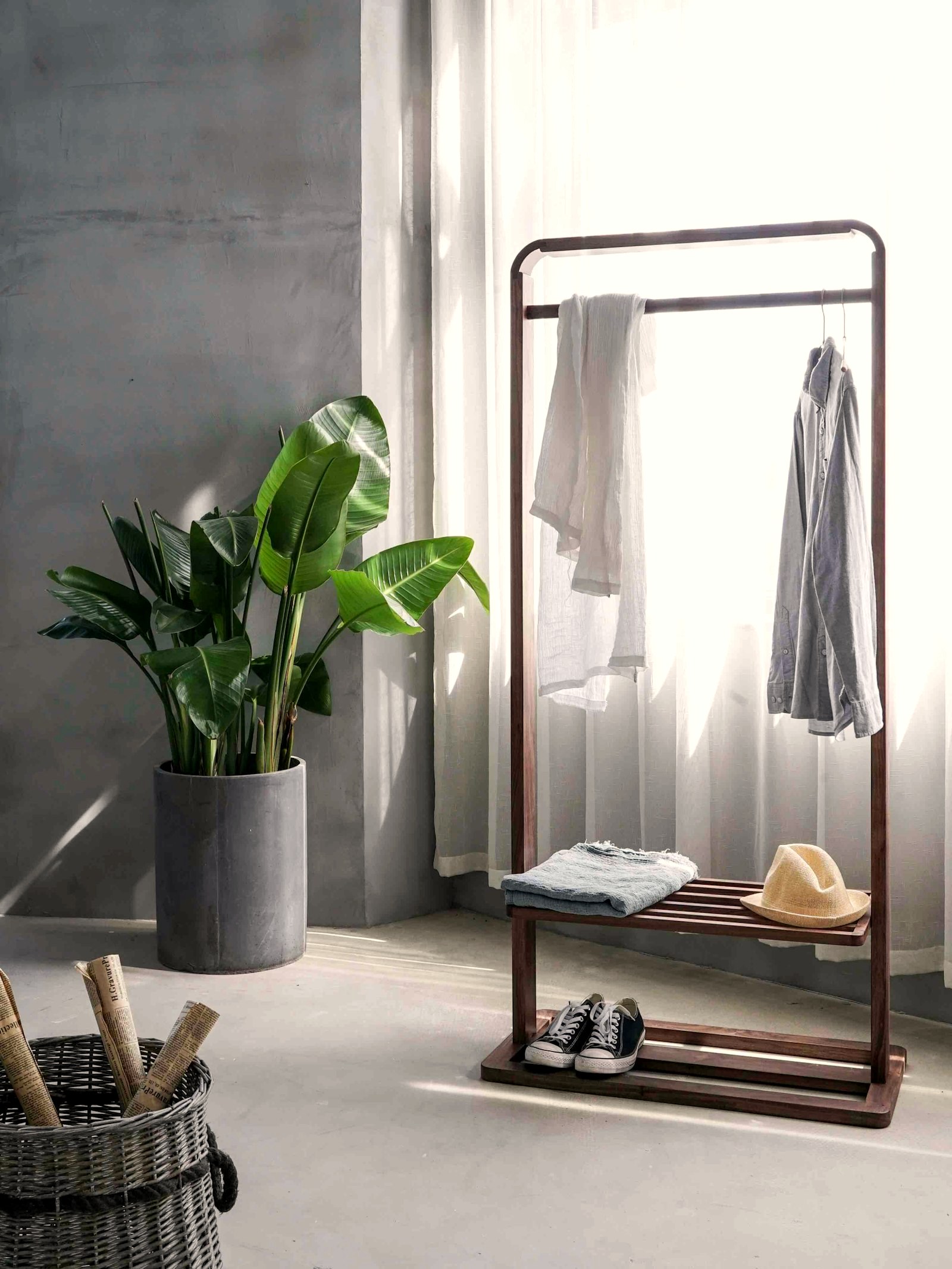
Fragrance is the last layer of getting dressed, applied after the rail has given up its shirt, and it is graded here the way the clothes are: on what it is made of, how long it lasts, and what it costs per unit of use. A note on photography, printed because this page believes in saying so: our photo bank holds no fragrance photography yet, so no bottle is pictured anywhere on this page rather than borrow one. The gap is on the harvest list, named.
Checked and updated October 2026
The basis: a fragrance is graded on its composition as published, its wear as reported, and its price per millilitre, because those three facts decide whether a bottle is still earning its shelf space in year two. Scent is described as scent on this page, nothing more: no bottle here is credited with changing how a room feels about you, because that claim belongs to the advertisements, and the advertisements are graded as advertisements where they appear. The winner: the Bleu de Chanel Eau de Parfum at 85, the one bottle to buy if one bottle is the plan, $173 for 100ml. The skip: the Parfums de Marly Layton at 56, named in the verdict box below: $400 for 125ml of an apple and vanilla composition its own field calls generic, sold on the borrowed costume of an eighteenth-century court by a house founded in 2009. In between, the office answer takes second, a Morillas fresh takes third at $0.69 a millilitre, the 1916 original cologne is graded honestly on its short wear, a tea from Le Labo does niche properly, and a rum and tobacco eau de toilette takes the evening slot.
First, the decision
Every fragrance argument is really three arguments, and this page settles all three before it scores anything. The first is the only question most readers actually have: if you buy one bottle, buy the Bleu de Chanel Eau de Parfum. It is ranked first below on the published evidence, and it is named here, in the first screen, because a page that buries its answer under seven cards has not answered it. It opens with citrus, settles into cedar, labdanum and New Caledonian sandalwood, wears a reported seven to nine hours, and is as correct over an Oxford shirt at nine in the morning as it is over a knit at nine at night. Its ubiquity is real and is graded on its card, not hidden. But the one-bottle question has one answer, and that is it.
The second argument is the words on the bottle, and they are simpler than the counters make them sound. The words name a concentration, meaning how much of what is in the bottle is perfume oil, and the trade's conventional bands are these. Parfum or extrait: 20 to 40 percent oil, the richest and closest-wearing form, usually the quietest in the first hour and the longest on skin. Eau de parfum: 15 to 20 percent, the modern default for anything meant to last a working day. Eau de toilette: 5 to 15 percent, brighter in the opening, lighter in the base, the register most office-safe bottles are built in. Eau de cologne: 2 to 5 percent, the oldest form, built as a bright opening act of citrus and herbs that is finished in three or four hours by design. Two cautions belong with the ladder. The bands are conventions, not law: a house may dose anywhere inside them, so a strong eau de toilette can outwear a weak eau de parfum, which is why every card on this page prints reported wear beside the printed concentration. And cologne is not a synonym for men's fragrance, whatever the department store signage says: it is the lightest rung, and the 1916 bottle ranked fourth below is on this page partly to prove that the lightest rung, honestly built, is a pleasure and not a defect.
The third argument is dose, and the desk's rule is short enough to print whole: two sprays of an eau de parfum is a full dose in shared air. One on the chest, one on the side of the neck or on a wrist, and stop. Three sprays is the ceiling, and it belongs to the lighter eau de toilettes in summer heat. A fourth spray has never improved a fragrance; it only announces it earlier, to people who did not ask. Scent done right is found at conversational distance. The wearer who can smell his own fragrance strongly an hour after applying has applied too much, because the nose adapts and everyone else's has not.
And the warning, because this category collects more purchase regret per dollar than any other in the grooming cabinet: do not blind buy. The same bottle wears differently on different skin, in different weather, against different laundry, and a ranking, including this one, can only narrow the field to bottles worth sampling. The honest way in is small and it is named: a 2ml decant from a reputable decanter, a house discovery set (Le Labo sells its own, and its ranked bottle below is exactly the kind that should be met at that size first), or a retailer sampler whose voucher redeems against the eventual full bottle, which Sephora's cologne sampler does. Wear the sample twice, on skin, on two different days, through a whole afternoon, including the dry-down at hour five, which is the part you will actually live with. The decants travel in the dopp kit ranked at Verdict Card No. 18; the full bottle is bought after, once, and the shelf stays honest.
How the scores work
Every bottle is scored out of 100 on the same five rows, and the rows are printed on every card, so the reader can disagree with the weighting and still use the evidence.
Composition & materials, 30 points. What the juice actually is, as published: a named perfumer, a published note pyramid, and a build that uses its materials with intent, naturals and aromachemicals each graded as what they are rather than as a purity contest. A house that publishes its composition earns more than a house that publishes a mood.
Wear, as reported, 20 points. Longevity and projection as widely reported by wearers, labelled as reported wherever it appears on this page. This desk runs no laboratory and claims no measurements: the row grades the consensus of published wear reports against the bottle's printed concentration, and a bottle whose reported wear contradicts its label loses points for the contradiction.
Versatility, 20 points. How much of the wardrobe this site actually sells the bottle can stand next to: the Oxford and the knit, the office and the evening, January and July. A masterpiece that only works in one register scores below a very good bottle that works in five, and ubiquity is priced here too: a scent a reader will smell on three other people in the same week has spent some of its versatility buying that reach.
Value per ml, 15 points. The verified price divided by the millilitres, printed in the table below so the arithmetic can be checked. A famous name at a famous price has to argue, and its card prints the argument.
Bottle & house, 15 points. The object and the institution: a bottle built to be kept and refilled or at least to age on a shelf without embarrassment, an atomiser that doses honestly, and a house whose history is a fact rather than a costume. Houses founded a century ago and houses founded last decade are graded on the same honesty.
The rows sum to the score. Prices were verified on the seller's own page at check time, and the exceptions, the discounter spreads and the sizes that had to be converted to a per-100ml equivalent, are printed in the honesty section rather than smoothed over.
Seven bottles, ranked
Bleu de Chanel Eau de Parfum
The Winner · The One-Bottle Answer
$173 for 100ml at Chanel
The call: the winner, and the answer to the one-bottle question: Jacques Polge's aromatic woody eau de parfum, a citrus accord opening over labdanum, dry cedar and New Caledonian sandalwood, in the deep blue bottle with the magnetic cap. It is the reference modern fragrance for the wardrobe this site sells, and at $1.73 a millilitre it is priced like one, which its value row of 9 prints rather than apologises for.
The composition row of 27 is earned on structure. The opening is citrus with a peppery edge, the heart is the warm resin of labdanum, and the base is the sandalwood the house names first among its materials, creamy where the eau de toilette below it in the line is drier. Nothing in it is exotic and nothing in it is wasted: it is the build of a house perfumer working inside a house that owns its own fields and its own supply, and it reads as composed rather than assembled. Reported wear is seven to nine hours on skin with a present but civil projection in the first two, which is the correct behaviour for a bottle asked to work an office day and an evening on one application.
The deductions are printed. Ubiquity is the real one, and it is priced in the versatility row at 18 rather than 20: this is among the best-selling men's fragrances on earth, and a reader will smell it on other people, in other offices, on other evenings. If being the only person in the room wearing a scent is the point, the fifth bottle on this page is the answer and this one is not. The second deduction is price discipline: Chanel does not discount, ever, so the $173 is the $173, with no discounter door at the back of the shop. What the money buys beyond the juice is the house row of 14: a bottle weighted like a paperweight, an atomiser that doses in fine, even mist, and a formula the house has kept in continuous, recognisable production since the eau de toilette of 2010.
Dior Homme Eau de Toilette
The Office Answer · Clean Woods, Honest Dose
$171 for 150ml at Ulta ($114 per 100ml)
The call: the fresh office-safe bottle of the field, and second overall: François Demachy's 2020 composition for the house, bergamot and pink pepper over Atlas cedar, cashmeran and patchouli, drying down to Iso E Super, white musk and vetiver. It smells like a shirt that fits, which is the entire brief for the nine-to-five slot, and at $114 per 100ml on the 150ml bottle it is the cheapest designer wear per millilitre among the leaders here.
One disclosure belongs at the top of this card, because the name has history: the Dior Homme in the current bottle is the 2020 woody composition, not the iris-led original of 2005 that collectors write elegies about. That fragrance effectively left the line when the name was rebuilt, and a buyer hunting the powdery iris should be told plainly that this is not it. What replaced it is a cleaner, drier, more architectural wood, less distinctive and more wearable, and this page grades the bottle that is actually for sale. Graded as itself, the composition is disciplined: the pepper lifts the opening without turning it sporty, the cedar heart is the whole personality, and the Iso E Super base gives the reported six to eight hours of close, even wear that its reviewers at the card's own retailer keep describing in the same words.
The wear row of 15 reflects the register: this is an eau de toilette that wears close by design, found at handshake distance rather than across a corridor, which the desk counts as correct behaviour for its slot and still scores below the winner's fuller day. The value row of 11 is the quiet argument of the card: bought in the 150ml, the per-ml price undercuts every designer bottle on this page except the discounter Versace below, from a house that, like the winner, essentially never discounts. A reader whose life is offices, meetings and shirts with collars can stop at this card and be done, at three points off the winner.
Versace Pour Homme Eau de Toilette
The Attainable Pick · Morillas at $0.69 a Millilitre
$68.65 for 100ml at FragranceX
The call: the attainable pick, inside the first three on merit and not on charity: Alberto Morillas's 2008 Mediterranean fresh, bergamot, neroli and Diamante citron over clary sage, blue hyacinth and cedar, on a base of mineral amber, tonka and musk. It is the bottle this page hands to the reader who wants one good scent and has seventy dollars, and its value row of 15, the only perfect row among the leaders, is the reason it stands third.
Grade the perfumer before the house, because here they diverge. Morillas is one of the most decorated noses alive, and this is his clean register done properly: the citrus opening is natural-smelling rather than synthetic-sharp, the sage and hyacinth heart keeps it aromatic instead of merely aquatic, and the mineral amber base is the detail that makes strangers place it a price class above its receipt. The composition row of 21, not higher, prints the honest limit: it is a beautifully executed example of a familiar structure, not an invention, and its reported wear of four to six hours is a fresh eau de toilette's normal span, graded at 13 without penalty beyond the fact.
The price needs its sentence, because it is two prices. On a department store shelf, and in Sephora's own delivery listing, this bottle asks $129. At the discounters, where this category actually trades, it asks $68.65, verified in stock at the card's link, and FragranceX's own guide puts its street band lower still. This page grades the street price, prints both, and notes that a house content to let its list price float at nearly double the market is telling you what the list price is for. At $0.69 a millilitre, a bottle worn daily at two sprays lasts well over a year; the per-wear arithmetic is in the table below, and it is the best on the page.
Acqua di Parma Colonia Eau de Cologne
The Original · 1916, Graded as a Cologne
$93.99 for 100ml at Perfume.com
The call: the heritage bottle, and the page's exhibit for the concentration ladder: the original Italian cologne of 1916, Sicilian citrus over lavender, rosemary, verbena and Bulgarian rose, on vetiver, sandalwood and patchouli, in the Art Deco bottle the house has barely touched in a century. It scores 75 with a wear row of 9, and the distance between those numbers is the most instructive line on this page.
The composition row of 26 and the house row of 15, the field's only perfect house score, grade what this bottle is: the template. Nearly every fresh citrus composition since has been an argument with this one, and the argument is over a formula built on real citrus oils and a floral heart that keeps it from ever reading as a sports scent. It is the freshest thing on this page and the most formal, the scent equivalent of the white Oxford the site ranks elsewhere: correct in a way that does not date. The house behind it has made the same bottle, in Parma, through a century of everything, and sells it today beside flankers that cost more and matter less.
Now the honest half. It is an eau de cologne, 2 to 5 percent oil by the trade's own band, and it wears like one: three to four hours as reported, the retailer's own FAQ on the card's page among the sources, fading to a clean skin scent by lunch. That is the class working as designed in 1916, when a cologne was reapplied the way a handkerchief was refolded, and this page refuses to call design a defect. It prices it instead: at $93.99 through the discounters against a $185 department store listing for the same 3.4 ounces, the value row lands at 9, because a bottle that needs a midday second application spends its millilitres twice as fast, and the per-ml table below charges it accordingly. Buy it as the classic it is, decant 10ml for the desk drawer, and it gives back more pleasure per morning than bottles twice its price.
Le Labo Thé Noir 29 Eau de Parfum
The Niche Bottle, Done Properly · Tea, Fig, Bay Leaf
$348 for 100ml at Le Labo
The call: the niche house done properly: Frank Voelkl's black tea composition for Le Labo, bergamot, fig and bay leaves over cedarwood, vetiver and musk, with the house's published black tea extraction giving the dry-down its dry, leafy, hay-like depth. It is the bottle for the reader who found the winner too familiar, and it is everything the skip at the bottom of this page pretends to be: genuinely composed, genuinely distinct, and priced like it, which its value row of 5 states without flinching.
The composition row of 27, level with the winner's, is the point of the card. The fig and bay leaf opening is green and strange in a way no designer brief would survive, the tea heart is dry rather than sweet, and the cedar and vetiver base keeps the whole thing in the woody register this site's wardrobe lives in. Reported wear is six to eight hours, longer on fabric, with a projection that stays in the wearer's own weather. It is also, by the same evidence, a narrower instrument: the versatility row of 12 prices a scent that belongs to knits, evenings and cooler months and sits oddly over a summer polo. Niche done properly means a point of view, and a point of view excludes.
The house row of 13 grades the Le Labo model as it is: bottles compounded and labelled to order, a name that is a laboratory count rather than a marketing invention, and a discovery programme that sells the 1.5ml first, which is the honest way into a $348 bottle and the route this page's decision section recommends for exactly this card. The price is the deduction and it is not small: $3.48 a millilitre is the highest figure among the six bottles above the skip, more than double the winner's. What it buys is real. Whether it buys twice the winner's worth is a question the score answers at 73: the composition is the winner's equal and the bottle is not the winner's all-rounder. Sample it at discovery size, wear it twice, and let the dry-down argue.
Maison Margiela Replica Jazz Club Eau de Toilette
The Evening Bottle · Rum, Tobacco Leaf, Vanilla
$158.90 for 100ml at OzCosmetics; $170 at Sephora
The call: the warm bottle of the field, the date-night slot taken by an eau de toilette that behaves like an evening: Alienor Massenet's 2013 composition for the Replica line, pink pepper, Primofiore lemon and neroli over rum absolute and clary sage, settling into tobacco leaf absolute, vanilla bean and styrax. It is a scent of low light and wool coats, rum and leaf and vanilla without a gram of syrup, and it is ranked sixth because the register it owns is an evening, not a week.
The composition row of 23 credits the balance, which is the hard part of this family: vanilla and tobacco builds collapse into sweetness in lesser hands, and this one stays dry, the rum reading as warmth rather than dessert and the tobacco as leaf rather than ashtray. Reported wear is six to eight hours, strong for its concentration and graded at 15, with the caveat the whole page runs on: these are wearers' reports, not this desk's measurements. The versatility row of 13 is the honest ceiling: over a summer shirt at noon this bottle is a coat worn indoors, and its season is October to March, evenings, knitwear, the hours after the office bottles have done their work.
The house row of 11 grades the Replica concept fairly: the apothecary bottle and the cotton label printed with a place and a year, Brooklyn, 2013, are theatre, but theatre in service of a real idea, that a scent can be a souvenir of a room. The price is mid-field and printed with its spread: Sephora lists the 100ml at $170, the card's retailer asks $158.90, and at either figure the per-ml cost sits at the winner's level for a narrower job, which the value row of 9 records. Buy it as the second bottle, after the one-bottle answer or the office answer is already on the shelf, and it will be the one reached for when the evening has a plan.
Parfums de Marly Layton Eau de Parfum
The Skip · $320 a 100ml for the Crowd-Pleaser Register
$400 for 125ml at HDYS Parfums ($320 per 100ml)
The call: skip it. This is the hype bottle in its purest current form: a pleasant apple, lavender and vanilla eau de parfum of the designer crowd-pleaser register, priced at $400 for 125ml, $320 per 100ml, which is niche money, Le Labo money and then some, for a composition the field's own roundups describe with the word generic. The juice is not bad. Nothing at this price is allowed to be merely not bad.
Read the published evidence the way this page reads every card. The notes are apple, bergamot and lavender over jasmine, violet and geranium, on vanilla, pepper, guaiac wood and patchouli: a fresh opening sweetening into a warm vanilla base, a structure the department store sells at a third of the price in a dozen bottles, executed well and invented nowhere. Its one strong row is wear, 16, because it is dosed and built to project and last, eight hours and beyond as reported, and the row is printed because the desk grades what is true. What surrounds the juice is the conviction: a house founded in 2009 dressed in the costume of Louis XV's court, horse statuary on the bottle, a name borrowed from an eighteenth-century château, and a marketing engine of paid placements that keeps the bottle in every feed while the composition stays in the crowd-pleaser register. The house row of 8 grades costume as costume.
The arithmetic closes it. At $320 per 100ml equivalent it costs 85 percent more per millilitre than the winner, nearly double the Le Labo's compositional ambition at the same money, and four and a half times the Versace that outranks it by twenty points. The reader who loves this profile has honest doors: the winner above for the polished version of crowd-pleasing, the Jazz Club for the vanilla register with the sweetness kept dry. A price that is mostly story is a story you are asked to keep paying for at every refill. The desk declines, and names it, so the next bottle wearing a costume meets a reader who has seen the trick itemised.
The numbers, side by side
Published figures, checked against the houses' and retailers' own pages this month, with reported wear labelled as reported: this desk measures nothing in a laboratory it does not have, and no figure below pretends otherwise.
| Bottle | Concentration | The published core | Wear, as reported | The fine print |
|---|---|---|---|---|
| Bleu de Chanel Eau de Parfum | Eau de parfum | Citrus accord, labdanum, cedar, New Caledonian sandalwood; Jacques Polge | Seven to nine hours | Among the best-selling men's fragrances in the world; ubiquity graded on its card |
| Dior Homme Eau de Toilette | Eau de toilette | Bergamot, pink pepper; Atlas cedar, cashmeran; Iso E Super, vetiver; François Demachy, 2020 | Six to eight hours, close to the skin | The 2020 woody composition; not the discontinued iris original of the same name |
| Versace Pour Homme Eau de Toilette | Eau de toilette | Bergamot, neroli, Diamante citron; clary sage, blue hyacinth, cedar; mineral amber, tonka, musk; Alberto Morillas, 2008 | Four to six hours | List $129 at full retail; $68.65 at the discounters, where the category actually trades |
| Acqua di Parma Colonia Eau de Cologne | Eau de cologne | Sicilian citrus; lavender, rosemary, verbena, Bulgarian rose; vetiver, sandalwood, patchouli; 1916 | Three to four hours | The lightest concentration on the page, working as its class was designed to work |
| Le Labo Thé Noir 29 Eau de Parfum | Eau de parfum | Bergamot, fig, bay leaves; black tea extraction; cedarwood, vetiver, musk; Frank Voelkl | Six to eight hours, longer on fabric | Compounded and labelled to order; discovery size sold first, as it should be at this price |
| Maison Margiela Replica Jazz Club Eau de Toilette | Eau de toilette | Pink pepper, lemon, neroli; rum absolute, clary sage; tobacco leaf absolute, vanilla bean, styrax; Alienor Massenet, 2013 | Six to eight hours | An evening and cold-weather register; $170 at Sephora, $158.90 at the card's retailer |
| Parfums de Marly Layton Eau de Parfum (the skip) | Eau de parfum | Apple, bergamot, lavender; jasmine, violet, geranium; vanilla, pepper, guaiac wood, patchouli; 2016 | Eight hours and beyond; its one strong row | $400 for 125ml at list; the house was founded in 2009, the court is a costume |
Five of the seven bottles on this page carry a named perfumer in their published credits, and the composition row notices. The two that do not ask the buyer to trust the house, or the mood film, instead. The desk grades published pyramids and named noses, and prints reported wear as reported, because a number with its evidence class attached is worth more than a louder one without.
Value per millilitre, in the open
The table divides each verified price by its millilitres, converting the two bottles not sold in 100ml to a per-100ml equivalent, printed as such. Cost per wear assumes the desk's two-spray dose and the trade's standard estimate of roughly a tenth of a millilitre per spray, so a wear costs about 0.2ml: the assumption is printed so the reader can re-run the arithmetic with his own dose rather than trust ours.
| Bottle | Price used | Per ml | Cost per wear, two sprays |
|---|---|---|---|
| Bleu de Chanel Eau de Parfum | $173 for 100ml at Chanel | $1.73 | $0.35 |
| Dior Homme Eau de Toilette | $171 for 150ml at Ulta ($114 per 100ml) | $1.14 | $0.23 |
| Versace Pour Homme Eau de Toilette | $68.65 for 100ml at FragranceX | $0.69 | $0.14 |
| Acqua di Parma Colonia Eau de Cologne | $93.99 for 100ml at Perfume.com | $0.94 | $0.19, twice on days it is reapplied |
| Le Labo Thé Noir 29 Eau de Parfum | $348 for 100ml at Le Labo | $3.48 | $0.70 |
| Maison Margiela Replica Jazz Club Eau de Toilette | $158.90 for 100ml at OzCosmetics | $1.59 | $0.32 |
| Parfums de Marly Layton Eau de Parfum (the skip) | $400 for 125ml ($320 per 100ml) | $3.20 | $0.64 |
| The aerosol body-spray tier (not ranked) | About $12 a can | Not sold by the millilitre, which is the point | At a can a month, about $144 a year, for the shortest wear in the category |
Read the table the way this site reads every category: the dearest ticket is not the dearest scent, and the cheapest ticket is not the cheapest either. The skip costs more per wear than the winner and the office answer combined. The aerosol tier, replaced monthly, outspends the Versace bottle inside a year while wearing for a fraction of the day. And the most expensive millilitre on the page belongs to the Le Labo, whose card argues, in composition, for every cent of it in a way the skip's card cannot.
Which one to buy
One bottle, full stop: the Bleu de Chanel Eau de Parfum at 85. The broadest register in the field, a reported full day of wear, $173. Buy it after a sample, like everything on this page.
The office, five days a week: the Dior Homme Eau de Toilette at 82. Clean woods at handshake distance, and the 150ml bottle makes it the leaders' cheapest wear. Remember it is the 2020 composition; its card prints the disclosure.
The least money for a real perfumer: the Versace Pour Homme at 76 and $68.65. Morillas, a proper published pyramid, $0.14 a wear. The first bottle to buy when the budget is the brief.
The classic, with eyes open: the Acqua di Parma Colonia at 75. A century-old formula that still defines fresh, bought knowing it is a morning scent with a decant for the afternoon.
The point of view: the Le Labo Thé Noir 29 at 73. Tea, fig and bay leaf, met first at discovery size, owned by readers who want a scent with an argument in it.
The evening bottle: the Replica Jazz Club at 71. Rum, tobacco leaf and dry vanilla for the cold months and the hours after work. The second bottle, not the first.
The full method behind these scores, including how the data team re-checks prices, is on the methodology page. Skin that reacts to fragrance has its own ruling in the skincare routine: fragrance-free everything while it settles, one new product at a time. The decants that this page keeps recommending live in the dopp kits ranking, Verdict Card No. 18.
How we know: the honesty section
The scores are this desk's own, computed on the basis printed above from house-published concentrations, note pyramids and perfumer credits, and from wear as widely reported, labelled as reported throughout. This desk runs no laboratory, owns no testing panel, and claims no measurements: where the page says a bottle wears seven to nine hours, it is reporting the consensus of published wear reports, and the reader's own skin remains the final instrument. Prices were verified on the seller's page at check time, and the exceptions are printed rather than smoothed over.
Five disclosures specific to this page. First, prices. The Bleu de Chanel's $173 is the house's US price for the 100ml eau de parfum, read from Chanel's own listing data; Chanel does not discount, so it is the price everywhere. The Dior Homme is priced on Ulta's 150ml bottle at $171, converted to $114 per 100ml and printed as a conversion wherever it appears. The Versace and the Colonia are priced where this category actually trades, at the discounters, with their full-retail figures, $129 and $185, printed on their cards beside the street price. The Thé Noir 29's $348 is Nordstrom's current listing for the 100ml; Le Labo's own page, checked the same day, would not render a checkable price to our checker. The Layton's $400 for 125ml is the department store list carried at Neiman Marcus and Nordstrom alike. Second, wear figures are reports. Retailer FAQs, wearer reviews and the houses' own pages are the sources, and they are cited as reports on the cards, never as this desk's measurements. Third, no house ranked here carries a standing brand score anywhere else on this site, and no score is borrowed from another category: the Versace name appears on the sunglasses ranking as an eyewear verdict about a different object, and it neither helps nor hurts this bottle. Fourth, marketing language is graded as marketing wherever it appears. Several of these bottles are sold with claims about the effect a scent has on a room; this page describes scent as scent, repeats none of those claims as findings, and scores none of them. Fifth, photography: the bank holds no fragrance photography, so no ranked bottle is pictured on this page. The hero is the garment rail the ranking was graded against, captioned as what it is. The harvest list names what is missing: a bottle still life in window light, a decant vial beside an open dopp kit, an application frame at the wrist in real light, and a bathroom shelf with two bottles and a razor.
Application, finally, is graded by the desk's own published rule rather than by any house's instructions: two sprays of an eau de parfum, three of a light toilette at most, on skin rather than clothing where the fabric allows, and never rubbed in, because rubbing crushes the opening the perfumer built first. The rule is printed in the decision section, and the per-wear table is computed on it.
Questions the desk hears
What is the best fragrance for men?
The Bleu de Chanel Eau de Parfum, 85 out of 100: a citrus opening over labdanum, cedar and New Caledonian sandalwood, reported at seven to nine hours of wear, at $173 for 100ml. The Dior Homme Eau de Toilette is second at 82, the office answer at $114 per 100ml on Ulta's 150ml bottle, and the honest cheap answer is third: the Versace Pour Homme at 76 and $68.65 for 100ml at the discounters. The Acqua di Parma Colonia, the 1916 original, is fourth at 75 for the reader who wants the classic and accepts a cologne's short wear.
What is the difference between parfum, eau de parfum, eau de toilette and cologne?
Concentration: how much of the bottle is perfume oil. The trade's conventional bands run parfum or extrait at 20 to 40 percent oil, eau de parfum at 15 to 20, eau de toilette at 5 to 15, and eau de cologne at 2 to 5. More oil generally means longer, closer wear and less opening brightness; less oil means a brighter first hour and a shorter day. The words are bands, not laws: houses dose within them as they please, which is why this page grades reported wear beside the printed concentration.
How many sprays should I wear?
Two of an eau de parfum is a full dose in shared air: one on the chest, one on the side of the neck or a wrist, and stop. Three is the ceiling, and it belongs to lighter eau de toilettes in summer. A fourth spray has never improved a fragrance; it only announces it earlier. Scent done right is found at conversational distance, not broadcast across a room.
How long should a fragrance last?
As reported wear, not lab measurement: an eau de parfum built on woods and resins should give seven to nine hours on skin, a woody eau de toilette six to eight, a fresh eau de toilette four to six, and a true eau de cologne three to four, which is the class working as designed rather than failing. Fabric holds scent longer than skin, and dry skin gives it back sooner. Any seller quoting a number without naming a skin, a dose and a concentration is quoting marketing.
Are expensive fragrances worth it?
Sometimes, and the per-ml table on this page is the test. The winner costs $1.73 a millilitre and the skip costs $3.20 a millilitre for a composition its own field calls generic; the cheapest honest bottle here, the Versace Pour Homme at $0.69 a millilitre, outlasts its price by years of daily wear. Price and worth part company at the composition row: named perfumers, published notes and honest materials at a high price is a purchase; a court costume and an influencer budget at a high price is a donation.
Should I blind buy a fragrance?
No. Above decant money, blind buying is how shelves fill with expensive regrets, because the same bottle wears differently on different skin. The honest way in is small: a 2ml decant, a house discovery set, or a retailer sampler whose voucher redeems against the full bottle. Wear the sample twice, on skin, on two different days, through a full afternoon. If it is still the one, the bottle has earned its place.
Seven bottles, one ladder of concentrations, and a winner that earns its ubiquity. The scent is the last thing on and the first thing graded.
Checked and updated October 2026