

Eight tees, one winner, one sent home. Every price printed, every cloth weight published or named as missing.
Checked and updated October 2026
The verdict, up front: eight white t-shirts, scored out of 100 on the house basis: material 30, construction 20, fit and versatility 20, value 15, longevity 15. Asket's tee wins at 88, the same score it holds in our quiet luxury capsule, because a ranking that changes its numbers between pages is not a ranking. The Merz B. Schwanen loopwheel tee takes the cloth crown at 82. And the Eton Filo di Scozia, at $225, is sent home at 61: beautiful cloth, indefensible arithmetic. The cheapest cost per wear on this page is about 6 cents. The most expensive is $1.50. Both are computed in the open below.
The most argued-over garment you own
Every man owns white t-shirts. Almost nobody can say what his weighs, what it costs per wear, or why the collar gave up in March. The category runs from $12 to $225 for what looks, on a hanger, like the same shirt. It is not the same shirt. The difference lives in four numbers most roundups never print: cloth weight, construction, expected life, and the price divided by that life.
So this ranking prints them. Every score below is built from the maker's published specifications and checked prices, scored under our published methodology. Where a brand does not publish its cloth weight, the table says so in plain words. An unpublished spec is data too, and it is rarely in the expensive brands' favour. One section below is a reading of the specs rather than a laboratory result, and it is labelled as such, because the difference matters.
How the scores work
Five rows, the same ones this magazine uses for any single garment. Material judges fibre quality and published cloth weight. Construction judges seams, collar work and finishing. Fit and versatility judges the cut and the sizing range behind it. Value divides what you get by what you pay, against the whole field. Longevity estimates service life from the construction class: dense, compacted cloth at the top, fine gauges and blends lower. The rows sum to the score, and the score is printed where you can screenshot it.
Eight tees, ranked
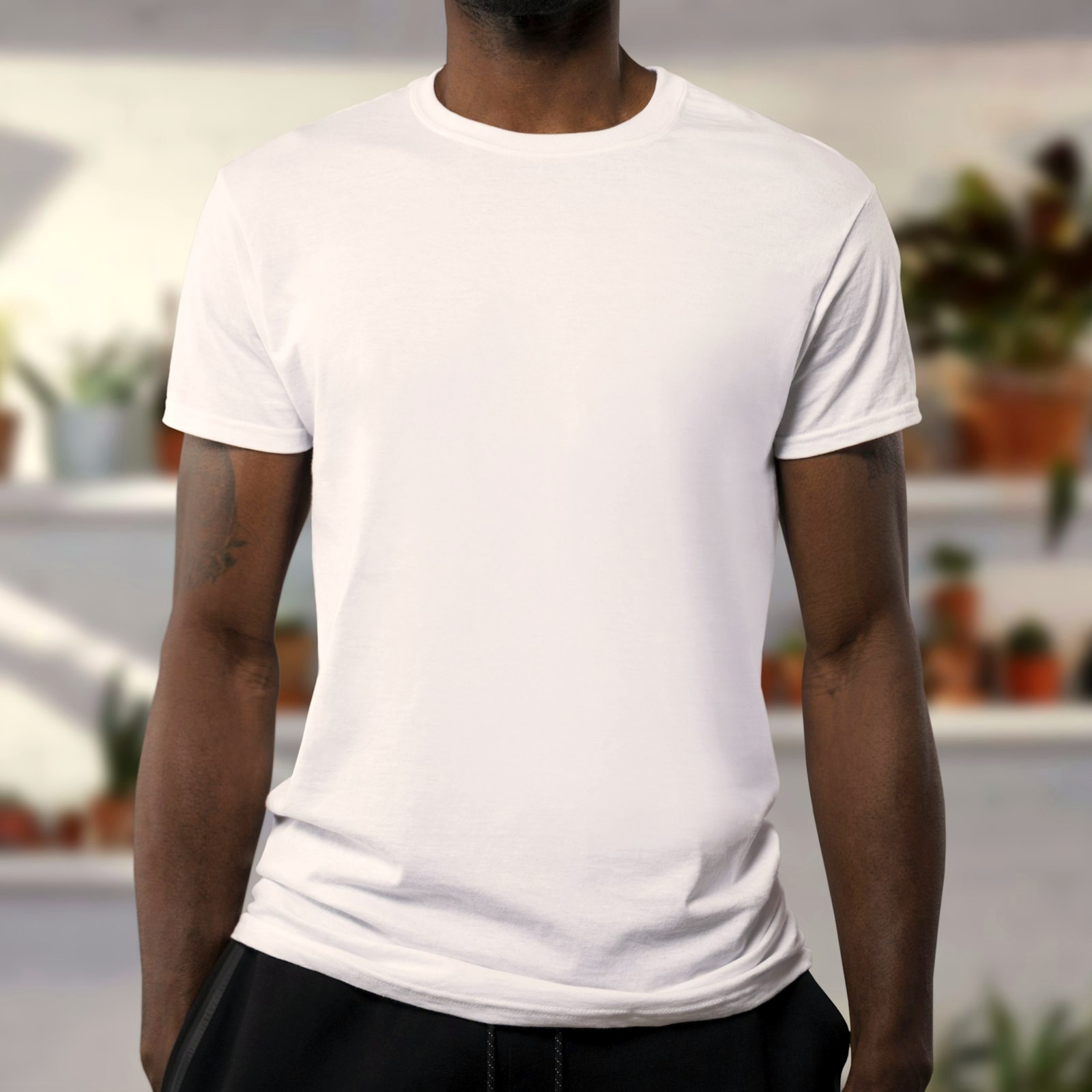
Asket: The T-Shirt
List price at last check: $70 in the US.
Buy it first. This is the tee the rest of the page is measured against.
Asket publishes two numbers most brands hide: what the tee weighs and what it costs to make. The cloth is a custom 180 gsm organic cotton jersey, extra-long staple, pre-shrunk and compacted so the body resists the twist that ruins cheap tees. The collar is bound rib knit, the fit comes in fine size increments across three lengths, and the garment is sewn in Portugal. No single row is the best on this page. The total is, because nothing is wasted: not the cloth, not the sizing, not the $70. It holds the same 88 it scored in our Scandinavian brands ranking, where Asket's range took the top slot in its field.
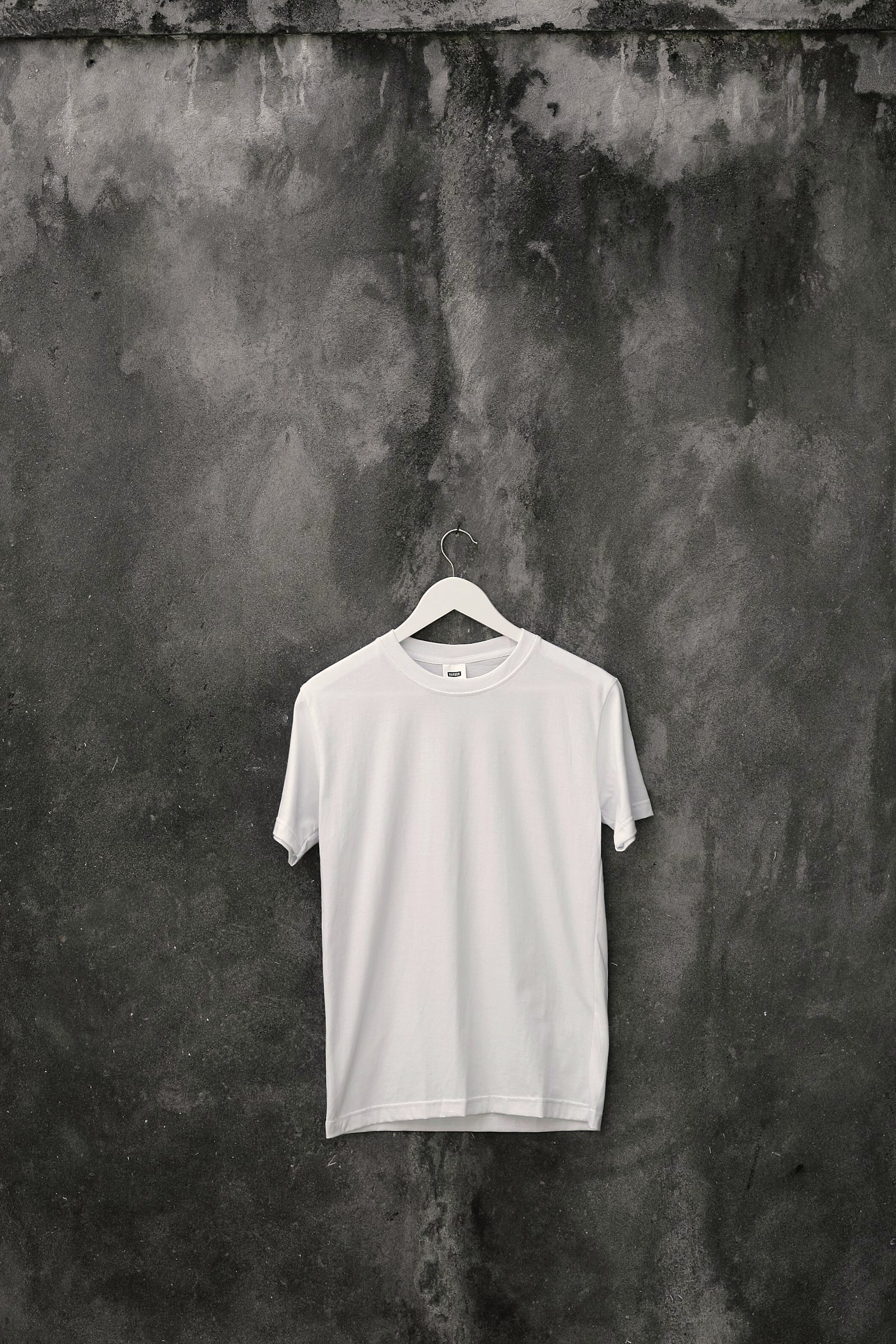
Merz B. Schwanen: 215 Loopwheel Tee
List price at last check: €105 from the maker; about $110 in the US.
Buy it if cloth is the hobby. Size up: the cut runs small.
The 215 is knitted on vintage loopwheel machines in the Swabian Jura, slowly, in a tube. There are no side seams, because the machine makes a cylinder; there are underarm gussets where a seam would rub; the collar is bound to be washed for a decade. At 245 gsm of organic cotton it is the heaviest cloth on this page by a wide margin, with a dry, dense hand that reads as a garment, not an undershirt. It loses points where this kind of craft always loses them: one classic cut that runs small, and a price that needs the cost-per-wear table below to defend it. It gets its defence: at four years of service, about 28 cents a wear.

Los Angeles Apparel: 1801GD Garment Dye Crew
List price at last check: $26.
Buy two. The roomy one your rotation leans on.
The 1801GD is the American blank done properly: 220 gsm of open-end US cotton, knitted, cut, sewn and garment-dyed in Los Angeles. The dye process is the trick. The shirt is washed as a finished garment, so it arrives broken-in and virtually shrink-free, with a high ribbed collar that holds its ring. Open-end yarn is coarser than the ringspun cloth ranked above it, which caps the material score, and the cut is one spacious fit rather than a size system. At $26 it does not need to win those rows. It needs to survive, and 220 gsm garment-dyed cotton survives.

Sunspel: Classic T-Shirt
List price at last check: $98 in the US.
Buy it for under tailoring. On its own it is a whisper of a shirt.
Sunspel has made jersey in Long Eaton, England since before the t-shirt had a name, and the Classic is its thesis: long-staple cotton in a fine, light jersey that drapes instead of standing up. Under a blazer or an open shirt it is the most elegant cloth on this page. Worn alone it shows its trade. Fine gauges are delicate, and Sunspel does not publish the weight, which on a page that prints weights counts against the cloth, not for it. At $98 you are buying hand feel and drape. The longevity row, 11, is the honest price of both.

Uniqlo: U Crew Neck T-Shirt
List price at last check: $19.90 in the US.
Buy it if you are buying your first good tee. Buy three and rotate.
The U line is Uniqlo's Paris design studio, run under Christophe Lemaire, applied to a $19.90 t-shirt: a substantial cotton jersey (Uniqlo, like Sunspel, does not publish the weight), a bound collar that keeps its ring, and a boxy cut that sits away from the body the way current clothes should. The fit row scores 17 because one good cut in this many sizes, at this price, is range enough. It is the cheapest tee here that behaves like a garment instead of a giveaway, and its cost per wear, about 10 cents, embarrasses shirts five times its price.
CDLP: Midweight T-Shirt
List price at last check: $125 in the US.
Buy it for the hand feel. Know that blends age faster than cotton.
CDLP's midweight tee is the page's one blend: 67 percent Tencel lyocell and 33 percent pima cotton at a published 220 gsm, made in Portugal. The lyocell is why it feels the way it does: smooth, cool, with a fall closer to a fluid than a jersey. It is also the risk printed on the label. Blends pill where pure cotton merely softens, and the longevity row says so. At $125 this is a considered purchase, not a default. Men who run warm, or who wear a tee as a base layer more often than as a shirt, will score it higher than we do.
Hanes: Beefy-T
List price at last check: about $12 for a single, less per shirt in a two-pack.
Buy the two-pack. It will outlive shirts on this page that cost ten times more.
The Beefy-T is the floor of this ranking, and the floor holds: 6.1 ounces of ringspun cotton, about 205 gsm, double-needle stitching, shoulder-to-shoulder taping, a lay-flat collar, sizes running to 6XL. The pattern has barely changed in decades because it did not need to. What it cannot do is feel refined. The hand is coarse, the cut is a box, and the material row scores it 16 without apology. Then the value and longevity rows answer back. At about $12 across a two-year life, it costs roughly 6 cents a wear. There are $225 tees that cannot say that. One of them is next.
Eton: Filo di Scozia T-Shirt
List price at last check: $225 in the US, £190 in the UK.
Skip it. Lovely cloth, indefensible arithmetic.
Filo di Scozia is a genuinely fine yarn: long-staple cotton lisle, mercerised until it shines, knitted in Italy into a jersey with a silky hand. Eton's tee is a beautiful object. It is also $225 for a fine-gauge t-shirt, and fine gauges are the most delicate construction on this page. The material row respects the cloth at 22. The value row, 2 of 15, respects the reader. Nothing about the shirt explains why it costs three Askets, two Merz loopwheels or eleven Uniqlo Us, and its expected life is the shortest here. A shirtmaker's name is not a fabric.
The cloth, in numbers
| Tee | Cloth | Published weight | Made in |
|---|---|---|---|
| Asket The T-Shirt | Organic cotton jersey, extra-long staple | 180 gsm | Portugal |
| Merz B. Schwanen 215 | Organic cotton loopwheel jersey | 245 gsm | Germany |
| Los Angeles Apparel 1801GD | Open-end US cotton, garment-dyed | 220 gsm | USA |
| CDLP Midweight | 67% lyocell, 33% pima cotton | 220 gsm | Portugal |
| Hanes Beefy-T | Ringspun cotton | About 205 gsm (sold as 6.1 oz) | Varies by batch |
| Sunspel Classic | Long-staple cotton jersey | Not published | England |
| Uniqlo U Crew Neck | Cotton jersey | Not published | Varies by batch |
| Eton Filo di Scozia | Cotton lisle, mercerised | Not published | Knitted in Italy |
Three of the eight brands on this page do not publish a cloth weight, and they are three of the four most expensive. Draw the conclusion the data team drew: weight is published when it flatters.
What each tee costs per wear
The maths, assumptions printed. A tee in a normal rotation is worn about twice a week, call it 100 wears a year. Expected life is estimated from construction class, not from the price tag: dense loopwheel and compacted jerseys at the top, fine gauges and blends lower. These are the data team's estimates, published so you can argue with them.
| Tee | Price | Expected life | Cost per wear |
|---|---|---|---|
| Hanes Beefy-T | $12 | 2 years | $0.06 |
| Uniqlo U Crew Neck | $19.90 | 2 years | $0.10 |
| Los Angeles Apparel 1801GD | $26 | 2.5 years | $0.10 |
| Asket The T-Shirt | $70 | 3 years | $0.23 |
| Merz B. Schwanen 215 | About $110 | 4 years | $0.28 |
| Sunspel Classic | $98 | 2 years | $0.49 |
| CDLP Midweight | $125 | 2 years | $0.63 |
| Eton Filo di Scozia | $225 | 1.5 years | $1.50 |
Argue with the Eton line first. Even on a generous three-year life it costs 75 cents a wear, more than three times the winner. The price is not buying years. It is buying a name.
The Skip · 61/100
The Eton Filo di Scozia t-shirt, $225 in the US and £190 in the UK at last check, is this ranking's named loser. The cloth is lovely, and that is the trap: fine lisle jersey is a dress-shirt material wearing a t-shirt's name, priced off a shirtmaker's label, with the shortest expected life on this page. At $1.50 a wear it costs 25 times the Hanes floor and more than six times the Asket it finishes seven places behind. Buy the Asket, put the $155 you saved toward the Merz, and own two better shirts plus a story about the one you skipped.
The first wash, read from the specs
An honesty note, because this page prints its methods: the three checks below are how to judge any tee after its first wash, together with what each construction on this page predicts. This is a reading of published specifications, not a laboratory result, and we label it that way because the difference matters.
Collar wave. Run a finger around the collar after wash one. A bound or ribbed collar with proper coverstitching holds its ring: Asket, Uniqlo U and Los Angeles Apparel all spec one. A thin self-fabric collar ripples early. On the fine gauges, Sunspel and Eton, the collar tape is the whole game, which is why it is the first place to look.
Seam twist. Lay the washed tee flat. If the side seams have walked toward the front, the jersey was knitted with torque and cut off-grain. Tubular loopwheel bodies, the Merz, have no side seam to walk. Compacted, pre-shrunk jersey, the Asket, is finished specifically to resist it. Budget open-end cloth twists most; the Hanes pattern counters with shoulder taping rather than knit quality.
Length loss. Measure the body before the first wash and after it. Garment-dyed shirts, the Los Angeles Apparel, were shrunk before you met them and move least. Pre-shrunk compacted jersey moves a little. Fine untreated cotton can give up the most, which is why the delicate tees on this page should be bought with a finger's width of length in hand.
Which one to buy
If you buy one: the Asket, in white, in your exact size and length. If you buy three: two from the Uniqlo U or Los Angeles Apparel tier for rotation, and the Asket for the days the tee is the outfit. If cloth is your hobby: the Merz, sized up, washed cold, kept for years. If you mostly layer: the Sunspel or the CDLP, chosen by whether you want cotton purity or the blend's drape. If money is genuinely tight: the Hanes two-pack, and no apology. The ranking is a ladder, not a fence.
Questions, answered
What is the best white t-shirt for men?
The Asket T-Shirt, scored 88 out of 100. It wins on balance: 180 gsm organic cotton with a published weight and a published cost breakdown, a bound collar, sizing in fine increments across three lengths, and a $70 price that works out to about 23 cents a wear. The Merz B. Schwanen 215 is the better cloth at 245 gsm, but it costs more and fits fewer bodies.
How much should a white t-shirt cost?
For most men, $20 to $70 covers the honest range. The Uniqlo U at $19.90 is a real garment, the Asket at $70 is the point where cloth, construction and sizing all arrive, and past $125 you are paying for hand feel and a name rather than years of wear. The cost-per-wear table on this page is the proof: the $225 tee costs the most per wear of the eight.
What weight should a white t-shirt be?
Between 180 and 220 gsm is the working band: opaque against skin, structured enough to hold a shape, light enough for summer. Under about 160 gsm a white tee reads as an undershirt and shows everything under it. Over 240 gsm, like the Merz loopwheel at 245, the tee becomes a garment in its own right and wears warm. Three brands on this page do not publish a weight at all, which is its own answer.
Do expensive white t-shirts last longer?
Not by price. On the published specs, lifespan follows construction: dense loopwheel and compacted heavyweight jerseys at the top, fine gauges and blends at the bottom. The most expensive tee ranked here has the shortest expected life, and the $12 Hanes Beefy-T is expected to outlast it. Price buys cloth quality and fit range. It does not buy years.
How do I keep a white t-shirt white?
Wash it cold, inside out, and only with other whites. Skip chlorine bleach, which yellows cotton over time; an oxygen-based soak handles most collar and cuff marks. Treat sweat stains early, before they set, and dry the shirt out of direct midday sun. A white tee is a maintenance commitment: five minutes a wash is the real price of the look.
Heavyweight or lightweight: which white tee should I buy?
Heavyweight if the tee is the outfit: the cloth holds its own shape and hides what is under it. Lightweight if the tee is a layer: fine jerseys like the Sunspel sit flat under shirts and tailoring and wrinkle less in a bag. Most men building a rotation need one of each, heavy first.
How this ranking stays honest
Scores follow our published methodology and are re-checked on the cadence in the byline; when a maker changes cloth, construction or price materially, the score moves and the move is noted here. The winner anchors our quiet luxury capsule wardrobe at the same score of 88, and the shirt it sits beside there is ranked in full in our Oxford shirt ranking. Prices are list prices at last check; several of these makers promote on a cycle, and paying less than the printed figure is a bonus, never a surprise we hide.