
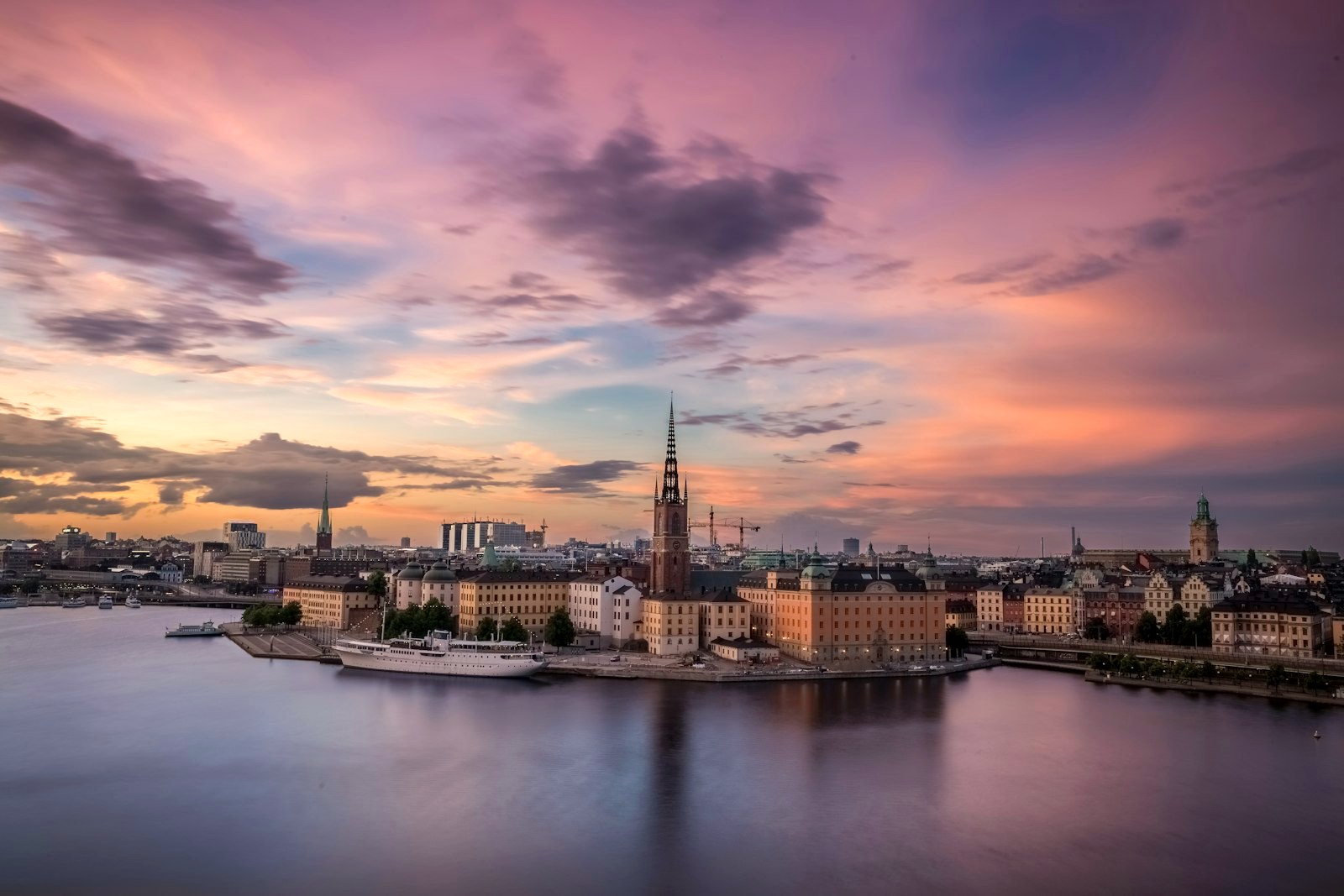
Stockholm, where half this list was founded. Twenty Scandinavian brands, scored, priced, and ranked for the man who wants fewer, better things.
Checked and updated October 2026
The short version: the winner is also the attainable pick. Asket (92/100) sells one permanent collection, in sizing honest enough to score a perfect 20, with the cost of every garment published. Buy Our Legacy (86) for design with a pulse and Norse Projects (85) for the knit you will wear for a decade. The famous name to skip is at the bottom: Peak Performance (66), a fine ski brand charging fashion prices for logo-forward gear its neighbours on this list beat at their own game. The best-known competing list of Scandinavian brands covers seventeen names with no prices and no scores. This one covers twenty, and every entry names a price band, a key piece, and a verdict. Scores follow our published methodology.
Japan perfected the cloth and Italy perfected the ease. Scandinavia perfected the discipline: one rail, natural fibres, nothing on it that does not earn its place. That discipline is a design culture before it is a fashion one, and it is why the region produces so few bad brands and so many quiet arguments about which good one matters most. This ranking settles the argument the way all our rankings do. Every brand is scored out of 100 under our published methodology: fabric and materials 30, construction and craft 20, fit range and sizing honesty 20, value 15, longevity 15. Three names here are not on the best-known competing list at all, because a list of Scandinavian menswear without the tailoring institution (Tiger of Sweden, 1903) and the attainable Stockholm staple houses is a list with holes in it.
Two ground rules. First, prices are given in US dollars at last check; several of these houses price in euros or kronor, so totals move a little with the exchange rate, and the bands below are honest ranges, not false precision. Second, two of the best names here make one category only, bags and shoes, and are scored as the specialists they are. A bag cannot win a wardrobe ranking, but it can absolutely lose one, as the bottom of this list demonstrates.
The ranking at a glance
Scores follow the methodology above. Prices are the typical US price of the key piece at last check; the reasoning for every line is in the entry below it.
| Brand | Score | Key piece | Typical price | The call |
|---|---|---|---|---|
| Asket | 92 | The T-Shirt | $70 | The winner |
| Our Legacy | 86 | The Borrowed Shirt | $250 to $350 | Design with a pulse |
| Norse Projects | 85 | Lambswool crewneck | $225 to $325 | The decade knit |
| mfpen | 84 | The Examination Shirt | $180 to $260 | Deadstock, tailored |
| Houdini | 84 | The Power Houdi | About $255 | The circular outdoor pick |
| Mismo | 83 | M/S Avail weekender | About $870 | The bag specialist |
| Another Aspect | 83 | Another Shirt 1.0 | $170 to $250 | Copenhagen's staples lab |
| NN07 | 83 | The Marco chino | $160 to $190 | The chino, solved |
| A Day's March | 82 | The overshirt | $130 to $190 | Attainable Stockholm |
| Myrqvist | 82 | The suede loafer | $300 to $400 | Welted shoes, direct |
| Séfr | 81 | The Ignacio shirt | $220 to $320 | Vintage soul, new cloth |
| Tiger of Sweden | 80 | The suit | $650 to $950 | The 1903 institution |
| Klättermusen | 79 | The Brage shell jacket | $450 to $700 | Mountaineering grade |
| Filippa K | 79 | The knit polo | $250 to $400 | Minimalism's elder |
| Scandinavian Edition | 77 | The Nimbus parka | $1,100 to $1,700 | One perfect coat, priced like it |
| Berner Kühl | 75 | The Volume Shirt | $230 to $330 | Promising, hard to buy |
| Soulland | 75 | The printed shirt | $180 to $280 | Prints date faster |
| Acne Studios | 74 | The 1996 jeans | $320 to $450 | The design tax |
| Steele & Borough | 67 | The Weekender | $250 to $450 | Honest, with a material ceiling |
| Peak Performance | 66 | Edge 2L ski jacket | $445 | Skip it: see the reasons |
The Top Five
1. Asket: the permanent collection wins
Best for: the whole base wardrobe, bought once and refined forever. Key piece: The T-Shirt, $70 at the official store. Price band: $70 to $680 at last check, tees to the wool coat. Score: 92/100.
Fabric 25/30 · Construction 18/20 · Fit range 20/20 · Value 14/15 · Longevity 15/15
Asket, founded in Stockholm in 2015, refuses the basic mechanics of fashion. There are no seasons and no drops; there is one permanent collection, improved garment by garment, year after year. Every piece carries a published breakdown of what it cost to make and where it was made, and the sizing is the most honest in menswear: dozens of sizes with short, regular and long lengths, which is why this is the only perfect fit score in the franchise. Add lifetime repair and take-back services and the picture is complete. This is what a research platform would build if it made clothes. The deduction is fabric ambition: the cloth is very good rather than sublime, and the design hand is deliberately plain. Verdict: start here, and let every other brand argue against it. Its Oxford shirt also sits in our ranking of the best Oxford shirts for men.
2. Our Legacy: design with a pulse
Best for: the wardrobe's interesting third, shirts, denim and boots with ideas in them. Key piece: the Borrowed Shirt. Price band: $150 to $1,200 at last check. Score: 86/100.
Fabric 27/30 · Construction 18/20 · Fit range 16/20 · Value 11/15 · Longevity 14/15
Our Legacy began in Stockholm in 2005 as a graphic T-shirt project and grew, slowly and on its own terms, into the most influential Scandinavian menswear label of its generation. The clothes walk a line nobody else holds this well: familiar garments, a shirt, a jean, a boot, cut a few degrees off normal, in fabrics that include deadstock and upcycled cloth worked into the main line rather than a capsule. The Borrowed Shirt and the Third Cut jean are modern staples, and the Camion boot built a quiet cult. Value is the honest deduction. Prices have followed the reputation upward, and some seasonal experiments date faster than the core. Verdict: buy the core silhouettes and the shirts. They will still look right in five years, which is more than fashion usually promises.
3. Norse Projects: the decade knit
Best for: knitwear and outerwear built for actual Nordic weather and actual daily wear. Key piece: the lambswool crewneck. Price band: $90 to $700 at last check. Score: 85/100.
Fabric 24/30 · Construction 17/20 · Fit range 18/20 · Value 12/15 · Longevity 14/15
Norse Projects started as a Copenhagen shop in 2004 and launched its own label five years later under a motto that doubles as a quality claim: created for life, good for all seasons. The knitwear is the heart of it, lambswool, merino and alpaca worked with Italian and British mills into fisherman ribs and fine gauges that layer without bulk. Nothing chases a trend and nothing is precious; the tab logo is the loudest thing the brand makes, and it is the size of a stamp. Fit runs true and the size information is plain, which our data team counts as a courtesy more brands should copy. Verdict: if you buy one Scandinavian knit, buy it here. It will outlast the argument about which one to buy.
4. mfpen: deadstock, tailored
Best for: relaxed shirts and tailoring in fabrics nobody else can sell you. Key piece: the Examination Shirt. Price band: $130 to $500 at last check. Score: 84/100.
Fabric 25/30 · Construction 17/20 · Fit range 16/20 · Value 12/15 · Longevity 14/15
Sigurd Bank founded mfpen in Copenhagen in 2015 on a constraint that became a signature: the collections are built substantially from deadstock fabrics, surplus cloth from European mills that would otherwise be wasted. Because the fabric comes first, the design stays calm: generous shirts, easy blazers, trousers with drape, a palette of washed neutrals. It reads like Italian soft tailoring filtered through Danish restraint, which is a fair description of where this magazine's taste lives. The catches are availability, since deadstock runs end, and a size range that stays narrow. Verdict: the insider's shirt brand of this list. When your size exists in a fabric you like, the decision is already made.
5. Houdini: the circular outdoor pick
Best for: one fleece and one shell that cover the cold half of the year, city included. Key piece: the Power Houdi, 2,400 kronor (about $255) at the official store. Price band: $90 to $750 at last check. Score: 84/100.
Fabric 24/30 · Construction 17/20 · Fit range 16/20 · Value 12/15 · Longevity 15/15
Houdini, founded in Sweden in 1993, is the outdoor brand this ranking trusts most, because it treats longevity as an engineering spec. The Power Houdi, a Polartec fleece refined over two decades, is the rare technical garment that also looks right in the city: clean lines, no shouty panels, a hood that sits like a collar. The company designs for circularity, repairs what it sells, and resells its own used garments, which is why longevity scores a clean 15. It is an outdoor brand on a wardrobe list, and it earns the place the same way it earns everything: by still being worn when louder gear is in a landfill. Verdict: buy the Houdi. Then notice, two winters from now, that you never stopped wearing it.
The Specialists and the Quiet Core
6. Mismo: the bag specialist
Best for: one bag, in bridle leather and hard canvas, carried for twenty years. Key piece: the M/S Avail weekender, 825 euros (about $870) at the official store. Price band: roughly $350 to $1,100 at last check. Score: 83/100.
Fabric 26/30 · Construction 19/20 · Fit range 14/20 · Value 9/15 · Longevity 15/15
Mismo has made bags in Copenhagen since 2003, and the formula has barely moved: vegetable-tanned full-grain bridle leather, custom-woven canvas and nylon, solid brass hardware, and silhouettes named like naval kit. The construction score is the highest in this section because the making is the whole point; these are bags built the way luggage was built before luggage became merch. Value is where the ranking pushes back. A weekender at this price competes with leather houses, and the fit score, read as range, reflects a catalogue that does one thing only. It does that one thing about as well as it can be done. Verdict: the connoisseur's carry. Buy the Avail or the Rucksack and leave the bag market the way Porter readers left it in our Japanese ranking.
7. Another Aspect: Copenhagen's staples lab
Best for: wardrobe staples rebuilt from recycled, deadstock and organic cloth. Key piece: Another Shirt 1.0. Price band: $140 to $500 at last check. Score: 83/100.
Fabric 25/30 · Construction 17/20 · Fit range 16/20 · Value 12/15 · Longevity 13/15
Three friends founded Another Aspect in Copenhagen in 2019 with a rule most brands only print on a tote bag: collections made exclusively from recycled fibres, deadstock and organic materials, produced by small local makers. The clothes are classic staples with the proportions quietly corrected, roomier where room helps, clean where it counts, in fabrics sourced from serious mills, Harris Tweed and Italian houses among them. Industry people speak of this label the way chefs speak of a small restaurant you have not heard of yet. Distribution is still catching up with the reputation, and the range stays deliberately tight. Verdict: the youngest brand in this top group, and the one most likely to climb it. Buy the shirt.
8. NN07: the chino, solved
Best for: trousers and knits in fits that translate to real bodies. Key piece: the Marco chino. Price band: $100 to $450 at last check. Score: 83/100.
Fabric 23/30 · Construction 16/20 · Fit range 18/20 · Value 13/15 · Longevity 13/15
NN07, named for No Nationality and the 2007 Copenhagen founding, built its name on the least glamorous garment in the wardrobe and made it properly: the Marco chino, a tapered trouser in a cotton with a little give, sold in fits and lengths that acknowledge men come in more than one shape. Fit range scores near the top of this page for exactly that reason. The knitwear and overshirts around the chino are solid, unspectacular, and fairly priced, and a turn in a certain Chicago kitchen drama put the Gael jacket on screens worldwide. This is wardrobe infrastructure, and infrastructure is allowed to be boring. Verdict: start with the chino in two colours. It is the trouser equivalent of a good answer.
9. A Day's March: attainable Stockholm
Best for: overshirts, knits and shirts at prices a first salary survives. Key piece: the overshirt, including the Harris Tweed editions. Price band: $90 to $400 at last check. Score: 82/100.
Fabric 22/30 · Construction 16/20 · Fit range 18/20 · Value 14/15 · Longevity 12/15
A Day's March has dressed Stockholm since 2014 in the garments young Scandinavians actually live in: heavy overshirts, rugby knits, good chinos, coats that look borrowed from a better decade. The cloth is a step below the top five, which the fabric score says plainly, and the construction is honest rather than exceptional. What the brand gets right is the arithmetic. Value scores 14 because the prices meet the quality where it stands, with no story tax and no logo surcharge, and the fits are cut for the bodies in its own shops. Verdict: the second attainable pick of this ranking, after the winner. A young wardrobe can be built here without a single regret purchase.
10. Myrqvist: welted shoes, direct
Best for: Goodyear-welted shoes without the heritage-brand markup. Key piece: the suede loafer. Price band: $270 to $450 at last check. Score: 82/100.
Fabric 24/30 · Construction 17/20 · Fit range 16/20 · Value 12/15 · Longevity 13/15
Myrqvist was founded in Stockholm in 2016 to test a simple claim, printed on its own homepage: premium footwear without the premium price tag. The shoes are designed in Stockholm and handmade in Portugal, Goodyear-welted so they can be resoled, in suedes and leathers chosen a grade above the price. Loafers, Chelsea boots and derbies in a tight, classic range: that restraint is the brand. Longevity is docked a point or two against the centuries-old bench shoemakers, because a decade-old direct brand has not yet proven thirty-year wear. Everything measurable so far says it will. Verdict: the shoe pick of this ranking. One pair of the loafers covers the office, the wedding and the decade.
11. Séfr: vintage soul, new cloth
Best for: textured shirts and retro-leaning pieces with real fabric character. Key piece: the Ignacio shirt. Price band: $160 to $650 at last check. Score: 81/100.
Fabric 25/30 · Construction 16/20 · Fit range 15/20 · Value 11/15 · Longevity 14/15
Séfr began as a vintage shop, founded in Malmö by Sinan Abi and Per Fredrikson, and the own label that followed in 2016 kept the shop's education: clothes that feel found rather than manufactured, with the flaws engineered out. The name means zero in Lebanese Arabic, a nod to Abi's roots. Bouclé knits, crinkled shirts, wide trousers and camp collars in washed, sun-faded colours: it is the most romantic brand in this ranking, and the fabric score rewards the textures. Fits run boxy and short for some bodies, which is the fit deduction, and prices ask designer money for a still-small house. Verdict: buy the shirts and the knits. Séfr is what to wear when the quiet wardrobe wants one piece with a memory in it.
The Institutions and the Deep North
12. Tiger of Sweden: the 1903 institution
Best for: the first real suit, and tailoring with a century of practice behind it. Key piece: the suit. Price band: $150 to $1,300 at last check; suits cluster near $650 to $950. Score: 80/100.
Fabric 23/30 · Construction 16/20 · Fit range 17/20 · Value 11/15 · Longevity 13/15
Marcus Schwarzman and Hjalmar Nordström founded Tiger of Sweden in 1903 and, by the house's own account, brought ready-to-wear tailoring to Sweden: the suit as something a working man could buy off a rail. A hundred and twenty years later it remains the region's tailoring institution, Stockholm-designed, sharp-shouldered, and priced below the Italian houses it competes with. It is not on the best-known competing list of Scandinavian brands, which says more about that list than about Tiger. The deductions are real: group ownership has brought seasons of uneven design, and the cloth, while good, is not Boglioli good. Verdict: the suit pick of this ranking. For a first tailoring purchase in the North, start where the North started.
13. Klättermusen: mountaineering grade
Best for: the hardest weather you will ever actually stand in. Key piece: the Brage shell jacket. Price band: $150 to $900 at last check. Score: 79/100.
Fabric 26/30 · Construction 19/20 · Fit range 12/20 · Value 8/15 · Longevity 14/15
Klättermusen has built equipment in Åre since 1975 for people whose weather is a safety question, and it shows in every seam: proprietary fabrics, an obsessive repair culture, and construction that ties with Mismo for the best on this page. As clothing for a city wardrobe it is overbuilt and priced accordingly, which is what the value score records, and the fits are cut for movement under load rather than for how a trouser falls at a desk. None of that is a criticism of the gear. It is a note about the job you are hiring it for. Verdict: buy it for the mountain without hesitation. For the commute, Houdini above does the same job in a quieter voice.
14. Filippa K: minimalism's elder
Best for: soft knitwear and clean tailoring in the original Stockholm minimalist language. Key piece: the knit polo. Price band: $150 to $900 at last check. Score: 79/100.
Fabric 23/30 · Construction 16/20 · Fit range 16/20 · Value 11/15 · Longevity 13/15
Filippa Knutsson founded Filippa K in Stockholm in 1993, and the house wrote the template half this list still uses: fewer pieces, better cloth, no decoration, design as a form of calm. The menswear has always been the smaller half of the business, and it shows in a range that covers the essentials beautifully and the rest thinly. Prices sit at full designer level for quality that younger houses on this page now match for less, which is the value story in one line. Respect is owed and paid here; the ranking still has to price the present, not the legacy. Verdict: buy the knits on their merits. The elder still dresses well; it just no longer dresses alone.
15. Scandinavian Edition: one perfect coat
Best for: a single weatherproof city coat, bought once. Key piece: the Nimbus parka. Price band: $800 to $1,900 at last check. Score: 77/100.
Fabric 25/30 · Construction 18/20 · Fit range 12/20 · Value 8/15 · Longevity 14/15
Scandinavian Edition, founded in Oslo in 2014, makes almost nothing but coats: minimalist parkas and insulated jackets engineered for Nordic weather and cut clean enough for a city that dresses well. The coats themselves score high on this page, fabric and construction both, because the narrowness is the point. The ranking's pushback is arithmetic and range. One category, priced at the level of tailoring houses, in a handful of fits, is a specialist purchase, and the value score treats it as one. Verdict: if your winter is serious and your budget matches it, this is the coat. Everyone else gets ninety percent of the weatherproofing further up this list for half the money.
See it at Scandinavian Edition →
Scored Down, With Reasons
Five names finish this list, and the ranking owes you the reasons in plain language. Two are young or print-led and will likely climb. One is a global fashion house paying itself a design tax. One is an honest small brand with a material ceiling. And one is a household name that finishes last, because on this page the arithmetic is the arithmetic.
16. Berner Kühl: promising, hard to buy
Best for: fabric obsessives who enjoy the hunt. Key piece: the Volume Shirt. Price band: $180 to $700 at last check. Score: 75/100.
Fabric 24/30 · Construction 16/20 · Fit range 13/20 · Value 10/15 · Longevity 12/15
Frederik Berner Kühl's Copenhagen label names its products like spec sheets, Seam Tee Organic 180, 5 Pocket 14 Oz, and means it: the clothes are material research wearing a tailored silhouette, bonded cottons and boiled wools included. The press noticed early and the stockist list is short and serious. What holds the score here is access and proof. Distribution stays thin, the size range narrow, and a label this young has not yet shown which of its designs survive five winters of trend cycles. Verdict: the one to watch in this entire ranking. Buy a shirt if your size appears; you will own something most people cannot find.
17. Soulland: prints date faster
Best for: one graphic piece with genuine design wit in it. Key piece: the printed shirt. Price band: $90 to $550 at last check. Score: 75/100.
Fabric 22/30 · Construction 15/20 · Fit range 15/20 · Value 11/15 · Longevity 12/15
Silas Adler has run Soulland from Copenhagen since 2002, out of skate culture and into a label known for print shirts and collaborations with real graphic intelligence. The design talent is not the question. The question this methodology asks is what a print is worth in year four, and the honest answer is less than in month one: graphics anchor a garment to its season, and a wardrobe built on cloth outlasts a wardrobe built on images. The plain pieces in the range are good and score the brand its mid-table respectability. Verdict: buy one printed shirt because you love the print, not as a foundation. Foundations are further up the page.
18. Acne Studios: the design tax
Best for: denim and statement pieces, bought knowingly. Key piece: the 1996 jeans. Price band: $200 to $1,800 at last check. Score: 74/100.
Fabric 24/30 · Construction 16/20 · Fit range 15/20 · Value 8/15 · Longevity 11/15
Acne Studios began in Stockholm in 1996 when Jonny Johansson made a hundred pairs of jeans with red stitching and gave them away; the house that grew from that gesture is now Scandinavia's global fashion flagship, and its best denim and leather still justify the name. The score is the methodology doing its job. A large share of the range is fashion-cycle product at flagship prices: logo tees and seasonal experiments where the cloth is ordinary and the design tax is the product. Under a rubric that pays for fabric, construction and years of wear, that mix lands here, below houses a tenth of its size. Verdict: buy the jeans and the leather, on sale if you can. Skip the logo pieces entirely; they are the tax, itemised.
19. Steele & Borough: honest, with a material ceiling
Best for: a light, water-resistant weekender at a fair price. Key piece: the Weekender. Price band: $190 to $500 at last check. Score: 67/100.
Fabric 17/30 · Construction 15/20 · Fit range 13/20 · Value 12/15 · Longevity 10/15
Steele & Borough, founded in Stockholm in 2015 by Catherine and Niklas, spent seven years prototyping its weekender, and the design care is real: clean lines, sensible interiors, prices that start under two hundred dollars. The ceiling is the material choice, made on principle: the bags are vegan polyurethane and nylon, and polyurethane does not age the way the bridle leather at Mismo ages. It resists water and scratches, then, years in, it peels where leather would have patinated. The fabric and longevity scores price that trade honestly, and the brand, to its credit, has never hidden it. Verdict: buy it for travel now, at its fair price, knowing it is a five-year bag. For the twenty-year bag, the answer is at number six.
20. Peak Performance: the famous name finishes last
Best for: resort skiing, if the logo is part of the fun for you. Key piece: the Edge 2L Insulated Shell Jacket, $445 at the official store. Price band: $100 to $1,000 at last check. Score: 66/100.
Fabric 20/30 · Construction 15/20 · Fit range 15/20 · Value 7/15 · Longevity 9/15
Peak Performance was founded in Åre in 1986 and built genuine ski credibility; today it is an Amer Sports brand, and the clothes read like it. The shells are competent. They are also logo-forward, styled for the resort photograph, and priced at a level where the comparison stops being kind: the $445 Edge jacket competes directly with the two outdoor schools above it on this page, and loses to both, to Houdini on design and circularity, to Klättermusen on construction, while asking fashion money for the difference. Longevity scores 9 because the styling dates by season, on purpose. None of this makes it a bad ski brand. It makes it the worst wardrobe buy on a list of twenty Scandinavian names, and a ranking that will not say so is a catalogue. Verdict: skip it. The mountain is better served at numbers five and thirteen, and neither will turn you into signage.
The cost-per-wear math
Scandinavian brands argue in cost per wear better than anyone, so here is the arithmetic on the top and the bottom of this list, assumptions printed. An Asket T-Shirt at $70, worn sixty times a year for five years, costs about $0.23 per wear, and the design in year five is the design in year one, because the collection does not change. A Peak Performance Edge 2L jacket at $445, worn twelve ski days a year for five years, costs about $7.42 per wear, roughly thirty-two times as much, for a garment whose styling is built to be replaced by next season's colours. Price is a fact. Cost per wear is the verdict, and it is why the top of this list is a brand most people have never heard of: the North rewards the buyer who does the division.
The Bottom Line
Scandinavia rewards the disciplined buyer. Asket proves the markup and the season were both optional, Norse Projects and Houdini prove climate clothing can be beautiful, and Mismo and Myrqvist prove the specialists beat the generalists at their own crafts. The famous names at the bottom are not villains. They are simply what happens to a score when a ranking pays for cloth, construction and years, and sends the bill for logos and seasons to the brands that charge for them.
How to buy Scandinavian brands well
Three data-team rules. First, do the currency honestly. Several houses above price in euros or kronor, and the dollar total moves with the rate; judge a piece on its price band here, not on an exchange-rate snapshot from a good week. Second, respect the Nordic sale calendar. Scandinavian retail discounts hardest in January and July, and mid-tier houses on this list surface there at thirty percent off or better; quiet clothing bought on sale is the region's own trick, played on itself. Third, start with the knit or the shirt. Those are the foundation garments of the whole Northern tradition, and the brands reveal themselves in them fastest.
This is Country Roundup No. 04. The series so far: Korean clothing brands for men (No. 01), our scored ranking of Japanese clothing brands for men (No. 02), and Italian clothing brands for men (No. 03). Read them together and the map is complete: Seoul changed the silhouette, Japan perfected the cloth, Italy perfected the ease, and the North perfected the discipline. For the labels our editors argue about across all four maps, see cool brands for men. Scores, price bands, and stockists on this page are re-checked on the rolling cadence in our methodology. When a house changes cloth, cut, or price materially, its score moves, and the move is noted here.