
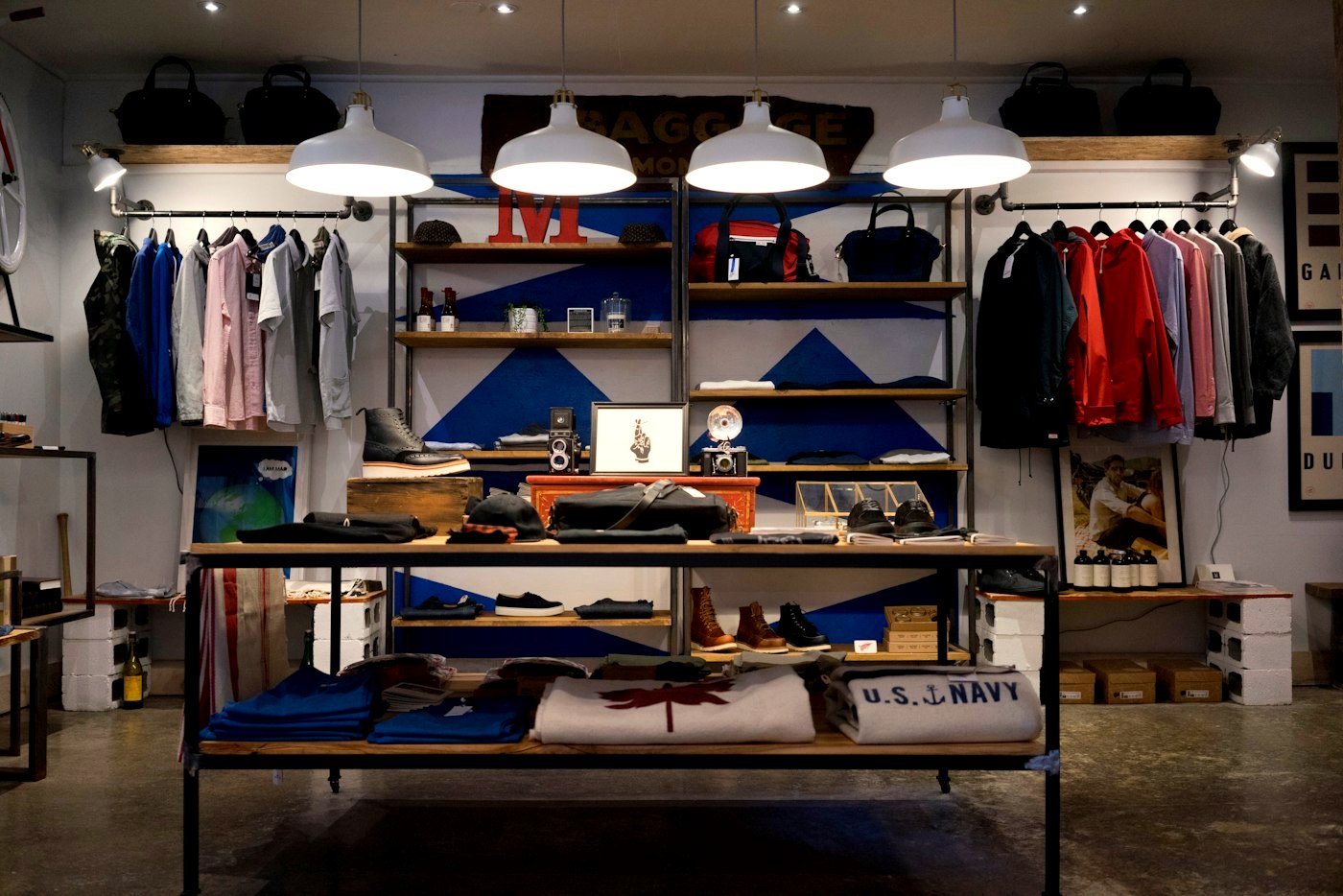
The good stuff is quiet. Japan's best menswear rarely shouts, and that is the point.
Checked and updated October 2026
The short version: if you buy one Japanese label this year, make it Auralee (94/100), the quiet summit of modern menswear. If the budget is real, Uniqlo (84/100) sits third on this list on merit, not charity, and OrSlow's fatigue pants are the single best trouser buy in the country. The famous name to skip at retail is A Bathing Ape (57/100): the price buys the camo and the ape head, and the cloth underneath is ordinary. Twenty brands below, each scored, each with the one piece we would actually buy.
Young Cotton has roots in New York and Japan, and this is the roundup our readers have asked for since the site launched. Japan is where the modern soft wardrobe was really invented: cloth woven slowly and honestly, construction that assumes you will keep the garment for a decade, and design that trusts proportion and fabric instead of logos. It is also a market wrapped in myth, which is why this list works the way all our rankings work. Every brand is scored out of 100 under our published methodology: fabric and materials 30, construction and craft 20, fit range and sizing honesty 20, value 15, longevity 15. The most-linked competing list of Japanese brands still carries a 2023 update date under a 2026 title, with no scores and no prices. This one was checked this month, and every entry names a price band and a verdict.
Two ground rules before the ranking. First, Japanese sizing runs slimmer and shorter than US sizing almost everywhere on this list, so measure a garment you own and compare it to the brand's chart rather than ordering your usual letter. Second, several of the best houses here barely sell online at all. Where a brand has no store we could verify, we say so in its entry and point you to the stockist route instead of printing a link we could not check.
The ranking at a glance
Scores follow the methodology above. Prices are the typical US price of the key piece at last check; the reasoning for every line is in the entry below it.
| Brand | Score | Key piece | Typical price | The call |
|---|---|---|---|---|
| Auralee | 94 | Super Fine Wool rib knit | $600 to $800 | The winner |
| Comoli | 92 | Washed silk shirt | $400 to $600 | Buy it when you find it |
| Uniqlo | 84 | U crew-neck T-shirt | $15 to $30 | The attainable pick |
| YAECA | 88 | Staple wide shirt | $250 to $350 | Quiet luxury, distilled |
| Kaptain Sunshine | 86 | Traveller Coat | $700 to $1,000 | The connoisseur's coat |
| Graphpaper | 84 | Oversized broadcloth shirt | $200 to $300 | Gallery-grade basics |
| Kapital | 90 | Century Denim jeans | $400 to $550 | Denim as folk art |
| OrSlow | 89 | US Army fatigue pants | $300 to $395 | Best trousers on the list |
| Beams Plus | 85 | Two-pleat twill trousers | $150 to $200 | Ivy, perfected in Tokyo |
| Studio D'Artisan | 82 | SD-103 selvedge jeans | $200 to $330 | For denim purists |
| Nanamica | 89 | 2L GORE-TEX Cruiser Jacket | $650 | Technical, tailored |
| Goldwin | 85 | PERTEX insulated jacket | $480 to $900 | The quiet tech giant |
| Snow Peak | 83 | Insulated shirt jacket | $180 to $280 | Camp polish, city manners |
| and wander | 81 | PERTEX wind jacket | $250 to $400 | Reflective, featherlight |
| Montbell | 80 | Versalite jacket | $140 to $190 | The value king outdoors |
| Porter (Yoshida & Co.) | 87 | Tanker 2-Way bag | $400 to $700 | The bag to end bags |
| Visvim | 79 | FBT sneaker | $700 to $1,000 | Beautiful, indefensible price |
| WTAPS | 75 | Jungle jacket | $350 to $500 | Buy mainline, skip collabs |
| Neighborhood | 73 | Savage denim jacket | $300 to $450 | Heritage over hype, mostly |
| A Bathing Ape (BAPE) | 57 | Shark full-zip hoodie | $335 to $495 | Skip at retail |
Start Here
1. Auralee: the quiet summit
Best for: the best knit in the room, with no logo on it. Key piece: the Super Fine Wool rib knit. Price band: $600 to $800 for core knits at the official store, coats well above that. Score: 94/100.
Fabric 29/30 · Construction 19/20 · Fit range 17/20 · Value 14/15 · Longevity 15/15
Ryota Iwai founded Auralee in 2015 and built it the slow way: proprietary fabrics developed with Japanese mills, washed silk and fine wool and baby cashmere that feel calm rather than rich, and cuts that sit soft on the body without slumping. Nothing here photographs loudly and everything here wears beautifully for years. The fit score is the only honest deduction: the cut is Japanese-slim and taller men should check sleeve and body lengths against the chart. Verdict: this is the standard. Start your Japanese wardrobe here and measure everything else against it.
2. Comoli: the insider's uniform
Best for: relaxed shirts and tailoring that look better the longer you own them. Key piece: the washed silk shirt. Price band: $400 to $600. Score: 92/100.
Fabric 28/30 · Construction 18/20 · Fit range 17/20 · Value 14/15 · Longevity 15/15
Comoli, designed by Keijiro Komori, is the label other designers wear: washed fabrics with a lived-in hand from day one, generous but deliberate proportions, and a palette of ink, ecru and faded black that makes getting dressed feel solved. The catch is access. Comoli has no conventional online store; it sells through mail order and a short list of stockists, and popular pieces go quickly. We count that as a buying note, not a quality deduction, but it is why the brand is second and not first. Verdict: if your size appears at a stockist, do not meditate on it. It will not be there next week.
3. Uniqlo: the attainable pick, on merit
Best for: building the base layer of the wardrobe at real-world prices. Key piece: the U crew-neck T-shirt. Price band: $15 to $30. Score: 84/100.
Fabric 21/30 · Construction 15/20 · Fit range 19/20 · Value 15/15 · Longevity 14/15
Uniqlo is the only mass brand on earth that belongs in this conversation, and it earns its place the hard way: the widest and most honest size range on this list, a perfect value score, and design direction (the U line, overseen by Christophe Lemaire in Paris) that keeps the basics cut like designer pieces. The deduction is real and we will not soften it: the cloth is the weakest of the top group, with blends and thinner knits that will not age like the names above it. Buy the tees, the Supima cotton, the workhorse layers. Verdict: the baseline every other brand on this page has to beat, and most days the smartest money here.
The Quiet Luxury Core
4. YAECA: quiet luxury, distilled
Best for: staple shirts, totes and everyday pieces with the noise removed. Key piece: the staple wide shirt. Price band: $250 to $350. Score: 88/100.
Fabric 26/30 · Construction 18/20 · Fit range 16/20 · Value 13/15 · Longevity 15/15
YAECA is a small Tokyo studio built around the idea that a shirt, a pair of trousers and a bag, made from the right cloth in the right proportions, are most of a wardrobe. The Staple and Like Wear lines are exactly that: nothing seasonal, nothing loud, everything considered down to the button. Longevity is a clean 15 because the designs simply do not date. YAECA sells mainly through its Tokyo shops and stockists rather than a global web store, so expect the stockist route. Verdict: the purest expression of the quiet wardrobe on this list.
5. Kaptain Sunshine: the connoisseur's coat
Best for: outerwear and easy tailoring in fabrics nobody else is using. Key piece: the Traveller Coat. Price band: $700 to $1,000. Score: 86/100.
Fabric 26/30 · Construction 18/20 · Fit range 15/20 · Value 12/15 · Longevity 15/15
Shinsuke Kojima spent years as a fashion editor and vintage dealer before founding Kaptain Sunshine in 2013, and the clothes carry that education: original textiles woven on slow looms, vintage and naval references filtered until only the good lines remain, and an easy, generous silhouette that still reads tailored. The fit deduction is for length and availability rather than honesty; the range is narrow and the best pieces move through stockists fast. The brand opened its Aoyama flagship and a Seoul shop in 2025, a sign of where its audience is growing. Verdict: buy the coat once and stop shopping for coats.
6. Graphpaper: gallery-grade basics
Best for: oversized shirting and minimal pieces with an architect's eye. Key piece: the oversized broadcloth shirt. Price band: $200 to $300. Score: 84/100.
Fabric 25/30 · Construction 17/20 · Fit range 16/20 · Value 12/15 · Longevity 14/15
Graphpaper began as a gallery-like shop in Tokyo and became a label with the same instincts: fine broadcloth and high-count cottons, shirts cut with real volume, everything stripped back until proportion does the work. It is the most architectural brand in this section, and the value score reflects that you are paying for cloth and cut, not for warmth or hardware. Distribution outside Japan is thin, which keeps it a stockist hunt. Verdict: if the oversized shirt is your silhouette, this is its best Japanese expression.
The Denim and Workwear Houses
7. Kapital: denim as folk art
Best for: one-of-one feeling denim, patchwork and the famous Ring Coat. Key piece: the Century Denim jeans. Price band: $400 to $550. Score: 90/100.
Fabric 27/30 · Construction 19/20 · Fit range 16/20 · Value 13/15 · Longevity 15/15
Kapital comes out of Kojima in Okayama, Japan's denim heartland, where the Hirata family turned indigo craft into something closer to folk art: boro patchwork, sashiko stitching, century denim woven to fade like a painting changing over seasons. The construction score is near the top of this list because the making is the point, and the longevity is perfect because a Kapital piece looks better repaired than most clothes look new. It sells through its Japanese shops and web store and a loyal stockist network abroad; the hunt is part of the culture around it. Verdict: the most characterful denim in the world. Buy the jeans, wear them for a decade, hand them down.
8. OrSlow: the fatigue pant perfected
Best for: workwear staples made slowly and honestly. Key piece: the US Army fatigue pants. Price band: $300 to $395. Score: 89/100.
Fabric 26/30 · Construction 19/20 · Fit range 15/20 · Value 14/15 · Longevity 15/15
Designer Ichiro Nakatsu founded OrSlow in 2005 on a simple refusal: no fast production, no shortcuts, just vintage workwear and military patterns rebuilt in Japanese mills to a standard the originals never reached. The fatigue pant is the proof, a ripstop or sateen trouser that our data team keeps calling the best single trouser buy in Japan, because it goes with every other brand on this page. OrSlow's own site is a catalogue with a stockist directory rather than a shop, so buy through its retailers and check the size chart twice: the cuts are faithful to the vintage originals, which means slimmer than modern US workwear. Verdict: the workwear house we recommend without a single caveat about quality. Only about sizing.
9. Beams Plus: Ivy, perfected in Tokyo
Best for: American classics, Oxford shirts, chinos and military pieces, made better. Key piece: the two-pleat twill trousers. Price band: $150 to $200. Score: 85/100.
Fabric 24/30 · Construction 17/20 · Fit range 18/20 · Value 13/15 · Longevity 13/15
Beams Plus is the menswear line of the Tokyo retail institution Beams, devoted since 1999 to the American trilogy of Ivy League, military and workwear, studied so closely that the copies now outrank the originals. Fit range scores high because the sizing data is good and the cuts translate to US bodies better than most of this list. The longevity deduction is about the seasonal fashion pieces, which date faster than the core classics. And a note for shirt people: the Japanese maker that tops our ranking of the best Oxford shirts for men, Kamakura, comes from this same culture of taking an American staple seriously. Verdict: the friendliest door into Japanese menswear. Start with the trousers and the Oxford shirts.
10. Studio D'Artisan: for denim purists
Best for: raw selvedge jeans woven on historic shuttle looms. Key piece: the SD-103 selvedge jeans. Price band: $200 to $330. Score: 82/100.
Fabric 26/30 · Construction 18/20 · Fit range 12/20 · Value 11/15 · Longevity 15/15
Studio D'Artisan, founded in Osaka in 1979, is one of the Osaka Five houses that rebuilt Japanese denim from vintage American blueprints, and it still weaves on the Toyoda GL3, among the oldest power looms in the country. Fabric and longevity are superb; the fades these jeans produce are the hobby's reference point. The fit score is the honest problem: cuts are made for Japanese frames, with lower rises and slimmer thighs, and many Western buyers will find no size that works. That is not a flaw in the jeans. It is a fact to know before you spend. Verdict: if the fit works for you, few jeans on earth are better made. If it does not, OrSlow is your house.
The Technical and Outdoor School
11. Nanamica: technical, tailored
Best for: weatherproof outerwear you can wear to a meeting. Key piece: the 2L GORE-TEX Cruiser Jacket, $650 at the US store. Price band: $410 to $1,100 across the outerwear range. Score: 89/100.
Fabric 27/30 · Construction 19/20 · Fit range 16/20 · Value 12/15 · Longevity 15/15
Nanamica was founded by Eiichiro Homma on a one-line idea, "One Ocean, All Lands": make technical clothing with the manners of tailoring. The result is the best city outerwear in Japan: GORE-TEX shells and down coats cut like overcoats, natural-fabric blends over membrane layers, and details borrowed from marine and mountain gear without the fancy-dress effect. Value is the only modest score, and it is modest rather than low because the construction genuinely is a step above the field. Verdict: the commuter's grail. One Nanamica shell replaces three jackets.
12. Goldwin: the quiet tech giant
Best for: premium outdoor clothing with a minimal, city-ready finish. Key piece: the PERTEX insulated jacket. Price band: $480 to $900. Score: 85/100.
Fabric 26/30 · Construction 18/20 · Fit range 16/20 · Value 11/15 · Longevity 14/15
Goldwin is the industrial backbone of Japanese outdoor clothing, a ski and mountain house with seven decades of manufacturing behind it, and its namesake line is what happens when that engineering is aimed at design: PERTEX shells, serious down, and silhouettes clean enough for the city. US pricing through its own store is premium, which is what the value score reflects; the quality underneath it is not in dispute. Verdict: Japan's answer to the European tech houses, and quieter than all of them.
13. Snow Peak: camp polish, city manners
Best for: relaxed apparel with outdoor DNA, and the best-looking camp wardrobe anywhere. Key piece: the insulated shirt jacket. Price band: $180 to $280. Score: 83/100.
Fabric 24/30 · Construction 17/20 · Fit range 16/20 · Value 11/15 · Longevity 15/15
Snow Peak began in Niigata in 1958 making mountain hardware, and its clothing line carries the same design culture into fire-resistant fabrics, easy camp silhouettes and pieces built to be lived in outdoors and worn in town without a costume change. The cloth is mid-weight rather than technical-grade, which is the fabric deduction, and US-facing prices carry a premium over the Japanese tags. In exchange you get clothes that shrug off seasons and trends alike. Verdict: the gateway to the whole Japanese outdoor school, and the most wearable of it.
14. and wander: reflective, featherlight
Best for: ultralight hiking clothing with genuine design flair. Key piece: the PERTEX wind jacket. Price band: $250 to $400. Score: 81/100.
Fabric 25/30 · Construction 17/20 · Fit range 14/20 · Value 11/15 · Longevity 14/15
Founded by two designers out of the Issey Miyake studio, and wander treats hiking clothing as a design problem rather than an equipment problem: reflective prints that read as patterns by day, featherlight shells, and colours no other outdoor brand attempts. The fit range is the weak point, a narrow Japanese size run, and the prices ask a lot for garments this light. The counterweight is that nothing else on the trail looks or packs like it. Verdict: for the hiker who refuses to dress like a rucksack.
15. Montbell: the value king outdoors
Best for: serious outdoor performance at the fairest prices in Japan. Key piece: the Versalite jacket. Price band: $140 to $190. Score: 80/100.
Fabric 22/30 · Construction 15/20 · Fit range 17/20 · Value 15/15 · Longevity 11/15
Montbell, founded by Isamu Tatsuno in Osaka in 1975, is the brand Japanese outdoors people actually buy: function first, prices kept honest, and a perfect value score on this list for gear that embarrasses Western rivals at twice the money. The deductions are the trade-offs of ultralight design, stated plainly: the lightest shells use fabrics that scuff and abrade sooner than heavier rivals, so longevity is an 11, and the styling is sincere rather than fashionable. Buy it for the mountain and you will forgive all of that by the first summit. Verdict: the smartest outdoor money in Japan. Just know you are buying light, not forever.
The Specialist
16. Porter (Yoshida & Co.): the bag to end bags
Best for: one bag, made in Japan, carried for twenty years. Key piece: the Tanker 2-Way bag. Price band: $400 to $700. Score: 87/100.
Fabric 25/30 · Construction 20/20 · Fit range 16/20 · Value 11/15 · Longevity 15/15
Yoshida & Co. has made bags in Japan since 1935, and its Porter line, launched in 1962, is the country's benchmark: the Tanker series, built from the same nylon as a flight jacket with a rescue-orange lining, is stitched to a standard that earns the only perfect construction score on this page. Every seam, zip and strap on a Tanker is placed by people who expect the bag to outlive its owner's career. Prices on the official store are in yen and the import total needs watching, which is the whole of the value deduction. Verdict: buy one Porter and leave the bag market permanently.
The Street Names, Scored Honestly
17. Visvim: beautiful, indefensible price
Best for: collectors who want craft and rarity in equal measure. Key piece: the FBT sneaker. Price band: $700 to $1,000. Score: 79/100.
Fabric 27/30 · Construction 19/20 · Fit range 12/20 · Value 6/15 · Longevity 15/15
Let us be fair first: Hiroki Nakamura's Visvim makes genuinely beautiful things, natural indigo, hand-finished leathers, fabrics researched like anthropology. Fabric, construction and longevity all score near the top of this page. Then the bill arrives. A value score of 6 is the data talking: sneakers at $700 and beyond, down jackets in the thousands, and a fit range hampered by narrow lasts and sizing that varies by line. You are paying for rarity and story as much as for clothing. Verdict: admire it, handle it if you get the chance, and buy it only with eyes open and money you meant to spend on art.
18. WTAPS: buy mainline, skip collabs
Best for: military-spec streetwear staples. Key piece: the jungle jacket. Price band: $350 to $500. Score: 75/100.
Fabric 22/30 · Construction 16/20 · Fit range 14/20 · Value 10/15 · Longevity 13/15
WTAPS, directed by Tetsu Nishiyama since the 1990s, built its name on military patterns executed with unusual care, and the mainline staples still justify the reputation: proper fabrics, proper hardware, a silhouette that sits between uniform and streetwear. The score sits in the 70s because the label's energy increasingly goes into collaborations and graphic capsules where the cloth is ordinary and the price is not. The brand's own motto is about placing things where they should be; the mainline does, the collabs often do not. Verdict: disciplined buying required. The staples are the real WTAPS.
19. Neighborhood: heritage over hype, mostly
Best for: motorcycle and military-inflected streetwear with real construction. Key piece: the Savage denim jacket. Price band: $300 to $450. Score: 73/100.
Fabric 21/30 · Construction 15/20 · Fit range 14/20 · Value 10/15 · Longevity 13/15
Shinsuke Takizawa founded Neighborhood in Harajuku in 1994, before streetwear was an industry, and the brand's motto, "Crafted with Pride", still shows in its repaired denim, work jackets and heavyweight staples. It scores below WTAPS for one reason: too much of the current range is graphic-led product at staple prices, where the cloth does not carry the tag. The Savage line and the core workwear remain the genuine article, and the official store releases them direct. Verdict: a real heritage brand having a long commercial phase. Buy the denim and the workwear, leave the logo pieces.
20. A Bathing Ape (BAPE): the famous name to skip
Best for: cultural history, and very little else at today's prices. Key piece: the Shark full-zip hoodie, and it is the problem in one garment. Price band: $335 to $495 for the Shark hoodie; $125 to $135 for a T-shirt at the US store. Score: 57/100.
Fabric 17/30 · Construction 13/20 · Fit range 15/20 · Value 5/15 · Longevity 7/15
BAPE matters historically. Nigo's 1993 label taught the world the limited drop, the camo as logo, the collaboration as currency, and streetwear would look different without it. But this ranking scores clothes, and the clothes do not carry the prices: ordinary jersey and fleece under the prints, prints that crack and fade, and a value score of 5 because the US store asks $335 to $495 for a hoodie whose fabric would be unremarkable at a third of that. Longevity is a 7 for the same reason: the garment dates and degrades faster than anything else on this page. None of this is a dunk. It is the arithmetic our methodology produces for every brand, and BAPE's numbers are BAPE's. Verdict: respect the legacy, buy it vintage if you must own it, and spend retail money on any of the nineteen names above.
What to Skip
Skip the souvenir "Tokyo style" merch sold to tourists, which borrows the city's name and none of its standards. Skip the logo diffusion lines and collaboration capsules from houses whose mainline you actually want; the capsule exists to sell the logo at a margin the cloth cannot justify. And skip paying resale markups on any brand in the street section before checking the retail price first. The value in Japanese menswear is cloth, cut and construction. A purchase that keeps only the graphic has deleted the point.
How to buy Japanese brands from outside Japan
Three data-team rules cover most of it. Measure, don't guess. Japanese sizing typically runs slimmer and shorter than US sizing, rises and sleeves included; measure a garment you own that fits the way you like, and compare it to the brand's own size chart, checked at the date in our byline. Know the route before the piece. Auralee, Nanamica, Goldwin, Porter and Uniqlo sell through their own stores linked above. Comoli, YAECA, Kaptain Sunshine, Graphpaper, Kapital, OrSlow and Studio D'Artisan are stockist brands for most readers, and Montbell and Visvim sell mainly through their own channels in Japan and select retailers abroad; a sold-out piece at retail beats a marked-up one on resale almost every time. Watch the total price. Yen pricing, shipping and duties can move a bargain into designer territory between the product page and your door, so judge every price in this guide as the garment price, not the landed one. Our rankings and prices are re-checked on the cadence in our Methodology.
This is Country Roundup No. 02. No. 01 covered the other root of the modern soft wardrobe: Korean clothing brands for men. Read them together and the map makes sense: Seoul changed the silhouette, Japan perfected the cloth, and the wardrobe we recommend is built where the two meet. The series continues west, to the tailoring root of the same wardrobe: our scored ranking of Italian clothing brands for men.