
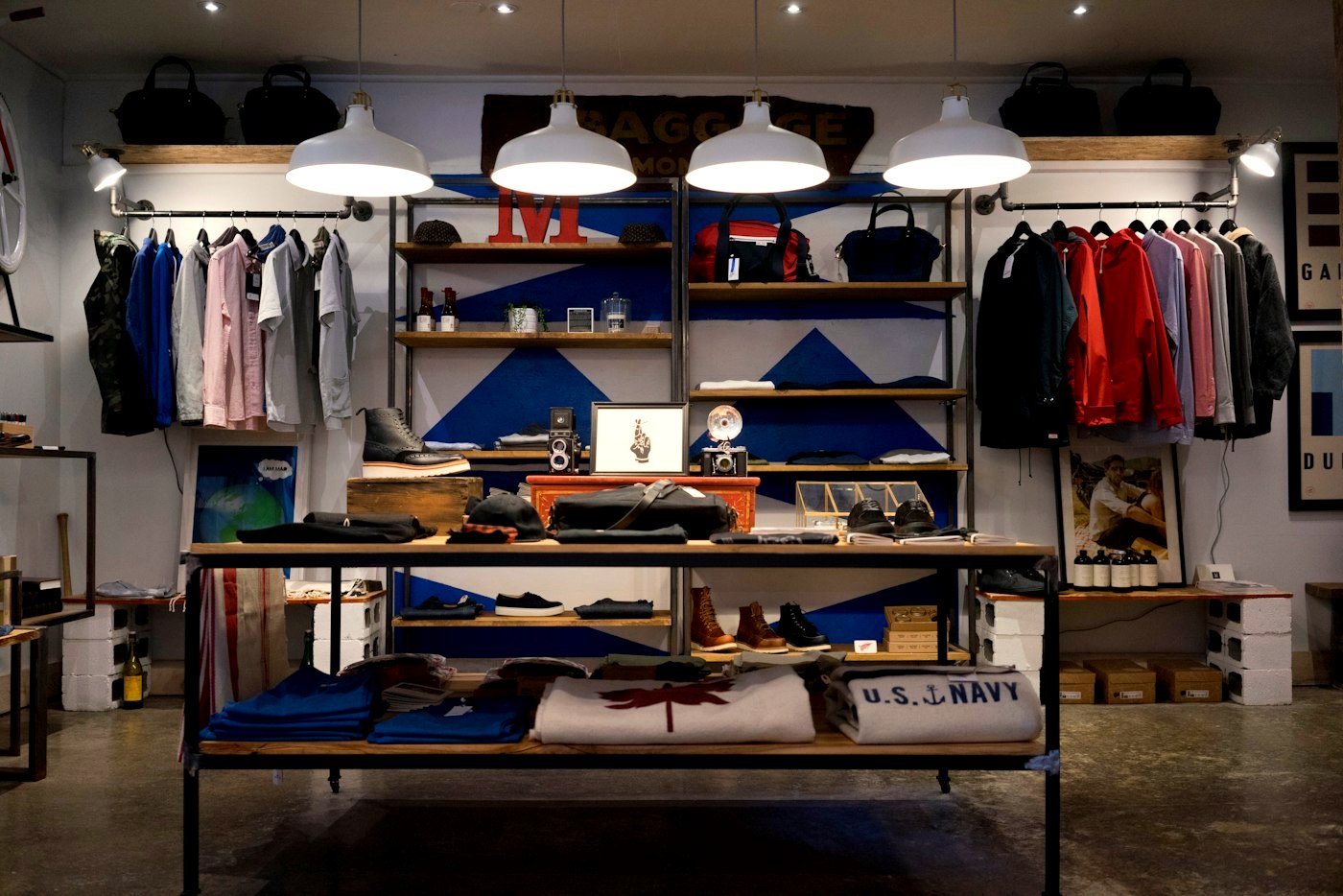
Italy is where quiet luxury was invented. Twenty houses, scored, priced, and ranked for the man who would rather be well dressed than be noticed dressing.
Checked and updated October 2026
The short version: buy Luca Faloni first (91/100): real quiet luxury at prices that do not require a trust fund. Buy Boglioli for the one soft jacket that carries a wardrobe. Brunello Cucinelli is the ceiling of the craft and priced like it. And skip the logo tax at the bottom of this list: Moncler (55) and Stone Island (58) charge you to advertise them. Every house below carries a data-team score, a printed price band, and a key piece, because a brand ranking without prices is a catalogue, not a ranking. Scores follow our published methodology.
Italy is the other root of this magazine's look, beside Japan. The Italian gift is sprezzatura: clothes built with total seriousness and worn with total ease. Soft shoulders, unlined jackets, knitwear treated as tailoring, trousers cut like they were made for sitting in a piazza for three hours. That is the quiet wardrobe's homeland, and it is why this ranking is scored the way it is. Houses are judged on cloth and construction, fit range and sizing honesty, value, and whether the design survives trend cycles. A loud pattern or a badge on the sleeve is not a crime. It is a longevity problem, and it costs points here, in the open.
The Top Five
1. Luca Faloni: quiet luxury without the theatre
91/100
Price band: $200–650 at last check. Key piece: the cashmere crewneck.
Founded in 2014 and sold direct, Luca Faloni is the house this ranking exists to find: Cariaggi cashmere, brushed-cotton shirts from heritage mills, linen cut for actual heat, and nothing on any garment that announces itself. The direct model strips out the wholesale markup, which is why a crewneck that would sit at $700 in a department store lands near $350 here. Sizing and cloth weights are published plainly, a honesty habit our data team wishes were contagious. Verdict: start here. This is the first Italian house a young wardrobe should own.
2. Boglioli: the soft jacket, perfected
90/100
Price band: $300–1,900 at last check; the K-Jacket sits near $1,050–1,400. Key piece: the garment-dyed K-Jacket.
Boglioli, founded in 1974 in Gambara, changed menswear with one idea: take the Neapolitan unstructured jacket, garment-dye it, and let it wrinkle with honour. The K-Jacket has almost no structure, weighs close to nothing, and works over a shirt, a knit, or a tee. Half a century later it is still the benchmark soft jacket on earth, and the brand's own store pricing is refreshingly visible. It loses a point or two on fit range, which runs slim and Italian. Verdict: one jacket, bought once, worn for a decade.
3. Brunello Cucinelli: the ceiling
88/100
Price band: $900–4,000 and beyond. Key piece: the cashmere crewneck, if the budget survives it.
Built from 1978 in the restored hill town of Solomeo, Cucinelli is what quiet luxury looks like with no budget ceiling: the finest cashmere, feather-soft construction, colours mixed like paint. The clothes are, simply, beautiful, and the value score is where the ranking pushes back. When a crewneck approaches four figures, each dollar buys less garment and more aura. Buy it when the money is genuinely spare, and it will be the best thing you own. Verdict: the aspiration is earned. The price is the only argument, and it is a real one.
See it at Brunello Cucinelli →
4. Zegna: the mill that dresses itself
87/100
Price band: $450–2,800 at last check. Key piece: the overshirt, in Zegna cloth.
Zegna began in 1910 as a fabric mill in Trivero, and it still weaves cloth other luxury houses buy. That vertical control shows: the fabrics are the product, and the current collections lean into exactly our reader's uniform of overshirts, knit polos, and soft tailoring in washed neutrals. The Triple Stitch shoe built a casual empire on comfort. Points come off for pricing that climbs fast once you leave the entry pieces. Verdict: buy the cloth, in whatever garment fits your life.
5. Massimo Alba: romance, garment-dyed
87/100
Price band: $250–1,800 at last check; jackets cluster near $1,000–1,600. Key piece: the baby corduroy suit.
Massimo Alba spent years inside other houses before starting his own in Milan, and the clothes feel like a man's private language: washed corduroy, garment-dyed velvet, colours that look sun-faded by a good life. His baby corduroy suit and the Sloop raincoat carried a certain film spy's off-duty wardrobe, which tells you the register: elegant, never stiff. The designer famously uses the smallest tags he can, in thread the colour of the garment. That is the house philosophy in one detail. Verdict: the romantic's quiet luxury. Buy the corduroy.
Cloth First: Knitwear and Fabric Houses
6. Fedeli: cashmere as a family trade
86/100
Price band: knitwear typically $550–1,500 at last check; statement pieces run far higher. Key piece: the fine-gauge cashmere crewneck.
Fedeli has made knitwear in Monza since 1934 and remains family-run, with Zegna and Prada holding minority stakes they took because the knitting is that good. The speciality is gauge: sweaters knitted so fine they wear like a second shirt, in colours that stay inside the quiet palette. Distribution outside Italy is thinner than the quality deserves, which is the only reason this house is not top three. Verdict: if you find your size, do not hesitate.
7. Barena Venezia: workwear from the lagoon
86/100
Price band: $300–950 at last check. Key piece: the soft knit blazer.
Barena, founded in 1993, builds its collections from the Venetian lagoon's working clothes and from archive fabrics rescued out of closed local mills. The result is soft tailoring with texture you can read across a room: knit blazers, washed-cotton overshirts, trousers with drape. It was doing sprezzatura before the word became a hashtag, and at prices that sit below the tailoring houses. Verdict: the insider's pick of this entire list.
8. Loro Piana: the fibre aristocracy
85/100
Price band: $600–6,500 at last check. Key piece: the knit polo, or the Summer Walk loafer.
A century of fibre obsession, from 1924 in Quarona to the house that made vicuña and baby cashmere into a wardrobe. The quality is beyond argument: nobody's knit polo feels like this. The score is held back by the same maths as Cucinelli, sharpened. When a cashmere jacket lists at $6,500, value and accessibility stop being footnotes. Buy one piece when you can, and understand exactly what you paid for: the finest raw materials on the market, full stop. Verdict: the connoisseur's house. Enter slowly.
9. Incotex: the trouser, solved
85/100
Price band: trousers $275–475 at last check. Key piece: the slim-fit chino.
Part of the Slowear group, Incotex has specialised in trousers since 1951, and specialisation shows in the details other brands skip: interior finishing, considered rises, cloth chosen per season instead of per cost sheet. For a reader building a wardrobe from the ground up, the trouser is the highest-leverage garment there is, and this is the name to know. Buy them through Slowear's store and size carefully; cuts run trim. Verdict: the quietest upgrade on this page, and maybe the most useful.

The Tailors and the Specialists
10. De Petrillo: Naples, at a fair price
84/100
Price band: jackets $700–1,300, suits $1,100–1,900 through retailers, at last check. Key piece: the soft-shouldered single-breasted jacket.
Benedetto De Petrillo founded his label in Naples in 2009 to put true Neapolitan tailoring, soft shoulder, light canvas, hand-finished details, at prices below the famous ateliers. He succeeded: this is the connoisseur's shortcut to the Naples look, loved hard in Japan for good reason. One honest gap: the house sells through retailers rather than its own online store, so we list no merchant link here rather than guess at one. Verdict: the smartest way into Neapolitan tailoring. Find a stockist and try it on.
11. Canali: the reliable suit
83/100
Price band: $250–2,800 at last check; suits cluster near $1,300–2,500. Key piece: the Kei soft jacket.
Family-run since 1934 and still made in Italy, Canali is the tailoring house a first serious suit often comes from: clean construction, honest cloth, and the Kei line's unlined jackets for men who want tailoring without armour. It scores below the romantics above it because the design hand is steadier than it is inspired. For the office pillar of a wardrobe, steadiness is a feature. Verdict: buy the Kei, wear it for years, never think about it again.
12. Velasca: Milanese value, direct
83/100
Price band: shoes $260–500 at last check. Key piece: the leather sneaker or the loafer, made in Montegranaro.
Velasca began in 2013 selling Italian-made shoes direct, cutting the retail markup the way Luca Faloni cut it for knitwear. The shoes come out of Montegranaro, the Marche shoemaking town that also anchors Santoni below, at roughly half the price of comparable bench-made footwear. The clothing line that followed is decent; the shoes are the point. Verdict: the attainable pick of this ranking, alongside Faloni. Start a shoe rotation here.
13. Aspesi: understatement as a house style
82/100
Price band: $200–900 at last check. Key piece: the nylon shirt jacket.
Alberto Aspesi founded his label in 1969 and built a cult on refusing to decorate anything: plain nylon jackets, perfect basic shirts, knitwear in colours that go with everything you already own. The famous shirt jacket is barely a jacket at all, which is precisely its use. Aspesi is what minimalism looks like when it is done by taste instead of by template. Verdict: buy the jacket you will reach for three hundred days a year.
14. Lardini: soft tailoring at scale
82/100
Price band: $450–1,400 at last check. Key piece: the unstructured blazer.
The Lardini family spent decades in Filottrano making soft tailoring for other famous names before their own label, founded in 1978, took the credit. The little fabric flower on the lapel is the signature; it unscrews, and the quiet reader may leave it in the box. Underneath the branding sits genuinely well-made unstructured tailoring at mid-luxury prices, easier to find on sale than Boglioli. Verdict: the pragmatic soft jacket. Buy on promotion without guilt.
15. Santoni: the Marche shoemaker
81/100
Price band: shoes $550–1,250 at last check. Key piece: the double-buckle shoe.
Founded in 1975 in Corridonia, Santoni hand-makes shoes the slow way, with hand-coloured leathers that shade from dark edges to a glowing centre. The double buckle is the icon; the loafers are the quieter buy. Prices have climbed into luxury territory, which trims the value score, but the craft per pair stays near the top of this list. Verdict: one pair, resoled for a decade, beats four pairs of anything cheaper.
16. Rubinacci: the temple, by appointment
78/100
Price band: ready-to-wear $800–3,500 at last check; bespoke is another country. Key piece: the Manny trousers.
Gennaro Rubinacci opened London House in Naples in 1932 and effectively invented the unstructured Neapolitan jacket the rest of this list descends from. The spalla camicia shoulder, the barchetta pocket, the featherweight canvas: it starts here, and the house, now run by Mariano and Luca Rubinacci, still sets the standard. The score reflects access, not craft. This is an atelier first and a shop second, priced and paced accordingly. Verdict: pilgrimage tailoring. Go when you are ready, and go in person if you can.
Scored Down, With Reasons
Four famous names finish this list, and the ranking owes you the reasons in plain language. None of them makes bad clothes. All four ask the quiet wardrobe to pay for something it does not value: visibility.
17. Bottega Veneta: great craft, fashion-cycle pricing
74/100
Price band: $700–4,500 at last check. Key piece: the intrecciato leather goods, not the ready-to-wear.
The intrecciato weave, developed in Vicenza from 1966, is quiet luxury in leather: no logo, all craft, and we score the leather goods gladly. The menswear around it has swung with creative directors and trend cycles, at prices that assume you will not comparison-shop. Under our methodology that is a longevity and value problem, not a taste verdict. Verdict: buy the woven leather, skip the seasonal clothing markup.
18. Missoni: the pattern is the logo
62/100
Price band: $300–1,400 at last check. Key piece: one knit, worn occasionally, if the zigzag is genuinely yours.
Missoni's knitwear craft, family-run since 1953, is real. The flame-stitch zigzag is also the loudest pattern in Italian fashion: it enters the room before you do, it dates to a specific mood, and it fights everything else in a quiet wardrobe. On a list scored for cloth that survives trend cycles, a signature this strong is a liability you wear on purpose or not at all. Verdict: a statement knit for men who collect statements. Everyone else, pass.
19. Stone Island: you pay for the badge
58/100
Price band: $400–1,500 at last check. Key piece: none for this wardrobe.
Credit where due: since 1982, Stone Island's fabric research, garment dyeing above all, has been genuinely inventive, and its archivists are serious people. But the compass badge on the sleeve is a logo you rent by the season, the fits run loud, and the resale-hype cycle around the brand means prices price in other people's speculation. Our methodology scores what a dollar buys in cloth and years of wear. Too few of these dollars buy either. Verdict: admire the dye labs, spend the money up this list.
20. Moncler: the logo tax, itemised
55/100
Price band: jackets $1,150–2,800 at last check. Key piece: none for this wardrobe.
The Maya down jacket is well made. It is also a billboard: glossy shell, tricolour trim, and a felt badge placed for photographs, at a price that has roughly doubled across a decade of logo heat. Down jackets are a solved problem at a third of this money, including from Aspesi and Barena on this very list, without the branding. This is the ranking's named lesson: when the logo is the loudest part of the garment, you are the media buy. Verdict: skip it. Warmth is available without the advertisement.
The cost-per-wear math
Quiet luxury argues in cost per wear, so here is the arithmetic on two entries, assumptions printed. A Luca Faloni cashmere crewneck near $350, worn sixty times a year for five years, costs about $1.20 per wear. A Moncler Maya near $1,800, worn twenty-five times a year for five years, costs about $14.40 per wear, and the design will read dated before the down wears out. Price is a fact. Cost per wear is the verdict, and it is why the top of this list is full of houses most people have never heard of: they spend on cloth, not on being recognised.
The Bottom Line
Italy rewards the quiet buyer. Faloni and Velasca prove the markup was optional, Boglioli and Barena prove the soft jacket was perfected decades ago, and Cucinelli and Loro Piana mark the ceiling for when money stops mattering. The famous names at the bottom are not bad brands. They are bad arithmetic for a wardrobe built on cloth instead of logos.
How to buy Italian brands well
Three data-team rules. First, translate the size. Italian tailoring sizes run 46, 48, 50: roughly US 36, 38, 40, and cuts run trimmer than American ones. The brand's own chart, checked at the date in our byline, is the authority. Second, respect the sale calendar. Italian retail discounts hardest in January and July, and houses like Boglioli and Lardini surface there at 30 to 40 percent off. Quiet luxury bought on sale is just luxury with patience. Third, start with the shirt. Italian shirting is the foundation garment of this whole tradition, and our scored Oxford shirt ranking shows the same methodology at work on the piece you will wear most. Then read the other root of the magazine's look: the Korean brands roundup, Country Roundup No. 01. The cloth root of the same map is scored the same way in our Japanese clothing brands ranking.
Scores, price bands, and stockists on this page are re-checked on the rolling cadence in our methodology. When a house changes cloth, cut, or price materially, its score moves, and the move is noted here.