
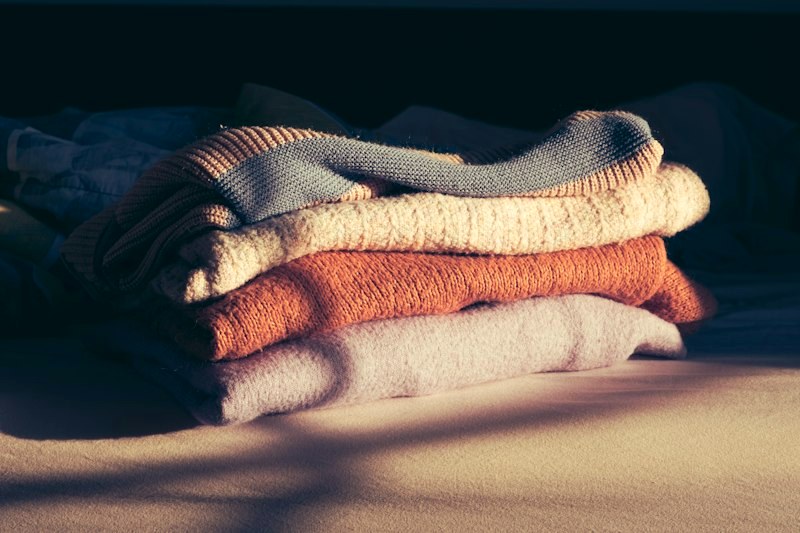
Underwear is the first garment on and the last one graded. This ranking grades the cloth first, because the cloth sits against skin for sixteen hours, then the build, then the price per pair at the pack price, because nobody buys one pair at a time. A note on photography, printed because this page believes in saying so: our photo bank holds no underwear photography, honest or otherwise, so no ranked pair is pictured anywhere on this page. The hero is a folded-knit still life from the bank, captioned as what it is, and the frames this page actually needs head the harvest list in the honesty section.
Checked and updated October 2026
The basis: a pair is graded on its cloth before its cut, because cloth decides the sixteen hours, and on its price per pair at the multipack price people actually pay, because the single-pair price is a fiction this category tells. Certification claims are graded the way this desk grades everything: against the certifier's own published licence, never against the label copy. The winner: the Organic Basics Core Boxer Brief at 87, 95 percent organic cotton, GOTS-certified at product level by Control Union, $15.87 a pair in its six-pack. It is the one pair to buy if you buy one. The skip: the Calvin Klein Ultra Soft Modal Boxer Brief at 52, named in the verdict box below: a competent modal pair whose $32 list price buys a waistband inscription, sold by a house whose own store offers the same class of pair at $15 each when you buy three. In between, a Swedish lyocell pair takes the cloth crown, a $14.90 synthetic earns the only honest place a synthetic holds on this page, a British long-staple pair is graded in its maker's own sterling, a patented pouch is scored as construction and its marketing as marketing, and the $4 multipack staple is priced by the year it actually lasts.
First, the decision
Every underwear argument is really three arguments, and this page settles all three before it scores anything. The first is the only question most readers actually have: if you buy one pair, buy the Organic Basics Core Boxer Brief. It is ranked first below on the published evidence, and it is named here, in the first screen, because a page that buries its answer under seven cards has not answered it. Its cloth is the pillar's whole argument made wearable: organic cotton whose certification this desk verified past the label, a six-inch leg, a published size run from XS to XXXL, and a per-pair price of $15.87 that sits within a dollar of the mass-market drawer it replaces.
The second argument is the cut, and it fits in four lines. Boxer brief: the default. A five to seven inch leg that does not ride, support without compression, correct under everything from denim to tailoring; buy this cut first and argue later. Trunk: the boxer brief shortened, a lower rise and a two to three inch leg, right under slim trousers and on shorter legs, wrong the first time your thighs meet on a long walk. Brief: the honest minimum. Nothing on the leg to bunch or ride, the coolest cut in summer, and the cut that lives or dies by its waistband, because the waistband is all there is. Woven boxer: a sleep and house garment with a fly and a history, pleasant in its place, and its place is not under a tailored trouser, where it bunches, or in a ranking of solutions, because it supports nothing.
The third argument is the fabric ladder, graded as cloth. Organic cotton, certified: the top rung for the daily pair, on one condition that is the whole of this site's Cotton Standard: the certification must name its certifier and carry a licence a reader can check, or it is a word, and words score nothing here. Conventional cotton: the same fibre without the audit, honest and unglamorous, graded on staple and knit like everything else. Modal and lyocell: the softest first touch in the category, CDLP's lyocell taking the highest cloth row on this page; the class deduction is price and a surface that tires sooner, not feel. Synthetic performance cloth: one honest job, the gym bag, where quick drying is a real property and the wear is ninety minutes; worn sixteen hours as the default it is the bottom rung, with exactly one exception ranked third below, graded up for doing the synthetic job properly and cheaply. And one boundary, printed because this desk prints its boundaries: this page grades cloth, construction and comfort. Sellers in this category make claims about health and the body that no garment can carry, and those claims are graded on these cards as what they are, marketing, wherever they appear.
The Cotton Standard commitment, kept in the open. On this site's pajama ranking, the desk wrote that no GOTS-certified set was ranked there because none could be verified to the standard the desk applies to cloth claims and prices alike, and committed to scoring one when both could be verified. This page is that commitment coming due. The winner's product page states the product itself is GOTS-certified and carries the mark. The maker publishes its certifier and licence in the open: Control Union, licence CU 1067589, GOTS certification GOTS-20447, with the instruction to verify in the GOTS public database, the certifier-side listing this desk's cloth row requires. An independent audit of who actually holds certificates, Apart Style's certification table, lists the same house with the same licence number, noting the certificate is issued per product by an outside body. Price verified the same day on the maker's own US store. Both halves of the standard met, so the pair is scored, and scored first. The full chain, including the one step a reader can run further than this desk could, is printed in the honesty section below.
How the scores work
Every pair is scored out of 100 on the same five rows, and the rows are printed on every card, so the reader can disagree with the weighting and still use the evidence.
Cloth, 30 points. The fibre line as the maker publishes it: which fibre, in what knit, at what weight where a weight is published, and, for any organic claim, whether the certification verifies against the certifier's own listing rather than the label copy. An unverifiable organic claim earns the cloth its conventional score and not a point more. Trademarked finish names, and every maker here has one, are graded as finishes: they may help a pair, they never substitute for a fibre.
Construction, 20 points. The build as published: waistband construction, seam type, and pouch construction where a maker builds one. A pouch is graded here as engineering, because that is what it is; the claims made for pouches are graded separately, as marketing, in the card's prose.
Fit & rise, 20 points. The cut system: rise options or the one rise honestly named, inseam where published, size range, and whether the maker's sizing is stated in inches a reader can measure against. A house that publishes its waist measurements earns points a house that publishes adjectives does not.
Value, 15 points. The per-pair price at the multipack price people actually pay, printed as such on every card. A pair sold only singly is costed singly, and a list price the maker's own store permanently discounts is graded as the theatre it is.
Longevity & wash, 15 points. How the pair ages in the machine and in the drawer: the care line's ceremony or lack of it, the fibre's known arc, and the elastic, which is where every pair in this category actually dies. Stated lives in the per-year table are this desk's, printed beside the figures so the reader can argue with the life rather than the arithmetic.
The rows sum to the score. Maker's figures are labelled the maker's figures throughout.
Seven pairs, ranked
Organic Basics Core Boxer Briefs 6-Pack
The Winner · The One Pair to Buy
$95.20 for the 6-pack, $15.87 a pair, at Organic Basics
The call: the winner is the certified pair, and the certification is the least interesting thing about why it wins. The cloth is 95 percent organic cotton with 5 percent elastane in a proper jersey, cut as a boxer brief with a published six-inch inseam and a supportive pouch, in a size run from XS to XXXL that is the widest honest range in this field. At $15.87 a pair it costs ninety-seven cents more than the synthetic in third place. The Cotton Standard was a programme before it was a product; this is the product, and if you buy one pair, buy this one.
The verification, in brief, because the cloth row of 27 is built on it: the product page itself carries the GOTS claim and the mark for this garment, not for the brand in general. The house publishes its certifier, Control Union, and its licence, CU 1067589, in its own FAQ, and states plainly that only products carrying the label are certified. The deductions are printed with the praise. The maker publishes no fabric weight for this knit, so none is graded. Its two trademarked finishes, a lasting finish and a cool finish, are graded as finishes, which is to say as claims, and the score stands without them. The care line asks for a maximum 30 degree wash, a small ceremony the Hanes below does not demand. And a stock note, because this desk prints those too: at check time the midnight blue six-pack showed its middle sizes sold out, with XS and the extended sizes available. Three years at $5.29 a year, $0.11 a wear, and the arithmetic is in the table further down.
CDLP Boxer Brief 3-Pack
The Cloth Crown · The Finest First Touch
$135 for the 3-pack, $45 a pair, at CDLP
The call: the finest cloth in the field, and the cloth row of 28 is the highest awarded on this page. The Stockholm house builds its boxer brief in 95 percent Tencel lyocell with 5 percent elastane, a fibre drawn from certified renewable wood sources by the maker's published account, knitted into a cloth with a silk-like hand that no cotton here matches on first touch. Made in Portugal in small batches, with an enhanced pouch, a signature waistband and no tag anywhere. If the drawer were graded on sensation alone, this card would be first and it would not be close.
The ranking is not graded on sensation alone, and the rest of this card is why second is its honest place. The price is $45 a pair in the three-pack, nearly three times the winner, and the value row of 7 is what three-for-one arithmetic earns even a superb build. The fit system is one rise, mid, and one leg, regular, offered in sizes from XS to XXXL with several sold out at check time. Lyocell's arc is kinder than modal's: the surface holds and the shape keeps, which the longevity row credits at 13, but the maker's language deserves its sentence. Superior breathability and natural moisture wicking are the house's phrases for properties lyocell genuinely has as a fibre; printed here as the maker's phrases, graded as fibre facts rather than as miracles, which is the most any honest fibre can ask. Four years at $11.25 a year, $0.23 a wear.
Uniqlo AIRism Boxer Briefs
The Attainable Answer · The Honest Synthetic
$14.90 a pair at Uniqlo
The call: the exception that defines the ladder's bottom rung. AIRism is a synthetic knit, now made with recycled materials by the maker's own account, and synthetics are graded down on this page for the daily wear they are mostly sold for. This one earns third because it does two jobs honestly: it is the gym pair, quick-drying and smooth under anything, and it is the attainable pair, $14.90 singly with no pack arithmetic required, in the best-published fit system in the field. The three-dimensional front, the regular rise and the real front fly are construction facts from the maker's page. The 4.5 out of 5 from its hundred-plus buyers is printed as a report, because it is one.
The fit row of 18 is the highest on this page, and it is a paperwork victory: Uniqlo publishes its waist measurements in inches on the product page, a medium at 30 to 33 inches, a large at 33 to 36 and a quarter, sizes running to 3XL. Every other house here asks you to trust an adjective. The deductions are the synthetic's own. The cloth row of 20 grades a fibre that does not breathe the way cotton breathes and does not age the way cotton ages: the stay-fresh finish is a finish, strongest in month one, and the longevity row of 10 prices the waistband arc and the surface sheen that come with the class. Two years at $7.45 a year, $0.15 a wear. As a second drawer under the winner, for training days and July, it is the correct $14.90. Uniqlo's standing brand score on this site is 84, recorded here for the record; this garment was scored fresh, as garments are, and neither number borrowed from the other.
Sunspel Stretch Cotton Boxer Brief
The Long-Staple Traditionalist · Priced in Its Own Sterling
£39 a pair at Sunspel
The call: the heritage answer, from the English house that introduced the boxer short to Britain in 1947 and has been refining the drawer ever since. The ranked pair is its stretch cotton boxer brief: 92 percent cotton and 8 percent elastane in a lightweight refined knit, flatlocked seams, made in Portugal, a longer leg than the house's trunk. The cloth row of 25 grades the house's long-staple tradition, the two-ply durability instinct its cotton is known for, carried into a modern knit. This is the pair for the reader who wants the classic drawer built by the house that invented half of it.
Two deductions put the traditionalist fourth, and both are printed. The fit system is one rise, low, with no front opening: a sleek line under tailoring, and a limitation stated as one, worth the fit row of 14 beside Uniqlo's 18. And the price is printed the way this desk found it, in the maker's own sterling: £39 a pair on Sunspel's own store, with a multi-buy the house applies on same size and colour. This page does not convert currencies it did not transact in, so the per-year table below carries this row in sterling and says so. Four years at £9.75 a year, £0.20 a wear, and the garment's quality is not the thing being graded down. The exchange rate is not this desk's department; the single-rise fit system is.
SAXX Ultra Boxer Brief with Fly 2-Pack
The Pouch, Graded · Construction Yes, Copy No
$60.95 for the 2-pack, $30.48 a pair, at Grivet Outdoors
The call: the pouch pair, and the pouch is real. SAXX builds its boxer brief around the BallPark Pouch, a patented internal mesh hammock that holds everything away from the leg, and as construction it is the most considered idea in this field: the construction row of 18 is the joint highest awarded here, earned by flat seams, a functional fly and a genuinely different pattern, not by the trademark. The cloth is 95 percent viscose with 5 percent elastane, soft and unremarkable, which is the honest summary of this card: an engineering answer wrapped around an ordinary fibre, at $30.48 a pair in the two-pack.
Now the copy, graded as copy, because this house writes the loudest in the category. The pouch is sold with promises about what it prevents and what it guarantees, and the guarantee is a satisfaction guarantee, a returns policy wearing a lab coat. None of it earns a point. What earns the points is measurable: a mesh structure where other pairs have a seam, and a fit that wearers either convert to or return, a polarisation the fit row of 16 prices in. The longevity row of 9 is the viscose arc plus the one open question in the design, the mesh's own life across two years of weekly washing. Buy it if the standard pouch is your specific problem. It is a good answer to a narrower question than its advertising asks. Two years at $15.24 a year, $0.30 a wear.
Hanes Boxer Briefs 5-Pack
The Drawer Staple · Four Dollars, One Year
$20 for the 5-pack, $4.00 a pair, at Target
The call: the staple, graded as a staple. Four dollars a pair buys a cotton-blend boxer brief with the house's Comfort Flex waistband, a tagless interior and a no-ride-up leg, in a size run that reaches 3XL in the wider line. The value row of 15 is the maximum this page awards, because $4.00 for a wearable pair is a fact no scoring system should argue with. For the first drawer, the spare drawer, the gym bag's permanent resident, this is the correct purchase, and this page says so without a smirk.
The rest of the card is the year's other side. The cloth row of 13 grades a blend whose ratio the maker's own copy varies by colourway, which is a sentence that should embarrass a fibre line. The construction is basic and the longevity row of 7 is the known arc: the waistband and leg elastic give first, buyer reports of shrinkage run through the maker's own retail reviews, printed here as reports, and the honest life is one year. Costed at that life, the cheapest pair in the field is not the cheapest year in the field by much: $4.00 a year against the winner's $5.29, for a garment with a third of the winner's cloth evidence behind it. The staple is a fine floor. This ranking exists to show what the floor costs and what $1.29 more a year buys.
Calvin Klein Ultra Soft Modal Boxer Brief
The Skip · The Logo Tax, Itemised
$32 list for a single pair at Calvin Klein
The call: skip it at list, and the conviction is arithmetic, not taste. The garment itself is a competent modal boxer brief: the cloth row of 17 credits a soft fibre honestly, and nothing on this card claims the pair is badly made. What is being graded is the price structure. The house lists a single pair at $32. The same house, on the same store, runs a standing offer of three or more pairs at $15 each, which means the $32 figure is not a price but a posture, maintained for the reader who does not scroll. This site has an anti-award for exactly this, the Logo Tax, and the waistband lettering on this pair is what the tax pays for.
Run the year and the case closes. At its list price over a generous two-year life, this is $16.00 a year, the dearest year in this ranking, three times the winner's $5.29, for a pair with no certification, no published fit system beyond the ordinary, and a construction budget visibly spent on the inscription. At the house's own $15 standing price it would be a fair modal pair and a dull card. The desk grades the price a reader is first shown, because that is the price the house wants believed. Buy the winner for a dollar more a pair than the promotional version of this, and get the audit trail with it. Two years at $16.00 a year, $0.32 a wear, at list.
The numbers, side by side
Maker's figures, checked against the makers' own pages this month, with the claims labelled as claims: where a maker publishes a fibre line, an inseam or a size chart, it is printed as theirs.
| Pair | The cloth | The build | Fit system | The fine print |
|---|---|---|---|---|
| Organic Basics Core Boxer Brief | 95% organic cotton, 5% elastane, GOTS-certified at product level | Support pouch, published supply chain, tier by tier | 6 inch inseam; XS to XXXL | Certifier Control Union, licence CU 1067589; max 30 degree wash; no GSM published |
| CDLP Boxer Brief | 95% Tencel lyocell, 5% elastane | Enhanced pouch, signature waistband, no tag, made in Portugal | Mid waist, regular leg; XS to XXXL | $45 a pair in the 3-pack; several sizes sold out at check |
| Uniqlo AIRism Boxer Briefs | Synthetic AIRism knit, made with recycled materials per the maker | Three-dimensional front, front fly | Regular rise; waist chart in inches, M is 30 to 33 in; S to 3XL | Stay-fresh finish is a finish; 4.5 of 5 from 101 buyers, as reported |
| Sunspel Stretch Cotton Boxer Brief | 92% cotton, 8% elastane, long-staple house tradition | Flatlocked seams, made in Portugal | Low rise only; longer leg; no front opening | Priced in sterling on the maker's own store; multi-buy on same size and colour |
| SAXX Ultra Boxer Brief with Fly | 95% viscose, 5% elastane | BallPark Pouch internal mesh, flat seams, functional fly | 6 inch class leg; fly version ranked | Pouch claims graded as marketing; satisfaction guarantee is a returns policy |
| Hanes Boxer Briefs | Cotton blend, ratio varies by colourway per the maker's copy | Comfort Flex waistband, tagless | No-ride-up leg; line reaches 3XL | Buyer reports of shrinkage, printed as reports; honest life one year |
| Calvin Klein Ultra Soft Modal (the skip) | Modal stretch, per the product's own name and line | Standard build, logo jacquard waistband | Ordinary size run | $32 list for one pair; the maker's own store offers 3 or more at $15 each |
Read the cloth column and the ranking explains itself. The top of the table is a certified natural fibre and a certified-source lyocell, in that order, because the audit is worth more than the hand feel at a third of the price. The middle is the synthetic that behaves and the traditionalist that publishes one rise. The bottom is a blend that will not state its ratio and a modal pair whose price is two prices, and the desk graded the prouder one.
Cost per pair, and per year, in the open
The table divides each per-pair price by a stated working life for its cloth and build, printed beside the figure so the reader can argue with the life rather than the arithmetic. Per-pair prices are the multipack prices people actually pay, as the basis requires. Wear counts assume a pair in a seven-pair rotation, fifty wears a year. Cotton and lyocell knits are costed at three to four years, the synthetic at two, the staple blend at one, and the Sunspel row is carried in the sterling it was verified in, because this desk does not convert currencies it did not transact in.
| Pair | Price per pair | Stated life | Cost per year | Cost per wear |
|---|---|---|---|---|
| Organic Basics Core Boxer Brief | $15.87 | 3 years | $5.29 | $0.11 |
| CDLP Boxer Brief | $45.00 | 4 years | $11.25 | $0.23 |
| Uniqlo AIRism Boxer Briefs | $14.90 | 2 years | $7.45 | $0.15 |
| Sunspel Stretch Cotton Boxer Brief | £39.00 | 4 years | £9.75 | £0.20 |
| SAXX Ultra Boxer Brief with Fly | $30.48 | 2 years | $15.24 | $0.30 |
| Hanes Boxer Briefs | $4.00 | 1 year | $4.00 | $0.08 |
| Calvin Klein Ultra Soft Modal (the skip) | $32.00 at list | 2 years | $16.00 | $0.32 |
Two headlines live in that table. The cheapest ticket in the field, the $4 Hanes pair, is not the cheapest year by much, because its life is the shortest honest life here; $1.29 a year more buys the certified winner and three years of it. And the dearest year in the field is not the $45 lyocell, which at least brings the finest cloth to its four years. It is the $32 logo pair at list, a price its own maker discounts by half the moment you buy three.
Which one to buy
Buy one pair only: the Organic Basics Core Boxer Brief at 87. Certified organic cloth with the licence printed on this page, a six-inch leg, $15.87 a pair, $5.29 a year. This is the drawer, rebuilt properly, at mass-market money.
Cloth above all: the CDLP Boxer Brief at 82. The lyocell hand is the finest first touch in the category, bought with the $45 a pair printed on its card rather than discovered at checkout.
Training days and hot months: the Uniqlo AIRism at 78. The one synthetic with an honest daily case, the best-published size chart in the field, and the second drawer every rotation needs two of.
The classic drawer: the Sunspel at 76, in its maker's sterling, for the reader who wants the house that introduced the boxer short to Britain to make his briefs, and who wears a low rise well.
The pouch is your specific problem: the SAXX Ultra at 70. Buy the construction, ignore the copy, and know the mesh is the part being tested across its two years.
The floor, honestly: the Hanes five-pack at 61. Four dollars a pair and one good year in them. The correct first drawer and the correct spare, replaced on the elastic's schedule, not the cloth's.
The rest of the base layer: the same desk grades what goes over this drawer, from the pajama ranking where the Cotton Standard commitment was first printed, to the cooling ranking whose fibre table this page does not contradict. Where every layer sits is mapped on the Body Map, and the full method behind these scores is on the methodology page.
How we know: the honesty section
The scores are this desk's own, computed on the basis printed above from maker-published fibre lines, construction details, size systems and care instructions, checked against the makers' own pages this month. Prices were verified on the seller's page at check time, and the exceptions are printed rather than smoothed over.
Five disclosures specific to this page. First, the certification, because it carries the winner. The GOTS claim was verified in three steps: the ranked product's own page states the product is GOTS-certified and carries the mark; the maker publishes its certifier and licence in its own FAQ, Control Union, licence CU 1067589, GOTS certification GOTS-20447, and directs readers to the GOTS public database; and an independent audit of certificate holders, Apart Style's certification table, lists the same house under the same licence, noting its certificates are issued per product. One step remains the reader's to run: the database itself is a search application this desk's checker could not submit a query to in this session, so the licence numbers are printed on this page in full, and the check takes a minute with them. If a future check finds the licence lapsed, this page's cloth row falls with it, and the desk will print that too. Second, prices. The Organic Basics six-pack at $95.20, list $112, the CDLP three-pack at $135, the Uniqlo single at $14.90 and the Sunspel single at £39 were read off the makers' own stores. The SAXX is priced at a stocking retailer's exact product page, $60.95 for the two-pack, and the Hanes at Target's, $20 for the five-pack, because those are the listings this desk could verify to the dollar; both are named on their cards. Third, the Calvin Klein card is costed at the $32 list from the maker's own store listings, with the store's standing three-for-$15-each offer printed on the card and in the verdict box, because the gap between those two numbers is the finding. Fourth, no fabric weight is graded anywhere on this page, because no maker in the field publishes one for these garments; where a GSM would settle an argument, the argument is left open and the absence is the data. Fifth, photography: the bank holds no underwear photography, no folded-stack still life of this category and no waistband frame, and this page does not pretend otherwise. The cards run without images rather than borrow a wrong frame, the hero is a folded-knit still life captioned as what it is, and the harvest list for this pillar names what is missing: a folded stack of boxer briefs in window light, a waistband-and-elastic macro, and a drawer flatlay in the Cotton Standard palette.
Nothing on this page is a health claim. The scores grade cloth, construction, fit and wash behaviour, and the comfort language is garment language. Makers in this category sell pairs with promises about the body that no garment can keep; where those promises appear, they are graded as marketing on the card that carries them, and they earn no points anywhere on this page.
Questions the desk hears
What is the best underwear for men?
The Organic Basics Core Boxer Brief, 87 out of 100: 95 percent organic cotton and 5 percent elastane in a six-inch boxer brief, GOTS-certified at product level by Control Union, licence CU 1067589, at $95.20 for a six-pack, which is $15.87 a pair. Second is the CDLP Boxer Brief at 82, the finest cloth in the field, a Tencel lyocell knit at $45 a pair in its three-pack. Third is the attainable answer, the Uniqlo AIRism Boxer Brief at 78 and $14.90, the one synthetic this page grades as a fair daily pair as well as the gym pair.
Is GOTS-certified organic cotton worth it in underwear?
At the winner's price, yes, and the arithmetic is the argument: $15.87 a pair is ninety-seven cents more than the synthetic in third and under a dollar a pair above the mass-market multipack class once their shortest lives are costed honestly. What the certification buys is verification, not magic: an outside certifier, Control Union, audits the chain from fibre to finished pair, and the licence number is printed on this page so the reader can run the same check in the GOTS public database. Organic cotton as a phrase on a label, with no certifier and no licence number behind it, is worth nothing, and this page scores it that way.
Boxer brief, trunk, or brief: which cut should I buy?
The boxer brief is the default, and it is not close: a five to seven inch leg that stays put under trousers, support without compression, and the cut every pair in this ranking's top five is built in. The trunk is the same idea with a shorter leg and a lower rise, right under slim trousers and for shorter legs, wrong if your thighs rub or your legs ride up. The brief is the honest minimal cut: nothing on the leg to bunch, the coolest of the three in summer, and the one that asks the most of the waistband. The woven boxer is sleepwear and house wear with a fly, a fine garment that this ranking places as a style, not a solution, because it supports nothing and bunches under anything tailored.
Cotton, modal, or synthetic: what is the best underwear fabric?
For the daily pair, cotton, and for the certified drawer, organic cotton with its chain audited: it breathes, it washes without ceremony, and it ages into softness rather than into smell. Modal and lyocell are the softest first touch in the field and the second rung: CDLP's lyocell takes the highest cloth row on this page, and the class deduction is price and a shorter surface life, not feel. Synthetic performance cloth has one honest job, the gym and the run, where its quick drying is real; worn all day as the default it is the ladder's bottom rung, and the exception that proves the rule is the Uniqlo AIRism in third, graded up for doing the synthetic job at $14.90 with a regular rise and a real fly.
How long should a pair of underwear last, and when do I replace it?
A cotton or lyocell pair in a seven-pair rotation should give two to four years, and the replacement signal is not a hole. It is the elastic: when the waistband stops recovering or the leg band stops gripping, the garment has ended, whatever the cloth still looks like, because a pair that migrates is a pair that has failed at its one job. By that test the per-year table on this page is the honest price list: the $4 Hanes pair costs $4.00 a year over its one-year life, the $15.87 winner costs $5.29 a year over three, and the $32 logo pair at the bottom costs $16.00 a year, the dearest year in this ranking.
How should underwear fit, and how many pairs do I need?
Buy by your measured waist, not by your trouser size, and measure at the height the pair will sit: the makers do not agree on what a medium is, but they all publish the inches. Uniqlo's own chart, printed on its product page, runs a medium at a 30 to 33 inch waist and a large at 33 to 36 and a quarter, which is the honest spread to check yourself against. The waistband should sit flat without folding, the leg should grip without a mark at lights out, and between sizes you take the larger one, because cotton-rich knits relax in wear and tighten in the wash. Seven pairs is the working drawer, one a day with a wash in the middle of the week; ten is comfortable. Every score on this page assumes that rotation.
Seven pairs, one licence number you can check yourself, and a winner that costs ninety-seven cents more than the plastic it replaces. The first layer is the foundation. Build it on audited cloth.
Checked and updated October 2026