
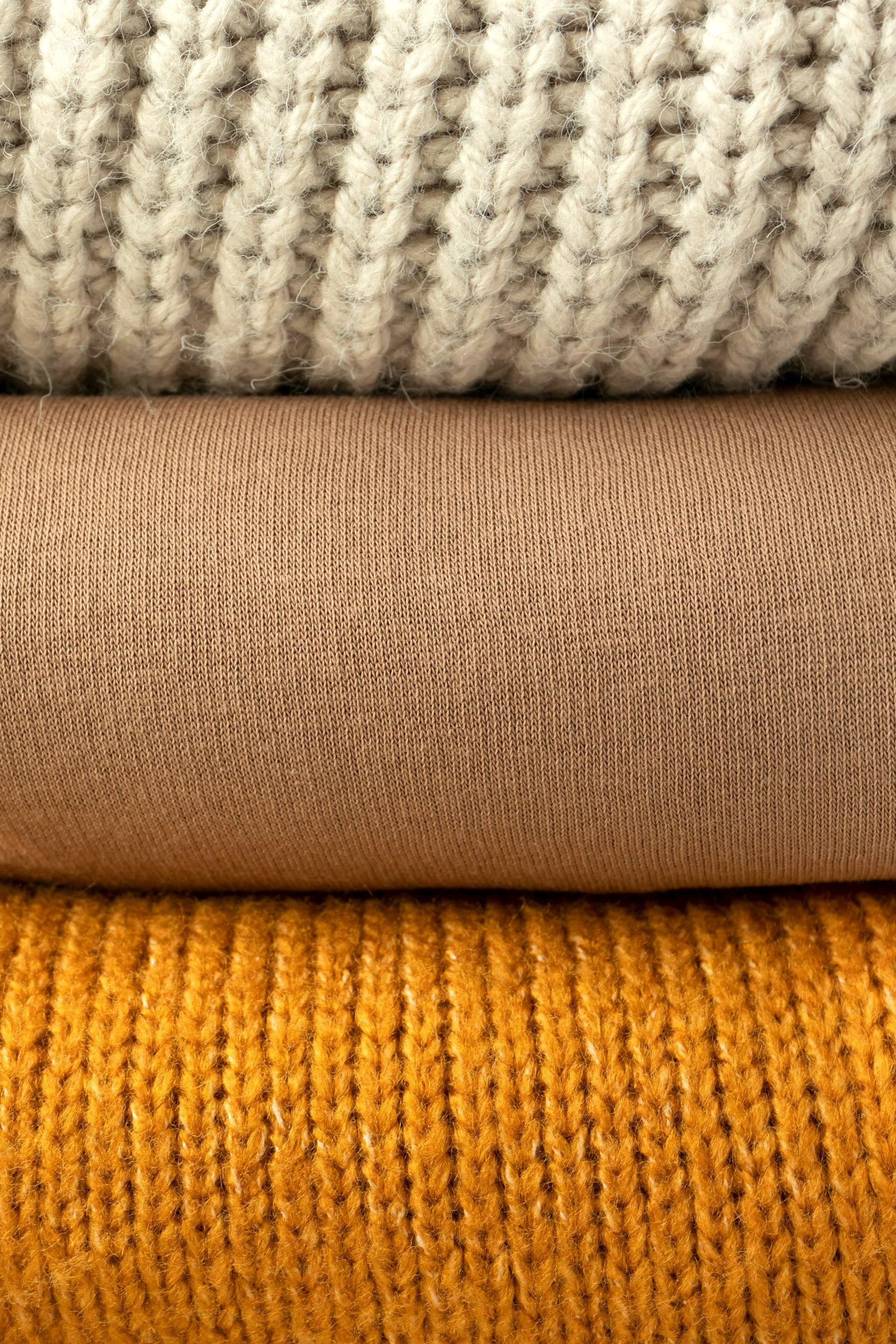
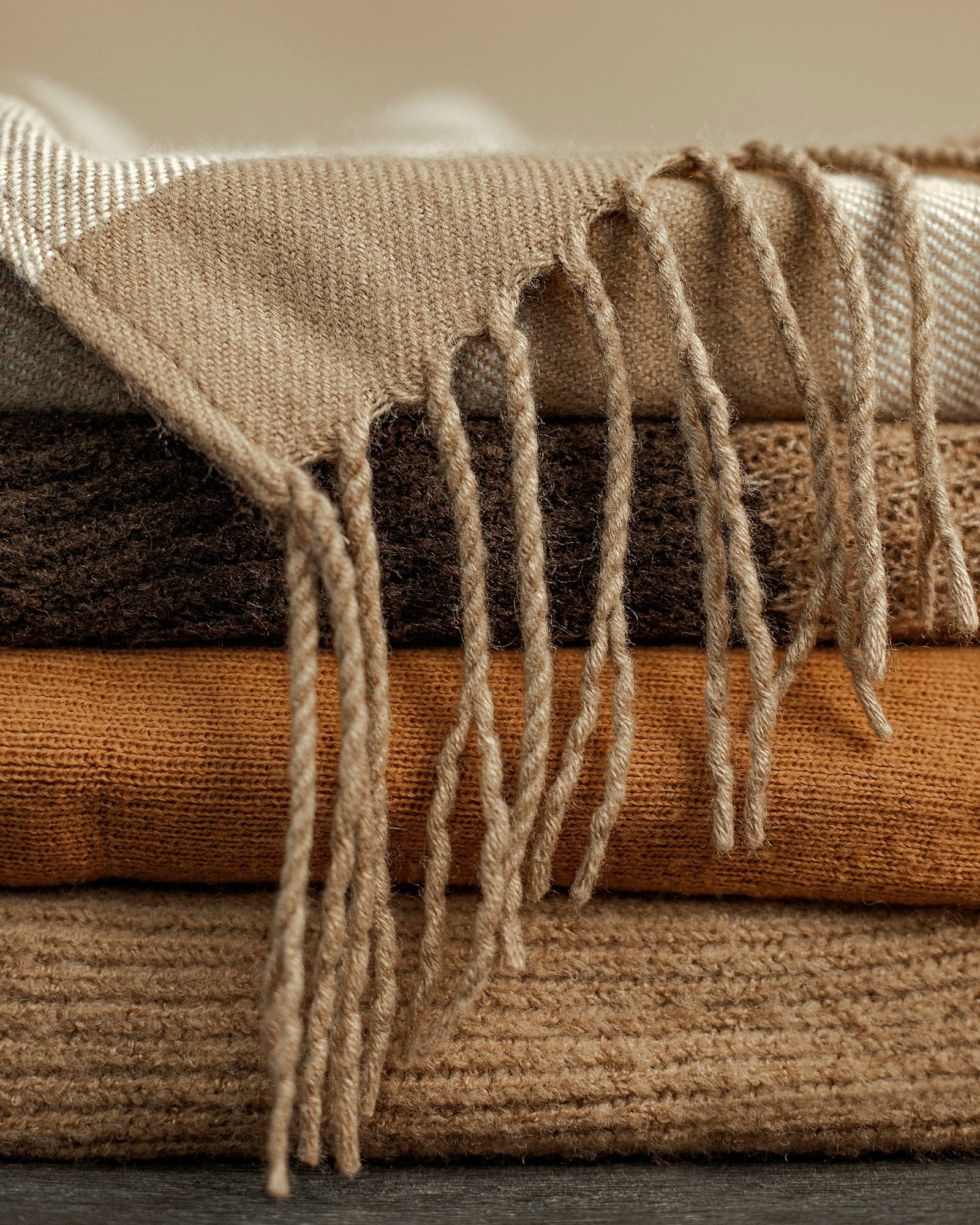
The fibre register in macro: gauge and texture are the whole argument on this page. The ranking below is built from the makers' published records cited on the page, and no garment by any ranked house is pictured. The photography gaps are printed in the honesty section below.
Checked and updated October 2026
The short answer: brands like Loro Piana are graded here on whether the quietest promise in menswear can be checked before it is paid for: what the fibre is, printed to the micron, the staple, the ply and the gauge, and what stands behind a garment priced like furniture. The anchor, Loro Piana, stands at 85 on our Italian and quiet luxury rankings; this page reproduces its standing rows exactly, argues them in the open, labelled derived wherever they appear, and joins the audit queue behind the number. Loro Piana finishes fourth at home, behind Auralee at 94, Lemaire at 90 and Brunello Cucinelli at 88, level with Sunspel at 85 and separated from it on the fabric row, and ahead of John Smedley at 78. The skip is Quince at its standing 59: the quiet knit look at $59.90, sold against a comparison figure that floats.
What people actually want from Loro Piana
Nobody searches for brands like Loro Piana because they need another polo. The want underneath the search is the extreme end of the quiet settlement: the rarest fibres used in clothing, vicuña, baby cashmere, merino measured in single microns, knitted plainly in the house's own mills in Quarona, no logo anywhere, from the family firm that has chased raw material around the world since 1924. The house's centre of gravity is the knit, the polo above all, and the want is for that fibre's hand and that rail's silence without its ticket, or with its paperwork improved.
That want has two failure modes, and they are the rest of this ranking. The first is the aura without the record: the fibre famous by reputation while the specification that would prove it in the garment, the staple, the ply, the gauge, is published nowhere, so the buyer pays for a story he cannot check. The second is the look without the fibre's life: the plain quiet knit as a price point, real cloth sold under a floating comparison figure with nothing standing behind the garment after the sale. Three tests separate the field. Is the fibre printed, the provenance and the specification, or only praised? Is the price an honest list, readable before a fitting is booked? And does anything stand behind the garment, a house, a mill, a programme, across the decades a knit in this register is bought for? The anchor passes the third as few houses anywhere do. On the first, its halo fibres are printed to the micron and its garments' paperwork is still thinner than its fibre, and the argument below is mostly that thinness, priced.
How the scores work
Every brand is graded out of 100: fabric and cloth out of 30, construction and craft out of 20, fit range and sizing honesty out of 20, value out of 15, longevity out of 15. The anchor's 85 is a standing total from two of our rankings, and this page treats it the way this series treats any number that arrives from a ranking rather than an audit: the rows that stand are reproduced exactly and argued in the open, labelled derived, and the page joins the audit queue behind the number rather than claiming one. Standing scores set elsewhere are reproduced exactly and are never re-tried on a page that is not theirs.
The standing rows, argued one by one against the maker's own current record, read live for this page: the United States store's classics rail, its returns page, and its textile pages. Fabric 28: the fibre record is the trade's aristocracy and, at the halo, it is printed like one. The maker's own textile pages give vicuña an average diameter of 12.5 to 13 microns, gathered once every two years, 250 grams of fleece an animal reduced to 120 to 150 grams of usable fibre, and name the house the world's foremost processor of it; The Gift of Kings merino is printed at 12 microns; baby cashmere, the first combing of the kid goat, is the house's emblem fibre; and the fine merino lots are bought at auction and knitted in the house's own mills, the record our quiet luxury ranking printed when it set this row. The row is charged two below the series ceiling of 29, where Auralee and Lemaire print specification-grade cloth records, for the silence that stands in the garment listings themselves: for the knit polo, the anchor's key piece, no staple, no ply and no gauge stands published, and the micron counts live on the textile pages rather than on the product. The comparison that fixes the row stands at the foot of this ladder, where the skip publishes 15.8 to 16.2 microns, a 34 to 36 millimetre staple and a 12-gauge knit at $59.90: the anchor's fibres are finer and rarer by an order of nature, and its garment paperwork is thinner, and 28 is the price of both facts at once. Construction 19: the making is the house's own, vertically held from the fibre lot to the finished knit, in the mills of a house that began as a textile maker in 1924 and still sells its cloth to the trade, made in Italy, the garments deliberately plain to the point of anonymity, which is a construction position published as the house's whole position; the row stands with the derived 19s of Cucinelli and Boglioli. Fit 14: the row is the quiet luxury ranking's own printed charge, a narrow fit range, and the current record confirms its shape: a knit-led rail cut slim and short on the Italian scale, a Summer Walk and a polo offered to a narrower band of bodies than any other house on this ladder, with no measurement library of the kind this series grades at 19 and 20. Value 9: the row is the Italian ranking's maths, sharpened, and the maker's own store read for this page prints it in figures: the baby cashmere polo at $2,000, the baby cashmere crewneck at $1,900, the Wish wool polo at $1,500, the Gift of Kings T-shirt at $2,750, the cotton polo shirt at $775, inside the ranking's band of $600 to $6,500, with the vicuña rail above the band entirely. The row stands with Lemaire's and Cucinelli's 9: at the summit, the register charges for itself, and this anchor is the summit's most expensive seat. Longevity 15: a house founded in 1924 in Quarona with a century of fibre obsession behind the rail, its own mills, garments made to be kept for decades, and honest store terms read for this page, 30 days for returns, free, refunds to the original payment. The ownership passed to the largest luxury group on earth in 2013, as our quiet luxury ranking prints, and the row holds on the family's pattern, the Boglioli precedent among them: the house, the mills and the garment outlast the shareholding. No repair programme is published on the maker's pages read for this page, and the row is carried by the house and the garment, the family pattern for a perfect 15. The rows sum to the standing 85, and the argument commits to this: if the maker publishes the knit polo's staple, ply and gauge, fabric is revisited first, upward, because the missing garment specification is the row's whole deduction; if the Quarona making moves or the mills close, longevity is revisited downward; if the core knit's list climbs past the ranking's band while the record stands still, value is revisited first.
The bookkeeping on this page, in full. The anchor's total has two homes, the Italian ranking and the quiet luxury ranking, and they agree at 85. A split exists in the tree, on the quiet luxury ranking, and this page reproduces it exactly: the situation is the reverse of the Cucinelli page's, where no split existed and one had to be derived to sum, and the page prints the difference rather than borrowing the neighbour's apparatus. One tie needs its ruling printed. At 85, the anchor's standing fabric 28 rules Sunspel's audited 24, the anchor carded fourth and Sunspel fifth, and the counterweight is printed with the ruling rather than smoothed over: Sunspel wins the fit row outright, 18 to 14, and the value row outright, 13 to 9, and a reader whose question is a garment to wear this month should take the lower card. The skip's 59 is a standing audited score from its own page in this series, reproduced with its rows; the charge beside it is its own audit's, restated here and labelled as such.
The rest of the register, rested in prose with their standing numbers untouched, because a card here would re-try a score set elsewhere. Luca Faloni rests at 91 as the Italian ranking's winner, and its position over the anchor is printed plainly because it is the anchor's sharpest embarrassment at home: the same fibre argument, Italian mills, direct prices, a value row of 15 of 15, graded in full on two of our rankings, where the anchor's band runs to $6,500. Brunello Cucinelli is carded below at 88, its rows derived in the open on its own page in this series, because the two ceilings of the register belong on one ladder. Officine Générale rests at 88, audited on its own page in this series and carded on the Cucinelli page, the Parisian answer in Portuguese cloth. Zegna rests at 87 on the Italian ranking, the mill's own house, knit polos of its own cloth. Massimo Alba rests at 87, the register softened and garment-dyed. Boglioli rests at 90, carded on the Cucinelli page with its rows derived there; its unstructured jackets answer a tailoring question this page is not asking, and its total is cited here by standing number only. Our Legacy at 86, Fedeli at 86 and Barena Venezia at 86 rest on the rankings, the knit houses of the second bench, and De Petrillo at 84, Canali at 83 and Lardini at 82 rest on the Italian ranking, houses whose centres of gravity are the jacket rather than the knit. Each keeps its number and its rows exactly as set, and none is re-argued here.
One name from the broader family is answered in prose rather than carded, because its own page is a living derivation rather than a settled score. Our H&M page derives its 38 from fourteen graded garments, and the figure moves as garments are added; this page does not restate it. The fibre argument resolves the comparison without arithmetic: nothing in that rail is offered in vicuña, baby cashmere or 12-micron merino, its knit polos are graded on our knit polo ranking, and a reader asking whether the anchor's fibre premium is real should read the derivation rather than a number repeated here out of context.
The disclosure ledger: what the record publishes
Fabric and construction are the rows a halo can be talked into, so the record behind them is printed here in full, as the makers publish it. The audit status of each row is printed with it.
| Brand | Fabric, as published | Construction, as published |
|---|---|---|
| Auralee | 29, audited on its own page in this series. The fibre named first and the cloth concept published beside it, super-160s-class wool among it, developed with its mills. | 19, audited. Garments finished to a printed standard in partner ateliers, the making published as part of the cloth's story. |
| Lemaire | 29, audited on its own page in this series, on the family split. Cloth research published as the house's method, fabrics developed to drape rather than to shine. | 19, audited. The soft construction is the published position, unlined and unstructured where the garment allows. |
| Brunello Cucinelli | 28, rows derived in the open on its own page in this series. Cashmere of the house's own grade, colours mixed like paint; no staple, gauge or ply published for the graded crewneck. | 19, rows derived in the open on its own page. Knitted in Solomeo since 1978, the hamlet itself the published factory. |
| Loro Piana | 28, standing on the quiet luxury ranking and argued on this page. Vicuña printed at 12.5 to 13 microns on the maker's own textile pages, The Gift of Kings merino at 12 microns, baby cashmere the first combing of the kid; no staple, ply or gauge published for the knit polo. | 19, standing on the quiet luxury ranking and argued on this page. Knitted in the house's own mills from lots bought at auction, made in Italy; the garment's plainness is the published position. |
| Sunspel | 24, audited on its own page in this series. Two-fold long-staple jersey traced to a single Californian farm, the fibre and the yarn count both published. | 17, audited. Cut and sewn in the factory the house has occupied since 1937, the making published as continuity. |
| John Smedley | 26, audited on its own page in this series. 30-gauge extra-fine merino and Sea Island cotton, the gauge published as the house's identity. | 18, audited. Knitted whole in the one Derbyshire mill, the garment finished where it was knitted. |
| Quince | 18, audited on its own page in this series. 16.2-micron Mongolian cashmere, a 34 to 36 millimetre staple and a 12-gauge knit, published at $59.90; the widest specification on this page and the narrowest house behind it. | 11, audited. Cut-and-sew factories named nowhere; the cloth record is the whole record. |
Seven brands like Loro Piana, ranked
Auralee
Core knits $600 to $800 at the maker's own store.
Audited in this series at 94, the summit of the quiet register. Ryota Iwai develops cloth with Japanese mills and publishes it like a specification, the fibre named first and the concept, shrinkage management, garment-dyeing, printed beside it, so the fineness the anchor sells by reputation is here a document a buyer can read before paying, a core knit at $600 to $800 at the maker's own store. It answers this page's question most completely, because it is the one house in the register whose aura and whose paperwork are the same size.
Lemaire
The twisted shirt about $500 at the maker's store, knitwear above it.
Audited in this series at 90, on the family split its own page prints. The register translated to Paris: cloth researched and developed until the garment drapes rather than shines, twisted seams and soft shoulders, a wardrobe built to be worn daily and priced accordingly, the twisted shirt at about $500. Its value row of 9 is the summit's own charge, and it is carded here because the anchor's searcher who wants the silence without the fibre tax starts in this rail.
Brunello Cucinelli
US prices: the cashmere crewneck $1,200 as graded on our cashmere ranking, read at $1,250 at US retail today; the maker's boutique catalogue could not be captured at this check, and the Italian ranking's band of $900 to $4,000 and beyond stands.
The other ceiling of the register, carded here with its rows derived in the open on its own page in this series and its derived label intact, standing at 88. Solomeo's knit against Quarona's fibre empire: cashmere knitted softly in one man's hamlet since 1978, colours mixed like paint, a house whose fibre is famous by aura and whose garment specification, like the anchor's, is published nowhere. Three points above the anchor because the wardrobe is wider and the prices, barely, less absolute; the fork between the two is argued in the questions below.
Loro Piana
US prices read on the maker's own store for this page: the baby cashmere polo $2,000, the Classic Crewneck in baby cashmere $1,900, the Wish wool polo $1,500, the cotton polo shirt $775; the ranking's band of $600 to $6,500 stands.
The anchor, graded on its standing rows, reproduced exactly from the quiet luxury ranking and argued in the open above: DERIVED. The fibre record is the trade's aristocracy and, at the halo, printed like one, vicuña at 12.5 to 13 microns on the maker's own textile pages, baby cashmere from the first combing of the kid, merino lots bought at auction and knitted in the house's own mills since 1924. The garment paperwork is thinner than the fibre: no staple, ply or gauge published for the knit polo at $2,000, a narrow fit welcome, and store terms read for this page of 30 days, free, with no repair programme published. One number is printed because no garment of the house's stands graded in this magazine; the knit polo is the rankings' key piece, not a scored garment, and the two are never conflated here.
Sunspel
US prices at its audit: the Classic T-shirt $98; the Superfine Cotton Vest $55 at Mr Porter US.
Audited in this series at 85, the tie with the anchor ruled on the fabric row above and the ruling's counterweight printed with it: Sunspel wins the fit row, 18 to 14, and the value row, 13 to 9, outright. The register's ground floor in Long Staple cotton: a two-fold jersey traced to a single Californian farm, cut and sewn in the factory occupied since 1937, the Classic T-shirt at $98. A reader buying a garment to wear this month takes this card over the one above it, and the page says so on both.
John Smedley
Prices at the audit: the Lundy crew $432.90 at US retail, £235 on the maker's own store; the Isis polo £200 at the maker's own store.
Audited in this series at 78. The finest gauge in the business from one Derbyshire mill: 30-gauge extra-fine merino and Sea Island cotton, the gauge published as the house's identity rather than implied by the price, the Lundy crew at £235 on the maker's own store against the anchor's $2,000 polo. What the anchor carries in fibre rarity, Smedley answers in fineness a buyer can verify from the listing, at a fifth of the money, and on this ladder that honesty is worth twelve points of the gap and no more.

Quince
US prices checked at its audit: the Mongolian Cashmere Crew $59.90, beside a struck traditional-retail figure; the Australian Merino Half Zip $92. This card ships without a buy link, and the honesty section prints why.
The skip, at its standing audited 59, and the same skip the Cucinelli page of this series set for this register, continued here and printed as not a new sentence: the quiet knit look at $59.90, its cloth specifications honestly published, its factories named nowhere, no afterlife programme of any kind standing behind the garments, and its prices sold against a struck comparison figure that floated from $250 to $158 between this series' derivation and its audit. The look is real. The life the anchor sells is not in it, and the questions below print the charge in full.
The pattern under the ranking
Read the fabric row against the price and the ranking stops looking like a league table and starts looking like an argument about evidence. At the top, Auralee and Lemaire print their cloth, fibre, concept and making, and charge $500 to $800 for the privilege of checking. The two ceilings praise their fibre, one through a founder's hamlet and one through a century of fibre obsession, and charge $1,200 to $2,000 for knitwear whose garments carry no published specification at all. The anchor's halo is the one place its paperwork rises to its reputation, microns printed on its own textile pages, and the deduction that holds it at 28 is that the paperwork stops exactly where the garment begins. Below them, a tee maker and a Derbyshire mill publish the humbler records completely, a farm, a yarn count, a gauge number, and win rows the ceilings lose. And at the foot, the skip publishes the widest specification on the page at $59.90 and fails on everything the specification cannot carry, a house, a factory, a programme, a comparison figure that holds still. The register's lesson, printed once: in quiet luxury, the fibre is graded by what is published about it where the garment is sold, and the houses are separated less by what their cloth is than by what a buyer is allowed to know about it before the money moves.
The ranking at a glance
| Brand | Score | Buy | Price |
|---|---|---|---|
| Auralee | 94 | The fineness-first knit or coat | $600 to $800 |
| Lemaire | 90 | The twisted shirt | About $500 |
| Brunello Cucinelli | 88 | The cashmere crewneck | $1,200 |
| Loro Piana | 85, derived | The baby cashmere polo | $2,000 |
| Sunspel | 85 | The classic T-shirt | $98 |
| John Smedley | 78 | The Lundy crew | $432.90 |
| Quince | 59 | None | $59.90 not spent on the crew |
Quince, 59. The quiet knit look at $59.90, with a fabric record more precisely published than either ceiling's and a struck comparison figure that floated from $250 to $158 while this series watched, factories named nowhere, and no programme of any kind standing behind the garment after the sale. It is skipped at the foot of the anchor's own ladder for the anchor's own reason: a knit in this register is bought for its life, and the life is the part Quince does not sell.
Which one to buy
Buy Auralee if the question is the finest knitwear with its paperwork in order: the cloth record is the point of the house, and the premium buys development you can read. Buy Lemaire if the want is the register worn daily, a soft uniform rather than a fibre trophy, at a summit price that still respects the garment. Buy Brunello Cucinelli if the other ceiling's story is yours, the founder's hamlet and the knit as a garment, three points above the anchor on a wider wardrobe. Buy Loro Piana if the fibre itself is the purchase, vicuña's house, baby cashmere from the first combing, entered slowly, one piece at a time, with the paperwork's thinness understood and accepted before the money moves. Buy Sunspel if the register is wanted today at an honest price, the tie at 85 resolved by the fit and value rows it wins outright. Buy John Smedley if gauge is the luxury you actually feel, 30-gauge merino from one mill at £235, the finest knit per pound on this page. Buy nothing from the skip if the garment is meant to be kept; its cloth is honest and everything around the cloth is not.
Questions, answered straight
What brand is most like Loro Piana?
For the fibre with the fullest paperwork in the register, Auralee at 94, audited on its own page in this series, its cloth developed with its mills and printed like a specification. For the other ceiling of the same register, Brunello Cucinelli at 88, its rows derived in the open on its own page in this series: Solomeo's knit against Quarona's fibre empire, three points apart. For the gauge itself at a fifth of the anchor's prices, John Smedley at 78, audited on its own page, 30-gauge merino and Sea Island cotton from one Derbyshire mill. And for the door into the register today, Sunspel at 85, tied with the anchor and separated from it on this page only by the fabric row, 24 to 28, while beating it on fit, 18 to 14, and on value, 13 to 9. The anchor's own emblem piece is the knit polo, baby cashmere at $2,000 on the maker's own store at this check: the finest raw materials on the market, in a garment whose listings publish no staple, no ply and no gauge.
Is Loro Piana worth the money?
At its standing 85, the fibre is, and the rankings that set the number printed the pushback in the same breath: when a cashmere jacket lists at $6,500, value and accessibility stop being footnotes. The arithmetic on this page is printed so it can be checked. The raw material is beyond argument, vicuña at 12.5 to 13 microns on the maker's own textile pages, baby cashmere from the first combing of the kid, merino lots bought at auction and knitted in the house's own mills, and the maker's own store prints honest terms, 30 days to return, free. Against that stands the specification silence our rankings charged: no staple, no ply and no gauge published for the knit polo at $2,000, a narrow fit welcome, and a rail whose prices treat a polo as a financial instrument. Buy one piece when you can, as the Italian ranking says, entered slowly, and buy the fibre rather than the paperwork, because the paperwork is short. Understand exactly which of those two you are paying for: the finest raw materials on the market, full stop, and a group-owned house's arithmetic around them.
Loro Piana or Brunello Cucinelli?
The two ceilings of the Italian ranking, three points apart: Cucinelli at 88, its rows derived in the open on its own page in this series, and Loro Piana at 85, standing on the same ranking. The fork is the fibre's story against the fibre's empire. Cucinelli is one man's hamlet: cashmere knitted softly in Solomeo since 1978, colours mixed like paint, a wardrobe built around the knit. Loro Piana is a century of fibre obsession from 1924, vicuña and baby cashmere at industrial depth, now inside a group, with knit polos our Italian ranking says nobody else's feel like. The rankings hold both back on the same maths, sharpened for Loro Piana: when a cashmere jacket lists at $6,500, value stops being a footnote. Buy Cucinelli for the knit as a garment, worn soft and often. Buy Loro Piana for the rarest fibres on the market, entered slowly, one piece at a time. Neither house publishes the specification layer this series grades highest, and the three points between them are the difference between a founder's village and a fibre house's depth, not between good and bad.
Why are Loro Piana's rows labelled derived?
Because the number was set by rankings, not by an audit of the house. Our Italian ranking scored Loro Piana 85 of 100 and printed the score, the specialty and the price band; our quiet luxury ranking printed the same total with a row split, fabric 28, construction 19, fit 14, value 9, longevity 15. No audit of the house stands behind either, so the label derived travels with the rows wherever this page states them, and this page joins the audit queue behind the number. The page's work differs from the Cucinelli page's, and it prints the difference: there, no split existed anywhere and the page derived one to sum; here, a split stands, so this page reproduces it exactly, argues each row in the open against the maker's own current record, the store's prices, the returns terms and the textile pages all read for this page, and moves nothing. If the maker's record ever contradicts a standing row, the audit this page queues is where that argument happens.
Why is Quince the skip?
Because its own audit in this series printed the charge, and this page does not move standing scores. Quince stands at 59, audited on its own page, rows 18, 11, 11, 12 and 7, and it was the skip on the Cucinelli page of this series for the same reason it is the skip here: it sells this register's look, the plain quiet knit, at a twentieth of the anchor's prices. The cloth is real and its specifications are published with a precision neither ceiling matches, microns, staple and gauge printed at $59.90. What failed was everything around the cloth: no afterlife programme of any kind stands behind the garments, its factories are named nowhere, and the struck comparison figure its prices are sold against floats, $250 when this series derived the score and $158 today, so the receipt a buyer is shown is a comparison against a number nobody charges. A house can sell the anchor's silhouette honestly at a twentieth of the price; what it cannot do is sell the anchor's permanence, and a knit in this register is a permanence purchase. The skip is the look, priced honestly as a look, at the bottom of a ladder whose top is the thing itself.
The honesty section
What this page could not verify, printed rather than smoothed over. The anchor's 85 is a standing total from two of our rankings, carrying a row split printed on the quiet luxury ranking, reproduced exactly and argued in the open on this page and labelled derived wherever the rows appear, and never audited by this series: the word audited is not claimed for the anchor anywhere on it, and the page joins the audit queue behind its anchor in the open. The situation is the reverse of the Cucinelli page's, where no split existed and one had to be derived to sum, and the difference is printed because the apparatus differs.
The anchor's maker record could be captured at this check, an upgrade on the neighbouring page's precedent and printed as one: the United States store renders, and the prices on the anchor's card and in its value row were read on the maker's own classics rail, the returns terms on the maker's own United States returns page, and the fibre figures on the maker's own textile pages. The anchor's door is the maker's own classics category, the rail the graded classics live on; our rankings print the maker's homepage as the door, and the deeper category is used here and the upgrade stated. The vicuña rail sits above the Italian ranking's band of $600 to $6,500 at retail, a vicuña sweater reported at roughly $9,000 in trade coverage in 2024; the band is the ranking's dated record for the wardrobe rail it graded and it stands as set, with the outer rail named here rather than folded into it. No repair programme is published on the maker's pages read for this page, and the page prints that absence rather than assuming one either way; a 24-month legal conformity warranty printed on the maker's non-United-States legal pages is a jurisdictional legal guarantee, not a house programme, and is not counted as one. One housekeeping item is flagged rather than fixed: our quiet luxury ranking prints Cucinelli's rows as 28, 19, 15, 11 and 15 against its own page's derived 28, 19, 17, 9 and 15, both summing to the standing 88; this page reproduces the family page's split, and the divergence is logged for a future conform rather than edited here. No Loro Piana garment stands graded anywhere in this magazine, so the anchor's card prints the brand's number alone; cloth woven by the house's mill for other houses, the Ludlow's cloth on our suits ranking among it, is another house's garment and is never used as the anchor's evidence. Every other score on the page is reproduced exactly from the page that graded it, with its status intact: audited where the series audited, derived where it derived.
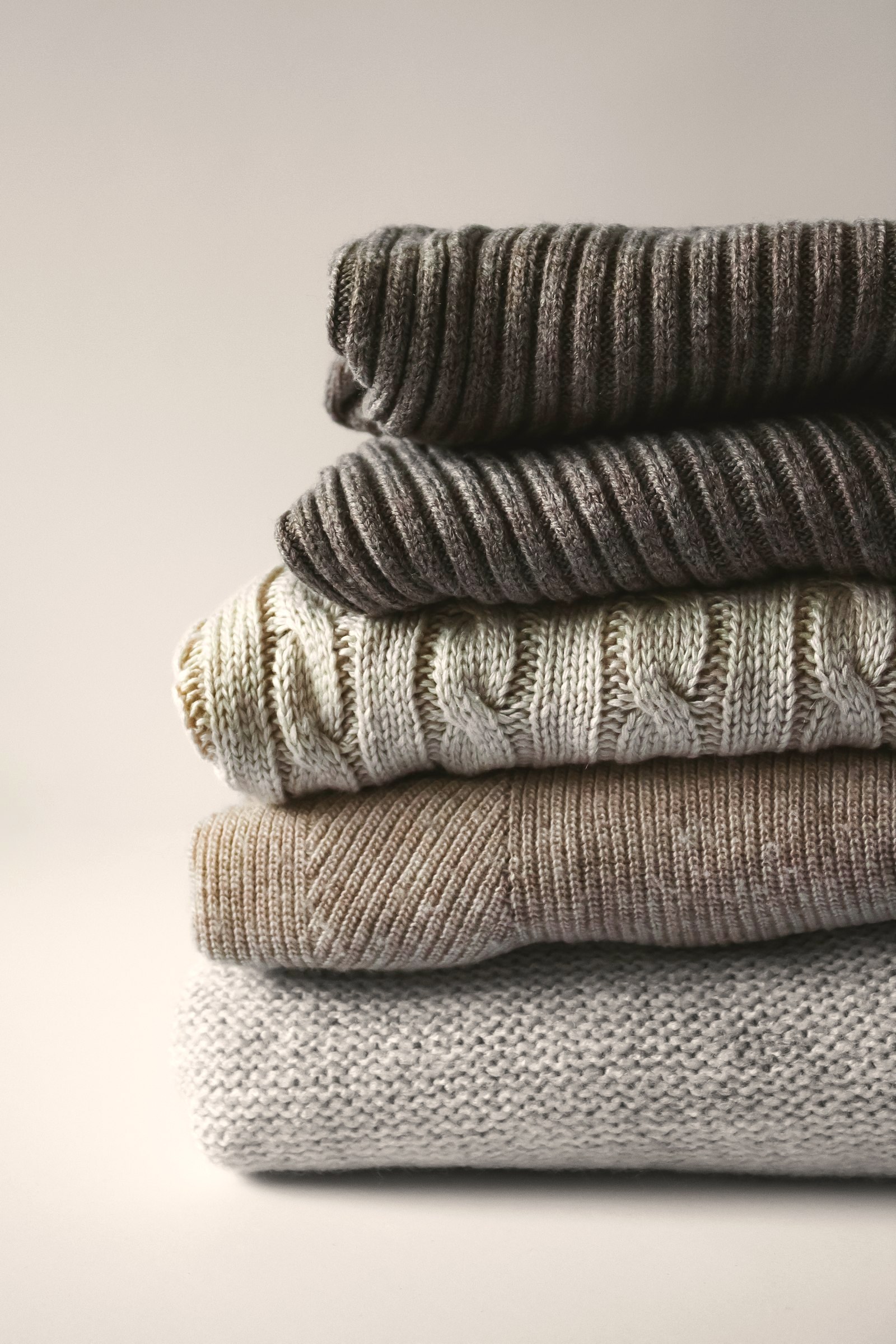
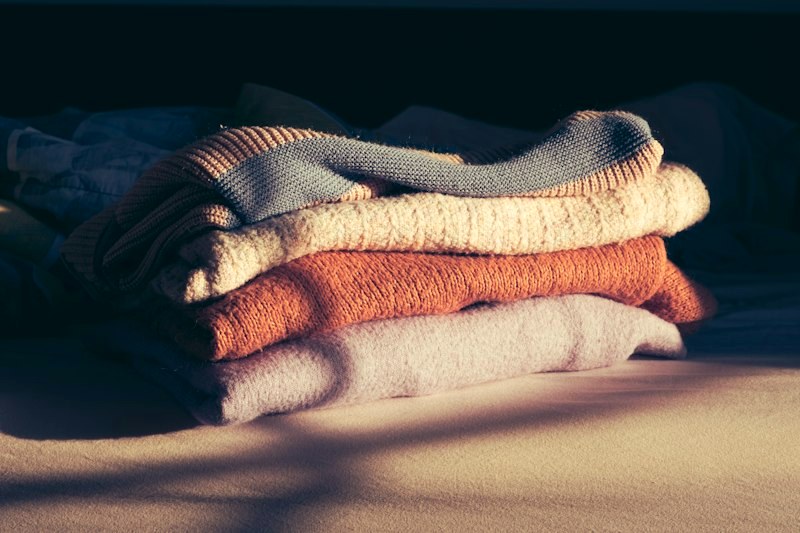
The product-photo gap, admitted as this series admits it: the bank holds no frame of any ranked house's garment, no vicuña, no baby cashmere, no mill interior, and none was staged for this page. The frames are bank knit and street frames, credited under CREDITS.md, extending the family's established assignments rather than inventing new ones for houses already placed elsewhere in this series. The harvest list for this register stays open: a vicuña or baby cashmere product frame, a mill interior, a folded polo rail in a quiet boutique, each credited. Prices and data were checked October 2026; the anchor's rest on the maker's own store read at this check, and the neighbours' on the audits and rankings that set them, labelled as such wherever they appear.