
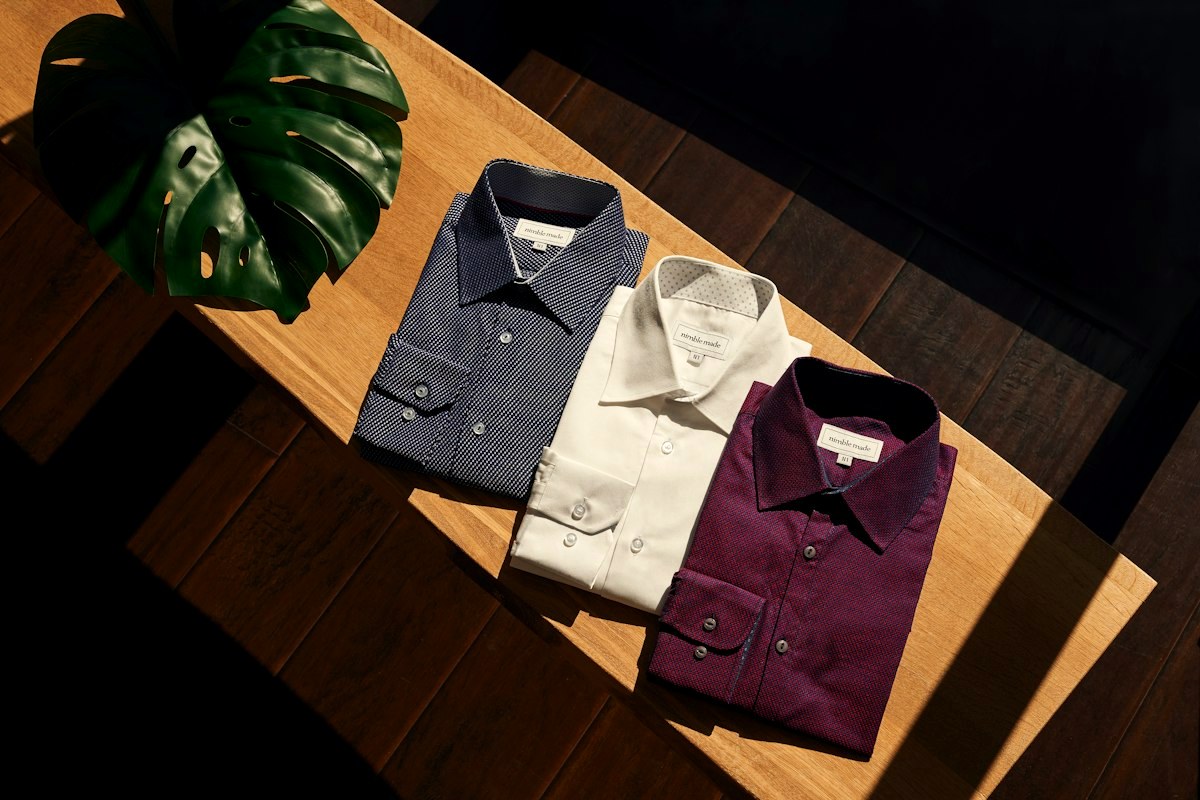
Three shirts, three weaves, three different jobs. Most men own all three and use them interchangeably. That is the mistake this page fixes.
Checked and updated October 2026
The ruling:
Default: Oxford. It wins on range. It is the only one of the three that looks intentional everywhere from denim to a soft blazer.
The office flip: twill. If your week is suits, ties and no time at an ironing board, twill's drape and wrinkle resistance beat Oxford's texture.
The formality flip: poplin. When the dress code is the whole point, a wedding in a suit, a boardroom with opinions, poplin's smooth face is the correct tool. Everywhere else, it is the weakest buy of the three. Scored below: Oxford 27 of 30, twill 23, poplin 19.
In this guide
The three weaves, by construction
Oxford, poplin and twill are not styles, fits or brands. They are structures: three different answers to the question of how a yarn should cross another yarn. Everything else about these shirts, the texture, the wrinkles, the rooms they can enter, is downstream of that crossing. Learn the three structures and you can read any shirt on any rack in about four seconds.
Oxford: the basket weave
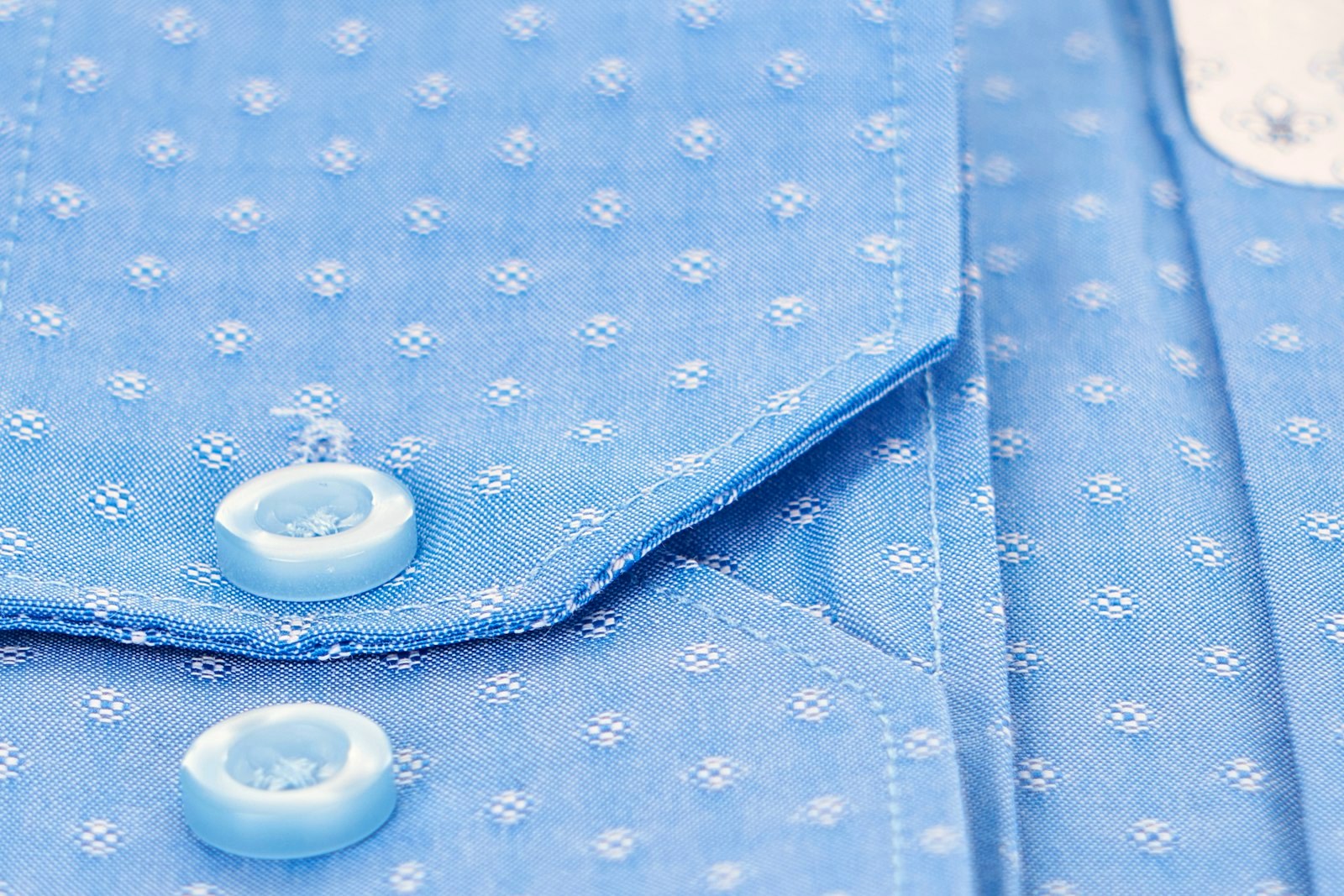
Yarns travel in pairs. Two warp yarns are interlaced as a single unit against the weft, a basket weave, often written as a 2 by 1 basket: paired warp, single weft. The pairing is why the surface carries that small checkerboard grain you can feel under a thumb, and why the cloth is thicker and tougher than a plain weave spun from the same yarn. Traditionally the warp yarns are finer and the weft yarns heavier, which is what gives classic Oxford its faint two-tone depth. The behaviour follows the structure: a matte texture that hides creases instead of advertising them, the best airflow of the three, and a hand that softens with every wash. Our explainer covers this cloth end to end: what an Oxford shirt actually is, collar roll included.
Poplin: the plain weave
One yarn over, one yarn under: the plain weave, the oldest structure there is. Poplin's trick is the yarn balance. A dense sheet of fine warp yarns is crossed by a slightly heavier weft, and that imbalance leaves a fine rib running across the cloth, invisible across a room, obvious under a fingernail. The face reads smooth and flat, and that smoothness is the entire point: poplin is the cloth formality is printed on. The name descends from papelaine, the silk and wool cloth woven for papal Avignon; the modern shirting version is cotton, typically light (apparel poplin commonly runs around 100 to 150 grams per square metre), crisp enough to take a pressed crease, and smooth enough to show every wrinkle it earns. Hold that last clause. It decides the scores below.
Twill: the diagonal
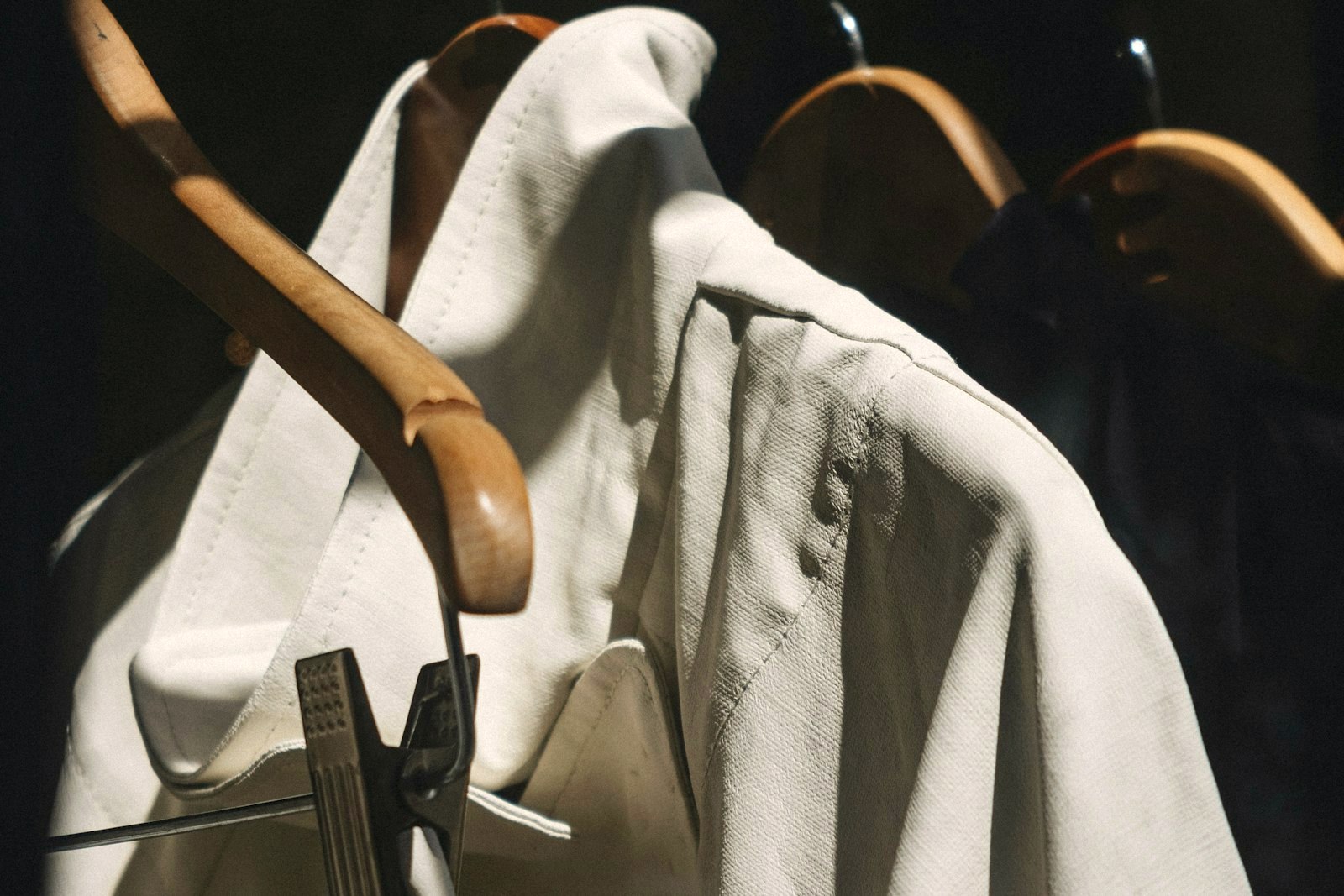
The weft passes over two or more warp yarns, then steps one yarn sideways on the next pass. The steps line up into diagonal ribs, called wales, running across the face of the cloth. Herringbone is the same weave with the diagonal reversed at intervals. The longer floats give twill its two famous behaviours: it drapes instead of standing, falling in folds where poplin holds a plane, and it resists wrinkles and hides soil better than a plain weave, a point the textile conservation literature makes about the structure itself. In a shirt, twill reads smooth with a slight sheen: dressier than Oxford, softer in the hand than poplin, heavier than both.
The decision table
| The test | Oxford | Poplin | Twill |
|---|---|---|---|
| Formality | Smart-casual to business casual; never black tie | Business to formal; the dress shirt default | Business-leaning, with a soft edge |
| Texture and hand | Visible basket grain, matte, softens with washing | Smooth and flat, fine crosswise rib, crisp | Fine diagonal rib, smooth face, fluid drape |
| Breathability | Best of the three; the paired yarns leave air paths | Light, but tightly woven; less forgiving in humidity | Warmest of the three; the dense diagonal holds heat |
| Wrinkle behaviour | Creases softly, and the texture hides it | Wrinkles first and shows it most; plan the iron | Resists best; creases fall out on the hanger |
| Collar behaviour | Body in the cloth gives the button-down its roll | Crisp spread or point; holds a tie knot cleanly | Lies smooth and flatter; neat under a tie, less roll |
| Price band, typical | Typically $40 to $130 for a good cotton shirt | Typically $50 to $200; the top end is fine dress shirting | Typically $50 to $180; priced like poplin, outlasts it |
| Under a blazer | The default: texture against smooth wool | Correct with a suit; stiff under a soft blazer | Strong second; keep the colours close in tone |
| With denim | The only one that looks intentional untucked | Stranded: dress shirt energy in a casual room | Workable tucked, in a dark twill |
| At a wedding | Daytime or garden, blazer and no tie | The pick: suit, tie, evening | Fine for guests; mind the sheen against a matte suit |
Read the table by your calendar, not by your taste. The right weave is the one whose behaviour matches the rooms your week actually contains. Taste enters later, at the level of colour and fit, where it belongs.
The scores: three mini-verdicts
The basis, printed so you can argue with it. Each weave is scored out of 30 on the three questions a cloth has to answer: weave honesty (does the cloth keep the promise its name makes, in honest fibre, without a finish faking it) out of 10; versatility (how many rooms it can enter without apology) out of 10; value (cost per wear at typical prices, with durability priced in) out of 10.
| Weave | Honesty /10 | Versatility /10 | Value /10 | Total /30 |
|---|---|---|---|---|
| Oxford | 9 | 9 | 9 | 27 |
| Twill | 8 | 7 | 8 | 23 |
| Poplin | 7 | 6 | 6 | 19 |
Oxford: 27 of 30 (9 + 9 + 9)
Honesty 9: the texture is the structure, not a coating; what you feel is what the cloth is, and it gets more itself with age. Versatility 9: the widest range in shirting, denim to soft tailoring, docked one point for the ceiling it cannot cross, black tie and the sharpest boardrooms. Value 9: honest versions start around forty dollars, the best cost about one hundred and thirty, and the cloth outlasts both rivals in weekly rotation. This is why our Oxford shirt ranking is the flagship page of this magazine: the weave earns the attention.
Twill: 23 of 30 (8 + 7 + 8)
Honesty 8: the diagonal is real engineering and the drape is earned, though the fine sheen on cheaper twills is sometimes a finish doing public relations. Versatility 7: superb inside the business band, less convincing outside it; the drape reads dressed even when you untuck it, and the warmth closes summer to it. Value 8: priced like poplin, it outlasts poplin and skips the iron, which is a genuine saving of the only currency that matters on a weekday morning.
Poplin: 19 of 30 (7 + 6 + 6)
Honesty 7: true poplin is a fine and honest cloth, but its promise is crispness and the cloth keeps that promise for about the first two hours of wear; the all-day-crisp version of poplin exists mainly in product copy. Versatility 6: it owns the formal end outright and has almost nothing to say below it; with denim or untucked it looks like a shirt that missed its own meeting. Value 6: cheap poplin is the worst buy in shirting, thin, creased by noon, replaced within the year; good poplin costs twill money and still bills you in ironing. None of this makes poplin bad. It makes it a specialist, and specialists should be bought on purpose.
The ruling, by use case
Buying your first real shirt: Oxford, white, then light blue. It covers the most life per dollar of anything in this comparison.
An office with a dress code: twill for the working week, poplin for the days with a presentation in them. Oxford joins once you have read the room for a month.
A wedding: in a suit and tie, poplin. In a blazer without a tie, Oxford. Twill sits between them and knows it.
Heat and a commute: Oxford. It breathes best of the three and forgives the journey.
Travel, one shirt, no iron: twill, and it is not close.
All three weaves appear in our quiet luxury capsule wardrobe, each in the slot its structure earned: Oxford as the foundation, twill in the rotation, poplin nowhere near the packing list. That is the ruling applied to a real wardrobe.
The mistakes we keep seeing
1. Buying poplin for warmth. Poplin is the lightest construction on this page. A cold office in a poplin shirt is a man negotiating with his own goosebumps by 11 a.m. Warmth lives in twill's density and in Oxford's body, or in a knit over either.
2. Buying Oxford for black tie. The basket grain and the button-down collar are casual signals, and a dinner jacket reads them instantly. Black tie wants a smooth formal front, traditionally pleated or Marcella. An Oxford under a tuxedo is the shirt equivalent of trainers with it: comfortable, confident, wrong.
3. Buying twill for a heatwave. The same dense diagonal that shrugs off wrinkles holds heat against the skin. A twill shirt at an August wedding is a slow negotiation you will lose by the speeches.
4. Trusting the label over the cloth. Poplin is the most borrowed name of the three: much of what is sold as poplin is balanced plain weave, closer to broadcloth, or a cotton blend wearing the word. Run a fingernail across the fabric. True poplin answers with a fine crosswise rib. Silence means the label is doing the weaving.
The Young Cotton Verdict
Own one weave: Oxford. Own two: add twill. Buy poplin on purpose, for the rooms where formality is the assignment, and respect it there. The wardrobe mistake is not choosing the wrong weave once. It is asking any single weave to do all three jobs, then blaming the shirt.
FAQ
Oxford vs poplin: which is more formal?
Poplin, and it is not close. Its smooth, flat face is the cloth formality is printed on: boardrooms, weddings, a tie worn all day. Oxford is the more useful cloth, but usefulness and formality are different contests, and poplin wins this one.
Which wrinkles less, Oxford, poplin or twill?
Twill wrinkles least. Its diagonal structure lets creases relax instead of setting, and they fall out on a hanger overnight. Oxford creases softly and hides them in its texture. Poplin wrinkles first and shows it most, because a smooth face has nowhere to hide a crease.
Is a twill shirt good for summer?
Usually it is the warmest of the three. The dense diagonal weave holds heat, which is a gift from October to April and a tax in a heatwave. For hot weather, Oxford breathes best; poplin is light, but its tight face is less forgiving in humidity.
Is pinpoint Oxford the same thing as poplin?
No. Pinpoint Oxford is still Oxford: the same basket weave, woven with finer yarns so the surface runs smoother. Poplin is a plain weave, one yarn over and one under. They can look alike across a shop floor and they are different structures under a thumb.
Can an Oxford shirt replace a dress shirt?
In most rooms, yes: with soft tailoring, at a smart office, at a daytime wedding with a blazer. In the most formal rooms, no. A sharp boardroom presentation or an evening event in a suit and tie still wants the smooth face of poplin or twill. Own Oxford for the many rooms, and one formal cloth for the few.
Next
The cloth, in full: what an Oxford shirt is, the weave, the collar and the roll. The weave's best shirts, scored: the Oxford shirt ranking. And the three weaves at work in one wardrobe: the quiet luxury capsule. This or That returns with the next argument worth settling.