

The cardigan is the layer in the middle, the only knit that opens. This ranking reads the fibre line first, then the placket the fibre has to hold up.
Checked and updated October 2026
The verdict, up front: seven cardigans scored on the knit basis this site publishes for sweaters: yarn and gauge out of 30, construction out of 20, fit range out of 20, value out of 15, longevity out of 15, with the fibre line, the gauge and the front build printed for every cardigan below. The John Smedley Bryn wins at 84. The William Lockie lambswool cardigan is second at 82. And the H&M regular-fit cardigan is sent home at 38: at $39.99 it ties the $425 cashmere as the most expensive cardigan on this page per presentable wear, and the maths is printed where you can check it.
The layer in the middle, judged properly
Our sweater index files the cardigan at formality 3 and warmth 3 and calls it the layer in the middle: the only knit that can sit over a shirt and tie and under a coat in the same outfit. Its rule governs this whole ranking: fine under tailoring, chunky as the top layer, and the bottom button stays open. The cardigan is also the hardest sweater to build well, because it is the only one with a moving part. A pullover fails slowly, at the neckband and the elbows. A cardigan fails at the front: the placket that gaps between buttons, the buttonholes that stretch into slots, the pockets that sag into pouches. That is why construction on this page is judged where the brief for this ranking puts it, on the button stance, the placket and the pocket build, and why the fibre line is printed for every entry, because a placket is only ever as honest as the yarn holding it.
The field is deliberate. Two heritage knitwear houses, one at each gauge the index describes. The Italian cashmere ceiling, in its modern zip form. The specification-sheet value pick from a tailoring maker. The honest budget lambswool. The mall's rugged entry. And fast fashion, whose cardigan is among the most bought garments in the category and gets scored like everything else. One scope note, printed rather than buried: the shawl-collar cardigan is a sibling type on our index, warmth 4, a jacket substitute rather than a layer, and two entries below wear that collar. They are scored on the same basis, with the collar judged as the construction it is. Wearing the type well, its fit rules, button discipline and outfit matrix, is briefed in full in How to Wear No. 01.
How the scores work
Yarn and gauge carries 30 points because a cardigan is its fibre before it is anything else: the percentages on the label, the micron count where the maker publishes it, and the gauge that decides whether the knit is a middle layer or the top one. Construction carries 20, and on a cardigan it is specific: fully fashioned fronts against cut-and-sew, a placket built to hold a button stance without gaping, buttonholes that will not stretch, and pockets, where they exist, knitted or welted to carry weight without sagging. Fit range carries 20: graded sizes, chest measurement where the maker offers it, and honesty about who the cut excludes. Value carries 15 and longevity 15, cross-checked by the cost-per-wear table further down, where life is counted in presentable service.
Where a maker publishes its fibre line, gauge or micron count, the table below prints it as the maker's figure. Where it does not, the desk prints a class figure and labels it as one. One entry's fibre split comes from its garment tag rather than its website, and the table says which. Nothing in the spec table is dressed up as measured when it was compiled.
Seven cardigans, ranked
John Smedley Bryn V-Neck Cardigan
US prices at last check: typically $425 to $495 at US retail.
The fine-gauge reference, from the house whose Lundy crew won our crew-neck ranking at 87: the same mill, the same discipline, with a front that opens.
The Bryn is the house's classic V-neck cardigan in 100% extra-fine merino at the fine gauge the index reserves for tailoring: the cardigan that disappears over a shirt and tie and under a blazer without adding a visible storey. The fronts are fashioned rather than cut, so the placket is part of the knitted structure instead of a band sewn onto a raw edge, and the button stance holds its line because the cloth on both sides of it is the same cloth at the same tension. That is the construction argument in this category, and the Bryn makes it quietly, the way the house makes everything.
What it gives back is the house's usual pair: price and patience. The value row is 9 of 15 because the US retail band runs to nearly $500, and the fit is graded rather than generous, a classic cut that assumes a shirt underneath and rewards the body it was drawn for. The cost table is the defence: ten winters of presentable service at $1.15 a wear, cheaper per outing than the cardigan at the bottom of this ranking that costs a twelfth of its price. If the cardigan is one purchase in a decade, this is the one the decade should be spent on.
William Lockie Lambswool Cardigan
US prices at last check: typically $525 to $625 at US stockists.
Geelong lambswool at the chunky end of the index's rule, hand-finished in Hawick: the best construction score on this page, for the second ranking running.
Lockie has knitted in Hawick, in the Scottish Borders, since 1874, and its cardigan is the top-layer form of the type: two-ply Geelong lambswool, the fine first shearing, knitted heavy enough to replace a jacket on an evening, with the furniture the form has carried for a century, proper buttons with shanks that stand off the placket, and patch pockets built to be used rather than indicated. The construction row, 19 of 20, matches the page-high score its Leven crew set on our crew ranking, and it is earned the same slow way: hand-finishing, natural yarns, and a make that expects repair across decades.
The honesty rows are fit and value. Sizes run by chest measurement in a classic cut that makes no apology for being traditional, and the fit row's 14 prices that. The US stockist band passes $600 at the top, and the value row's 8 is the ranking declining to pretend otherwise. What the money buys is in the last row and the cost table: twelve costed winters, the longest life on this page, at $1.20 a wear. Dear to buy, cheap to own, the heritage argument unchanged, now with buttons on it.
Luca Faloni Pure Cashmere Zip Cardigan
US price at last check: $425 at the maker's store.
Pure cashmere from the house that tops our Italian ranking at 91, closed with a two-way zip instead of buttons: the softest hand here, and the cost table's honest problem.
Faloni's cardigan is knitted in Italy from pure cashmere spun by Cariaggi, the yarn house its crew neck and roll neck are built on, and the yarn row rewards it at 27 of 30, level with the winner, because there is no finer raw material for this garment. The form is the modern branch of the type: a clean zip front with a two-way zip, no pockets, nothing between the hand and the cloth. The construction row scores the trade honestly. A zip cannot gap the way a button stance can, and the finishing is the house's usual standard; what the form gives up is the cardigan's oldest skill, the graduated opening, two buttons at the waist under a jacket, that no zip performs.
The cost table prints the rest. Cashmere wants rest days between wears, and at $425 over eight costed winters the Faloni lands at $1.33 per wear, the joint highest figure on this page, tied with a cardigan that costs $39.99. The ranking does not bury that, here or on the crew page, where this house's crew carried the same honest distinction. Buy it for what your hand tells you when you pick it up. Do not buy it pretending the arithmetic is anything but luxury arithmetic.
Spier & MacKay Merino Cardigan
US list price at last check: $68 at the maker's store.
A $68 fine merino cardigan from the tailoring maker whose Oxford scored 85 as a garment and whose chinos won their Verdict Card: the cheapest cardigan to own on this page.
Spier & MacKay sells construction by the specification sheet, and its cardigan is the fine form of the type at a price that reads like a misprint next to the heritage pair: 100% merino wool, a clean button placket, a cut drawn by people who grade tailoring for a living, in slim and contemporary fits. The yarn row, 20 of 30, is the honest ceiling: this is a good working merino, not a named fibre from a named mill, and the knit is lighter in the hand than the Smedley's at seven times the price. What the row does not do is apologise, because the fibre line is a single natural fibre, printed in full, which is more than the entries below it manage.
The value row is where this cardigan embarrasses the field, and the cost table finishes the argument: five costed winters at $68 is $0.34 per wear, the lowest figure on the page by a distance, undercutting even the budget lambswool below it. The deductions are the maker's known ones, consistency across batches and patience with shipping, and a longevity row of 11 that expects the placket to need its buttons re-sewn inside the costing. For the reader who wants the fine cardigan's job done this winter rather than this decade, this is the answer, and it is not close.
Uniqlo Premium Lambswool V-Neck Cardigan
US list price: $59.90.
The same 19.5-micron lambswool discipline as its crew and roll neck siblings, with a grosgrain-backed placket the maker prints on the product page: the value row's perfect score.
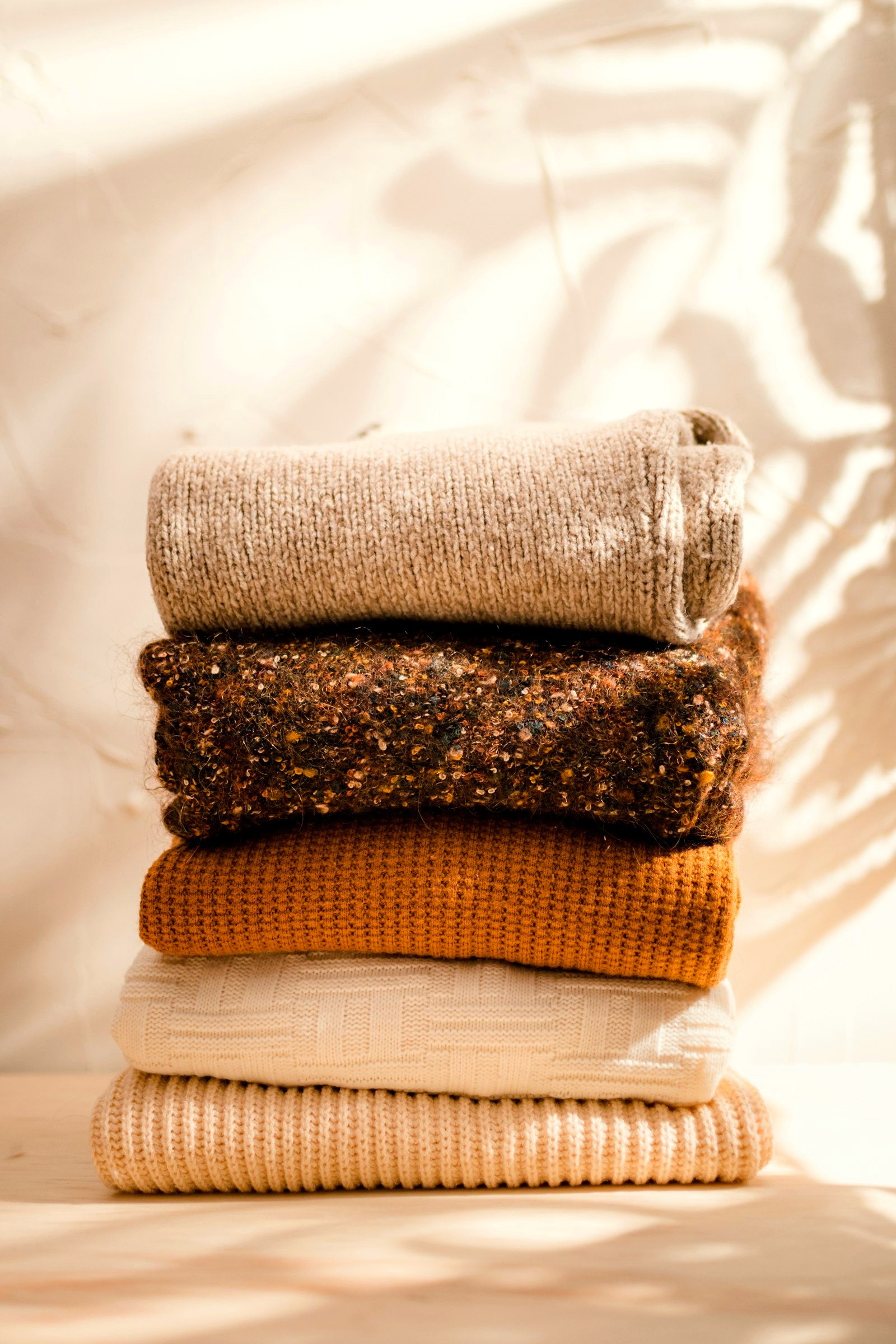
Uniqlo's premium lambswool cardigan runs the formula its knitwear keeps winning with on this site: a genuinely fine natural fibre, 100% lambswool at 19.5 microns, at a price the mall cannot answer, in sizes from XXS to 3XL, the widest run on this page. The construction detail deserves its sentence, because it is the detail this category is judged on: the maker backs the button placket with grosgrain tape specifically so the front cannot twist, a small, correct, engineered answer to the cardigan's first failure, printed on the product page rather than discovered on the rail. The front pockets are real and the buttons are honest.
The deductions are the known ones, and they are the same ones its crew carries. The knit is thinner than the heritage cardigans, the finishing is efficient rather than crafted, and three winters is the honest costing before the elbows and the placket start negotiating, which is why the longevity row stops at 9. The arithmetic survives all of it: $0.50 per wear, the second lowest on this page, from a cardigan whose fibre line would not embarrass a garment three times its price. The budget answer, again, is a real material, properly engineered.
J.Crew Rugged Merino Cardigan
US list price at last check: $138, usually promoted.
The mall's rugged entry: a handsome shawl collar and leather buttons over a fibre split the website declines to print, the same story its crew neck told at the same score.
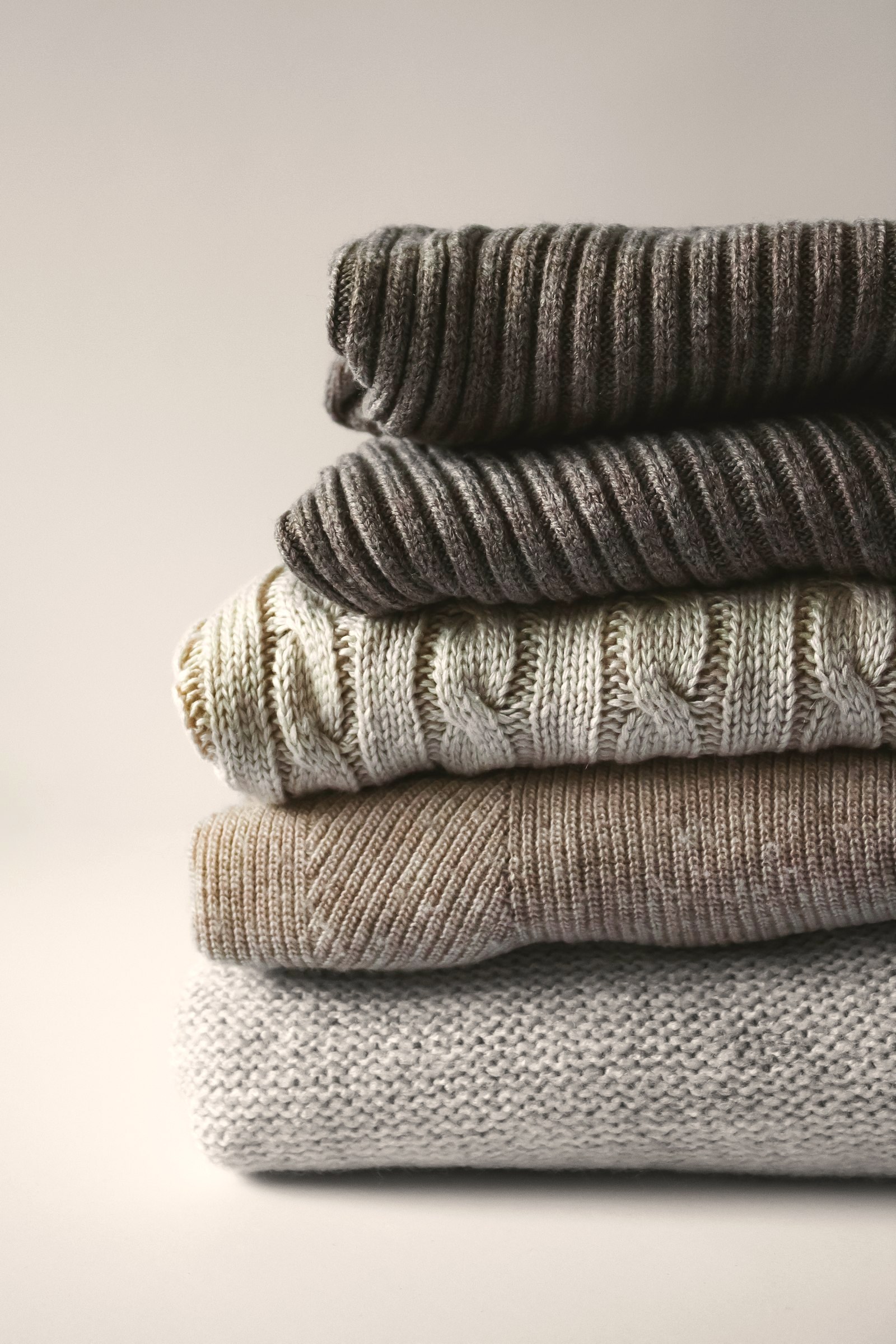
J.Crew knows how a cardigan should look, and this one looks the part: a substantial shawl collar, marled yarn, leather buttons, the heritage silhouette the house has sold for decades. The trouble starts where it started on our crew ranking, on the label. The website calls the cloth a merino blend and stops there; the garment tag gives the split, 60% merino wool and 40% polyamide, which means two fifths of the natural-fibre price buys a synthetic the shopper was not told the share of. The yarn row scores exactly that: 15 of 30, the fibre you are paying for being partly a fibre you were not sold.
At $138 list it sits in the ranking's awkward middle: double the Spier cardigan's price for a weaker fibre line, a quarter of the heritage pair's price for none of their construction. The value row is helped, as this house's value rows always are, by the perpetual promotion, and four costed winters at list returns $0.86 a wear, respectable maths that improves at the prices actually charged. Buy it on promotion if the collar suits you. Just read the tag first, and know which fibre you actually bought.
H&M Regular-Fit Cardigan
US price at last check: $39.99.
Forty dollars of soft knit with wool content, the eleventh garment from this house we have scored, failing at the one joint a cardigan cannot afford to fail.
The product page describes the cloth as a soft knit with wool content, and that phrase is the review. Wool is present the way a garnish is present: the proportions go unpublished, the hand is a synthetic's hand, and the fibre row scores the evasion the way it scored the same evasion on this house's crew neck. A cardigan adds a second failure to the familiar one, because its whole front is a moving part. The placket on a knit this light has no structure to hold a button stance, so the front gaps between buttons by the first month, the buttonholes stretch into slots, and the body twists in the wash the way its siblings' bodies twist.
The desk costs it at about 30 presentable wears, which at $39.99 is $1.33 per wear, tied with the $425 cashmere as the most expensive cardigan on this page, for the opposite reason. Its garment scores here join the house's line on this site: the Oxford at 41, the chinos at 48, the overshirt at 33, the flannel at 38, the roll neck at 44, the crew at 40, the jeans at 36, the polo at 35, the camp shirt at 35 and the linen blend at 34. Eleven garments, one method. The honest budget cardigan exists on this page, twice: the lambswool at $59.90 and the merino at $68. This is the cardigan to leave on the rail.
The fibre lines and the fronts, printed
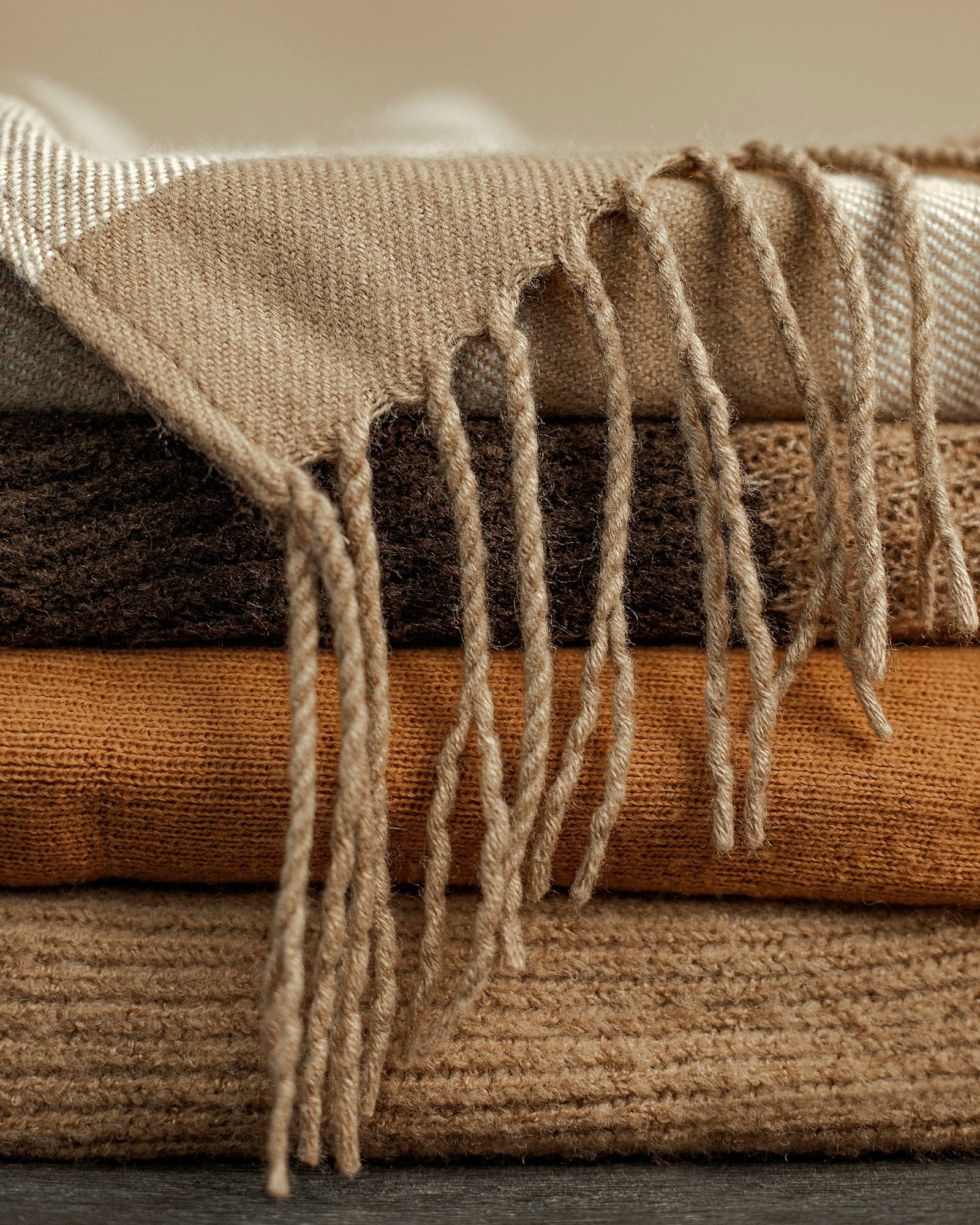
A cardigan ranking that hides its inputs is a mood board. Here is the data spine of this page: every cardigan's fibre line, its gauge class and its front build, with each figure marked as the maker's own, a desk class figure compiled for the category, or, in one case, the figure the garment tag prints and the website does not.
| Cardigan | Fibre line | Gauge | Front and pockets | Figure |
|---|---|---|---|---|
| John Smedley Bryn | 100% extra-fine merino wool | Fine gauge | Button placket, fashioned fronts | Fibre maker's; gauge class figure |
| William Lockie Cardigan | 100% Geelong lambswool, two-ply | Mid-heavy class | Horn buttons, patch pockets | Fibre maker's; gauge and furniture class figures |
| Luca Faloni Zip Cardigan | 100% cashmere, Cariaggi yarn | Fine gauge | Two-way zip, no pockets | Maker's figures |
| Spier & MacKay Merino Cardigan | 100% merino wool | Fine gauge class | Button placket | Fibre maker's; gauge class figure |
| Uniqlo Premium Lambswool Cardigan | 100% lambswool, 19.5 micron | Mid gauge class | Button placket, grosgrain-backed; front pockets | Maker's figures |
| J.Crew Rugged Merino Cardigan | 60% merino wool, 40% polyamide | Mid-heavy class | Shawl collar, leather buttons | Fibre from the garment tag; gauge class figure |
| H&M Regular-Fit Cardigan | Soft knit with wool content, proportions not published | Fine gauge class | Button placket | Class figures |
Read the fibre column against the scores and the ranking explains itself. The top five cardigans are each a single named natural fibre at 100%. The sixth is a blend whose split lives only on its garment tag. The seventh will not publish a split at all. The yarn row, the biggest row on the page, is where that ladder of candour is priced.
What each cardigan costs per wear
The maths, assumptions printed. A cardigan in regular rotation is worn about 40 times a year across the cold half of the year, the same working assumption as our crew-neck and turtleneck rankings. Expected life is presentable service: the winters the cardigan keeps its shape, its surface and a placket that still closes honestly, not the winters it merely exists. The Smedley and Lockie rows use the middle of the price bands stated on their cards. Divide price by wears.
| Cardigan | Price used | Expected life | Cost per wear |
|---|---|---|---|
| Spier & MacKay Merino Cardigan | $68 | 5 winters (200 wears) | $0.34 |
| Uniqlo Premium Lambswool Cardigan | $59.90 | 3 winters (120 wears) | $0.50 |
| J.Crew Rugged Merino Cardigan | $138 | 4 winters (160 wears) | $0.86 |
| John Smedley Bryn | $460 | 10 winters (400 wears) | $1.15 |
| William Lockie Cardigan | $575 | 12 winters (480 wears) | $1.20 |
| Luca Faloni Zip Cardigan | $425 | 8 winters (320 wears) | $1.33 |
| H&M Regular-Fit Cardigan | $39.99 | About 30 presentable wears | $1.33 |
Two lessons, both printed rather than implied. First, the cheapest cardigan to own is not the cheapest to buy or the dearest: it is the $68 merino in the middle of the ladder, because five winters of honest cloth divide a small price into a smaller one. Second, the table's top line is a tie with nothing in common: the $425 cashmere and the $39.99 cardigan cost the same per wear, one because its fibre asks for rest, the other because its life is a month of looking right. A ranking that only punishes one of those is an advertisement, not a verdict.
The Skip · 38/100
H&M Regular-Fit Cardigan. A placket with no structure to hold it, a fibre line that answers to the phrase wool content, and a dollar-thirty-three per presentable wear. The cardigan is the easiest sweater to buy well at every price on this page; there is no budget at which this is the right one.
Which one to buy
Buy the best once: the Smedley Bryn (84), the fine-gauge middle layer that works over a shirt and tie and under a coat, at a cost per wear below the fast-fashion option's.
Buy the heritage: the Lockie lambswool cardigan (82) for real cold and the longest life on this page; the cardigan as top layer, built the way Hawick has built it since 1874.
Buy the luxury: the Faloni cashmere zip (79), knowing exactly what the table says: the joint highest cost per wear here, bought for the hand of pure Cariaggi cashmere and a decade of evenings.
Buy the value: the Spier & MacKay merino (76) if the fine cardigan's job needs doing now; $68, a printed fibre line, and the lowest cost per wear on the page.
Buy the bargain: the Uniqlo premium lambswool (75), 19.5-micron lambswool with an engineered placket at $59.90 and $0.50 a wear. Start here, and upgrade when the drawer asks, not before. The full map of the category, every neckline, yarn and weight, is in the sweater index, the wearing rules are in How to Wear No. 01, and its closed-front sibling is ranked in the crew-neck Verdict Card.
Questions, answered
What is the best cardigan for men?
The John Smedley Bryn V-Neck Cardigan, at 84 out of 100 in this ranking. It is 100% extra-fine merino in the house's fine gauge, fully fashioned in Derbyshire, and it is the cardigan that can sit over a shirt and tie at noon and over a T-shirt at nine. The William Lockie lambswool cardigan is second at 82 as the heritage pick, and the Spier & MacKay merino cardigan at 76 is the value answer, at $0.34 per wear in the cost table on this page.
Should I buy a fine-gauge or a chunky cardigan?
Both exist for different jobs, and our sweater index prints the rule: fine under tailoring, chunky as the top layer. A fine-gauge cardigan is a middle layer, worn over a shirt and under a coat or blazer. A chunky lambswool cardigan is the top layer itself, the jacket substitute of an evening at home or a cold walk. Buy the one that matches the storey of the outfit you are missing; buying a chunky cardigan to wear under a blazer is the category's most common mistake.
What do you wear under a cardigan?
A shirt with a collar that can hold its own against the V: an Oxford or a dress shirt under a fine cardigan, a T-shirt or a henley under a chunky one. The full rules, the button discipline and the outfit matrix are in our cardigan brief, How to Wear No. 01. The short version: the layer under a cardigan should be thinner than the cardigan, the collar should sit outside it, and the bottom button stays open, the rule our sweater index prints for the whole type.
How many buttons of a cardigan should be done up?
All but the last, as a default. Our sweater index prints the rule for the type: the bottom button stays open, because a cardigan buttoned to the hem pulls across the stomach and shortens the body it is meant to lengthen. Worn open entirely, a fine cardigan reads as a layer; worn open, a chunky one reads as the jacket it is replacing. The middle path, two or three buttons at the waist, is the one that works under tailoring.
How long should a cardigan last?
A heritage cardigan should give a decade or more of presentable service: the Lockie is costed at 12 winters and the Smedley at 10 in the table on this page. A good budget lambswool gives about three winters before the placket and elbows start negotiating. The floor is the fast-fashion cardigan, costed here at about 30 presentable wears, because a cardigan has a failure point a pullover does not: the button placket, which gaps and twists first. Life means presentable service, not existence in the drawer.
Are expensive cardigans worth it?
On the printed maths, the middle beats both ends. The cheapest cardigan to own on this page is the $68 Spier & MacKay merino, at $0.34 per wear across five costed winters. The most expensive to own are tied at $1.33: the $425 Faloni cashmere, because cashmere wants rest days, and the $39.99 H&M cardigan, because its presentable life is about 30 wears. The heritage pair sit between, at $1.15 and $1.20, and buy their place with construction a budget cardigan does not attempt. Price and cost per wear are different measurements, and this page prints both.
How this ranking stays honest
The basis is printed on every card and the inputs are printed in the spec table: fibre lines and gauges are the makers' published figures where makers publish them, and labelled class figures where they do not, because a percentage a brand will not print is itself a finding. Two prices on this page are bands, the Smedley and the Lockie, printed as bands because US retail and stockist pricing for both houses moves; the cost table uses each band's middle and says so. The J.Crew fibre split is printed from the garment tag, because the maker's website does not publish it, and that gap between the tag and the page is part of its score. The H&M cardigan is the eleventh garment from that house scored on this site, and its line reads the same on every page because the method never changes. Scores for the houses repeat across this site by design: Smedley's crew won its ranking and its cardigan wins here, Lockie's construction row leads both knit pages it appears on, and Faloni's cashmere carries the same honest cost-per-wear distinction in both. If a cardigan is reformulated, repriced or quietly cheapened, the score moves at the next check, and the date at the top of this page moves with it.