

The garment the concierge configurator sells: a suit cut to one man's numbers, worn in the street rather than the showroom. The ranking below is built from the makers' published records cited on the page, and no garment by any ranked house is pictured. The photography gaps are printed in the honesty section below.
Checked and updated October 2026
The short answer: brands like Black Lapel are graded here on the premium made-to-measure buyer's three published facts: what construction the house stands behind as a standard, in its own words, rather than as an upgrade; what the cloth record says at the tier the buyer is actually paying for, mill and weight, or family and a Super count; and what the fit promise actually promises when its own policy section is read beside its headline, the window counted in days and the money counted in dollars. The anchor finishes third at home, because this page is the audit its number was owed. The 69 derived in the open on the Indochino page is confirmed against the maker's current record: the documents improved and their conditions sharpened in the same pages, and the audit prints both. Above it stand Spier & MacKay at 76 and Oliver Wicks at 74; below it, Hockerty at its audited 56, StudioSuits at 55 and Indochino at 49. The skip, by a field test printed in full below, is Sartoro at its audited 46.
What people actually want from Black Lapel
Nobody searches for brands like Black Lapel because they need another suit seller. The want underneath the search is the house's founding sentence, restated as a shopping problem: a suit cut to your own measurements at half to a third of designer money, from a house that behaves like a tailor rather than a checkout, a concierge who reads your fit photographs, a first garment treated as a draft to be corrected rather than a verdict to be lived with, and a promise with a name, Flawless Fit, standing behind the pattern once it is dialled in. The want is for that sentence with its construction made quotable, or its remedy made deeper, or its process kept while its premium is beaten.
That want has two failure modes, and they are the rest of this ranking. The first is the promise read at headline length: three legs on the tin, alterations, a remake, a return, and a policy section underneath in which the money is capped lower than the headline, the remake waits on a team's approval, and the refund is gated behind the process the headline forgets to mention. The second is the premium paid for atmosphere: a concierge's warmth charged against paperwork a rival publishes colder and deeper, a standard with a dollar figure and a year to run. Three tests separate the field. Is the construction a standard the house publishes on its own pages, in words a buyer can quote? Does the cloth record run to a mill and a weight at the tier being bought, or does it stop at heritage names and a Super count? And when the first garment lands wrong, as first garments do, what do the maker's own published terms actually promise, in the headline and in the policy section alike, and do the two agree? The anchor passes the first test better than it did when this series derived it, passes the second at its flagship end, and answers the third with the field's most human document and its most conditional one, in the same page. The audit is those three answers, priced row by row.
How the scores work
Every brand is graded out of 100: fabric and cloth out of 30, construction and craft out of 20, fit range and sizing honesty out of 20, value out of 15, longevity out of 15. Standing scores set elsewhere in this series are reproduced exactly and are never re-tried on a page that is not theirs. The anchor is the exception that proves the rule's purpose: its number was set as a derivation on another house's page, argued from that season's record, and a number quoted across the series is owed a full audit against the maker's own current published record, with the original derivation printed fairly and each row ruled on in the open.
The derivation, in full, before the audit rules on it. The Indochino page of this series derived the house at 69: fabric 21, construction 15, fit 14, value 9, longevity 10, each row argued from the maker's own published record as captured that season. Fabric: named Italian cloth at the Premium line, the range curated rather than vast. Construction: published by line, the Standard line half canvas from $499, the Premium line full canvas in Italian cloth from $949. Fit: a survey-and-algorithm profile from height, weight and body shape, self-measurements addable for precision, a concierge reviewing fit photographs, and the Flawless Fit Promise as published, complimentary alterations on the first order, remakes when alterations are not enough, returns in rare cases when every other solution is exhausted, inside a sixty-day window. Value: the premium configurator's ladder, $499 at the floor against the volume houses' $110 to $300, the concierge charged in the ticket. Longevity: the New York online tailor of 2012, founded by Derek Tian and Warren Liao, still standing. The audit takes the rows in order.
Fabric: 21, confirmed, with a genuine improvement credited in the argument and priced at what it is worth, which is not a point. Read live for this page, the maker's own quality guide names its sourcing outright: world-class materials from renowned heritage mills, Vitale Barberis Canonico, Reda and Loro Piana named in the text, every fabric hand-selected. The flagship product page prints the spec line this series has learned to ask for, in one breath: the Reserve Gray Sharkskin is made from Vitale Barberis Canonico, 100% wool Super 110s, weighing 270 grams, at $1,499. Swatches are offered to any buyer who emails the concierge. Three deductions keep the row where the derivation put it. The mills are named at house level, as sourcing, not as a per-fabric code a buyer can hold a specific cloth to across a range the homepage counts in the hundreds. The second flagship page read for this page, the Saxon Navy Herringbone at $1,199, prints its composition and its Super count, 100% merino wool, Super 110s yarn, and neither a mill nor a weight: the spec format is a flagship habit, not yet a standing one. And the derivation's 21 already paid for named Italian cloth at the premium line; what the current record adds is breadth of naming and one full spec line, not a new fact about the cloth at the floor. The improvement is the kind the last three audits credited on weaker rows. On this row it confirms. Twenty-one stands.
Construction: 15, confirmed, on a document stronger than the one the derivation graded, minus the map the derivation graded it by. The maker's jacket quality guide now publishes the standard outright, in the maker's own words: whether you choose full canvas or half canvas, all of our jackets are hand-crafted with true, natural fiber floating canvas construction, with the shortcut named and refused, synthetic interlinings, glues and fusing set against it. Around the canvas the guide publishes the rest of the anatomy: hand-set shoulder pads, carefully rolled lapels, natural buttons in horn, corozo and mother of pearl, a Bemberg lining, pick stitching, and functional buttonholes on every jacket, the house so confident in its fit process that it cuts working cuffs it cannot lengthen later. The FAQ adds the factory: we own and operate our own factory, and the guide places the cutting in the maker's own workshop. Against that, one retirement, printed plainly: the by-line architecture the derivation graded, a Standard line at half canvas and a Premium line at full, no longer appears on the maker's current storefront, which merchandises its suits by fabric and by price instead. The standard survives the lines that carried it, and is better documented than when it had them; a buyer choosing between half and full today reads the guide's either-or and asks the concierge, rather than reading a line map. A stronger standard and a missing map price each other. Fifteen stands.
Fit: 14, confirmed, and this row is the audit in miniature, because both halves of the record outgrew the derivation in opposite directions. The machinery first, better documented than this series captured: a sizing survey and a data-backed algorithm the FAQ describes as built on thousands of successful custom fits, from height, weight, body shape and fit preferences, with self-measurements addable for precision and no tape required; patterns saved per garment type, several to a profile; and the architecture the derivation never saw, printed on the promise page itself: we typically start by sending one of each garment type, the first garment a deliberate draft, the remaining items held until the fit is confirmed, then updated to the final fit and moved into production, with complimentary high-priority expedites on the first garment of each type while the confirmation runs. Fit experts with over ten years of experience review the photographs, as the derivation's concierge did. The window is confirmed in the maker's own words: fit feedback requests must be made within sixty days of delivery for the first garment of each type. Now the money, read in the same pages. The promise's suits section offers up to $125 in store credit for eligible tailoring receipts, $125 for a suit, $75 for a jacket, $50 for dress pants, $30 for casual pants. The same page's policy section caps reimbursement lower and pays it differently: up to $75 for your first jacket or outerwear piece, and up to $50 for your first shirt or pant, to the original form of payment, behind a required Fit Assessment Request submitted before the tailor is visited, with the warning that missing a step or spending more than the allotted amount may result in store credit or denial of the refund altogether. A remake must be reviewed and approved by the team first. And the third leg, the one no rival on this page publishes, is printed in two voices on the maker's own record: the suits section lists it plainly, return the garment to us for a full refund, altered clothing excepted; the policy section answers the refund question by refusing it until the alteration process has had its opportunity, and the FAQ calls returns what the derivation called them, rare cases when we have truly exhausted all other solutions. Cancelling an unproduced order costs the fabric, the FAQ allowing about two hours to change one's mind first. One more document fact, printed because this page prints what the record says: the promise's suits section names the party who will do the altering or remaking, and the name it publishes is Proper Cloth, a house this page field-tests below on its own record. The derivation's 14 priced a concierge, a survey and an honest three-legged promise. The audit finds a trial-garment system worth more than the derivation's process and a money schedule worth less than its headline, with the maker's own two texts disagreeing about the refund in between. Fourteen stands.
Value: 9, confirmed, with the ladder printed whole, including the rung the maker's own guide does not reach. The derivation priced a Standard floor of $499 and a Premium floor of $949. The maker's own current wedding guide, published on its own site for this season's grooms, prices the range in the maker's own words: Black Lapel custom suits range from $499 to $1,299 depending on fabric, a custom tuxedo from $699. The floor the derivation charged stands on the maker's current word, which is not nothing in a field whose floors drift. The maker's own storefront, read live, merchandises above its guide's top: the Saxon at $1,199 inside it, the Reserve at $1,499 beyond it, the extra two hundred being named-mill money charged for named-mill cloth, the arithmetic every premium house on this ladder runs at its top. Shipping is free worldwide on the maker's FAQ, which the value row notes because the volume houses charge their remedies in currency and their freight in patience. The row prices what the search is actually buying against the field: twice the volume guarantee house's floor and five times the published standard's, for the concierge process, the trial garment and the third leg, with the guide's top quietly outrun by the shop floor. The derivation's arithmetic holds at both ends. Nine stands.
Longevity: 10, confirmed, and the row's evidence has changed kind since the derivation wrote it. The house was founded by Derek Tian and Warren Liao and launched in 2011 and 2012, the New York online tailor of 2012 as this series has always printed it. What the derivation could not know: in 2021 the house was acquired by Blank Label, a Boston configurator of the same generation, and in January 2024 the two merged with a third house, Ratio Clothing, continuing under the Black Lapel name, backed, on the announcement as reported, by a United States manufacturing company, with a Denver store opened the same month. The maker's own consolidation page, written for the merged house's clients, records what survived the paperwork: for almost three years the same workshop produced both brands' garments, the accounts, measurements, patterns and fit preferences were transferred intact, and the team the clients knew is integrated into this operation. The homepage claims 120,000 customers worldwide and a 99% satisfaction figure, printed here as the maker's claims, graded as claims. The deductions stand as derived and sharpen by the same record: no repair programme is published, the garment's service life at the premium remains unproven by any document, and a house that has been bought and merged twice in four years asks its buyers to trust that the pattern file outlives the org chart, a trust its own consolidation page argues well and cannot prove in advance. Survival with the buyer's record intact is worth more than the derivation's plain still-standing, and consolidation risk is worth less; the two price each other at the row the derivation set. Ten stands. Add the audit's rows: 21, 15, 14, 9, 10. The brand score is 69, audited. The re-audit commitments are printed with it: if the spec format reaches the range, a mill and a weight on every product page rather than the flagship's, fabric is revisited first, upward; if the promise's two money schedules are reconciled into one published figure, or the refund's gating is printed in the suits section beside the offer, fit is revisited; if a repair programme is ever published, longevity is revisited.
The rest of the tailored bench is cited in prose, by total, numbers untouched. The programme with an exit rests: Suitsupply at 75, audited on its own page in this series; its Custom Made arm is the concierge configurator's wager executed by a programme with stores and returns, and it is graded across Nos. 48 and 49 on this ladder's own ground, this page grading the configurator field the anchor actually competes in. The anchor's own family is cited for the record: Blank Label and Ratio Clothing are not alternatives to it any longer, the three houses having been consolidated under this name, and a search that meets them meets this page's anchor wearing its older names. Garment scores are cited as evidence only, and the anchor has none to cite: no garment of its has been ranked in this magazine, because our suit ranking grades the off-the-rack two-piece and made-to-measure houses are graded here, on their systems and their terms, instead.
One name is answered in prose because the search expects it, and left unranked for a stated reason. H&M is the attainable end of the tailored look, suits and blazers at a tenth of this ladder's floor, and its compositions are printed per garment, which is the paperwork the law requires and the house provides; what its record does not publish is a measurement system, a construction standard, or a custom programme of any kind, the three things this page grades. Its brand record in this magazine is maintained on its own page in this series; it is not restated, re-derived, or scored against here, and no garment of its ranges is ranked on this page.
The disclosure ledger
| House | Cloth and construction, as published | The exit, as published |
|---|---|---|
| Spier & MacKay | The anatomy in the product names, audited on its own page in this series: half canvas stated, the mill and the weight on the product page, the size library a table a buyer can read before paying | The rack garment is returnable on the first piece, as its deriving page printed; the price of the system is the buyer's own tailor for the finishing |
| Oliver Wicks | Half-canvas construction published as the house's non-negotiable standard with a full-canvas upgrade above it; cloth exclusively from named Italian and English mills | A $125 alterations credit valid 365 days; a free remake for first-time customers inside 30 days where a local tailor cannot fix the fit; free return shipping on remakes |
| Black Lapel | Audited on this page: a floating natural-fibre canvas standard, full or half, published in the maker's own quality guide with natural buttons, Bemberg lining and functional buttonholes; heritage mills named as sourcing, Vitale Barberis Canonico, Reda, Loro Piana, and a full spec line, mill, composition, Super count and weight, on the flagship product page, the format not yet standing across the range | The Flawless Fit Promise as published: one garment of each type sent first and the rest held for fit confirmation; complimentary alterations or a full remake on the first garment of each category inside sixty days; up to $125 store credit for tailoring receipts in the suits section, reimbursement capped at $75 and $50 in the same page's policy section; returns in rare cases, a full refund listed in the suits section and gated behind the alteration process in the policy; altered garments never returnable; cancelling an unproduced order costs the fabric |
| Hockerty | Compositions printed across a hundred and fifty-plus fabrics with samples sold, and named-mill lines, Cerruti 1881, Loro Piana, Vitale Barberis Canonico, merchandised on the storefront itself, audited on No. 52; no fabric weight published per cloth, and no construction standard published anywhere on the maker's own record | The Perfect Fit Guarantee as published: a fit review inside 30 days of delivery with photographs, the alteration covered through a partner tailor invoicing the maker directly or reimbursed under the pre-purchase terms, a remake where the garment cannot be altered; no returns, exchanges or monetary refunds, store credit only in exceptional pre-approved cases |
| StudioSuits | A proper half-canvas construction with pad-stitched lapels published as the standard for every suit jacket, audited on No. 51; spec lines, composition, count and weight, on the product pages read, Vitale Barberis Canonico named on the Italian line; the entry library still sold by family | No returns, refunds or exchanges on any garment, ready sizes included; free replacement where the maker's measurements differ significantly from those submitted, the old garment returned at the buyer's shipping cost; alteration compensation as gift certificates to $75 a suit, claimed by email inside 30 days; free remakes on designated Fit Guarantee products for first-time buyers |
| Indochino | Canvas as a customization described in the maker's help center, audited on its own page: half canvas or unconstructed; fabric weights in GSM a standard field on its product pages | Fourteen days to raise a fit concern, at a showroom, tags attached; after that period claims cannot be accepted; refunds not available under any circumstances; returns not accepted; no remake promised in the published process |
| Sartoro | Audited on No. 50: spec lines on every product page, a named suiting with a fabric code at the premium tier; the standard jacket's construction published nowhere, full canvas a priced option in the designer | An alteration credit of $65 cash a suit at the maker's full discretion; remakes free inside 30 days at the maker's final determination, declinable for inaccurate self-measurements; remade garments never returnable; returns confined to the first order inside a fourteen-item exclusion list; defects after 15 days not covered |
Seven brands like Black Lapel, ranked
Spier & MacKay
Suits from $328 on the rack; the ranking this series keeps re-deriving to
The call: the answer above the anchor is the house that publishes its anatomy at a rack price, and its card here is the standing one, reproduced exactly as audited on its own page in this series. It sells the pattern the concierge build promises, disclosed like a specification sheet, and its card on the Hockerty page argues the rest: the same 76 anchors every premium tailored ladder this series prints, because it is the only house in the field whose answer to the buyer's three questions is a document rather than a process.
Where it loses to the anchor is the service, and the loss is structural: no concierge reads your photographs, no trial garment is sent to be corrected, no pattern is held for you behind the transaction, and the finishing is your own tailor's bill. A buyer who wants the garment and can read a spec buys here and finishes locally. A buyer who wants the fitting itself managed, the first garment treated as a draft by the house that cut it, buys the anchor three points and five rows below, and this page's audit is the honest accounting of what that management is worth. The two houses are not rivals for the same temperament, and the five-point gap between them is the price of the temperament itself.

Oliver Wicks
Custom suits from $799 at the maker's store
The call: the closest peer in the anchor's own trade is the house this series derived at 74 on the Indochino page, reproduced exactly here: the European online tailor that publishes half canvas as its non-negotiable standard with a full-canvas upgrade, sources exclusively from named Italian and English mills, sizes from a video-led self-measurement wizard, and prints its remedy like a contract. It stands five points above the anchor on the strength of the two documents the premium buyer reads first, and nothing in the anchor's audit, which improved the anchor's cloth and construction arguments on paper, reaches either one: named mills at every tier against named mills at the flagship end, and a standard stated as a rule against a standard stated as a guide whose lines have been retired from the shop floor.
The gap lives in the longevity and construction rows rather than the exit headline, and it is worth printing precisely because the anchor's promise has the more human shape. Oliver Wicks' $125 is a credit a buyer can actually use, valid 365 days against the anchor's sixty-day window, with free return shipping on a remake and a fabric guard on top; the anchor's $125 is store credit in one section of its page and a $75 reimbursement cap in another. The anchor answers with machinery the European house does not publish: a garment in every category sent first, the rest of the order held until the fit is confirmed, fit experts reviewing photographs, and two physical showrooms. Buy Oliver Wicks when the paperwork is the comfort. Buy the anchor when the process is, eyes open about which section of its promise page governs the money.
Black Lapel
Custom suits from $499 at the maker's own current guide, to $1,299 there, and $1,499 on its own storefront's flagship
The call: the anchor finishes third at home, and the audit that confirms its 69 is the argument of this page, printed in full above: the derivation's rows re-argued on the maker's current quality guide, promise page, FAQ, product pages, price guide and consolidation page, and confirmed at 21, 15, 14, 9 and 10, because in every row the improvement and the condition arrived in the same document and priced each other out. Third is not a demotion. It is where a premium configurator with a published floating-canvas standard, a trial-garment system no card below it offers, and the field's only three-legged promise stands when the two specification houses above it are graded on the same columns: behind the published standard and the published anatomy, ahead of every volume configurator the field runs.
Buy the anchor for the process, and buy it informed. The process is real: answer the survey, add your own measurements if you have them, let the house send one garment per category and hold the rest, photograph the fit for experts who have done it for a decade, and let the pattern be corrected before the order completes; the promise then stands behind that pattern with alterations first, a remake when alterations will not do, and a return in the rare case nothing will, a third leg no house below it on this page publishes at all. The informed part is equally real, and it is printed on the maker's own page for any buyer who reads past the headline: the tailoring money is a $125 store credit in the suits section and a $75 reimbursement cap in the policy section, the remake waits on the team's approval, the refund is gated behind the alteration process in the policy's own answer, and the window is sixty days from delivery on the first garment of each type. A house that publishes its conditions has earned the right to have them read rather than rumoured. Read them, and the anchor is the honest premium buy on this ladder.
Hockerty
Custom suits from under $300 at the maker's store
The call: the budget mirror of the anchor's wager stands at its audited 56, set on its own page in this series and reproduced exactly: the volume configurator that learned to name its premium mills, Cerruti 1881, Loro Piana and Vitale Barberis Canonico merchandised on its storefront, behind a two-legged guarantee and an unpublished construction standard. Thirteen points below the anchor, and the rows locate the distance precisely: this is what the premium configurator's ticket buys when it is spent at the volume end, a guarantee with the same first two legs and no third, cloth merchandised by name at its top without a weight at any tier, and no construction sentence a buyer can quote at all.
The comparison is the anchor's best argument and its sharpest warning in the same breath. The argument: for roughly the price of one anchor suit at its guide's middle, the volume house sells two, and its cloth names are not worse at the tier where its names appear; what the anchor's extra money buys is documents, the floating-canvas standard, the spec line, the trial garment, the third leg. The warning: documents are the whole of the difference, and documents are what the anchor's own promise page keeps in two voices; a buyer choosing between these two configurators is choosing which set of published terms to hold a maker to, and should read both pages' small print with the same care this audit read the anchor's. The anchor's paperwork, conditions included, is deeper. That is the thirteen points, itemised.
StudioSuits
Custom suits from $110 at the maker's store
The call: the budget configurator stands at its audited 55, set on its own page in this series and reproduced exactly here: the house that publishes a proper half-canvas construction with pad-stitched lapels as the standard for every suit jacket at $110, prints spec lines with weights on the named lines it sells, Vitale Barberis Canonico among them, and closes its door harder than any house its deriving page graded, no returns, no refunds, no exchanges, on any garment at all. Fourteen points below the anchor, and the construction row is the comparison that keeps the audit honest: the $110 configurator's standard is stated as a rule for every jacket, where the anchor's is stated as a guide for a line map its storefront no longer shows. The anchor's standard is the richer document, floating natural-fibre canvas with the full anatomy around it, and its fit and exit paperwork is deeper by whole legs. But the rule-versus-guide distinction is the premium field's open wound, and this card is where it is priced: two construction points, 15 to 12, on a $389 price gap.
Buy it as the configurator field's floor with its door closed knowingly: the garment is well-specified for its money and the measurements are the buyer's entire insurance. The anchor's buyer pays the difference and receives the insurance the floor house refuses to sell, a fitter's eye on the photographs, a first garment held back for correction, and a promise with a refund leg, however gated. Neither buy is foolish. They are the same wager at opposite ends of the risk column, and this ladder exists so the buyer chooses the end on purpose.
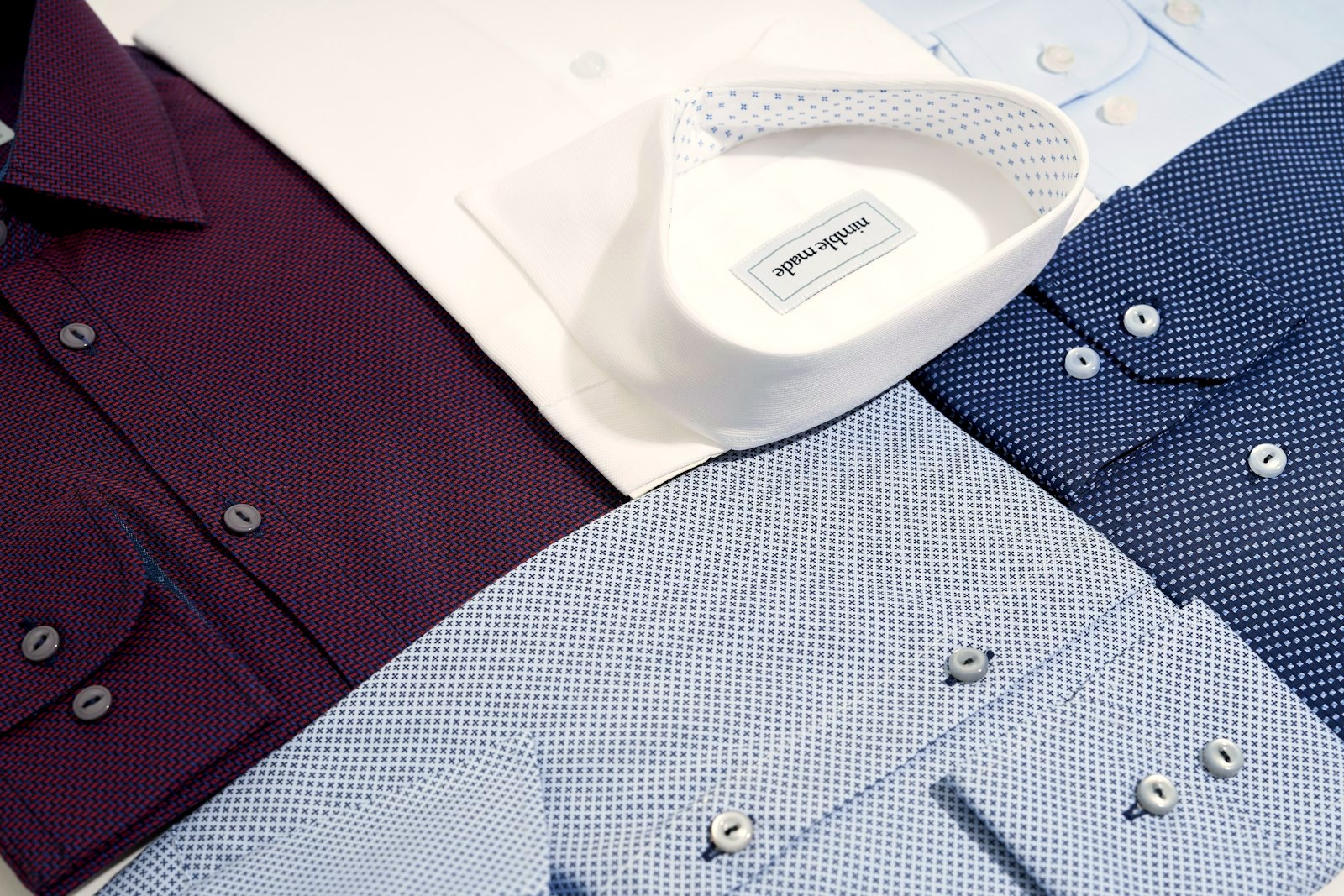
Indochino
Custom suits from $449 at the maker's store
The call: the showroom configurator stands at its audited 49, set on its own page in this series, the page that derived the anchor's 69 in the first place, and reproduced exactly: the field's most complete measuring network, showrooms across the continent with professionals holding the tape, ending in its shortest published leash, fourteen days to raise a fit concern and no refunds under any circumstances. Twenty points below the anchor, and the audit sharpens the old comparison rather than softening it: the anchor's promise has conditions, printed on this page at length, and it also has sixty days, a trial garment, a remake leg and a return leg, where the showroom house's published process ends at the showroom door with the concern raised or lost. Conditions on a promise are a lesser fault than a promise with a fortnight's fuse and no exits at all, and the twenty points are mostly that sentence, priced.
Buy it for the room: the buyer who wants a professional's hands on the tape and a garment to try on before committing will not find that network anywhere else on this ladder at the price, and its fabric weights are printed in GSM on its product pages as a matter of routine, a paperwork habit the anchor's range has yet to adopt. The leash is the price of the room, and it is printed on the maker's own help center for anyone who reads it before the wedding rather than after.
Sartoro
Custom suits from $495 at the maker's store, not spent
The call: the skip is a house this series has already audited, and the test that returns it is printed here in full, because a skip earned by a fresh search is worth more than a skip assumed. This page re-tested the made-to-measure field for an operation thinner than the anchor on the same columns at similar prices, and tested one premium name fresh for the purpose: Proper Cloth, which names its mills on its own pages, Thomas Mason, Vitale Barberis Canonico, Drago and Loro Piana among them, and publishes a remedy that clears the anchor's exit headline rather than falling under it, remake the garment in an adjusted size or offer a full refund, in its own words. It does not describe the skip. Neither do the field's other regulars, each disqualified by a published strength this series has graded before: MTailor publishes the strongest exit in the field, Tailor Store the fullest cloth paperwork, Renz Tailors a cash alteration table with a half-inch tolerance, Hangrr a half-canvas standard and named mills outright, StudioSuits a published standard at $110, carded above. Two names could not be tested to this page's standard because their current terms could not be verified on their own pages in this pass, iTailor for the fourth page running and Knot Standard here, and both are printed as unverifiable rather than convicted, neither carded nor skipped. Two more are no longer separate houses to test at all: Blank Label and Ratio Clothing were consolidated into the anchor itself, their clients' patterns moved onto its platform on the maker's own record. Alain Dupetit is not made-to-measure on its own FAQ's word. What the test leaves standing is the weakest verified record in the field, at its audited 46 from its own page in this series.
Against the anchor the conviction writes itself, at the anchor's own money. Sartoro's entry suit is $495; the anchor's floor is $499. At that price the anchor publishes a floating natural-fibre canvas standard in its own quality guide, and Sartoro publishes no construction standard at all, full canvas a priced option inside its designer and the standard jacket's build unstated anywhere on its record. The anchor runs a pattern system, a survey and an algorithm over your numbers, a saved pattern per garment type, one garment sent first and the rest held for confirmation; Sartoro asks five inputs and calls the output a digital pattern. The anchor's promise, read with every condition this page prints, ends in alterations, a remake, or in rare cases a return; Sartoro's remedy is an alteration credit of $65 at the maker's full discretion and a remake decided at the maker's final determination, declinable where the maker judges the buyer's own measurements inaccurate, the remade garment then never returnable. A buyer at five hundred dollars is owed the documents the anchor publishes, conditions and all, and the four dollars saved here buy their absence. Skip it, and spend the same money one rung of paperwork up.
The pattern under the ranking
The pattern is that the premium made-to-measure field has split into two kinds of house, and the ladder's shape is the split. Above the anchor stand the document houses: Spier & MacKay publishes an anatomy, Oliver Wicks publishes a standard and a contract, and both let the paperwork carry the sale. The anchor is the field's great process house: its best documents are not specifications but procedures, a survey, a held order, a first garment, a photograph review, a pattern kept, and its worst document is the one place where procedure meets money, a promise page whose headline and policy section quote different figures for the same tailoring. Below it the volume configurators trade documents for price in descending order of candour, and the audit's lesson generalizes cleanly: in this field, a house is worth what its least convenient published page says, because that is the page the buyer will meet when the first garment lands wrong. The anchor survives that test better than any configurator below it and worse than the two houses above it, which is the whole of its 69, now audited rather than derived.
The second pattern is consolidation, and it is why the anchor's longevity row reads differently than it did at derivation. The premium configurator generation of the early 2010s has folded into fewer, larger operations: the anchor itself is now three brands wearing one name, its workshop producing for houses whose own storefronts redirect to it, its pattern files holding customers who never chose it by name. A buyer choosing a configurator in 2026 is choosing a pattern custodian as much as a tailor, and the published record of how a house treats the patterns it inherits is the newest evidence this ladder grades. On that evidence the anchor argues its case well, accounts and measurements transferred intact, in the maker's own words, and cannot prove the next merger in advance. No house on this page can. The ones that publish the transfer earn the benefit of the doubt; the audit gives it, and prints the reservation beside it.
| Brand | Score | The piece to buy | Price |
|---|---|---|---|
| Spier & MacKay | 76 | The half-canvas suit off the rack, finished by your own tailor | From $328 |
| Oliver Wicks | 74 | The half-canvas suit at the published standard, the full-canvas upgrade where the cloth earns it | From $799 |
| Black Lapel | 69 | The first-category suit on the trial-garment system, the pattern dialled before the wardrobe follows | From $499 |
| Hockerty | 56 | The named-mill line suit, bought for the cloth name at the volume price | From under $300 |
| StudioSuits | 55 | The standard half-canvas suit at the floor, measurements taken twice | From $110 |
| Indochino | 49 | The showroom-measured suit, the concern raised inside the fourteen days | From $449 |
| Sartoro | 46 | None | $495 not spent |
The verdict: the anchor stands where its audit leaves it, third on its own page at a confirmed 69, behind the two houses that publish their way past it and ahead of every configurator that asks the buyer to trust what it will not print. Buy Spier & MacKay for the specification, Oliver Wicks for the standard and the contract, and Black Lapel for the process, a first garment treated as a draft and a pattern kept like a tailor keeps one, with its promise page's policy section read before the fitting, because that is where its promise keeps its arithmetic. Below the anchor, buy Hockerty for volume, StudioSuits for the published standard at the floor, Indochino for the room and the tape. And skip Sartoro at the anchor's own money: no construction standard where the anchor publishes floating canvas, five inputs where the anchor sends a trial garment, and a remedy at the maker's final determination where the anchor's promise, conditions and all, is a printed rule a buyer can hold it to.
Which one to buy
Buy Spier & MacKay if a published anatomy at $328 is the whole of your want and your tailor handles the finishing.
Buy Oliver Wicks if the standard and the remedy are the comfort, and five hundred dollars of premium buys you a contract you can quote.
Buy Black Lapel if the fitting itself is the product: a survey, a trial garment, a held order, a concierge reading photographs, and a pattern that improves with every order after the first.
Buy Hockerty if the wardrobe is the want and the guarantee's two legs are legs enough.
Buy StudioSuits if the published standard at $110 is the wager and your measurements are careful enough to be the whole insurance.
Buy Indochino if a professional's hands on the tape are worth a fourteen-day leash, and raise the concern inside it.
Skip Sartoro. At the anchor's own money it publishes none of the three documents the anchor publishes, and decides its remedy itself.
Questions, answered
What brand is most like Black Lapel?
Oliver Wicks, five points above the anchor at its standing 74: the same premium online wager with the two documents this ladder grades published deeper, half canvas as a non-negotiable standard with a full-canvas upgrade, cloth exclusively from named Italian and English mills, and a remedy printed like a contract, a $125 alterations credit valid a full year and a free remake for first-time customers. Below the anchor, the budget mirror is Hockerty at its audited 56, the configurator with the guarantee and without the published construction. Spier & MacKay, at 76, is the specification answer, the published anatomy at $328 on the rack. Buy the anchor itself when the concierge model is the want: a pattern built from a survey and your own numbers, one garment sent first in every category, and a promise with a third leg, however rarely it is used, that no configurator below it publishes at all.
Why does Black Lapel's score not move on its own page?
Because the audit found the improvements and the conditions in the same documents, and they price each other out, row by row, in the open. The fabric record genuinely improved: the maker's quality guide names its heritage mills and its flagship product page prints a mill, a composition, a Super count and a weight in one line. But the derivation's 21 already paid for named Italian cloth, the mills are named at house level rather than as codes on every fabric, and the second flagship page read prints neither a mill nor a weight. The construction document is stronger than the one derived, a floating natural-fibre canvas standard published outright, and the by-line map the derivation graded, Standard half canvas and Premium full, no longer appears on the maker's storefront. The fit machinery is better documented than the derivation captured, a trial garment in every category with the rest of the order held, and its money is more conditional: the promise's own page caps the reimbursement below its headline credit and gates the refund its suits section offers plainly. An audit that only ever confirms is a ceremony, and three of the last four in this series moved their numbers. This one confirms, and prints the near-moves so the reader can weigh them: 69, audited, is a stronger 69 than the derived one it replaces.
Black Lapel or Oliver Wicks: which should I buy?
Five points separate them, 74 to 69, and the rows say where. Oliver Wicks wins cloth, 23 to 21, named mills at every tier against named mills at the flagship end, and construction, 17 to 15, a standard published as a rule with its upgrade priced, against a standard published as a guide with its lines retired. It wins longevity on the remedy's depth as this series grades it, a $125 credit valid 365 days and a first-order remake with free return shipping, against a sixty-day window and a reimbursement schedule with conditions. Black Lapel wins value at the floor, a $499 entry against $799, and offers the architecture the European house does not: a garment in each category sent first and the rest held until the fit is confirmed, a concierge who reviews photographs, and showrooms behind the website. If the paperwork is the comfort, buy the published standard. If the process is the comfort, a first garment whose only job is to be corrected, buy the anchor, and read its promise page's policy section before the fitting, because that is where its promise keeps its conditions.
Is Black Lapel worth it from $499?
At the audited value row of 9, it is the premium configurator priced as one, and the audit prints the ladder whole rather than the floor alone. The maker's own current guide prices its custom suits from $499 to $1,299 depending on fabric, and its own storefront merchandises above the guide's top, a named-mill suit at $1,499 read live for this page. What the floor buys is documented on this page: a floating-canvas construction the maker now publishes as its standard, a pattern from a survey and your own measurements, one garment per category sent first for correction, and a promise whose three legs are alterations, a remake, or, in rare cases, a return. What it does not buy is the configurator field's cheapness, a published standard at $110 or a guarantee at under $300, or this ladder's deepest remedy, which sits five points above it at $799. Priced as the concierge end of online tailoring, the ticket is coherent. Priced against the volume houses, it is a $200 to $400 premium for the process and the third leg, and this page's rows are where that premium is itemised.
Why is the skip a house this series already audited?
Because the test that looked for a thinner record is printed on this page, and it found none it could honestly convict. This page re-tested the custom field for an operation publishing less than the anchor on the same columns at similar prices, and tested one premium house fresh: Proper Cloth names its mills and publishes a remake or a full refund on its own pages, which clears the anchor's exit headline rather than falling under it. MTailor publishes the strongest exit in the field, Tailor Store the fullest cloth paperwork, Renz Tailors a cash alteration table, Hangrr a half-canvas standard and named mills outright, StudioSuits a published standard at $110. Two names could not be verified on their own pages to this page's standard, iTailor for the fourth page running and Knot Standard in this pass, and are neither carded nor skipped. Two more are no longer separate houses to test: Blank Label and Ratio Clothing were consolidated into the anchor itself. What remains is the weakest verified record in the field, Sartoro's audited 46 from its own page in this series: at $495, the anchor's own money, no construction standard published where the anchor publishes floating canvas, five inputs for a pattern where the anchor sends a trial garment, and a remedy decided at the maker's final determination where the anchor's promise, conditions and all, is a printed rule. A ranking sends home the weakest record it can verify, and prints the test so any house that publishes less can appeal it.
How this ranking stays honest
Every score on this page that was not set here is reproduced exactly from the page that set it, and this page set exactly one: the anchor's, on an audit that confirmed it. Spier & MacKay's 76 was audited on its own page in this series, Oliver Wicks' 74 derived in the open on the Indochino page, Hockerty's 56 audited on the Hockerty page, StudioSuits' 55 audited on the StudioSuits page, Indochino's 49 audited on the Indochino page, Sartoro's 46 audited on the Sartoro page, and Suitsupply's audited 75 rested in prose. Black Lapel's 69 was derived on the Indochino page from that season's record, and this page rebuilt it row by row from the maker's own current published record, the quality guide, the promise page and the FAQ quoted in the maker's own words, two product pages, the maker's price guide, and its consolidation page, all read live for this page in October 2026. Where the derivation and the audit disagreed in emphasis, the audit printed both: the mills are named more broadly than the derivation captured, and the promise's money is more conditional than its headline. The November reconciliation this series usually owes when an audit moves a number is not owed here, because the number did not move; what changed is its status, derived to audited, and this page is where that change is recorded. If the maker reconciles its promise's two money schedules, extends its spec format across the range, or publishes a repair programme, the rows named in the method section are revisited first, and the change will be printed with its evidence, as every audit in this series has printed it.
The doors on this page are the makers' own storefronts as opened live for it, and the skip ships with no door, by the house rule that a ranking does not sell what it sends home. One research gap is printed rather than smoothed: the current garment terms of iTailor and Knot Standard could not be verified on their own pages to this page's standard in this pass, and both houses are named as unverifiable in the skip's field test rather than convicted on other people's summaries. The photography is banked stock, credited in CREDITS.md, and extends the per-brand assignments this family of pages established: the suited cyclist who heroed the page that derived the anchor heroes this one, the boutique rail stands for the anchor, the garment rail for Oliver Wicks, the flatlay for Spier & MacKay, the folded tees for Hockerty, the black cloth for StudioSuits, the folded shirts for Indochino, and the neutral wardrobe rail for the skip. No frame shows a garment by any ranked house, no ranked house's product photography is used, and the captions say so; the two banked suit portraits this magazine retired fleet-wide were not revived for this page. If a house believes its published record has been misread, the correction route is the same as it has been all series: publish the document, and the page will cite it.