
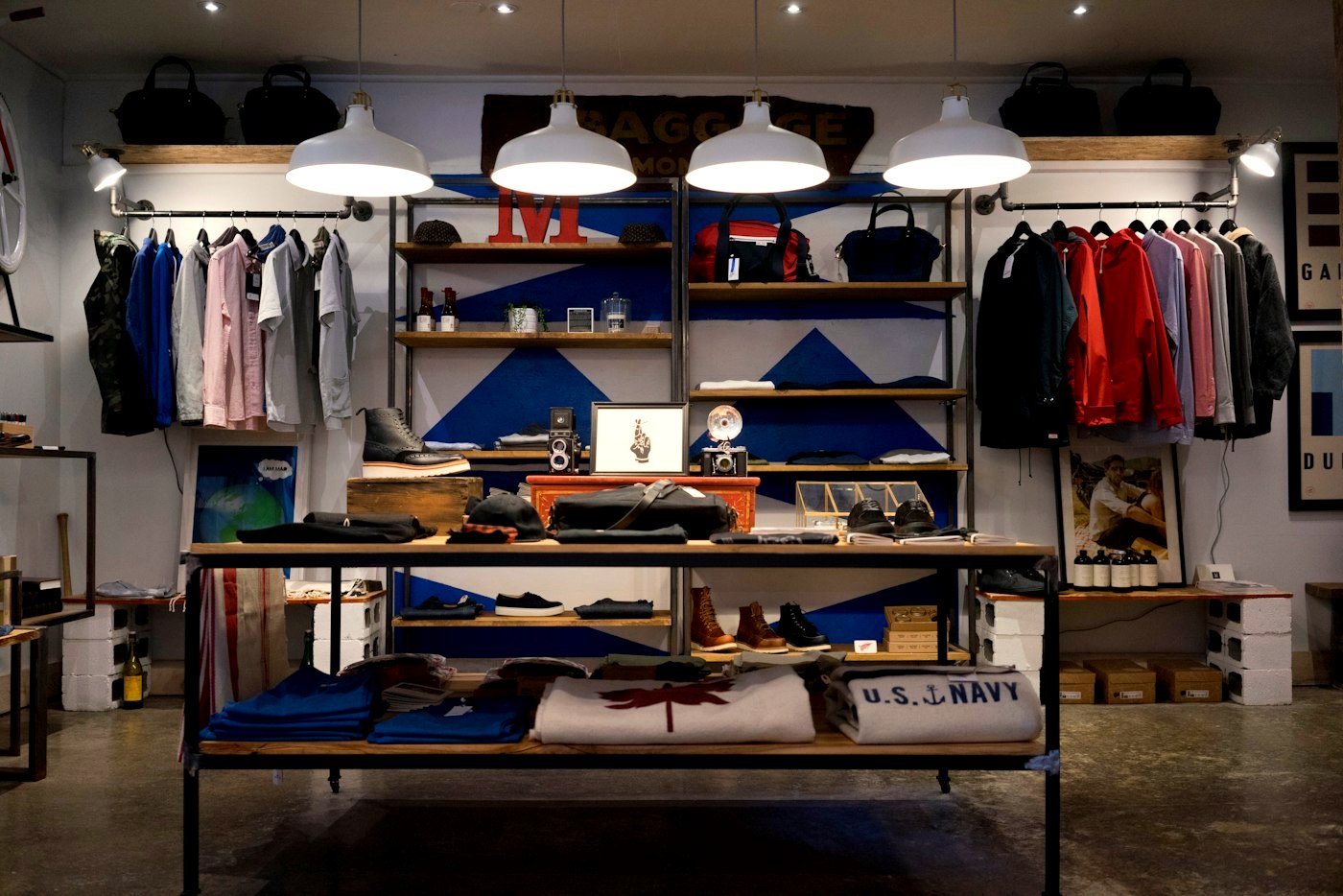
The store is the anchor's argument: the ranking below is built from the makers' published records cited on the page, and no garment by any ranked house is pictured. The photography gaps are printed in the honesty section below.
Checked and updated October 2026
The short answer: brands like Suitsupply are graded here on the attainable tailor's three published facts: what the cloth is, mill named and composition printed; what holds the chest up, stated as a standard rather than implied; and what the finished garment costs, ticket plus the alteration bill the ticket excludes. The anchor finishes fourth at home, and its number is this page's real subject. This magazine has printed Suitsupply at 78 and at 74 on two different pages, in good faith, on different evidence. Audited against the maker's own current published record, the score is 75: the 74's derivation is confirmed on four rows and corrected one point on fit, and the 78 is retired. Above it stand Boglioli at 90, Brooks Brothers at 77 and Spier & MacKay at 76; below it, J.Crew at 73 and Charles Tyrwhitt at 65. The skip is Indochino at its standing 49.
What people actually want from Suitsupply
Nobody searches for brands like Suitsupply because they need another suit seller. The want underneath the search is the house's founding wager, restated as a shopping problem: a properly built suit, half-canvas in cloth from a named Italian mill, at a price the traditional trade called impossible, sold in a store where a tailor pins it on your body before you pay. The want is for that wager without its compromises, or with its paperwork improved, or at its original price.
That want has two failure modes, and they are the rest of this ranking. The first is the specification without the infrastructure: the same published anatomy sold by post, cheaper, with the fitting left to the buyer's own tailor and tape measure. The second is the promise without the specification: the word custom sold at the wager's price for a garment whose construction is a checkbox and whose first fitting is final. Three tests separate the field. Is the cloth printed, the mill, the composition, the fabric code, or only photographed? Is the construction stated as a line standard, in the maker's own words, or discovered by wearing? And is the price the whole price, or the first of two bills, with the alteration list published where the buyer can read it before the fitting? The anchor passes the first test better than any house at its price, passes the second in its literature rather than on its garments' own pages, and answers the third more honestly than its reputation admits and less completely than its ticket implies. The audit below is those three answers, priced row by row.
How the scores work
Every brand is graded out of 100: fabric and cloth out of 30, construction and craft out of 20, fit range and sizing honesty out of 20, value out of 15, longevity out of 15. Standing scores set elsewhere in this series are reproduced exactly and are never re-tried on a page that is not theirs. The anchor is the exception that proves the rule's purpose: it holds two standing scores, and a number that changes from page to page is marketing, so this page does the one thing that resolves it, a full audit of the house against its own current published record, with both earlier records printed fairly and the losing rows retired in the open.
The two records, in full, before the audit rules on them. The Massimo Dutti page of this series scored the house fresh at 78: fabric 21, construction 16, fit 18, value 13, longevity 10. Its printed case was real as far as it went: half-canvas and full-canvas jackets in named Italian mill cloth, suits from $499, an alterations system in the store, fits graded like a tailor's. What it did not do was argue a single deduction: no garment of the house had been ranked here when it printed, the fit row's 18 rested on the store experience asserted rather than tested, and the value row's 13 priced the $499 ticket as if the alterations system in the same sentence softened it. The Spier & MacKay page derived the house at 74: fabric 23, construction 16, fit 15, value 10, longevity 10, each row argued from the published record with its deductions named, in text that said the brand had never been scored on this site, which the earlier page contradicts. A derivation that does not know about the score it displaces is still a derivation, and its rows were the fuller record; the garment rankings that followed, the Havana jacket at 76 and the Lazio suit at 79, printed 74 as the brand, and so did the pages after them. The divergence is four points, and it lives in three rows. Construction agrees at 16 on both pages. Longevity agrees at 10. The fight is fabric, fit and value, and the audit takes them in order.
Fabric: the derivation's 23 is confirmed, and the earlier page's 21 is retired. The maker's suits page names Vitale Barberis Canonico, Thomas Mason and Rogna in its own headline copy; its product pages name the mill on the cloth itself, with compositions and fabric codes printed, the record our suit ranking counted when it found the mill named for three of its eight graded cloths and this house among them, and our blazer ranking counted when this house and one other named the same Biella mill. The garment evidence agrees: the Perennial trouser scored 83 in our wool trouser ranking in the same mill's tropical wool as the winner's. The row's deductions stand as the derivation printed them: the entry rung runs to house cloth and stretch blends, and no cloth weight is published anywhere in the range, the count our suit ranking printed at none of eight. Twenty-one was the assertion; twenty-three is the record.
Construction: 16 on both pages, and 16 is confirmed. Half-canvas is published as the suit line's standard in the maker's fit and fabric literature, which is where our suit ranking counted it, stated in the house's literature rather than on the graded suit's own headline, and full canvas stands at the La Spalla top of the ladder. The deductions are the derivation's and they check out: the functioning sleeve buttons are an alteration tax the independent record flags on the house's own bestselling fit, and fused pieces stand at the line's edges. One garment caveat rides with the row, printed on the anchor's card: the soft Havana's own copy never says the word canvas at all, the silence our blazer ranking charged at 13 for that garment. The brand row grades the line standard; the garment keeps its charge.
Fit: neither printed row survives, and the audit lands between them, at 16. For the higher mark: the fit library is the widest on this page, fit after fit with short, regular and long runs, mix and match separates on the volume fit, and a Custom Made programme above the rack; and the fitting system around the library is published like no other house here publishes anything, the maker's store terms stating that in-store tailors turn basic alterations around within 30 minutes and complex ones within 3 days, that a full alteration pricing list exists for the reading, and that the maker's return policy extends to Custom Made orders, returnable within 30 days unworn and unaltered. For the lower mark: the default cuts run slim, larger bodies are served thinly, and the house size advisor's steering failure is not this magazine's invention but an independently documented one, a reviewer of record printing his own measurements, 5 foot 10 and 185 pounds, a 38 or 40 on his back, beside the 34 the advisor proposed. The 78's fit 18 priced the tailor theatre and never met the advisor. The 74's fit 15 priced the advisor and forgot the fitting system its own card praised in prose. Sixteen is where both facts land, one point back from the derivation, two below the assertion.
Value: the derivation's 10 is confirmed, and the earlier page's 13 is retired. The ladder has climbed and the era that built the row is closed: the $399 line that made the house famous is history, and the live ladder reads $499 at the ready-to-wear floor, $549 for a Custom Made suit in named Vitale Barberis Canonico tropical wool on the maker's own mill page, the volume fit's band running to $699 and the full-canvas top around $1,000. Against that, the second bill: alterations are not included in the price of the garment, in the maker's own words on its store pages, and the independent record of the $499 suit leaving the store at $750 to $800 after the alteration round grows is the documented risk the published price list exists to discipline. The row is not lower because the lists are honest, the cloth at the floor is named-mill, and the alteration prices are at least published, the one house in our suit ranking of which even the existence of alterations in print could be said. Thirteen belonged to a $399 story and a ticket read as finished; at $499 plus a published second bill, against a rival's 13 earned at a $328 entry two cards above, it cannot stand.
Longevity: 10 on both pages, and 10 is confirmed. Founded in 2000, a quarter century at a scale neither neighbour on this ladder has reached, with garments that wear as well as their construction says they should; charged, as both records charged it, because the cuts chase the season's silhouette harder than the classic houses above it, which dates them, and because the aftercare is an alterations bench rather than a published repair programme, with no resale or take-back standing behind the garment's second life. Add the audit's rows: 23, 16, 16, 10, 10. The brand score is 75. The re-audit commitments are printed with it: if the maker publishes cloth weights across the suit range, fabric is revisited first, upward; if the size advisor's record is answered in print or the fit library's larger sizes deepen, fit is revisited; if the ladder's floor moves again while the record stands still, value is revisited first, downward.
The rest of the attainable bench is cited in prose, by total, numbers untouched. The summit of the soft register rests: Lemaire at 90, audited on its own page in this series, rested here because its register is the silhouette as a wardrobe rather than the attainable tailor's ladder, and because the Boglioli page of this series cards it in its own field. The high-street silhouette rests: Massimo Dutti at 71, from its own page in this series, the page that printed the retired 78 in the first place; its blazer record is argued there and on the Boglioli page, and this ladder's tail is spoken for. The event price rests: Banana Republic at 69, carded on the Spier & MacKay page, whose Vitale Barberis Canonico separates at the Friends and Family price are the anchor's cloth at the anchor's money one week a season. Garment scores are cited as evidence only: the anchor's Perennial trouser at 83, its Lazio suit at 79 and its Havana jacket at 76, each graded on its own Card, none of them the brand.
One name is answered in prose because the search expects it, and left unranked for a stated reason. H&M is the attainable end of the tailored look, suits and blazers at a tenth of this ladder's floor, and its compositions are printed per garment, which is the paperwork the law requires and the house provides; what its record does not publish at this check is a construction standard, an alterations system, or a custom programme of any kind, the three things this page grades. Its brand record in this magazine is maintained on its own page in this series; it is not restated, re-derived, or scored against here, and no garment of its ranges is ranked on this page.
The disclosure ledger
| House | The cloth record, as published | The construction, as published |
|---|---|---|
| Boglioli | Fabric 27, derived on its own page in this series: noble fibres named and the garment-dye process printed; no fibre split for the graded garment, no cloth weight, no mill named | Construction 19, derived: unstructured and unlined, stated on the maker's own collection page as the model's identity; the stated absence |
| Brooks Brothers | Fabric 22: serious cloth buying at the top of the range, the icons' cloth a matter of record since 1900, thinner at the range's bottom | Construction 17: the 1818 line's half canvas stated in the maker's own product copy, one of two in our suit ranking's count |
| Spier & MacKay | Fabric 22: the mill, the composition and the weight printed on the product page itself, 260 grams a metre on the suit this series links | Construction 15: half canvas printed in the maker's own product names; the anatomy is the marketing |
| Suitsupply | Fabric 23, audited on this page: a mill named on every cloth, with compositions and fabric codes printed; no cloth weight published anywhere in the range | Construction 16, audited: half-canvas published as the line standard in the maker's literature and full canvas at its top; the soft jacket's own copy never says the word |
| J.Crew | Fabric 21: the Ludlow's cloth named twice over, Loro Piana on the flagship and Tollegno on the worsted line; house blends below them go unnamed | Construction 15: half-canvas in the Traveler's record, quieter at the chest than the three houses above it |
| Charles Tyrwhitt | Fabric 18: two-ply shirting with the weaves published; the suit cloth runs to unnamed Super counts behind the word wool | Construction 12: the suits' canvas story is not itemised at any rung of a $450 to $800 ladder, silence charged as silence on its deriving page |
| Indochino | Fabric 15: fibre lines published, the entry cloth naming no mill, Super counts carried as marketing | Construction 10: half-canvas or unstructured offered as an option in the build, not a standard the house stands behind |
Seven brands like Suitsupply, ranked

Boglioli
US price at last check: the K-Jacket $1,795 at US retail; the maker's own store lists the model from CHF 1,000, inside the house band of $300 to $1,900 our Italian ranking prints.
The call: keeps its standing 90, its rows derived to sum in the open on its own page in this series and labelled derived there: the soft jacket as a stated absence, and the ceiling this ladder's doctrine eventually reaches.
Its rows (27, 19, 16, 13 and 15) are reproduced from the page that derived them. It leads a tailoring page without selling a canvas, because its construction is stated more completely than any house below it states its own: unstructured and unlined, in the maker's own words, as the model's identity since 2000, in a factory of its own in Gambara. Against the anchor the fifteen points are the two doctrines priced. The anchor publishes the specification and sells the store; Boglioli publishes the garment and lets the specification ride. Buy the K-Jacket when the jacket is the purchase and the budget reaches it. Its full record is on its own page in this series.
Brooks Brothers
US price at last check: the Original Polo Button-Down Oxford about $120 at full price, as printed in our Oxford ranking.
The call: keeps its standing 77, from the pages that set it: the register's benchmark house, honest mainline tailoring, and the depth a twenty-five-year-old house cannot counterfeit.
Its rows (22, 17, 17, 10 and 11) are reproduced exactly. On this ladder its distinction is that its construction needs no literature hunt: the 1818 line's half canvas is stated in the maker's own product copy, one of the two stated constructions in our suit ranking's count of eight. The anchor beats it on cloth paperwork, 23 to 22, and on value at the floor; the winner of that exchange still finishes two points above the anchor, and the two points are the fit library's two centuries and the longevity of a house whose benchmark garment has been in continuous argument since 1900. The deductions are printed where they were set: the value row grades the mainline, not the outlet rail trading on the name. Buy the benchmark Oxford and the 1818 tailoring, on promotion. Its full record is on its own page in this series.
Spier & MacKay
US prices at last check: half-canvas suits from $328 at the maker's store; the Oxford $55 to $70, as printed in our Oxford ranking.
The call: keeps its standing 76, audited in the open on its own page in this series: the anchor's wager with the store removed and the specification left, at $171 less to start.
Its rows (22, 15, 17, 13 and 9) are reproduced exactly, as this page's commissioning required. The head to head is the closest in the family. The anchor wins cloth, 23 to 22, on the breadth of its mill naming, and construction, 16 to 15, on a full-canvas top the rival does not field. The rival wins fit, 17 to the anchor's audited 16, a tailored library without an advisor scandal attached, and value outright, 13 to 10, the same published anatomy at $328 against $499 plus alterations. Its garments outscore the anchor's in this magazine's rankings, the trouser 87 to 83, which is evidence about garments and is printed as such. What it cannot sell is the room: no store, no tailor with pins, no 30-minute hem. One point is the honest size of that room. Buy it when the measurements are known and the specification is the want. Its full record is on its own page in this series.
Suitsupply
US prices at last check: suits from $499 ready to wear; Custom Made in named Vitale Barberis Canonico tropical wool at $549 on the maker's own mill page; alterations priced separately from a published list.
The call: the anchor, audited in the open on this page at 75: the specification sold at scale, the strongest cloth paperwork at its price in the world, and the store system no rival on this ladder operates, with its two earlier numbers in this magazine, 78 and 74, retired and confirmed respectively in the method above.
Three numbers stand on this card and they are never confused. The brand stands at 75, audited here. The garments stand where their Cards put them: the Lazio suit at 79 on our suit ranking, on the strength of the field's best cloth paperwork; the Havana jacket at 76 on our blazer ranking, tied with the K-Jacket and beaten on the construction row because its own copy never says canvas; the Perennial trouser at 83 in our wool trouser ranking. The garment record is genuinely strong, and the brand number is lower than two of the three, because a brand is the whole ladder: the entry rung's house cloth and stretch blends, the shirting at $99 and up, the advisor's documented steering, the ladder that climbed from $399 to $499 while the silhouette chased the season. The audit's rows are the house whole: fabric 23, the mill named on every cloth and the codes printed, charged for the unpublished weight; construction 16, the standard published in the literature and the full canvas at the top, charged for the sleeve-button tax; fit 16, the widest library and the only published fitting system on the page, charged for the advisor and the slim default; value 10, honest lists and a second bill, both published; longevity 10, a quarter century of scale against a silhouette that dates. Buy the Lazio or the Custom Made in the named cloth, in a store, with the alteration list read before the fitting, and the house delivers what its wager promised. Read any single garment's own page before assuming the standard reaches it.
J.Crew
US price at last check: the Ludlow Traveler suit $696 as separates at list, before the promotions that run most weeks.
The call: keeps its standing 73, from the pages that set it: the door most readers of this search walk through first, a half-canvas Ludlow in named Italian cloth, sold as separates and priced as a promotion schedule.
Its rows (21, 15, 17, 12 and 8) are reproduced exactly. Against the anchor it is the convenience answer: two named mills on its suiting pages, Loro Piana on the flagship jacket and Tollegno on the worsted line, a record only the anchor matches on this ladder, and a store in the mall rather than the menswear district. The deductions are the ones its deriving page printed: the list price is an opening bid the promotions answer most weeks, the cloth story thins below the named pieces into house blends with no mill printed, and the longevity row of 8 prices a silhouette re-cut with the decades. Buy the Ludlow in the named cloth, on promotion, never at list. Its full record is on its own page in this series.
Charles Tyrwhitt
US prices at last check: the non-iron twill shirt $129 at list, $74.75 each on the multibuy; suits $450 to $800.
The call: keeps its standing 65, derived in the open on the Spier & MacKay page in this series: the shirt library is the real product, four fits and a collar matrix, and the suits are the sideline the score grades.
Its rows (18, 12, 15, 11 and 9) are reproduced exactly. On a tailoring ladder it finishes where a sideline finishes: its suit range prices from $450 to $800, into the anchor's canvas territory, without itemising its canvas at any rung, the silence its deriving page charged at construction 12. The fairness sentence is the same one its page printed: as a shirt shop it out-serves half this ladder, and a reader building the shirt rail first could start here happily. Buy the shirts on the multibuy. Buy the suit only in the clearance weeks, when its price admits what it is. Its full record is on its deriving page in this series.
Indochino
US prices at last check: custom suits from $499 at the Studio tier, about $799 at Premium and $999 at Luxury. This card ships without a buy link, and the honesty section prints why.
The call: the skip, at its standing 49 from the Spier & MacKay page in this series: the made-to-measure promise priced like canvas and built like a configurator, on terms that make the first garment final.
Its rows (15, 10, 10, 7 and 7) are reproduced exactly from the derivation that set them, and the conviction is that page's, restated without softening. The house sells the most seductive sentence in tailoring, a suit made to your measurements, from the same $499 the anchor charges for a published half canvas in a named mill's cloth. What the $499 buys is a stock pattern adjusted to submitted measurements, with the construction offered as an option in the build, half-canvas or unstructured, rather than a standard the house stands behind; the independent buying guidance for the house advises leaving time for an alteration round and never ordering against a deadline; and made-to-measure orders are final sale under the terms its deriving page checked. This page adds one contrast, labelled as its own and read from the maker's published terms for this page: the anchor's maker states that its return policy extends to Custom Made orders, returnable within 30 days unworn and unaltered, so the house that sells the rack and the programme takes its custom garment back, and the house that sells only the promise does not. Set against the anchor, the argument completes itself: for the Studio tier's $499, the anchor sells a stated canvas, a named mill and a tailor in the store, alterable and returnable. The skip sells the idea that the pattern began with you. A ranking that grades evidence over ideas prices the times it does not land.
The pattern under the ranking
Read the ladder as one argument about the second bill and it explains itself, the anchor included. A tailored garment's ticket is never its price: trousers come unhemmed by design, sleeves are set for the alteration the maker expects, and the finished garment costs the ticket plus the tailoring. The houses divide on whether that second bill is published where the buyer can plan it. The anchor publishes the most: a fitting system with stated turnaround times and an alteration price list its store terms point to, which its audit credited, and still excludes the alterations from the ticket, which its audit charged. The rival two cards above publishes its anatomy and leaves the second bill to the buyer's own tailor, at prices the buyer chooses. The skip publishes neither a construction standard nor an exit: the garment is final before it is fitted, and the alteration round its own guidance predicts is the buyer's problem at the buyer's tailor. The scores are that gradient, measured seven times: publication first, infrastructure second, and the promise that cannot be checked or returned last.
The second pattern is what the anchor's audit exposes about this magazine, and the page prints it because the reader is owed it. A score printed early, on a store visit's evidence and a strong first impression, does not stay a local fact: it is quoted, carded and built on, and within a season two pages of the same magazine were grading the same house four points apart, each certain, one of them unaware of the other. The correction is not embarrassment; it is procedure. The number now has one home, this page, one basis, the maker's current published record, and a printed account of what each earlier page got right: the 78 was right that the store system is real and the cloth is named; the 74 was right about the codes, the climbed ladder and the advisor; and the audit is right, if it is, because it made both records answer the same evidence at the same time. That is what the family exists to do to brands. It should not exempt its own.
Suitsupply and its alternatives, at a glance
| Brand | Score | The piece to buy | Price |
|---|---|---|---|
| Boglioli | 90 | The K-Jacket | $1,795 |
| Brooks Brothers | 77 | The 1818 suit, on promotion | About $120 the benchmark Oxford |
| Spier & MacKay | 76 | The core half-canvas suit | From $328 |
| Suitsupply | 75 | The Lazio, or Custom Made in the named cloth | From $499 |
| J.Crew | 73 | The Ludlow Traveler, on promotion | $696 at list |
| Charles Tyrwhitt | 65 | The shirts, on the multibuy | $74.75 each |
| Indochino | 49 | None | $499 not spent |
The one to skip: Indochino. Not a new sentence, and the page does not pretend otherwise: the house stands at 49 from the Spier & MacKay page in this series, its rows reproduced untouched, and its conviction is that page's, the configurator's construction and the final-sale terms. The audit on this page sharpens the contrast it is skipped against. The anchor's maker, audited above on its own published terms, sells a custom programme whose orders it accepts back within 30 days, publishes what its alterations cost, and states the canvas standard its line is built to; the skip, at the same $499 entry, offers construction as a checkbox and a garment that cannot be returned. Custom is the most expensive word on this page and buys the least verifiable garment on it. The made-to-measure promise deserves a house that publishes its construction as a standard and stands behind the first garment. Until this one does, it is the most expensive way on this page to arrive at almost.
Which one to buy
Buy Boglioli if the jacket is the purchase: the stated absence, bought once, at the maker's own store.
Buy Brooks Brothers for the heritage: the benchmark garments and the 1818 line, on promotion.
Buy Spier & MacKay for the specification per dollar: the published anatomy at $328, measurements known.
Buy Suitsupply for the published chest at scale and the tailor in the store: the named cloth, the read alteration list, the custom programme that takes returns.
Buy J.Crew for the convenience: the Ludlow in named cloth, on promotion, never at list.
Buy Charles Tyrwhitt for the shirts: the library on the multibuy, and leave its suits to the clearance weeks.
Skip Indochino on this page's test: canvas money for a configurator, on terms that make the first garment final.
Questions, answered
What brand is most like Suitsupply?
Spier & MacKay, at 76 to the anchor's audited 75: the same wager, named-mill cloth and published half-canvas construction sold direct, at a $328 entry against the anchor's $499, without the stores. Brooks Brothers, at 77, is the heritage answer, two centuries of depth and the benchmark Oxford. Buy the anchor itself when the infrastructure is the point: a store with a tailor in it, a published alteration price list, and a custom programme whose orders the maker takes back.
Why did this magazine print two different Suitsupply scores?
Because two pages graded it at different times on different evidence, and this page exists to settle it. The Massimo Dutti page scored the house fresh at 78, on the strength of named-mill cloth, canvas construction and an in-store alterations system, with no deductions argued. The Spier & MacKay page later derived it at 74, row by row from the published record, in text that said the brand had never been scored here, which the earlier page contradicts. Both were printed in good faith; they cannot both stand. Audited against the maker's current published record on this page, the score is 75: the derivation's fabric, construction, value and longevity rows are confirmed, its fit row is corrected one point upward for the fitting system it under-credited, and the 78's fit and value rows are retired, because the size advisor's steering is documented, the $399 era that built the value story is closed, and alterations are a second, published bill rather than part of the ticket.
Suitsupply or Spier & MacKay: which should I buy?
One point apart after the audit, 76 to 75, and the point is not the decision. Spier & MacKay wins the specification per dollar: a stated half canvas in VBC cloth at $328, against the anchor's $499 floor, and head to head in our wool trouser ranking its tropical wool trouser scored 87 against the anchor's Perennial at 83, the same mill's cloth in both. Suitsupply wins everything around the garment: stores where a tailor pins you, basic alterations turned around inside 30 minutes by the maker's own terms, a published alteration price list, a wider fit library with a custom programme above it, and Custom Made orders the maker accepts back within 30 days. If you know your measurements, buy the anchor's rival. If you are buying a first tailored wardrobe and want a human to check the shoulder, buy Suitsupply, and budget the alterations as the second bill the maker's own terms say they are.
Is Suitsupply worth it at $499?
At the audited value row of 10, yes, with the second bill counted. The $499 buys a half-canvas suit in cloth whose mill is named on the product page, the strongest cloth paperwork at the price anywhere in this family, and at $549 the maker's Custom Made programme sells a named Vitale Barberis Canonico tropical wool. What the $499 does not buy is the finished fit: trousers come unhemmed, alterations are not included in the garment price by the maker's own terms, and the published price list is the honest way to budget them, against the independent record of the $499 suit leaving a store at $750 to $800 once the alteration round grows. Priced as $499 plus a planned alteration bill, it is honest money. Priced as $499 finished, it is the ladder's oldest trick, and this page's value row grades the first reading.
Why is Indochino the skip?
Because its standing score says so, and this page does not move standing scores. Indochino stands at 49 from the Spier & MacKay page in this series, rows 15/10/10/7/7, derived there in the open: suits from $499 at the Studio tier to $999 at Luxury, the money this ladder charges for published half-canvas construction in named-mill cloth, buying a stock pattern adjusted to submitted measurements, with construction offered as an option in the build, half-canvas or unstructured, rather than a standard the house stands behind, and made-to-measure orders final sale under the terms that page checked. This page adds one contrast, labelled as its own: the anchor's maker publishes that its return policy extends to Custom Made orders, returnable within 30 days unworn and unaltered, while the skip's custom garment cannot go back at all. A first suit that cannot be returned, built to a pattern, at a canvassed suit's price, is the most expensive way on this page to arrive at almost.
How this ranking stays honest
Every score on this page has a home, and the anchor's has three, which is the problem this page was commissioned to end. The Massimo Dutti page scored the house fresh at 78 with no deductions argued and no garment evidence behind it. The Spier & MacKay page derived it at 74 in the open, in text unaware of the earlier score. The garment Cards and the pages after them followed 74; the suit styling brief followed 78. This page audits the house against the maker's own current published record, read live for it: the suits page naming its mills in its own copy, the mill pages pricing Custom Made in named cloth, and the store terms printing the fitting system's turnaround times, the alterations' exclusion from the ticket, the published price list and the Custom Made returns. The audit confirms the derivation on fabric, construction, value and longevity, corrects it one point on fit for the published fitting system its row under-credited, retires the fresh score's fit and value rows against the advisor record, the closed $399 era and the maker's own alterations terms, and rules 75. The losing pages are flagged for reconciliation in the November pass, with this page as the ruling's home; until that pass runs, this page is the magazine's current word on the house, and it says so. Boglioli's 90 was set as a total on the Italian ranking and derived to rows on its own page in this series, labelled derived there and here; Brooks Brothers' 77, Spier & MacKay's 76, J.Crew's 73 and Charles Tyrwhitt's 65 were set or audited on their own pages and are reproduced exactly, rows included; the skip's 49 was derived in the open on the Spier & MacKay page and is reproduced exactly, with this page's one addition, the returns contrast, labelled as its own and read from the anchor maker's published terms. Garment scores on this site are cited as evidence only and are never promoted into brand numbers, in either direction: the anchor's 79 suit does not raise its 75 brand, and its 75 brand does not lower its 79 suit. H&M is engaged in prose as a comparison only: its brand record is maintained on its own page, is not restated or reopened here, and no garment of its ranges is scored on this page. Houses cited in prose, Lemaire, Massimo Dutti and Banana Republic, keep the numbers their own pages set.
Doors follow the deep-link rule, and the anchor's is the door its first scoring page prints: the maker's own suits page, opened and read live for this page. The other doors are the ones the scoring pages print: the maker's search page for the K-Jacket (Boglioli), the maker's storefront where that is the door its page prints (Brooks Brothers), and the exact garment where a card names one (Spier & MacKay's linked suit, Charles Tyrwhitt's linked shirt, J.Crew's linked Ludlow). The SKIP ships with no buy link, by the standing rule. Photography: every frame is from this magazine's credited bank, each extends the family's established assignment for its house where one exists, none shows a ranked house's garment, and the captions say so; the bank holds no frame of the anchor's in-store tailoring benches at work, the one photograph this page's argument is about, and that frame is on the standing harvest list rather than faked. Prices and records were checked against the pages cited in October 2026; the full method is written out on the methodology page.