

The Spier & MacKay want is tailoring with the specification sheet left in: half-canvas, named mills, a high rise where a high rise belongs, at prices that embarrass the mall tailor. The ranking below scores who else sells that, and who sells the photograph of it.
Checked and updated October 2026
The verdict, up front: the anchor finishes second at home, by one point. Brooks Brothers takes the page at 77, keeping the standing score and rows set for it earlier in this series, on depth and the benchmark garment. Spier & MacKay stands at 76, its standing score audited in the open below against the strongest garment record any anchor has brought to this series: a trouser at 87, a chino at 84 and an Oxford at 85. Suitsupply, scored as a brand for the first time here and derived in the open, is third at 74. J.Crew keeps its 73 and Banana Republic its 69. Charles Tyrwhitt, also derived in the open, stands at 65. The skip is Indochino at 49: the made-to-measure promise priced like canvas and built like a configurator.
What people actually want from Spier & MacKay
Nobody searches for brands like Spier & MacKay because they need another suit. They search because a Toronto house founded in 2010, by Rikky Khanna, first as a shirtmaker, sells the dressed wardrobe the direct way and publishes the evidence: suits and sport coats with the construction printed on the product page, half-canvas, the mill named, Vitale Barberis Canonico Super 110s woven in Italy at 260 grams a metre on the Rivo suit this page links to, genuine horn buttons, a Bemberg cupro lining, sleeve buttons left non-functional so your tailor can actually alter the cuff. Trousers with a proper tailored waistband and a high-rise option. An Oxford shirt that beat the benchmark at half its price. The want is tailored clothing at honest cloth, graded by someone who reads the specification before the story.
The ceiling is real, and this page names it before the anchor's card can be accused of hiding it. The range is a core, not a universe: the dressed staples done properly, without the heritage houses' breadth of formalwear, madras and campus colour. The house is young, so its longevity evidence is a decade and a half of garments, not a century of them. And buying direct from Canada means shipping, duties on some orders, and returns that are free on a first suit or sport coat and your cost after that. The alternatives below are graded on the three tests this search is really asking. Is the construction honest, canvas where canvas is claimed, and published rather than implied? Is the cloth provenance real, a named mill, or the phrase Italian fabric doing the work of one? And does the fit library serve real bodies, high rises, pleats, separates and sizes beyond the sample size?
How the scores work
Every brand here is scored on the house basis for this series: fabric and cloth out of 30, construction and craft out of 20, fit range and sizing honesty out of 20, value out of 15, longevity out of 15. Four scores on this page are standing scores, reproduced with their rows from the pages that set them, because a score that changes from page to page is marketing. Brooks Brothers' 77, J.Crew's 73 and Banana Republic's 69 were set earlier in this series and are printed in full on the Brooks Brothers page, the J.Crew page and the Banana Republic page. Three scores are new on this page, derived in the open from the published record, and the page says so wherever it matters: Suitsupply's 74, Charles Tyrwhitt's 65 and Indochino's 49, each argued row by row on its card.
The anchor gets the open treatment too, the way the Rhone page taught this series to treat an anchor: audited in print, from its record. Spier & MacKay's 76 was set earlier in this series and printed with its rows on the Brooks Brothers and J.Crew pages, so this page does not invent a new number for its own anchor; it rebuilds the standing one, row by row, from the evidence, and prints the rebuild. The garment record is the strongest any anchor has brought here: the tropical wool trousers won our wool trouser ranking at 87, cloth 26, construction 18, fit 17, value 13, longevity 13 on that ranking's basis; the high-rise chino won our chino ranking at 84; the Oxford scored 85 in our Oxford ranking, a point above the Brooks Brothers benchmark garment. A garment score is evidence, not a brand score, so the brand rows are built from that record plus the house's published construction story. Fabric 22: named mills where it counts, the winning trouser's VBC high-twist wool, the Rivo suit's mill and weight printed on its own product page, docked because part of the range is house cloth with no mill named and the knitwear rail is thin. Construction 15: half-canvas published as the standard across the suit line, a tailored waistband, horn buttons and Bemberg linings, docked because the finishing, while honest, is a step below the heritage winner's best mainline work. Fit range 17: two jacket fits, slim and contemporary, high-rise and pleated trouser options, separates and a made-to-order programme, the library this search actually wants. Value 13: half-canvas suits from $328, the winning trouser at $175, the Oxford at $55 to $70, docked for cross-border friction on returns after the first tailored piece. Longevity 9: founded in 2010, a decade and a half of garments wearing well, and not yet the decades of testimony the top of this page can call. Add them: 22, 15, 17, 13, 9. The brand score is 76, the standing score, confirmed from the record up. When a fourth Spier & MacKay garment is ranked on this site, the audit will be printed again.
One more standing score is answered in the open rather than ranked: Massimo Dutti, 71 in this series, graded in full on its own page. Its tailoring is a sideline of a shirting and knitwear house, graded there against its own register; this page ranks the houses whose core business is the tailored wardrobe, plus the shirt specialist and the made-to-measure promise that compete for the same first-suit money. And one name is rested with the reason printed: Sid Mashburn, the Atlanta tailor-shop this desk admires, holds no score here because its record is a single shop's rail and a bespoke-adjacent price ladder, with no published construction specification at a scale this ranking can grade fairly. Admiration is not evidence, so it is named and left unranked.
Seven brands like Spier & MacKay, ranked
Brooks Brothers
US price at last check: the Original Polo Button-Down Oxford about $120 at full price, as printed in our Oxford ranking.
The heritage tailor: the register's benchmark garment, honest mainline tailoring, and the depth a fifteen-year-old house cannot counterfeit.
Brooks Brothers wins this page the way it won its own: not on specification, where the anchor matches it row for row at the top, but on the two things time builds. The first is the benchmark. The Original Polo button-down Oxford, the collar this house invented in 1900, scores 84 as a garment in our Oxford ranking, and the anchor's 85 beats it by a point without dislodging it, because a benchmark is the thing a category is measured against, not merely its highest score. The second is depth: the 1818 tailoring line, suits and sport coats in the American soft-shoulder grammar, formalwear, and a range the anchor's core cannot cover. Its garment evidence beyond the Oxford is printed across this site, down to the cotton Oxford boxers that won our boxers ranking at 83. The 77 and its rows, fabric 22, construction 17, fit 17, value 10, longevity 11, are reproduced exactly from the pages that set them.
The deductions are the ones this series always prints. The value row of 10 is the split house: the icons fairly priced at list and plainly worth the promotions that run most weeks, the outlet-made lines and the non-iron finishes trading on the name with thinner cloth, and the 77 scores the mainline, not the Factory rail. The fabric row ties the anchor at 22 rather than beating it, because the cloth buying at the top is serious and the cloth buying at the bottom of the range is not. Buy the benchmark Oxford and the 1818 tailoring, on promotion. The anchor exists for readers who want the same grammar without paying for two centuries of it, and it finishes one point behind, which is the honest size of the heritage premium today.
Spier & MacKay
US prices at last check: half-canvas suits from $328 at the maker's store; the Oxford $55 to $70, as printed in our Oxford ranking.
The anchor: the specification sheet as a business model, three ranked garments at 84 or above, and the best value row at the top of this page.
The case for the anchor is its record, and the record is unusual: this site has ranked three of its garments and all three sit at the top of their categories. The tropical wool trousers won the wool trouser ranking at 87, VBC high-twist wool that drapes like cloth four times the price, a tailored waistband, a high-rise option, $175. The high-rise chino won the chino ranking at 84, the only tailored trouser in that field, $88. The Oxford scored 85 in the Oxford ranking. The suits publish what the mall tailor implies: the Rivo suit linked from this card prints its own anatomy, 100 percent Super 110 virgin wool woven in Italy by Vitale Barberis Canonico, 260 grams a metre, half-canvas construction, a soft spalla camicia shoulder, horn buttons, Bemberg lining, at the direct price the series has printed since it first carded this house, suits from $328. Its brand rows, audited in the open in the method section above, are fabric 22, construction 15, fit 17, value 13, longevity 9.
The deductions are printed on the same card. Construction at 15: the finishing is honest and a step below the winner's best mainline work, and a young house's quality control has less depth behind it when a piece misses. Longevity at 9: founded in 2010, its garments have worn well for a decade and a half and simply have not had the decades the winner's have. Fit at 17 rather than higher: the library serves the tailored wardrobe properly, high rise, pleats, two jacket fits, and stops at the edges of the size run where the biggest houses keep going. None of it changes the conclusion for this search. If the want is the specification, published and priced fairly, the anchor is the answer, one point behind a two-hundred-year head start.
Suitsupply
US prices at last check: suits around $499 at the Lazio rung; the Perennial trouser $149, as printed in our wool trouser ranking.
Derived in the open on this page: the anchor's wager at industrial scale, named mills and published canvas, with stores, tailors and a ladder that has climbed.
Suitsupply had never been scored as a brand on this site, so its number is built here from the published record, and the garment evidence starts it honestly: its Perennial trouser scored 83 in our wool trouser ranking, the same mill's tropical wool as the winner's, four points behind it. The brand rows are argued from what the house publishes. Fabric 23, the highest on this page: the mills are named on the product pages themselves, Vitale Barberis Canonico, Rogna, Drago, Colombo, with compositions and fabric codes printed, docked because the entry rung runs to house cloth and stretch blends. Construction 16: half-canvas published as the standard across the suit line and full canvas at the La Spalla top, docked for the functioning sleeve buttons its own reviewers flag as an alteration tax and for fused pieces at the line's edges. Fit 15: the widest fit library here, Lazio, Havana, Napoli and a custom programme, docked because the default cuts run slim, the house size advisor is documented steering buyers to wrong sizes, and larger bodies are served thinly. Value 10: $449 to $499 for a named-mill half-canvas suit is honest money, and the ladder has climbed from the $399 era that built the reputation, while the shirting at $99 and up argues less well. Longevity 10: founded in 2000, the garments are well built, and the cuts chase the season's silhouette harder than the two houses above it, which dates them. Add them: 23, 16, 15, 10, 10. The brand score is 74.
What the score cannot capture, and the card should say, is the infrastructure: stores in the cities this magazine's readers live in, a tailor who pins the jacket on your body, alterations on site, and a return path that does not cross a border. For a first tailored wardrobe bought by a reader who does not yet know his measurements, that infrastructure is worth real points that this basis does not award, and the FAQ below argues the split honestly. On specification per dollar the anchor beats it; on everything around the garment, it is the strongest answer here, and third is where those two facts land.
J.Crew
US price at last check: the Ludlow Traveler suit $696 as separates at list, before the promotions that run most weeks.
The mall tailor, graded fairly: a half-canvas Ludlow in named Italian cloth, sold as separates, priced as a promotion schedule.
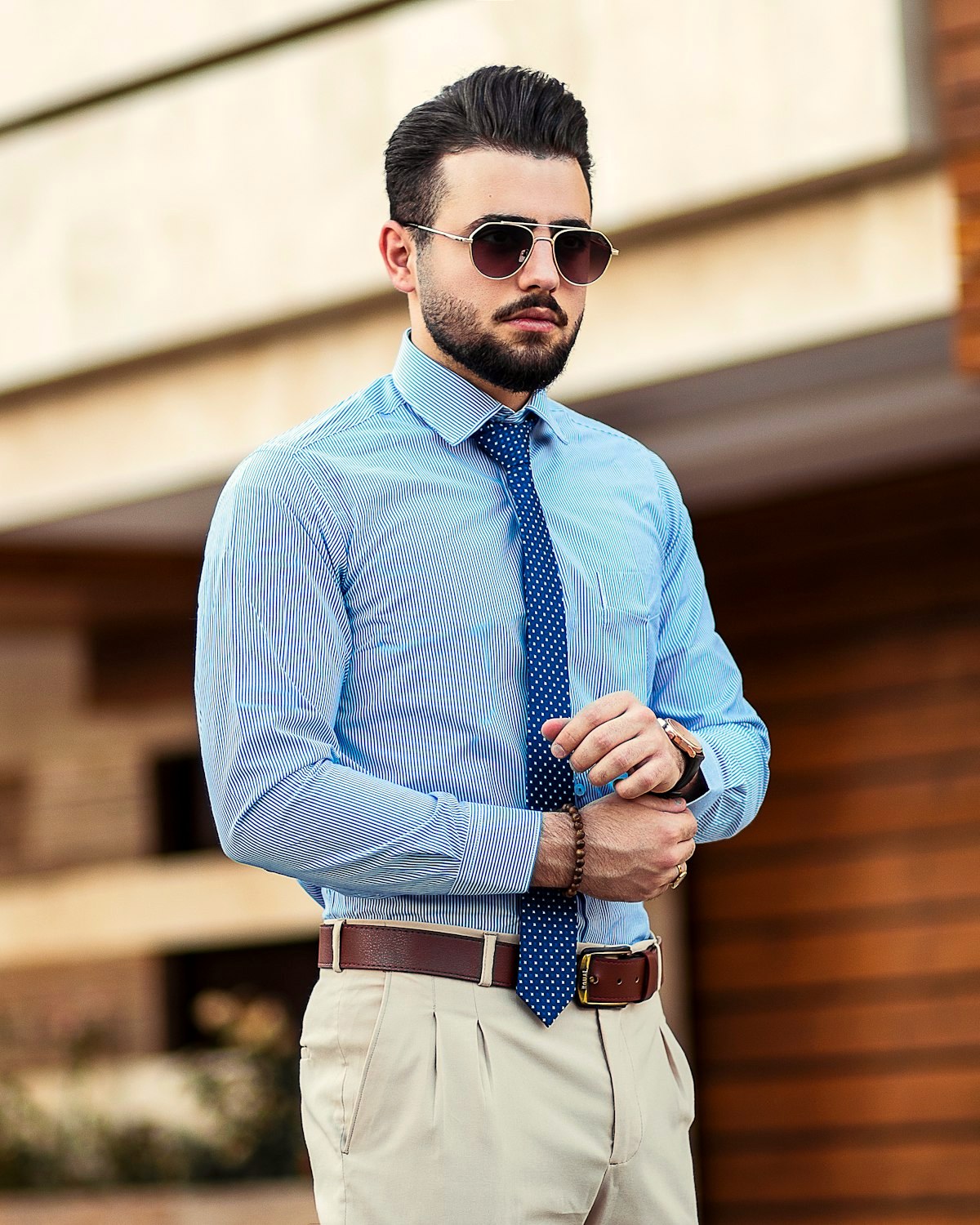
J.Crew is the door most readers of this search walk through first, and its card grades the tailoring, not the tee rail. The Ludlow, the slim suit that taught a generation the silhouette, is better built than its reputation in this series: the current Traveler version is half-canvas, partially lined in cupro, in an Italian stretch wool woven by Tollegno 1900, sold as separates so the jacket and trouser sizes are chosen independently, $696 the suit at list at this check, the trouser $248 of it. That is a real specification, and the standing 73, set earlier in this series and reproduced exactly, rows fabric 21, construction 15, fit 17, value 12, longevity 8, prices it fairly: this is the anchor's grammar at mall scale, with a store in the mall to try it in.
The deductions are the calendar and the cloth ladder. The list price is an opening bid: the same suit appears in final-sale coverage at a fraction of $696, which makes the value row's 12 a grade of the price actually paid, not the one printed. The cloth story thins as you leave the Traveler and the named-mill pieces, into house wool blends that do not publish a mill. And the longevity row of 8 prints a silhouette that has been re-cut with the decades, the Ludlow of today wider than the Ludlow that made it famous, so the buy-it-again test wobbles. Buy the Ludlow on promotion, in the named cloth, and it is the most convenient honest suit in America. At list, the anchor's published specification beats it for less money.
Banana Republic
US prices at last check: the Vitale Barberis Canonico wool suit separates list at $680 and sold at $408 in the fall Friends and Family event; the Lived-In Chino lists at $100.
The anchor of its own page, keeping its standing 69: real named-mill tailoring at the top of the range, a house cloth ladder below it.
Banana Republic keeps the score and rows set on its own page of this series: 69, fabric 20, construction 13, fit 17, value 10, longevity 9. The case for it on a tailoring page is the top of its range, which is better than the mall register suggests: suit separates in Vitale Barberis Canonico wool, the same mill the anchor and Suitsupply print, listing at $680 and selling at $408 in the fall Friends and Family event, as its own page recorded. A reader who catches that event buys named-mill tailoring at anchor money, in a store, with a fitting room. The fit row of 17 is earned the same way, a size library that serves the office population at scale.
The deductions are the ladder and the silence. Below the named-mill pieces, the cloth story goes quiet, house wools and blends with no mill printed, and the construction story is quieter: the house does not publish its canvas the way the three houses above it do, so the construction row of 13 grades what can be verified, not what can be hoped. The value row of 10 prints a list price designed to be discounted, the $680 that is really $408 in the event weeks. None of this makes it a bad buy at the event price. It makes it a fifth-place answer on a page that grades publication as a virtue: the anchor prints its anatomy at $328, and this house prints its anatomy at the top of the range and goes quiet below it.
Charles Tyrwhitt
US prices at last check: the non-iron twill shirt $129 at list, $74.75 each on the multibuy; suits $450 to $800.
Derived in the open on this page: the shirt library is the real product, four fits and a collar matrix, and the suits are the sideline the score grades.
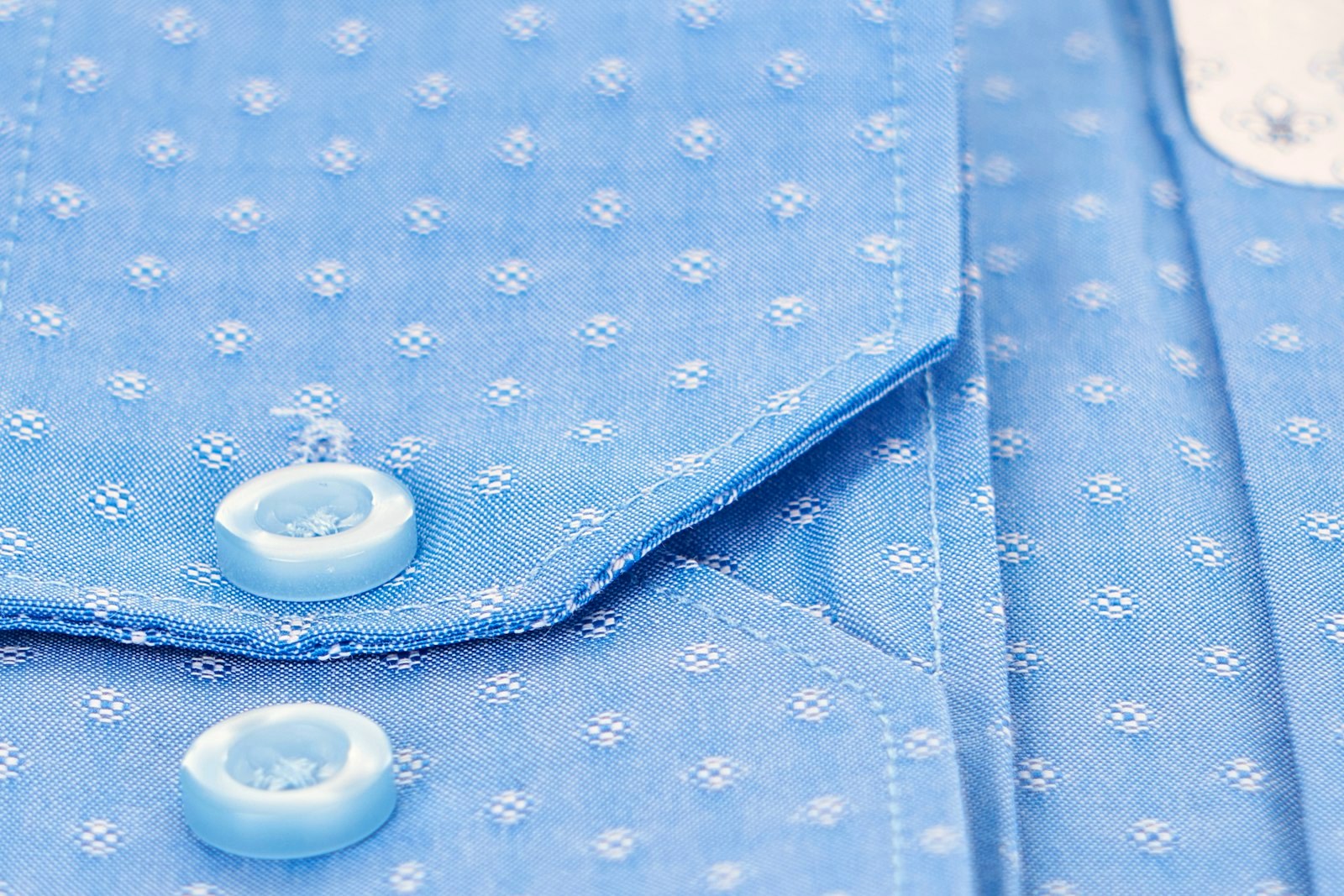
Charles Tyrwhitt also had no brand score on this site, so its number is built here, and it starts from two garment records: its non-iron twill scored 74 in our performance dress shirt ranking, the cotton control that beat the field on credibility, and its Oxford scored 74 in the Oxford ranking. The brand rows grade the whole house, suits included. Fabric 18: two-ply cotton shirting with the weaves published, honest cloth for shirts, docked because the suit cloth runs to unnamed Super counts and the core range leans on non-iron finishes that trade the cloth's breath for a creaseless morning. Construction 12: the shirts are finished properly for the money, brass collar stays among them, and the suits are where the row falls, a $450 to $800 ladder whose canvas story the house does not itemise the way the houses above it do, silence charged as silence. Fit 15: four shirt fits with a collar and sleeve matrix that is genuinely the best shirt library on this page, docked because the suits run boxy and parts of the range are slim only. Value 11: nobody pays the $129 list, the multibuy price is the real price and it is fair, docked because the list is theatre. Longevity 9: founded in 1986, the shirts hold up in rotation, and the suits are not decade garments. Add them: 18, 12, 15, 11, 9. The brand score is 65.
The placing needs one sentence of fairness: as a shirt shop, this house out-serves half the page, and a reader building the shirt rail first could start here happily. This page grades the tailored wardrobe whole, and a house whose tailoring is a sideline, unpublished in construction and priced into canvas territory, finishes where a sideline finishes. Buy the shirts on the multibuy. Buy the suit only in the clearance weeks, when its price admits what it is.
Indochino
US prices at last check: custom suits from $499 at the Studio tier, about $799 at Premium and $999 at Luxury.
The skip, derived in the open: the made-to-measure promise, graded on its published claims, charging canvas money for an adjusted pattern.
The skip on this page is not a bad-clothes verdict either; it is a promise verdict, and the promise is graded on the house's own published material. Indochino sells the most seductive sentence in tailoring, a suit made to your measurements, from $499 at the Studio tier, about $799 at Premium and $999 at Luxury at this check. Its rows are new here and argued from the record. Fabric 15: fibre lines are published, a captured suit prints 97 percent wool and 3 percent spandex at 320 grams, and the entry cloth names no mill, Super 110 carried as a marketing count. Construction 10: the maker's own product copy offers jackets in half-canvas or unstructured, which is an option in a configurator, not a standard a house stands behind, and at $499 the buyer is paying the anchor's rivals' canvas money for whichever box was ticked. Fit 10, the row the whole brand rests on: the garment is a stock pattern adjusted to submitted measurements, the independent buying guidance for the house advises leaving time for an alteration round and never ordering against a deadline, and made-to-measure orders are final sale under the terms checked this season, so the fit promise resolves, too often, into a suit that almost fits and cannot go back. Value 7: the ladder reaches $999 for cloth and construction the page cannot verify past the configurator's bullets. Longevity 7: founded in 2007 and genuinely scaled, with garments whose service life at these prices is still unproven. Add them: 15, 10, 10, 7, 7. The brand score is 49.
Set it against the anchor and the argument completes itself. For $499, the Studio tier's entry, the anchor sells a published half-canvas suit in a named mill's cloth with $171 left over for the tailor, alterable, returnable on the first piece, its measurements a size you can try again next year. Indochino sells the idea that the pattern began with you. Sometimes it lands, and the wedding photographs are lovely. A ranking that grades evidence over ideas has to price the times it does not land, the alteration round, the final-sale terms, the deadline the guidance warns you about. The made-to-measure promise deserves a house that publishes its construction as a standard and stands behind the first garment. Until this one does, it is the most expensive way on this page to arrive at almost.
The pattern under the ranking
Read the ladder as one argument about publication. The top three print their anatomy: the winner's benchmark garment is a matter of public record since 1900, the anchor prints its mill, weight, canvas and buttons on the product page, and Suitsupply prints fabric codes next to the price. The middle prints selectively: J.Crew names its mill on the Traveler and goes quiet on the house cloth, Banana Republic names VBC at the top of its range and goes quiet below it. The bottom sells a sentence: a shirt house whose suit construction is unpublished, and a custom promise whose construction is a checkbox. The scores are that gradient, measured seven times. Nobody here is punished for being affordable; the anchor's value row of 13 at $328 disproves that on its own card. The punishment is for substitution, the story doing the work the specification was hired to do.
The second pattern is the price of the word custom. The anchor's suit starts at $328 with its construction published. Suitsupply's ladder starts a rung higher with stores and tailors attached. The skip starts at $499, above both, for a pattern adjusted to your numbers and terms that make the first garment final. Custom is the most expensive word on this page and buys the least verifiable garment on it, which is why the ranking ends where it does: in tailoring, the honest hierarchy is not bespoke above ready-made. It is published above promised.
| Brand | Score | The piece to buy | US price |
|---|---|---|---|
| Brooks Brothers | 77 | The Original Polo Button-Down Oxford | $120 |
| Spier & MacKay | 76 | The tropical wool trousers | $175 |
| Suitsupply | 74 | The Perennial trouser, then a Lazio suit | $149 |
| J.Crew | 73 | The Ludlow Traveler suit, on promotion | $696 |
| Banana Republic | 69 | The VBC suit separates, in the event | $680 |
| Charles Tyrwhitt | 65 | The non-iron twill shirt, on the multibuy | $74.75 |
| Indochino | 49 | None | $499 |
The Skip · 49/100
Indochino. The made-to-measure promise at canvas money: a stock pattern adjusted to your measurements, construction offered as a checkbox, the first garment final sale, and an alteration round the buying guidance tells you to schedule before you need the suit. The anchor publishes more and charges $171 less.
Which one to buy
Buy the heritage: Brooks Brothers (77), for the benchmark Oxford and the 1818 tailoring, on the promotions that run most weeks.
Buy the anchor: Spier & MacKay (76), for the specification per dollar, the trousers first, then the chino, the Oxford and a half-canvas suit from $328.
Buy the infrastructure: Suitsupply (74), when a store, a tailor and an easy return matter more than the last two points of specification. Buy the convenience: J.Crew (73), the Ludlow in named cloth, on promotion, never at list. Buy the event price: Banana Republic (69), the VBC separates when the Friends and Family cut lands. Buy the shirts: Charles Tyrwhitt (65), on the multibuy, and leave the suits to the clearance weeks. The rest of the family: brands like Brooks Brothers, brands like J.Crew, brands like Banana Republic and brands like Massimo Dutti.
Questions, answered
What brand is most like Spier & MacKay?
Suitsupply, at 74 out of 100 in this ranking, derived in the open on this page: the same wager, named-mill cloth and published half-canvas construction sold direct, run at ten times the scale with stores to try it in. The heritage answer is Brooks Brothers, which wins this page at 77 on the strength of the benchmark garment and two centuries of depth. The honest answer includes the anchor itself: Spier & MacKay, at 76, is the only house here whose three ranked garments on this site all sit at 84 or above, and for the reader who wants the specification sheet rather than the story, it is the answer.
Is Spier & MacKay worth it?
On the record this site has published, yes, and the record is garment by garment. The tropical wool trousers won our wool trouser ranking at 87, Vitale Barberis Canonico high-twist wool at $175. The high-rise chino won our chino ranking at 84, $88. The Oxford scored 85 in our Oxford ranking, a point above the Brooks Brothers benchmark, at $55 to $70, roughly half its price. The suits publish their construction on the product page: half-canvas, named mill, horn buttons, Bemberg lining, from $328. What the price does not buy is depth, a young house's range is narrower than the heritage rail, and its longevity row of 9 prints that its garments have not yet had decades to testify. Buy the trousers, the chino and the Oxford first. The suits argue for themselves on the same evidence.
Spier & MacKay or Suitsupply: which should I buy?
Spier & MacKay for the garments, Suitsupply for the infrastructure, and the scores print the split: 76 to 74 in this ranking. Head to head in our wool trouser ranking, the Spier & MacKay tropical wool trouser scored 87 against the Suitsupply Perennial's 83, the same mill's cloth in both. Suitsupply answers with things the anchor cannot: stores where a tailor pins you, a wider fit library, full canvas at the top of its ladder, and suits around $499 at the Lazio rung against the anchor's $328 entry. If you know your measurements and your tailor, the anchor's specification wins per dollar. If you are buying your first tailored wardrobe and want a human to check the shoulder, buy Suitsupply and accept the smaller margin.
Why does Brooks Brothers win a page about Spier & MacKay?
By one point, 77 to 76, and the point is depth, not specification. On specification the anchor matches or beats the winner: its Oxford scores 85 as a garment against the benchmark's 84, its trousers and chinos won their rankings outright, and its fabric row ties Brooks Brothers at 22. What the anchor cannot yet match is the range behind the icons and the testimony of time: Brooks Brothers still owns the register's benchmark garment, the Original Polo button-down, its 1818 tailoring line is honest work, and its garments have had decades to prove the longevity row that the anchor, a house founded in 2010, is still earning. The construction row prints the other half: 17 against 15, the anchor's finishing is honest and a step below the winner's best mainline work. One point is exactly the size of that gap today.
Why is Indochino the skip?
Because it charges canvas-adjacent money for a configurator, and its own published terms print the catch. Suits start at $499 at the Studio tier and climb to $999 at Luxury, the money the anchor's rivals charge for published half-canvas construction in named-mill cloth. What the $499 buys is a stock pattern adjusted to your measurements, with the construction offered as an option in the build, half-canvas or unstructured, rather than a standard the house stands behind. The independent buying guidance for the house advises leaving time for an alteration round and not ordering against a deadline, and made-to-measure orders are final sale under the terms checked this season. A first suit that cannot be returned, built to a pattern, at a canvassed suit's price: the made-to-measure promise is real, and on this page's evidence it is the most expensive way here to arrive at a suit that almost fits.
How this ranking stays honest
Four scores on this page are standing scores, reproduced with their rows from the pages the method section cites: Brooks Brothers' 77, the anchor's 76, J.Crew's 73 and Banana Republic's 69. The anchor's number is not merely reproduced; it is audited in the open in the method section, rebuilt row by row from the three garments this site has ranked and the construction the maker publishes, and the audit lands where the standing score stands, which is what an audit is for. Three scores are new and labelled as such wherever they appear: Suitsupply's 74, Charles Tyrwhitt's 65 and Indochino's 49, each derived in the open from the published record argued on its card, and each open to re-derivation when a garment from those houses is ranked here. Garment scores quoted on this page, 87, 84, 85, 83, 83 and 74, belong to the garments and to the rankings that set them; brand and garment are kept separate throughout. Prices were re-checked today: the anchor's suit specification and construction were read off its own product page, the Ludlow Traveler's $696 and its Tollegno cloth from current reviews and the maker's store, Suitsupply's ladder from its current range, Indochino's tiers from a buying guide that checked them this season and its own product copy for the construction claim. Three doors are what they are and are named: Brooks Brothers and Banana Republic link to the makers' storefronts, as they do elsewhere in this series, Indochino's configurator has no stable product page to link, so its door is the storefront, and Suitsupply's follows the verified category door our wool trouser ranking uses. The photography is this magazine's licensed bank photography throughout; no brand's campaign imagery is used, and the bank holds no frame of these houses' suits, so the photographs stand for the register, as the captions say. When a maker changes cloth, price or model materially, the score moves and the move is noted here.