
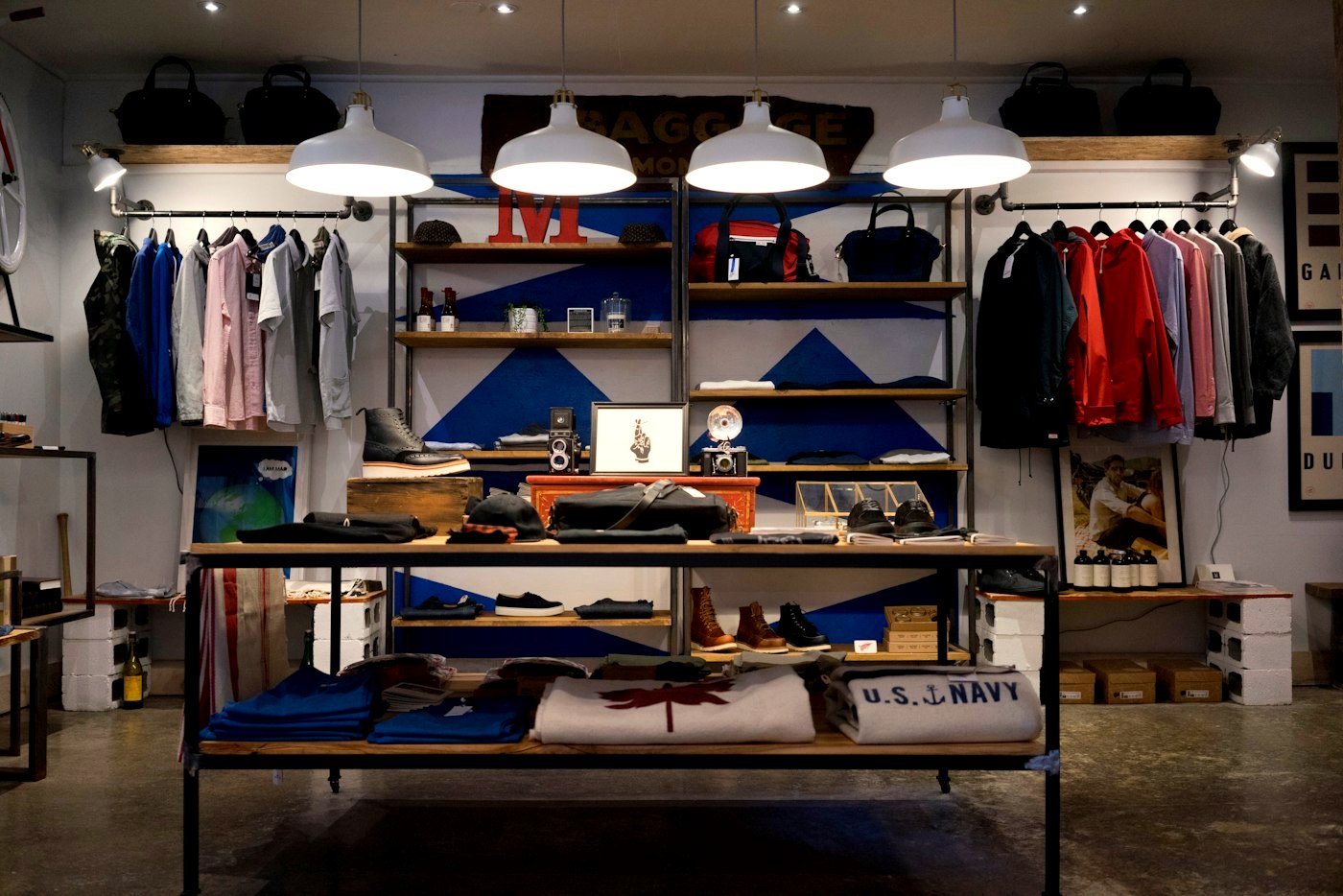
The want underneath the search: the mall's taste level, kept. This page scores who kept it best.
Checked and updated October 2026
The verdict, up front: seven brands scored out of 100 on the published brand basis: fabric and cloth 30, construction and craft 20, fit range and sizing honesty 20, value 15, longevity 15. Asket wins at 92, the everyday wardrobe with the replacement cycle removed. Uniqlo is second at 84, the honest high street the anchor's shoppers already half live in. And J.Crew lands sixth at 73, keeping the score and the rows from our American ranking: fabric 21, value 12 on the strength of the perpetual promotion, longevity 8, the weak row of an uneven institution. The named skip is Tommy Hilfiger at 56, the same prep picture with the clothes left out.
What people actually want from J.Crew
The want under this search is the mall's taste level, kept. J.Crew at its best was the place where the preppy register became wearable by everyone: the Ludlow suit that taught a generation to wear tailoring without fear, the broken-in chino, the Oxford with the collar roll left in, a wardrobe that agrees with itself at prices a salary can hold. It is polish at a human temperature, prep softened into sportswear, and it is the promise that the eye doing the choosing can be trusted, so the shopper does not have to become an expert to dress well. Every brand below is scored against those wants, including the anchor itself.
What the anchor does well is the eye. The proportion sense is real, and the garment evidence on this site shows it at its best: the Ludlow Oxford scored 78 in our Oxford ranking, in the top half of that page. What it does badly is consistency and candour about price. Quality swings by line and by season, the heritage-leaning Wallace & Barnes pieces at one standard and the promotional core at another, which is how the lambswool crew lands at 62 in our crew ranking and the performance piqué polo at 63 in our polo ranking. And the list price has become a fiction the house itself does not believe: the perpetual promotion trains every shopper to never pay it, so the printed number is not a price but an opening bid. Those deductions are the ones our American ranking printed when it scored the house 73 and called it the uneven institution, and they are printed again in its card below, sixth of seven, in the open.
How the scores work
Same ruler as every brand ranking on this site, published on our methodology page: fabric and cloth out of 30, construction and craft out of 20, fit range and sizing honesty out of 20, value out of 15, longevity out of 15. Brands already scored on this site keep their number here, because a ranking that changes its numbers between pages is not a ranking: Asket keeps its 92 from the Scandinavian ranking, Uniqlo its 84 from the Japanese ranking, Todd Snyder its 79, Brooks Brothers its 77 and Spier & MacKay its 76 from the Ralph Lauren page in this series, J.Crew its 73 from the American ranking, with the American ranking's rows reproduced exactly, and Tommy Hilfiger its 56 from the Ralph Lauren page. Garment scores quoted in the calls are for the garments; the brand scores here are for the houses.
Seven brands, ranked
Asket
US price at last check: the T-Shirt $70; the Loose Twill Chino $230.
The call: the permanence answer: the anchor's plain register with the drop calendar, the trend cycle and the replacement schedule all removed. Asket is what the J.Crew rail would be if it were allowed to finish a garment: one T-shirt refined year over year instead of replaced, graded sizes built from body measurements across three lengths, a fit row at a perfect 20 against the anchor's 17, and the cost breakdown of every garment published, fabric mill and assembly price included, which is the opposite of a list price nobody is meant to pay. The comparison that decides this search is the one the anchor's own numbers make: its fine basics expire on a season's rhythm, while this house's whole method is that they should not. Start with the T-shirt, then the merino knitwear, and notice the wardrobe stop expiring.
Uniqlo
US prices at last check: the U crew-neck tee $15 to $30.
The call: the same street, the opposite method: the garment engineered instead of photographed, at prices in the anchor's own conversation. The garment evidence on this site is not close. Its merino crew scores 75 in our crew ranking against the anchor's lambswool at 62, a blend whose proportions move by season. Its DRY piqué polo scores 71 in our polo ranking against the anchor's performance piqué at 63. Its selvedge jean scores 72 in our jeans ranking at $59.90. Value is a perfect 15, the only one in this series, because the price printed is the price charged. The ceiling is named on its own page in this series: alpha sizing, cloth ambition capped at good, no tailored register at all. For the J.Crew shopper whose complaint is the basics expiring, this is the first move, and it does not require leaving the street.

Todd Snyder
US price at last check: the Champion sweatshirt about $150, as printed in our American ranking.
The call: the closest relative, keeping the 79 set on the Ralph Lauren page of this series. The founder cut his teeth at Ralph Lauren and inside J.Crew itself, and the label reads like the anchor's language edited by its own graduate: Italian-mill cloth on American silhouettes, tailoring that behaves like sportswear, the camp collar shirt good enough to win our camp collar ranking outright at 84 as a garment. It loses to the two above it on price discipline and permanence, and to nobody on wearability. The deduction is the one our American ranking printed: at the top of the range you pay a designer layer for the editing. Buy the sweatshirts, the camp shirts and the tailoring, on sale where possible. This is what the anchor's eye becomes when it is allowed to buy cloth.
Brooks Brothers
US price at last check: the Original Polo Button-Down Oxford about $120 at full price, as printed in our Oxford ranking.
The call: the original institution, scored on the Ralph Lauren page of this series and reproduced here. J.Crew's whole project was this house modernised, the establishment wardrobe cut slimmer and priced for a younger salary, and the debt still shows in every Ludlow lapel. What remains at the original is the benchmark garment: the button-down collar Brooks invented in 1900 is still the collar our Oxford ranking scores a perfect 20, on a shirt it places at 84 as a garment. As a brand the picture is softer, cloth thinned across the years and a range that sprawls from the 1818 tailoring to promotional filler, a criticism this page also prints about the anchor below it, because the two houses have spent forty years teaching each other their worst habits as well as their best. Buy the icons, on promotion. The anchor sells this house's world back to you younger; this house sells it to you older. The shirt is the same shirt, and it is a good one.
Spier & MacKay
US prices at last check: half-canvas suits from $328 at the maker's store; the Oxford $55 to $70, as printed in our Oxford ranking.
The call: the tailoring answer, keeping the 76 from the Ralph Lauren page. When the J.Crew want narrows to the suit, the blazer and the shirt under both, this Canadian maker sells the construction the Ludlow describes: half-canvas suits in named mill cloth from $328, an Oxford our ranking places at 85 as a garment, and chinos that won our chinos Verdict Card at 84. Against the anchor the comparison is unkind and specific: the Ludlow's job, done by specification sheet, at prices that do not require a promotion to be honest. The deductions are consistency and patience: quality control varies by batch, shipping is not fast, and there is no world here, no story, only the clothes. For a reader buying the tailored half of the J.Crew wardrobe, that is the point.
J.Crew
US list price at last check: the Secret Wash shirt about $90 at the maker's store, before the promotions that run most weeks.
The call: scored in the open, the anchor finishes sixth on its own page, keeping the 73 from our American ranking with that page's rows intact: fabric 21, because the cloth is rarely better than good; construction 15 and fit 17, the respectable middle; value 12, helped by the perpetual promotion, because nobody pays the printed price and the ranking scores the price actually charged; longevity 8, the weak row, because too much of the line is built to a price and a season. The case for the anchor is the eye, and it is real: the Ludlow Oxford at 78 in the top half of our Oxford ranking, proportions chosen by people with taste. The case against is the variance around that eye, a lambswool crew at 62 whose blend proportions move by season, a performance polo at 63 built for the golf register and scored in the wardrobe one. Buy Wallace & Barnes and the Ludlow, on sale, with your eyes open. The institution is worth shopping; it is no longer worth trusting blind.
Tommy Hilfiger
US price at last check: the Oxford shirt lists at $89.50 at the maker's store, and is discounted most weeks.
The call: the other prep empire, keeping the 56 and the skip's place from the Ralph Lauren page, and the proof of what this category becomes when the logo finishes eating the clothes. The flag is a fine piece of graphic design. Behind it: commodity cloth with stretch in everything, construction built to a licensing spreadsheet, and a list price of $89.50 on the Oxford that the store itself discounts by a quarter to a half most weeks, which tells you what the list price is for. The anchor above at least keeps a best line where the taste is real and a garment can still score 78. This page's skip never built one. Fit range is the honest row; the machine dresses everyone. Nothing else here survives contact with the basis.
The pattern under the ranking
Read the ladder and the J.Crew market explains itself: the brands above the anchor sell narrower things than taste. The winner sells permanence. Second sells engineering. Third sells the anchor's own language, edited by its graduate. Fourth invented the wardrobe. Fifth sells construction by the specification sheet. The anchor sells taste, which is a real product, the eye is genuinely good, but taste is the one product that cannot be quality-controlled by the buyer in the store, and the anchor's variance is what fills the gap: the same rail holds a 78 garment and a 62 garment, and the label gives you no way to tell them apart before the wash does. The second pattern is price candour. Every house above the anchor prints a price it expects to be paid. The anchor and the skip below it print prices designed to be discounted, and a shopper trained by that system learns to distrust all prices, including honest ones. When you shop this category, ask two questions the label will not answer: which line am I holding, and what is the price when nobody is performing. This table is the shortcut.
| Brand | Score | The piece to buy | US price |
|---|---|---|---|
| Asket | 92 | The T-Shirt | $70 |
| Uniqlo | 84 | The merino crew, 75 as a garment | $49.90 |
| Todd Snyder | 79 | The camp collar shirt, the winner of our camp ranking | $158 to $178 |
| Brooks Brothers | 77 | The Original Polo Button-Down Oxford | About $120 |
| Spier & MacKay | 76 | The half-canvas suit | From $328 |
| J.Crew | 73 | The Secret Wash shirt, on promotion | About $90 list |
| Tommy Hilfiger | 56 | None | Oxford lists at $89.50 |
The Skip · 56/100
Tommy Hilfiger is this page's named loser, and the charge is specific. Prep is a cloth language before it is a flag: Oxford weave, flannel, madras, canvas, cut generously and worn for years. The skip sells the flag on commodity cloth, at a list price its own store treats as fiction, in fits graded for a photograph. Our Oxford ranking sent home a $25 shirt for being a costume of a shirt. At $89.50 list, this is the same costume with better marketing, and the extra money buys no extra garment. If the budget is Hilfiger money, the anchor above it, on its perpetual promotion, is the honest version of the same picture, and the alumnus at number three is the good one.
Which one to buy
If you buy one thing: the Asket T-shirt at $70, the anchor's promise kept permanently. If you want the closest relative: Todd Snyder, the language without the variance, camp shirts and tailoring first. If it is the shirt: Brooks Brothers on promotion, the original at its modern discount, or the Spier & MacKay Oxford at $55 to $70 if the specification matters more than the story. If it is a suit: Spier & MacKay from $328, and spend the saving on alterations. If you were really shopping the anchor: buy it, on sale, Wallace & Barnes and the Ludlow first, knowing the value row is 12 because the sale is the price. The other pages in this family score the pony's world in brands like Ralph Lauren, the resort want in brands like Tommy Bahama, the high street's honest end in brands like Uniqlo and its other end in brands like H&M.
Questions, answered
What brand is most like J.Crew?
Todd Snyder, at 79 on this page. Its founder cut his teeth at Ralph Lauren and inside J.Crew itself, and the label reads like the anchor's language edited by its own graduate: the same American sportswear and soft tailoring, with better cloth and settled fits. The page is won by Asket at 92, which answers the same everyday-wardrobe want with the replacement cycle removed. Snyder is the closest relative. Asket is the better clothing.
Is J.Crew worth the money?
On promotion, for the icons, yes. At list price, the question answers itself: the house discounts so constantly that the printed price is a fiction its own stores do not believe, which is why our American ranking scores its value at 12, helped by the perpetual promotion, rather than at the number the tag claims. The garment evidence is genuinely mixed, an Oxford at 78 in our Oxford ranking, a lambswool crew at 62 and a performance polo at 63. Buy the Ludlow and Wallace & Barnes on sale, with your eyes open, which is the American ranking's verdict and this page's.
J.Crew or Uniqlo: which is better?
Uniqlo, 84 to 73 as brands on this page, and the garment evidence runs the same way: its merino crew scores 75 against the anchor's lambswool at 62, and its piqué polo scores 71 against the anchor's performance polo at 63. The anchor's honest edge is the register Uniqlo does not attempt, the soft suit, the dressed chino, the Ludlow silhouette, American prep tailored rather than engineered. If the purchase is a basic, Uniqlo. If the purchase is the picture, J.Crew on sale.
What is the difference between J.Crew and J.Crew Factory?
Factory is the outlet line, designed for the outlet channel rather than marked down from the mainline: the silhouettes echo the mainline's, and the cloth and construction sit a step below it. The 73 on this page scores the mainline house, from our American ranking. The practical consequence follows from the anchor's own pricing: a mainline piece on its perpetual promotion is usually the better garment for the same money as Factory at its perpetual discount, and it is the one whose scores appear on this site.
What should I actually buy at J.Crew?
The pieces our American ranking names: the Ludlow suit and the Wallace & Barnes line, bought on promotion. Add the Secret Wash shirt at about $90 list, less on the promotions that run most weeks, and the broken-in chino. Leave the promotional core, the seasonal filler priced to be discounted, because that is where the quality swings the ranking deducts for live. The institution is worth shopping. It is no longer worth trusting blind.
How this ranking stays honest
Scores follow our published methodology and are re-checked on the cadence in the byline. Every brand score on this page is a standing score from this site's published rankings, reproduced with its rows: the Asket, Uniqlo and J.Crew figures from the country and American roundups, and the Todd Snyder, Brooks Brothers, Spier & MacKay and Tommy Hilfiger figures from the Ralph Lauren page of this series. Prices are US prices at last check: the makers' own store prices where this site has printed them, and the roundups' figures where it has printed those. Where a line prices in a band, the card prints the band and says so. When a maker changes cloth or price materially, the score moves and the move is noted here.