

A camp collar is a summer shirt with the structure taken out. This ranking scores what remains: the cloth, the print and the collar itself.
Checked and updated October 2026
The verdict, up front: seven camp collar shirts scored out of 100 on the summer-shirt basis this site publishes: cloth and fibre 30, print discipline 15, collar and construction 20, fit range 15, value 10, longevity 10. The Todd Snyder camp collar wins at 84, the balanced shirt: honest drape cloth, prints edited down to taste, at typically $158 to $178. The Gitman Vintage is second at 82 and is the ceiling, US-sewn from Japanese cloth at up to $290, beaten on fit range and value alone. And the novelty print is sent home at 35: at its $44.99 list it costs more per wear than everything above it. Every fibre line below is printed, and the cost-per-wear table is in the open.
The shirt with the structure taken out
A camp collar shirt is what is left when a shirt gives up its architecture. There is no collar stand and no interlining: the leaf is cut in one piece with the front and lies flat and open against the chest, held by a loop and a single button when it is held at all. The hem is straight because the shirt is built to be worn untucked. Our shirt index files the type at formality two among the summer shirts, in rayon, linen and seersucker, with one rule: open, untucked, hem straight. A summer shirt, not a dress shirt on holiday.
What decides the garment, then, is everything a dress shirt can hide behind structure: the cloth, the print, and whether the collar still lies like a collar by the third summer. The cloths are the heat's cloths, and they are not interchangeable. Rayon drapes and breathes and asks for a gentle wash. Tencel, the lyocell fibre, is the same family made stronger and easier to live with. Cotton holds a shape and outlasts both. Linen breathes the most and creases completely, which is its texture rather than its flaw. Every score below is built from the makers' published fibre lines and checked US prices under our published methodology, and the fibre line of every shirt is printed on its card, because in this category the label is the specification.
How the scores work
Six rows, the summer-shirt basis, printed here so the scores can be argued with. Cloth and fibre judges the fabric itself: what the fibre line actually says, the drape and hand of the class, and the care it honestly asks for. Print discipline judges the pattern as a decision: its scale against the body, its colour count, whether it was drawn for cloth or shrunk from a poster. Solids are scored here too; declining to print is a discipline, and the row rewards it when the cloth carries the shirt instead. Collar and construction judges the make: the one-piece collar's lie, the placket, the seams, the buttons. Fit range judges the size run and whether the cut serves more than one body. Value divides what you get by the US price, against the whole field. Longevity estimates summers of service from the construction class. The rows sum to the score.
Seven camp collar shirts, ranked
Todd Snyder Camp Collar Shirt
US prices at last check: typically $158 to $178 at the maker's store.
The call: the balanced shirt, and the one a first buyer should own. The maker's summer camps run in rayon drape cloth and cotton-linen, with the fibre line printed on every shirt, and the prints are the edited end of the category: tonal botanicals, geometrics, a paisley kept dark enough to wear after dark. The collar is a true convertible camp collar on a straight hem with split side seams, cut boxy and cropped in the modern register, in a size run that serves the whole rail. The house scores 79 as a brand on the J.Crew page in this series, where it finishes as that anchor's closest relative; this garment lands above its brand, which is the camp collar story at this house: it is the shirt the label is known for, made like it.

Gitman Vintage Camp Shirt
US prices at last check: typically $249 to $290 at US retail.
The call: the best made shirt on this page, and the second best buy, which is the heritage argument in one line. Gitman has sewn shirts in the United States since 1978, and the camp shirts carry the house's construction whole: flat-felled seams, extra-thick chalk buttons, a locker loop and box pleat at the back, cloths sourced from Japanese mills, cotton and cotton-linen dobbies that Gear Patrol's long-term owners report outlasting a decade of rotation. The print row is where the ceiling shows its one crack: the archive prints are drawn, not photographed, and some seasons the house takes the crazy print on purpose, which is a taste risk the wearer underwrites. The fit row is the real deduction: one vintage-true cut in a narrow spread. If your body fits the pattern, this is the last camp shirt argument you will have.
Buck Mason Wornwell Camp Shirt
US price at last check: $138 at the maker's store.
The call: the attainable quality shirt, and the print row's quiet argument. The Wornwell is a published 4-ounce mercerized cotton, washed for softness, in solids and quiet stripes: the print discipline of declining to print, scored as the discipline it is, because a 4-ounce cotton in a clean colour outwears every novelty on this page. The construction is honest American sportswear, a collar that lies flat and a hem cut straight, and the size run runs the full spread. The house behind it tops our American ranking at 90; this garment finishes below its brand because 4 ounces is a summer weight with a summer lifespan, and the longevity row prices that in. Buy it in a solid and wear it for the decade's warm thirds.
Portuguese Flannel Camp Collar Shirt
US prices at last check: typically $165 to $198 at US retail.
The call: the cloth and the taste are real, and the cut is the argument. The same Portuguese weaving country that produces this house's flannels produces its camp shirts in cotton and cotton-linen, and the prints are the category's fine end: small florals, embroidery worked into the cloth rather than printed onto it, colour kept in the register of a garden rather than a gift shop. What the fashion register costs it is range: a slimmer, shorter cut in a narrower size run, the same deduction its flannel took in our flannel ranking, where the shirt scored 72 as a garment. At up to $198 you are paying for the print done properly. On this evidence, it is the one print premium on the page that the cloth underneath supports.
Uniqlo Open Collar Shirt
US price at last check: $29.90 at the maker's store.
The call: the honest budget entry, from the brand that scores 84 in our Japanese ranking on exactly this virtue. Uniqlo calls the type by its other name, the open collar shirt, and sells it in cotton-linen and rayon blends at $29.90, in solids and small prints, across one of the widest size runs in the field, which is why the value row is at full marks. The deductions are printed in the rows it loses: the cloth is light and the collar is a light build, and three summers is the honest costing. It never pretended otherwise, and that honesty is worth thirteen points of score over the entry at the bottom, which charges half again the money for the same lifespan and a louder shirt.

Tommy Bahama Silk Camp Shirt
US prices at last check: typically $150 to $195 at the maker's store, the embroidered panelbacks at the top.
The call: the question this category always asks, answered in the open. The silk is real silk, and the drape is the benchmark every rayon on this page is imitating: the cloth row says so, and the brand behind it scores 76 on its own page in this series for the same reason. What the garment score deducts is everything wrapped around the cloth. The prints run at poster scale, palms the size of the chest that wears them. The cut is relaxed only, generous on the bodies it serves and absent for the rest. And the price climbs to $195 for embroidered panelbacks, a joke told on your back at collector money. Buy the plain silk on sale and it is a fine shirt. The ranking scores the shirt as it is sold, not as it is remembered.
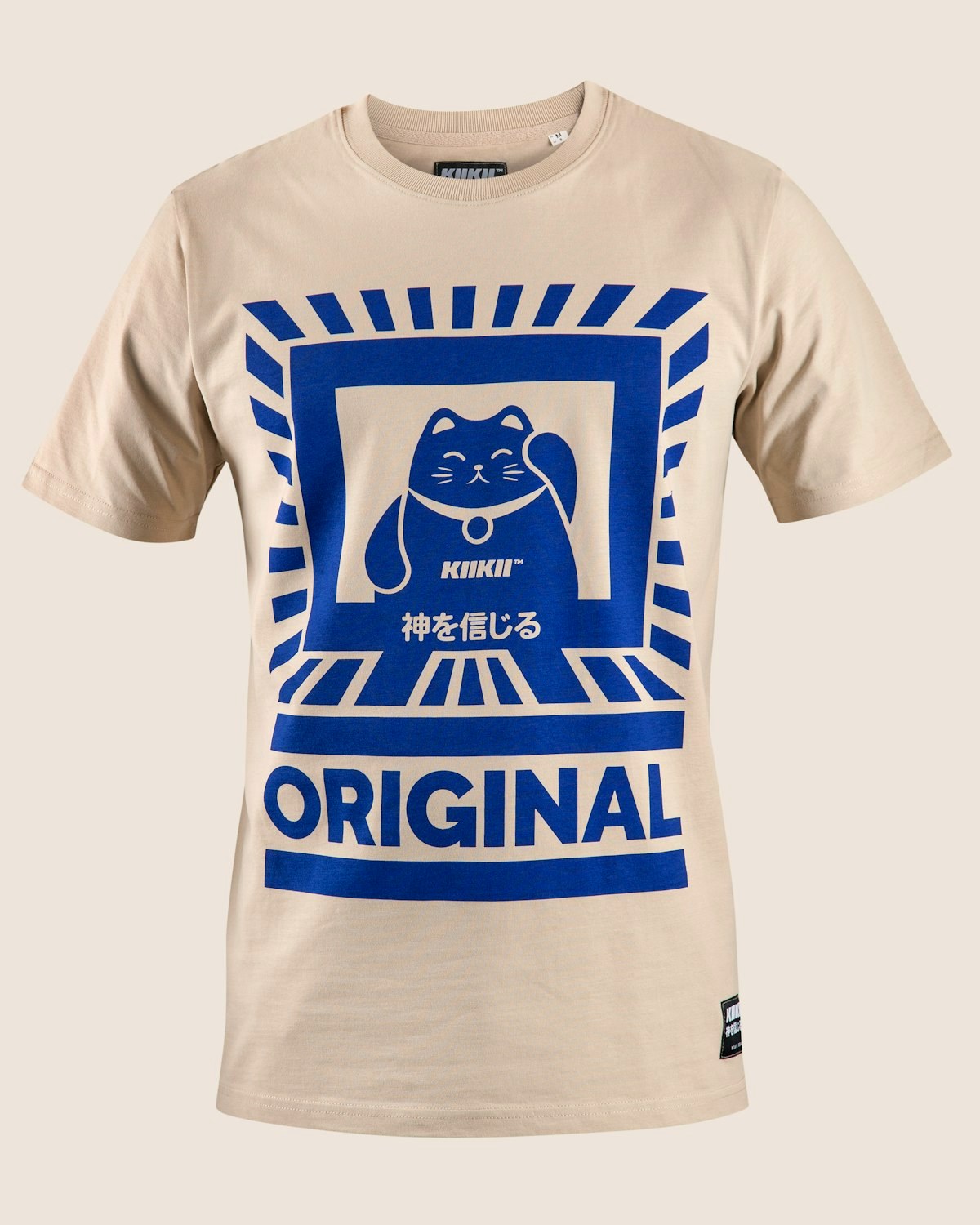
H&M Patterned Resort Shirt
US list price at last check: $44.99 at the maker's store, sold at $24.99 on promotion when checked.
The call: the novelty print, scored as the mechanism it is. The cloth in the patterned line is a cotton and linen blend, and the card does not pretend otherwise; the fibre line is not the failure here. The failure is that the print is chosen at thumbnail scale, fruit, landmarks and slogans sized to read in a product grid, in colours chosen to photograph rather than to wear, over a collar with no body in it and seams finished to a price. It is the tenth garment from this house we have scored, after 41 in our Oxford ranking, 38 in flannel and 35 in polos, and the pattern has never changed: the look of the garment for a season, at a list price that is no longer even cheap. The maths below is the whole review.
The fibre lines, printed
A camp collar ranking that hides its cloth is a mood board, so the fibre lines stand together here. A maker's figure is the fibre content the maker publishes for the shirt or its line. A class figure is the desk's reading of the class the shirt belongs to, printed where the line rotates by colourway, and marked as what it is. The print column is the desk's measurement of scale and colour, the row this category is actually bought on.
| Shirt | Cloth | Print discipline | Figure |
|---|---|---|---|
| Gitman Vintage Camp Shirt | Japanese cotton and cotton-linen, by season | Archive prints, drawn not photographed; some seasons deliberately wild | Maker's fibre |
| Portuguese Flannel Camp Collar | Cotton and cotton-linen, woven in Portugal | Small florals and embroidery, garden register | Maker's fibre |
| Todd Snyder Camp Collar | Rayon drape cloth and cotton-linen, by colourway | Tonal botanicals and geometrics, mid scale, two to three colours | Maker's fibre |
| Buck Mason Wornwell Camp | 100% cotton, 4 oz, mercerized and washed | Solids and quiet stripes; print mostly declined | Maker's figure |
| Tommy Bahama Silk Camp | 100% silk in the plain camps; silk blends in the prints | Palms and panels at poster scale | Maker's fibre |
| Uniqlo Open Collar | Cotton-linen and rayon blends, by colourway | Solids and small prints; novelty declined | Maker's fibre |
| H&M Patterned Resort | Cotton and linen blend in the patterned line; the line rotates by colourway | Novelty motifs at postcard scale, sized for a thumbnail | Maker's fibre, patterned line |
Read the table against the ladder and the category's rule falls out: the ranking is the print column with the cloth applied. Every shirt that treats its pattern as a decision finishes in the top five. The two that treat it as a poster finish last but one and last, and the distance between a drawn print and a photographed one is visible across a room, which is the distance this page is priced on.
What each camp shirt costs per wear
The maths, assumptions printed. A camp collar shirt in a working rotation is worn about 30 times a year: twice a week across the warm third of the year, plus the holidays it was bought for. Expected life is estimated from construction class, not from the price tag: the US-sewn heritage shirt at the top, the novelty print at the bottom. Where a price is a band, the table uses its middle and says so here: $168 for the Todd Snyder, $270 for the Gitman, $180 for the Portuguese Flannel, $170 for the Tommy Bahama. The H&M is costed at its $44.99 list; at its promoted $24.99 it still returns about 83 cents a wear. These are the data team's estimates, published so you can argue with them.
| Shirt | Price | Expected life | Cost per wear |
|---|---|---|---|
| Uniqlo Open Collar | $29.90 | 3 summers | $0.33 |
| Buck Mason Wornwell Camp | $138 | 7 summers | $0.66 |
| Todd Snyder Camp Collar | $168 | 8 summers | $0.70 |
| Gitman Vintage Camp | $270 | 12 summers | $0.75 |
| Portuguese Flannel Camp Collar | $180 | 8 summers | $0.75 |
| Tommy Bahama Silk Camp | $170 | 6 summers | $0.94 |
| H&M Patterned Resort | $44.99 | 1 summer | $1.50 |
The table's shape is the category in miniature. The honest budget shirt is the cheapest way to wear the type, at thirty-three cents a time. The ceiling, the most expensive shirt here by a factor of nine over the budget entry, amortises to seventy-five cents because twelve summers is a long denominator. And the novelty print, the shirt bought to be looked at once, is the most expensive per wear at a dollar fifty, because its denominator is one summer and its numerator was never cheap to begin with.
The Skip · 35/100
The H&M patterned resort shirt, $44.99 at list in the US, is this ranking's named loser, and it loses on the row this category exists on: print discipline, three of fifteen. The mechanism deserves naming precisely. A novelty print is not a pattern that failed; it is a pattern designed for a different surface, the product thumbnail, where a pineapple at postcard scale reads as fun in a grid of forty shirts. On a body it reads as a costume, and the garment underneath cannot rescue it, because there is barely a garment underneath: a collar with no body, seams finished to a price, one summer of presentable life. Our Tommy Bahama page names the same class at the brand level: the cheap printed camp delivers the photograph of a vacation shirt, not the shirt. At $29.90, the Uniqlo above it delivers the shirt. Spend the thirty, or spend the $138 once. The first camp collar a man buys teaches him what the type is. This one teaches him it is a joke.
Which one to buy
If you buy one: the Todd Snyder, in a tonal print, and wear it every warm evening for the decade. If you want the best made: the Gitman, and think of it as the twelve-summer purchase its price assumes. If the budget has a ceiling and the taste has a floor: the Buck Mason in a solid, the quiet shirt that never argues with the rest of the outfit. If the print is the point: the Portuguese Flannel, the one print premium the cloth supports. If the budget is the whole story: the Uniqlo, honestly bought, over the skip at half again its price. Worn open over a tee, any of the top five answers to the logic of our shirt index; the resort register scored as brands is in brands like Tommy Bahama.
Questions, answered
What is the best camp collar shirt for men?
The Todd Snyder camp collar shirt, scored 84 out of 100. It wins on balance rather than on any single row: honest drape cloth with the fibre line printed by the maker, prints edited down to tonal botanicals and geometrics, a collar built to lie open without collapsing, and the widest useful size run in the quality tier, at typically $158 to $178. The Gitman Vintage at 82 is the better made shirt, US-sewn from Japanese cloth, and the ceiling of the category.
What is a camp collar shirt?
A short-sleeved summer shirt built around a one-piece collar with no stand: the leaf is cut in one piece with the shirt's front and lies flat and open against the chest, closed at the neck by a loop and a single button when it is closed at all. The hem is straight because the shirt is made to be worn untucked. Our shirt index files the type at formality two, with one rule: open, untucked, hem straight. A summer shirt, not a dress shirt on holiday.
Rayon, Tencel, cotton or linen: which cloth is best for a camp collar shirt?
Each fibre class buys a different summer. Rayon drapes the best and breathes well, and asks for a gentle wash in return. Tencel, the lyocell fibre, is the same drape family made stronger and easier to wash. Cotton is the durable middle: less drape, more structure, the longest life per dollar. Linen breathes the most and creases immediately and completely, which is the texture rather than a defect. What matters more than the class is the honesty: every card on this page prints the fibre line, because the word silky on a listing is not a fibre.
How should a camp collar shirt fit?
It should skim, not cling. Our shirt index prints the shared law of the summer shirts: a hot-weather shirt must skim the body, because cloth against skin is the thing you are dressing to avoid. The hem is straight and worn untucked, the sleeve ends around the mid-bicep, and the collar lies open without standing up or folding under. Size for air. A camp shirt bought tight is a dress shirt's mistake in a summer cloth.
Are Tommy Bahama camp shirts worth it?
The silk is real, and the drape is the category's benchmark, which is why the brand scores 76 on its own page here and why its shirt is on this page at all. As a garment it scores 64: the deductions are the print at poster scale, a relaxed-only cut, and a price that climbs to $195 for embroidered panelbacks, collector money for a joke told on your back. Buy the plain silk camp on sale and it earns its place. Buy the novelty embroidery at full price and you have paid for the panel, not the shirt.
Are expensive camp collar shirts worth it?
The maths on this page says yes at the top and no at the bottom, which is the opposite of the price tags' suggestion. The $270 Gitman works out to about 75 cents a wear across twelve summers, because flat-felled seams and Japanese cotton are a lifespan. The $44.99 skip, replaced every summer, costs about $1.50 a wear at list, the highest figure on this page. Expensive is worth it when the money is in cloth and construction you can verify. It is not when the money is in the print.
How this ranking stays honest
Scores follow our published methodology and are re-checked on the cadence in the byline; when a maker changes cloth, print or price materially, the score moves and the move is noted here. Prices are US prices at last check from the makers' own stores and US retail: the Buck Mason and Uniqlo figures are single list prices; the Todd Snyder, Gitman, Portuguese Flannel and Tommy Bahama lines price in bands and the cards print the bands rather than a false precision. Where a line's fibre content rotates by colourway, the fibre table prints the class and labels it as one. Brand scores quoted in the calls are context from this site's brand rankings; every garment score on this page is this page's own work, built on the summer-shirt basis printed above.