
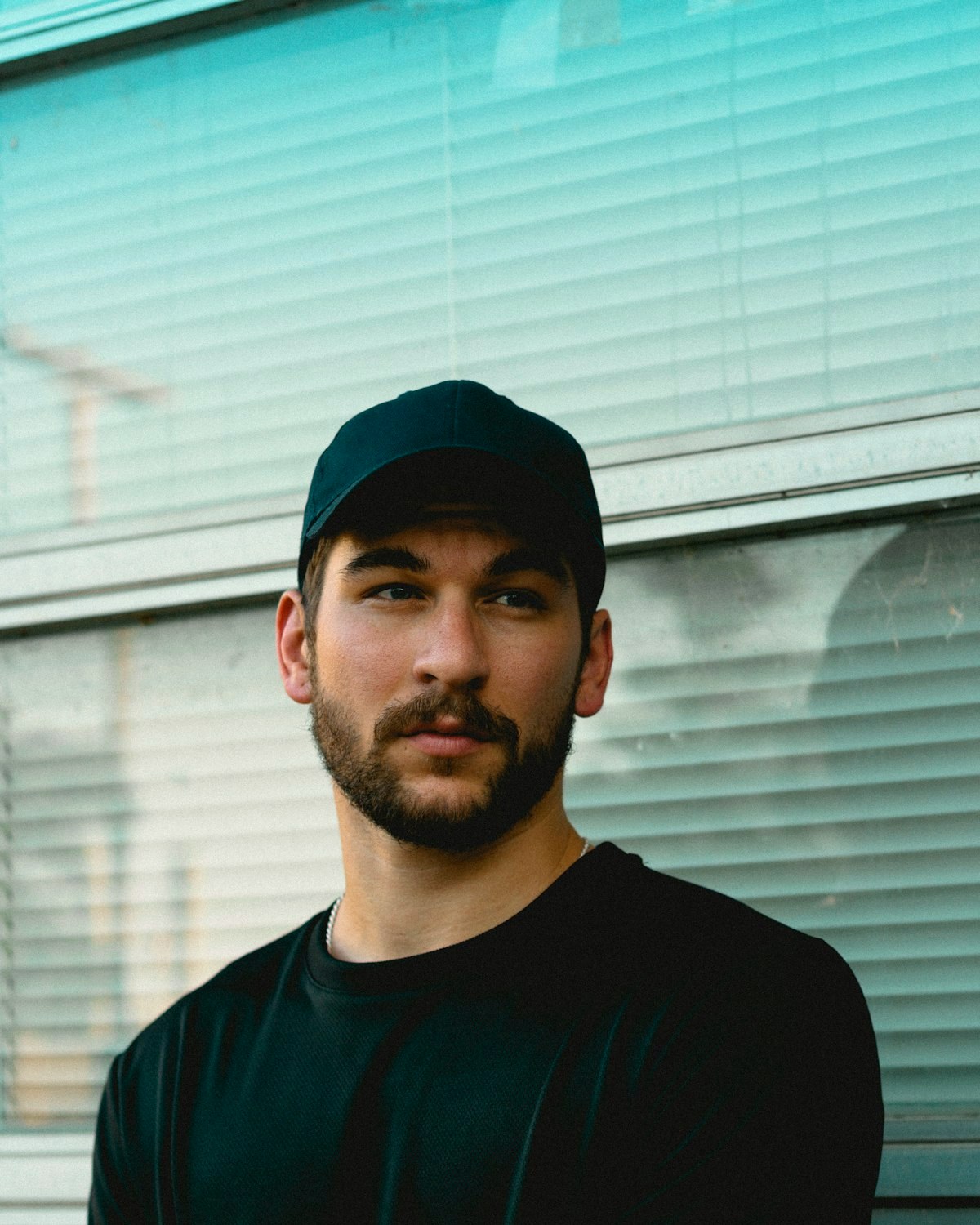
The heart brief in one frame: the low, close crown the hub names for this shape, and below it the outline doing the shape's own work, narrowing from the widest line at the top to a defined chin.
Checked and updated October 2026
The short answer: your forehead is the widest line you own and your jaw narrows to a defined chin, so every good decision on this page moves the emphasis down or takes it off the top. Hair: a fringe or forward texture, or a side part, with nothing slicked back and nothing piled high. Frames: bottom-weighted, oval and light. Beard: short and even, its length kept off the point. Collars: point and button-down. One sentence carries the whole page: width lives at the top, so keep the top quiet and the balance low. The decision table below is the whole system for your shape on one screen. If you have not measured yet, start with the Face-Shape Decoder hub: three measurements, two minutes, and this page is either confirmed as yours or ruled out honestly.
In this guide
Confirm it is heart
The full method lives on the Decoder hub; here is the short version, because this shape is decided by one observation more than by any ratio. Take the three hub measurements (face length, forehead width, jawline width) with your hair pushed back, and then name your widest feature. Heart reads like this: the forehead width is the greatest of the three widths, out-measuring the cheekbones as well as the jaw; below it the outline narrows steadily as it descends; and the jaw arrives at a defined chin, a point rather than a curve or a corner. No length ratio routes you here, the way one and a half routes a face to oval: the widest line at the top and the narrowing below it are the whole identification.
The confusions worth ruling out. Heart or diamond: the pair that shares the narrow chin, and as the diamond page rules from its side, they split at the top. Compare the forehead against the cheekbones. On a heart face the forehead is the widest line of the face, wider than the cheekbones below it; on a diamond the cheekbones out-measure the forehead, and the forehead steps in from them. If the forehead is your widest line, the guidance on this page is yours; if the cheekbones are, it is the diamond page's. Heart or triangle: the inverted pair of this system, the same two measurements read in opposite directions. On a triangle face the jaw out-measures the forehead and the face widens as it descends; on yours the forehead out-measures the jaw and the face narrows as it descends. The guidance inverts with the outline, which is why the tape matters here more than anywhere: triangle adds width and weight on top, and nearly every answer on this page does the reverse.
Two things to judge honestly. First, fullness moves: the hub FAQ notes that weight change can shift how a shape reads, because the bone structure stays while the outline's fullness goes, and a heart reading lives in the outline more than most. Style for the face you have now, and re-measure after a major change. Second, judge the shape with the beard you actually wear: a fuller beard redraws the jawline, and the hub explains how it can move a face one step toward square or triangle. On a heart face that step fills the narrow end, which can soften a borderline heart reading toward square; the beard section below works with the beard on, not the beard imagined. The guidance on this page is proportion, not grading: a wide forehead and a defined chin are a feature with a styling logic, and the logic fits in one sentence. Width lives at the top, so keep the top quiet and the balance low.

Haircuts: quiet the top
Every shape in this series has a line it protects. Yours is the forehead, and the haircut's job is the opposite of the triangle page's: where triangle builds width on top because its top is narrow, yours takes emphasis off the top because its top is already the widest line on the face. The hub gives the menu in one breath: fringe and forward texture reduce the forehead's emphasis, and a side part breaks its width. Everything in this section is those three answers, worked out.
Fringe: the lead answer. Hair worn forward over the forehead breaks its width into a shorter, textured line, and the widest feature on the face stops presenting itself as one long unbroken band. The fringe does not need to be long or heavy; it needs to be forward. Forward texture: the same principle at any length. Texture pushed toward the forehead, rather than up off it, keeps the hair's weight low and its direction down the face, and it is what makes the shorter versions of this menu work. Side part: the tidy version. One diagonal line across the top interrupts the forehead's width the way a fringe does, with a cleaner finish; it is the menu's answer for offices and occasions, and the hub names it alongside the fringe for exactly this reason.
With care: a textured crop, provided it is worn forward; the moment a crop is styled up and off the forehead it leaves this column for the fights. Longer styles belong here too, worn down or tucked so their width lands low on the face, beside the narrower jaw, where this shape can use a little of it; the same length swept back off the forehead is a different and worse answer. Fights your shape: slicked-back styles, which expose the whole forehead and present the widest line at full size, and high volume in any form, a tall quiff or a built-up top, which adds weight exactly where the face already carries it. The hub names both, and they are the two most common cuts ordered by men with this shape, because both are the default styles of the moment. The default is written for the average face. Yours is decided at the top, so yours is styled forward.

Say this to your barber
"Keep the top low and forward: a fringe or texture pushed toward my forehead, a side part if we part it, and no height built on top. My forehead is my widest line, so the cut's job is to quiet it, not frame it." Three sentences, and the appointment stops being a negotiation with the default cut.
The heart decision table
This table expands the heart row of the hub decision matrix into the full working version for this shape, compiled by our data team from standard barbering and eyewear fitting practice and re-checked on the same cadence as the hub. It is the one object to screenshot from this page: four decisions, each with the answer, the careful version, and the one that fights your shape.
| Decision | Works | With care | Fights your shape |
|---|---|---|---|
| Haircut | Fringe, forward texture, side part | A textured crop worn forward; longer styles worn down or tucked, their width landing low | Slicked-back styles that expose the whole forehead; high volume that adds weight where the face already carries it |
| Frames | Bottom-weighted, oval, light frames | Light rectangles with their weight carried low; rimless and light metal styles that stay quiet at the top line | Heavy browline frames that stack presence on the forehead; top-accented frames that widen the top line |
| Beard | Short beard kept even; stubble; clean-shaven | A fuller beard kept short and even (it fills the narrow jaw a step toward square, a direction, not an error) | A long pointed beard that extends the chin's point; growth heavy at the chin and thin at the cheeks, which sharpens the taper |
| Collar | Point, button-down | Band collar (it removes the question); a moderate semi-spread worn open | A wide spread collar that echoes the forehead's width at the other end of the face |
How the four rows connect: each one moves weight in the same direction. The hair takes emphasis off the forehead, the frames lend their presence to the lower half of the face, the beard lends a little to the narrow jaw, and the collar declines to repeat the forehead's width at the other end. Read the fights column and the pattern is a single line four times: nothing heavy, wide or tall gets added at the top.
Glasses: keep the balance low
Frames sit at the centre of the face and either echo its lines or counter them. On a triangle face the right frame loads the top line, because that is where the width is missing. Your face is the same problem read upside down: the width is present at the top and missing at the bottom, so the right frame keeps its balance low. The hub's answer is bottom-weighted, oval and light frames, and each word is doing a job. Bottom-weighted frames carry their visual weight at the lower rim, lending presence to the narrower half of the face. Oval outlines put a soft curve under the forehead instead of a second straight line across it. Light frames, thin metal, rimless or a fine acetate, decline to stack anything on the widest line the face has.
With care: rectangular frames, provided they are light and carry what weight they have low; a deep, dark, top-heavy rectangle is a different object from a light one and belongs in the next sentence. Fights your shape: heavy browline frames, which the hub names outright, because a browline stacks a strong horizontal bar directly on the forehead and doubles the emphasis of the face's widest line; and top-accented frames generally, the triangle page's lead answer, which work here in reverse for the same reason they work there. If you tried on a browline because it looked right on a friend, check his jaw against yours before you buy it: the frame was solving his shape, not yours. Sunglasses follow the same rule as glasses: the weight low, the outline soft, nothing heavy parked at the top.

Beards: short, even, off the point
A beard redraws the jawline, and the jawline is one of the lines this whole system reads first. On most shapes that makes the beard a correction with risks attached. On yours it is closer to a gift, used carefully: the jaw is the narrow end of this face, so a beard lends presence exactly where the outline carries the least, and a short one kept even softens the narrowing toward the chin without redrawing the shape. Stubble does the same job at lower volume, and clean-shaven is always safe. The hub's general rule runs underneath all of it: a fuller beard can move a face one step toward square or triangle. From heart, the step is toward square, as the jaw fills in; taken deliberately and kept short, it is a direction, not an error.
Fights your shape: length at the point. A long beard extends the chin, and the chin is already the end of a taper; every centimetre grown downward makes the face narrower for longer, the exact opposite of the balance the rest of this page is building. A pointed beard is the extreme of the same mistake, sharpening the one feature the shape defines itself by. Growth left heavy at the chin and thin at the cheeks does similar work in miniature, loading the point and starving the sides. The maintenance rule follows: whatever you grow, keep it even, keep its length off the point, and trim the chin's underside on the same schedule as the cheeks. On this shape the beard is the one decision that can add width low on the face. Let it, briefly, and then stop.

Collars: the quiet pair
The collar column on this shape is a short answer with one named exception. The hub gives the pair in one line: point and button-down collars sit quietly under a narrower jaw. Neither draws a wide horizontal line under the chin, neither argues with the face above it, and both keep the frame around the face narrower than the face's own widest line, which is the whole requirement. The collar column in practice is the Oxford shirt, scored in our Oxford ranking, and its button-down collar is this shape's home ground.
The exception is the one the hub names: a wide spread collar echoes the forehead's width at the other end of the face. It frames the narrow jaw between two wide lines, the forehead's and its own, and the taper between them reads longer for the comparison. A moderate semi-spread worn open sits in the with-care column, its line broken by the open neck; worn buttoned to the top at full width, it joins the fights. The band collar removes the question entirely, as it does on several pages of this series, and is an honest summer answer. Keep the collar in scale with the jaw it sits under, and let the decision be ordinary: on this shape, ordinary is the point.

The five mistakes heart faces make
1. Slicking it back. The most common one, because the slicked-back style is the default tidy answer of the moment. It exposes the whole forehead at full size, and on this shape the forehead is the widest line on the face: the style presents the deciding feature with nothing in front of it. Forward is tidy enough. 2. Height on top. The tall quiff and the built-up pompadour add weight where the face already carries it, the hub's second named caution for this shape's hair. Volume is a styling budget; this face spends its at the sides and the front, never on top. 3. The browline frame. A strong top bar stacked on the widest line doubles its emphasis. The browline is a good frame on the triangle page, where the top line is the narrow one; the same frame on this face works backwards, and frames are bought by the face wearing them, not the face in the advertisement. 4. The wide spread collar. It echoes the forehead's width at the other end of the face, framing the narrow jaw between two wide lines. The point and button-down collars in the same drawer do the job quietly. 5. Reading only the chin. Deciding between heart and diamond by the pointed chin both shapes share, and never comparing the forehead against the cheekbones. The chin cannot separate them; the top of the face can, in one measurement. Three tape measurements on the hub settle which page is actually yours in two minutes.
The Heart Rule
Keep the top quiet and the balance low. Your widest line arrived first, at the forehead, and every mistake on this page is a way of adding a second one up there: height in the hair, a bar across the frames, width in the collar. Take the emphasis off the top, lend a little presence to the lower half of the face, keep the chin's point short, and the proportions the tape found are the proportions the eye gets.
FAQ
What is a heart face shape?
A face whose forehead is its widest line and whose jaw narrows as it descends to a defined chin. In the Decoder readings it is the mirror of triangle: a triangle widens as it goes down, a heart narrows. The forehead out-measures both the cheekbones and the jawline, and the chin ends the outline in a point rather than a curve or a corner.
Is my face heart or diamond?
Compare your forehead width with your cheekbone width. Both shapes narrow toward the chin, and they split at the top: on a heart face the forehead is the widest line of the face, wider than the cheekbones below it. On a diamond the cheekbones out-measure the forehead, and the forehead steps in from them. Widest at the forehead is heart; widest at the cheekbones is diamond, and the diamond page's answers apply there.
Is my face heart or triangle?
Measure your forehead width and your jawline width. The two are the inverted pair in this system. If the forehead is clearly the wider of the two and the face narrows as it descends, it is heart. If the jaw is clearly wider and the face widens as it descends, it is triangle. The guidance inverts with the outline: triangle adds width on top, heart takes the emphasis off the top and keeps the balance low.
What haircut is best for a heart face shape?
One that reduces the forehead's emphasis and adds nothing on top: a fringe or forward texture that breaks up the forehead's width, or a side part that puts one diagonal line across it. Keep the volume low and forward rather than high. Slicked-back styles expose the whole forehead, and height adds weight exactly where this shape already carries it.
What glasses suit a heart face shape?
Frames that keep the balance low: bottom-weighted styles, oval outlines and light frames that stack nothing on the forehead. The frame's job on this shape is to lend a little presence to the lower half of the face and sit quietly at the top. Heavy browline frames do the opposite, adding a second strong line at the forehead, which is already the widest line the face has.
Should a heart face shape grow a beard?
Yes, kept short and even. A beard draws on the jawline, and on this shape the jaw is the narrow end, so a short even beard lends presence where the face carries the least and softens the narrowing toward the chin. What fights the shape is length at the point: a long beard extends the chin and stretches the taper. Keep the beard's length off the point and its edges clean.
Next
This page is Spoke No. 07 of the Face-Shape Decoder, the last of the seven, and the Decoder hub is its front door: the full measurement method, the other six shapes, and the complete decision matrix live there. With this page the per-shape series is complete, and its sibling spokes solve the neighbouring problems: the triangle page, this shape's inverted pair (their jaw is the widest line and their face widens as it descends, so their answers add width on top where yours take the emphasis off it), the diamond page, the split at the forehead (their cheekbones are the widest line and their forehead steps in; yours is the widest line the face has), the oval page, where no feature dominates and every decision is conservation (yours has one dominant line, and it is at the top), the square page, where forehead and jaw arrive in a similar range with angles doing the talking, the oblong page, which owns the length axis at about 1.6 times the width or beyond, and the round page, where length and width run close to equal and the hair builds the height this page forbids. Sizing is the other half of fit: our Shoe Size Conversion Chart is Decoder Utility No. 01 and ends the other guessing game. And for the collar column in practice, the shirts it applies to are scored in our Oxford shirt ranking, with the cloth behind them explained in what is an Oxford shirt?