
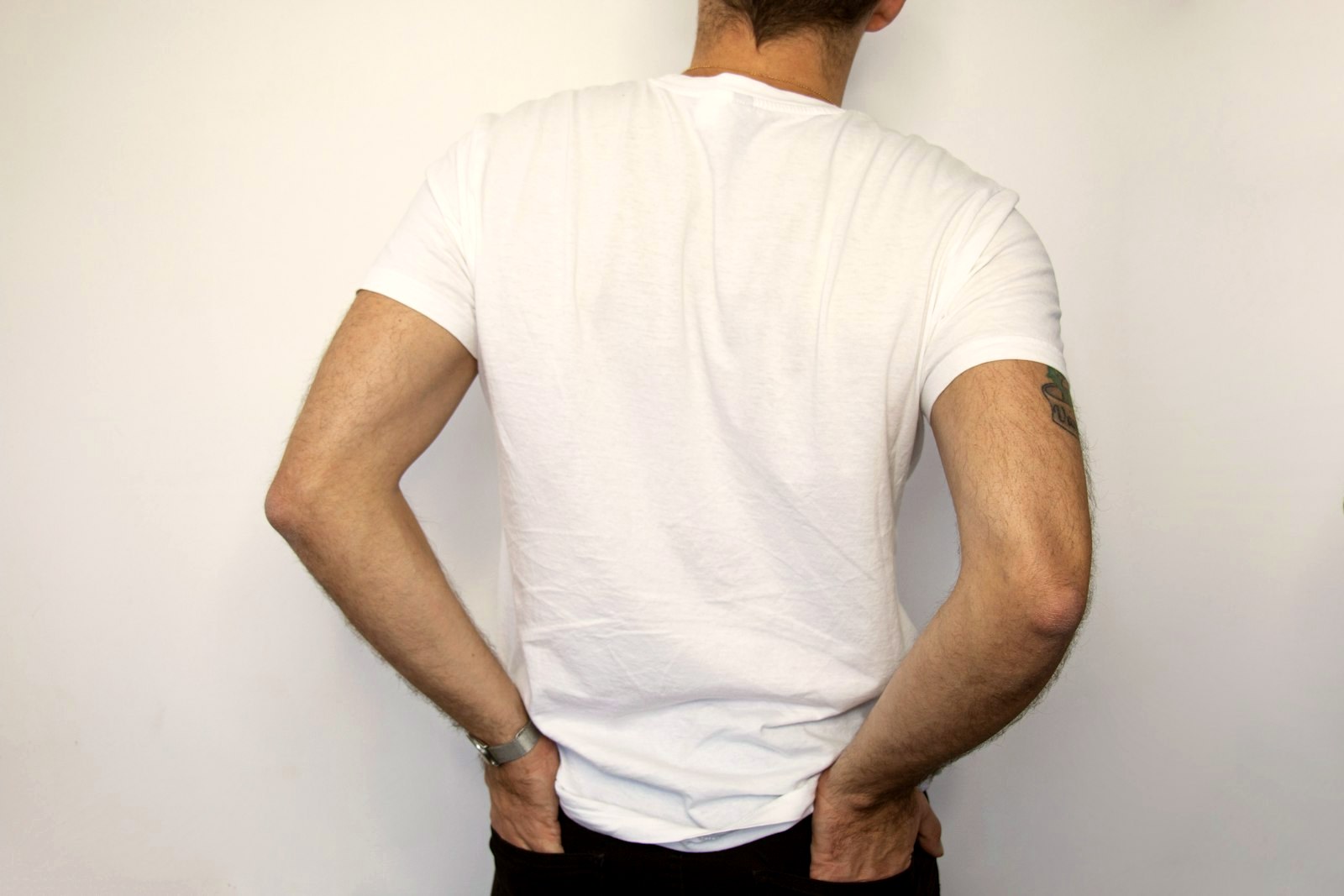
The white tee is the finish this page grades: every claim below is, in the end, a claim about what happens under a shirt by four in the afternoon. A note on photography, printed because this page believes in saying so: our photo bank holds no product photography for this category and no bathroom-shelf frames yet, so no ranked product is pictured anywhere on this page rather than borrow one. The gap is on the harvest list, named in the honesty section.
Checked and updated October 2026
The basis: an underarm product is graded on its published record, the active ingredient and its percentage as printed on the Drug Facts panel or the ingredient list, the honesty of the full list behind the marketing, the performance claim graded as a claim, and the verified price per ounce, because those are the facts a reader can check before money moves. This desk wears nothing on a test panel and asserts no performance of its own: where a card says a product protects for 72 hours, it is reporting the maker's printed claim and grading its specificity, and the card says so. The winner: the Certain Dri Prescription Strength Clinical Roll-On at 86, aluminum chloride at 12.0 percent, the only percentage-first record in the field. The skip: the Native Classic Deodorant at 59, named in the verdict box below: the natural shelf's biggest name, sold on what it lacks, circulating two mutually exclusive ingredient panels under one product name in the same week of checking. And the finding the whole page hangs on, counted across both species: an active percentage is printed by 4 of 4 antiperspirants and 0 of 4 deodorant-only products. One side of the shelf is required to say how strong it is. The other side is required only to say what is in it, in order, and has built its marketing on the difference.
First, the decision
One product, named before anything is scored: buy the Certain Dri Prescription Strength Clinical Roll-On. It is the only aluminum chloride in the field, 12.0 percent printed on its FDA Drug Facts label, an inactive list exactly three ingredients long, and directions that read like a protocol instead of a slogan: apply at bedtime, to dry skin, a few nights a week. Everything else on this page is a variation on a stick. This one is an instrument with instructions, and its record is the cleanest published document in the field.
Now the species paragraph, because the shelf hides it and the ranking depends on it. An antiperspirant and a deodorant are different instruments. An antiperspirant is an over-the-counter drug in the United States. It carries an aluminum active, it must print that active and its percentage on a Drug Facts panel, and the claim it is permitted to make is the reduction of underarm wetness. A deodorant is a cosmetic. It carries an ingredient list in descending order of concentration, it is not required to print a percentage for anything in it, and its claim is odor, only odor. Neither species is the honest or dishonest one; they are regulated differently, and the regulation writes the label. This page grades each product against its own species' claim, and prints the species on every card, because half the disappointment in this category is a reader buying an odor product to do a wetness job, or a wetness product and resenting its chemistry.
The finding, stated once here and counted in the table below: the percentages on the drug side exist because the law compels them, not because the makers volunteered them, and the vagueness on the cosmetic side is permitted rather than accidental. What separates the good natural records from the bad ones is what a maker does inside that permission. The best natural maker in this field prints its odor active first on the list, names its baking soda in its own FAQ, and sells a separate line without it. The biggest natural brand in this field prints absence claims on the front, a 72-hour claim beside them, and, in the week this page was checked, two different ingredient lists at major retailers, one of which still contains the baking soda its marketing has moved away from. Both records are published. The ranking is what happens when somebody reads them side by side.
The by-need rulings, one line each, printed here so a reader can leave with his answer before the cards:
Heavy sweating: the clinical end of the drug shelf, the winner or the third card, both graded on their printed protocols and percentages; a deodorant-only product makes no wetness claim and is not a substitute.
The everyday office answer: the second card, a mainstream antiperspirant stick with the most complete panel at its price and the field's best value per ounce among the drugs.
Wears fragrance: the winner again, fragrance-free by formula, or the sixth card, the premium deodorant whose scent is a single named oil rather than a perfume accord; a strongly scented stick will argue with a fragrance all day.
The natural brief, honestly held: the fourth card. Magnesium hydroxide first on its published list, a 24-hour claim that is the most modest in the field, and a maker that prints the way out for sensitive skin on its own site.
Sensitive skin: read the baking soda paragraph in the questions section before buying anything natural. The published record is that the makers themselves build separate sensitive lines around that one ingredient, and this desk prints the record rather than grading anybody's skin.
And the application rule for the clinical end, stated plainly once: at night, on dry skin. Both clinical labels in this field direct bedtime application, and the winner's directs washing in the morning. A clinical antiperspirant applied to damp skin in the morning rush is the category's most common self-inflicted failure, and it is a reading failure before it is a product failure.
The aluminum question, as the record stands
This page takes no position on aluminum beyond what the published record supports, and prints the record in three parts. First, what the makers print: every antiperspirant here names its aluminum active and its percentage on a Drug Facts panel, 12.0 percent aluminum chloride at the clinical end, 20.0 percent aluminum zirconium tetrachlorohydrex GLY at the clinical stick end, 15.2 and 15 percent in the mainstream sticks. Every deodorant-only product here prints the words aluminum-free, or words to that effect, as a headline claim, and prints no percentage for any ingredient it does contain. Second, what the regulators print: antiperspirant actives sit inside the Food and Drug Administration's over-the-counter drug framework, which is why the panel and the percentage exist; and the European Commission's Scientific Committee on Consumer Safety has published opinions on aluminum in cosmetic products, in 2020 and again in 2024, setting out the levels it considers safe for antiperspirant use. Third, what nobody in this field prints: a maker-side safety dossier of any kind. The clinical labels carry drug warnings; the natural labels carry an absence. A reader weighing the question deserves to know that the loudest document in the debate is a marketing claim, and that the quiet documents, the drug panel and the committee opinions, are the ones with numbers in them.
One neighbouring species is rested from this field, and the desk says why. Crystal stone deodorants, a single mineral salt sold as a stick, are marketed under the same absence banner as the natural creams and sticks, and the desk could not capture the leading maker's own published record to the standard this page grades at press time. Rather than convict or clear a product from other sellers' copies of its label, the stone is rested to a later pass, and the gap is printed here instead of a verdict the evidence has not earned.
How the scores work
Every product is scored out of 100 on the same five rows, printed on every card, so the reader can disagree with the weighting and still use the evidence.
Active record, as published, 30 points. The active ingredient as printed, and its strength where a strength is printed. On the drug side this is the Drug Facts percentage. On the cosmetic side there is no percentage anywhere, so the row grades the next best evidence: whether an odor active can be identified at all, and where it sits on the list, because position is concentration's only public trace. A first-position active is a specification. An unidentifiable one is a mood.
Formulation honesty, 20 points. The full list, read whole: published or withheld, consistent or in two versions at once, and the distance between the marketing and the list measured in the open. Absence claims are graded here as what they are, marketing statements that say what a product is not, and a maker who prints the whole list earns the chance to be convicted or cleared by it.
Performance, as claimed, 20 points. The maker's printed claim, its hours and its strength language, graded as a claim: its specificity, its internal consistency, and whether published wear reports contradict it. This desk asserts no performance of its own. A bounded claim, 12 hours, 24 hours, scores as more credible evidence than an unbounded one at the same strength of language, and a claim with a protocol attached scores above a claim with a slogan attached.
Value per ounce, 15 points. The verified price divided by the published size, printed in the table below so the arithmetic can be checked. Where a maker's own label directs a few applications a week instead of a daily swipe, the card says so, because per-ounce arithmetic alone would misread a bedtime instrument as an expensive stick.
Format and species clarity, 15 points. The format itself, stick, roll-on or cream, the sizes offered, and whether the maker tells the reader plainly which species the product is. A product whose name and shelf placement blur the line between an antiperspirant and a deodorant loses points here even when its label, read closely, does not.
The rows sum to the score. Prices were verified on the seller's own page at check time, and the exceptions, the search-level links, the missing price and the stock caveats, are printed in the honesty section rather than smoothed over.
Seven ranked, and the one sent home
Certain Dri Prescription Strength Clinical Roll-On
The Winner · The Only Aluminum Chloride in the Field, Percentage on the Label
$19.99 for a 3-pack of 1.2 fl oz roll-ons at Target
The call: the winner, and the answer to the one-product question: a roll-on built like an instrument rather than a fragrance accessory. Its FDA Drug Facts label prints aluminum chloride at 12.0 percent, the only aluminum chloride in the field, and behind the active the entire inactive list is three ingredients long: a polymer, sodium hydroxide, water. There is no fragrance, no scent story, no lifestyle copy on the label, because the label is a drug label, and the directions are a protocol: apply at bedtime, to thoroughly dry skin, and wash in the morning.
The active row of 28 is the field's standard for what a published record can be. A named active, a printed percentage, a published inactive list short enough to read in one breath, and a use pattern that follows from the chemistry as the label presents it: night application while sweat glands are least active, the effect established by morning. The performance row of 17 grades the claim as a claim, and the claim is unusually well built: 72 hours, bounded, with the protocol attached, rather than a number floating free of instructions. The honesty row of 18 carries one deduction, printed here: the words prescription strength are marketing. No prescription is involved; this is an over-the-counter drug, and what makes it clinical is the 12.0 percent on the panel, not the adjective on the box. The desk credits the number and discounts the adjective, and the score lands where that arithmetic lands.
The costs are size and price, and both are printed rather than excused. At 1.2 fl oz this is the smallest format in the field, and per ounce it is the dearest of the drugs even bought as a 3-pack at $5.55 per ounce as the retailer itself prints it; the single roll-on lists at $12.86 in the same catalogue, $10.72 per ounce. The value row of 9 is softened by exactly one published fact and no more: the label directs application a few nights a week, not a daily swipe, so a roll-on is consumed at a fraction of a stick's rate. A reader who sweats through ordinary sticks is not buying ounces here. He is buying the strongest printed record on the shelf, and on this page's basis that is what wins.
Dove Men+Care Clean Comfort Antiperspirant
The Mainstream Answer · The Most Complete Panel at Its Price
$7.99 for 2.7 oz at Target
The call: the everyday answer, and the mainstream stick this page hands to a reader who wants the drug species without the clinical protocol: aluminum zirconium tetrachlorohydrex GLY at 15.2 percent on its Drug Facts label, a full inactive list published behind it, and a 48-hour claim, at $7.99 with the retailer's own per-ounce figure of $2.96, the best value per ounce among the antiperspirants in the field.
The active row of 25 grades a mid-field percentage carried by the field's most complete mainstream panel. Read the inactive list as the desk read it: stearyl alcohol, C12-15 alkyl benzoate, cyclopentasiloxane, isopropyl palmitate, PPG-14 butyl ether, hydrogenated castor oil, PEG-8, dimethicone, fragrance, silica, polyethylene, sunflower seed oil, steareth-100, BHT. The sunflower seed oil matters beyond its position, because the brand's entire care positioning rests on moisturising ingredients, and here the positioning and the list agree: the ingredient the marketing leans on is actually in the product, printed, where a checker can find it. That agreement is what the honesty row of 17 is paying for. The performance row of 16 grades the 48-hour claim as the standard claim of its class, neither inflated to 72 nor dressed in clinical language the formula has not earned.
Two deductions, both printed. The format row of 13 carries the species blur the brand builds itself: the same Clean Comfort name also sells an aluminum-free deodorant-only stick at the same retailer, so a reader reaching by scent name alone can walk out with the other species, and only the small print on the back tells him which instrument he bought. And the size record drifts at retail: the label size is 2.7 oz, the retailer's listing title says 2.6 oz, and its per-ounce mathematics is computed on 2.7. The desk prices the label, prints the drift, and moves on; a stick this honest about its formula has earned a shrug about its retailer's arithmetic.
Degree Men Clinical Protection
The Highest Percentage in the Field · 20.0 Percent Under a Name That Splinters
$8.99 for 1.6 oz at Target
The call: the strongest stick on the drug shelf: its Drug Facts label prints aluminum zirconium tetrachlorohydrex GLY at 20.0 percent, the highest active percentage in this field, with the monograph's own uses line, reduces underarm wetness, extra effective, and directions as specific as the winner's: apply before bed, two clicks per underarm. On the active row it ties the winner at 28, because 20.0 percent printed is 20.0 percent printed.
What costs it the top of the clinical class is not the formula. It is the name. Under the single Clinical Protection banner the retail shelf holds a soft solid, an invisible solid and a cream stick, in scents and sizes that share the 20.0 percent active and little else, 1.6 oz here, 1.7 oz there, Sport Strength on the label record this desk graded, Cool Rush on the retailer's men's listing at the printed price. A reader cannot tell from the front of any one of them exactly which instrument he holds, and the honesty row of 17 grades that splinter for what it is: not concealment, the panel is complete on every variant, but a range architecture that makes the published record harder to match to the product in the hand than the winner's single roll-on ever is.
The value row of 7 is simple division with no protocol discount available: this is a daily stick at $5.62 per ounce, the dearest daily wear in the field, and unlike the winner its label's bedtime direction does not come with a few-nights-a-week rhythm to stretch the stick. The performance row of 17 credits a claim with a protocol attached, two clicks, before bed, the same evidentiary shape as the winner's. The reader choosing between the two clinical cards is choosing a format and a consumption pattern: the roll-on's stronger chemistry at a slower rate, or the stick's higher percentage at a daily one. The ranking prints which record the desk trusts further, by three points, and the evidence for the gap is on both cards in the open.
Schmidt's Bergamot & Lime Deodorant Stick
The Honest Natural · Its Odor Active Sits First on the List
$9.99 for 2.65 oz at Meijer
The call: the highest deodorant-only product on the page, and the proof that the natural species can publish a serious record inside the rules it is given: a full ingredient list, printed in full, with the odor active in the position of honour. Magnesium hydroxide sits first on the list, ahead of the coconut oil, the arrowroot powder and the shea butter, and sodium bicarbonate, the ingredient this shelf usually whispers, sits sixth, named, where a reader can weigh it. The scent record is the list itself: bergamot fruit oil and lime oil, printed individually, not a bare word fragrance doing the talking.
The honesty row of 19, the highest on the page, is earned in the maker's own FAQ as much as on the stick. The house states in plain language that its signature formula uses primarily magnesium and some baking soda. It claims 24 hours of odor protection, the most modest hour figure in the field, and graded as a claim that modesty is evidence: a maker inflating its hours does not stop at 24 when the shelf around it prints 72. It sells a separate sensitive collection with the baking soda removed entirely, which is the maker itself printing the route out for the skin that objects. And its certified-natural claim names a certifier, Ecocert, rather than an adjective. This is what the permission the cosmetic rules grant looks like when a maker spends it on information instead of atmosphere.
The deductions are the class condition and one trap for the cross-shopper. The active row of 24 is capped by the absence of any percentage, as every natural card on this page is capped; position is the evidence, and first position is the best evidence the species allows. The trap: the same brand's jar formula is a different list, with baking soda third instead of sixth, so a reader who meets the jar first is reading a different product under the same scent names. The stick is the graded product here, and at $9.99 for 2.65 oz, $3.77 per ounce, it is also the natural shelf's reasonable price. The desk's natural answer is this card, and it is not close.
Old Spice Fiji with Palm Tree Antiperspirant
The Scent-Led Stick · Graded on Its Scent Record, and the Record Is a Place Name
$7.99 for 2.6 oz at Target
The call: the fragrance-led seed of the brief, graded as what it is: an antiperspirant first and a scent second. Its Drug Facts label prints aluminum zirconium tetrachlorohydrex gly at 15 percent, a mainstream strength, with a full inactive list behind it, kaolin and coconut oil among the carriers. As an antiperspirant record that is respectable. As a scent record, which is what this stick is bought for, the published file is remarkably thin: the maker prints no notes, no accord breakdown, nothing but the name of an island and a palm tree, and the bare word fragrance in the list where the entire scent lives.
The honesty row of 13 carries the card's real conviction, and it is a labelling record, not an opinion. Two current Drug Facts labels circulate under this one scent name: the label this desk graded, updated at the end of December 2025, prints the active at 15 percent; a second label under the same name, updated in April 2026, prints 17 percent. A reader holding either stick owns a legitimate product, and from the front of the pack he cannot tell which strength he owns, because the difference lives only in the small print of the panel. A retailer-carried ingredient list for the same name adds its own drift, talc in, kaolin out. None of this makes the stick bad. All of it makes its record the least stable on the drug side of the page, where stability is supposed to be the species' whole advantage.
What keeps the card at 78 rather than lower is the arithmetic and the active. At $7.99 for 2.6 oz, $3.07 per ounce, the value row of 13 nearly matches the second card's, and the 15 percent on the graded label is a real, printed, mid-field strength with the full panel behind it. The performance row of 15 grades a claim set with no hour figure on the captured label at all: the scent is the claim, the island is the argument, and as a claim it is unfalsifiable either way. Buy it for the smell if the smell is your priority, and know that the desk graded it fifth on a record its own maker keeps in two versions.
MALIN+GOETZ Eucalyptus Deodorant
The Premium Natural · Ten Ingredients, and the Modest Claim
No verified US price at check time (see the honesty section)
The call: the apothecary end of the natural shelf, and the shortest list in the field: ten ingredients, published in full by the house. Propylene glycol, water, sodium stearate, glyceryl caprylate, eucalyptus globulus leaf oil, glyceryl undecylenate, citronellyl methylcrotonate, caprylic and capric triglyceride, sodium hydroxide, limonene. The scent is a single named oil at position five. The named odor active, the citronellyl compound, sits seventh, and the card grades that position exactly as it grades every position on this page: the specification of this stick is a eucalyptus oil doing the talking and a specialist molecule doing the work quietly behind it.
The honesty row of 18 grades two sentences the house prints about itself. The first is the claim: clinically-proven 12-hour protection, the most modest hour figure in the field after the fourth card's 24, published with its evidence framing attached, consumer-agreement percentages in the high nineties for glide, absorption and gentleness, asterisked on the maker's own page. The second sentence is rarer. On its own site the house states in plain words that this product is not an antiperspirant and will not prevent sweating, that sweating is natural, and that the stick is designed to let the body function while handling odor. Species clarity does not get plainer than a maker declining the other species' job in print, and the format row of 14 is paid for it.
The value row of 5 requires its own paragraph, because it grades an absence this page refuses to fill with a guess. This card carries no buy pill, and the reason is printed, as this site's rule requires: no US price for the full-size stick could be verified on the maker's own store at check time, the figures the desk could open belonged to other regions and a travel size, and a price the desk cannot check does not get printed. The stick's premium positioning is not in doubt; its price in dollars is, and the row scores the record that exists rather than the reputation. The November pass owes this card a price and a pill.
Ursa Major Hoppin' Fresh Deodorant
The Reformulated Natural · The Longest List in the Field
$20 for 2.6 oz at Ursa Major
The call: the Vermont house's mint stick, and the second reformulation story on the page: the current formula, published under the maker's own Full Ingredients heading, has removed the baking soda its earlier panel carried, and the maker's page says why in language this desk wishes were the shelf's standard, calling baking soda potentially irritating to some skin and building the current product without it. The odor system that replaced it is a named blend, hops, eucalyptus and a saccharomyces ferment, with diatomaceous earth and tapioca starch as the absorbents, and the scent is printed as its parts: eucalyptus, peppermint, citrus.
The active row of 19 grades the blend's ceiling. Thirty-one ingredients is the longest list in the field, every botanical named, and the desk credits the completeness; but no single active leads it, no percentage exists, and the specification a reader can verify is a system described in the maker's prose rather than a substance at a position. Compare the fourth card, where the active sits first and the argument ends. Here the argument is longer and the conclusion softer, and the row prints the difference. The performance row of 12 grades the field's only unquantified claim: the maker's page says the blend neutralizes odor and prints wearer reports of a full day on its own review rail, labelled as reported, but attaches no hour figure of its own, and on this page an unquantified claim scores below a bounded one.
The honesty row of 16 is the reformulation's shadow: the old panel, baking soda in the middle of the list, still circulates at third-party sellers under the same product name, and the maker prints nothing a reader could use to date the stick in his hand. Reformulating toward gentleness is the right direction; leaving the old record in the wild uncorrected is the same failure, in miniature, that sends the next card home. At $20 for 2.6 oz, $7.69 per ounce, the value row of 5 is also simple division: this is the dearest per-ounce stick in the ranked field, dearer than either clinical drug, and the record it buys is good rather than field-leading.
Native Classic Deodorant
The Skip · Two Ingredient Panels Under One Name, in the Same Week
$14 for 2.65 oz at Native
The call: skip it, on the published record, which is the only ground this page ever convicts on. Native is the natural shelf's biggest name, and its maker's page is a model of the finding this Card was built to test. The front of the record is absence and assurance: an aluminum-free original, clean ingredients, 72-hour odor protection described as clinically proven, and a formula said to be fighting odor in five ways, five ways the page as captured does not enumerate. The ingredient list itself does not appear on the maker's own product page as this desk captured it. To read what is in the category's best-selling natural stick, a reader must go to a retailer. And which list he finds depends on which retailer he picks.
Exhibit A, the panel at the largest shelf in the country, read in the same week this page was checked and matched by a second major retailer's panel the same week: caprylic and capric triglyceride, tapioca starch, ozokerite, sodium bicarbonate in fourth position, magnesium hydroxide, coconut oil, cyclodextrin, shea butter, fragrance, dextrose, lactobacillus acidophilus. Exhibit B, the panel at two grocery retailers in the same week: the same product name over a different formula entirely, magnesium oxide third, piroctone olamine among the actives, no ozokerite anywhere, and no bicarbonate at all. Two lists, one name, no note on the maker's page that a reformulation has occurred or which panel a given stick carries. The desk prints both because both are published, and grades the situation, not either formula: a reader cannot establish from the record what he is buying.
The ingredient at the centre of the drift deserves its sentence. The bicarbonate in Exhibit A sits at an unpublished strength, as it does everywhere on this shelf, but its position is fourth, high in the list, and it is the one ingredient the natural category's own makers, this maker included, build separate sensitive lines to avoid. The maker's sensitive stick exists. The maker's classic stick, on the panel most widely distributed in the week of checking, still carries the ingredient at position four under a brand whose entire proposition is what it leaves out. Reformulation is not the crime here; the new panel may well be the better formula, and the desk says so. The crime is a record in two versions with the absence claim doing the specification's work on both. At $14 for 2.65 oz, $5.28 per ounce, the value row of 7 charges premium money for the privilege. The format row of 13 is printed fairly, because fairness is the page's whole method: sixty scents, two sizes, and species clarity that is genuinely plain. A wide door into an unreadable room.
The numbers, side by side
Published figures, checked against the labels, the makers' own pages and retailers' own listings this month, with every performance figure labelled as the maker's claim: this desk reads panels and grades claims, and no figure below pretends to a wear trial it did not run.
| Product | Species | The active record, as published | Percentage printed | The claim, as printed | The fine print |
|---|---|---|---|---|---|
| Certain Dri Prescription Strength Clinical Roll-On | Antiperspirant (drug) | Aluminum chloride, sole active; the inactive list is three ingredients long | 12.0% | 72 hours, on a bedtime protocol | Fragrance-free; 1.2 fl oz, the smallest format here |
| Dove Men+Care Clean Comfort | Antiperspirant (drug) | Aluminum zirconium tetrachlorohydrex GLY; full inactive list, sunflower seed oil included | 15.2% | 48 hours | The same scent name also sells an aluminum-free stick; label reads 2.7 oz, the retailer title 2.6 oz |
| Degree Men Clinical Protection | Antiperspirant (drug) | Aluminum zirconium tetrachlorohydrex GLY | 20.0% | Extra effective, the label's uses line; before bed, two clicks | One banner, three formats at retail: soft solid, invisible solid, cream stick |
| Schmidt's Bergamot & Lime | Deodorant only (cosmetic) | Magnesium hydroxide first on the list; sodium bicarbonate sixth | None | 24 hours | The maker's FAQ confesses the baking soda; the jar formula is a different list |
| Old Spice Fiji with Palm Tree | Antiperspirant (drug) | Aluminum zirconium tetrachlorohydrex gly | 15% (a second current label prints 17%) | No hour figure on the captured label; the scent is the claim | No notes published behind the scent name, only the name |
| MALIN+GOETZ Eucalyptus | Deodorant only (cosmetic) | Citronellyl methylcrotonate seventh of ten ingredients; eucalyptus oil fifth | None | 12 hours, clinically-proven, asterisked on the maker's page | The maker states in print that it is not an antiperspirant |
| Ursa Major Hoppin' Fresh | Deodorant only (cosmetic) | A ferment and hops blend with diatomaceous earth; no single lead active | None | No hour figure; neutralizes odor | The old baking-soda panel still circulates at third-party sellers |
| Native Classic (the skip) | Deodorant only (cosmetic) | Two panels: sodium bicarbonate fourth, or magnesium oxide third with piroctone olamine | None | 72 hours, clinically proven, fighting odor in five ways | The maker's own page printed no ingredient list as captured |
Read the fourth column as the page's whole argument. It is full on the drug side and empty on the cosmetic side, and the emptiness is legal, which is exactly why the makers who fill the gap with position, plain language and a named certifier earn their scores, and the maker who fills it with an absence claim and leaves two panels in circulation earns his.
Value per ounce, in the open
The table divides each verified price by its published size. The winner is charged at the 3-pack it is sensibly bought in; its single-stick price in the same catalogue is printed on its card and in the reading column.
| Product | Price used | Per ounce | The reading |
|---|---|---|---|
| Certain Dri Prescription Strength Clinical Roll-On | $19.99 for 3 × 1.2 fl oz at Target | $5.55 | The label directs a few applications a week, not a daily swipe; the single lists at $12.86 in the same catalogue |
| Dove Men+Care Clean Comfort | $7.99 for 2.7 oz at Target | $2.96 | The best per-ounce figure among the drugs, and it is the retailer's own printed figure |
| Degree Men Clinical Protection | $8.99 for 1.6 oz at Target | $5.62 | A daily stick at clinical money, with no slower rhythm on its label to stretch it |
| Schmidt's Bergamot & Lime | $9.99 for 2.65 oz at Meijer | $3.77 | The natural shelf's reasonable price for its most honest record |
| Old Spice Fiji with Palm Tree | $7.99 for 2.6 oz at Target | $3.07 | Mainstream arithmetic; the money buys the scent story, such as it is published |
| MALIN+GOETZ Eucalyptus | No verified US price at check time | Not printed | The value row grades the absence; a price and a pill are owed to this card |
| Ursa Major Hoppin' Fresh | $20 for 2.6 oz at Ursa Major | $7.69 | The dearest per-ounce stick in the ranked field, dearer than either clinical drug |
| Native Classic (the skip) | $14 for 2.65 oz at Native | $5.28 | Premium money for a record in two versions |
The table's lesson is the shelf's lesson. The strongest record in the field costs less per ounce than the natural shelf's premium sticks, because it is sold as a drug and dosed like one. The two dearest ounces here belong to cosmetic sticks whose specification is a story, and the widest gap on the page is not between the drug and natural species; it is between the natural records that publish and the ones that merely reassure.
Which one to buy
One product, full stop: the Certain Dri Prescription Strength Clinical Roll-On at 86. The only aluminum chloride in the field, its percentage on the label, its protocol in the directions.
The strongest stick: the Degree Men Clinical Protection at 83. Twenty percent, printed, for the reader who wants the clinical end in a daily format and accepts the daily price.
The everyday answer: the Dove Men+Care Clean Comfort at 84. The mainstream stick with the complete panel and the field's best drug-side value per ounce.
The natural brief: the Schmidt's Bergamot and Lime at 82. Magnesium hydroxide first on the list, 24 honest hours claimed, and a maker that prints its own sensitive alternative.
Bought for the scent: the Old Spice Fiji with Palm Tree at 78, bought with eyes open: a sound 15 percent record under a scent name whose file is two labels deep.
The considered natural: the MALIN+GOETZ Eucalyptus at 70 for the shortest list and the plainest species statement in the field, once its US price can be verified, and the Ursa Major Hoppin' Fresh at 65 for the reformulated, baking-soda-free record at a premium per ounce.
The full method behind these scores, including how the data team re-checks prices, is on the methodology page. The kit this record completes, priced with a blank where this product belonged, is in Grooming Take No. 1; the scent that should not have to fight your stick is ranked in the fragrance Verdict Card, and whichever stick wins travels in the dopp kit ranked at No. 18.
How we know: the honesty section
The scores are this desk's own, computed on the basis printed above from published Drug Facts panels and ingredient lists, makers' published claims graded as claims, and prices verified at check time. This desk runs no wear trial, asserts no product's performance as its own finding, and makes no medical claim: where a card reports hours, strength or protection, it is reporting the maker's printed claim and grading its specificity, and where the page touches skin at all it prints what the makers themselves print about their own sensitive lines and stops there.
Six disclosures specific to this page. First, provenance. The four Drug Facts records were read on the FDA's published label record: Certain Dri's aluminum chloride at 12.0 percent with its three-ingredient inactive list, Degree's 20.0 percent, Dove's 15.2 percent with its full inactive list, and Old Spice's Fiji label at 15 percent, updated December 31, 2025, with the second 17 percent label under the same name, updated April 30, 2026, printed on its card rather than resolved in silence. The Schmidt's list was read on a retailer's published panel for the stick and checked against the maker's own FAQ; the MALIN+GOETZ list and claims on the house's own published pages; the Ursa Major list on the maker's own product page; and the Native panels at four retailers, Target, Publix, Food Lion and Balducci's, all read in the week of checking, October 2026, which is why the page can date the contradiction it convicts. Second, doors. Two cards carry retailer search links rather than captured product pages, the Degree and the Dove, because no stable product-page URL for either could be captured at check time and this site does not guess URLs; both land where the exact product is listed at the printed price, and the desk says so. Third, the MALIN+GOETZ card carries no pill: no US price for the full-size stick could be verified on the maker's own store at check time, the figures the desk could open belonged to other regions and a travel size, and the backfill is owed. Fourth, shelf drift, printed rather than smoothed: Meijer's shelf showed the rest of the Schmidt's line at $9.49 on the day of the check against the $9.99 Bergamot and Lime listing the card prices from, and the Dove's retailer title reads 2.6 oz against its label's 2.7. Fifth, no brand ranked here carries a standing brand score anywhere else on this site, and no score is borrowed from another category. Sixth, photography: the bank holds no product photography for this category and no bathroom-shelf frames, so no ranked product is pictured on this page. The hero is the garment the claims are made against, captioned as what it is. The harvest list names what is missing: a bathroom shelf in morning light, a stick beside a folded white tee, a roll-on on a nightstand, and the underarm of a white shirt at the end of a long day, worn by someone living his actual life in it.
The regulatory frame is printed in the aluminum section and sourced there: the Drug Facts panel is a requirement of the over-the-counter drug framework, the cosmetic list a requirement of cosmetic labelling, and the European safety opinions are the Scientific Committee on Consumer Safety's published documents of 2020 and 2024. The desk's contribution to the aluminum question is deliberately limited to noticing which documents carry numbers and which carry adjectives.
Questions the desk hears
What is the best deodorant for men?
The Certain Dri Prescription Strength Clinical Roll-On, 86 out of 100: the only aluminum chloride in the field, 12.0 percent printed on its FDA Drug Facts label, an inactive list three ingredients long, and a bedtime protocol printed on the label instead of a slogan. The Dove Men+Care Clean Comfort antiperspirant is second at 84, the mainstream stick with the field's most complete panel at its price, and the Schmidt's Bergamot and Lime stick is the highest deodorant-only product at 82, fourth overall.
What is the difference between an antiperspirant and a deodorant?
An antiperspirant is an over-the-counter drug in the United States: it carries an aluminum active at a printed percentage on a Drug Facts panel, and its claim is reducing underarm wetness. A deodorant is a cosmetic: it carries an ingredient list in descending order, no percentage for anything, and its claim is odor only. They are different instruments sold on the same shelf, and this page grades each against its own claim rather than marking one species down for not being the other.
Why do antiperspirants print a percentage and natural deodorants do not?
Because the law asks one of them to. The Drug Facts panel is a regulatory requirement for an over-the-counter drug, so every antiperspirant in this field prints its active and its strength: 4 of 4. A cosmetic ingredient list is required to name ingredients in descending order of concentration, not to quantify them, so every deodorant-only product in this field prints no percentage for anything: 0 of 4. On the natural shelf, position on the list is the only concentration evidence a reader gets, which is why this page prints positions.
What is baking soda doing in natural deodorant?
Sodium bicarbonate is the traditional odor active of the natural shelf: an alkaline absorber that neutralizes odor acids, listed at an unpublished strength in every formula that uses it. The published record around it is the interesting part. Two of the four deodorant-only records in this field were reformulated to remove it, one maker's own page calls it potentially irritating to some skin, and the category's biggest brand sells a separate sensitive line without it. This desk prints that record; it does not grade skin, and a reader whose skin reacts to anything on this page should stop using it and talk to a dermatologist.
What does the published record say about aluminum in antiperspirants?
Two things, and the page prints both without adding a third. The makers print percentages because the Food and Drug Administration's over-the-counter drug framework requires the active and its strength on the label. The regulators print assessments: the European Commission's Scientific Committee on Consumer Safety has published opinions on aluminum in cosmetic products, in 2020 and again in 2024, setting out the levels it considers safe for antiperspirant use. This desk grades published records; it issues no safety verdict of its own, and the absence claims on the natural shelf are marketing statements, not regulatory findings.
Which one should I buy if I sweat heavily?
On the published record, the clinical end of the antiperspirant shelf: the Certain Dri roll-on at 86, whose label prints a bedtime application protocol and a 72-hour claim, or the Degree Men Clinical Protection at 83, whose label prints the field's highest active percentage, 20.0 percent. Both are the makers' claims, graded as claims on their cards. A deodorant-only product makes no wetness claim at all, and no product on this page is a treatment: sweating that a correctly used clinical antiperspirant does not control is a conversation for a doctor.
Eight products, two species, one column of numbers that only one side of the shelf is required to print. Read the panel before the promise.
Checked and updated October 2026