
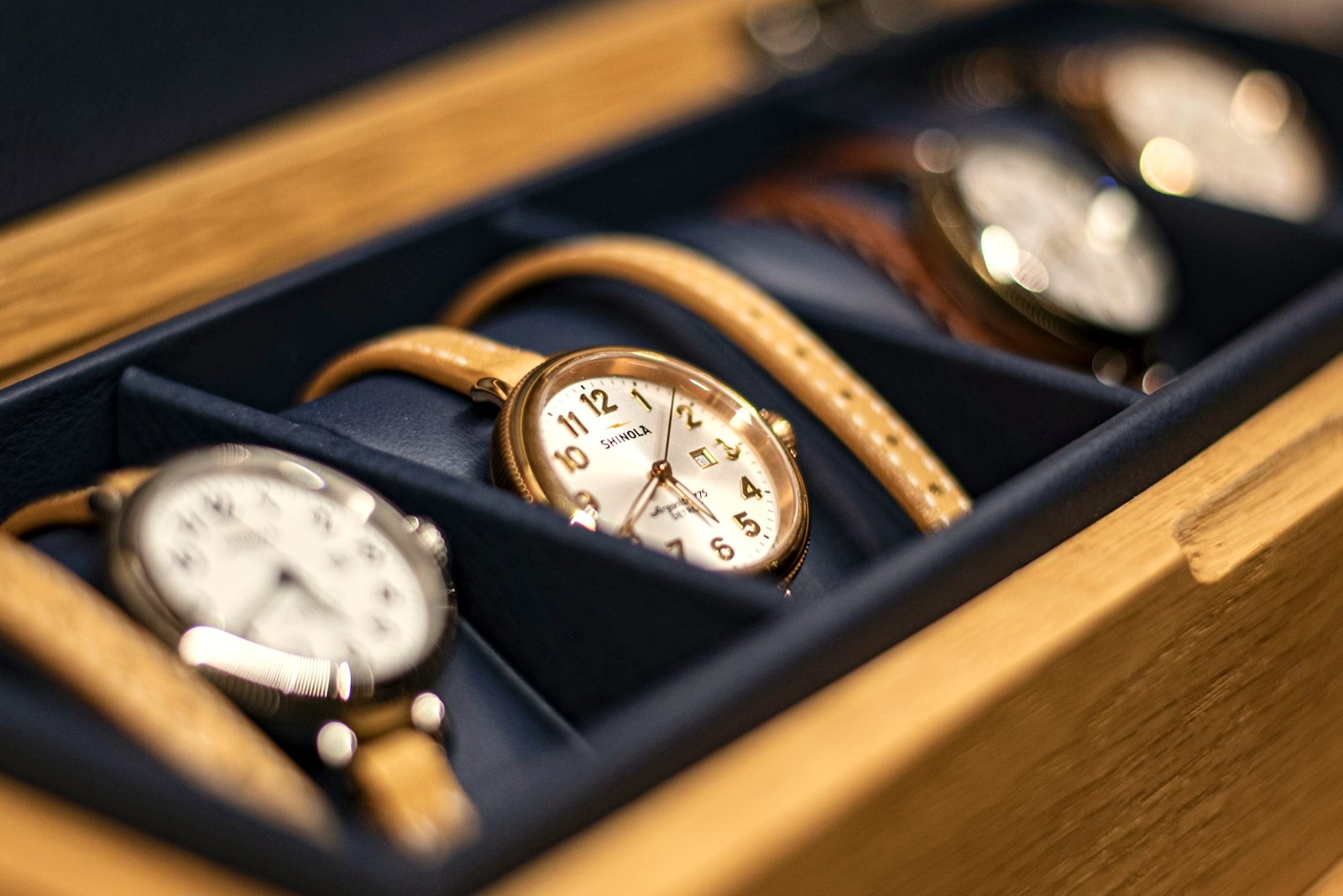
The collection box: accumulation with good joinery, kept in a drawer and admired on schedule. This page is about the same instinct at the bathroom sink, where it is not collected but sold, one step at a time. The photo bank holds no honest frame of a bathroom shelf, and that gap is named in the honesty section below rather than filled with a face.
Checked and updated October 2026
The thesis, up front: grooming is sold by the step and works by the habit. The industry's format is accumulation: ten steps, layered actives, a second bottle for the evening, a shelf that eventually needs its own furniture. Every record this site has published votes the other way. The skincare Decoder rules the routine at four steps, with roughly ninety per cent of the benefit in two of them. The fragrance ranking's answer to scent is one bottle. The sea salt ranking's answer to texture is one spray. The brow Decoder's whole instrument is a pencil and ten seconds. This Take assembles those verdicts into the position they already add up to, prices the counter-format from the same record, and ends with the smallest kit the record supports: priced product at $189.99, a bag at $170, and a skin core that runs about $10 to $14 a month.
In this issue
The thesis: the shelf is a sales format
The format first, with its debt named. The grooming routine feature is the magazine industry's own invention: the shelf tour, the twelve-product morning, the routine presented as a personality. This page borrows that shape, one argument carried across skin, hair, scent and brows, and changes the one thing that matters. Nothing here is photographed into authority. Every claim below resolves to a graded record on this site, and where the record runs out, the page says so and stops.
The step is the industry's unit of sale. A step is a product, a product is a repurchase cycle, and a routine built of steps can always be sold one more step. A habit has no checkout. That asymmetry, and nothing more mysterious, is why the standard advice about grooming is a list that grows: the format is not describing skin, hair or scent. It is describing inventory. The tell is that the list never shrinks. No routine feature concludes that three of its products can be retired; the genre has no mechanism for subtraction, because subtraction is not a sale.
The records on this site were not built to make this argument. The skincare Decoder was built to answer a routine question, the two Cards to rank a spray and a scent, the brow Decoder to map a shape. But each one, working its own desk, arrived at the same shape of answer: a small number of things, done in the right order, repeated. The Decoder prints the mechanism in one sentence: the routine that works is the short one you actually repeat. This Take is that sentence, applied to the whole sink.
The evidence, desk by desk
Four desks, four records, one direction. The scores and prices below are the records' own, reproduced exactly; each section links the page that earned them.
Skin: four steps, ninety per cent in two
The skincare Decoder is the fullest statement of the small-kit position on this site, and it is arithmetic before it is advice. The routine is four steps in the morning and four at night, matched to skin type: cleanse gently, moisturise, SPF in the morning; cleanse, one treatment at most, moisturise at night. Roughly ninety per cent of the benefit, the Decoder rules, lives in two of the steps: cleansing without violence, and sunscreen every morning. The remaining steps are support. The step the format sells hardest, the treatment, is capped at one, and it is not added on day one: the Decoder's buying rule is three things (a gentle cleanser, a moisturiser for your type, and an SPF 30), with a treatment admitted only after a month of the core.
The Decoder also prices its own discipline. Skin type is set by a one-hour test, done once: wash, wait an hour, read the shine map. Judgement runs on skin's calendar, not the shelf's: texture and clarity are judged after four to six weeks, and the page's sharpest line is about abandonment, that a routine given up at day nine was never tested, only its patience was. A ten-step routine is nine more chances to reach day nine. The four-step routine is costed in this site's published copy at about $10 to $14 a month, which is the counter-format's problem in one figure: the working routine is already cheap, so the shelf cannot be sold as the serious version. It can only be sold as the bigger one.
Hair: one product, four cosmetic effects
The sea salt ranking grades a single styling product, and its discipline is the point. A sea salt spray is graded on its published ingredient list, its hold as reported by the people who wear it, and its price per 100ml. What it does is four cosmetic effects, and the Card describes them as cosmetic effects only: grit, separation, a matte finish and hold. No bottle on that page is credited with improving the hair itself, and treatment claims, where a maker markets one, are graded as marketing, in the open. One product, one job, described in words that do not inflate.
The winner is the Sun Bum Texturizing Sea Spray at 81, $16.99 for 177ml from the maker. The loser is the more instructive bottle: the Oribe Après Beach Wave and Shine Spray, sent home at 38, $46 for a 300ml aerosol whose own published ingredient list, on the house's own site, contains no salt of any kind, in any position. That is accumulation's hair desk in miniature: the premium shelf sells the category's name at three times the winner's price with none of the category's ingredient in it. The record's answer to hair texture is not a system. It is one bottle, chosen by reading its ingredient list, which is a habit of exactly the kind the shelf exists to replace.

Scent: the one-bottle answer
The fragrance ranking was not built as a minimalism argument either. It grades a fragrance on its composition as published, its wear as reported, and its price per millilitre, because those three facts decide whether a bottle is still earning its shelf space in year two. Its winner, the Bleu de Chanel Eau de Parfum at 85, $173 for 100ml, is printed on the Card with the plainest possible framing: the one bottle to buy if one bottle is the plan. One bottle is treated there as a plan, not a compromise.
The Card's other discipline matters as much. No bottle on that page is credited with changing how a room feels about the wearer, because that claim belongs to the advertisements, and the advertisements are graded as advertisements where they appear. Scent is described as scent and nothing more. Strip the outcome claims away and the case for a rotation goes with them: what remains is a set of compositions, and a composition is worn one at a time. The bottle sent home from that ranking, the Parfums de Marly Layton at 56, costs $400 for 125ml. At the scent desk, accumulation does not look like ten modest steps. It looks like a second bottle at $400, bought to stand beside the one that already worked.
Brows: ten seconds, two tools
The brow Decoder is the thesis at its smallest scale. Its shape rule fits in one line: straight, full and low, one degree softer than the jaw. Its instrument is a pencil and ten seconds: held vertically against the side of the nose, the pencil marks where the brow should start; angled past the outer corner of the eye, it marks where the tail should end; the highest point sits roughly above the outer edge of the iris. Anything outside those lines is a stray. The whole diagnostic costs ten seconds and one pencil, and it replaces an entire category of brow products, stencils and services with a measurement.
What follows the test is maintenance, and the Decoder says so in words this page will not improve on: the work that matters is maintenance, not design. Clear the bridge, tidy the tail, trim the length, every two to three weeks, with tweezers and small scissors. The mistakes it names are all forms of accumulation: arches, stencilled edges and waxed blocks, the additions that turn a tidy brow into a visible one. At the brow desk the small kit is two tools and a calendar entry. Nothing about that is a product launch, which is precisely why it works.
The counter-format, steelmanned and priced
The case for the shelf, stated as strongly as it can be. More steps can mean more targeted ingredients, each product doing one job properly instead of three jobs approximately. Layering is a real technique in the formulator's sense: consistency, order and compatibility matter, and a longer routine can respect them more carefully than a short one. The ritual itself has value that is not fraudulent: ten unhurried minutes is a pleasure some routines are honestly bought for, and a shelf can be a hobby, like a record collection, judged as a hobby rather than as a regimen. All of that is true, and this page concedes it in full.
It is answered by the record, not by taste. The Decoder does not merely prefer four steps; it locates the benefit, ninety per cent of it in two steps, caps the treatment layer at one, and sequences the buying over a month precisely so that each addition can be judged on skin's calendar. A step added on day one cannot be judged at all, because nothing about a face at day nine separates the product's work from the routine's noise. The fragrance Card refuses the outcome claims the shelf retails, and the sea salt Card shows the shelf's premium tier selling a salt spray with no salt in it. Pleasure is a fair reason to own a shelf. It is not evidence the shelf outperforms four steps, and the records here grade what performs. Where the two conflict, the hobby should be bought as a hobby, knowingly, and not as an upgrade.
Then the price, because the format never prints one. The four-step core runs about $10 to $14 a month on the costing this site publishes, across four steps: call it roughly $3 a step per month. A ten-step shelf, priced on that same per-step arithmetic, runs roughly $25 to $35 a month. The arithmetic is printed here because it is the only honest costing available: it assumes each added step costs no more than the core's steps do, and the format's actual business model, the upgrade to the premium version of each step, is applied on top of that, step by step, forever. The record's two priced exhibits show where the gravity pulls: a $46 spray with no salt in it, and a $400 bottle sent home at 56. Accumulation is not ten cheap steps. It is ten steps, each with a more expensive version waiting.
The Take Rule
A step that cannot say what it does in one sentence is not a step. It is shelf decoration. Buy the habit: four steps, one spray, one bottle, ten seconds with a pencil.
The kit: the smallest the record supports
No new shopping list has been invented for this page. Every line below is a standing record on this site, with its score or its published costing, and the one line the record does not price is printed unpriced rather than estimated.
| Item | The record | Price, as published |
|---|---|---|
| A gentle cleanser, a moisturiser for your type, an SPF 30 | The skincare Decoder's three buys; skin type set by the one-hour test | The routine runs about $10 to $14 a month |
| One treatment at most, added after a month of the core | The skincare Decoder's cap and sequence | Inside the same monthly costing |
| Sun Bum Texturizing Sea Spray | Sea salt ranking winner, 81 | $16.99 for 177ml |
| Bleu de Chanel Eau de Parfum | Fragrance ranking winner, 85 | $173 for 100ml |
| Tweezers and small scissors | The brow Decoder's named maintenance tools | The record names the tools and prices none; no price is invented here |
| Leatherology Double Zip Toiletry Bag | Dopp kit ranking winner, 87 | $170 |
The priced record totals $189.99 of product. With the bag that won its own ranking, $359.99. The skin core runs on top of that at about $10 to $14 a month. That is the whole kit: four desks, five records, and no line on the list without a verdict behind it. Everything the shelf adds beyond this page is either a second version of something here, a step the Decoder capped, or a bottle the rankings already sent home.
What this page does not claim
Three limits, printed rather than implied. First, the framing: every effect described on this page is a cosmetic effect, described as one, in the discipline the Cards themselves print. Nothing here treats, cures or diagnoses anything, and sunscreen appears as the skincare Decoder's routine step, in the Decoder's own terms. Where a sentence above reports a benefit, it reports the record's ruling, attributed to the record.
Second, the record has edges, and one of them is a staple. No page on this site has graded a deodorant or an antiperspirant, and the most searched grooming debate in the desk's keyword research, the armpits question, sits in the research queue as a future Take, unbuilt. This page does not fill that gap with an opinion dressed as a record. When the verdict is built, it will be built the way the rankings are: on published ingredient lists and priced evidence. Until then, the honest line in the kit where a deodorant would go is a blank, and it is printed as one here.
Third, the photographs. The bank this page draws on holds no bathroom shelf, no grooming product still life and no fragrance bottle frame; the fragrance frame is the bank's standing harvest gap. The hero is a collection box of watches, used because the page is about accumulation and captioned for exactly what it shows, and the skin and scent sections run without frames rather than borrow faces to fill the space. The beard, for the record, is not argued here at all: it has a Decoder of its own, a styling system of lengths and edges by face shape, and a system is not a shelf.
FAQ
What is the smallest grooming kit that works?
The smallest kit the published record on this site supports has four parts. For skin, the three buys the skincare Decoder names: a gentle cleanser, a moisturiser for your type and an SPF 30, with one treatment at most added after a month of the core; the routine is costed at about $10 to $14 a month. For hair, one product: the Sun Bum Texturizing Sea Spray, winner of our sea salt ranking at 81, $16.99 for 177ml. For scent, one bottle: the Bleu de Chanel Eau de Parfum, winner of our fragrance ranking at 85, $173 for 100ml, the one bottle to buy if one bottle is the plan. For brows, tweezers and small scissors, the tools the brow Decoder names, used every two to three weeks. The priced product totals $189.99, or $359.99 with the Leatherology Double Zip Toiletry Bag, the dopp kit that won its ranking at 87, at $170.
Is a ten-step skincare routine better than a four-step routine?
The skincare Decoder on this site rules that the ten-step routine is a sales format, not a skin format. Its routine is four steps in the morning and four at night, and it puts roughly ninety per cent of the benefit in two of them: cleansing without violence, and sunscreen every morning. A treatment is capped at one, added only after a month of the core. The Decoder's judging rule is consistency: a routine abandoned at day nine was never tested, and the short routine that is actually repeated is the one that works.
How much should a basic skincare routine cost per month?
About $10 to $14 a month for the four-step core, the costing this site publishes for its skincare Decoder's routine: a gentle cleanser, a moisturiser matched to skin type and an SPF 30, with one treatment at most. The ten-step shelf, priced on the same per-step arithmetic that costing implies, runs roughly $25 to $35 a month before any upgrade, and the upgrade is the format's business model. The Decoder names product categories, not brands, and sets skin type by a one-hour test: wash, wait an hour, and read the shine map.
How many fragrance bottles does a grooming kit need?
One, on the record of our fragrance ranking. The Bleu de Chanel Eau de Parfum wins that ranking at 85 and is printed there as the one bottle to buy if one bottle is the plan, $173 for 100ml, graded on its composition as published, its wear as reported and its price per millilitre. The ranking's discipline is printed on the Card itself: no bottle is credited with changing how a room feels about the wearer, because that claim belongs to the advertisements. The bottle sent home from that ranking, at 56, costs $400, which is what accumulation looks like at the scent desk.
What does sea salt spray actually do?
Four cosmetic effects, and the ranking that grades it describes them as cosmetic effects only: grit, separation, a matte finish and hold. Nothing in the bottle is credited with improving the hair itself. The winner of our sea salt ranking is the Sun Bum Texturizing Sea Spray at 81, $16.99 for 177ml, graded on its published ingredient list, its hold as reported by the people who wear it, and its price per 100ml. The spray sent home from that ranking, at 38, costs $46, and its own published ingredient list contains no salt of any kind.
How often do eyebrows need maintenance?
Every two to three weeks, on the brow Decoder's record: clear the bridge, tidy the tail, trim the length, with tweezers and small scissors. The Decoder's shape rule is straight, full and low, one degree softer than the jaw, and its instrument is a ten-second pencil test: held vertically against the side of the nose, the pencil marks where the brow should start; angled past the outer corner of the eye, it marks where the tail should end. The Decoder's warning is that the work is maintenance, not design: arches, stencilled edges and waxed blocks are how a tidy brow becomes a visible one.
Next
The records this Take argues from, in the order it argues them: the skincare Decoder, the sea salt ranking, the fragrance ranking and the brow Decoder. The neighbouring systems: the beard Decoder, the dopp kit ranking the kit's bag won, and the Aesthetic Decoder, where the clean register is decoded as a routine rather than a shopping list. How any of it is graded is on the Methodology page. The next Take is already in the research queue; it is named in the honesty section above, as a gap, until the evidence for it exists.