
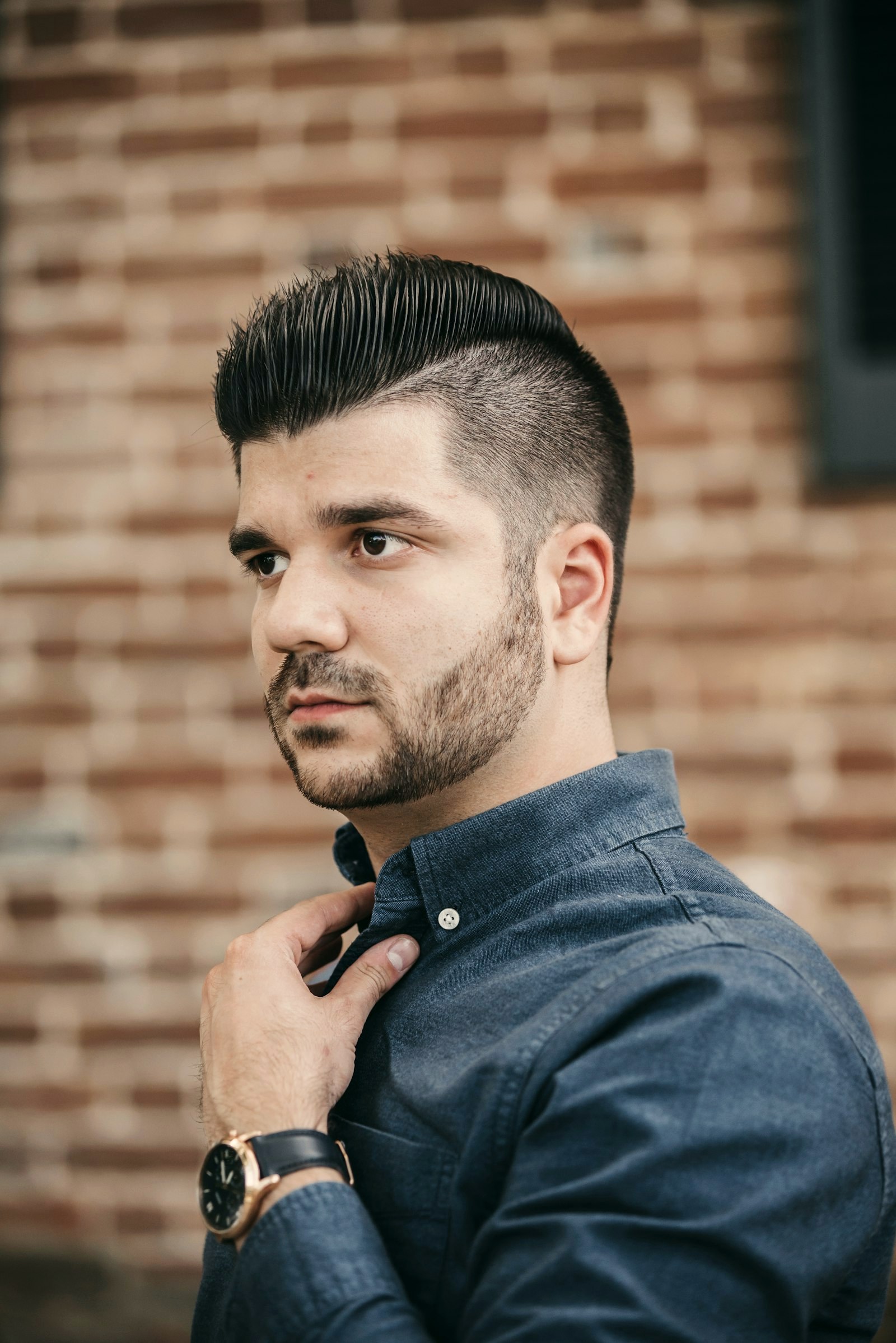
Full, straight, unbothered: the target is the brow you were given, with the noise removed.
Checked and updated October 2026
The ruling, up front: a man's brow should be straight, full and low, following the brow bone he already has. The correct shape for you is set by your face shape: keep the brow one degree softer than the jaw, and stop there. The work that matters is maintenance, not design: clear the bridge, tidy the tail, trim the length, every two to three weeks, with tweezers and small scissors. Arches, stencilled edges and waxed blocks are how a tidy brow becomes a visible one. This page maps each face shape to its brow, prints the ten-second pencil test that finds your start and end points, and names the mistakes that give the game away.
On this page: the face-shape map, the pencil test, the routine, pluck, thread or wax, the mistakes, questions.
Your face shape sets your brow shape
Brows are the frame the face hangs in, and the frame has one job: balance. A strong jaw wants a strong, straight brow above it; a soft face wants the brow kept soft too, because a carved brow on a round face does not sharpen the face, it just looks borrowed. This is the same system as our face-shape decoder: find your shape there first if you have not, then read your row here. The data team's mapping, built from the proportions of the seven shapes our system decodes:
| Face shape | Your brow | The rule |
|---|---|---|
| Oval | Straight, medium-full, kept natural | The balanced face needs nothing added. Tidy only. |
| Square | Full and straight, a degree softer than the jaw | A brow as hard as the jaw doubles the hardness. Soften one degree. |
| Round | Straight with a slight lift at the tail | Angles help, arches do not. Keep the line straight, keep the length. |
| Heart | Full and low, never thin | A wide forehead needs brow weight below it. Thinning unbalances you. |
| Diamond | Full through the middle, tidy tails | Width at the brow balances width at the cheekbones. |
| Oblong | Straight, flat and full, kept low | A flat brow shortens a long face. Never lift the tail. |
| Triangle | Full and straight, the strongest row here | A heavy jaw needs brow weight above it to balance the silhouette. |
Read the table's pattern and the doctrine states itself: in six of seven rows the answer is some version of full and straight. That is not a lack of imagination. It is the finding. Men's brow fashion cycles between bushy and sculpted roughly every decade, and the face underneath never asked for either. Each row is also a page in full: the brow text in the table links to its spoke, where that face's start, high point and end are set and its one mistake is named.
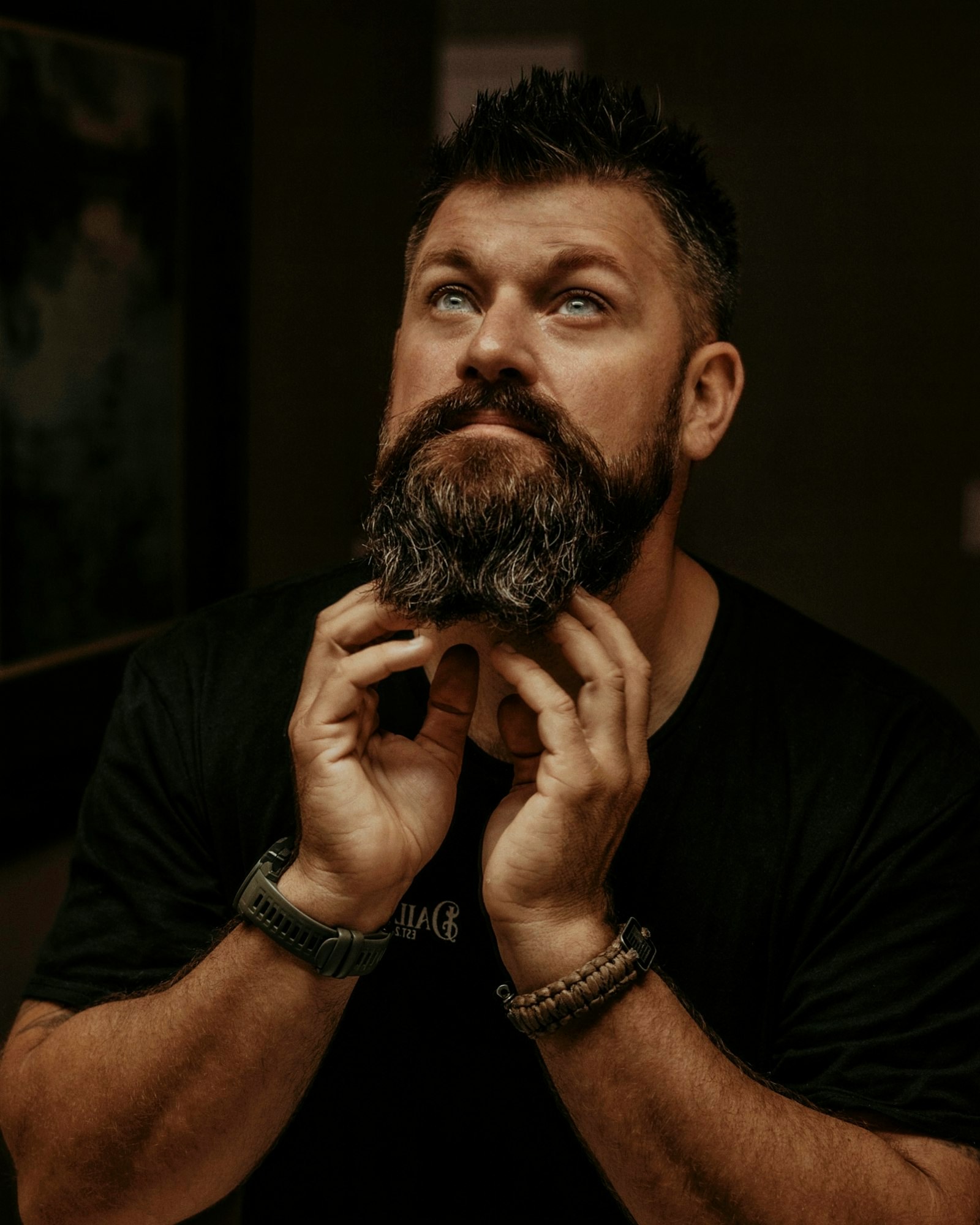
The pencil test: your start, arch and end
Before anything is removed, map the brow you have. You need a pencil or the handle of a toothbrush and a mirror, and the test takes ten seconds a side.
| Point | How to find it | What it means |
|---|---|---|
| Start | Hold the pencil vertically against the side of the nose | The brow should begin where the pencil crosses it. Hair inside that line, toward the other brow, is bridge growth: it goes. |
| High point | Look straight ahead; find the outer edge of the iris | The brow's highest point sits roughly above it. On a man this is a plateau, not a peak: the brow runs flat and eases down. |
| End | Angle the pencil from the nose past the outer corner of the eye | Where it crosses the brow is where the tail should end. A tail that runs past it drags the eye down; one that stops well short looks cut. |
Mark the three points with the pencil if it helps. Everything outside the lines is fair game for the tweezers. Everything inside them is your brow, and it stays.
The routine: five minutes, every two to three weeks
Step one: warm water. Do this after a shower, or hold a warm cloth over the brows for a minute. Hair releases easier from warm skin, and the whole job stings less.
Step two: brush up. Comb both brows upward with a clean spoolie or an old toothbrush. The hairs that stand past the top line are your length problem, visible at last.
Step three: trim the length. With small scissors, snip only the tips that cross the top line, a millimetre at a time, following the natural direction of growth. Little and level beats short and sorry. Never cut straight across the top like a hedge: stagger the cuts.
Step four: tweeze the strays. Bridge first, between the start lines, then the obvious outsiders under the tail and above the brow. Pull in the direction of growth, one hair at a time, and stop every few hairs to look at the whole face. The whole face, not the brow: that is the view everyone else gets.
Step five: stop early. The single rule that separates tidy from done. You are removing noise from a signal. The moment the brow looks deliberate, you have gone two hairs too far, and the fix is two weeks of growing it back.
Pluck, thread or wax: the honest table
| Method | Precision | Best for | The catch |
|---|---|---|---|
| Tweezers | One hair | Strays, bridge, maintenance | Slow on a very heavy brow |
| Threading | A clean line, professionally judged | A first proper tidy, heavy growth | The line can come out too clean. Ask for tidy, never shaped. |
| Waxing | A block at a time | Almost nothing, on a man's brow | Hard edges that read as done, and no way to take half a decision back |
| Trimmer | Length only | The comb-and-trim pass | Removes nothing at the root; a helper, not a method |
The Brow Ruling
Best shape: your own, straight and full. Best tool: tweezers. Best cadence: five minutes every two to three weeks. The one thing to never do: chase an arch. A man's brow is not a design project; it is a frame, and a frame succeeds by being noticed last.
The mistakes that give the game away
The arch. The most common error, borrowed from a different face's instruction book. A peaked brow on a man reads as surprise, permanently.
The stencil edge. A brow with a ruler-straight bottom line did not grow that way, and every eye in the room knows it. Tidiness lives in the strays, not in a redrawn border.
The too-wide gap. Clearing the bridge is right; clearing it past the inner-eye lines opens the face up like a startled owl. The pencil test exists to prevent exactly this.
The matching pair. Brows are siblings, not twins. Chasing perfect symmetry means removing hair until both are thin, and thin is the one outcome no face shape asked for.
Dyeing them darker. A brow two shades darker than the hair above it looks pasted on. If grey is the issue, trim the long grey strays first. It usually is the whole issue.
Questions, answered
What is the best eyebrow shape for men?
The one your bone structure already drew. Men's brows should stay straight and full with a low, flat angle: the work is removing the strays that blur the outline, not carving a new shape. Map your face shape first, then keep the brow one degree softer than the jaw. The full face-shape to brow-shape table is on this page.
Should men shape their eyebrows at all?
Clean them, yes. Shape them into arches, no. There is a wide strip of ground between a monobrow and a sculpted brow, and that strip is where well-groomed men live: strays between the brows gone, strays below the tail tidied, length trimmed. The natural outline survives all of it. If anyone can tell you had them done, they were overdone.
How do I find where my eyebrows should start and end?
With a pencil, in ten seconds. Hold it vertically against the side of your nose: where it crosses the brow is where the brow should start. Angle it from the nose past the outer corner of the eye: where it crosses is where the tail should end. The highest point of the brow sits roughly above the outer edge of the iris. Anything growing outside those lines is a stray, whatever the current fashion for bushy brows says.
Should men pluck, thread or wax their eyebrows?
Tweeze the strays yourself, and leave the rest alone. Tweezing removes one hair at a time, which is exactly the level of control men's brows need. Threading is the professional option when the outline needs a proper tidy, because a good threader works fast and conservative. Waxing is the one to avoid: it takes a block of skin's worth of hair at once, draws a hard edge that reads as done, and is how natural brows turn into stencils.
How often should men trim their eyebrows?
Every two to three weeks, in the same pass as a haircut or a beard trim. Brow hair grows slower than scalp hair, so a light comb-and-trim on that cadence keeps the length honest without ever looking freshly done. If a brow hair is long enough to curl or cross its neighbours, it is long enough to trim.
Can eyebrow grooming make a man look younger?
It removes one of the louder age tells. Brow hair greys, lengthens and wanders with age, and an unruly brow reads as neglect long before it reads as experience. A trimmed, tidy brow does the opposite of a sculpted one: it does not announce itself, it just takes ten years of static off the face. That is the realistic promise of this whole routine, and it is enough.
Next
The brow sits inside a system. Start at the hub: how to determine your face shape, with the measurement method and the seven shapes decoded. The other half of the grooming routine is the skin: the men's skincare routine, decoded, four steps in the morning and four at night, and no ten-step theatre. For the data this page rests on, see our methodology.