
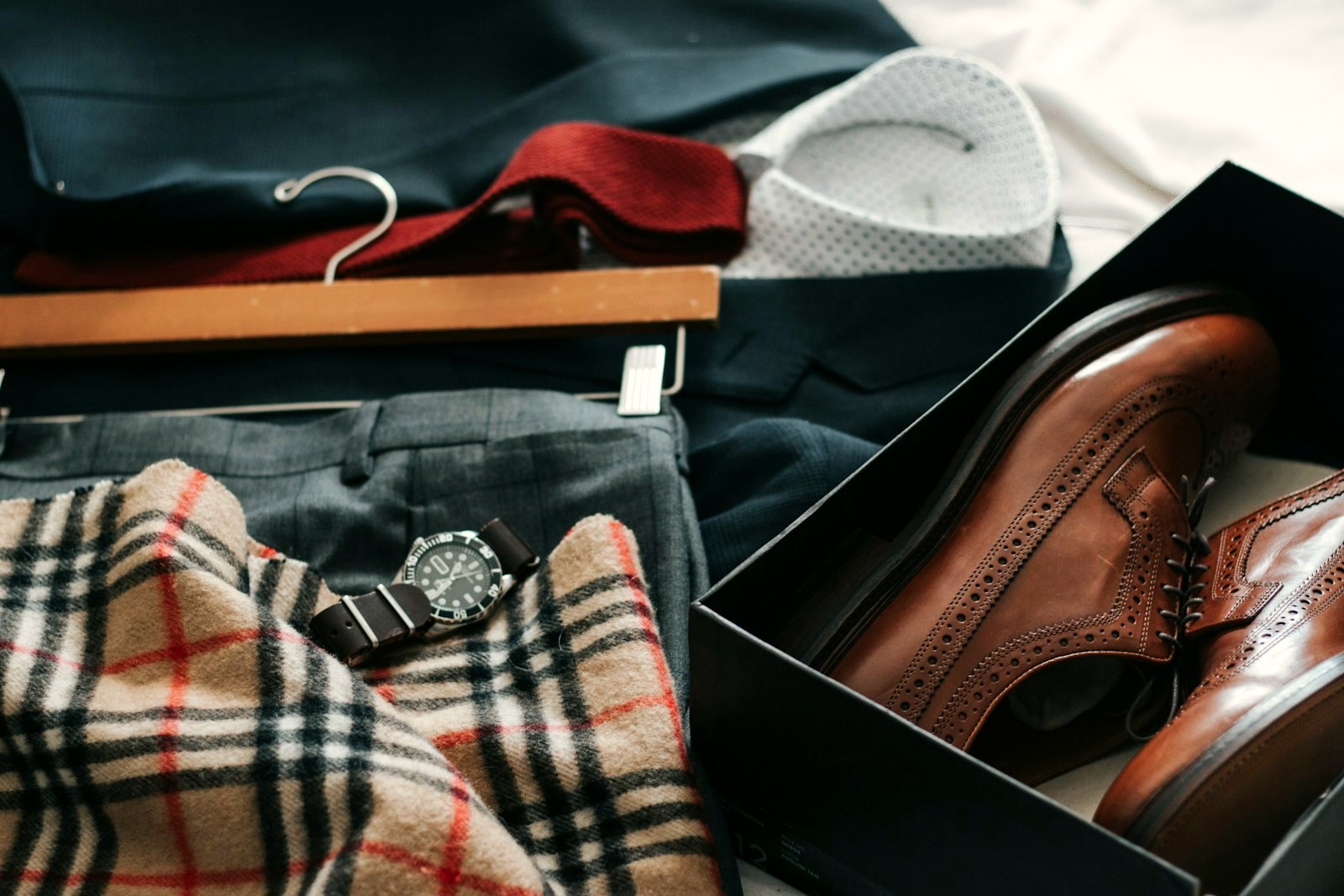
The tailored end, laid flat: the bank holds no pleated trouser on a body in any cloth, a gap this page admits rather than covering with a borrowed shot; no ranked garment is pictured anywhere on this page.
Checked and updated October 2026
The verdict, up front: eight pleated trousers scored out of 100 on the house basis for the garment: cloth and weight honesty 30, pleat and waistband construction record 20, fit and range 20, value 15, longevity and service 15. The Natalino Classic Pleated Trouser wins at 88: the only record in the field that publishes its mill, its cloth weight, its pleat direction and its waistband's whole construction, at £215. The Berg & Berg August Flannel follows at 80, on the heaviest published cloth here, 430 grams. The Cavour Summer Hightwist is third at 78, its single reverse pleat stated and its buttonholes handmade. And the pair sent home, at 37, is a suit pant in a cloth that is 6 percent wool, its pleats uncounted over a drawstring waist. The field's own question runs through every card: the pleated trouser is the species that is its pleats, so the pleats should be specifiable, and of eight records, six count them, three give their direction, and none, not one, gives their depth.
First, know which species you are in
A pleat is not a decoration that happens to trousers. It is a fold of cloth at the front waist that opens when the wearer sits or strides: room, engineered. Our trouser index files the species at formality 4, between the dress trouser and the chino, and prints the system this Card grades inside: pleats are a system, high rise, full thigh, taper below, and a pleat on a low-rise slim leg is a contradiction, because a pleat is a fold of cloth that needs somewhere to live. The rise bands are the index's: low under 10 inches, mid 10 to 11.5, high 11.5 and above, and pleats require the high band.
The neighbours, ruled the way this site rules them. Against the flat-front tailored trouser, ranked in Verdict Card No. 15: the same tailored family, the same waistband furniture, without the fold. That Card's winner, the Spier & MacKay tropical wool trouser at 87, carries a pleat option in its copy, and its runner-up field includes the Brooks Brothers double-pleated wool flannel at 76: both garments stand graded there, and this Card cross-references them rather than grading them twice, because one garment earns one grade. Against the fold as styling: the pleat sewn onto a trouser that deletes the system, a slim or low leg, an undisclosed or token cloth, a drawstring where the waistband's construction should be. That garment is inside this field, at the bottom of it, and it is graded as what it is. Against the pleated cloth of garment-pleating houses: a heat-set pleat pressed into the fabric itself is a different invention, a cloth treatment rather than a tailored fold, and it is rested on that line in the honesty section below. What remains is the tailored pleated trouser, single or double, forward or reverse, and this Card grades its record.
How the scores work
Every pleated trouser is scored out of 100 on the same five rows, settled from the trouser Cards' shape, No. 73's basis adapted so the second row carries this garment's signature. Cloth and weight honesty (30) reads the cloth record first: the fibre named and its composition printed, the mill named or the cloth sold as a feeling, the weight printed in numbers or carried by an adjective. Pleat and waistband construction record (20) reads the species' defining facts as published: the pleat count stated or gestured at, the direction named, forward or reverse, the depth measured in any unit or nowhere, and the waistband's construction, its extension, curtain and split, stated where a buyer can read it. Fit and range (20) is scored on the published fit against the index's system, the high rise the pleats require, the full thigh, the taper, and the size library behind it. Value (15) is the score divided by the bill. Longevity and service (15) is the life the construction can hold and the candour of the record behind it. One discipline governs the whole page: scores held elsewhere are evidence about houses, never garment scores here. Suitsupply stands at 75 in the brands books, audited; COS at 70; Zara at 48. Every trouser below is graded on its own published record.
The ranking

Natalino Classic Pleated Trouser
UK price at last check: £215 with VAT (£179.17 before tax on the maker's page).
Buy it on the record entire: the mill, the weight, the pleat's direction and the waistband's whole construction in print, at £215.
The cloth: 100 percent wool by Vitale Barberis Canonico, a woollen flannel, at a published 340 grams: the mill, the fibre, the weave family and the weight in one specification, the fullest cloth line in the field. The cloth row's 27 charges the two facts the line still withholds, a Super number and a yarn count, beside the Berg & Berg below, whose own exclusive cloth is heavier at 430 grams and whose mill goes unnamed. A named mill at a stated weight is the standard this page asks for, and this is the only record that meets all of it at once.
The pleats and the waistband: single reverse pleats, the count and the direction both published, and then the waistband, which is where this garment leaves the field behind: a curtained waistband, a reinforced waistband with internal canvas, and a split rear waistband, all three printed on the maker's page, the only curtained waistband and the only split waistband published by any maker here. Around them the construction completes itself in print: genuine horn buttons, side adjusters, a front lined to the knee, a coin pocket and two rear pockets, bar tack reinforcement, unfinished hems at 37.5 inches. The fit is the index's system entire, high-waisted with room in the thigh and a gentle taper from the knee down, waists 28 to 40, made in Portugal. The pleat row's 19 withholds one point for the fact the whole field withholds: the pleat's depth is stated nowhere, here as everywhere.

Berg & Berg August Flannel Trousers
Price at last check: €380 at the maker's own store.
Buy it for the cloth: the heaviest published weight in the field and a double pleat whose direction is stated, at the field's second-highest bill.
The cloth: 100 percent wool, an English flannel woven in Yorkshire exclusively for the house, at a published 430 grams: the heaviest cloth weight in the field by ninety grams, and the only cloth here a maker had woven for itself. The cloth row's 26 credits the weight and the exclusivity and charges the name that never comes: the Yorkshire mill is not identified, where the winner prints Vitale Barberis Canonico in its specification. An exclusive cloth is a claim a buyer cannot check; a named mill is one he can.
The pleats and the waistband: double reverse pleats, count and direction both published, one of three records in the field that states a direction at all. The waistband record is honest and thinner than the winner's: side adjusters, a button-tab closure with a zip fly, horn buttons, one back pocket with a button closure, and no curtain, no split, no extension named anywhere on the page. The fit is the system, a high rise and a generous leg, sizes 44 to 56, shipped unhemmed from a Portuguese make. The value row's 10 is the bill set against the record: €380 buys the field's best cloth and its second-best pleat record, and the winner publishes more of both for less.

Cavour Summer Hightwist Trouser (Model 2)
US price at last check: $325 for the Model 2 single-pleat trouser.
Buy it on the maker's hand: a weighed VBC cloth, a stated reverse pleat and handmade buttonholes, charged for a medium rise on a pleated leg.
The cloth: 100 percent wool, a high-twist tropical by Vitale Barberis Canonico, at a published 240 grams: mill, fibre, weave and weight entire, the second fullest cloth line in the field. The cloth row's 24 credits the publication and notes the cloth itself: 240 grams is a summer weight, a hundred grams under the winner's flannel, chosen for heat and graded as chosen, a lighter garment by design rather than by corner cut.
The pleats and the waistband: a single reverse pleat, stated on the maker's page with its direction, beside side tab adjusters, slanted side pockets and two back pockets, and a handmade register no other record here attempts: handmade buttonholes, bar tacks and pick stitching, printed as the garment's features. The trousers come unfinished, with an extra 5 centimetres of circumference in the leg seams for alterations, an inlay the longevity row credits. The pleat row's 17 charges the waistband's silence past its tabs: no curtain, no split, no extension is published. The fit row's 14 charges the model's one compromise with the system this Card grades inside: the Model 2 is a medium rise, where the index rules that pleats require the high band, and the maker's own Model 3 exists for the buyer who wants the pleat at its proper height. The price stands at $325 on the model's published record; the maker's page linked here is the garment's own.
Bonobos Italian Pleated Wool Trouser
US price at last check: $149 on sale at the maker's store (list $229).
Buy it on sale, knowingly: honest wool and a published double pleat at $149, with the rise charged against the system it shortens.
The cloth: 100 percent virgin wool flannel, the fibre and its grade published entire, and there the cloth record stops: no weight stands anywhere on the page, and the Italian of the garment's name is a geography, not a mill, where the two records above it print Vitale Barberis Canonico and a Yorkshire weave. The cloth row's 19 credits a clean fibre line at an attainable price and charges the two silences beside it.
The pleats and the waistband: a double-pleated front, the count published, the direction not, with an extended tab and button closure, a lining at the interior front and welt back pockets: a real tailored furniture list, the fullest published by any attainable maker here. The pleat row's 14 credits the extension, the field's only one in print beside the Berg & Berg's button tab, and charges the direction that never comes. The fit is where this garment argues with the index, and the card prints the argument: the maker publishes a mid rise, sitting at the standard waist, on a pleated trouser, where the index rules that pleats require the high band because the fold needs somewhere to live. The pleats are relaxed through the hip and thigh and the leg opening is published at 16 and a half inches, and the size library is the field's broadest, waist by length across the whole grid, which the fit row's 15 weighs against the rise and finds the honest middle of the field. At $149 on sale the value row is the ranked field's best money; at the $229 list it would sit two points lower, and the card grades the price a buyer can pay today.
COS Wool-Blend Relaxed-Fit Wide-Leg Pants
US price at last check: $159 at the maker's own store.
Buy the silhouette, knowingly: a wide pleated leg at $159 whose cloth split its maker's US page does not publish.
The cloth: a wool-blend twill, in the maker's own words, and on the maker's US page the record ends there: no percentages stand behind the blend, no weight is published, no mill is named. The cloth row's 15 is that silence priced at $159. The house stands at 70 in the brands books, evidence about the house; the garment's record is a fibre category and a weave word, and a buyer who wants to know what share of his trouser is wool will not learn it from the page that sells it.
The pleats and the waistband: roomy pleats for volume, in the maker's phrase: the pleats are present and uncounted, their direction unstated, their depth, like every depth in this field, unmeasured. The construction record is a closure, hook, bar and zip, with belt loops, pressed creases and welt pockets, and no waistband construction of any kind published. The pleat row's 11 credits a real pleated garment with a named closure and charges the count that never comes. The fit is the silhouette of the moment carried honestly: a relaxed wide leg with the inside leg published at 30.31 inches in the 32 regular, a measurement in print where most of this field offers adjectives. The rise is not stated on the US record, and the fit row's 13 grades a wide leg whose pleats the record does not place in the index's bands.

Beams Plus 2 Pleats Tapered Twill Trousers
Price at last check: $180.08 at HHV.
Buy the pattern, knowingly: the pleat count carried in the garment's name, over the thinnest tailored record among the ranked.
The cloth: a cotton twill, plush in its retailer's word, with pleats and a five-pocket set up: the published retail record for the garment names the fibre family and the weave and publishes no percentages and no weight. The cloth row's 14 credits an honest workwear cloth honestly described and charges the numbers that never come, on a garment whose house, founded in Harajuku in 1976 with this label launched in 1999, is graded in the longevity row for the pattern's endurance rather than the page's candour.
The pleats and the waistband: the count is the name. Two pleats, carried in the product's title at every stockist, the one pleat fact this record guarantees entire, and it is not nothing: a buyer ordering the 2 Pleats knows the architecture he is buying, which is more than the COS above it, or the skip at the foot of the page, tells him. Everything past the count is silence: no direction, no depth, no waistband construction, no closure named in the captured record, a five-pocket workwear furniture where the tailored field prints adjusters and extensions. The pleat row's 10 is the count credited and the silence charged. The fit is a tapered leg in alpha sizes, medium to double extra large, the coarsest grading in the field beside the Propper logic of No. 84, and the fit row's 12 prices a Japanese reading of an American golden-age pattern that a buyer sizes by letter. The door is the stockist's pants index for the house, the category tier of the deep-link rule, printed here rather than smoothed over.
Rota Single-Pleat Trousers
Price at last check: $520 at the maker's own store.
Buy the name if you must, knowingly: the field's highest price stands on its thinnest published record.
The cloth: the record open to a buyer is the maker's single-pleat collection page, and it publishes no composition and no cloth weight for the garment: the cloth column of this Card's table prints the silence where the winner prints a mill and 340 grams. The cloth row's 11 is not an accusation about the cloth itself, which this desk has not read; it is the grade for a record a buyer cannot interrogate, from a house whose whole trade is this garment. A trouser specialist that publishes less about its trousers than a London startup publishes about its first flannel has made a choice about its page, and the page is what is graded.
The pleats and the waistband: the single pleat is the collection's identity, stated in its name and its copy, and nothing further is published: no direction, no depth, no waistband construction, no closure, no rise. The pleat row's 12 credits the count and the maker's pattern, the trade of a house that has cut trousers in Italy for generations, and charges the rest. The fit row's 11 is a size run standing behind a collection page, seven waists at $520, with no fit record published beside them. The value row's 6 is the arithmetic of the field: the highest price here, two and a half times the winner's, stands on the thinnest record here, and the longevity row's 12, the ranked field's joint highest, is the name's own, credited in the open so the split between the house and its page is visible. When the maker publishes its garments' records, this desk will re-grade them, and the November list carries the watch.

Zara Regular Fit Pleated Suit Pants
US price at last check: $79.90. It ships without a buy link, the way this desk sends home the garments it convicts.
Leave it. A suit pant in a cloth that is 6 percent wool, its pleats uncounted over a drawstring waist.
The cloth: the composition is published, and the card credits the publication before it convicts the cloth: 68 percent polyester, 26 percent viscose, 6 percent wool, standing on the maker's own page for a garment sold as a suit pant in the suit department. Six percent is not a blend; it is a garnish, the minimum wool a cloth can carry while the rail calls the outfit suiting. No weight is published. The cloth row's 8 credits the honesty of the percentages and grades what they confess: the tailored garment of the field's cheapest ticket is a synthetic trouser with a wool signature.
The pleats and the waistband: front pleats, in the maker's words, uncounted, their direction unstated, over an adjustable waistband with an interior drawstring: the sweatpant's furniture sewn inside a suit pant's waistband, the exact deletion of the system the index prints, the fold kept and the construction it belongs to removed. The closure is a zip fly with a hidden metal hook, the pockets are front and back double-welt, and no waistband construction of any tailored kind is published, because there is none to publish. The pleat row's 7 is the fold as styling, priced. The house stands at 48 in the brands books, evidence only; the garment's 37 is its own page's arithmetic, and the cost table below finishes it: at $79.90 across a two-year life, this pant wears at about a dollar, dearer per wear than the winner at £215.
The cloth, pleat and waistband table
Every entry below is the maker's own published record for the garment, checked against the makers' pages or their published listings in October 2026. Where the record is silent, the table prints the silence: on a pleated trouser, the missing entries are the cloth's weight, the pleat's direction and depth, and the waistband's construction, and those are the garment.
| Trouser | Cloth, as published | Weight & composition, as published | Pleats & waistband, as published |
|---|---|---|---|
| Natalino Classic Pleated Trouser | Woollen flannel by Vitale Barberis Canonico | 340 g; 100% wool | Single reverse pleats; curtained waistband; reinforced waistband with internal canvas; split rear waistband; side adjusters; horn buttons; front lined to knee; bar tacks; unfinished hems |
| Berg & Berg August Flannel Trousers | English flannel woven in Yorkshire exclusively for the house; mill unnamed | 430 gsm; 100% wool | Double reverse pleats; side adjusters; button-tab closure with zip fly; horn buttons; one back pocket with button closure; shipped unhemmed |
| Cavour Summer Hightwist Trouser (Model 2) | High-twist tropical by Vitale Barberis Canonico | 240 g; 100% wool | Single reverse pleat; side tab adjusters; handmade buttonholes, bar tacks and pick stitching; 5 cm alteration inlay; unfinished hems; medium rise |
| Bonobos Italian Pleated Wool Trouser | Virgin wool flannel; mill unnamed, Italian in the name only | 100% virgin wool; no weight published | Double-pleated front, direction unstated; extended tab with button closure; lining at interior front; welt back pockets; mid rise; 16.5 inch leg opening |
| COS Wool-Blend Relaxed-Fit Wide-Leg Pants | Wool-blend twill, as named | No composition split published on the US page; no weight published | Roomy pleats, count unstated; hook, bar and zip closure; belt loops; pressed creases; welt pockets; no waistband construction published |
| Beams Plus 2 Pleats Tapered Twill Trousers | Cotton twill, as described by its stockists | No composition split published in the captured record; no weight published | Two pleats, the count carried in the garment's name; five-pocket set up; no direction, depth, closure or waistband construction published |
| Rota Single-Pleat Trousers | As published on the maker's single-pleat collection page | No composition published; no weight published | Single pleat, the collection's identity; no direction, depth, closure or waistband construction published on the collection page |
| Zara Regular Fit Pleated Suit Pants (the skip) | Suit cloth, as sold | 68% polyester / 26% viscose / 6% wool; no weight published | Front pleats, count unstated; adjustable waistband with interior drawstring; zip fly with hidden metal hook; front pockets and back double-welt pockets |
Read the table as the ranking does. The cloth column, this Card's first finding: a full composition stands on five of the eight records, and a cloth weight on three, the Natalino's 340 grams, the Berg & Berg's 430 and the Cavour's 240, every one of them from a tailored house and every one in grams. A mill is named by two, Vitale Barberis Canonico twice. The COS page publishes a blend with no split, the Beams retail record a fibre with no split, and the Rota collection neither. The pleat column, the finding this species exists to produce: the count is stated by six of the eight, and the direction by three, the Natalino, the Berg & Berg and the Cavour, every one of them reverse: not one maker in the field publishes a forward pleat's direction, and not one maker anywhere in the field publishes the pleat's depth in any unit. The fold that defines the garment is counted by most, directed by a few, and measured by none. The waistband column: a curtained waistband is published by exactly one maker, which also publishes the field's only split rear waistband and its only canvas-reinforced waistband; side adjusters stand on three records, an extended or button tab closure on two, and the remaining waistbands offer a hook and bar, a five-pocket workwear front, a collection page's silence, or a drawstring. The counts are the ranking: the garments that publish are the garments that place.
Cost per wear, printed in the open
The assumption, printed before the numbers: a tailored trouser in rotation is worn about 40 times a year, the working leg of the wardrobe our trouser index describes. The life column is the service life our longevity row scores for, counted in years on the construction and service record published. Prices stand in the currencies the makers publish them in, printed on the cards; this desk does not convert a bill it did not pay.
| Trouser | Price | Scored life | Cost per wear |
|---|---|---|---|
| Natalino Classic Pleated Trouser | £215 | 8 years | £0.67 |
| Berg & Berg August Flannel Trousers | €380 | 9 years | €1.06 |
| Cavour Summer Hightwist Trouser | $325 | 7 years | $1.16 |
| Bonobos Italian Pleated Wool Trouser | $149 on sale | 5 years | $0.75 |
| COS Wool-Blend Relaxed-Fit Wide-Leg Pants | $159 | 4 years | $0.99 |
| Beams Plus 2 Pleats Tapered Twill Trousers | $180.08 | 6 years | $0.75 |
| Rota Single-Pleat Trousers | $520 | 8 years | $1.63 |
| Zara Regular Fit Pleated Suit Pants (the skip) | $79.90 | 2 years | $1.00 |
The table's shape is the field in miniature. The winner is also the cheapest tailored wear on the page: £0.67 across eight flannel years, with the attainable Bonobos at $0.75 across five on its sale price ($1.15 at its $229 list, printed on its card) and the Japanese twill at $0.75 across six. The heavy cloth wears at €1.06 across nine years, the handmade summer cloth at $1.16 across seven, and the heritage name at $1.63, the dearest ranked figure, on the record that publishes least. And the skip, the cheapest ticket in the field, wears at $1.00 across two years: dearer per wear than the winner, the wide leg and the Japanese reading, for a drawstring waist and 6 percent wool. A short life is a price, and the arithmetic prints it.
Which pleated trouser to buy
If you buy one: the Natalino Classic Pleated Trouser, the fullest published record in the field at £215. If you buy the cloth: the Berg & Berg August, 430 grams of the house's own Yorkshire flannel with a double reverse pleat. If you buy for summer: the Cavour Hightwist, 240 grams of VBC high-twist with handmade buttonholes, in the Model 3 if you want the pleat at the high rise the index prescribes. If you buy attainable: the Bonobos on sale at $149, knowing the rise is charged. If you buy the silhouette: the COS wide leg, knowing its blend is unpublished. The tailored family entire is mapped in the trouser index, its flat-front brother is ranked in Verdict Card No. 15, its cotton middle in No. 4 and its winter cloth in No. 38.
Questions, answered
What are the best pleated trousers for men?
The Natalino Classic Pleated Trouser scored 88 out of 100: a Vitale Barberis Canonico woollen flannel at a published 340 grams, single reverse pleats, a curtained and split waistband with internal canvas, horn buttons and side adjusters, made in Portugal at £215. The Berg & Berg August Flannel follows at 80, on the heaviest published cloth in the field, 430 grams, with double reverse pleats, at €380. The Cavour Summer Hightwist Trouser is third at 78, a 240 gram VBC high-twist with its single reverse pleat stated and its buttonholes handmade, at $325. The pair sent home, at 37, is a suit pant whose cloth is 6 percent wool, with a drawstring inside its waistband and no pleat count anywhere on its page.
What counts as a pleated trouser?
A tailored trouser built on the pleat system our trouser index prints: a high rise to hold the fold, a full thigh for the fold to open into, and a taper below the knee so the leg lands clean on the shoe. The index files the species at formality 4 and rules that a pleat on a low-rise slim leg is a contradiction, because a pleat is a fold of cloth that needs somewhere to live. Against the flat-front tailored trouser ranked in Verdict Card No. 15, the pleated trouser is the same tailored family with the fold added as engineering, room that opens when the wearer sits or strides. A fold sewn onto an undisclosed cloth over a drawstring waist is the pleat as styling, and this Card grades it as one.
Pleated trousers, wool trousers, chinos and corduroys: what is the difference?
Four tailored neighbours, four different questions. The pleated trouser is defined by its construction, the fold system at the waist, whatever cloth it is cut in, and it is graded here on the pleat and waistband record. The wool trouser of Verdict Card No. 15 is defined by its cloth and graded on weight and weave; its winner, the Spier & MacKay tropical wool at 87, carries a pleat option in its copy and stands graded there, not re-graded here, because one garment earns one grade. The chino of No. 4 is the cotton twill middle of the rotation, the corduroy of No. 38 is graded by its wale, and the ecru trouser of No. 73 by its shade. A pleated wool flannel belongs to two families at once; this Card grades the pleats.
Who publishes the pleat count, the pleat direction and the waistband construction?
Of the eight pleated trousers graded here, six state the pleat count and three state the direction: the Natalino, the Berg & Berg and the Cavour, every one of them reverse pleats. No maker in the field states the pleat depth in any unit, inches, centimetres or otherwise: the fold that defines the species is nowhere measured on a maker's page. The waistband record is thinner still. A curtained waistband is published by exactly one maker, the Natalino, which also publishes the field's only split rear waistband and its only canvas-reinforced waistband. Side adjusters are published by three, an extended or button tab closure by two, and the remaining records offer a hook, a bar or a drawstring and stop.
Why does the Rota trouser place last of the ranked seven?
Because this Card grades the maker's published record, and the Rota record open to a buyer is a collection page: a single-pleat collection at $520, made in Italy, with no composition, no cloth weight and no waistband construction published for the garment on it. The house is a heritage trouser maker and its name is credited in the longevity row; the record is what is graded, and the record is the thinnest among the ranked seven at the field's highest price. Set it beside the winner: the Natalino publishes its mill, its weight, its pleat direction and its waistband's whole construction at £215, which is what a published record looks like. When Rota publishes its garments' records, this desk will re-grade them.
How much should good pleated trousers cost?
The ranked field runs from $149, the Bonobos on sale, to $520 for the Rota, with the winner at £215. Cost per wear rearranges the order, as it always does: at forty wears a year the Natalino wears at about £0.67 across eight years and the Bonobos at about $0.75 across five on its sale price, while the dearest cloth in the field, the Berg & Berg at €380, wears at about €1.06 across nine. The pair sent home is not the bargain its ticket promises: at $79.90 across a two-year life on a cloth that is 6 percent wool, it wears at about $1.00, dearer per wear than the winner, for a drawstring waist and an uncounted pleat.
How this ranking stays honest
Rests, boundaries and door notes, printed. The Spier & MacKay pleated trouser was not re-graded: the house's high-rise tropical wool trouser, with its pleat options in its copy and its maker's own note that its Neo cut is a high-rise pleated trouser with side tabs, stands graded at 87 on Verdict Card No. 15, and one garment earns one grade; the Brooks Brothers double-pleated wool flannel rests beside it at 76 on the same Card, and the Drake's single-pleat corduroy at 79 on No. 38. Suitsupply's pleated trousers were rested on the capture rule: the house, which stands at 75 audited in the brands books as evidence, names its mills across its trouser listings, but no pleated product page of its could be captured whole in this pass, and this desk grades records it has read entire; the November list carries the capture. Proper Cloth's custom trousers were rested on the boundary: a made-to-measure configuration across dozens of cloths is not a garment with one record, and the house's published fact that its pants carry curtained waistbands is printed here as evidence of what the species can publish, not as a grade. The garment-pleated trousers of the pleating houses were rested on the boundary printed above: a heat-set pleat in the cloth is a different invention from a tailored fold at the waist. Massimo Dutti's double-pleated trousers were rested: the house stands at 71 in the brands books, and its US channel lists the garment by name and price with no composition or construction record this desk could capture whole. H&M was rested deliberately, and no H&M garment is engaged or scored on this page. On doors: six cards carry a buy link, five of them exact product pages for the garment and one, the Beams Plus, a stockist's category index for the house, the category tier of the deep-link rule, with the Rota's door its maker's single-pleat collection page, the same tier, both printed rather than smoothed over. The Cavour's price stands on its model's published record, printed on its card. The skip ships without a link, as convicted garments do. On photography: this page uses flat lay, street, rail and cloth studies from the magazine's own bank, no product photography, and the bank holds no pleated trouser on a body in any cloth, a gap this page repeats rather than covering with a mislabelled picture; the harvest list names what is missing, in order: a pleated flannel worn, a reverse pleat in close-up, a curtained waistband in macro, a wide pleated leg in daylight. Prices and records were checked against the makers' own listings in October 2026; where a figure rests on a retail listing or a collection page, the card or this section says so, and the next data pass owes the Suitsupply a captured pleated product page, the Rota a captured garment page and a published specification watch, the Beams Plus a captured maker's record, the COS a composition split on its US page, and the skip a re-grade on its maker's own channel if that channel publishes more than its listing does. The full method is written out on the methodology page.