
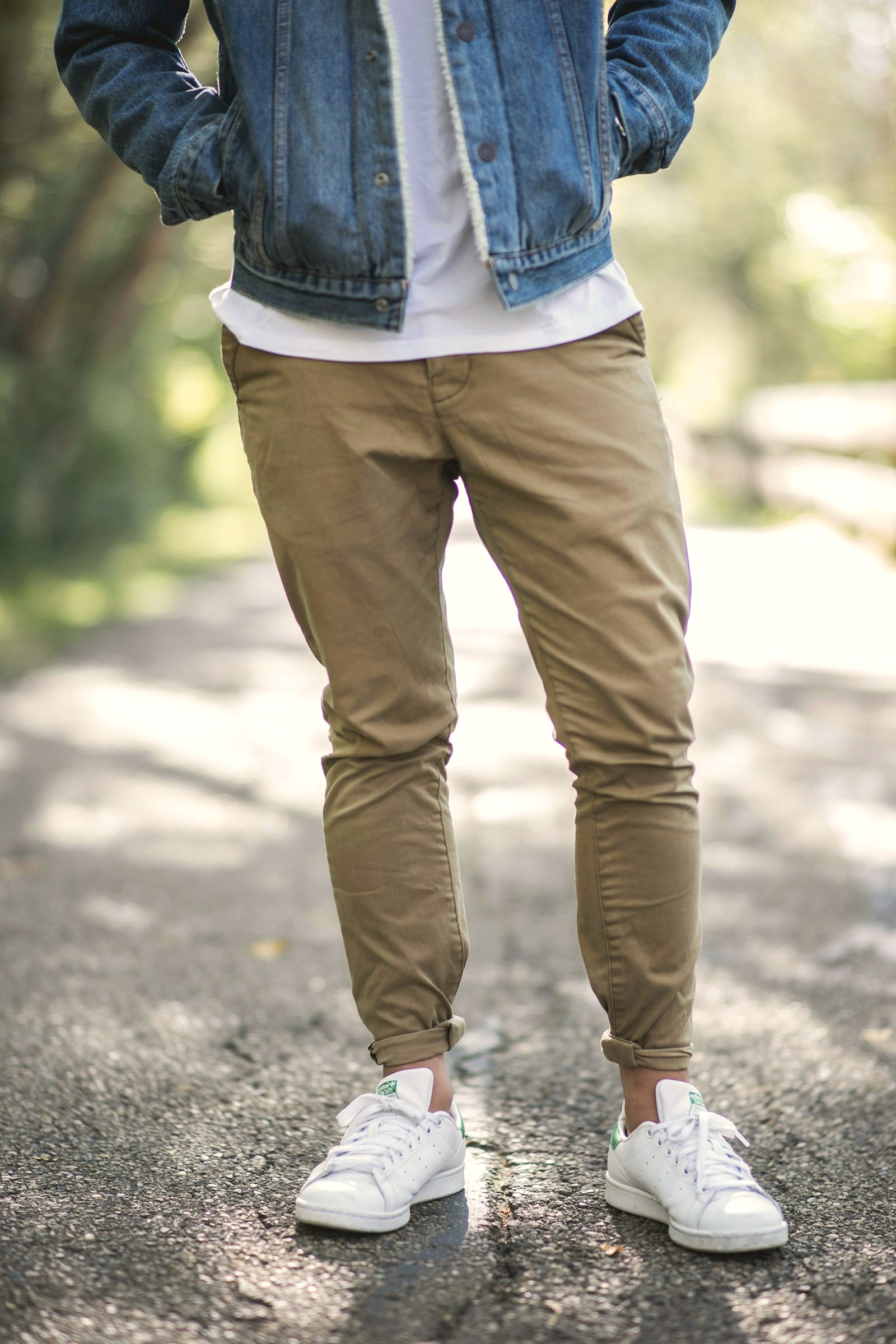
The chino at work: one of ten types on the ladder, and the middle of the whole rotation. The index exists because pants, like jacket, is one word covering very different garments.
Checked and updated October 2026
The ruling, up front: there are ten types of pants that cover a man's whole rotation, and each is defined by three things: its cloth, its rise, and the shape of its leg. This page indexes all ten and scores each for formality from one to five, with the rise and taper facts compiled as data and the one buying rule that decides it. The dress trouser tops the ladder at five; the cargo stands at the bottom at one; and the number that decides most of the ladder is the rise, the one measurement no tailor can give back. Own across the ladder, not along one rung of it.
On this page: the index, the numbers, the tailored family, the rotation, the work inheritance, the ease trouser, the buying rule, questions.
The index: ten pants, one ladder, two measurements
The scores are the data team's compiled judgement, built from cloth, construction and the rooms each type can walk into. The compiled data underneath the scores is the fit itself: the front rise, measured from the front waistband down through the fork to the back waistband's seam line, and the taper, the difference between the thigh and the leg opening. Those two numbers decide more outfits than colour ever has. A trouser's cloth sets its formality ceiling, its rise sets where it sits on the body and therefore how long the leg reads, and its taper sets how it lands on the shoe. The table prints all of it, so the position is taken on purpose.
| Type | Cloth | Formality | Rise and taper | The one rule |
|---|---|---|---|---|
| Dress trousers | Wool worsted, tropical wool, flannel | 5 | Mid to high rise; straight leg easing to a gentle taper | Fit the waist at your natural waist. The crease does the formality; the rise does the leg. |
| Pleated trousers | Wool, cotton twill, linen | 4 | High rise; full through the thigh, tapering below the knee | Pleats are a system: high rise, full thigh, taper below. A pleat on a low-rise slim leg is a contradiction. |
| Chinos | Cotton twill, plain or with a touch of stretch | 3 | Mid rise; straight to tapered | Real rise, real cloth. Judge them as trousers, not as jeans with better manners. |
| Wide-leg trousers | Wool, cotton twill, linen blends | 3 | High rise; wide and straight to a broad opening | Width is worn with discipline: hem at the shoe, top half fitted or tucked. Pooling cloth is a mistake, not a silhouette. |
| Corduroys | Cotton corduroy, by wale: wide, standard, needlecord | 3 | Mid rise; straight leg | The wale is the formality dial: needlecord under tailoring, wide wale for the weekend. |
| Linen trousers | Linen, linen and cotton blends | 3 | Mid to high rise; straight or gently tapered | Buy weight, or a blend. Featherweight pure linen bags at the knee by noon; the creases are the charm, the sag is not. |
| Drawstring trousers | Cotton twill, linen blends, wool-look knits | 2 | Mid rise; relaxed thigh, tapered leg | The waistband is the only casual thing allowed: tailored cloth, a clean leg, a proper shoe. |
| Five-pocket twill | Cotton twill cut on the jeans pattern | 2 | Jeans rises: mid, in slim, straight or tapered legs | It is a jean in a trouser cloth. Judge it by jeans rules, and never ask it to be a dress trouser. |
| Fatigue pants | Cotton sateen, ripstop | 2 | Mid to high rise; straight and roomy | Patch pockets and a straight leg, kept honest. Taper a little if you must; taper a lot and the garment is gone. |
| Cargo pants | Cotton ripstop, canvas, twill | 1 | Mid rise; straight to relaxed | Flat, slim bellows or nothing. Volume is the point of a work garment and the failure of a dressed one. |
The numbers: rise classes and leg openings
Two compiled references run underneath the whole table. Front rise: low is under 10 inches, mid is 10 to 11.5, high is 11.5 and above. Low rise is a fashion cut with a date on it: it shortens the leg line, works a tucked shirt loose, and gives a pleat nowhere to live. High rise is where tailoring lives: the waistband at the natural waist, the shirt staying tucked, the leg reading its full length. Leg opening: a tapered trouser lands around 6 to 7 inches across, a straight leg at 7 to 8, a wide leg at 9 to 10.5. The opening is read against the shoe, not against the thigh: the wider the opening, the more substantial the shoe it wants under it, and a broad opening over a slim trainer is the two halves of the outfit arguing. Taper is simply the journey between the two: thigh width minus opening width. A strong taper on a short leg reads cropped and quick; the same taper on a full-length trouser reads tailored. The numbers are the data team's working classes, compiled from the trousers this site has ranked and measured, and they are printed so any pair on any rail can be judged against them in the shop.
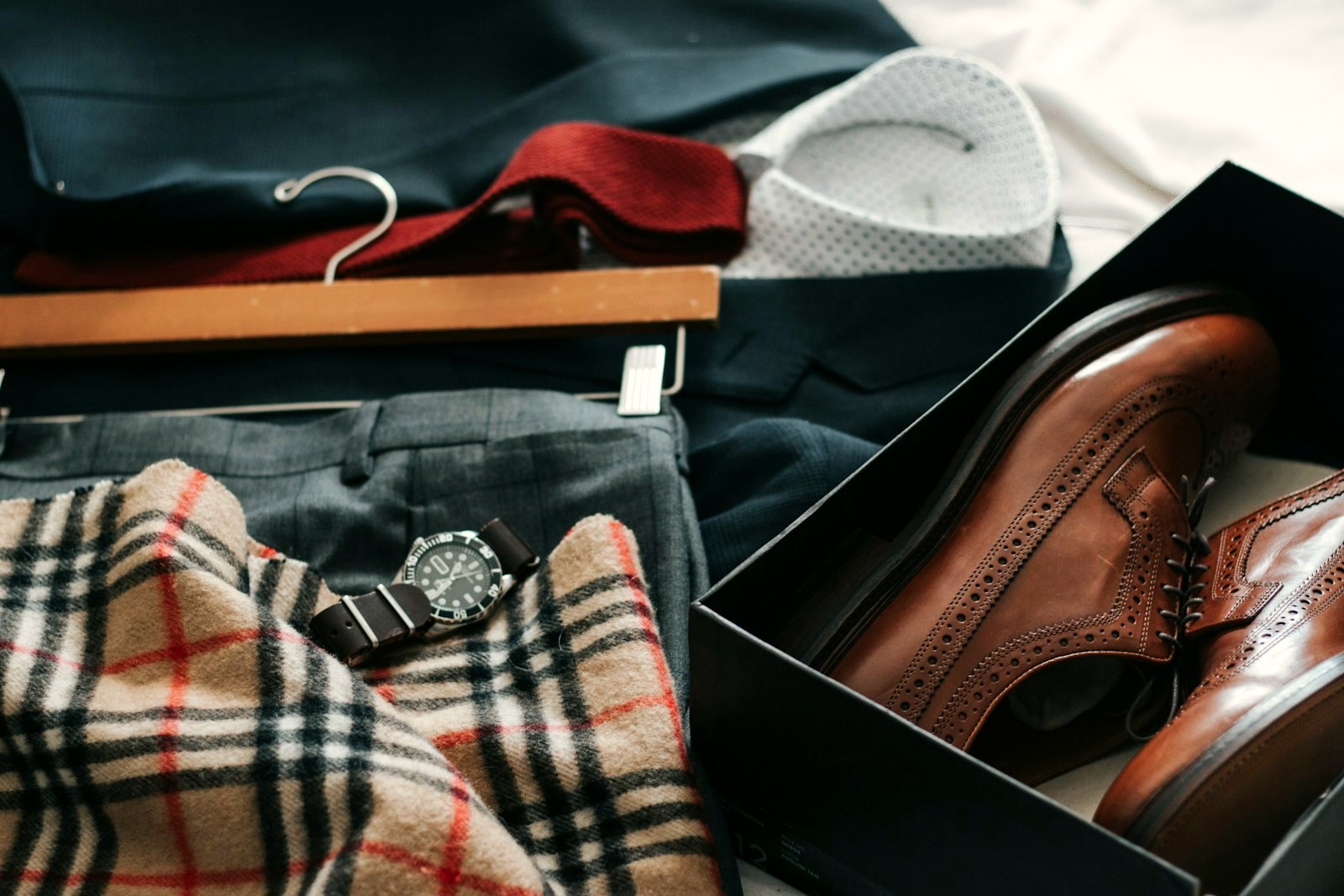
The tailored family: dress trousers, pleats, the wide leg
The dress trouser is the formal ceiling of the leg: a wool cloth, a pressed crease, a constructed waistband, worn at the natural waist, and built, in origin, as the lower half of a suit. Worn with its jacket it is a suit; worn alone with a knit or a shirt it is the sharpest a leg can dress without one, formality five either way. Its fit law is the rise: a dress trouser worn down on the hips loses the crease's line and the leg's length at once, which is why its rule is about the waist and not the taper. Worn as part of the whole garment, it is briefed in full in How to Wear a Suit, No. 04.
The pleated trouser is the dress trouser's fuller sibling, and the most misunderstood type on this page. A pleat is a fold of cloth at the front waist that opens when the wearer sits or strides: room, engineered, not decoration. The system has three parts and fails if any one is missing: a high rise to hold the fold, a full thigh for the fold to open into, and a taper below the knee so the leg still lands clean on the shoe. The slim, low-rise trouser with a pleat pasted on, sold whenever the silhouette cycles back, keeps the fold and deletes the system, and it reads as a mistake because it is one. The wide-leg trouser is the silhouette of the moment built on the oldest pattern of all: high rise, a leg that falls straight and broad from the thigh to an opening of nine inches and more. Its formality is set entirely by its cloth, tailored wool at three and climbing with a crease, work canvas falling toward the work family. Its rule is discipline: the width is the statement, so everything it touches is kept exact, the hem at the shoe rather than pooling past it, the top half fitted or tucked so the outfit has a waist. Width worn loosely everywhere is not a silhouette. It is a size too big.
The rotation: chinos, corduroys, linen
The chino is the middle of the whole rotation and the type most men actually live in: a cotton twill trouser, military in origin, formality three, at home under a blazer and beside a t-shirt in the same week. Because it is the lived-in type, it is the one this site ranks rather than merely indexes: the seven worth buying are scored in the chinos Verdict Card, where the Spier & MacKay high-rise chino wins at 84 on exactly the facts this index prints, a proper tailored rise and real cloth at a two-figure price. On the site's figure, the chino is the leg the map dresses by default: the legs layer of the Body Map wears the Verdict Card's winner, with the shorts as its summer switch. The corduroy is the chino's winter counterpart, a cotton cloth with a ribbed pile, and its compiled fact is the wale, the number of ribs per inch: wide wale at around 8 is the casual, country end; standard at around 11 is the middle; needlecord at 14 to 16 is fine enough to sit under a blazer and beside flannel. One cloth, three formalities, chosen by a number most rails never print. The linen trouser is the heat's answer, the coolest cloth a leg can wear, and the most honest about its terms: it creases, immediately and completely, and the crease is the texture rather than a defect. What is a defect is the sag, the knee bagging out of a featherweight cloth by midday. The fix is in the buying rule: a heavier linen, or a linen and cotton blend, holds the line of the leg while keeping the cloth's cool. In a tailored cut, pleated and high-rise, linen is also the summer form of the tailored family above, and the two families share it without argument.
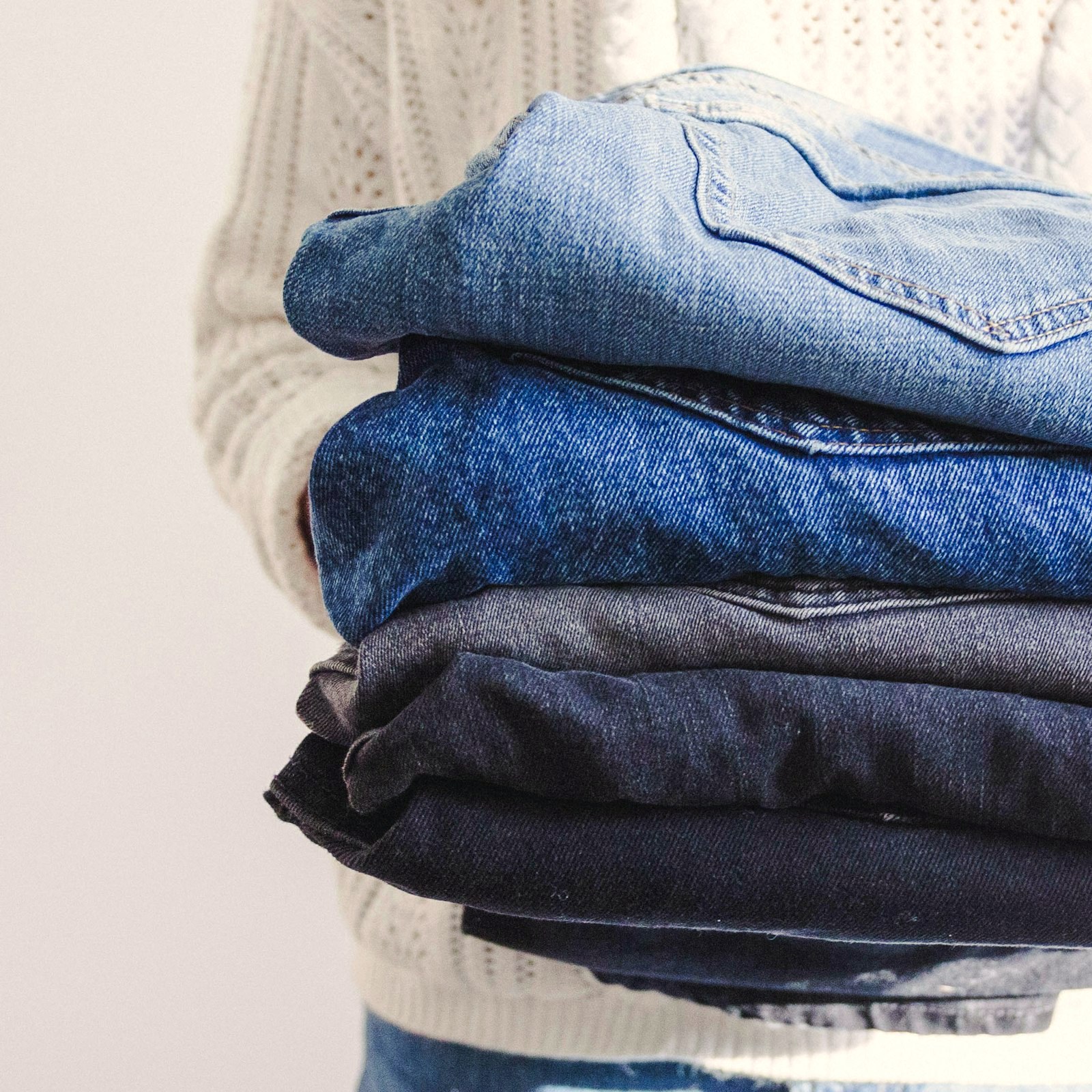
The work inheritance: fatigues, cargos, the five-pocket
Three of the ten types were issued, not designed, and they are judged by workwear's law: the features are tools, and a feature that stops working is a costume. The fatigue pant is the soldier's trouser, cotton sateen in its original OG-107 form: two large flat patch pockets at the front, two at the back, a straight and roomy leg made to move in. The patch pockets sit flat, which is why the fatigue, alone among the utility trousers, can climb toward the middle of an outfit: under a knit or an unstructured blazer its read is texture, not equipment. The cargo pant adds the bellows pocket at the thigh, a pocket built to expand, and that expansion is the whole question. Flat and slim, on a straight leg, the modern cargo is a texture trouser at formality one to two. Fully bellowed, on a relaxed leg, it is a work garment honestly worn and should be worn as one, with the rest of the outfit in the same register. What fails is the middle pretence: bellows pockets dressed up with a blazer, equipment asking to be read as tailoring. The five-pocket twill is the jeans pattern cut in a chino cloth: the same five pockets, the same rises and leg shapes as denim, in a cloth that reads a rung smarter. It is a useful trouser and an honest one, as long as nobody asks it to be more: it has no crease to keep, no waistband construction to speak of, and at a formal room it is a jean that changed its shirt. Judge it by jeans rules and it never disappoints.
The ease trouser: the drawstring
The drawstring trouser is the newest type on this page and the one that answers the loudest current complaint: that a waistband with a button is a negotiation a man loses by evening. The type keeps the trouser and replaces the fastening: an elasticated or drawstring waist, often with a flat front that keeps the line of a tailored waistband from across the room, over a relaxed thigh that tapers to a clean leg. Scored formality two, with the condition printed in the index because the type lives or dies by it: the waistband is the only casual element allowed. In a tailored twill or a wool-look cloth, with a proper shoe and a shirt or knit that dresses like clothing, the drawstring reads as ease, the deliberate comfort of a man who chose it. In a jersey cloth over a baggy leg, it is a sweatpant that left the house, and no caption on the rail can save it. Comfort is not the enemy of dressing well. Comfort wearing sloppiness as its disguise is, and this type, bought by its rule, is the proof the two come apart.
The Trouser Ruling
The ladder: formality runs dress trousers 5, pleated 4, chinos, wide-leg, corduroys and linen 3, drawstring, five-pocket and fatigues 2, cargo 1, and cloth moves a type a rung in either direction. The rule: buy the rise first, the cloth second, the taper last, because the order is the order of what can be changed: a taper can be tailored, a cloth is chosen, and a rise is forever. The wardrobe error: ten pairs on one rung of the ladder, usually ten near-identical mid-rise tapered chinos, leaving the tailored end and the seasonal ends of the leg bare.
The one buying rule, and the rotation
Buy the rise first, the cloth second, the taper last. That is the whole system in one sentence: the rise decides where the trouser lives on the body and cannot be altered by any tailor living; the cloth decides the formality, the season and the lifespan; and the taper decides the landing on the shoe, the one part of the fit a tailor can still adjust after the purchase. The rotation a man actually needs is four across this index: one dress trouser for the formal end; one chino for the middle of everything, the type the Verdict Card ranks; one seasonal pair, linen against the heat or corduroy against the cold; and one ease or work pair, drawstring, fatigue or five-pocket, for the days the rotation rests. The jackets that go over all ten are indexed in the jackets index, the knits that go over the tailored half in the sweater index, and the dress trouser worn with its other half is briefed in How to Wear No. 04.
Questions, answered
What are the main types of pants for men?
Ten cover the whole rotation: dress trousers, pleated trousers, chinos, wide-leg trousers, corduroys, linen trousers, drawstring trousers, five-pocket twill, fatigue pants and cargo pants. Each is defined by its cloth, its rise and the shape of its leg, and this page's index scores each one for formality from one to five, with the rise and taper facts and the one buying rule that decides it.
What is the most formal type of pants?
Dress trousers, formality five on this page's index, in a wool cloth with a crease, worn at the natural waist. Pleated trousers stand below them at four. Formality in trousers is set by cloth and crease more than by cut: a smooth wool with a pressed crease reads formal in almost any silhouette, which is why the wide leg, a fashion shape, still stands at three in a tailored cloth and would fall a rung in a work canvas.
What rise should trousers have?
Mid to high for almost everything. Roughly 10 to 11.5 inches of front rise is the mid band, 11.5 and above is high, and under 10 is low: a dated fashion cut that shortens the leg and works the shirt loose. Pleats require the high band, because a pleat is a fold of cloth that needs somewhere to live. The rise is the one measurement a tailor cannot change after the fact, which is why this index prints it for every type, and why it is bought first.
What is the difference between chinos and dress trousers?
Cloth and construction. A chino is a cotton twill trouser, off-duty in origin, formality three on this index, usually without a crease it intends to keep. A dress trouser is a wool trouser built like half of a suit: a pressed crease, a constructed waistband, often a lining to the knee, formality five. The chinos worth buying are ranked in our chinos Verdict Card, where the Spier & MacKay high-rise chino wins at 84; the dress trouser worn as part of its whole garment is briefed in How to Wear a Suit, No. 04.
Are drawstring trousers sloppy?
Not by construction. A drawstring trouser in a tailored cloth, with a clean tapered leg and a proper shoe, reads as ease. The same waistband over a baggy leg in a jersey cloth reads as a sweatpant that left the house. The index scores the type at formality two with the condition printed beside it: the waistband is the only casual element allowed, and everything below it has to dress like a trouser.
How many pairs of trousers should a man own?
Four across this index cover a life: one dress trouser for the formal end, one chino for the middle of everything, one seasonal pair, linen for heat or corduroy for cold, and one ease or work pair, drawstring, fatigue or five-pocket. The failure mode is four versions of the same mid-rise tapered chino in four colours, which is one trouser bought four times. Buy the missing rung of the ladder, not another copy of the rung you already stand on.
Next
From the index to the briefs and rankings: the chino is ranked in the chinos Verdict Card; the dress trouser's whole garment is briefed in How to Wear a Suit; the ten legs are worn by the site's figure in the Body Map, legs layer; the coats above them are indexed in types of jackets; and the shirts that tuck into all ten are indexed in types of shirts.