

A suit in the wild, Tokyo: the garment small in the frame, the weekday large around it. That proportion is the first lesson on this page. A suit is worn inside a life, not instead of one.
Checked and updated October 2026
The ruling, up front: a suit is one garment in two pieces, and it is worn well by fitting it in a fixed order: shoulder first, button stance second, the trouser break third, the cuff fourth, and cloth over all of it. The fastening button sits at the natural waist and the bottom button never closes. The hem lands at the break you chose, a slight break by default. The jacket sleeve ends at the wrist bone and shows a sliver of shirt cuff. Most suit failures are not taste failures. They are order failures: a break chosen by accident, a button closed out of tidiness, a shoe spending formality the suit needed to keep. This page prints the order, the cloth classes, the outfit matrix, and the four ways men ruin it.
On this page: one garment, two pieces, the fit rules, the cloth classes, the outfit matrix, the mistakes, the buying note, questions.
One garment, two pieces
A suit is not a jacket and a pair of trousers that happen to match. It is a single garment cut from one length of one cloth, in one dye lot, built to be worn together and read as one continuous surface from shoulder to shoe. That continuity is the suit's whole power: the eye travels the full height of the man without a break in colour or texture, which is why no other outfit in the wardrobe carries the same authority, and why the suit forgives nothing. Every fit error is printed twice, once on the jacket and once on the trouser, in the same cloth, under the same light.
The rules on this page follow from that one fact. Because the two pieces are one garment, the fit is fitted as a system, in an order, and the order is not negotiable: the parts that cannot be altered are judged first, and the parts a tailor can still fix are judged last. How to Wear No. 03 covers the blazer, the jacket that was born alone. This brief covers the opposite garment, the one that was born married, and it begins where the blazer's brief ends: with the pieces kept together.
The fit rules, in order
1. The shoulder. The jacket's shoulder seam sits on the shoulder point, neither dropping past it nor pulling short of it. A suit jacket's structure, canvas and a firmer shoulder than a blazer's, can lend a man a shoulder line he does not quite have, but it cannot lend him a different size: a shoulder too wide ripples at the sleeve head, a shoulder too narrow pulls at the button, and neither can be altered into honesty. As with every tailored garment on this site, the shoulder is the first thing fitted and the last thing compromised, because it is the one part of the suit that is bought rather than tailored.
2. The button stance. On a two-button suit, the fastening button, the top one, sits at the natural waist, and it is the only button that ever closes. On a three-button, the middle carries the fastening, the top sometimes joins it, and the bottom, on every suit and every tailored jacket ever cut, stays open. This is the two-button discipline, and it is structural, not ceremonial: the jacket is built to hinge at the fastening button, draping open below it, and closing the last button fights the cut, pulls the fronts crossed across the waist, and shortens the leg line the suit exists to lengthen. Length: the jacket hem covers the seat and lands near the knuckle of a curled hand, the proportion that divides the body the way tailoring intends.
3. The break. The trouser hem's landing on the shoe is called the break, and it is a ladder with four rungs, chosen, never inherited from whatever length the trouser happened to be sold at.
| Break | What it is | The read | The shoe it wants |
|---|---|---|---|
| No break | The hem clears the top of the shoe; the sock shows when you walk | The modern, cropped read. Sharp on a tapered leg, severe on a wide one | Loafers and clean minimal shoes. There is no cloth to spare over a heavy shoe |
| Slight break | One small fold where the front of the hem rests on the shoe | The default: correct in every room this page covers, and the tailor's standard ask | Any dress shoe. The fold survives sitting, walking and weather |
| Medium break | A deeper, continuous fold of cloth around the shoe | The traditional read, generous and calm. It asks for a fuller leg to match | Oxfords and derbies with some substance |
| Full break | Cloth pooling and stacking over the shoe | The drape era's read. On a standard trouser it is simply too much length | Only a wide trouser worn deliberately, which is a silhouette, not a default |
The house ruling is the slight break, for a working reason: it is the only rung that survives the whole day, sitting, standing, stairs, without the hem either riding to the sock or trailing to the floor. The trouser that carries it is the tailored end of the trouser index, where the dress trouser stands at formality five and the rise classes the break depends on are compiled. One related choice: turn-ups, cuffs on the trouser hem, add a horizontal line and a little weight at the ankle, and they belong on pleated or fuller trousers, where they finish the leg. On a slim tapered trouser they usually crowd it. Plain hems are the safer default, and the break matters more than either.
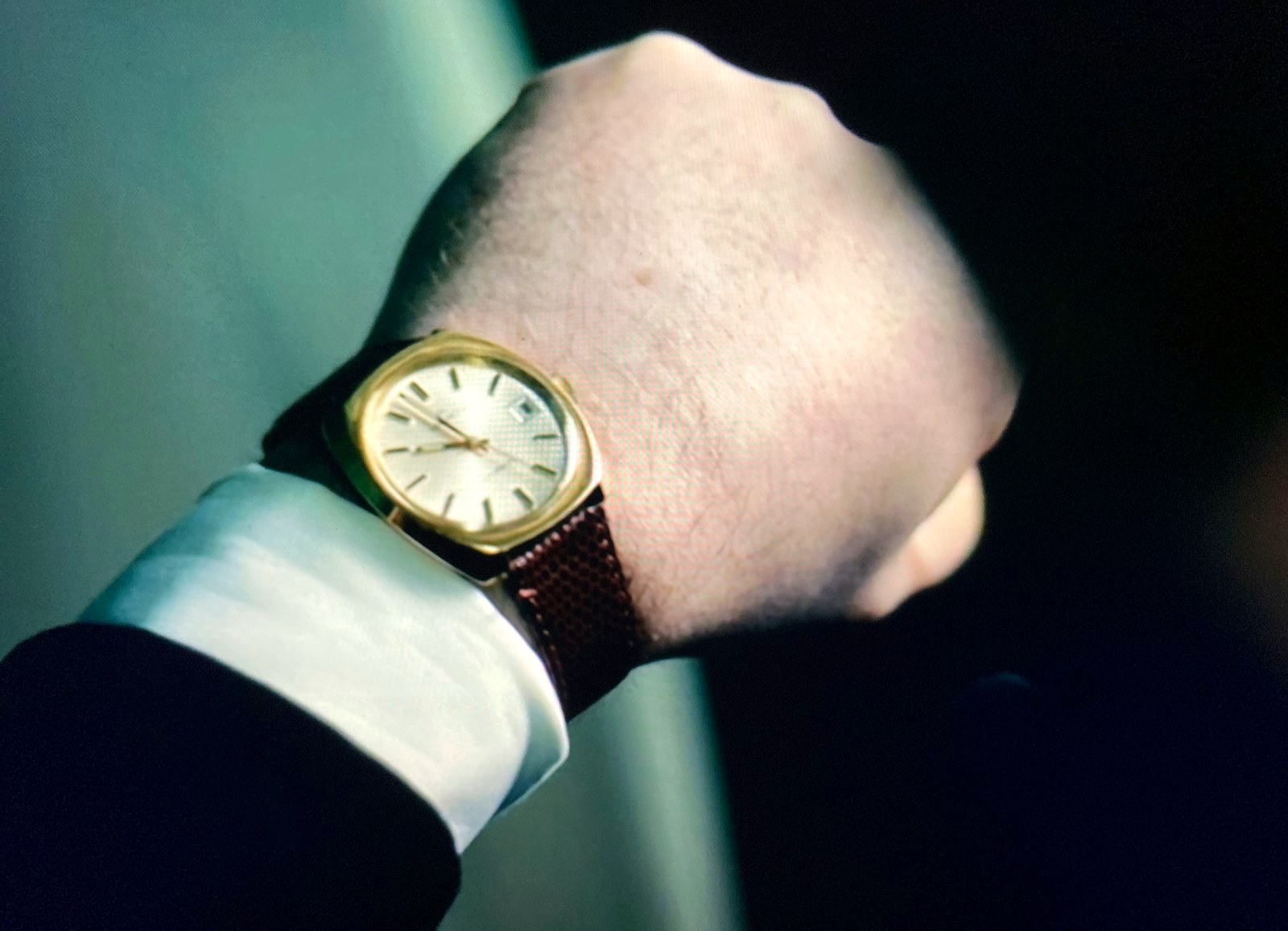
4. The cuff rule. The jacket sleeve ends at the wrist bone, and the shirt cuff shows beyond it by roughly a centimetre, a quarter to half an inch: the sliver. It is the same tailoring rule as the blazer's, printed in full in No. 03, and in a suit it is load-bearing, because the suit's continuous surface needs its finished edges to read as chosen: the white line at the wrist is where the garment ends and the man begins. A sleeve that swallows the cuff makes the jacket a size too big in the eye, whatever the tape said. The shirt's own cuff belongs in the same equation: it should sit at the wrist, close enough to stay inside the sleeve's line, with the watch under it rather than over it.
5. Sleeve and lapel facts. The lapel should lie flat against the chest with no gaping when the jacket is fastened; a lapel that lifts away from the chest is reporting a fit failure in the body, not a style. Its width is read against two things, the blade of the tie and the frame of the man, and the moderate width outlives both the skinny and the wide cycles, which arrive and depart on schedule. The notch lapel is the business default; the peak lapel lifts the suit toward ceremony and belongs to the evening row of the matrix below. And a good lapel rolls, curving gently toward the fastening button rather than creasing flat at a pressed fold: the roll is the canvas inside doing its work, and it is one of the first things to look for in the shop, before the cloth is even discussed.
The cloth classes
Most suit failures after fit are cloth failures: the silhouette is widely copied, and the cloth is where the real garment separates from the photograph of one. A note on this page's own photography, printed because this desk prints its gaps: our photo bank holds no honest suit-on-body frame in which the garment reads at size, and the two catalogue suit portraits it does hold fail the house standard, posed, saturated, lit like a showroom. They are not used. The brief runs on the street, the cuff and the shoe, the three places a suit is actually judged.
| Cloth | What it is | How it behaves | The ruling |
|---|---|---|---|
| Worsted wool | A smooth, fine wool yarn, woven tight; the standard suiting cloth of the working world | Holds a crease, drapes clean, works three seasons; graded by super number, the fineness of the fibre | The default. Super 110 to 130 is the working band: fine enough to feel like tailoring, tough enough to be worn weekly |
| Wool flannel | A brushed wool with a matte, textured face | Softer and warmer than worsted, drapes with a gentle weight, and reads a degree less corporate at the same formality | The winter suit. In grey it is the most forgiving cloth a man can wear after dark or before noon |
| Fresco | A high-twist wool woven open, named for the Italian for fresh | Breathes through its open weave, resists creasing harder than any other suiting, and springs back from a suitcase | The summer business cloth and the travel suit. If one suit must do heat and work, it is this one |
| Linen | Flax, usually in an open weave, often unlined or half-lined in the jacket | The coolest suiting cloth there is; it creases as it is worn, completely and immediately | The summer suit, worn relaxed. The creases are the texture. A man who cannot make peace with them should buy fresco |
| Shiny polyester | Synthetic woven smooth and finished to photograph like worsted | Shines under daylight and office light alike, breathes nowhere, pills at the seat and the cuff, and ages in dog years | The skip class. It keeps the silhouette and deletes the cloth, and the shine announces the deletion from across the street |
A word on super numbers, because the rails shout them: the number grades the fineness of the wool fibre, and higher is softer, silkier and less hard-wearing, not better in any simple sense. A Super 150 at a suspicious price is a cloth that will shine at the seat and tire within a couple of seasons, bought for a number printed inside a pocket. The honest money is in the working band above, from a maker who names the mill.
The outfit matrix
The data team's assemblies, by occasion. The constant in every row is the system from the fit rules: the stance closed at the one button, the break at the rung chosen, the cuff showing, and the shoe keeping the formality the suit is carrying into the room.
| Occasion | Suit | Shirt | Tie and square | Shoes |
|---|---|---|---|---|
| Boardroom | Charcoal or navy worsted, two-button | White or pale blue dress shirt | Tie, straight and simple; the square white, if one is worn at all | Black oxfords |
| Wedding guest | Navy or mid-grey, with life in the cloth: flannel in winter, fresco in summer | White shirt | A tie, or an open collar with a square in the summer version | Oxfords or derbies, brown or black by the cloth |
| Evening | Dark navy or midnight, the darkest suit you own short of black tie | White, the whitest you own | A dark tie, or none with a white square | Black oxfords, kept polished |
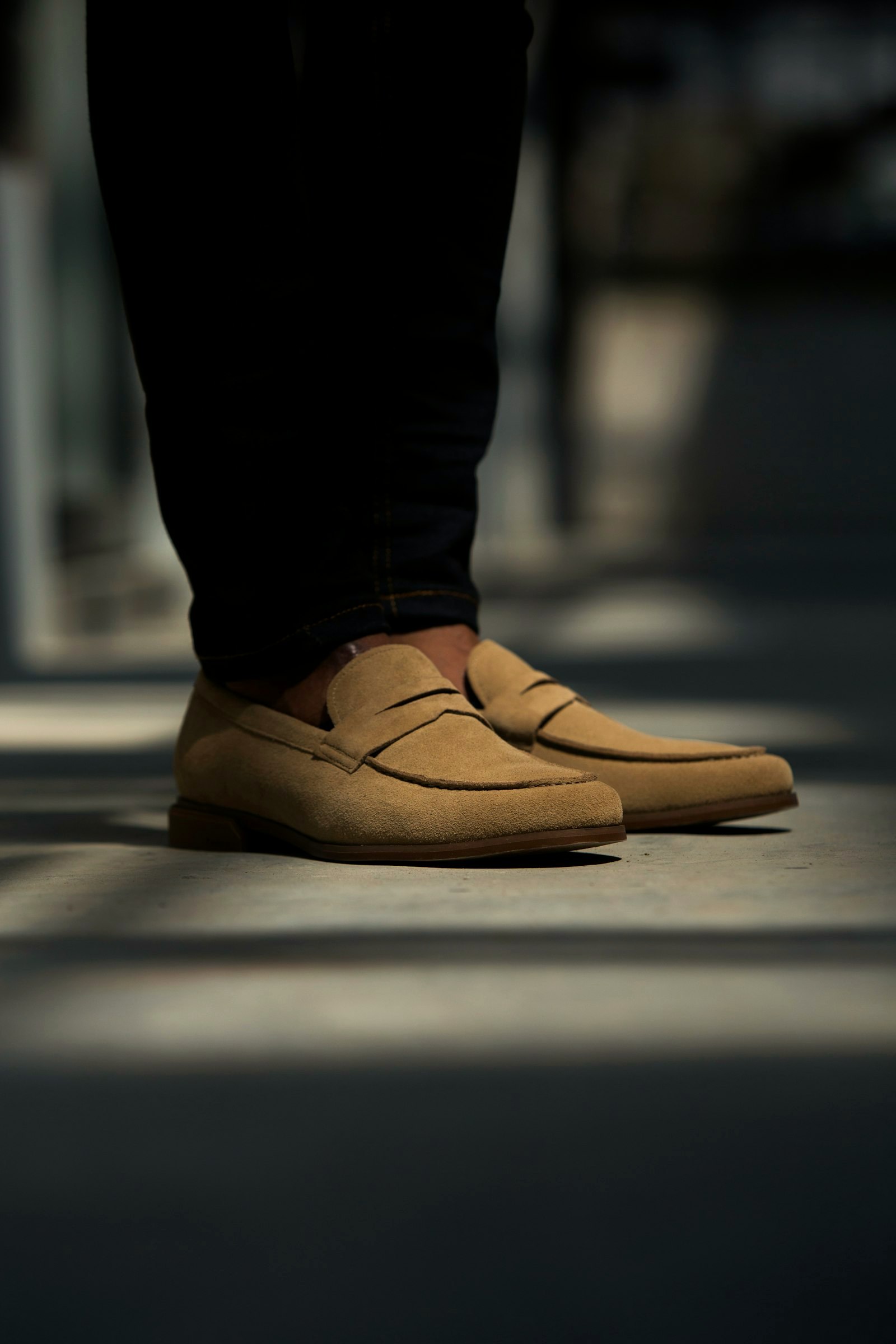
| Summer | Linen or fresco, stone, tan or light grey | Linen or cotton shirt | Optional. The cloth is the decoration | Suede loafers, no socks or invisible ones |
| Travel | High-twist worsted or fresco, dark navy | An Oxford shirt, the crease resister | A knit tie, or none | Derbies that can walk all day, or the minimal sneaker ruled on below |
The boardroom and evening rows lean on the white dress shirt deliberately, and the shirt under every row has to earn its place as part of the garment: the eight Oxfords worth owning, the suit's oldest shirt partner in its softer register, are ranked in the Oxford Verdict ranking. The travel row's shoe is the one licensed exception on this page, and its terms are strict: low, plain, leather, clean, and ruled on in full in the mistakes, where the gym shoe is waiting.
The Suit Ruling
Shoulder: yours, bought, the first fit and the last compromise. Stance: the fastening button at the natural waist, the bottom button open, always. Break: chosen from the ladder, slight by default. Cuff: showing, a sliver, with the watch under it. Cloth: worsted by default, flannel for winter, fresco for heat and travel, linen for high summer; the polyester shine is the skip class.
The mistakes
The buttoned bottom button. The most common suit mistake in the world, made daily by careful men, because it feels like tidiness. It is the opposite: the jacket is cut to hinge at its one fastening button and drape open below it, and closing the last button pulls the fronts crossed, strains the cloth across the waist and visibly shortens the leg. The rule has no exceptions and no special occasions: two-button, top only; three-button, middle, sometimes top; bottom, never. If a hand drifts down there out of habit, the fix is to know that the open button is not an unfinished state. It is the garment working as designed.
The black suit in daylight. Black is tailoring's evening colour, and daylight is unkind to it in two ways at once: it flattens every colour worn with it, shirt, tie and skin all reading duller beside it, and it carries its two standing associations, the funeral and the formal evening, into every room it enters before noon. The man who reaches for black as the safe daytime choice has it backwards: charcoal and navy are the safe daytime colours, with more life in the cloth and more mercy in the light, and they do every job black is asked to do in the day, better. Keep the black suit, if one is owned, for after dark, where it stops being a uniform and becomes the strongest colour a suit can be.
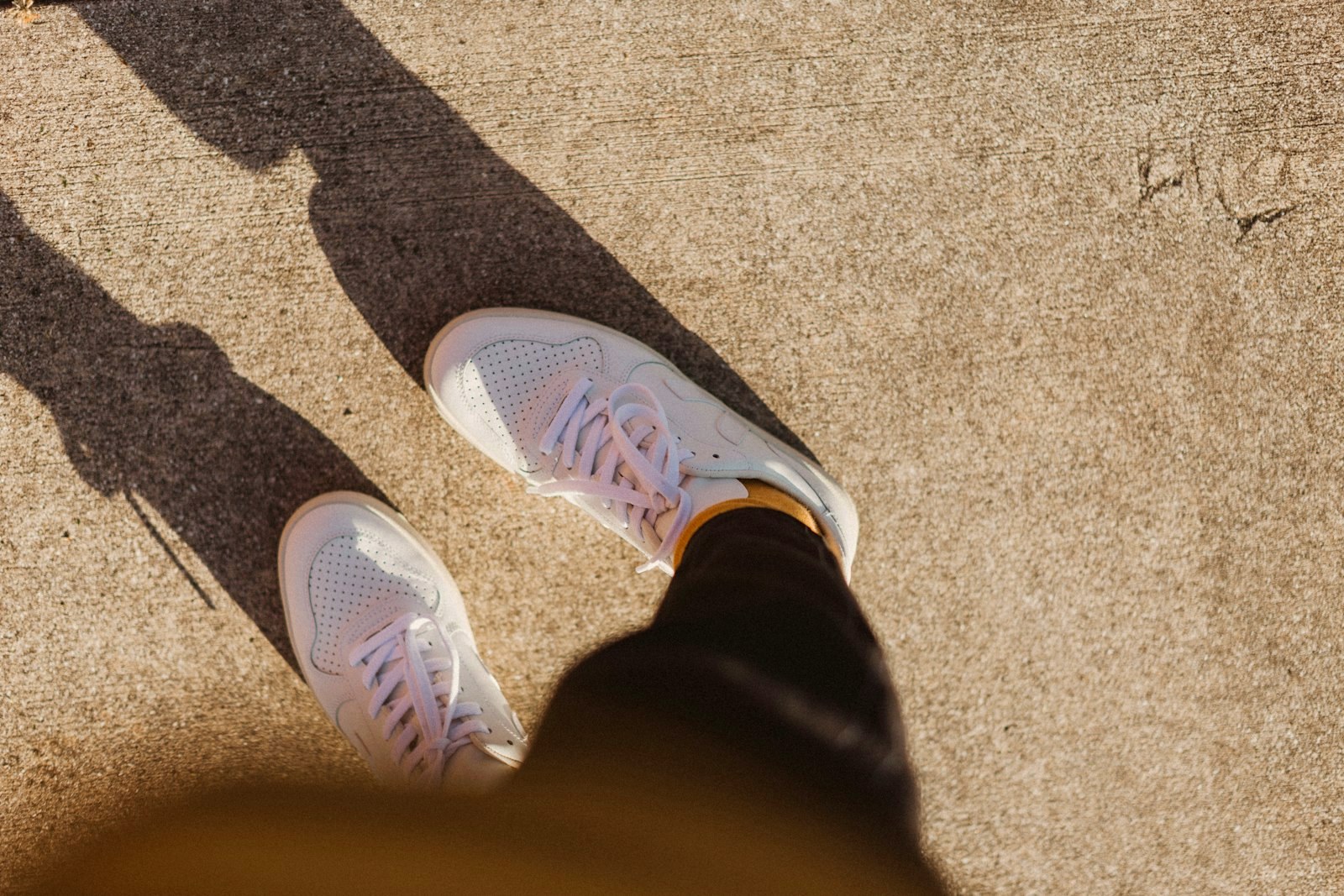
The gym-shoe suit. A running shoe under a suit: cushioned, coloured, built with a sole shaped for a stride, worn under a hem cut for a dress shoe. It spends the suit's entire formality in a single step and buys nothing back, and the chunk of the sole fights the trouser's line as hard as the register fights the room. The distinction this page insists on is between that shoe and the minimal leather sneaker, low, plain and clean, which is a shoe that happens to have a flat sole and is licensed in exactly the rows the matrix licenses it in, travel and summer, as a deliberate lowering of the outfit's register. One is a decision. The other is a collision.
The separated suit. The suit jacket taken off on its own, over odd trousers, as if it were a blazer; or the suit trousers worn under a blazer that almost matches. This mistake has a full brief of its own, because it is the most common tailored error there is and it deserves its evidence printed once, properly: How to Wear No. 03 prints the orphan rule and the tells that give the separated jacket away. This page adds only its own half of the law: a suit is one garment, the pieces are married, and a jacket that came with trousers stays with them.
The buying note: principles, not a ranking
An honesty note before the principles: this site has not ranked suits. There is no suit Verdict Card, and the desk will not borrow authority it has not earned, so what follows is the system a ranking would use, printed so it can be applied in any shop, including to suits this site has never handled. Buy the shoulder first: in your size, fitted before anything else is discussed, because it is the one part of the jacket that cannot be altered into place. Buy the construction second: a half-canvas front is the floor for a suit bought to be worn for years; a fully fused front is a garment with a shorter life priced into it, and the canvas test, a gentle pinch of the chest cloth to feel the layers move separately, takes two seconds in the shop. Buy the cloth third: by name and by band, worsted in the working super range, from a maker who names the mill. Budget the tailor as part of the price: the hem, the sleeve and the waist are finished after purchase, and the alterations appointment is booked when the suit is, not remembered in the taxi on the way to the event. Buy in rotation order: navy first, charcoal second, and the third suit is a cloth, flannel or fresco, before it is a colour.
On price, the honest shape of the market is a band rather than a figure: a suit in a named cloth with half-canvas construction usually starts in the mid hundreds at US retail and climbs from there. The market's reference point is Suitsupply, suits from $499, scored 78 as a brand in our brands like Massimo Dutti page, where the suit is precisely the reason for the score; that is a brand score, printed here as one. At the separates end of the same discipline, Spier & MacKay's garments are scored in the business-casual capsule: its tropical wool trousers at 87 and its sport coat at 85, garment scores, cited as garments. Below the band, the fibre line and the canvas pinch will tell you why the price is what it is. The trousers' own facts, rise classes and openings, are compiled in the trouser index, and the coats that go over a suit in winter are indexed in the jackets index.
Questions, answered
How do you wear a suit?
As one garment in two pieces: a jacket and trousers cut from the same cloth, worn together, and fitted in a fixed order. The shoulder first, bought rather than tailored into existence; the fastening button at the natural waist with the bottom button open; a sliver of shirt cuff showing at the sleeve; and the trouser hem landing at the break you chose, a slight break by default. Under it, a shirt that dresses like part of the garment, and shoes that keep the suit's formality instead of spending it.
Should you button the bottom button of a suit jacket?
Never. A two-button jacket fastens at the top button only; a three-button fastens at the middle, sometimes the top as well, and the bottom button of any tailored jacket stays open in every configuration. The jacket is cut to hinge at the one fastening button. Close the last button and the fronts pull apart across the waist, the cloth strains, and the whole line shortens. It is the quickest way to make a good suit look borrowed.
How long should suit trousers be?
At the break you chose on purpose. The ladder runs no break, the hem clearing the shoe, the modern and cropped read; a slight break, one small fold where the cloth meets the shoe, this page's default; a medium break, a deeper fold, the traditional read; and a full break, cloth pooling over the shoe, which belongs to a wide trouser worn deliberately and reads as a mistake on a standard one. Most men are best served by the slight break: it survives sitting, walking and fashion.
Can you wear sneakers with a suit?
A minimal leather sneaker, low, plain and clean, yes, in the casual rows: a summer suit, a travel day, an evening that is not formal. A gym shoe, no, in any row. A running shoe under tailoring spends the suit's whole formality in one step and buys nothing back, and the chunky sole fights the trouser's line as well as its register. The sneaker that works is a shoe that happens to have a flat sole, not athletic equipment.
Can you wear a black suit during the day?
You can, and it will be read as evening or ceremony wherever you take it. Black in daylight flattens every colour worn with it and carries its two standing associations, the funeral and the formal evening, into rooms that asked for neither. Charcoal and navy do the daytime work black is asked to do, with more life in the cloth and more mercy in the light. Keep black for after dark, where it is the strongest colour a suit can be.
Has Young Cotton ranked suits?
Not yet, and this page will not pretend otherwise: there is no suit Verdict Card on this site. What exists is the system a ranking would use, printed above, and scores for the suit's neighbours, cited as what they are: Spier & MacKay's tropical wool trousers score 87 as a garment in the business-casual capsule, and Suitsupply scores 78 as a brand in our brands like Massimo Dutti page, where the suit from $499 is the reason for the score. Garment scores and brand scores, not a suit ranking. When the ranking exists, this page will link it.
Next
The family this brief belongs to: the trousers are indexed in types of pants; the jacket that was born alone is briefed in How to Wear a Blazer; all twelve jacket types, including the coats that go over a suit, are in types of jackets; the shirt under the suit is ranked in the Oxford ranking; and the season's assemblies are in the Fall Edit.