
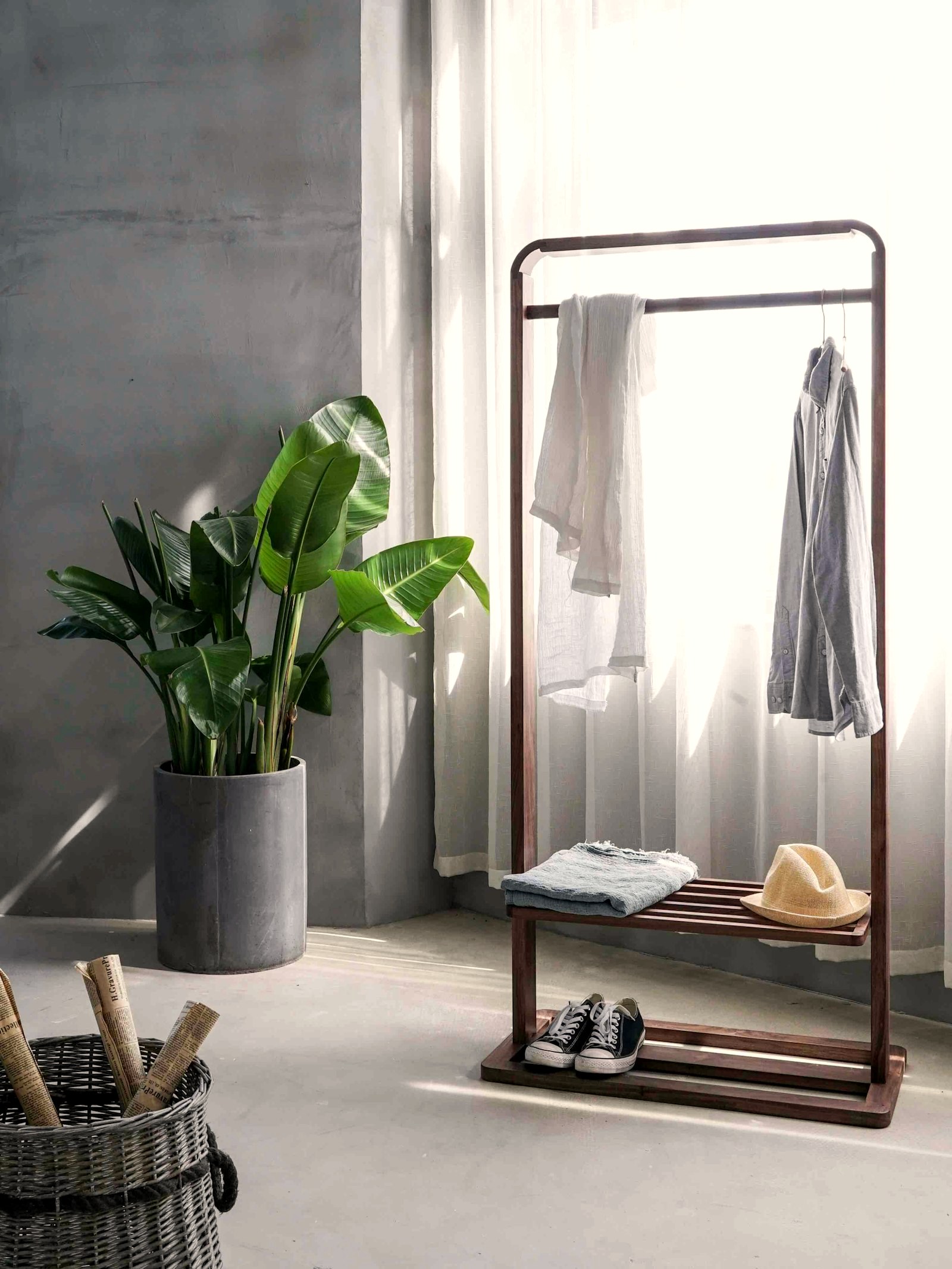
The kept wardrobe, the register this page ranks: few garments, worn for years, repaired instead of replaced. This is the frame our Scandinavian ranking printed beside the anchor's entry. No garment by any ranked house is pictured: the ranking is built from the makers' published records cited on the page, and the photography gaps are printed in the honesty section below.
Checked and updated October 2026
The short answer: brands like Houdini are graded here on whether the circular promise is a system a customer can use or a paragraph a customer can read: fabric records with weights and certifiers, repairs with a bench and a date, rental and second-hand rails, take-back that accepts the worn-out garment. The anchor, Houdini, is audited in the open at its standing 84 and finishes first at home, one point above Patagonia at 83, the entire gap a single fit row. Klättermusen keeps 79, the specification bought at expedition prices, Rab keeps 77, and Arc'teryx and Montbell tie at 73, the tie ruled on fabric. The skip is Peak Performance at 66, standing from our Scandinavian ranking: the technical look whose own environmental disclosure certifies the packaging.
What people actually want from Houdini
Nobody searches for brands like Houdini because they need another fleece. The want underneath the search is an exit from the replacement cycle: technical clothing designed to be kept, built from one material family so it can be recycled whole, repaired by the people who made it, rented when ownership makes no sense, and resold by the maker when the owner is done. The anchor, founded in Sweden in 1993, states the doctrine as a design rule rather than a campaign: everything is borrowed from nature, natural and technical fibres are never blended across its two cycles, and a garment that cannot come back is a design failure, not a marketing problem. The clothes themselves are quiet on purpose, cut for the commute and the mountain in the same register, which is the other half of the want: the system without the expedition costume.
That want has a failure mode, and it is the rest of this ranking: the vocabulary kept, the system dropped. Three tests separate the field. Is the fabric record hard facts, a weight, a composition, an origin, a certifier, or adjectives, responsible, conscious, eco? Is the afterlife purchasable, a repair bench with years behind it, a rental rail, a second-hand section, a take-back bin in the store, or is circularity a concept garment in a press release? And is the price an honest list at a specialist's register, or resort money charged for a logo's season? The anchor passes all three more completely than any house below it, which is what its score says. The page is graded on all three.
How the scores work
Every brand is graded out of 100: fabric and cloth out of 30, construction and craft out of 20, fit range and sizing honesty out of 20, value out of 15, longevity out of 15. The anchor's 84 is audited in the open here, because no Houdini garment ranking sets this number: our fleece ranking scored the flagship garment at 86, and that garment score is evidence for the audit, never the brand number itself. Standing scores set elsewhere are reproduced exactly and are never re-tried on a page that is not theirs.
The audit, row by row, from the maker's own store, circular design pages and published interviews, read for this page. Fabric 24: the hard-facts habit is the house standard, composition, weight and origin published per garment, and the flagship's fabric is the proof our fleece ranking already graded: Polartec Power Stretch Pro at 57 percent polyester, 33 percent polyamide and 10 percent elastane, 246 grams per square metre, woven in Italy, bluesign certified, the garment made in Latvia in the maker's own sustainability status. Under it sits the doctrine that makes the record cohere, mono-material design across two cycles that are never blended, so a polyester garment can actually be recycled rather than landfilled politely. The deduction is the one our fleece ranking charged and this audit charges again: the recycled share of that flagship fabric is not stated in the maker's hard facts, in a field where the standard this magazine applies is a percentage with a certifier. Construction 17: the flagship is the argument, the Power Houdi launched in 2003 and, in the maker's own words, virtually unchanged since, two decades of refinement in place instead of seasonal replacement, and the maker's own survey counts an average of 1,287 uses per Power Houdi with a good two to three years of wear left at that point. The house's published principles argue the same way, fewer details because details break, no product stronger than its weakest component. It is docked against the mountain bench three seats below, whose construction row of 19 is bought with harder alpine specification per garment; Houdini publishes no seam or stitch specification to answer it. Fit 16: a unisex-leaning graded range at one register, and the strongest fit evidence on the page is the rental programme itself, because a rental garment must fit bodies it has never met, season after season, which is a fit discipline no size chart can fake. It is docked the published tape measure: no garment measurements are printed per piece, so the welcome is proven by the system rather than by the numbers. Value 12: the printed price is the price, with no perpetual promotion on the maker's store, and the flagship reads $240 at the US store at this check, 2,400 kronor at home, below the roughly $255 our ranking recorded. It is docked because the register is real money and because the value mechanism that argues loudest, renting or subscribing instead of owning, three garments at 600 kronor a month at the maker's Stockholm circular store, is centred on Sweden at this check, so most readers cannot use it. Longevity 15: the clean score our ranking printed, confirmed by the audit, because the system is complete and dated: care and repairs running since 2008, the Reuse second-hand collection and Rental both since 2012, take-back recycling units in all the maker's own stores and at many retailers, accepting every worn-out Houdini garment including the ones that are not recyclable yet, in the maker's own words, so nothing need go to waste. No other house on this page publishes all four services; the covenant two seats of history deeper matches it at scale, which is why its longevity is also 15. The rows sum to 84, the standing score, and the audit commits to this: if the published services contract, if rental, resale or take-back is withdrawn, longevity moves first and furthest; if per-garment recycled percentages with certifiers start printing, fabric moves up; if the flagship's fabric record thins, fabric moves down; and if the core prices climb through the band our ranking printed while the system stands still, value is revisited.
The bookkeeping on this page, in full. There is no divergence to rule on for the anchor, and the page says so rather than performing one: our Scandinavian ranking prints Houdini at 84 with all five rows in its entry, fabric 24, construction 17, fit range 16, value 12, longevity 15, and the three family pages that cite the house in prose print the same total and the same description, the ranking's circular outdoor pick. Every source was read directly for this page and they agree row for row, so the audit follows the only split the tree prints. Our cool brands page has never scored this house, so there is no design-language number to refuse. One tie does need its ruling printed: Arc'teryx and Montbell both stand at 73, set on different pages of this series, and the tie is ruled on the fabric row, 25 to 24, Arc'teryx above, the same instrument this series used on the three-way tie at 73 the Arc'teryx page recorded. The skip's 66 is a standing score, not a derivation; the one charge this page adds to it is labelled as this page's own on its card.
The rest of the outdoor shelf is cited in prose, by total, numbers untouched. The attainable tier rests: REI Co-op at 73, set beside the anchor's neighbours on the Arc'teryx page, and Marmot at 65, one strong budget shell away from a better paperwork grade. The Swedish elder rests: Fjällräven at 72, its rows on the Patagonia page. Norrøna stands at 69, the fullest page and the fullest price, and Cotopaxi at 66, the young covenant, on their own pages. The North Face stands at 64 and was the skip on the Patagonia page of this series on its own record; it is not re-tried here. Moncler stands at 55, the anti-award house of our awards record, the skip on the Arc'teryx page, its rows at home there. The anchor's own shelf in the Scandinavian ranking rests beside it: Asket at 92, Our Legacy and Studio Nicholson at 86, Norse Projects at 85, mfpen at 84, the tailored answers to a neighbouring want, graded on their own pages.
One name is answered in prose because the search expects it, and left unranked for a stated reason. H&M is the attainable end of the technical look, shells and fleeces at a tenth of the anchor's prices, and its compositions are printed per garment, which is more paperwork than the skip below manages on its key piece; what its record does not publish at this check is a system behind the garment, no repair bench, no rental, no own-label resale rail and no take-back at anything like the anchor's register. Its brand record in this magazine is maintained on its own page in this series; it is not restated, re-derived, or scored against here, and no garment of its ranges is ranked on this page.
The disclosure ledger
| House | The fabric record, as published | The afterlife, as published |
|---|---|---|
| Houdini | Hard facts per garment: composition, weight and origin printed, bluesign certification on the flagship fabric; mono-material doctrine, two cycles never blended; the flagship fabric's recycled share not stated | The full system: repairs since 2008, Reuse second-hand and Rental since 2012, take-back in all own stores accepting every worn-out garment |
| Patagonia | Per-garment recycled percentages under GRS certification; the line figure published, 96 percent of the Fall 2025 line by weight using recycled inputs | Worn Wear trade-in and resale; repairs under the guarantee; the covenant graded on its own pages |
| Klättermusen | Mountaineering specification at full depth per garment, the Scandinavian ranking's fabric and construction peak | Repairs through the maker's service; no rental or own-label resale programme published at this check |
| Rab | Both warmth numbers published on the key piece, 700 fill power and 153 grams of down, GRS-certified; the complete record at the attainable end | An in-house Service Centre and a limited lifetime defects warranty; no rental or resale programme published |
| Arc'teryx | Laminated construction specified per garment; the specification is the record | ReBIRD trade-in and resale since 2021; repairs capped at one repair or replacement per purchase in the warranty text |
| Montbell | Both numbers, always: the Plasma 1000 parka prints 1000 fill power, 96 grams of fill, a 7-denier shell and 237 grams total at $479 | Fee-based repairs at a reasonable rate under a lifetime-of-the-product warranty, three to five week turnaround, printed by the maker |
| Peak Performance | Its own environmental disclosure states the brand is not GRS or RCS scope certified; the recycled material the disclosure points to is the plastic packaging | Repairs offered through a website form, per the maker's own announcement; the circular showcase garment is a research project |
Seven brands like Houdini, ranked
Houdini
US price at last check: the Power Houdi $240 at the maker's US store (2,400 kronor in its home store).
The call: the anchor, at its standing 84 from our Scandinavian ranking, audited in the open above and finishing first at home: the only complete circular system on the page, sold as clothing rather than as a campaign.
The house was founded in Sweden in 1993 and built the system before the vocabulary existed: repairs from 2008, second-hand and rental from 2012, take-back in its own stores, mono-material design so the garment can come back whole. The garment evidence agrees with the brand record: the Power Houdi scored 86 in our fleece ranking, a garment score cited here as evidence and never as this number, on a fabric record that publishes its composition, its weight, its origin and its certifier, with the one honest gap this page charges twice, the flagship fabric's unstated recycled share. Against the covenant below, the win is narrow and specific: identical rows everywhere except fit, where a range proven on rental bodies beats a range with documented variance. Buy the Power Houdi and the shells. This is the technical wardrobe as a kept thing, and the audit found the standing number earned.
Patagonia
US price at last check: the Synchilla Snap-T pullover about $139 at the maker's store.
The call: keeps its standing 83: the same philosophy as the anchor at continental scale, the guarantee, the trade-in rail and the published line figures, beaten here by a single fit point and nothing else.
Its standing 83 and rows (24, 17, 15, 12 and 15) are reproduced from our American ranking, where its own page in this series audited them in the open and landed where they stand. Read against the anchor, this is the closest comparison in the family: fabric level, its per-garment percentages under GRS certification against the anchor's hard facts with one share unstated; construction level; value level; longevity level at 15, pinned by the guarantee's text and the resale rail's scale. The point lives in fit, 16 to 15, and the audit prints why above. Buy the Synchilla and the workwear of the covenant where the anchor's register runs out: nobody else on this page sells the system in this many towns. Its full record is on its own page in this series.
Klättermusen
US price at last check: the Brage shell jacket $450 to $700 at the maker's store.
The call: keeps its standing 79 from our Scandinavian ranking: the answer for the reader who wants the specification instead of the system, the best fabric and construction rows on this page, at prices that print their own objection.
Its rows (26, 19, 12, 8 and 14) are reproduced from the ranking that set them, the mountaineering house founded in Åre in 1975, five decades of single-minded alpine specification. Against the anchor the comparison is a fork in the eco-technical want: Klättermusen publishes the harder garment, fabric 26 and construction 19 are the page's peaks, and Houdini publishes the fuller life, longevity 15 to 14 on a system of repair, rental, resale and take-back that the bench does not match. The five-point gap is mostly the bill, value 8 against 12, a shell at $450 to $700 against a flagship at $240, charged to a narrower fit range graded for the mountain rather than the week. Buy it for the expedition the anchor's quiet register declines to dress. For the commute, as our ranking put it, the anchor does the same job in a quieter voice.
Rab
US list price at last check: $295 at the maker's US store.
The call: keeps the 77 derived in the open on the Arc'teryx page of this series: the complete record at the attainable end of the technical tier, certified down, both warmth numbers published, a service centre behind the garment.
Its rows (24, 17, 12, 12 and 12) are reproduced exactly from the page that derived them. The garment evidence is the strongest per dollar on this page: the Microlight Alpine scored 84 in our puffer ranking on a record that prints 700 fill power and 153 grams of down, GRS-certified, where houses at three times the price print a ratio and stop. Against the anchor, the seven-point gap is the system: Rab publishes the garment's record in full and repairs it in-house under a limited lifetime defects warranty, and Houdini publishes the garment's record, repairs it, rents its kin, resells its used clothing and takes back the corpse. Buy the Microlight line as the honest floor of certified warmth. Buy the anchor when the afterlife matters as much as the specification.
Arc'teryx
Price at last check: $400 at the maker's store.
The call: keeps its standing 73: laminated construction and a resale platform from the alpine bench, charged for the register it charges and for a warranty that caps its own generosity in print.
Its rows (25, 18, 12, 7 and 11) are reproduced from the derivation on the Patagonia page of this series, audited since on its own page there. The tie at 73 with the house below is ruled on the fabric row, 25 to 24, printed here and on that card: the bench's cloth and lamination record is the deeper one. Against the anchor, the eleven-point gap is the shape of the two offers: Arc'teryx sells the harder shell and runs resale as a platform beside the range, while the anchor sells a slightly softer garment wrapped in the fuller system, and on this page's tests the system outscores the shell. Its longevity row of 11 carries the cap its own warranty text prints, one repair or replacement per purchase, against the anchor's open-ended bench. Buy the Beta for the mountain it was laminated for. Its full record is on its own page in this series.
Montbell
US list price at last check: the Plasma 1000 Alpine Down Parka $479 at the maker's US store; no stable maker product address surfaced in our fetching, so this card ships without a buy link.
The call: keeps the 73 derived in the open on the Arc'teryx page of this series: the disclosure purist of the insulation tier, both warmth numbers on every piece, the tier's best value row, and paperwork a warranty lawyer could frame.
Its rows (24, 15, 11, 13 and 10) are reproduced exactly from the page that derived them. The tie at 73 is ruled against it on the fabric row, 24 to 25, and the page prints the ruling rather than hiding it: the bench above publishes the deeper cloth record, and Montbell publishes the deeper numbers. The Plasma 1000 prints a 1000 fill power, 96 grams of fill, a 7-denier shell and a 237 gram total weight at $479, a standard of arithmetic the anchor's own insulation pieces are graded against elsewhere in this magazine. Against the anchor, the eleven-point gap is range and system: a Japanese insulation specialist against a full wardrobe with a circular system behind it, value running the other way, 13 to 12, the best on the page below the winner's tier. Buy the Plasma line when warmth per gram per dollar is the whole question.
Peak Performance
US price at last check: the Edge 2L Insulated Shell Jacket $445 at the maker's store. This card ships without a buy link, and the honesty section prints why.
The call: keeps the 66 it was given in our Scandinavian ranking, reproduced exactly: the technical look at anchor prices, cut for the resort photograph, whose record thins exactly where this page reads hardest.
The standing conviction is that ranking's, argued there and kept here: founded in Åre in 1986 and owned by Amer Sports, the house is logo-forward and styled for the season, its longevity row of 9 docked because the styling dates by season, on purpose, and its fits are honestly credited at 15, the best below the anchor's tier, because the clothes themselves are well cut. What this page adds is one charge of its own, labelled as such and read from the maker's own published environmental disclosure, the document French law requires it to file: the disclosure prints that the brand is not GRS or RCS scope certified against its products, the Fall 2024 Edge Insulated Jacket rows included, and the recycled material its entries can point to is the plastic bag the garment ships in, made from 100 percent recycled materials. The fairness is printed with it: the house has built a genuinely circular down anorak, engineered to be unmade, with certified down and a fishing-net shell, and it is a research project, not the $445 Edge on the rail, and its repairs run through a website form. At the anchor's prices, the record is the product, and this record certifies the packaging. Buy the system from the six houses above it.
The pattern under the ranking
Read the ladder as a systems gradient and the scores explain themselves. At the top, afterlives a customer can use: a repair bench running since 2008, a second-hand rail and a rental programme since 2012, take-back bins that accept the worn-out garment, a guarantee with a trade-in rail at continental scale. In the middle, covenants and benches: an in-house service centre, a resale platform, a fee-based repair service with its turnaround printed. At the bottom, a disclosure document in which the certifiable recycled content is the packaging, and a circular garment that exists as research. The longevity row tracks the system almost exactly, which is the point of the page: in this cluster, circularity is not an adjective a fabric earns. It is a set of services with dates on them, and the houses that publish the dates outscore the houses that publish the word.
The second pattern is the one-point page. This series is built to reproduce standing scores rather than flatter anchors, and its anchors have finished second, third and sixth at home on that discipline. Here the audit lands the anchor first, by the width of one fit row, over the strongest covenant in outdoor clothing, and the page prints that as plainly as it printed the losses: the arithmetic is the argument, and the argument does not change direction when it favours the house in the title. Underneath it sits the fork the ranking exposes. The eco-technical want splits into the system and the specification, the Swedish circular wardrobe against the Åre mountain bench, and the scores say the system wins at home while the specification wins its rows. A reader who buys the spec sheet gets the better shell. A reader who buys the system gets the garment that is still being repaired, rented and resold when the shell is a photograph.
Houdini and its alternatives, at a glance
| Brand | Score | The piece to buy | Price |
|---|---|---|---|
| Houdini | 84 | The Power Houdi | $240 |
| Patagonia | 83 | The Synchilla Snap-T | About $139 |
| Klättermusen | 79 | The Brage shell jacket | $450 to $700 |
| Rab | 77 | The Microlight Alpine jacket | $295 |
| Arc'teryx | 73 | The Beta jacket | $400 |
| Montbell | 73 | The Plasma 1000 parka | $479 |
| Peak Performance | 66 | None | $445 not spent |
The one to skip: Peak Performance. Not for the clothes, which are well cut and honestly credited in the rows, and not on a fraud charge this page does not make: the house files the disclosure the law requires and builds real circular research. Skip it on this page's test, which is the record at the price. A $445 jacket whose brand's own environmental filing states it is not GRS or RCS scope certified, whose certifiable recycled content is the polybag, and whose circularity lives in a prototype is the technical look with the system removed, sold at the system's prices. Buy the look where the paperwork survives reading: any of the six houses above it.
Which one to buy
Buy Houdini if the garment is a kept thing: the mono-material rail, the repair bench, the rental and resale system, and the flagship that has not needed replacing since 2003.
Buy Patagonia for the same covenant at scale: the guarantee, the trade-in rail, and a store in your town.
Buy Klättermusen for the specification: the hardest fabric and construction record on the page, for the mountain rather than the week.
Buy Rab for certified warmth with both numbers printed, at the attainable end of the tier.
Buy Arc'teryx for the laminated shell itself, with your eyes open about the warranty cap.
Buy Montbell when warmth per gram per dollar is the whole question, and buy it knowing the door is the maker's own store.
Skip Peak Performance on this page's test: the resort edition of the technical want, whose own disclosure certifies the packaging.
Questions, answered
What brand is most like Houdini?
Patagonia, at 83, is the nearest relative in philosophy: the same conviction that a garment is a commitment, run at American scale with the guarantee, the trade-in rail and the published line figures. Its rows match the anchor's everywhere except fit, 15 to 16. Klättermusen, at 79, is the answer for the specification instead of the system, the best fabric and construction rows on the page at expedition prices. Rab, at 77, is the complete record at the attainable end, certified down and both warmth numbers printed. The anchor's own verdict piece is the Power Houdi: $240 at the maker's US store at this check, unchanged since 2003, with the maker's survey counting 1,287 average uses.
Is Houdini worth the money?
At its standing 84, audited in the open on this page, yes for the core: the flagship fleece is $240 with an honest printed price and no perpetual promotion, the model has been refined rather than replaced since 2003, and the system behind it is purchasable, repairs running since 2008, second-hand and rental since 2012, take-back in the maker's own stores. The deductions are printed on the page: the flagship fabric's recycled share is not stated in the maker's hard facts, and the rental and subscription route is centred on Sweden, so most buyers cannot use the value mechanism that argues loudest. Buy the Power Houdi and the shells; that is where the score lives.
Houdini or Patagonia?
One point apart, and the point is a single row. Houdini scores 84 (24/17/16/12/15) and Patagonia 83 (24/17/15/12/15): fabric, construction, value and longevity are level, and the anchor's fit row wins it, a unisex graded range proven on rental bodies it has never met against a fit record with documented variance. Buy Patagonia for scale, the breadth of the guarantee and a trade-in rail on another continent's high streets. Buy Houdini for the mono-material doctrine, repair, rental and resale under one roof, and the quieter garment: the same covenant, written in Stockholm, in a smaller and more consistent hand.
How does the anchor finish first on its own page?
Because a family page reproduces standing scores instead of flattering the anchor, and this time the arithmetic flatters it anyway. Patagonia's 83 was set by two audits on its own pages, Klättermusen's 79 stands in the ranking that scored the anchor, and the anchor's 84, audited in the open here against the maker's published record, lands one point above the covenant on the fit row alone. First at home is the honest result, printed with the same plainness this series uses when an anchor finishes third or sixth, and the audit is on the page so the arithmetic can be checked.
Why is Peak Performance the skip?
Peak Performance keeps the 66 it was given in our Scandinavian ranking, where it finished last of twenty, rows 20/15/15/7/9, its longevity docked because the styling dates by season, on purpose. This page's own charge is checkability, read from the maker's own published environmental disclosure: the document prints that the brand is not GRS or RCS scope certified against its products, the Edge Insulated Jacket included, and the recycled material it can point to is the plastic bag the jacket ships in. Its genuinely circular garment, a down anorak built to be unmade, is a research project rather than the $445 jacket on the rail. Buy the look from the six houses above it, whose records survive reading.
How this ranking stays honest
Every score on this page has a home. The anchor's 84 stands in our Scandinavian ranking with all five rows printed in its entry, and is audited in the open above, rows rebuilt from the maker's published record, with the re-audit commitment printed; step zero found no divergence to rule on, the ranking and the three family pages that cite the house agreeing row for row, and the page says so rather than performing a ruling. Patagonia's 83 was set by the audits on its own pages in this series. Klättermusen's 79 and the skip's 66 stand in the same Scandinavian ranking that scored the anchor. Rab's 77 and Montbell's 73 are the derivations the Arc'teryx page argued in the open, and Arc'teryx's 73 is the derivation the Patagonia page argued, audited since on its own page; all are reproduced exactly, rows included. The tie at 73 is ruled on the fabric row in the open, on both cards. The one charge this page adds, the skip's checkability, is read from that maker's own published environmental disclosure and is labelled as this page's own wherever it appears; the standing score it attaches to is not moved by it. Garment scores on this site, the Power Houdi's 86 and the Microlight Alpine's 84 among them, are cited as evidence only and are never promoted into brand numbers. H&M is engaged in prose as a comparison only: its brand record is maintained on its own page, is not restated or reopened here, and no garment of its ranges is scored on this page. Houses cited in prose, REI Co-op, Fjällräven, Norrøna, Cotopaxi, Marmot, The North Face, Moncler, Asket, Our Legacy, Studio Nicholson, Norse Projects and mfpen, keep the numbers their own pages set.
Doors follow the deep-link rule: the maker's standing search door where that is the door the scoring pages print (the anchor), the maker's category door the ranking prints (Klättermusen), the exact garment where a card names one (Rab's Microlight Alpine, Arc'teryx's Beta jacket), and the maker's storefront where that is the door its own scoring pages print (Patagonia). Montbell ships with no buy link under the precedent its deriving page set, no stable maker product address having surfaced, and the reason is printed on its card. The SKIP ships with no buy link, by the standing rule. Photography: every frame is from this magazine's credited bank, each extends the family's established assignment for its house where one exists, none shows a ranked house's garment, and the captions say so; the bank holds no fleece worn on a body, no technical shell frame and no repair bench or rental rail scene, and those frames are on the standing harvest list rather than faked. Prices and records were checked against the pages cited in October 2026; the full method is written out on the methodology page.