
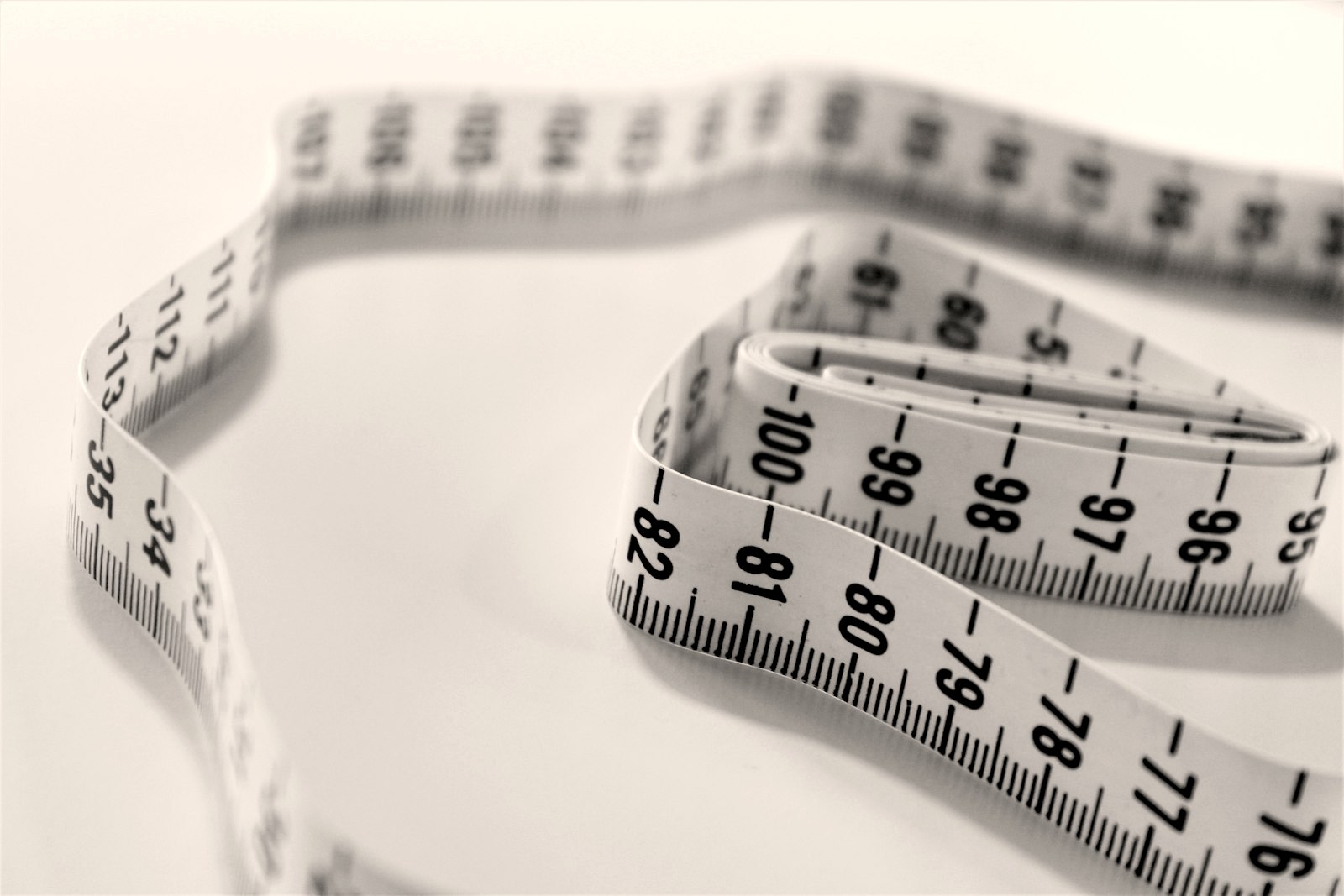
The instrument this house actually hands you: a tape, a form, and your own numbers. The ranking below is built from the makers' published records cited on the page, and no garment by any ranked house is pictured. The photography gaps are printed in the honesty section below.
Checked and updated October 2026
The short answer: brands like StudioSuits are graded here on the budget custom buyer's three published facts: whether the construction is stated at the price, as a standard a buyer can quote; what the cloth record says per fabric, composition, weight and mill, or family and colour; and what the maker's own terms promise when the first garment does not fit, with the barred doors counted as plainly as the guarantees. The anchor finishes fifth at home, because this page is the audit its number was owed. The 53 derived in the open on the Sartoro page is moved to 55 against the maker's current record: its product pages now print spec lines and a named mill the derivation never saw. Above it stand Spier & MacKay at 76, Oliver Wicks at 74 and Black Lapel at 69; beside it, Hockerty ties it at 55 and takes the higher place on the fit row, the ruling printed on both cards; below it, Indochino at 49. The skip, by a field test printed in full below, is Sartoro at its audited 46.
What people actually want from StudioSuits
Nobody searches for brands like StudioSuits because they need another suit seller. The want underneath the search is the house's founding sentence, restated as a shopping problem: a suit cut to your own measurements, from a cloth you chose, at the price of a clearance rack garment, without a store visit, delivered in weeks. The want is for that sentence with its cloth made inspectable, or its first fitting made survivable, or its price kept while its paperwork improves.
That want has two failure modes, and they are the rest of this ranking. The first is the cloth bought blind: a library sold by family and colour, where the garment that arrives is the first time the fabric is a fact. The second is the door that does not open: a garment made to your numbers that cannot be returned at any price, where a measuring error, yours or the maker's, is settled by a policy page rather than a person. Three tests separate the field. Is the construction a standard the house publishes at this price, or a claim that dissolves when it is quoted back? Does the cloth record run per fabric, composition, weight and mill, or does it stop at the family's name? And when the first garment lands wrong, as first garments do, what do the maker's own published terms actually promise, a guarantee with numbers, a credit with conditions, or a bar in a single sentence? The anchor passes the first test better than any house near its price, has quietly rebuilt its record on the second since this series last read it, and answers the third with the hardest sentence in the field, printed in full below. The audit is those three answers, priced row by row.
How the scores work
Every brand is graded out of 100: fabric and cloth out of 30, construction and craft out of 20, fit range and sizing honesty out of 20, value out of 15, longevity out of 15. Standing scores set elsewhere in this series are reproduced exactly and are never re-tried on a page that is not theirs. The anchor is the exception that proves the rule's purpose: its number was set as a derivation on another house's page, argued from that season's record, and a number quoted across the series is owed a full audit against the maker's own current published record, with the original derivation printed fairly and each row ruled on in the open.
The derivation, in full, before the audit rules on it. The Sartoro page of this series derived the house at 53: fabric 12, construction 12, fit 9, value 13, longevity 7, each row argued from the maker's own site as read that season. Fabric: a large library sold by family and colour, lining compositions printed, shell paperwork thin on the record captured, with weights and mills absent. Construction: the maker's category pages stating, as a standing claim for every suit jacket it makes, a proper half-canvas construction with pad-stitched lapels, a standard published where the anchor of that page published an option. Fit: full self-measurement by submitted body measurements, a tape set the buyer can inspect line by line, ending in the field's hardest exit. Value: suits from $109.99, the best on that page after the specification rival. Longevity: sixteen-plus years claimed on the maker's own pages and a review record in the tens of thousands on its own count, with garment service life at these prices unproven. The audit takes the rows in order.
Fabric: the derivation's central charge is retired by the maker's current product pages, and the row moves first. Every named product page read for this audit carries a printed spec line: a composition, a count, a weight, an origin. The Italian Wool Ferenci Suit at $439, read first-hand for this page, prints Composition 100% Wool, Weight Midweight, and the line Woven by Vitale Barberis Canonico, Italy. The Italian Ervasi Blue Wool Suit at $516 prints 100% Merino Wool, Super 120s, woven in Italy, at 205 gsm. The Italian Wool ilario Suit at $439 prints 100% Virgin Wool at 280 grams and the same mill, and its page describes the limited-edition programme behind the line, sourcing premium stock fabrics from Italy's top mills, VBC, Cerruti, Reda, Guabello and Botto, with Corneliani, Pal Zileri and Zegna named beside them. The Black Merino Wool Tuxedo Suit at $303 prints its spec with the same completeness, 65% Wool, 35% Poly, Super 120's, 180 gsm. That is the full paperwork habit, composition, weight and a named mill, where the derivation found none of it. The deductions that remain are real and are printed: the spec format covers the named product lines, while the entry product, the 65-fabric first suit from $109.99, still sells its cloth by family on the page read for this audit, wool, linen, Terry rayon and corduroy, with the lining's composition printed and the shells' not; the named mill covers the Italian and limited lines, not the entry library; and the tuxedo's spec line is itself the page's name-claim exhibit, a suit headlined Merino Wool whose own printed composition is a third polyester. Twelve was the record then. The Sartoro audit set the exchange rate for exactly this improvement, spec lines as a standing format and a mill at the premium tier, and moved its subject from 12 to 14. The same record shape earns the same move here, and the row stays below Indochino's 15, whose weight field covers its entry tiers, because this house's format has not yet reached its own floor product. Fourteen stands.
Construction: 12, confirmed, because the sentence at the centre of the derivation still stands verbatim on the maker's suits page, under the maker's own heading, Canvassed Construction, for better drape and durability: all our Suit Jackets are custom made using a proper half-canvas construction with pad-stitched lapels. Nothing deeper has been published since: no full-canvas upgrade is priced on the record read, no anatomy beyond the lapel line is described, and the standard is stated for suit jackets as a class rather than argued garment by garment. None of that costs the row what it earned. A published line standard, quotable by any buyer before money moves, remains the rarest document at this end of the ladder: the skip on this page publishes none at $495, the showroom house describes a choice in its help center at $499, and this house prints its standard at $110. Twelve stands.
Fit: 9, confirmed, and the audit weighs the maker's improved wording against an unchanged core. The system is the derivation's: full self-measurement by submitted body measurements, in the policy page's own summary, made according to more than 6 measurements of you, with published size guides for the ready sizes and one printed wrinkle the sizing-honesty row exists to catch, the maker's policy stating that where body measurements are provided it will add ease to the garment based on our standard defaults or your chosen fit preference, which is the part of the fit the buyer does not control, disclosed by the maker itself. The exit, in the maker's own current words from its Shipping & Returns page: if our measurements differ significantly from what you submitted or ordered, we will replace the garment with a new one, absolutely free of charge, upon the return of the old garment for us to check, the return shipping at the customer's own cost; as all our products are custom-made at our tailoring workshop, we do not offer returns, refunds or exchanges, a policy the page extends expressly to pre-set sized garments; alteration compensation as gift certificates, claimed by email with the alteration receipt within 30 days of purchase, to $75 for a two-piece or three-piece suit, $50 for a jacket, $25 for pants; and Fit Guarantee products for first-time buyers, whereby if you are not satisfied with the measurements we give free Remakes, the policy page's Fit Guarantee section strengthening the offer to free remake if required, no questions asked, with the Fit Guarantee Suit at $263 printing the mechanism, a free remake of the second suit inside 15 days of the shipped mark, once. For the higher mark: the remake wording is stronger than the derivation recorded, and the maker's-error replacement is unconditional in its sentence. For the lower mark: the guarantee covers designated products on a first order, the compensation is store credit where this ladder's guarantee houses cover the tailor's bill or remake outright, and behind both exceptions the door is barred in a single sentence, for every garment, at every price. The row grades the whole exit, and the whole exit is still a bar with two published exceptions. Nine stands.
Value: the derivation's 13 is confirmed. The floor is verified on the maker's own suits page at $109.99, with the 65-fabric first suit itself at $153; the Fit Guarantee Suit sits at $263; the named-mill Italian line is captured at $439 against a $632 list; the tuxedo at $303 and the Ervasi at $516 mark the top of the record read. The maker's own value argument is printed in its policy and credited here in its words: we provide the Best Value for your money by only charging for the price of items you purchase; unlike other sellers out there who include the cost of remakes in the original price, we give you the Million Dollar look for a price none can match. The desk credits the arithmetic and discounts the adjective: the barred door is not an oversight in the price, it is the price, stated by the maker as policy. Against the row stand the two costs the audit confirmed, compensation in gift certificates, which is a second purchase demanded, and maker's-error replacements travelling back at the buyer's shipping cost. At the floor, a published half-canvas standard and a printed spec format keep 13 the best value row on this page after the specification rival's. Thirteen stands.
Longevity: 7, confirmed. The maker's suits page still prints the claim the derivation recorded, handcrafted quality, tailored to you, 16+ years of excellence, and the review record on the maker's own pages now stands at 13,698 reviews at 4.9 beside its 5,000-plus Trustpilot count, both published by the maker and credited as its own figures. All of that was in the derivation and none of it was in dispute. The deductions stand as derived: the service life of a $110 to $153 garment remains the unproven half of the record, no repair programme is published, and the document that will govern the relationship in year three is still the terms page, which is a bar. Seven stands. Add the audit's rows: 14, 12, 9, 13, 7. The brand score is 55, audited. The re-audit commitments are printed with it: if the spec format reaches the entry library with per-fabric compositions and weights, fabric is revisited first, upward; if alteration compensation is ever paid in cash, or a remake offered beyond the designated Fit Guarantee products, fit is revisited; if a full-canvas line is published and priced, construction is revisited.
The tie this audit creates is ruled here, in the open, before the cards print it. Hockerty and the anchor stand level at 55, fabric level at 14, longevity level at 7. The anchor wins construction, 12 to 10, a published standard against an unpublished one, and value, 13 to 12, a $110 floor against under $300. Hockerty wins fit, 12 to 9, by the widest margin of the four contested rows, and on this ladder the fit row is where the exit lives, which the pattern section of No. 50 calls half the product. A tie decided by the column the cluster exists to grade is the honest ruling available: Hockerty fourth, the anchor fifth, the ruling printed on both cards so either house can appeal it with a better document.
The rest of the tailored bench is cited in prose, by total, numbers untouched. The programme with an exit rests: Suitsupply at 75, audited on its own page in this series; its Custom Made arm is the budget configurator's wager executed with returns, and it is graded across Nos. 48 and 49 on this ladder's own ground, this page grading the configurator field the anchor actually competes in. Garment scores are cited as evidence only, and the anchor has none to cite: no garment of its has been ranked in this magazine, because our suit ranking grades the off-the-rack two-piece and made-to-measure houses are graded here, on their systems and their terms, instead.
One name is answered in prose because the search expects it, and left unranked for a stated reason. H&M is the attainable end of the tailored look, suits and blazers at a tenth of this ladder's floor, and its compositions are printed per garment, which is the paperwork the law requires and the house provides; what its record does not publish is a measurement system, a construction standard, or a custom programme of any kind, the three things this page grades. Its brand record in this magazine is maintained on its own page in this series; it is not restated, re-derived, or scored against here, and no garment of its ranges is ranked on this page.
The disclosure ledger
| House | Cloth and construction, as published | The exit, as published |
|---|---|---|
| Spier & MacKay | The anatomy in the product names, audited on its own page in this series: half canvas stated, the mill and the weight on the product page, the size library a table a buyer can read before paying | The rack garment is returnable on the first piece, as its deriving page printed; the price of the system is the buyer's own tailor for the finishing |
| Oliver Wicks | Half-canvas construction published as the house's non-negotiable standard with a full-canvas upgrade above it; cloth exclusively from named Italian and English mills | A $125 alterations credit valid 365 days; a free remake for first-time customers inside 30 days where a local tailor cannot fix the fit; free return shipping on remakes |
| Black Lapel | Construction published by line, derived on the Indochino page: the Standard line half canvas from $499, the Premium line full canvas in Italian cloth from $949 | The Flawless Fit Promise as published: complimentary alterations on the first order, remakes when alterations are not enough, returns in rare cases when every other solution is exhausted |
| Hockerty | Fit 12's paperwork, derived on the Indochino page: cloth paperwork the anchor's audited equal; a construction standard published nowhere on the record derived | The Perfect Fit Guarantee as published: a claim inside 30 days of delivery, alterations covered through a partner tailor or by reimbursement, a remake where the garment cannot be altered |
| StudioSuits | Audited on this page: a proper half-canvas construction with pad-stitched lapels published as the standard for every suit jacket; spec lines, composition, count and weight, on the product pages read, Vitale Barberis Canonico named on the Italian line; the entry library still sold by family | No returns, refunds or exchanges on any garment, ready sizes included; free replacement where the maker's measurements differ significantly from those submitted, the old garment returned at the buyer's shipping cost; alteration compensation as gift certificates to $75 a suit, claimed by email inside 30 days; free remakes on designated Fit Guarantee products for first-time buyers |
| Indochino | Canvas as a customization described in the maker's help center, audited on its own page: half canvas or unconstructed; fabric weights in GSM a standard field on its product pages | Fourteen days to raise a fit concern, at a showroom, tags attached; after that period claims cannot be accepted; refunds not available under any circumstances; returns not accepted; no remake promised in the published process |
| Sartoro | Audited on No. 50: spec lines on every product page, a named suiting with a fabric code at the premium tier; the standard jacket's construction published nowhere, full canvas a priced option in the designer | An alteration credit of $65 cash a suit at the maker's full discretion; remakes free inside 30 days at the maker's final determination, declinable for inaccurate self-measurements; remade garments never returnable; returns confined to the first order inside a fourteen-item exclusion list; defects after 15 days not covered |
Seven brands like StudioSuits, ranked
Spier & MacKay
US prices at last check: half-canvas suits from $328 at the maker's store; the Oxford $55 to $70, as printed in our Oxford ranking.
The call: keeps its standing 76, audited in the open on its own page in this series: the published anatomy at three times the anchor's floor, with a custom programme of its own above the rack.
Its rows (22, 15, 17, 13 and 9) are reproduced exactly. On a budget configurator's ladder its presence is the argument the anchor's audit keeps meeting: everything the anchor's buyer is asked to take on trust, this house prints, and the anchor has spent two audits closing the gap from below. The canvas is in the product names here too, and so are the mill and the weight, on every product page rather than the named lines; the size library is a table a buyer can read before paying; and the garment that arrives wrong goes back on the first piece, the exit no configurator on this page offers at any price. Against the anchor it wins cloth, 22 to 14, and fit outright, 17 to 9, the returnable rack against the barred door. What it cannot sell is the anchor's sentence: a suit from your own numbers at $110. Twenty-one points is the honest size of what that sentence still costs in paperwork and exit, after the anchor's audit narrowed it by two. Buy it when the specification is the want and the measurements are known. Its full record is on its own page in this series.
Oliver Wicks
US prices at last check: suits from $799 at the maker's store, the shown price carrying shipping and duties; the full-canvas upgrade sits above the half-canvas standard.
The call: keeps its standing 74, derived in the open on the Indochino page in this series: the online tailor that publishes the two things this ladder grades, a construction standard and a remedy, more completely than any house here, the anchor included.
Its rows (23, 17, 15, 9 and 10) are reproduced exactly, as the Indochino page derived them. Half-canvas construction published as the house's non-negotiable standard with a full-canvas upgrade above it, cloth exclusively from named Italian and English mills, and the remedy printed like a contract the maker expects to keep: a $125 alterations credit valid a full 365 days, a free remake for first-time customers inside 30 days with free return shipping, unproduced orders changeable inside 90 days. Read against the anchor, the comparison is the ladder in miniature. The anchor now matches this house's first habit, a standard and a spec line, at a seventh of its floor; it does not attempt the second, and the nineteen points between the two houses are mostly the remedy, priced, plus the mill record's depth. Buy it when the measuring can be done carefully at home and the standard matters more than the shortcut. Its full derivation is on the Indochino page in this series.
Black Lapel
US prices at last check: the Standard line, half canvas, from $499; the Premium line, full canvas in Italian cloth, from $949.
The call: keeps its standing 69, derived in the open on the Indochino page in this series: the New York online tailor of 2012, which publishes its construction by line and ends its fit promise, in rare cases, with the word returns.
Its rows (21, 15, 14, 9 and 10) are reproduced exactly, as derived there. The comparison the anchor's buyer should sit with is the promise architecture. The anchor's exit has three legs too, a replacement, a credit and a remake, but each is fenced: the replacement only for the maker's own significant error, the credit only in gift certificates, the remake only on designated products for first-time buyers. This house publishes the same three legs as a promise with its rarity admitted in the open, complimentary alterations, remakes when alterations are not enough, returns when every other solution is exhausted, decided by a concierge who reviews fit photographs rather than by a policy's reservations. Fourteen points is the price of the fences. Buy the Standard line when the concierge model appeals and a promise you do not have to litigate is the comfort you want. Its full derivation is on the Indochino page in this series.
Hockerty
US prices at last check: custom suits from under $300 at the maker's storefront, the premium cloths running to about $500.
The call: keeps its standing 55, derived in the open on the Indochino page in this series: the cheapest real made-to-measure in the field beside the anchor, and the proof that a guarantee is not a luxury feature, since this house publishes one at under $300.
Its rows (14, 10, 12, 12 and 7) are reproduced exactly, as derived there, and the tie with the anchor is ruled on this card as it is on the anchor's. Level at 55, fabric level, longevity level. The anchor beats this house on construction, 12 to 10, a proper half-canvas standard published where this house publishes none, and on value, 13 to 12, $110 against under $300. This house beats the anchor on the row this ladder treats as half the product: fit, 12 to 9, because the Perfect Fit Guarantee opens a claim inside thirty days and covers the alteration through a partner tailor or by reimbursement, with a remake where the garment cannot be altered, while the anchor's door is barred and its compensation is a gift certificate. The ruling follows the row: the guarantee house stands fourth, the standard house fifth, and the three-point fit gap is printed here so the anchor can appeal it the day its remedy is published in cash or in remakes beyond a designated subset. Buy it when the budget is the brief and the guarantee matters more than the profile's price. Its full derivation is on the Indochino page in this series.
StudioSuits
US prices at last check: custom suits from $109.99 at the maker's store, the 65-fabric first suit at $153, the Fit Guarantee Suit at $263 and the named-mill Italian line at $439; alteration compensation as gift certificates to $75 a suit.
The call: the anchor, audited in the open on this page at 55: the cheapest custom suit in the field with a published construction standard, whose cloth paperwork has caught up with its canvas since this series derived it, behind the hardest door in the field, unchanged.
The audit's rows, argued in full in the method section above, are the house whole. Fabric 14: spec lines as a standing format on the product pages read, composition, count, weight and origin, Vitale Barberis Canonico named on the Italian line at $439 and a five-mill limited-edition programme printed beside it, credited as the improvement it is, over an entry library still sold by family and one Merino headline sitting over a 65/35 spec line. Construction 12: a proper half-canvas construction with pad-stitched lapels, published as the standard for every suit jacket the house makes, the sentence unchanged since the derivation and still the only line standard at this end of the ladder. Fit 9: full self-measurement by submitted body measurements, the maker adding ease by its own standard defaults as its policy discloses, ending in the exit quoted in the method section, no returns, refunds or exchanges on any garment, maker's-error replacement free with the return shipped at the buyer's cost, gift-certificate compensation to $75 a suit inside 30 days, and free remakes on designated Fit Guarantee products for first-time buyers. Value 13: a $109.99 floor with the maker's own argument printed in its policy, that the cost of remakes is not built into the price. Longevity 7: sixteen-plus years claimed on the maker's own pages, a review record in the tens of thousands on its own count, garment service life at the floor price unproven. The tie with Hockerty at 55 is ruled against this card on the fit row, and the ruling is accepted here in the same terms it is printed there: the anchor publishes the better garment document and the worse exit document, and this ladder prices the exit as half the product. Buy it when the budget is hard, the measurements are careful, and the risk is understood to be yours, because the maker says so in one sentence and the sentence is the contract.
Indochino
US prices at last check: suits from $499 at the entry tier, $799 captured mid-ladder and $999 at the tier the maker labels Luxury, before the promo codes the maker's pages run most weeks.
The call: keeps its standing 49, audited in the open on its own page in this series, the page that derived Sartoro in the first place: the largest made-to-measure operation in the world by its own count, graded exactly where its audit put it.
Its rows (15, 10, 10, 7 and 7) are reproduced exactly, as its audit set them. The head to head with the anchor is this page's recurring contrast, so it is printed once, whole. The cloth: this house's weight field covers its entry tiers, which is why its fabric row stands one above the anchor's audited 14, and the anchor's named mill at $439 is the document this house does not publish at any tier. The construction: canvas as a customization described in the maker's help center, half canvas or unconstructed, against a standard published outright on the category page; a choice described loses to a standard stated, 10 to 12. The exit: fourteen days, a showroom appointment, refunds barred under any circumstances, against a bar with two published exceptions, a maker's-error replacement and a designated-product remake; neither house trusts its buyer, and the six points between them are the price of the exceptions plus the floor, $499 against $110. Buy the first suit there if the room is what you need and the fourteen days are a deadline you can keep. Its audit is on its own page in this series.
Sartoro
US prices at last check: custom suits from $495 at the maker's store, most orders between $495 and $850 by the maker's own FAQ, the premium cloths to $995. This card ships without a buy link, and the honesty section prints why.
The call: the skip, at the number its own audit set on No. 50 of this series: the fastest route to a custom suit on this page, whose published record remains the weakest verified one in its field, convicted here on the same columns the anchor is graded on, at four and a half times the anchor's price.
Its rows (14, 9, 9, 8 and 6) are reproduced exactly, as its audit set them, and the audit's own summary stands as this card's record. Fabric 14: compositions, GSM weights and stock codes on every product page read, a named suiting with a fabric code at the premium tier, under a Super-count headline and over an entry cloth that is a fifth polyester and names no mill. Construction 9: full canvas named and priced as an option in the designer; the standard jacket's construction published nowhere, the maker's FAQ silent on canvas altogether. Fit 9: five core inputs generating twenty-five-plus measurements, a published half-inch tolerance and a claimed tailor review, ending in the field's most conditional exit, final determination on remakes, credit amounts at the maker's full discretion, coverage declinable for the inaccurate self-measurements the system invited, remade garments unreturnable without exception, and a remake fee of no less than half on later orders whose changes went undeclared. Value 8: a $495 floor, a top reaching $995, and the field's smallest remedy number against the price. Longevity 6: founded 2020, bootstrapped, its own factory published as policy, the youngest house on the ladder by a decade or more. The test that makes this card the skip is printed because the reader is owed it. This page looked for the operation the brief describes, a published record thinner than the anchor's on the same columns at similar prices, and re-tested the field live. iTailor, the budget name the search expects, was re-tested for this page and remains unverifiable on its own pages to this page's standard: its suits pages are marketing, and the guarantee summaries in circulation are third-party paraphrase, so it is neither carded nor skipped, as on No. 50. MTailor, the phone-scan house, publishes the strongest exit in the field, free remakes and a full refund inside ninety days; its thin construction paperwork is an audit candidate for another page, not a conviction on this one. Tailor Store prints composition, weave and weight for every suit fabric and refines its suits through a fitting garment before the final suit is tailored; its guarantee's exclusion of suits is a charge for its own audit, and its fabric record alone clears this card's. Renz Tailors publishes a cash alteration table, a remake for garments outside a half-inch tolerance, and its terms in full; a house that pays its remedy in cash is not thinner than the anchor on any column this page grades. Alain Dupetit, the famous budget name, is not in this business at all on its own FAQ: no made-to-measure sizing, no alterations, suits in sets at a fixed drop. What survives that test is not a house with no paperwork. Since its audit, this house's paperwork is genuinely improved, and this page prints the improvement because its own anchor was just moved by the same kind. What survives is the comparison the columns force: at $495 this house publishes no construction standard, where the anchor publishes one at $110; its remedy is decided at its own final determination, where the anchor's bar is at least a rule a buyer can read in advance; and its sizing is five inputs the buyer cannot inspect, where the anchor hands over the whole tape. The convenience is real, and it is priced in the rows. So is everything behind it.

The pattern under the ranking
Read the ladder as one argument about what is published at the price and it explains itself, the anchor included. A made-to-measure garment is the only purchase in menswear whose first fitting happens after the money is gone, so the paperwork is not the fine print of the product; it is half the product. The houses divide on which half they publish. At the top of the ladder both halves are documents a buyer can quote: a standard with a name, a mill with a code, a credit with a dollar figure and a year to use it, a programme whose orders come back. In the middle the halves split: a guarantee without a construction standard, a standard line with a concierge's discretion at the end of it. At the anchor the split is the whole story told in one house: the garment's documents, canvas, composition, weight, mill, are now published to a standard its price has no business matching, and the relationship's document is a single barred sentence with two exceptions the maker grants. Disclosure and generosity are different virtues, and this ladder grades both, which is why a house can win the garment argument, tie the field's guarantee house, and still stand fifth: the half it refuses to publish is the half the buyer lives with when the first fitting goes wrong.
The second pattern is what the anchor's audit says about this magazine, and it extends the confession the last two pages of this series printed. On the Indochino page, a derivation quoted as a conviction was audited and confirmed. On the Sartoro page, the audit moved its subject upward on its fabric paperwork, and sent it home last anyway. Here the audit moves its subject upward on the same row, for the same reason: between the derivation and the audit, the maker rebuilt the document the derivation had convicted it for lacking. A ranking that defends its old sentences against new evidence is a fan magazine with footnotes. This one prints the improvement, moves the number, rules the tie the improvement creates against its own anchor on the row that matters more, and then prints the field test its skip still fails. Both halves are the record. The next audit is owed the same treatment, whichever way it cuts.
StudioSuits and its alternatives, at a glance
| Brand | Score | The piece to buy | Price |
|---|---|---|---|
| Spier & MacKay | 76 | The core half-canvas suit | From $328 |
| Oliver Wicks | 74 | The half-canvas standard, full canvas above it | From $799 |
| Black Lapel | 69 | The Standard line suit | From $499 |
| Hockerty | 55 | The premium-cloth suit, guarantee read first | From under $300 |
| StudioSuits | 55 | The half-canvas suit, risk understood; the named-mill Italian line above it | From $109.99 |
| Indochino | 49 | The entry suit, terms read before the fitting | From $499 |
| Sartoro | 46 | None | $495 not spent |
The one to skip: Sartoro, at its audited 46. The field test that produces it is printed on its card rather than asserted here, and the comparison is the anchor's own columns. The anchor publishes a proper half-canvas construction as the standard for every suit jacket it makes, at $110; this house publishes no construction standard at any price, and sells its canvas as an upgrade from an unnamed baseline, at $495. The anchor's exit is a bar, and a bar is at least a rule a buyer can read before paying; this house's exit is a discretion, final determination on remakes, full discretion on credit amounts, coverage declinable for the inaccurate self-measurements its own five-input system invited. The anchor hands the buyer the whole tape and prints its ease policy; this house takes five numbers and keeps the workings. Every other house verified for this page, the guarantee houses emphatically included, publishes at least one hard fact a buyer can hold it to without permission. This house publishes a process, an improved spec sheet, and a determination. Made to measure deserves a house that can be measured itself. Until this one publishes its standard jacket's construction and lets a printed rule decide its remedies, it is the most convenient way on this page to arrive at an argument.
Which one to buy
Buy Spier & MacKay for the specification per dollar: the published anatomy at $328, custom programme above the rack.
Buy Oliver Wicks for the published standard: half canvas as a rule, named mills, a year to use the credit.
Buy Black Lapel for the concierge: a stated construction by line and a promise that can end in a return.
Buy Hockerty for the budget with a guarantee: under $300 to start, alterations or a remake inside thirty days.
Buy StudioSuits for the floor with a standard: a published half canvas and a printed spec from $110, the barred door understood.
Buy Indochino for the room: the showroom, the style guide, the saved profile, with the fourteen days treated as the deadline they are.
Skip Sartoro on this page's test: the algorithm's convenience, priced against the maker's discretion.
Questions, answered
What brand is most like StudioSuits?
Hockerty, tied with the anchor at 55: the same budget configurator wager with the opposite door, a published guarantee, covered alterations or a remake inside thirty days, at under $300 to start, against the anchor's published construction standard and $110 floor behind no returns at all. The tie is ruled on the fit row and printed on both cards. Spier & MacKay, at 76, is the specification answer, the published anatomy at $328 on the rack. Buy the anchor itself when your measurements are careful, the standard at the price is the point, and the alterations credit is a remedy you have read as the whole remedy.
Why does StudioSuits' score move on its own page?
Because the audit this page was commissioned to run found the derivation's fabric charge retired by the maker's own current product pages. The Sartoro page derived 53 on a record in which the cloth library was sold by family and colour and no weight or mill was printed for the shell. Read live for this page, the maker's product pages carry a spec line as a standing format, composition, count and weight, and name Vitale Barberis Canonico on the Italian line at $439, with a limited-edition programme naming five more mills. Fabric rises two, to 14, the same move the Sartoro audit made on the same improvement: 55. What did not move matters as much. The construction sentence is unchanged, the exit is still barred in the maker's own words, the entry library is still sold by family, and one verified product headlines Merino Wool over a spec line of 65 percent wool and 35 percent polyester. An audit that only ever confirms is a ceremony; this one moved the number where the evidence moved, and prints both halves.
StudioSuits or Hockerty: which should I buy?
They tie at 55, and the rows split cleanly. The anchor wins construction, 12 to 10, a proper half-canvas construction published as the standard for every suit jacket it makes, where Hockerty publishes no standard, and value, 13 to 12, a $110 floor against under $300. Hockerty wins fit, 12 to 9, by the widest margin of the four contested rows, because its Perfect Fit Guarantee covers the tailor's bill or remakes the garment inside thirty days, where the anchor offers no returns, refunds or exchanges at all and compensates alterations in gift certificates. On this ladder the fit row carries the exit, and the exit is half the product, so the tie is ruled to Hockerty. If a first garment landing wrong would ruin the occasion, buy the guarantee. If the budget is hard and the tape work is careful, buy the standard at $110, and read the policy page before the profile, because after it the policy is the whole contract.
Is StudioSuits worth it at $110?
At the audited value row of 13, yes, with the risk priced in and read first. The money buys the only published construction standard at this end of the ladder, a proper half canvas with pad-stitched lapels, a full self-measurement system, a printed spec format on the named lines, and named-mill cloth at $439. It does not buy any exit: no return, refund or exchange on any garment, replacement only where the maker's own measurements differ significantly from yours, and alteration compensation as a gift certificate, which is a second purchase demanded. The maker's own value argument is printed in its policy and credited on this page: it does not build the cost of remakes into the original price. That is a fair trade, disclosed in one sentence on the maker's own policy page, which is one sentence more disclosure than the skip on this page publishes at $495. Priced as a specified garment with a barred door, the floor suit is the budget field's honest ticket. Priced as a risk-free one, it is not, and the maker does not claim it is.
Why is the skip a house this series already audited?
Because the test that looked for a thinner record is printed on this page, and it found none it could honestly convict. This page re-tested the budget custom field for an operation publishing less than the anchor on the same columns at similar prices. iTailor was re-tested and remains unverifiable on its own pages to this page's standard, its suits pages being marketing and the guarantee summaries in circulation third-party paraphrase. MTailor publishes the strongest exit in the field, free remakes and a full refund inside ninety days. Tailor Store prints composition, weave and weight for its fabrics and refines its suits through a fitting garment before cutting. Renz Tailors publishes a cash alteration table and a half-inch tolerance. Alain Dupetit, the famous budget name, is not in this business at all on its own FAQ. What remains is the weakest verified record in the field, Sartoro's audited 46 from its own page in this series: no construction standard published at any price, a remedy decided at the maker's final determination, at $495, four and a half times the floor of an anchor that publishes its standard outright. A ranking sends home the weakest record it can verify, and prints the test so any house that publishes less can appeal it.
How this ranking stays honest
Every score on this page has a home, and the anchor's was set the way this series' audit pages exist to correct: derived in the open on a rival's page, quoted across the series, and at risk of hardening into a sentence no later record was allowed to appeal. This page audits it against the maker's own current published record, read live for it: the suits category page with its construction standard and its floor, the product pages with their new spec lines and named mill, the Fit Guarantee Suit's printed mechanism, and the Shipping & Returns policy quoted in its own words. The audit moves the derivation on one row, credits the maker's improved paperwork in the fabric argument in terms, quotes the unchanged barred door rather than paraphrasing it, and upgrades the number's status from derived to audited at 55. It then rules the tie that move creates against the anchor, on the fit row, in the open, and does the thing a ranking owes its reader before sending any house home: it tests the rest of the field for a thinner record, and prints the test, each candidate named with the strength that disqualified it, including the house it could not honestly grade for the second page running. Spier & MacKay's 76 was audited on its own page in this series; Oliver Wicks' 74, Black Lapel's 69 and Hockerty's 55 were derived in the open on the Indochino page; Indochino's 49 and Sartoro's 46 were audited on their own pages; all are reproduced exactly, rows included, and Suitsupply's audited 75 is rested in prose rather than re-tried. Garment scores on this site are cited as evidence only and are never promoted into brand numbers; the anchor has no garment score to promote, which the method section states rather than repairs. H&M is engaged in prose as a comparison only: its brand record is maintained on its own page, is not restated or reopened here, and no garment of its ranges is scored on this page. Houses cited in prose keep the numbers their own pages set.
Doors follow the deep-link rule: the audited and derived houses keep the doors their own pages print or take the makers' own storefronts and category pages, each opened and read live for this page. The skip ships with no buy link: it is this page's skip, by the standing rule, and a ranking does not sell the garment it sends home. Photography: every frame is from this magazine's credited bank, each extends the family's established assignment for its house where one exists, none shows a ranked house's garment, and the captions say so; the bank holds no frame of a tape measure in a buyer's own hands at a kitchen table, a fabric library being scrolled, or a gift certificate arriving by email, the photographs this page's subject actually consists of, and those frames are on the standing harvest list rather than faked. One reconciliation is owed and is flagged here for the November pass: the Sartoro page prints the anchor's derived 53 on its card, in its short answer and in its glance table; the audited 55 supersedes it, and this page is the ruling's home. Prices and records were checked against the pages cited in October 2026; the full method is written out on the methodology page.