
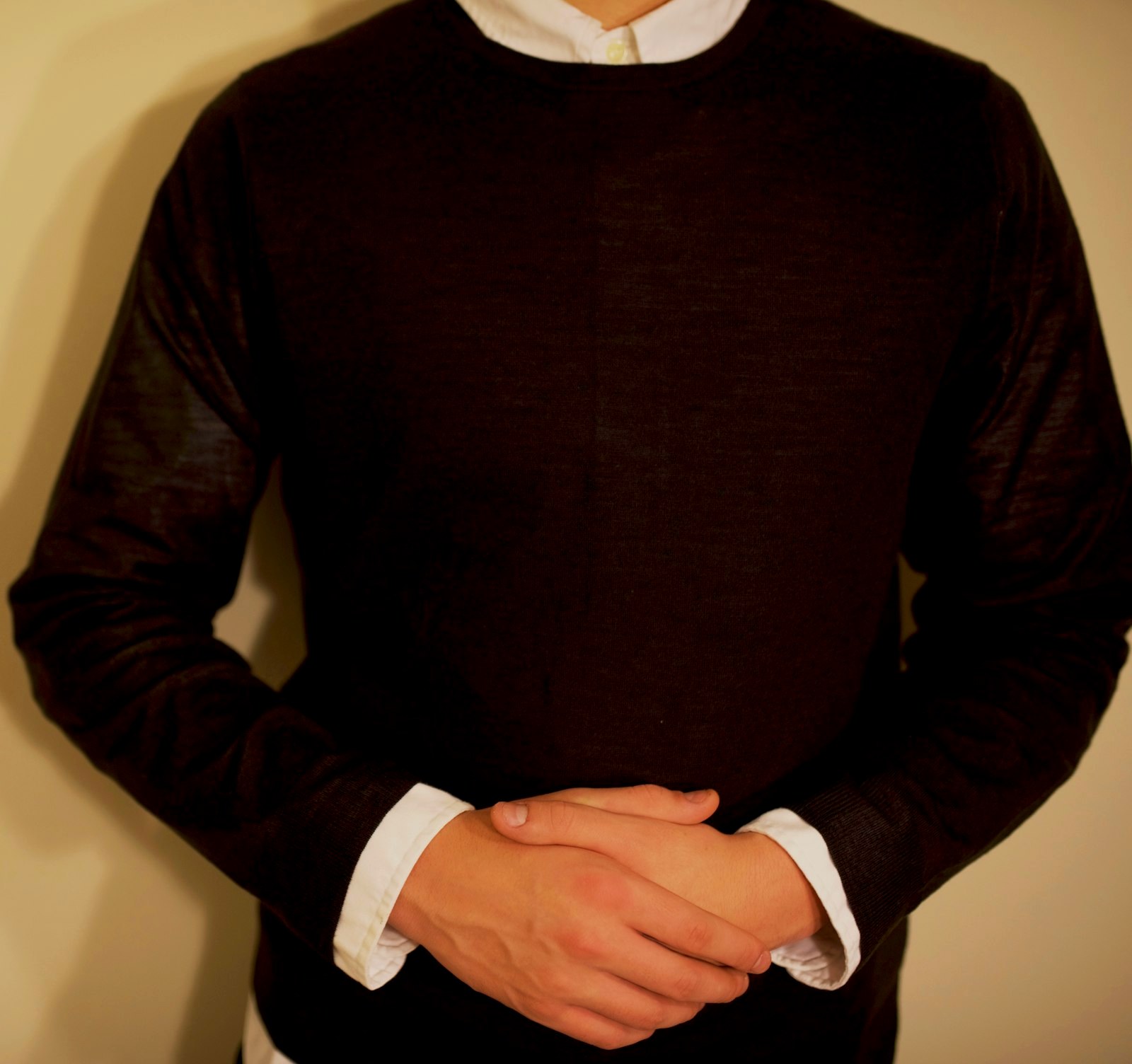
Cashmere is the fibre with the widest gap between its name and its substance: the same word covers a 36 millimetre long-staple yarn and a short-staple cloth that pills by Christmas. This ranking grades the claim, not the word. A note on photography, printed because this page believes in saying so: the hero is a bank frame of the garment class, a fine crew worn over a collared shirt, not a photograph of any ranked sweater, and no card below pictures the product it scores. The bank holds knit frames, not brand photography, and a wrong photograph is worse than none.
Checked and updated October 2026
The basis: this page grades the cashmere claim itself. Grade, staple length, ply, and the honesty of the fibre line, in crew form so the seven sweaters can be compared like for like. A maker who publishes a long staple, a micron count and a ply earns the cloth row; a maker who publishes only the word cashmere earns less of it, and a maker whose blend leads with cashmere on a single-digit share is convicted on its own label. The winner: the Luca Faloni two-ply crew at 84, the score it earned on our crew-neck ranking, carried here unchanged: 100 percent cashmere, two plies of Cariaggi yarn, 12 gauge, knitted in Bergamo, at about $375. The skip: the Brunello Cucinelli cashmere crewneck, scored 66 and named in the verdict box below: fine cloth at $1,200 whose listings publish no staple, no ply and no gauge, in a channel that discounts the house every season. In between, the Scottish mill charges $1,150 for its own two-ply knit, a $59.90 crew publishes the fullest fibre specification in the field, COS prints its certification's scope to the shell, and the sweater that launched the $75 disruption claim now sells at $98 with the claim retired.
First, the decision
Every cashmere argument is really three arguments, and this page settles all three before it scores anything. The first is the only question most readers actually have: if you buy one cashmere crew, buy the Luca Faloni two-ply. It is ranked first below on the published evidence, and it is named here, in the first screen, because a page that buries its answer under seven cards has not answered it. Its maker publishes the yarn spinner by name, the ply, the gauge and the garment's weight, and sells the result at a price the heritage end of this page cannot approach.
The second argument is the boundary with our own catalogue, printed so the two pages cannot be misread. The crew-neck ranking, Verdict Card No. 10, grades the crew garment across every fibre: merino, lambswool, cashmere, blends. The Faloni won its cashmere argument there at 84, second overall behind a merino, and that garment score is reproduced on this page exactly, rows and all. This page asks the narrower question No. 10 could not: when the fibre itself is the claim, whose cashmere is what its label says? The sweaters here are graded on the cashmere evidence, staple, ply, blend honesty, certification scope, and the Faloni's carried score is the bridge between the two pages, not a second opinion.
The third argument is the category's standing lie, and it is a sentence structure, not a brand. Cashmere blend, leading a garment whose published split gives cashmere a single-digit share, is the lie in its purest form: the word does the selling, another fibre does the work. It appears on this page as an exhibit rather than a card: the L.L.Bean Wicked Soft crew, 95 percent cotton and 5 percent cashmere on the maker's own details line, sold in the cashmere conversation at $67.99 on the maker's international store at this check. Bean, to its credit, names the cotton first, which is more honesty than the category's average, and the garment is a decent cotton crew. It is named here in prose, unranked and unscored, because the finding is about the phrase, and the phrase is the grade. The same desk rule closed the scarves ranking: cashmere-feel and soft-touch mean the fibre is absent; a 5 percent share means it is present the way a garnish is present.
How the scores work
Every sweater is scored out of 100 on the same five rows, and the rows are printed on every card, so the reader can disagree with the weighting and still use the evidence.
Cloth, 30 points. The cashmere itself, as the maker publishes it: the grade and the fibre percentage, the staple length in millimetres and the micron count where a maker prints them, the ply, and the blend honesty of the line, a single named fibre at 100 percent at the top, a marketing phrase at the bottom. Silence is graded: an unpublished staple is charged as an unpublished staple, in the open, on the card where it happens.
Construction, 20 points. The build as published: fully fashioned or whole-garment knitting against cut-and-sew, the gauge, the garment's weight where a maker prints it, and the trims, the neckband above all, because the neckband is where a cashmere crew dies first. A construction the maker does not describe earns the row its description deserves.
Fit, 20 points. The size run as published, the fit as the maker describes it, and the warnings the maker itself prints, a runs-small note on a maker's own page is evidence and is graded as the honesty it is. A sweater sold in four sizes by a mill and a sweater sold in eight by a chain are different answers to the same question.
Value, 15 points. The price against the published cloth it buys, at the door named on the card. A struck-through reference price nobody charged is graded as the theatre it is, and the discounting behaviour of the channel that sells the sweater is printed as evidence. The garment's own price, when it is real, is graded on its merits.
Longevity, 15 points. How the sweater ages: the pilling arc implied by the staple evidence, the rest the fibre needs, the care line, and any repair service the maker publishes, quoted as published. An anti-pill finish claim earns nothing until the fibre line behind it is published, and a satisfaction guarantee is a returns policy and earns nothing here either.
The rows sum to the score. Maker's figures are labelled the maker's figures throughout.
Seven cashmere crews, ranked, and one sent home
Luca Faloni Two-Ply Cashmere Crew Neck
US price at last check: about $375.
Two plies of Cariaggi cashmere, the spinner named on the maker's own page, at about $375: the fullest specification in the field and the winner of the cashmere argument on two of our pages now.
The call: the winner, and its paperwork is why. Faloni's own cashmere page publishes what this category usually hides: the yarn is 100 percent two-ply pure cashmere from Cariaggi, named as the spinner, described by the maker as A-grade; the knit is 12 gauge; the garment weighs around 250 grams; it is knitted in Bergamo, in the maker's words, in traditional Northern Italian ateliers. Read that list against the rest of this page. No other maker here publishes spinner, ply, gauge and weight on one page, and the cloth row of 27, carried unchanged from the crew-neck ranking where this sweater finished second of seven across all fibres, grades exactly that completeness.
The deductions are printed with the praise, and the first is a silence this desk charges even against its winner: the maker publishes no staple length in millimetres, so the pilling arc is graded from the ply and the spinner's reputation rather than from a fibre figure, and the November re-check owns the capture if the maker ever prints one. The fit row of 16 is the second: a tailored Italian cut across the standard run, excellent for the bodies it serves and unbending for the ones it does not. And the value row of 9 refuses to call $375 cheap. What it says instead is in the cost table: over eight costed winters this is $1.17 a wear, the honest price of the luxury end, undercut on arithmetic by everything attainable on this page and justified, where it is justified, by the hand of two-ply cloth and a decade of it.
Johnstons of Elgin Lecht Cashmere Crew Jumper
$1,150 at Johnstons of Elgin (US store)
Two-ply 100 percent cashmere knitted in the maker's own Hawick mill, from the house that has worked fine fibre since 1797: the summit of provenance on this page, priced like it.
The call: the mill's card. Johnstons of Elgin dyes, spins, knits and finishes under its own roofs, the only fully vertical maker in this field, and the Lecht is its classic crew: 100 percent cashmere in a lightweight two-ply yarn, flat-rib, knitted in the maker's Hawick mill, made in Scotland, hand wash, folded to store. The construction row of 19 is the highest on this page, because verticality is a construction fact before it is a romance: the house that spins the yarn answers for the yarn. The house's sourcing paperwork is published at brand level, Sustainable Fibre Alliance certified cashmere farms for its cashmere lines, the same record the scarves ranking credited when this mill finished second there and wove the skip's cloth besides.
The deductions are printed with the praise. The maker publishes the ply and the origin and stops there: no staple length, no micron count on the product page this desk read, so the cloth row of 27 grades a two-ply mill knit whose fibre figures are the mill's reputation rather than its printout. The fit row of 14 grades the US store's listed run, XS to L in the colourway read. And the value row of 6 is the US price itself: $1,150 on the maker's own US store, a figure well above the same sweater's sterling class at home, charged here as the price a US reader actually pays. The mill also publishes a repair and recycle service, credited in the longevity row: a maker that will take its sweater back is grading its own longevity in public. Fifteen years at $76.67 a year, $1.92 a wear, the dearest wear in the top half and printed as such.
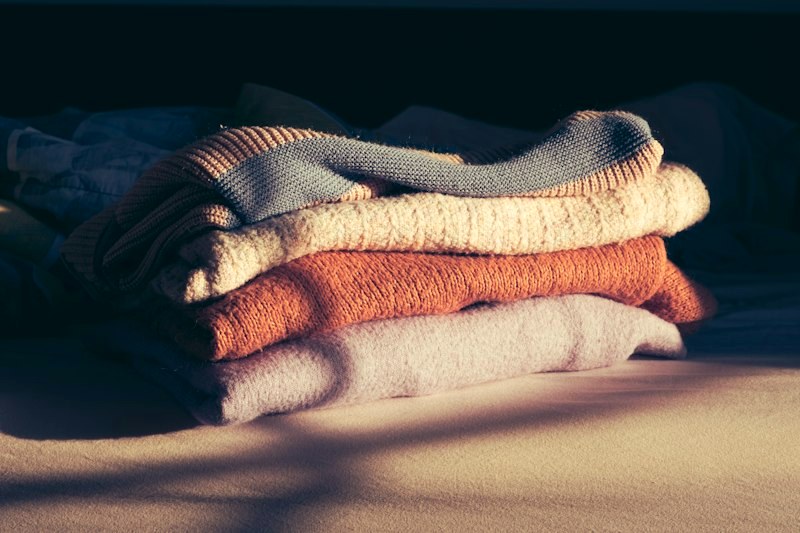
Quince Mongolian Cashmere Crewneck Sweater
$59.90 at Quince
One hundred percent Grade-A Mongolian cashmere with its microns, its staple and its gauge printed on its own page, at $59.90: the disruption claim, tested against its own paperwork, and mostly upheld.
The call: grade the garment, as this desk always grades this house, on its published specification and never on its brand story. The specification is genuinely the fullest in the attainable half of this page: 100 percent Grade-A Mongolian cashmere, fibres of 15.8 to 16.2 microns, a staple of 34 to 36 millimetres, a 12-gauge knit, ribbed trims, produced in BSCI-certified factories, all printed on the maker's own product page at this check. The cloth row of 25 is what that paperwork earns. Two honest limits ride inside it: the staple's top end touches the 36 millimetre long-staple line and its bottom end does not reach it, and Grade-A is the maker's own grading label, printed here as the claim it is. Even discounted for both, no other sweater under $330 on this page publishes a staple at all.
The rest of the card is the price of the price, printed in the open. The ply is unpublished and the knit reads as the one-ply class: light, soft, and on the standard short arc at the elbows, which is how the longevity row of 9 and the three-winter costing grade it, and the maker's less-prone-to-pilling language is graded as a claim beside a published staple that makes it plausible rather than proven. And the figure struck through beside the $59.90, $158 labelled traditional retail at this check, is graded the way this site has graded it before: it is a comparison, not a price anyone charged, it has moved between our checks, and it earns the value row nothing. The $59.90 itself earns plenty: it is a real price for a real, fully specified cashmere crew, and at $0.50 a wear over three winters it is the cheapest honest cashmere year on this page. Buy the garment if you like it. Do not buy the strikethrough.

COS Pure Cashmere Crew-Neck Jumper
$250 at COS
Pure cashmere at $250 from the one high-street house that prints its certification's scope: Good Cashmere Standard fibre, seamless knitting, and a staple figure nowhere to be found.
The call: the high-street cashmere with its paperwork in the best order. COS's own collection page states that its cashmere is verified through the Good Cashmere Standard, owned by the Aid by Trade Foundation, with the standard's scope printed in the maker's own words: requirements on animal welfare, land management, and herders' working conditions. On the maker's cashmere product pages the claim takes its precise product-level form, Shell: 100 percent GCS cashmere, excluding trims, and the crew itself is described by the maker as spun from pure cashmere and crafted using a seamless knitting technique, which the construction row of 16 credits: whole-garment knitting has no seams to fail, and the maker says so plainly.
The deductions are printed with the praise, and they are the same two this desk printed on this house's scarf. The first is scope discipline: the Good Cashmere Standard certifies how the fibre is produced, not how the sweater will wear, and it says nothing about staple length, which COS does not publish, so the pilling arc is the unpublished one and the longevity row of 10 grades it. The second is the standing wobble in this house's certification reporting, found by an October 2026 check of its own product information and printed on the scarves page: on that garment the description and the material tab gave the standard two different scopes. Neither account was a lie this desk could convict, and the fibre was 100 percent cashmere on both. But a certification that changes scope between tabs is graded as unsettled until it stops moving, and the cloth row of 23, high for the high street and short of the documented mills and spinners above it, is exactly that grade. Six years at $41.67 a year, $1.04 a wear.

Everlane Midweight Cashmere Crew
$198 at Everlane
One hundred percent cashmere with its construction described stitch by stitch and its fibre described not at all: the house that publishes everything publishes no staple, no micron, no ply.
The call: the transparency test case. Everlane built its name on publishing the mechanism, and this sweater's page publishes the build with unusual care: 100 percent cashmere in a jersey stitch, saddle sleeves, and fully plaited two-by-two rib at the neck, cuffs and waistband to hold shape and recovery, in the maker's own description, at $198. The construction row of 15 credits a trim specification most makers on this page do not attempt. Then the fibre line stops. No staple length, no micron count, no ply, no grade figure this desk could capture on the product page: the cloth row of 20 grades a pure cashmere whose paperwork is thinner than the $59.90 sweater ranked third here, and that inversion is this card's whole finding.
The context is printed because this site keeps it. Everlane's cashmere crew line has been repriced across our checks, the famous hundred-dollar crew of its founding story listing at $148 on the garment this site's brand pages audited, with this midweight build now at $198: the mechanism pitch survives, the founding price does not, and the value row of 11 grades the sweater in front of us rather than the story behind it. At $198 for a described build and an undescribed fibre it sits exactly where it scores, below the certified COS and above the two remaining disruptors, a good sweater from a house whose paperwork used to be the point. Five years at $39.60 a year, $0.99 a wear.
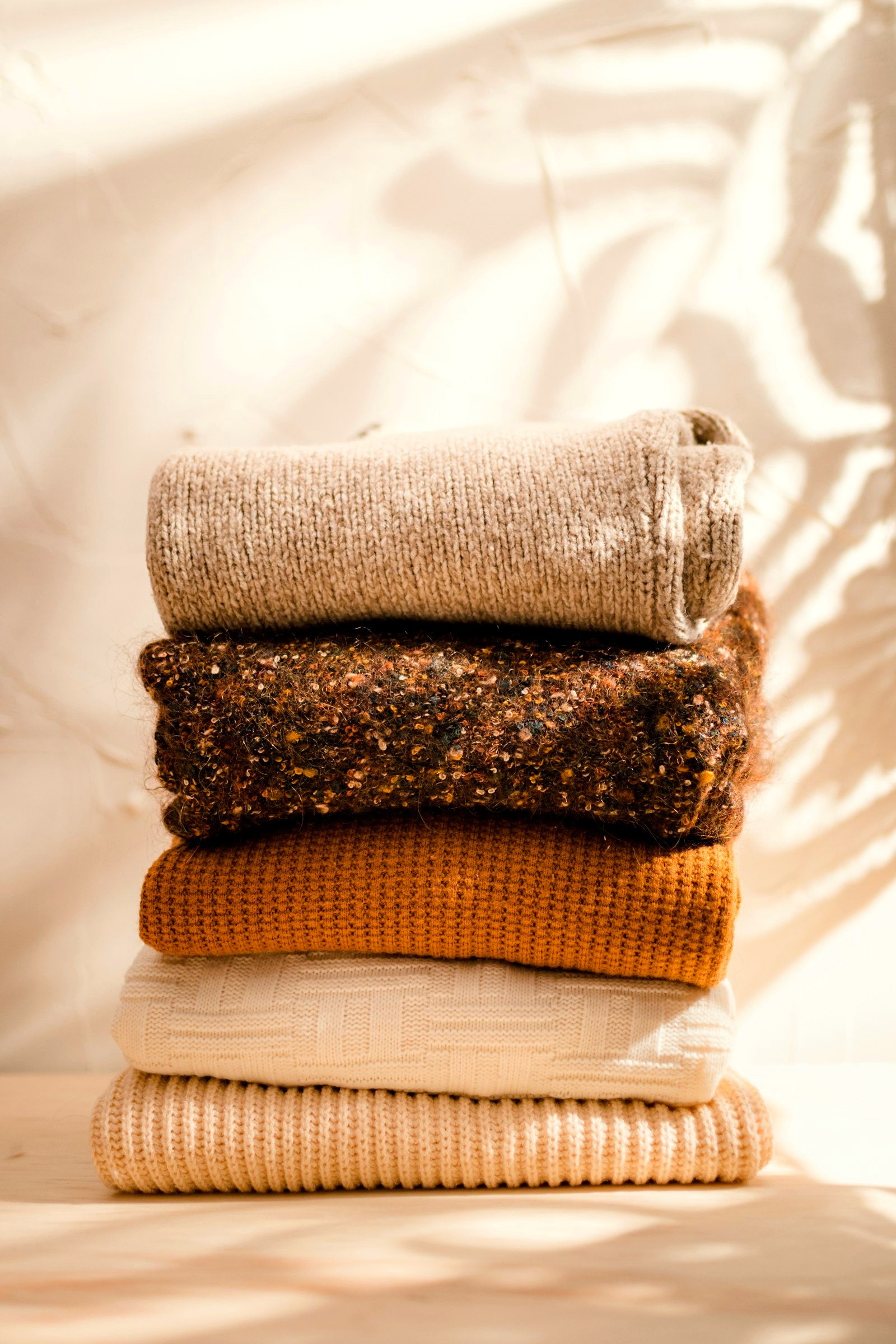
Naadam The Original Cashmere Sweater
$98 at Naadam
The sweater that taught the market to expect cashmere under $100 now sells at $98, still 100 percent cashmere, and still publishing less about its fibre than the rival it inspired.
The call: the original disruption, graded on its current page rather than its founding headline. The Original was the $75 cashmere sweater, the claim that reorganised this category a decade ago. At this check the maker's own product page prices it at $98, under the $100 line its copy now leads with, in 100 percent cashmere with a crew neckline, ribbed details and a classic fit, in core colourways with limited-edition hues each season. The value row of 13 grades what survives of the claim: a pure cashmere crew under a hundred dollars from the house that invented the pitch is still a real offer, and $98 divided by three winters is $0.82 a wear.
The deductions are printed with the praise. The product page this desk captured publishes no staple length, no micron count and no gauge for this sweater, a silence that costs it the cloth row against the Quince above it, the imitator now out-publishing the original on the original's own chosen ground of specification. The maker prints its own fit warning, that the classic fit runs small and the reader should size up, and the fit row of 15 credits the honesty while grading the fact: a crew that needs a warning is a narrower answer than a crew that does not. The longevity row of 8 is the attainable class's standard arc, a light one-ply-class knit on a three-winter costing. The claim retired; the sweater remains, honestly priced and thinly documented.
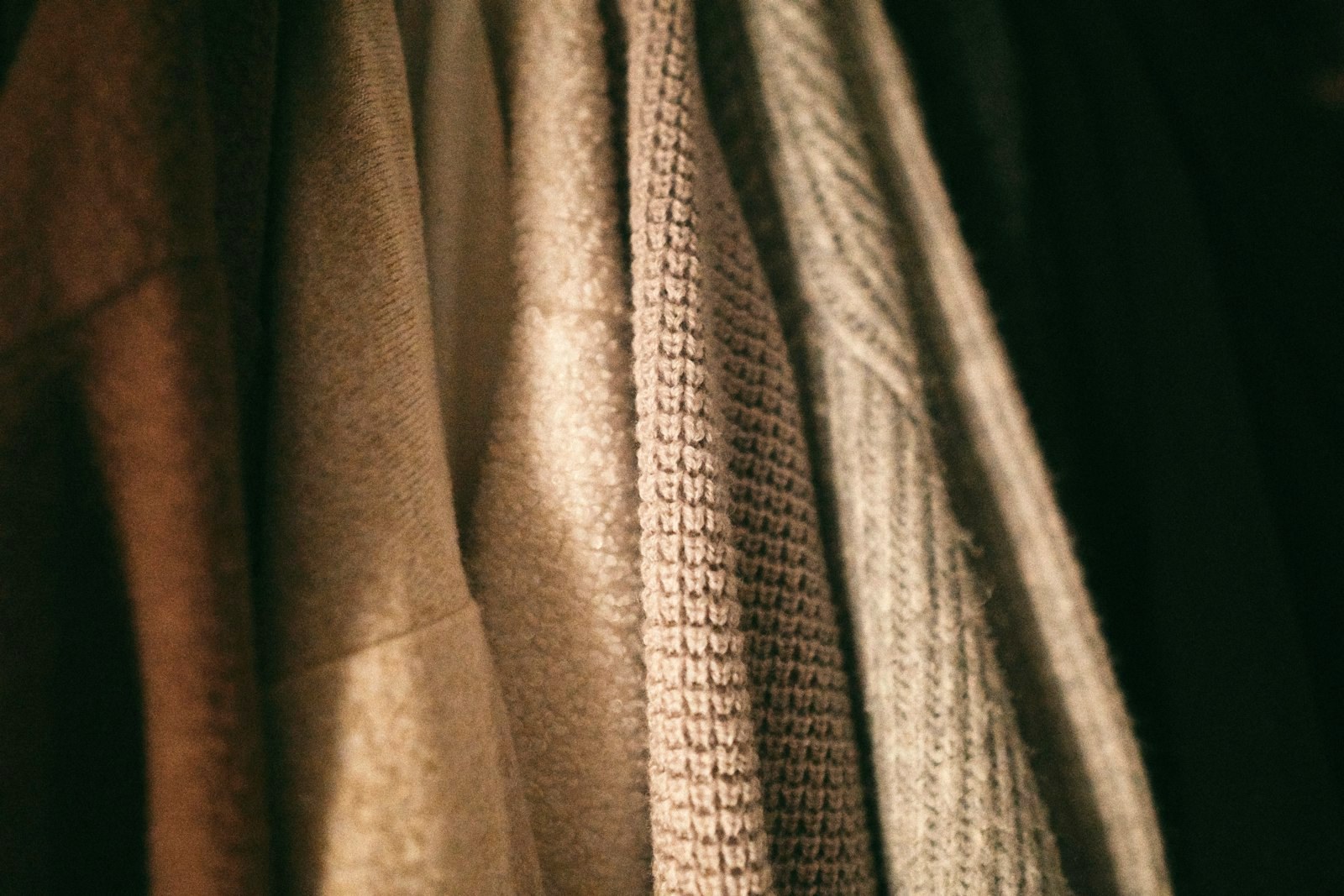
Uniqlo Cashmere Crew Neck Sweater
$99.90 at Uniqlo
One hundred percent cashmere at $99.90 in sizes XS to 3XL, from the house whose standing brand score here is 84: the fibre is real, and almost nothing about it is published.
The call: the attainable answer's other half, from the house this site scores 84 as a brand, recorded for the record; this garment was scored fresh, as garments are, and neither number borrowed from the other. The maker's US page sells a 100 percent cashmere crew at $99.90, regular fit, in a size run from XS to 3XL that is the widest on this page and earns the fit row of 17 outright. The fibre line is real, there is no blend and no adjective doing substitute work, and at this price that honesty alone separates it from the fast-fashion floor this page declined to rank.
The rest of the card is the price of the price, printed in the open. The maker's page publishes no staple length, no micron count, no ply and no gauge for this sweater, the quietest fibre line in the field, and the cloth row of 19 grades it. Its one fibre-adjacent claim, special pilling-resistant processing, is a finish claim of exactly the kind this page grades as a claim: a treatment described in a sentence, worth nothing in the longevity row until the staple behind it is published, and the row of 8 costs the sweater on the standard short-staple arc for its class, three winters at $33.30 a year, $0.83 a wear. Buy it as the honest budget cashmere it is, with a cashmere comb, and read the two cards above it before deciding the paperwork is not worth $2 less or $1.90 more.
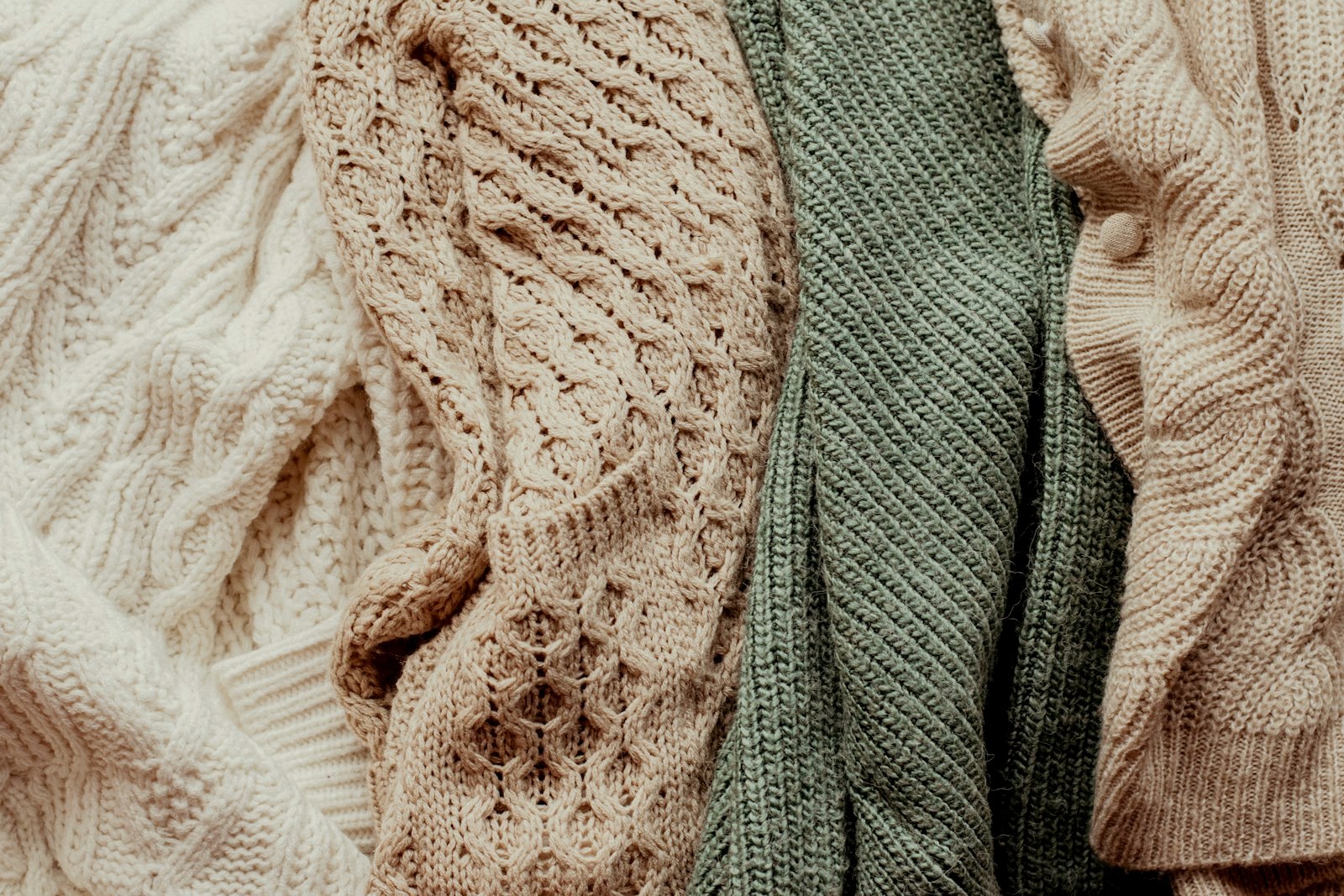
Brunello Cucinelli Cashmere Crewneck Sweater
$1,200 at Neiman Marcus
The most expensive crew on this page publishes the least about its fibre: at $1,200 the reader is asked to take the cashmere on faith, and this page does not grade faith.
The call: skip it, and the conviction is arithmetic before it is taste. The cloth is fine; nobody who has handled this house's knitwear doubts the hand, and the cloth row of 22 grades real cashmere from a house that built its name on the fibre. What the listings this desk could read publish behind the name is: 100 percent cashmere. No staple length. No ply. No gauge. At $1,200 at Neiman Marcus, that is the whole of the fibre evidence offered for the most expensive sweater in this ranking, more than the Johnstons of Elgin crew ranked second, whose maker spins and knits its own two-ply yarn in its own mill and prints the ply on the page, and more than three times the winning Faloni, whose maker publishes spinner, ply, gauge and weight. The fibre math is the conviction: per published fact, this is the worst-documented sweater on the page, and it is the dearest.
The channel finishes the argument. The same retail world that lists this crew at $1,200 spends its sale seasons cutting this house's cashmere by half and more, a pattern visible in the retailer's own sale listings, where the house's cashmere crews and cardigans appear at 40 to 60 percent off as a matter of routine. A price that behaves like that is not a price; it is an opening bid, and the value row of 2 grades it as one. This card ships without a buy line, deliberately: this desk captured the price from the retailer's brand listing and holds no verified product door it is willing to print, and a skip does not get a door in any case. Buy the Faloni for the specification, the Johnstons for the mill, the Quince for the arithmetic. If the Solomeo name is the point, buy it in the sale, knowing the discount is the confession. Twelve years at $100.00 a year, $2.50 a wear, the dearest wear on this page by a distance.
The numbers, side by side
Every figure from the cards above, in one table. Staple, ply and gauge are printed exactly as far as each maker publishes them; where a maker publishes nothing, the table prints the silence rather than a guess, because on this page the silence is data.
| Sweater | Score | Fibre line | Staple | Ply & gauge | Price |
|---|---|---|---|---|---|
| Luca Faloni Two-Ply Crew | 84 | Cashmere 100%, Cariaggi yarn, maker's A-grade | Not published | Two-ply · 12 gauge · about 250g | About $375 |
| Johnstons of Elgin Lecht | 80 | Cashmere 100% | Not published | Two-ply · flat rib | $1,150 |
| Quince Mongolian Crewneck | 77 | Cashmere 100%, maker's Grade-A, 15.8 to 16.2 microns | 34 to 36mm, published | Ply not published · 12 gauge | $59.90 |
| COS Pure Cashmere Crew | 75 | Cashmere 100%, GCS shell per maker's line | Not published | Seamless knit · gauge not published | $250 |
| Everlane Midweight Crew | 72 | Cashmere 100% | Not published | Ply not published · jersey stitch | $198 |
| Naadam The Original | 70 | Cashmere 100% | Not published on the page captured | Not published | $98 |
| Uniqlo Cashmere Crew | 69 | Cashmere 100% | Not published | Not published | $99.90 |
| Brunello Cucinelli Crewneck (the skip) | 66 | Cashmere 100% | Not published | Not published | $1,200 |
Read the staple column against the price column and the page's argument makes itself. The only maker in the field who publishes a staple length charges $59.90 for the sweater. The dearest sweater in the field publishes nothing at all. Everything this ranking believes about the category is in those two cells.
Cost per sweater, and per wear, in the open
No cashmere sweater is expensive or cheap until it is divided by its life. Every figure below is computed from the printed price and the stated life, on the desk's standard rotation for this garment class: a crew in regular use through the cold half of the year, forty wears a year.
| Sweater | Price | Life used | Per year | Per wear |
|---|---|---|---|---|
| Quince Mongolian Crewneck | $59.90 | 3 years | $19.97 | $0.50 |
| Naadam The Original | $98 | 3 years | $32.67 | $0.82 |
| Uniqlo Cashmere Crew | $99.90 | 3 years | $33.30 | $0.83 |
| Everlane Midweight Crew | $198 | 5 years | $39.60 | $0.99 |
| COS Pure Cashmere Crew | $250 | 6 years | $41.67 | $1.04 |
| Luca Faloni Two-Ply Crew | $375 | 8 years | $46.88 | $1.17 |
| Johnstons of Elgin Lecht | $1,150 | 15 years | $76.67 | $1.92 |
| Brunello Cucinelli Crewneck (the skip) | $1,200 | 12 years | $100.00 | $2.50 |
Read the table the way the desk reads it. The attainable three divide honestly because their tickets are small, and among them the Quince wins the arithmetic outright: a published long-edge staple at $0.50 a wear is the best cashmere maths in the field. The winner's $1.17 is the luxury end's honest figure, printed beside its score on two pages now: you buy the Faloni for the cloth, and the table refuses to pretend the cloth is the bargain. The mill's $1.92 buys fifteen years and a repair service, a defensible extravagance. The skip's $2.50 buys twelve years of fine cloth and nothing else on paper, which is the whole conviction in one cell.
Which one to buy
If you buy one cashmere crew: the Luca Faloni two-ply.
Eighty-four points, the spinner named, the ply and gauge and weight published, knitted in Bergamo, at about $375. It is the sweater this category is judged by, here and on the crew-neck ranking both.
If provenance is the point: the Johnstons of Elgin Lecht.
The vertical mill's own two-ply knit at $1,150 on its US store, with a repair and recycle service behind it. You are paying for the shortest supply chain in the field, and the card prints exactly what that does and does not include: no staple figure, even here.
On a budget: the Quince, then the Naadam or the Uniqlo.
The Quince at $59.90 is the attainable answer with the paperwork attached, the only published staple in the field. The Naadam at $98 is the original pitch at its current price, thinly documented. The Uniqlo at $99.90 is the widest size run and the quietest fibre line, bought with a cashmere comb. Between the three, the whole attainable drawer costs less than one designer ply.
For the full drawer logic: start from the garment, then the fibre.
The crew as a garment, across every fibre worth owning, is ranked in Verdict Card No. 10, its place in the knitwear family is mapped in the sweater index, and wearing the winners well is briefed in How to Wear No. 09. Every ranking on this site runs on the same five rows under the same methodology.
How we know: the honesty section
This is the permanent furniture of these rankings. Everything the reader needs to discount the page is printed on the page.
Fibre figures come from makers' own pages, never from reviews. Quince's microns, staple and gauge are its own product page, opened for this ranking. Faloni's spinner, ply, gauge and weight are its own cashmere page. Johnstons' ply, mill and construction are its own US product page. COS's certification scope is its own collection page, and the shell-level form of the claim is its own product line. Everlane's construction details are its own product description. The silences charged on the cards are charged as captured: Naadam's product page, as this desk's checker could read it, publishes no staple, micron or gauge for The Original, and Uniqlo's publishes none for its crew. Both captures are owned by the November re-check.
Two scores on this page are standing records, handled as such. The Faloni's 84 and its five rows are reproduced exactly from Verdict Card No. 10, where the garment was scored across all fibres; this page adds no second score for it. Uniqlo's 84 and Everlane's record in this site's brand pages are brand numbers, cited in prose for the record only; both garments here were scored fresh, as garments are. The Johnstons sourcing record is the one the scarves ranking established from the maker's own published standards.
Prices were checked at the doors named on the cards on the day this page was checked. The Johnstons price is the maker's own US store for the colourway read. The COS price is the maker's own cashmere knitwear page, and its buy line runs to that page, the maker's store being the door this desk could verify, as it was for this house's scarf. The Faloni price is the figure standing on Verdict Card No. 10, its maker's collection page carrying no price in the text this desk could read; the November re-check owns the product-page capture. The Brunello price was read from the named retailer's brand listing, no product door was verified, and the card ships without a buy line for that reason and because it is the skip. The L.L.Bean exhibit's price is the maker's international store at this check, printed as found.
Scores are this desk's. The construction and fit rows grade published build and size facts. The longevity rows grade staple evidence, care lines and published repair services, and grade every anti-pill and less-pilling phrase as a claim. No maker paid for a score, and no score in this ranking was supplied by a brand, a network, or a reader. Houses named in copy were not consulted. Where a maker's claim could not be graded, it is printed as a claim and the row shows it.
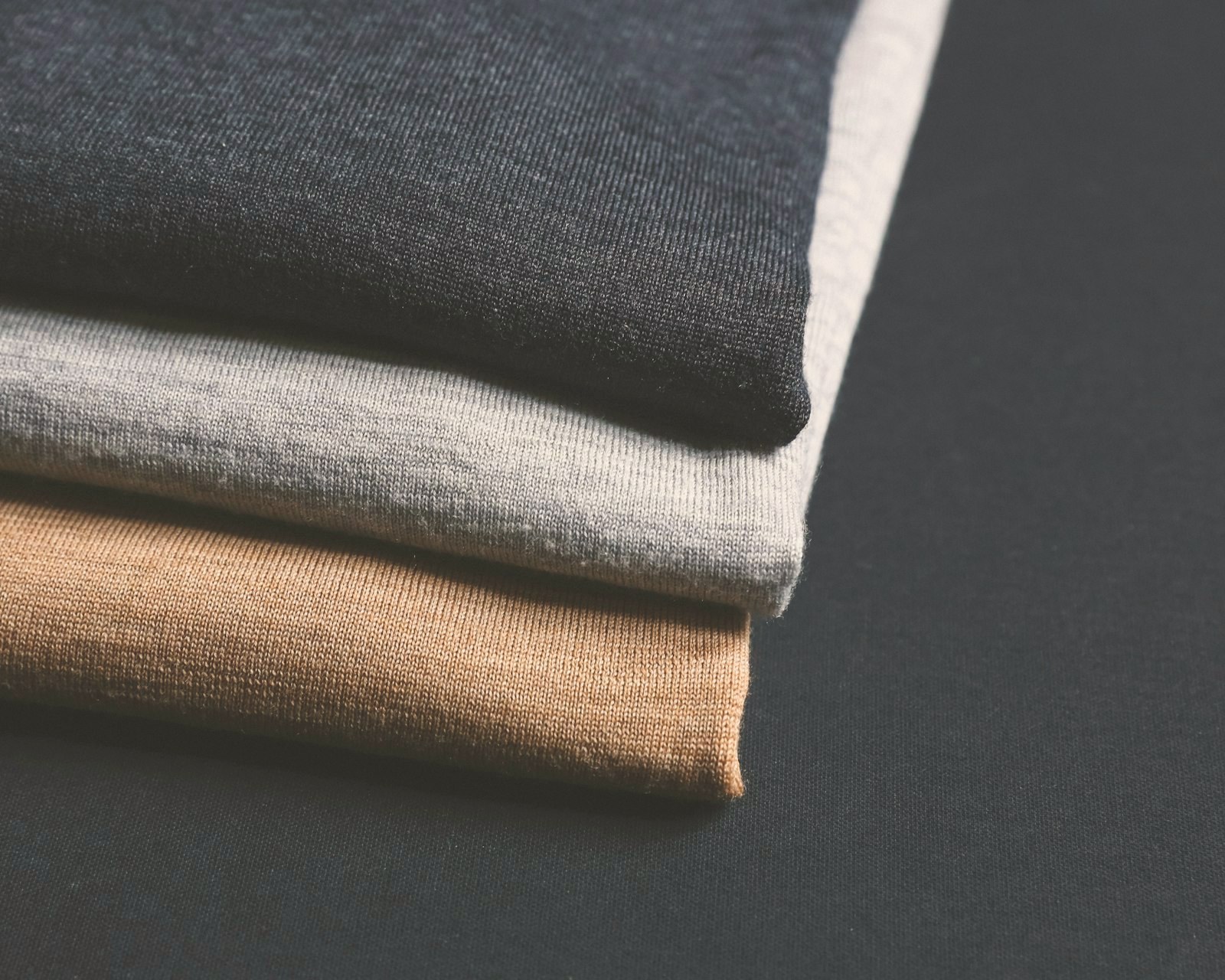
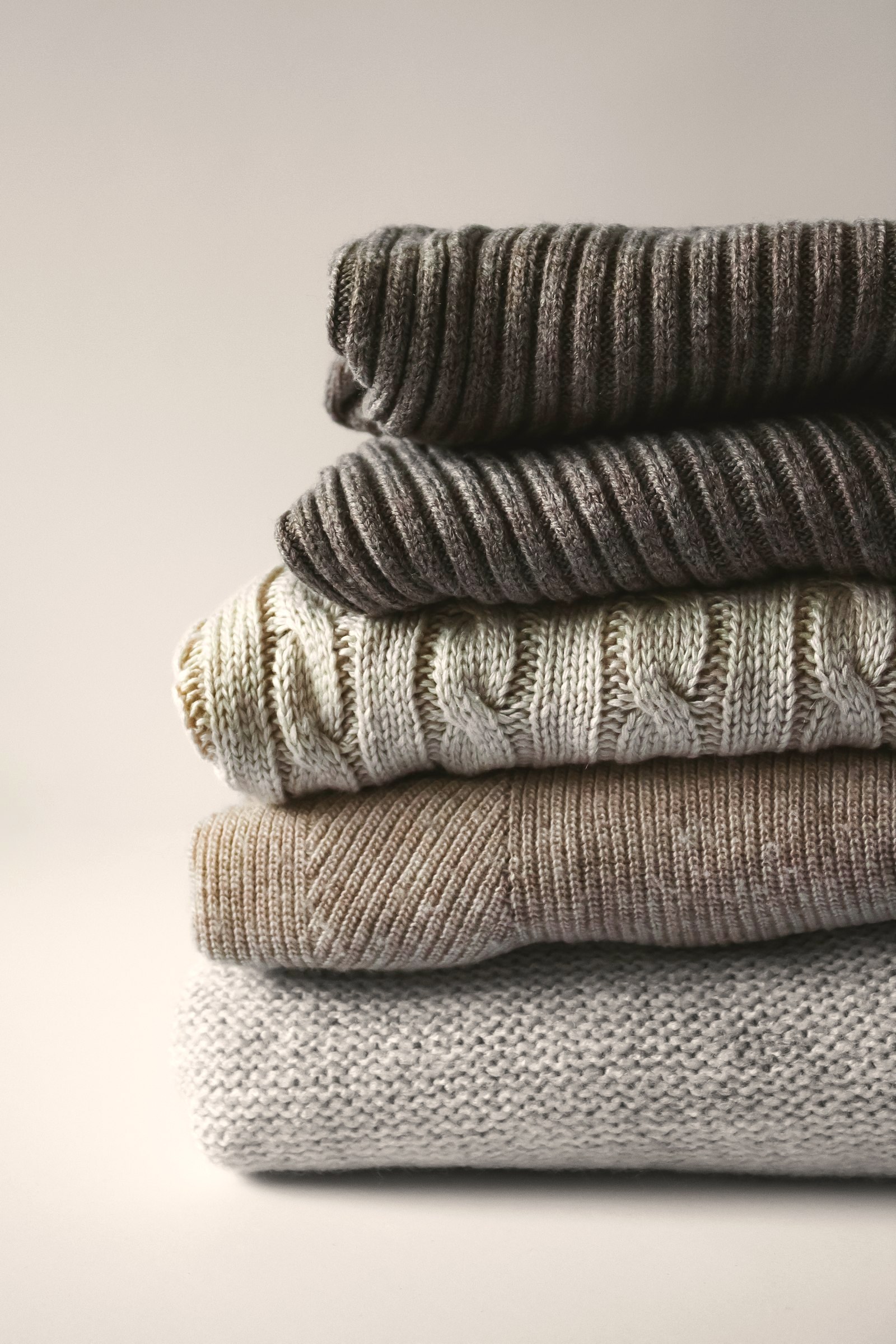
Photography, disclosed. This page carries no photograph of any ranked sweater. The bank this site draws from holds knit frames, folded stacks, texture macros and one on-body crew, and the desk's rule is that a wrong photograph is worse than none: the hero and card frames are captioned and alt-texted as exactly what they are, frames of the garment class. The frames this page needs are on the harvest list and named here so the gap is auditable: a cashmere crew on a body in window light, a two-ply yarn in macro, a neckband under tension. When the bank holds them, this page gets its pictures and this paragraph comes out.
Questions, answered straight
What is the best cashmere sweater for men?
The Luca Faloni two-ply cashmere crew neck, at 84 out of 100 in this ranking, the same score it earned on our crew-neck ranking. It is 100 percent cashmere in two plies of Cariaggi yarn, knitted in Bergamo at 12 gauge, at about $375: the fullest published specification in the field at a third of the Scottish mill's US price. The Johnstons of Elgin Lecht is second at 80, two-ply cashmere knitted in the maker's own Hawick mill. The attainable answer is third: Quince's Mongolian cashmere crew at 77, $59.90, with a 34 to 36 millimetre staple and a 15.8 to 16.2 micron fibre published on its own page.
What does ply mean in a cashmere sweater, and how many plies should I buy?
Ply is the number of yarn strands twisted together before knitting. One ply is the whisper: light, soft, and the fastest to thin at the elbows. Two plies is the working standard this page recommends, roughly double the yarn for notably more strength, warmth and shape retention, which is why both sweaters at the top of this ranking publish it. Four plies and up is the heirloom end, a heavy winter garment at a heavy price. Ply is not quality by itself: two plies of short-staple yarn still pill. Read ply and staple together, and treat a sweater that publishes neither as a sweater whose maker has told you something.
Why does cheap cashmere pill so fast?
Staple length. Cashmere fibre runs from about 28 millimetres at the short end to 36 millimetres and beyond at the long end. Short fibres work free under friction, ball into pills, and leave the cloth thinner each season; long fibres stay locked in the yarn. A pure cashmere sweater under $100 is possible because the staple is short or unpublished, and its pilling arc is set before it is worn. The management is mechanical: rest the sweater a day between wears, comb the first pills rather than pulling them, and fold it rather than hanging it. No finish or anti-pill treatment changes the fibre underneath, which is why this page grades anti-pill claims as claims.
Is a cashmere blend sweater worth buying?
Read the split before the name. A blend can be honest engineering: cashmere through a wool body at a published 25 or 30 percent is a warmer, harder sweater than pure short-staple cashmere. The category's standing lie is the blend that leads with the word cashmere on a garment that is 5 percent cashmere and 95 percent something else, a cotton crew with a cashmere garnish sold into the cashmere conversation at a cashmere-adjacent price. This page's rule: the fibre in the product's name should be the fibre doing the work, and where a maker publishes a single-digit cashmere share, the sweater is graded and priced as what the other 95 percent is.
What does Good Cashmere Standard certification actually cover?
The Good Cashmere Standard is owned by the Aid by Trade Foundation, and COS's own collection page states its scope plainly: requirements on animal welfare, land management, and herders' working conditions. It is a sourcing standard for how the fibre is produced, not a quality grade for the sweater: it certifies nothing about staple length, ply, or how the garment will pill. On the COS crew ranked fourth here the product-level form of the claim, printed on the maker's own cashmere pages, reads Shell: 100 percent GCS cashmere. This page credits a named standard with a printed scope, and grades it as exactly that: provenance paperwork, worth having, no substitute for the fibre figures.
Is the Brunello Cucinelli cashmere crew worth $1,200?
Not against this page's evidence, which is why it is the skip at 66. The cloth is fine, and the listings this desk could read publish 100 percent cashmere and nothing behind it: no staple length, no ply, no gauge. At $1,200 at Neiman Marcus it costs more than the Johnstons of Elgin crew ranked second here, a two-ply sweater whose maker spins and knits in its own mill and prints the ply on the product page, and more than three times the winning Faloni, whose maker publishes its yarn spinner, its ply, its gauge and its weight. The fashion channel that sells it also discounts the house's cashmere steeply every season. Fine cloth, unpublished fibre, theatre pricing: the arithmetic is the verdict.
Young Cotton's verdict cards rank garments on published evidence: fibre lines from makers' own spec pages, staples and plies in the makers' own figures, prices checked at the doors named on the cards, and silences charged where they occur. This card closes with the finding the whole category keeps making: in cashmere, the word is free and the fibre is the price, so the published staple is the luxury, the printed ply is the construction, and the sweater that tells you the least about its cashmere is, at $1,200, asking the most for it.
Checked and updated October 2026