
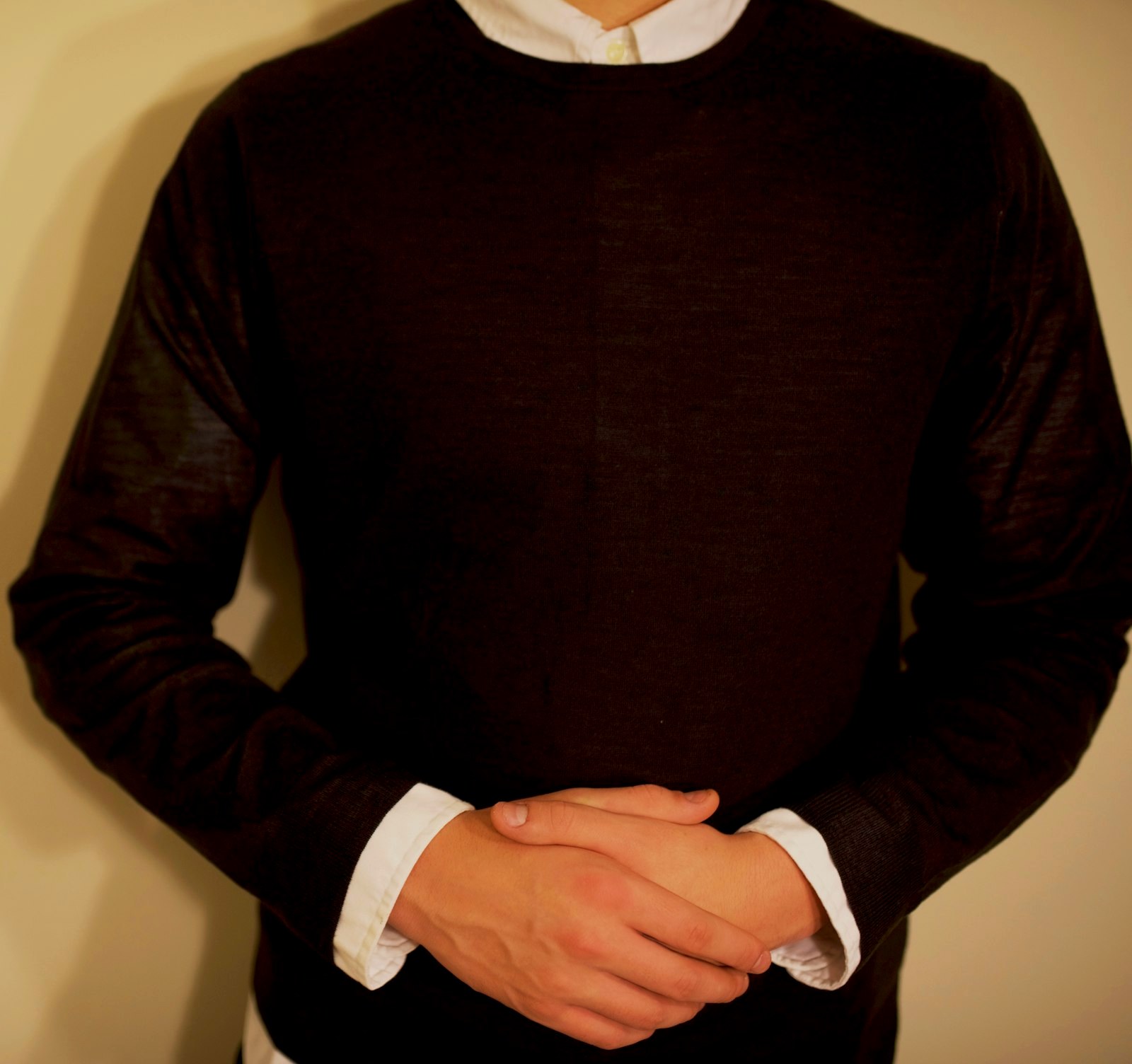
The whole brief in one frame: the neckline sits low and quiet, the collar inside it does the talking. The crew neck is a frame, and the shirt is the picture.
Checked and updated October 2026
The ruling, up front: the crew neck's job is the opposite of its high-necked sibling's. The turtleneck's collar is the argument and frames the face; the crew's neckline sits low and quiet and frames what is worn inside it, a collared shirt with its band showing, or, worn alone, the knit itself. Two working parts decide everything else: the gauge, which chooses the room, and the neckband, which is the garment's signature and its first failure. And one prohibition, stated once and plainly: no tie, ever. Which crew to buy is a scored question, answered in Verdict Card No. 10, where the Smedley Lundy took the category at 87.
This brief: the frame rule · gauge decides the room · the collar question · layering, both directions · the V-neck ghost · the office ruling · the outfit matrix · the mistakes · fibre care
The decisive rule: the neckline is a frame
Every neckline in the knitwear family has a job. The turtleneck's is to stand up and be looked at: How to Wear No. 08 rules that its collar is the whole outfit's argument, folded once, with nothing allowed to compete with it. The crew neck works in the other direction. Its neckline is a low, round frame, and a frame is judged by two things: what it holds, and whether its own edge is clean.
Worn over a shirt, the shirt is the picture. The collar band showing above the neckband, the points contained, the cloth of the shirt reading against the cloth of the knit: that small arrangement is the oldest deliberate look in the category, the one this page's hero wears, and the one the crew Card describes as carrying the garment from the office to the evening without a costume change. The sweater contributes the frame and the warmth; the shirt contributes the detail.
Worn alone, the knit itself is the picture, and then the frame rule turns inward: with nothing inside it, the crew is judged on its own edge and its own fit. The Card's fit ruling is the test. The neckband sits flat against the collarbone, no gap and no choke; the shoulder seam sits on the shoulder; the body is clean without pulling across the chest. Our sweater index files the crew at formality 3 and warmth 3, the middle of everything, and the middle is exactly why the frame matters: a garment that sits between categories is decided by how it is worn, not by what it is.
Gauge decides the room
The gauge bands below are the ones Verdict Card No. 10 published, and they govern this brief the way the collar definitions govern the turtleneck's. Buy the gauge for the room you actually dress for.
| Gauge | What it is | Where it works |
|---|---|---|
| Fine, roughly 24 to 30 | A smooth, close knit, the Lundy class at 30 gauge | Under a blazer, over a shirt, the office: tailoring's knit |
| Mid, roughly 12 to 20 | The all-purpose default; the Asket crew is knitted at 20 | Over an Oxford, alone, under an open coat or jacket |
| Heavy, 7 and below | The weekend end of the drawer, where the Lockie lambswool sits | Standing alone as the top layer; never inside tailoring |
The bands are not a quality ladder. The heavy gauge is not a failed fine gauge; it is a different garment with a different job, warmer, more textured, built to be the outside of the outfit. The failure is wearing a gauge in the wrong room: fine knit asked to be a weekend layer reads thin and cold, and a chunky crew forced under a blazer is named in the mistakes below because both garments lose.
The collar question: crew over a collared shirt
How much collar shows: the band, and a finger's width. The shirt's collar band and about a finger's width of collar should clear the sweater's neckband, with the collar points contained inside the neckline. Less than that and the shirt disappears, leaving a mysterious ring of cloth at the throat. More, a collar standing tall and loose above the knit, and the frame is broken from the other side: the shirt looks like it is escaping.
The button-down collar is the engineered answer. Its buttons hold the points down inside the frame, which is why the Oxford shirt is this combination's standard partner and has been for a century. A spread collar is built for a tie's knot and open space; under a crew its points have nowhere to sit, so they slide out over the neckband and wing. If the shirt is a spread collar, wear it as the top layer and keep the crew in the drawer.
The tie prohibition, stated plainly: never a tie under a crew neck. The knot crowds against the neckband, the blade vanishes under the knit with a triangle showing at the throat, and the arrangement reads as a school uniform because a school uniform is precisely a collar, a tie and a crew neck worn as a set. Remove the tie and the same shirt and sweater read as an adult's outfit. The uniform read also appears when everything in the combination is brand new, flat and matched, navy knit over a white dress shirt; the Oxford's softer cloth and a knit with some life in it are the difference. Where a tie is required, the ruling is the one No. 08 gives its garment: the tie is not negotiated around, the shirt is worn on its own and the knit stays home.
Nothing else shows at the neck. An undershirt's neckline sits below the sweater's neckband or it is not worn. A crescent of white undershirt peeking above a dark crew is not a layer, it is an accident; when a tee is the picture, it is worn as the layer in the open, not glimpsed under a knit.
Layering, both directions
Under the blazer, fine gauge only. This is the other half of the gauge law, and the blazer brief carries its side of it: How to Wear No. 03 rules fine gauge under tailoring, always, and sizes the blazer's fit test with the winter plan of a fine knit beneath it. The crew's half of the bargain is the Card's fit test: a fine-gauge crew should disappear under a blazer without bunching at the arm. The reference garment is the Card's winner, John Smedley's Lundy at 87, a 30-gauge merino that slides under a blazer like a shirt with warmth. Mid gauge under a blazer is bulk the jacket was not cut for; heavy gauge under one is the mistakes section.
Over the Oxford, any working gauge. The combination in the collar section is the crew's home layer: fine gauge for the office register, mid gauge for the everyday one, the shirt's band showing and its points contained. It is the pairing the crew Card's own closing photograph prints, a fine or mid gauge over a collared shirt, and it is the fastest route this garment has from weekday to evening: the same clothes, the jacket off.
As the top layer, heavy gauge under an open coat. The layering reverses at the weekend end. A heavy lambswool crew, the Lockie Leven's class at 82 on the Card, worn alone over a shirt or a plain tee and under an open overcoat, is a complete outfit whose outside surface is the knit itself. Nothing goes over it but weather.
The V-neck ghost
Every crew neck in the drawer won a small war to be there, against the V-neck that used to be the default sweater with a collar. The V lost on completeness. A V-neck worn alone frames a bare triangle of chest and reads unfinished, a garment waiting for its other half; worn as designed, it demands a shirt, and historically a tie in the opening, and each of those pairings has its own failure mode, the tie's knot crowding a shallow V, the open collar sliding out of a deep one. The crew asks nothing: it is finished alone, and over a shirt it frames instead of competing. The V survives honourably as a period piece, under a jacket, over an open collar, worn by a man who chose it knowingly. But the drawer, the rotation and this brief belong to the crew, because the crew is the neckline that never makes the rest of the outfit negotiate.
The office ruling
A crew neck in the office is knitwear worn as a shirt alternative, and it is judged as one. Fine or mid gauge, a dark or neutral colour, over an Oxford or worn alone, with tailored trousers: that combination is correct in any room that allows a shirt without a tie. The failures are specific. A chunky gauge is off-duty cloth in an on-duty room, the same failure No. 08 names for the roll neck. A neckband that has stretched or gone shiny announces a garment past its best. A novelty or graphic knit is a joke the room did not ask for. And the tie stays prohibited here most of all: the office is where the uniform read costs the most, and a room that requires a tie is answered with a shirt, not with a sweater arranged around one.
The outfit matrix: five ways, no improvisation needed
| Setting | The knit | With | The judgment |
|---|---|---|---|
| Office tailoring | Fine-gauge crew, charcoal | An Oxford under it with the band showing, Spier & MacKay tropical wool trousers, loafers | The frame and the picture at full strength; the trousers are the 87 of Verdict Card No. 15 |
| Evening | Fine-gauge crew, black | An unstructured blazer per No. 03, dark trousers, nothing at the neck | The blazer row the blazer brief wrote this knit into |
| Smart casual | Mid-gauge crew, navy | Over an Oxford, dark one-wash denim, suede boots | The crew's home ground, office to evening without a change |
| Double denim, broken | Mid-gauge crew in a clear tone | Between a denim jacket and a dark jean | No. 05's wash-break law: the knit is the third surface that widens the break |
| Weekend cold | Heavy-gauge lambswool crew | Alone under an open overcoat, corduroy or the faded pair retired to weekend duty, boots | The heavy gauge standing alone, as the gauge law intends |
The ruling
Keep the frame clean and the crew neck never puts a foot wrong: neckband flat, gauge matched to the room, the picture inside the frame chosen on purpose, and nothing added at the throat. Every failure of this garment is a frame failure, the wrong gauge in the room, a tie forced into the neckline, a collar escaping, a band let go. The crew is the drawer's default because it asks the least and holds the most. Wear it like it was designed, which is to say, around something worth framing.
The mistakes
The stretched neck. The bagged, wavy neckband is the crew neck's visible death, and it is made in the closet and at the mirror, not in the wash: a knit hung on a hanger stretches under its own weight, and a sweater dragged on by its neckband gives a little at every wearing. The Card's evidence is blunt about the cheap end, a fast-fashion neckband bagging by about the tenth wear, and about the fix, which is built into the garment: the Lundy's band is dense, double-layered and sprung, the part of a cheap crew that dies first, built like it knows it. Your half is simpler. Pull the sweater on by its body, fold it, store it flat. Once a band has bagged, it does not recover, and the sweater leaves presentable service.
The crew over a dress shirt, with a tie. Two failures in one outfit: the spread collar wings out over the neckband because it was cut for open space, and the tie's knot crowds the band with its blade hidden, the uniform read at full strength. The shirt for this job is the button-down Oxford; the tie belongs to a shirt worn alone.
The chunky crew under a slim blazer. The blazer strains over the knit, the sleeves bunch at the arm, and the neckline bulges out of the lapel line. The gauge law exists precisely here: tailoring takes the fine gauge, and the heavy knit takes the open coat.
The Christmas jumper. The garment itself is innocent, and this page declines to sneer at it: a novelty knit is a costume with a date printed on it, and worn on its day, to its party, with commitment and good humour, it does its job honestly. The mistake is one of calendar, not taste: letting it stand in for a sweater in the winter rotation, where it has to do a real garment's work in rooms that never got the joke, or wearing it to the office party as irony, a register that photographs cannot record. Buy it for the day if the day is yours. Just do not ask it to be knitwear.
Fibre care, briefly
The Card's longevity evidence is the care brief in one paragraph. Fold every knit and store it flat; the hanger is where necks go to stretch. Merino is the working fibre, fine enough for tailoring and it washes and wears without ceremony, which is why three of the Card's seven are merino. Cashmere wants rest days between wears and rewards them with years: the Faloni crew is costed at eight winters and the page's highest cost per wear, $1.17, and the rest days are part of that price. Lambswool pills lightly in its first wears and then settles into its matte warmth. The service lives the Card prints are the expectations to hold a sweater to: a heritage crew gives a decade or more, the Lockie costed at twelve winters and the Smedley at ten; a good budget merino, the Uniqlo at $0.42 a wear, gives about three; and the fast-fashion fine knit, the Card's skip at 40, is costed at about thirty presentable wears before the neckband bags and the surface pills. Care is not a ritual. It is how the first set of numbers becomes yours instead of the third.

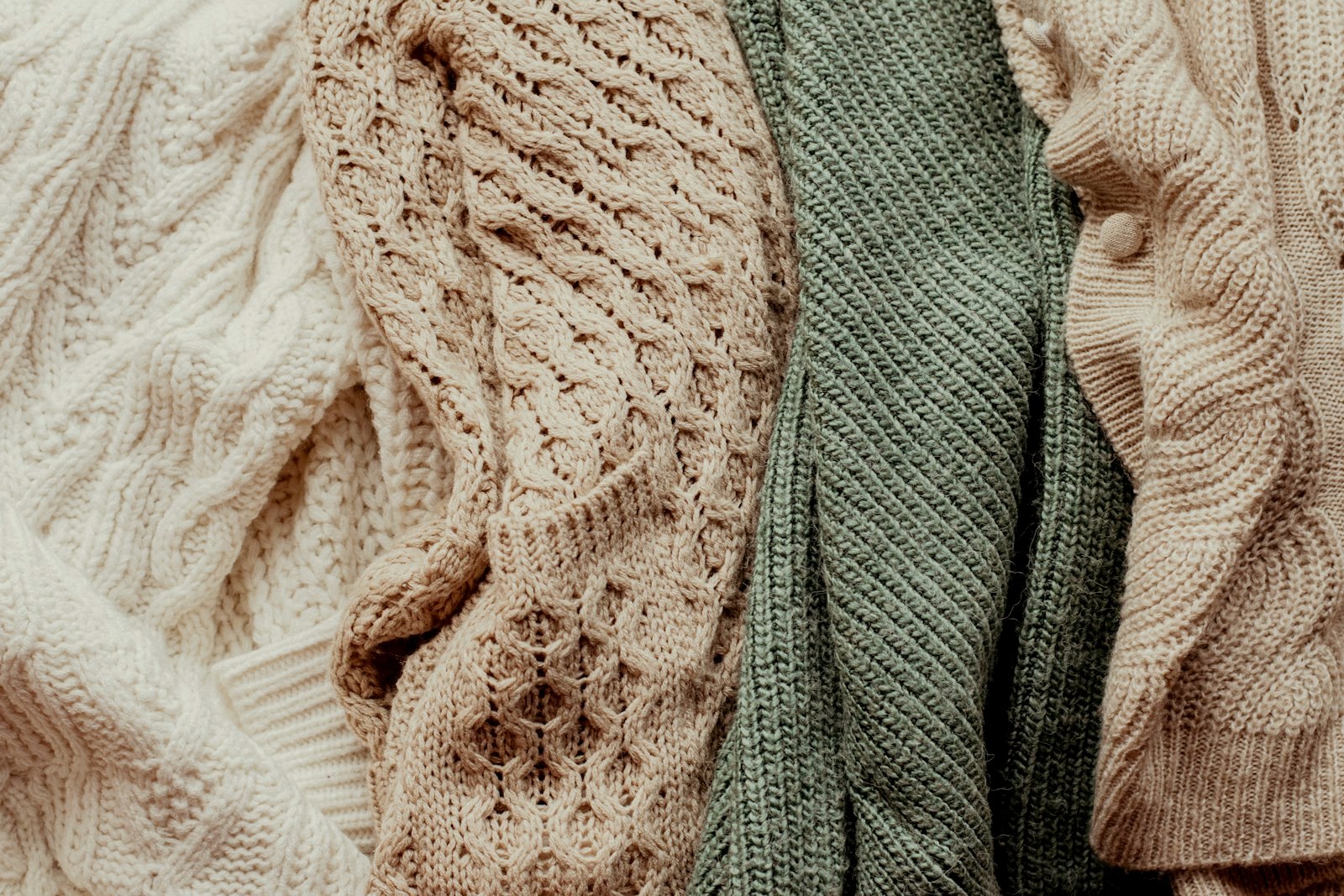
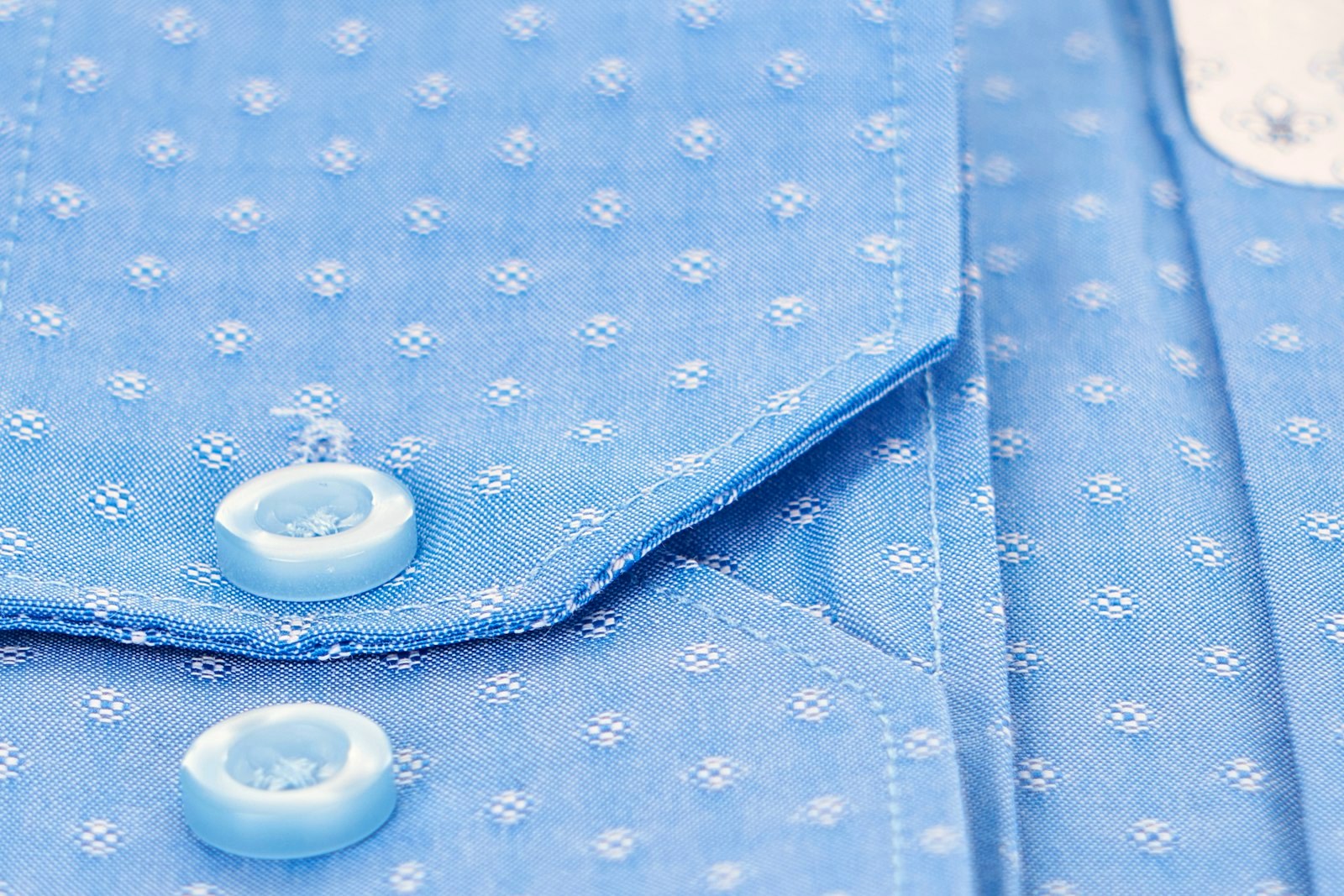
A note on our own photography, printed because this page believes in saying so: our photo bank holds one honest crew-on-body frame, the fine crew over a collared shirt at the top of this page, and no second yet, so this brief runs on that frame and the cloth studies rather than borrowed model shots.
Questions, answered
Can you wear a tie with a crew neck sweater?
No, and the ruling is plain. The knot crowds the neckband, the blade of the tie disappears under the knit except for a triangle at the throat, and the combination is the school uniform's, not the office's. A tie belongs to a shirt worn as the top layer. If the room requires a tie, wear the shirt and leave the crew in the drawer; it is the same ruling this site gives the turtleneck.
How much shirt collar should show above a crew neck sweater?
The collar band, and about a finger's width of collar above the sweater's neckband, with the collar points contained inside the neckline. A button-down collar is the engineered answer, because its buttons hold the points down where they belong. A wide spread collar fails the frame: its points escape the neckline and wing out over the knit.
Can you wear a crew neck sweater under a blazer?
Yes, in fine gauge only, roughly 24 to 30 gauge, the class of the Smedley Lundy that won our crew ranking at 87. A fine crew should disappear under a blazer without bunching at the arm. Mid gauge is a layer for coats and open jackets, and heavy gauge stands alone. The blazer brief's rule covers the whole family: fine gauge under tailoring, always.
Can you wear a crew neck sweater to the office?
Yes. A fine or mid gauge crew in a dark or neutral colour, over an Oxford shirt or worn alone, with tailored trousers, is office knitwear in any room that allows a shirt without a tie. The failures are a chunky gauge, which is off-duty cloth, a stretched or shiny neckband, a novelty or graphic knit, and any attempt to complete the outfit with a tie.
Crew neck or V-neck: which should I own first?
The crew, and it is not close. A crew neck is complete worn alone and works as a frame over a shirt, so it answers every room the drawer serves. A V-neck is unfinished alone: it frames a bare chest or demands a shirt, historically with a tie, and each of those pairings carries its own failure mode. Own the crew first; the V is a period piece that survives under a jacket with an open collar.
Why does a crew neck collar stretch out, and can it be saved?
The neckband is the hardest-working part of the garment, pulled over the head at every wearing. A sprung, double-layered band recovers; a cheap single band bags, and our crew ranking costs the fast-fashion version's neckband at about ten wears. Hanging a knit on a hanger stretches the neck under the garment's own weight, which is why knits are folded and stored flat. A bagged neckband does not recover; it retires the sweater from presentable service.
Next
The buy itself is scored in Verdict Card No. 10, where the Smedley Lundy's 87 and the H&M fine-knit's 40 were earned on yarn, gauge and wear. The other neckline's brief is How to Wear No. 08, whose fold-once discipline governs the collar that stands where this one sits down. The layer this brief most often works under is ruled in How to Wear No. 03, the blazer, and the full knitwear family, every neckline, yarn and weight, is indexed in types of sweaters.