
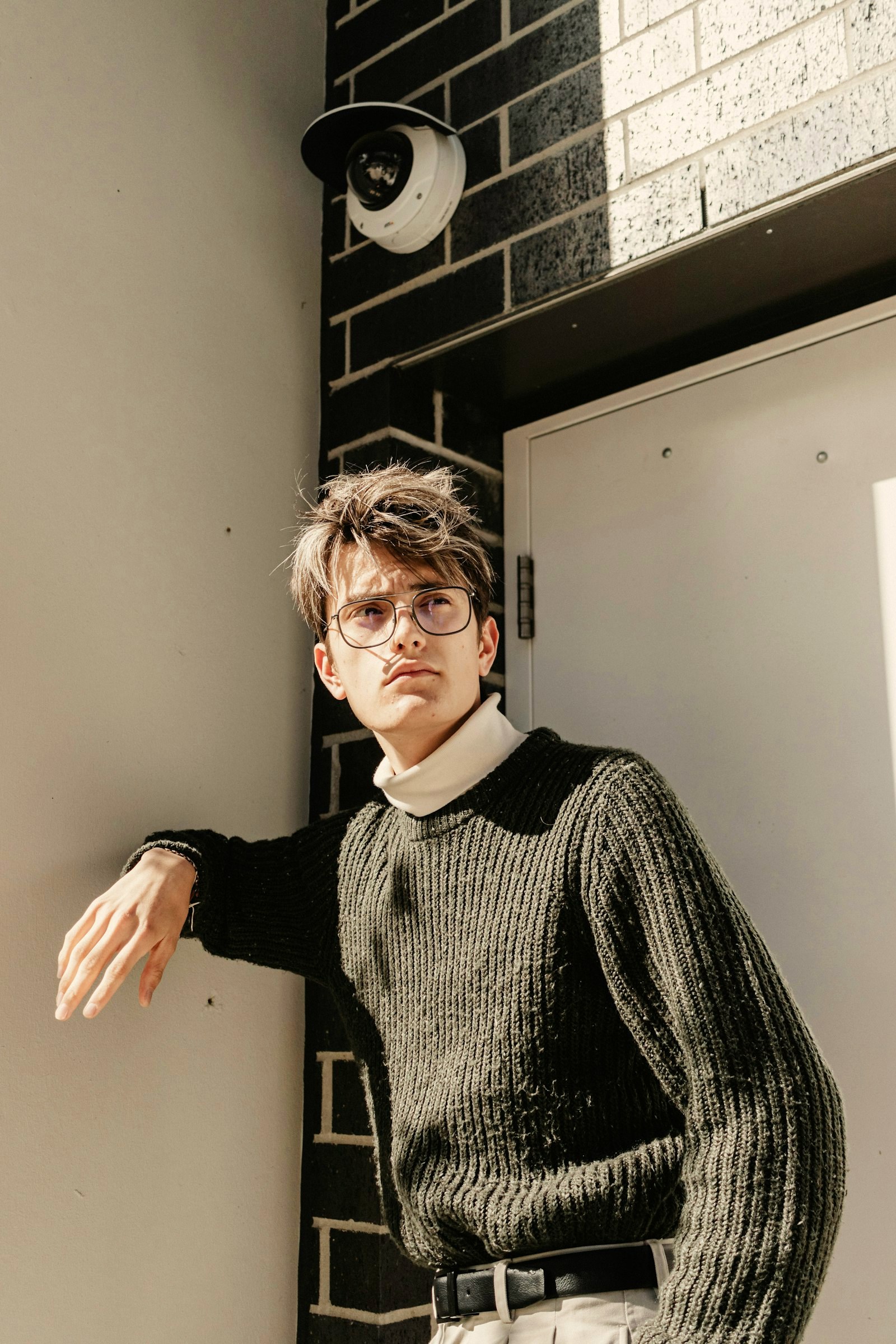
One garment, one gesture: the collar, folded once, sitting flat. Everything else about the turtleneck is choosing the right height and the right room.
Checked and updated October 2026
The ruling, up front: a turtleneck is worn folded once, flat and even, and the collar is the whole outfit's argument, so nothing competes with it: no tie, no jewellery over the knit, no chunky gauge under a slim blazer. Height is chosen by the neck, not by fashion: a long neck takes the full fold, a short neck takes the roll or the mock. Under tailoring it replaces the shirt entirely. Black obeys its own logic and cream carries a known risk, both printed below. Which one to buy is a scored question, answered in Verdict Card No. 05.
This brief: the three collars · the roll's rules · with tailoring · the office ruling · colour · the outfit matrix · the mistakes
First, know which collar you own
The family has three members, and most turtleneck failures are a man wearing one as if it were another. The definitions below are the ones this site's turtleneck Verdict Card published, and they govern this brief.
| Collar | What it is | Character |
|---|---|---|
| Turtleneck | A tall collar that folds down over itself, once | The sharpest and most formal of the three |
| Roll neck | A collar knitted to roll softly rather than fold | Softer, a touch lower, the forgiving middle |
| Mock neck | A collar at half height that never folds | The least formal, and the kindest to a short neck |
All three are mapped against the rest of the knitwear family in the types of sweaters index. The brief that follows uses turtleneck for the family and names the specific collar where the rule differs.
The roll's rules: fold once, and choose the height by neck
Fold it once, and fold it flat. A true turtleneck's collar is knitted tall enough for exactly one fold. The fold is finished when it sits evenly all the way around, the top edge clean, no second roll creeping in at the front. If the collar is fine-gauge, make the fold before you pull the sweater on: dragging a folded collar over your head, day after day, is how collars stretch out of shape, which is also why the Card's care ruling says to fold the collar down before the sweater goes on and to store it folded, never hung by the neck.
A roll neck is not folded, ever. Its collar is knitted shorter and softer precisely so it rolls instead of folding. Wearing it unfolded, standing tall like the collar on a jumper, is the single most common way this garment goes wrong, and it is named in the mistakes below because it converts a deliberate piece into an accident.
Height is a neck decision. A high collar shortens the neck visually and frames the face closely. On a long neck and an oval face, the full folded turtleneck is the best frame in knitwear. On a short neck it crowds, and on a round face it can underline the roundness. The remedies are inside the family: step down to a roll neck, which sits lower and softer, or to a mock neck at half height, or wear any of the three under an open jacket, which breaks the frame the collar draws. Where a collar lands on the body is part of the Body Map's neck and torso layers, and the ruling there matches this one.
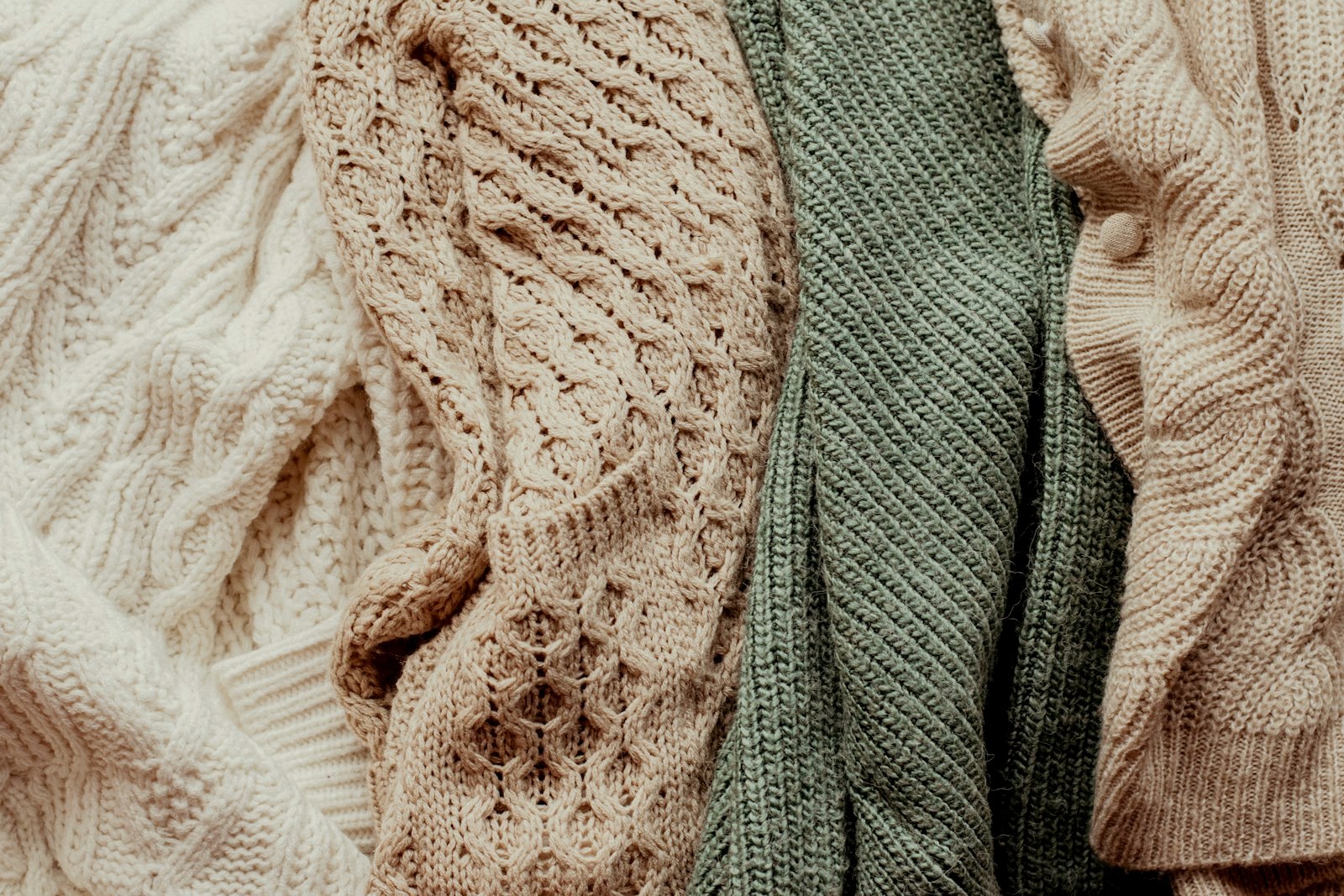
With tailoring: under a blazer, under a suit
Under a blazer, fine gauge only. A fine-gauge turtleneck or roll neck under a blazer is the garment's classic register: the collar stands where a shirt collar and tie would crowd, the line stays clean, and the whole outfit reads considered rather than dressed up. The precedent is set by the Card's winner, John Smedley's Cherwell at 85, a merino turtleneck from the Derbyshire house that has knitted this garment longer than anyone, fine enough to sit under a blazer without a fight. That fineness is the entry requirement. The blazer brief's rules carry the other half of the outfit, in How to Wear No. 03.
Under a suit, it replaces the shirt, completely. This is not a shirt worn differently; it is the shirt removed from the equation. No tie, nothing at the collar, and the suit does the formal work while the knit does the ease. Keep the suit soft-shouldered and the cloth textured, flannel, tweed, a brushed worsted, because a hard glossy suit over a knit reads as two eras arguing. Dark collar colours only: black, charcoal, deep navy. The full tailoring brief is How to Wear No. 04.
The tuck question is already answered. The Card ruled on it and this brief repeats the ruling: wear the body clean, tucked into tailored trousers or falling straight to a clean hem. The fashionable half-tuck reads undecided on a turtleneck, because the silhouette has one statement and it is at the neck.
The office ruling
A turtleneck in the office is a shirt substitute, and it is judged as one. Fine gauge, dark or neutral colour, clean collar, tailored trousers: that combination reads deliberate in any room that allows a shirt without a tie, and in a good number of stricter rooms besides. The failures are specific and avoidable. A chunky roll neck is off-duty cloth in an on-duty setting. A collar that has stretched or gone shiny announces that the garment is past its best. And jewellery worn over the knit, chains on a turtleneck, belongs to a different register entirely and cheapens both in an office. If the office requires a tie, the turtleneck is not the loophole; wear the shirt.
Colour rules: black's separate logic, the cream risk
Black is not a colour choice, it is a stance. The black turtleneck is the family's default and its sharpest form: graphic, evening-leaning, the partner of grey flannel and black tailoring. Its costs are printed in the Card and repeated here because they are real: black shows every fleck of lint and dandruff at conversational distance, and black knitwear fades toward charcoal across a season of washing, so a black turtleneck is quietly a renewable purchase. None of that argues against it. It argues for buying the good one, which is what the Card is for.
Navy is the day instrument. Softer than black, better with brown shoes, denim and daylight, slower to show its age. If the turtleneck's main work is daytime and office, navy and charcoal out-serve black across a season.
Cream is the risk, taken knowingly. A cream or winter-white roll neck against dark tailoring is one of the best looks in this entire brief, and it carries the family's only genuine hazard: the collar sits against skin, sunscreen and collar grime, and every mark shows on cream, with the fold hiding none of it. Buy cream in a washable gauge, keep it as an occasion piece instead of a rotation piece, and let the collar, not the body, set how long you expect it to live.
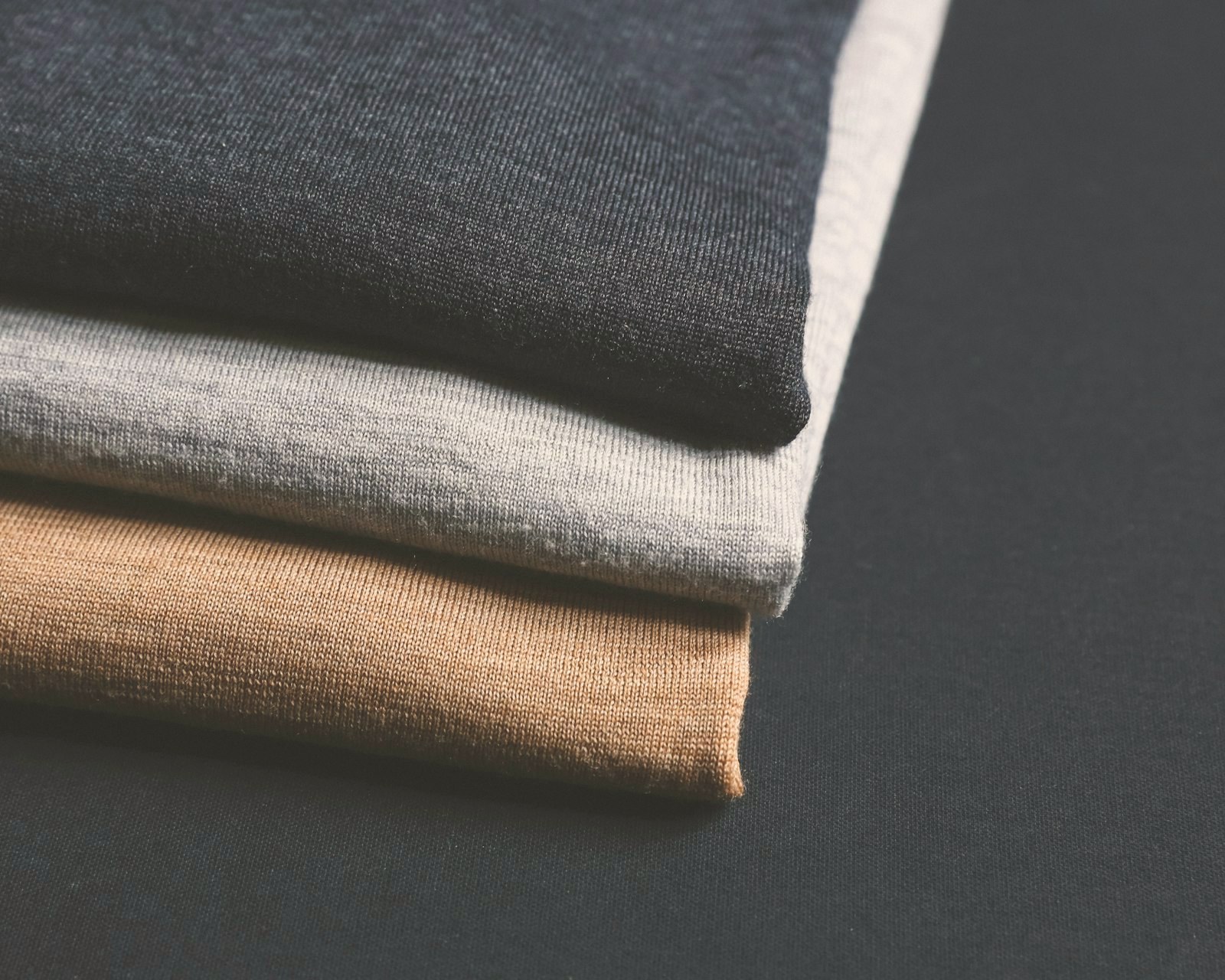
The outfit matrix: five ways, no improvisation needed
| Setting | The knit | With | The judgment |
|---|---|---|---|
| Office tailoring | Fine-gauge turtleneck, charcoal | Navy blazer, grey flannel trousers, loafers | The shirt substitute at full strength |
| Evening | Fine-gauge turtleneck, black | Charcoal suit, black shoes, nothing at the collar | Black's separate logic, used on purpose |
| Smart casual | Roll neck, navy | Dark denim, suede boots, an open overshirt or chore coat | The roll neck's home ground |
| Weekend | Chunky roll neck, cream | Corduroy or wide-leg trousers, boots, an overcoat over all of it | The cream risk, taken knowingly and off duty |
| Travel | Mock neck, black or navy | Tailored jogger or clean trousers, minimal sneakers | Half height, no fold to crush in a cabin |
The ruling
Fold once. Match the height to the neck, the gauge to the room, and the colour to the hour, and then stop adding things: the turtleneck is the rare garment that is finished the moment it is on correctly. Every failure mode of this piece is an addition or a hesitation, an unfolded collar, a chain, a half-tuck, a chunky knit forced into tailoring. The garment's confidence is its plainness. Wear it plain.
The mistakes
The roll unfolded. A roll neck pulled up tall, or a turtleneck worn unfolded, standing around the neck like the collar on a jumper. The garment reads instantly as not knowing how it works. Fold the turtleneck once; let the roll neck roll.
The chunky roll under a slim blazer. Two silhouettes fighting in one outfit: the blazer strains over the knit, the collar erupts out of the lapel line, and both garments lose. Chunky is for open coats and off-duty layers; tailoring takes fine gauge or nothing.
The black roll neck as a costume. All black, head to toe, worn with ceremony, is the one look that tips this garment from sharp into dressing-up-box: the beat poet, the architect, the man performing taste instead of having it. Break the black with grey, denim or texture, and let the turtleneck be a garment again.
The half-tuck. Ruled on in the Card, repeated here: it reads undecided. The silhouette has one statement and it is at the neck.
Jewellery over the knit. A chain on a turtleneck fights the collar for the same real estate and loses the garment its office ruling on the spot. Anything worn at the neck goes under, or goes without.
Questions, answered
How do you fold a turtleneck collar?
Once. A true turtleneck collar is knitted tall enough to fold down over itself a single time, and the fold should sit flat and even all the way around, with no roll at the edge. Fold it before you pull the sweater on if the gauge is fine, so the fold is never stretched over your head. A roll neck is the opposite case: it is knitted shorter to roll softly and is worn as it falls, never unfolded tall and never folded flat.
Can you wear a turtleneck with a suit?
Yes, and it is the garment's best trick. The conditions are gauge and colour: a fine-gauge turtleneck or roll neck, in black, charcoal or deep navy, under a soft-shouldered suit in a cloth with some texture. It replaces the shirt, so everything else gets simpler, no tie, no collar gap, no cuff decisions. A chunky knit under a suit is the mistake version of the same outfit.
Are turtlenecks office appropriate?
In most offices, yes, as a shirt substitute, with conditions. Fine gauge, a dark or neutral colour, worn clean with tailored trousers, reads as deliberate and formal-adjacent. The office failures are a chunky roll neck (off-duty cloth in an on-duty room), a stretched or shiny collar, and any jewellery worn over the knit. If your office requires a tie, the turtleneck is not the loophole.
Black or navy turtleneck, which is better?
They obey different logic. Black is the default and the sharpest: it is a graphic decision, it pairs with grey and black tailoring, and it shows every fleck of lint and fades toward charcoal over a season. Navy is the softer instrument, better with brown shoes, denim and daylight, and it ages more gracefully. Own black first if evenings are the use, navy first if days are.
Who should avoid a full turtleneck?
A short neck is crowded by a tall folded collar, and a round face framed closely can read rounder still. The remedies are built into the family: a roll neck sits lower and softer, and a mock neck stands at half height and never folds. Wearing any of the three under an open jacket also breaks the frame the collar makes around the face.
Is a cream turtleneck a good idea?
It is the highest-risk colour in the family and worth it only knowingly. A cream or white roll neck is beautiful against dark tailoring and denim, and it stains at the collar faster than any other knit you own: sunscreen, collar grime and coffee all show, and the fold hides none of it. Buy cream in a washable gauge, wear it as an occasion piece rather than a rotation piece, and expect the collar to set the garment's lifespan.
Next
The buy itself is scored in Verdict Card No. 05, where the Smedley Cherwell's 85 and the H&M roll neck's 44 were earned on cloth, gauge and wear. The wider knitwear family, including the crew neck this roll sometimes stands in for, is indexed in types of sweaters. The layer it most often works under is ruled in How to Wear No. 03, the blazer, and the neck it frames is drawn in the Body Map. If your knitwear rotation is being rebuilt from the shelf, the same fold-once discipline in a cardigan is How to Wear No. 01.