

The pattern in its founding cloth: a denim trucker worn outdoors. Denim truckers are graded on Verdict Card No. 51; this Card grades the pattern across its other cloths, and our bank holds no suede, corduroy or canvas trucker on a body, a gap this page admits rather than covering with a borrowed shot.
Checked and updated October 2026
The verdict, up front: eight trucker jackets scored out of 100 on the house basis for the garment: cloth and weight honesty 30, hardware and pattern record 20, fit and layering 20, value 15, longevity and service 15. The Taylor Stitch Long Haul Jacket in Rinsed Indigo Waffle wins at 85: an 8.5 ounce organic cotton with its weight printed, antique copper tack buttons named, five pockets and its stitching stated, at $208. The Schott 121 Type 3 follows at 81, the pattern kept entire in naked cowhide, its leather weight and metal shank buttons published, made in the United States at $1,130. The Patagonia Pile-Lined Trucker is third at 80, the field's only published wale count in an organic cotton corduroy at $199. And the jacket sent home, at 34, keeps the silhouette entire and describes its cloth in two words, faux suede, with no composition, no lining and no care published anywhere in its record. The field's own question runs through every card: of eight jackets, two publish a cloth weight, one of two corduroys publishes its wale, five name the metal in their front closure, and one asks the most famous silhouette in workwear to sell a material it never describes.
First, know which species you are in
The trucker is a pattern before it is a cloth, and this ranking prints the boundary before it grades anything, because two neighbouring Cards already own pieces of this rail. The trucker, as this Card prints it: the Type III silhouette, twin chest pockets on a panelled front, a buttoned placket down the front, a waistband closing a cropped body at hip length, cut close enough to work as a layer. The cloth is the variable the pattern is cut in, denim first and, on the modern rail, suede, corduroy, cotton weaves and leather, and this Card grades the pattern across those cloths on one ruler: what the maker publishes about the cloth, the hardware and the pattern itself.
The neighbours, ruled the way this site rules them. Against the denim jacket, ranked in Verdict Card No. 51: the Type III in denim is that Card's founding garment, and its grades stand there, the Iron Heart 21 ounce Type III at 86, the original Levi's Trucker at 66, graded on the record its maker publishes now. A denim trucker is not graded twice; this Card cross-references No. 51 wherever the founding cloth appears and grades the pattern's other cloths. Against the leather jacket, ranked in Verdict Card No. 50: that Card graded the leather family by pattern, moto, racer and flight, and one suede trucker-form garment stands in its field, the Todd Snyder Italian Suede Dylan at 74, graded there as a leather jacket and cross-referenced here on the same rule. The leather truckers below are graded here as truckers, against corduroy and suede, which is the comparison the rail actually offers a buyer. Against the waxed jacket, ranked in Verdict Card No. 74: the Flint and Tinder Flannel-Lined Waxed Trucker stands at 72 there, this pattern in the waxed species, graded once and cross-referenced, the same discipline the field Card applied to a waxed coat standing on its boundary.
The agreement with the index, printed. Our jackets index files the denim trucker inside its work-and-field family, cloth denim at mid to heavy weight, formality 2, warmth 2, spring through autumn, under the family law this Card adopts as its own order of questions: cloth first, hardware second, silhouette third. The index's buying rule for the garment is a styling rule, never the same wash as the jeans, and its three-jacket answer names the trucker as the personality layer of a working wardrobe. Nothing below contradicts the index: the jackets graded here are the formality 2, warmth 2 class it describes, read across the cloths the index's single denim entry stands for, and the one jacket in the field that trades the pattern's buttoned front for a zip is charged for the trade in the open.
How the scores work
Every jacket is scored out of 100 on the same five rows, settled from the jacket Cards' shape: the cloth-first basis of No. 51, adapted here so the second row carries this garment's signature. Cloth and weight honesty (30) reads the cloth record first: the fibre or hide named, its weight or count printed or withheld, its composition in percentages or in adjectives, and its lining published or silent. Hardware and pattern record (20) reads the species' defining facts as published: the buttons, the trucker's signature hardware, their material and construction stated or silent, and the pattern behind them, pockets counted or placed, panels and stitching stated, waist adjusters named or absent from the record. Fit and layering (20) is scored against the species' own terms: the cropped, close cut the pattern promises, the length published or withheld, and the size library behind it. Value (15) is the score divided by the bill. Longevity and service (15) is the life the construction can hold and the candour of the record behind it, repair and resale programmes counted where a maker publishes them. One discipline governs the whole page: scores held elsewhere are evidence about houses, never garment scores here. The Iron Heart Type III stands at 86 on No. 51 and the Levi's Trucker at 66 there; the Todd Snyder suede Dylan stands at 74 on No. 50; the Flint and Tinder waxed trucker stands at 72 on No. 74; Taylor Stitch stands at 85 and Patagonia at 83 in the Brands Like family. Every jacket below is graded on its own published record.
The ranking

Taylor Stitch Long Haul Jacket in Rinsed Indigo Waffle
Price at last check: $208 at the maker's own store.
Buy it on the fullest published record in the field: a weighed organic cotton, named copper hardware, five pockets and its stitching stated, at the field's honest middle price.
The cloth: an 8.5 ounce, 100 percent organic cotton, the weight and the composition both printed on the product page, one of two numbered weights in the field and the only one under $1,000. The weave is named, and the naming carries this card's boundary, printed rather than smoothed over: the Long Haul is the maker's trucker pattern, and this season's cloth is a waffle weave, not a denim twill. Denim belongs to Verdict Card No. 51, and this jacket is graded here, as a cotton trucker, on exactly that footing; the line's waxed canvas reading is archived by the maker and its denim readings are No. 51's species. The cloth row's 25 credits a weight, a percentage and a named weave, and charges the one silence in the record: no lining is stated for this cloth.
The hardware and the pattern: the fullest record in the field, and it is not close. Custom antique copper tack buttons and rivets, the material and the finish both named, the construction the pattern signs with. Zig-zag reinforcement stitching on the under collar and the front placket, stated. Two rounded patch chest pockets, the left with a pen sleeve; front welt hand-warmer pockets; two interior pockets at waist level; adjustable back tabs at the waistband. Five pockets across three zones, a stitch construction, a waist adjustment and a named hardware metal: the hardware row's 19 prices the complete publication and charges nothing but the absence of a published garment length. The house stands at 85 in the Brands Like family on its own audit; this garment earns its 85 here, on this record, and the agreement between the two numbers is a coincidence the desk prints rather than hides.

Schott 121 Type 3 Naked Cowhide Jacket
Price at last check: $1,130 at the maker's own store.
Buy it as the heritage leather reading of the pattern: the hide's weight published, shank buttons front and cuff, the full pocket set, made in the United States.
The cloth: naked cowhide, top grain, full aniline and drum-dyed, with the figure no other hide in the field publishes: a leather weight of 3 to 3.5 ounces, printed on the product page. The raw material is stated as United States domestic, tanned in Mexico, and the lining is stated with it, a poly satin, named rather than dressed up. The cloth row's 26 credits the field's only hide weight and a tannage record in full, and charges the honest remainder: the metal of the hardware is named as a class, and the hide's thickness is carried by the weight figure alone.
The hardware and the pattern: metal shank button front closure and metal shank sleeve cuffs, stated in so many words: the signature hardware of the pattern, with its construction named, on the field's heritage leather entry. Two button upper flap pockets, two lower pockets, adjustable side tabs at the waist, and a 26 inch back length published, one of two numbered lengths in the field. The hardware row's 18 credits the complete pattern kept entire at $1,130 and charges the two withholdings beside it: the shank's alloy is not named, and no panel or stitch construction is stated. The jacket is made in Union, New Jersey, and the house's garment evidence on this site is the Perfecto's 85 on Verdict Card No. 50; this grade rests on this record alone.

Patagonia Pile-Lined Trucker Jacket
Price at last check: $199 at Backcountry, on the record REI Co-op carries below.
Buy it on the field's only wale count and a Fair Trade sewn record: the corduroy graded as a cloth, with its pockets and its metal placket stated.
The cloth: a 14-wale corduroy exterior in 100 percent organically grown cotton, both figures published in the maker's record as its official retailers carry it: the only wale count in the field, on either corduroy, and a full percentage composition beside it. The lining is named, a pile fleece through the collar and body, and its own composition is not published in the record this desk read, which the cloth row's 23 charges alongside the missing cloth weight: the count is printed, the ounces are not. The jacket is Fair Trade Certified sewn, printed in the same record, the field's only sewing certification.
The hardware and the pattern: a metal full-button placket, stated; two chest pockets with flaps and button closures; dual hand-warmer pockets trimmed with twill tape, a construction detail stated in words; adjustable cuffs with snap closures; a regular fit at hip length, longer than the classic crop and stated as such. The hardware row's 17 credits a pocket and closure record stated entire at $199 and charges the pattern's two silences in this record: no waist adjusters are stated, and the button metal is a class, not an alloy. The house stands at 83 in the Brands Like family; the garment's grade here is its own, and on the published record it out-records every suede in the field.
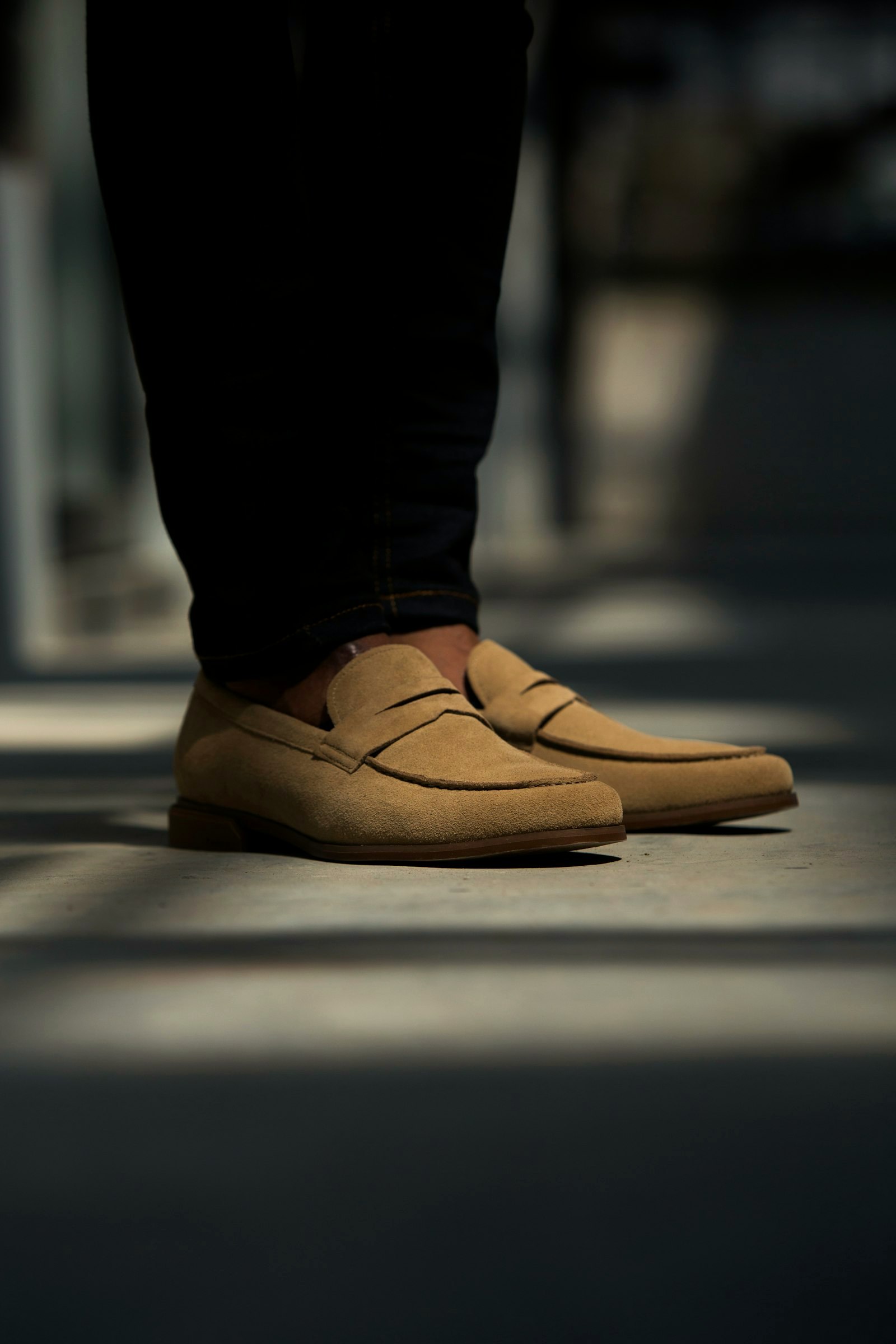
Thursday Suede Trucker Jacket
Price at last check: $360 at the maker's own store.
Buy it as the suede reading with its hardware named: brass snaps with their finish stated, a waxed goat suede, and a maker's no-discount price held all year.
The cloth: a waxed goat suede, the hide and the finish both named in the maker's copy, washed for a lived-in look, over a plush polyester interior with leather trimmings, the pocket linings stated at 100 percent polyester. No weight and no thickness stand anywhere in the record, which the cloth row's 21 charges: the hide is a fact, its substance is an adjective. Against the field's other suedes it is still the fullest suede record under $1,000, and the maker's pricing doctrine is printed with it: no sales, no discounts, the same price all year, which the value row credits at $360.
The hardware and the pattern: durable brass snap buttons with a black matte finish, the material and the finish both stated, the fullest hardware line at this price. The construction is a snap, and the row charges the deviation in the open: the pattern signs with a button, and this jacket's front closes with snaps, as does its premium rival at No. 7. The pocket record is stated and it rearranges the pattern: twin side pockets and hidden internal breast and torso pockets, while the Type III's twin chest pockets do not appear in the record at all. The hardware row's 15 prices a named metal and a stated pocket set against a front closure and a chest line that have both traded the pattern's terms for the silhouette's ease.

Schott 582 Lightweight Unlined Cowhide Trucker Jacket
Price at last check: $1,120 at the maker's own store.
Buy it knowing the trade: a stated lightweight cowhide and named brass hardware, with the pattern's buttoned front exchanged for a zip at near its brother's price.
The cloth: a lightweight cowhide, chrome tanned with an oil finish, the tannage and the finish both stated, and the weight carried by the adjective alone: lightweight is a claim this maker's own brother, at No. 2, replaces with a figure, 3 to 3.5 ounces, and the cloth row's 20 prices the difference between the two records as well as the hides. The construction is stated with it: unlined, with a printed cotton half yoke lining and poly twill sleeve linings, an inside record fuller than several ranked jackets publish.
The hardware and the pattern: here the charge lands, and it is the pattern charge this Card exists to print. The front closes with a zip. The trucker's signature is a buttoned placket, the hardware this Card's second row is named for, and this jacket trades it away while keeping the silhouette, the name and, at $1,120, ten dollars of its brother's price. What the record does state is credited: metal shank closures at the cuffs, antique brass hardware named as branded, three front pockets. The hardware row's 11 prices a named metal and a stated pocket count against a front that has surrendered the garment's defining fact, printed here rather than discovered at the till.

Levi's Relaxed Corduroy Sherpa Trucker Jacket
Price at last check: $130 at the maker's own store.
Buy it as the pattern owner's own corduroy: a percentage split printed and branded metal buttons, with the wale count its species signs with withheld.
The cloth: a corduroy at 58 percent cotton and 42 percent polyester, the split printed entire on the maker's page, and then the withholding this Card's corduroy finding turns on: no wale count, on the cloth whose count is its specification, where the Patagonia at No. 3 prints 14. No weight stands either, and the sherpa lining is named without its composition in the record this desk read. The cloth row's 17 credits an honest percentage and charges the two absences, and one more fault is printed because the desk grades records: the maker's own copy for this corduroy jacket describes it as constructed with durable denim, a sentence belonging to another garment, left standing on this one's page.
The hardware and the pattern: Levi's branded metal buttons, stated, the metal a class and the branding the fact; tapered V stitches down the front, the Type III's panel construction named in the maker's own words; a point collar and a relaxed fit. The hardware row's 13 credits a stated stitch line and a stated button at $130, the cheapest ranked ticket in the field, and charges what the record omits around them: no pocket construction beyond the pattern's presumption and no waist record. The house's founding garment stands at 66 on Verdict Card No. 51 in denim; its corduroy reading here scores a point under it, on a record that publishes its blend and withholds its count.

FRAME Suede Trucker Jacket
Price at last check: $1,698 at the maker's own store.
Buy it as the designer reading of the pattern, on the thinnest record in the ranked field, at the field's dearest price.
The cloth: this is the premium test the Card set the field, and the record does not carry it. The materials line reads 100 percent lamb leather, a fact entire, and it is nearly the whole cloth record: no weight, no thickness, no tannage, no lining published on the maker's page, for a suede at $1,698. The cloth row's 14 sets the two facts side by side the way this Card always does: the fibre is stated, and everything a buyer would grade a hide by is absent at the highest price in the field, on a pattern whose $208 winner publishes its weight, its percentage and its hardware on one page.
The hardware and the pattern: what the maker's pages do state is credited: a snap front and front patch pockets, a point collar, a clean structured shape. The snaps' material is not stated, no waistband or adjuster record stands, and the pattern is carried by the silhouette and three phrases. The hardware row's 10 is the ratio of that record to the field's fullest, the copper tacks and five pockets at No. 1. The fit row's 13 credits the field's other numbered length, 25.5 inches from the shoulder, with fits true to size and the model's height printed. The value row's 4 is not a punishment for luxury; it is the ratio of the dearest ticket on the page to the least a maker can publish and still call it a record.

Apt. 9 Faux Suede Trucker Jacket
Price at last check: $69.99 regular at Kohl's, standing at $34.99 on sale at this check. It ships without a buy link, the way this desk sends home the garments it convicts.
Leave it. The silhouette entire over a cloth described in two words, with no composition, no lining and no care published anywhere in its record.
The cloth: the whole cloth record is the product's name: faux suede. Read the retailer's page entire and the material is never described again: no composition, no percentage, no weight, no lining, no care line, nothing a buyer could grade, compare or even wash by. Every other jacket on this page publishes at least a fibre; the ranked Levi's, at twice the regular price, prints its blend to the percentage. The cloth row's 5 prices a record that is complete about sizing charts and silent about the garment, and the silence is the product: the word suede is doing the selling, over a material the seller declines to name.
The hardware, and the conviction: one sentence of pattern record exists, chest pockets featuring snap closures, and it is credited: the pockets are the pattern's, and the closures are stated. The snaps' material is not, no waistband or panel record stands anywhere, and the page's remaining thousands of words are the retailer's generic size tables. The fit row's 11 credits the one thing the record does publish, a size library, while noting it is the house chart for every top the retailer sells, not a measurement of this jacket. The cost-per-wear table below convicts it a second way: costed on its regular price across a generous two years it wears at about $1.17, dearer per wear than the $208 winner, the $199 corduroy, the $130 Levi's and the $360 suede it hangs beside. Cheap is not the charge. The charge is a famous silhouette asked to sell an undisclosed cloth.
The cloth, hardware and pattern table
Every entry below is the maker's own published record for the garment, checked against the maker's pages or their published listings in October 2026. Where the record is silent, the table prints the silence: on a trucker, the missing entries are the cloth's weight, the corduroy's count and the button's metal, and those are the garment.
| Jacket | Cloth, as published | Weight & composition, as published | Hardware & pattern, as published |
|---|---|---|---|
| Taylor Stitch Long Haul Waffle | Organic cotton waffle weave, named | 8.5 oz; 100% organic cotton; no lining stated | Custom antique copper tack buttons and rivets; zig-zag reinforcement stitching; two patch chest pockets with pen sleeve, welt hand-warmers, two interior pockets; adjustable back tabs |
| Schott 121 Type 3 | Naked cowhide, top grain, full aniline, drum-dyed; poly satin lining | Leather weight 3 to 3.5 oz; raw material US domestic, tanned in Mexico | Metal shank button front and cuffs; two button flap pockets, two lower pockets; adjustable side tabs; 26 inch back length |
| Patagonia Pile-Lined Trucker | Corduroy with pile fleece lining; Fair Trade Certified sewn | 14-wale; 100% organically grown cotton; no cloth weight; lining composition not published | Metal full-button placket; chest flap pockets with button closures; hand-warmers with twill tape trim; snap cuffs; hip length |
| Thursday Suede Trucker | Waxed goat suede; plush polyester interior, leather trimmings | No weight or thickness; pocket linings 100% polyester | Brass snap buttons, black matte finish; twin side pockets; hidden internal breast and torso pockets; chest flap pockets not in the record |
| Schott 582 Lightweight Trucker | Lightweight cowhide, chrome tanned, oil finish; unlined, printed cotton half yoke, poly twill sleeve linings | Lightweight, unnumbered; no composition percentage | Zip front; metal shank cuff closures; antique brass hardware; three front pockets |
| Levi's Corduroy Sherpa Trucker | Corduroy, sherpa lined | 58% cotton, 42% polyester; no wale count; no weight | Branded metal buttons; tapered V stitches; point collar; relaxed fit |
| FRAME Suede Trucker | Lamb suede | 100% lamb leather; no weight, lining or tannage published | Snap front, material unstated; front patch pockets; point collar; 25.5 inch length |
| Apt. 9 Faux Suede Trucker | Faux suede, in the product name only | No composition, weight, lining or care published | Chest pockets with snap closures, material unstated; no waistband or panel record |
Read the table as the ranking does. The cloth column, this Card's first finding: a weight in numbers is published by two of the eight, an 8.5 ounce cotton and a 3 to 3.5 ounce hide, and a composition in percentages stands on four; a lining or its absence is stated by five. The corduroy test splits the field's two corduroys cleanly: Patagonia publishes its wale count, 14, beside a full organic composition, while Levi's publishes its blend and withholds the count, so the mass maker's corduroy is a percentage without a specification and the outdoor house's is a specification without a weight. The hardware column: a metal is named for the front closure on five of the eight, copper, brass or metal with its construction stated, and the construction itself, shank, tack, snap or button, is named on all eight, which is what makes the field's one zip front a stated deviation rather than a discovered one: the Schott 582 names its brass and its shank cuffs and still trades the placket away. The pattern column: a pocket record beyond the chest pair is stated by five of the eight; a panel or stitch construction is stated in words by three, a zig-zag reinforcement, a tapered V and a twill tape trim; waist adjusters are stated by two; and a garment length is published in numbers by two, the heritage leather and the dearest suede, at opposite ends of everything else in the table.
Cost per wear, printed in the open
The assumption, printed before the numbers: a trucker in rotation is worn about 30 times a year, the shoulder-season layer the jackets index files it as, spring through autumn. The life column is the service life our longevity row scores for, counted in years on the construction and service record published. One jacket stands on sale at its door at this check; the table costs every jacket on its regular price, the price its record asks in season, and the sale is printed on the card.
| Jacket | Price | Scored life | Cost per wear |
|---|---|---|---|
| Taylor Stitch Long Haul Waffle | $208 | 12 years | $0.58 |
| Patagonia Pile-Lined Trucker | $199 | 10 years | $0.66 |
| Levi's Corduroy Sherpa Trucker | $130 | 6 years | $0.72 |
| Thursday Suede Trucker | $360 | 12 years | $1.00 |
| Apt. 9 Faux Suede Trucker | $69.99 regular | 2 years, generous | $1.17 |
| Schott 121 Type 3 | $1,130 | 20 years | $1.88 |
| Schott 582 Lightweight Trucker | $1,120 | 18 years | $2.07 |
| FRAME Suede Trucker | $1,698 | 15 years | $3.77 |
The table's shape is the field in miniature. The cheapest wears in the field belong to the fullest records: the weighed cotton at 58 cents and the counted corduroy at 66, which is what a published cloth buys a buyer, a denominator that can be believed. The skip wears dearer than both, and dearer than the $130 Levi's and the $360 suede, despite the lowest regular ticket among the field's cloth-named jackets, because an undisclosed cloth earns an undisclosed life. The dearest wear is the designer suede at $3.77, and the heritage leather, across the twenty years its construction underwrites, wears at $1.88, about half the FRAME's figure for a record several times as deep.
Which trucker to buy
If you buy one: the Taylor Stitch Long Haul in Rinsed Indigo Waffle, the fullest record in the field at $208. If you buy the heritage leather: the Schott 121, the pattern kept entire with its hide weight printed. If you buy corduroy: the Patagonia Pile-Lined, the counted wale and the Fair Trade sewing; the Levi's is the budget reading of the same cloth, bought knowing its count is withheld. If you buy suede: the Thursday, the named brass and the honest price, over the FRAME's fibre-and-nothing record at nearly five times the money. The neighbouring species are ranked in Verdict Card No. 51, No. 50 and No. 74, and the cloth classes are mapped in the jackets index.
Questions, answered
What are the best trucker jackets for men?
The Taylor Stitch Long Haul Jacket in Rinsed Indigo Waffle, scored 85 out of 100: an 8.5 ounce organic cotton with its weight and composition printed, antique copper tack buttons and rivets named, five pockets and its reinforcement stitching stated, at $208. The Schott 121 Type 3 follows at 81, the pattern kept entire in naked cowhide with its leather weight and metal shank buttons published, at $1,130. The Patagonia Pile-Lined Trucker is third at 80, the field's only published wale count, 14, in an organic cotton corduroy at $199. The jacket sent home, at 34, is a trucker silhouette over a cloth its seller never describes beyond two words.
What counts as a trucker jacket?
A pattern before it is a cloth: the Type III silhouette, twin chest pockets on a panelled front, a buttoned placket, a waistband at a cropped, hip length body, cut close enough to layer. The pattern was born in denim and this site's denim Card, Verdict Card No. 51, grades it in that cloth. This Card grades the same pattern in the cloths the rail cuts it in now: suede, corduroy, cotton weaves and leather. A jacket that keeps the silhouette and trades away the pattern's working parts, its buttoned front or its chest pockets, is graded on the trade here, and a jacket in the trucker's shape over an undisclosed cloth is graded on the silence.
Trucker jacket, denim jacket or leather jacket: what is the difference?
The denim jacket and the trucker are the same pattern read two ways: Verdict Card No. 51 ranks the pattern in its founding cloth, denim, where the Iron Heart Type III stands at 86 and the original Levi's Trucker at 66, and this Card cross-references those grades rather than repeating them. The leather jacket of Verdict Card No. 50 is a family of other patterns, the moto, the racer, the flight jacket, and one suede trucker-form garment stands there at 74, graded as a leather jacket. This Card's ground is the pattern itself across its cloths, so a leather trucker is graded here as a trucker, on its cloth record, its hardware record and its pattern record, beside the corduroy and suede readings of the same silhouette.
Who publishes the cloth weight, the wale and the button metal?
Of the eight jackets graded here, a cloth weight in numbers is published by two: the Taylor Stitch cotton at 8.5 ounces and the Schott 121's cowhide at 3 to 3.5 ounces. A composition in percentages stands on four of the eight. The field holds two corduroys and the wale count is published by one of them, Patagonia's 14-wale, while Levi's prints a percentage split for its corduroy and withholds the count. A metal is named for the front closure on five of the eight, copper, brass, or metal with its construction, shank, tack or snap, and the closure construction itself is named on all eight, which makes the one jacket that closes its trucker front with a zip a stated deviation rather than a hidden one.
Does the cloth change the jacket?
The pattern holds and the wearing changes. The jackets index scores the trucker formality 2 and warmth 2, a spring through autumn layer, and the cloth moves a jacket inside that band rather than out of it: denim is the hard-wearing original, graded on Verdict Card No. 51; corduroy adds a pile surface and, lined, the field's warmest readings here; suede is the dressier surface and the most fragile, a specialist-clean cloth whose makers say so; leather is the heaviest and longest-lived reading, priced like it. What the cloth never changes is the desk's question, which is whether the maker publishes the cloth, its weight and its hardware, or asks the silhouette to sell an undisclosed material.
How much should a good trucker jacket cost?
The ranked field runs from $130, the Levi's corduroy, to $1,698 for the FRAME suede, with the fullest record in the field standing at $208, the Taylor Stitch Long Haul. Cost per wear rearranges the ends: at thirty wears a year the Taylor Stitch wears at about 58 cents across twelve years and the Patagonia corduroy at about 66 cents across ten, while the FRAME wears at about $3.77 across fifteen on the thinnest premium record in the field, and the jacket sent home, costed on its $69.99 regular price across a generous two years, wears at about $1.17, dearer per wear than four of the ranked jackets it undercuts at the till.
How this ranking stays honest
Rests, boundaries and door notes, printed. Reigning Champ's Piston Trucker Jacket was rested: its 14-wale corduroy record and its $225 price stand in current retail coverage, but the maker's own product page could not be captured to this desk's standard in this pass, and the desk grades makers' records or rests the garment; it is first on the November capture list, beside the Patagonia's own page, whose record here is carried by its official retailers. Nudie Jeans' Robby suede jacket and Valstar's suede trucker were rested on the same rule: their published records in this desk's file are dated, and no current record with a price could be pinned in this pass. Rogue Territory's Supply Jacket is this pattern in the waxed species and belongs to No. 74's ground; its denim readings belong to No. 51. Taylor Stitch's waxed Long Haul is archived by its maker, no longer available for purchase, and the line's current cloth is the one graded at No. 1. Belstaff's Piston Trucker is a washed denim, No. 51's species. Carhartt WIP offered no current trucker product record this desk could pin. H&M was rested deliberately, and no H&M garment is engaged or scored on this page. On doors: seven cards carry a buy link. Six link the makers' own product pages; the Patagonia links REI Co-op, the official retailer whose listing carries the graded record, with its Backcountry price printed on the card. The skip ships without a link, as convicted garments do. On photography: this page uses street and rail studies from the magazine's own bank, no product photography, and the bank holds no suede, corduroy or canvas trucker on a body, a gap this page repeats rather than covering with a mislabelled picture; the harvest list names what is missing, in order: a suede trucker worn on a body, a corduroy trucker in daylight, a shank button in close-up. Prices and records were checked against the makers' own listings in October 2026; where a figure rests on a retail listing or a dated record, the card or this section says so, and the next data pass owes the Reigning Champ a maker's-page capture, the Patagonia its maker's own page, and the Thursday its black colourway's price in the maker's own metadata. The full method is written out on the methodology page.