
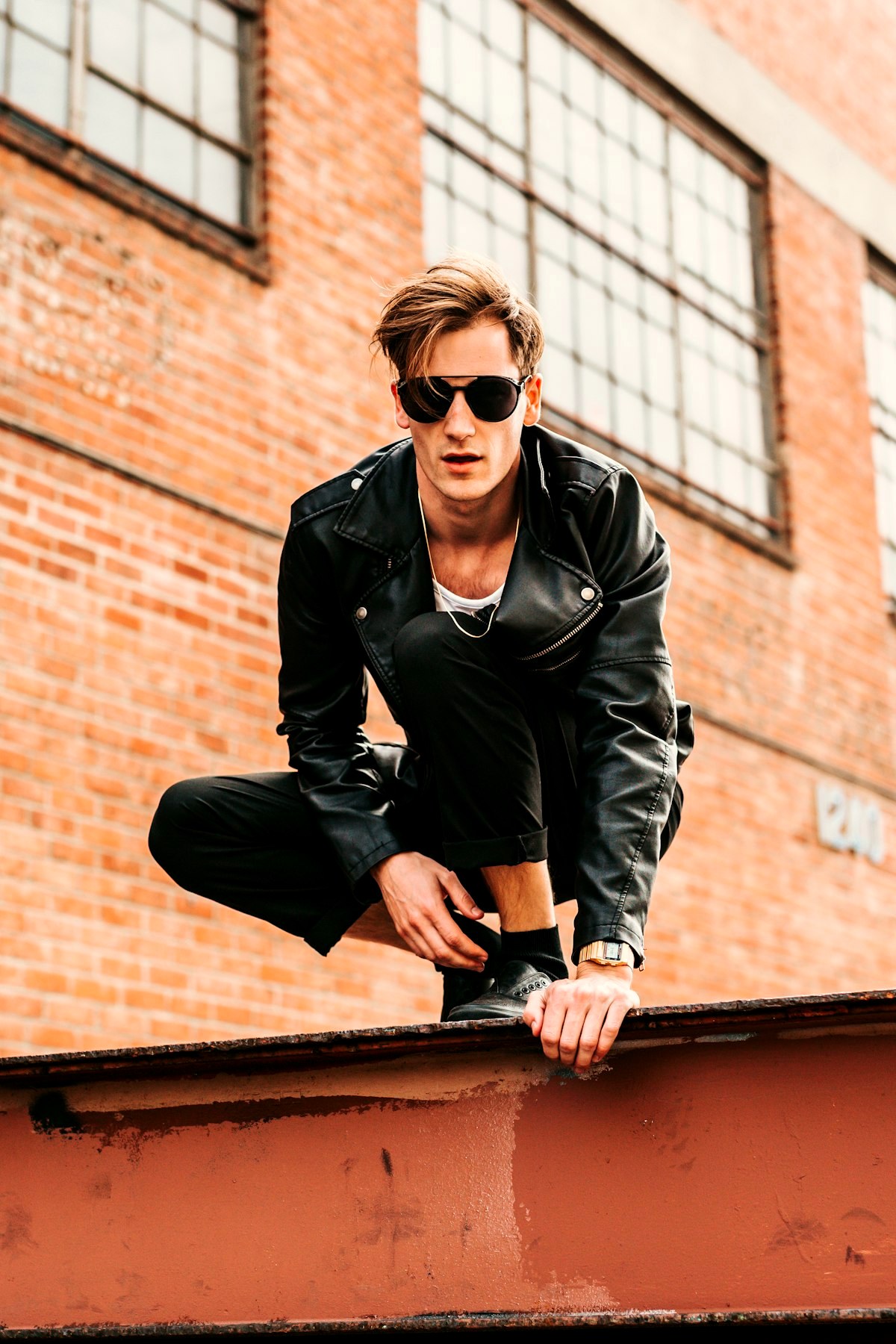
The double rider register: a black Perfecto-style jacket on a body at street level. It is the bank's one true leather-jacket frame, not any ranked jacket; the harvest list in the honesty section below names what is still missing rather than let a stranger's jacket stand in for a ranked one.
Checked and updated October 2026
The verdict, up front: seven leather jackets scored out of 100 on hide 30, construction 20, fit 20, value 15, longevity 15, plus the bomber sent home. The Taylor Stitch Moto Jacket wins at 88, the fullest published record in the field: 3.5 ounce full-grain steerhide, chrome-tanned, handmade by Golden Bear in San Francisco, a named YKK zip, at $1,248. The Schott Perfecto 618 is second at 85, top-grain printed in the maker's own words at $1,020. The Belstaff Brooklands is third at 76, a hand-waxed belted motorcycle jacket at £1,225. And the jacket sent home, at 30, is Danier's CAYSON bomber, whose maker's entire material record reads 100% Genuine Leather. The count underneath the ranking is the story: four makers in eight print a hide grade at all, two publish a hide weight, and one names its zip.
The finding: one word, twenty prices, and the label rarely says which
"Leather jacket" names a material family, not a material. At one end of the family stands a full-grain steerhide, the hide's whole surface kept, tanned, weighed and warranted, sewn into a jacket meant to be worn for twenty years. At the other end stands the bottom layer of a split hide, corrected and coated to imitate a grain it never had, sold under the two most reassuring words in the trade: genuine leather. The price spread between those two jackets runs past twenty to one, and the label on each says almost the same thing. Our jackets index files leather at formality 3 and warmth 3, styles a closed set (cafe racer, double rider, flight jacket), and prints its rule whole: one hide, one style, bought once and worn for a decade, a rule about materials rather than fashion. This page grades the materials, and it grades them the only way a buyer can before the box arrives: on what the maker publishes. The grade as printed, the species as printed, the tannage and the weight where printed, the lining, the hardware named or anonymous, and the price verified live. The count from the eight jackets below is the finding. Four makers print a grade word that names a layer of the hide: full-grain once, top-grain twice, and split once, printed by Todd Snyder in its suede's composition line with a candour the smooth-leather field should copy. One maker prints the word genuine as the whole record, and genuine is itself a grade name, the bottom rung of the ladder, worn here as a compliment by a house that sells nothing but leather. Three makers print no grade at all: two name a species and stop, and one, at a $598 list price, prints neither species nor grade, just the words 100% leather. Two makers in eight publish a hide weight. Three publish anything checkable about tanning. One names its zip maker. The leather jacket is the wardrobe's longest purchase, and its paperwork is the thinnest in the closet. This page grades the paperwork, and the hide grades follow it.
The field below was built across the classic species rather than inside one: two cafe racers, two double riders and the fashion rider that imitates them, a belted motorcycle jacket, a suede trucker, an attainable moto, and a bomber as the skip. The species are printed on every card, because a ranking of seven double riders would grade one silhouette's paperwork seven times and call it a category. The desk's other leather record, the leather belts Card, runs on the same law: the grade is the words the maker prints, and the words are checkable or they are decoration.
How the scores work
Every jacket is scored out of 100 on the same five rows. Hide (30) reads the published record first: a printed grade scores, and the grade's own rank scores with it, full-grain above top-grain, top-grain above the corrected and split material that may legally wear the word genuine. A printed species scores again, a published weight a third time, and a named tannery, a tanning country or a certification such as the Leather Working Group's a fourth, because each is a claim a buyer can check. Silence is charged at each step, and it is charged hardest where the price is highest. Construction (20) is the build as published: lining materials printed or anonymous, hardware named or described by its shine, armour, reinforcement and making place where the maker files them. Fit (20) is the species' own law applied: a rider cut to move, a trucker at the hip, length and size range published or not, and the maker's own fit words read as evidence rather than as praise. Value (15) divides the price by the published record and by the years the longevity row scores, printed in the cost table below; a struck-through reference price is theatre and is scored as such, never as a saving. Longevity (15) is the ownership audit: how the hide ages, whether its finish can be renewed, whether the house will still exist, and still sell the model, when the jacket needs a zip. Row scores add to the total, on every card. Garment scores are evidence about garments. Where a house holds a brand score elsewhere on this site, the brand number is printed on the card and kept separate, in both directions.
The ranking
Taylor Stitch The Moto Jacket
Cafe Racer · The Winner
US price at last check: $1,248 in the maker's own Moto Collection data (the exact garment page resisted capture at this check; the collection door is printed below and flagged in the honesty section).
Buy it as the reference leather jacket of this field: the only maker here that publishes the grade, the weight, the tannage, the maker and the zip, all five, on one garment.
The hide: 3.5 ounce full-grain steerhide, printed with its tannage, chrome-tanned and drum-dyed. Read that line against the rest of this page, because no other jacket in the field files all three facts, the grade, the weight and the process, and most file none. Full-grain is the top of the ladder this page grades on: the hide's whole grain surface kept, which is why the jacket will polish where it rubs instead of peeling where it flexes. The hide row takes 28 of 30, docked for the two facts still missing even here, a named tannery and a published lining weight; the desk does not print perfection, it prints the fullest record it has ever graded in this category, and this is it.
The build and the fit: handmade in San Francisco by Golden Bear, a maker named on the record, in the cafe racer's true form: a band collar, a clean front, none of the double rider's theatre. The main zip is a YKK two-way in antique brass, the only named zip in the field of eight, and the lining is published like a specification because it is one: diamond-quilt insulation with 3M Thinsulate, flannel-lined pockets, a cotton and polyester body lining and acetate in the sleeves. Construction 18. Fit 17 on the published architecture, a racer cut drawn to move over layers, charged for a garment length the record does not print. Value 11 carries the page's one price argument in the open: launch-era coverage priced this jacket at $875, hands-on reviews in 2023 at $1,075, and the maker's own current collection data prices it at $1,248. The desk scores the maker's current figure and prints the drift rather than smoothing it; even at $1,248, on a twenty-year life, the jacket costs about $62 a year, less per year than the skip at the bottom of this page. Longevity 14 is the steerhide's record plus a house that repairs what it sells. Taylor Stitch the brand stands at 85 elsewhere on this site, scored on its whole range. This 88 is the jacket's own, earned on a record fuller than its house's average, and the two numbers are kept separate on purpose.
Schott Perfecto 618 Steerhide Motorcycle Jacket
Double Rider · The Benchmark
US price at last check: $1,020 at Schott NYC (sizes above the core run $1,125 to $1,225).
Buy it as the heritage answer with its paperwork in order: the grade printed by the maker itself, the weight published, the origin filed, at the field's second-fullest record.
The hide: steerhide, and the grade is printed in the maker's own words, which this page quotes because they do the grading: the leather is, in Schott's words, a robust finished top grain cowhide. Not full-grain, and the maker says so itself, at $1,020, which is worth more to a buyer than a vaguer house's silence at twice the price. The weight is published at 3 to 3.5 ounces, the origin line is published whole, US domestic raw material, tanned in Mexico, chrome-tanned, drum-dyed and hand cut, and the hide row takes 27: the fullest heritage record in the field, docked for the grade word itself and for a tannery named by country rather than by house.
The build and the fit: the double rider in its original American form, asymmetric zip, belted waist, coin pocket, made in the USA in sizes 32 to 54, the widest published range in the field. The hardware is described as nickel-plated brass, the metal named and the zip's maker not, which is the record's one true silence and is charged inside construction 18 rather than forgiven: Schott names the metal, Taylor Stitch names the zip, and the difference is three points of hide and build between them. The lining is published at 5.5 ounce nylon and polyester quilt, insulated, a working lining for a working jacket. Fit 16 on the published 25 inch length and the size run, on a cut the maker itself warns is stiff until the steerhide breaks in, which is the honest sentence every heavy-hide jacket owes its buyer. Value 10 at $1,020, about $51 a year across twenty years, and longevity 14 on a pattern the house has sold, repaired and resold for generations. This is the benchmark the fashion riders below are imitating, and its paperwork is better than theirs.
Belstaff Brooklands Motorcycle Jacket
Belted Motorcycle Jacket · The Process Record
UK list price at last check: £1,225 at Belstaff (about $1,640 at £1 = $1.34).
Buy it for the process: a belted motorcycle jacket whose maker publishes an 18-hour hand-waxing where the rest of the luxury field publishes an adjective.
The hide: 100 percent cow leather, printed, and then the process, printed in more detail than any luxury house on this page manages: an 18-hour hand-waxing, the wax worked into the hide by hand until the surface carries its own weather finish. What is not published is the grade, the thickness and the tannery, and the hide row lands at 23 on the strength of the process record against those three silences. The wax matters beyond the shine: a waxed hide is a renewable surface, the same ownership logic this site grades on the waxed jackets record, where a finish that can be renewed outlives a coating that can only peel.
The build and the fit: a belted motorcycle jacket in the British line, D3O armour at shoulder and elbow, quilted reinforcement over both, corduroy facings at neck and cuff where the jacket touches skin, and a checked woven cotton lining. Construction 17 scores the armour and the facings as the working parts they are, docked for hardware described by finish rather than by maker. Fit 14 on the belted architecture, adjustable at the waist by design, with no garment measurements in the captured record. Value 9 is the luxury end read plainly: £1,225, about $109 a year across fifteen years, buys a process and a pattern, not the field's fullest file, and the card says so. Longevity 13 credits the renewable wax and a house that has sold this pattern for decades. Belstaff the brand stands at 70 on the waxed record; this 76 is the Brooklands' own garment score, and neither number was derived from the other.
Todd Snyder Italian Suede Dylan Jacket
Suede Trucker · The Honest Split
US price at last check: $998 at Todd Snyder.
Buy it as the suede answer and the disclosure standard: the only maker in the field that prints the word split in its own composition line, and names its tannery in the same breath.
The hide: Italian calf suede, and here is the sentence this whole ranking exists to reward, printed on the maker's own product page in the composition line: 100% Calf Split Suede. Suede is cut from the hide's flesh side, and most garment suede comes from the split layer; nearly every maker in the trade lets the word suede float above that fact, and this one prints the fact. The tannery is named with it, Pellemoda of Tuscany, forty years of leather garment making under one roof on the maker's published account. The hide row scores the record, not the layer's rank on the ladder: 22, the highest disclosure mark in the field after the two steerhides, charged because a split is a split and no thickness is published, credited because the maker is the one who said so.
The build and the fit: the Dylan is the house's trucker, a vintage trucker body remade in the suede, slim, hitting at the hip, with logo shank buttons, chest pockets, side-entry hand pockets, button cuffs and adjustable waist tabs, fully lined in a cotton body and viscose sleeves, all of it published. Construction 15. Fit 16 on the printed fit notes and a colour range the house keeps wide, the suede trucker being the one species on this page that dresses up as readily as it dresses down. The maker prints its own warning on the page, that the suede may crock and transfer colour in the first wears, and the longevity row, 11, prices that honesty in rather than discovering it later: suede is the shortest-lived hide on this page and the card scores it as one, about $100 a year across ten years. Value 10 at $998. Todd Snyder the brand stands at 79 on its family page; this 74 is the jacket's own, and the gap between them is the suede's nature, not the house's paperwork, which is the best in the field at this price.
Quince 100% Leather Cafe Racer Jacket
Cafe Racer · The Honest Floor
US price at last check: $250 at Quince's US store (the garment record was read on the maker's own product page; the door below is the maker's US jackets department, flagged in the honesty section).
Buy it as the floor of the honest market: a printed top-grain grade and a certified tannery standard at $250, the cheapest jacket here whose paperwork survives reading.
The hide: top-grain sheep leather, printed, with the tanning published as Leather Working Group certified practice. The maker even prints its definition of the grade, top-grain as strong, smooth and buffed to remove imperfections, which is the honest version of the process and the reason this card credits the house: a maker that defines its grade is a maker that expects to be checked. The hide row takes 20, docked for what the record withholds, a thickness, a named tannery, and for sheep itself, the softest and least armoured of the commercial hides, a comfort choice printed nowhere as one. It is still a grade, printed, at $250, which is more paperwork than the $598 jacket at No. 7 files.
The build and the fit: a sixties cafe racer updated, stand collar with a snap tab, gusseted zip vents, metal grommet details, and hardware described by its finish rather than its maker, which is where the attainable record thins and construction lands at 12. Fit 14 on the published cut and the house's size guidance. Value takes the field's maximum, 15, and earns the explanation: the price is $250, about $31 a year across eight years, and the struck-through $650 traditional-retail figure the house prints beside it is theatre, scored as theatre, the same reference-price habit this desk charged on the Quince record before. The value row scores the $250 and the printed grade under it, not the story beside it. Longevity 9 prices the sheep hide and the anonymous hardware honestly. Quince the brand stands at 59, derived in the open from its whole range; this 70 is the jacket's own, and a single honest garment outscoring its house is a pattern this desk prints whenever the record does it.
AllSaints Milo Asymmetric Zip Leather Biker Jacket
Double Rider · The Fashion Rider
Canadian list price at last check: CA$749 at AllSaints (about $547 at CA$1 = $0.73), chained inside the house's own sale to CA$501 and then CA$400.80 on the same product page; the door is the maker's Canadian store, flagged below.
Buy it with both eyes open: a well-cut fashion rider in named lamb, whose list price is an opening bid and whose record stops at the species.
The hide: butter-soft lamb leather, printed, and that is the whole record: no grade, no weight, no tannery, no tannage. Lamb is the fashion rider's honest material, soft, light and short-lived next to steerhide, and the hide row, 17, credits the named species and charges the three silences in proportion to the list price they sit under. The jacket's defence is that it never pretended to be the Schott: it is the double rider as a silhouette, cut slim for the street rather than the road, and graded as one.
The build and the fit: asymmetric zip front, silver metal hardware described by its colour, a slim fit the maker publishes with a leather size guide behind it. Construction 13, fit 15, the fashion cut being the garment's genuine skill. The value row, 10, is where the house's own habit is charged, the lesson this site learned on the Rag & Bone page where AllSaints was first scored: the list price is an opening bid. This jacket's own product page chains CA$749 to CA$501 to CA$400.80 without leaving the page, so the desk scores the list, prints the chain, and lets the reader decide which number is the price. At the chained figure the jacket is a fair buy; at the list it is a tax on not scrolling. Longevity 10 on the lamb and the fashion pattern's churn. AllSaints the brand stands at 66, scored on its whole range; this garment scores 65, one point below its own house, a coincidence of arithmetic that the card prints rather than tidies, because the two numbers measure different things and neither was taken from the other.
Michael Kors Leather Moto Jacket
Moto Jacket · Two Words of Record
US list price at last check: $598 at the maker's outlet store, chained to $299 on the same page.
Buy it only at the chained price and only with the record understood: a genuinely leather jacket whose maker publishes two words about the leather.
The hide: the entire material record, quoted entire, is 100% leather. No species, no grade, no tannery, no weight, no tannage, at a $598 list price that sits within sight of the Schott's paperwork-rich $1,020. The hide row takes 9, the lowest mark a ranked jacket receives on this page, and the number is the record's fault rather than the jacket's: the leather is real, the architecture around it is published, four zip pockets, snap lapels, a relaxed moto cut, and a buyer who handles the garment may well find it decent. A ranking graded on the published record cannot pay for quality the maker declines to publish, and a maker that will not name the species of a $598 leather jacket is telling the buyer exactly how the jacket was specified: by price point.
The build and the fit: construction 11 on the published architecture and a lining printed as 100 percent polyester, the record's one other material fact, with origin printed as imported and nothing behind it. Fit 12 on the relaxed cut and the published model data. Value 12 is scored the way this desk scores every chained price, at the figure a buyer actually pays with the chain printed: at $299 the jacket is cheap real leather, about $50 a year across six years; at the $598 list it would grade several points lower, and the gap between those two numbers is the outlet model working as designed. Longevity 8 on the outlet line's build and the polyester lining. Michael Kors holds no brand score on this site and this garment card creates none: 52 is the jacket's own, and it is the record, not the hide, that earned it.
Danier CAYSON Genuine Leather Bomber
Bomber · The Skip: Sent Home
Canadian list price at last check: CA$497 at Danier, chained to CA$349 (about $255 at CA$1 = $0.73). No buy pill: this desk does not link what it sends home.
Send it home: a leather specialist's bomber whose entire material record is the grade name for the bottom of the ladder, worn as a compliment, over an effect finish, at a perpetual markdown.
The hide: Danier sells leather. It is the house's whole trade, its name and its reason to exist, and its bomber's material record, quoted from the maker's own page, is 100% Genuine Leather, over a finish the same page describes as a cracked leather effect. Genuine leather is a grade name: it certifies real hide and names, in the trade's own ladder, the bottom rung of it, the split and corrected material that cannot honestly be called full-grain or top-grain. Printed by a generalist it would be ignorance. Printed as the entire specification by a leather specialist, over an effect finish, it is the category's founding fraud in a single product page, and the hide row takes 5, the lowest on this page.
The build and the fit: the published architecture is a bomber's, ribbed cuffs and hem, a removable sheepskin collar that is genuinely sheepskin, three interior pockets, over a 100 percent polyester interior, imported, with no tannery, no weight, no species and no grade behind the two words on the label. Construction 8, fit 9. The pricing completes the record the label began: CA$497 list, CA$349 at this check, the perpetual markdown that pairs with a record too thin to sell at the ticket. Value 4 and longevity 4 close the card at 30: on a five-year life the jacket costs about $51 a year, the same annual money as the Schott Perfecto, for a shell whose maker will not say what it is. The full conviction is written in the skip section below.
The record table: what each maker actually publishes
| Jacket | Grade, as printed | Species, as printed | Weight | Tanning or origin | Zip maker named |
|---|---|---|---|---|---|
| Taylor Stitch Moto | Full-grain | Steerhide | 3.5 oz | Chrome-tanned, drum-dyed; made by Golden Bear, San Francisco | YKK |
| Schott Perfecto 618 | Top grain (maker's words) | Steerhide | 3 to 3.5 oz | US raw material, tanned in Mexico | No (nickel-plated brass printed) |
| Belstaff Brooklands | Not published | Cow | Not published | 18-hour hand-waxing published; tannery not named | No |
| Todd Snyder Suede Dylan | Split (maker's words) | Calf | Not published | Pellemoda, Tuscany, named | No (shank buttons) |
| Quince Cafe Racer | Top-grain | Sheep | Not published | LWG-certified tanning published; tannery not named | No |
| AllSaints Milo | Not published | Lamb | Not published | Not published | No |
| Michael Kors Moto | Not published | Not published | Not published | Not published | No |
| Danier CAYSON (skip) | "Genuine leather," the whole record | Not published | Not published | Not published | No |
Read the table as the category's confession. The two jackets that publish a weight are the two American heritage builds, and both publish the same class, 3 to 3.5 ounces, because a maker that weighs its hide is a maker building to a specification. The one named tannery in the field belongs to a suede. The one named zip belongs to the winner. And the bottom two rows show the fraud's two shapes: a record of two words at $598, and a grade name worn as a compliment at CA$497, from the one house on the page that sells nothing else.
The care audit: the hide includes its own maintenance
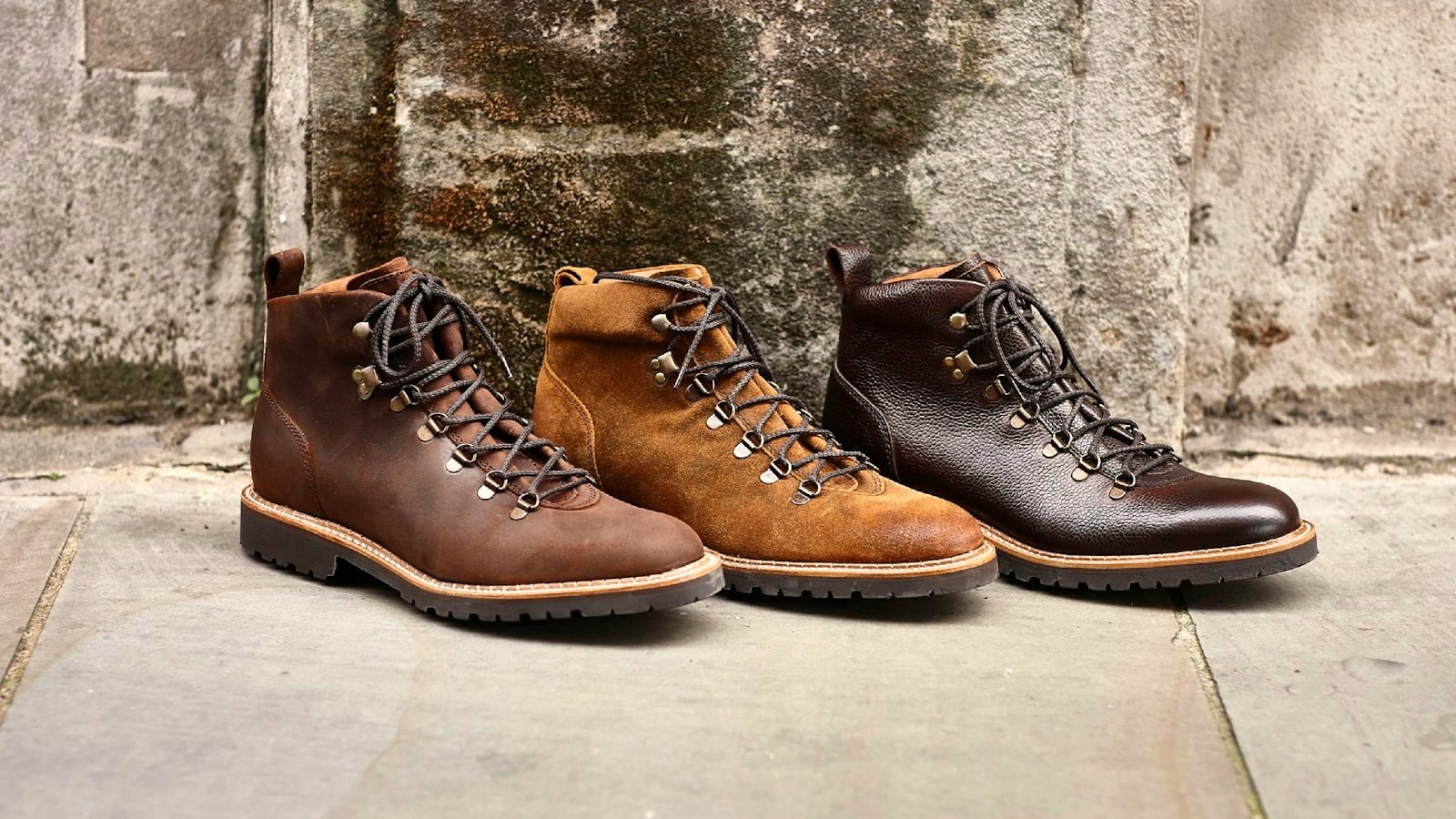
A leather jacket is the one purchase in the wardrobe whose lifespan is set as much by its owner as by its maker, and the makers' own pages print the terms. The heavy steerhides arrive stiff: Schott warns the buyer in its own copy, and the break-in is a season of wear, after which a 3.5 ounce hide holds its shape for decades and asks only for conditioner before it dries and a hanger with shoulders. The Belstaff's hand-waxed surface is a renewable finish, the wax renewed the way the waxed-cotton jackets on the Barbour record are renewed, which is why a waxed leather outlives a coated one. The suede's terms are printed by Todd Snyder on the garment's own page: brush it, blot it, and expect it to transfer colour in the first wears, the crocking warning being the rare case of a maker publishing its product's flaw at the point of sale. Lamb asks the gentlest ownership and gives the shortest life in exchange, which the longevity rows have already priced. What no maker on this page publishes is a repair service for leather, and the absence is charged where it sits: the houses that will resole, re-wax and re-line are the houses whose jackets fill the vintage rails, and a jacket bought for a decade should be bought from one of them.
Cost per year, printed in the open
| Jacket | Price | Score | Life scored | Cost per year |
|---|---|---|---|---|
| Quince Cafe Racer | $250 | 70 | 8 years | About $31 |
| Schott Perfecto 618 | $1,020 | 85 | 20 years | About $51 |
| Danier CAYSON (skip, at its chained price) | CA$349 (about $255) | 30 | 5 years | About $51 |
| Michael Kors Moto (at its chained price) | $299 | 52 | 6 years | About $50 |
| Taylor Stitch Moto | $1,248 | 88 | 20 years | About $62 |
| AllSaints Milo (at list) | CA$749 (about $547) | 65 | 8 years | About $68 |
| Todd Snyder Suede Dylan | $998 | 74 | 10 years | About $100 |
| Belstaff Brooklands | £1,225 (about $1,640) | 76 | 15 years | About $109 |
The table's second line is its argument. The skip, at its own sale price, costs the same per year as the Schott Perfecto: about $51 of annual money buys either twenty years of published top-grain steerhide or five years of a shell its maker describes in two words. The Quince is the cheapest jacket here to own by a wide margin, because a printed grade at $250 is the attainable market working properly. The two honest premiums sit at the top and are labelled as premiums: the Dylan charges for suede's short, soft life, and the Brooklands for a hand process. What no line defends is paying specification money for a specification that was never filed.
The skip: Danier's CAYSON bomber at 30
Every Verdict Card on this site sends one garment home, and the honest ones are convicted out of their makers' own mouths. Danier is a leather house. Leather is its name, its trade and its entire range, and when a leather house publishes a bomber whose complete material record is the words 100% Genuine Leather, the conviction writes itself: genuine leather is the grade name for the bottom of the hide ladder, the split layer, corrected and finished, here under a cracked leather effect the maker prints in the same breath. A generalist chain printing those words could plead the vocabulary of its copywriters. A specialist printing them as the whole specification is telling the buyer that the words are the product, that the jacket is sold on the reassurance of a term the trade uses for its cheapest legal claim. Add the shape of the pricing, CA$497 struck to CA$349 as a standing condition, and the record is complete: a jacket that cannot be sold on its hide is sold on its discount. Buy the Quince and own a printed grade for less money. Buy the Schott and own the benchmark for the same money per year. The word leather is a promise about a hide. This bomber is the promise with the hide left out.
Which leather jacket to buy
If you buy one: the Schott Perfecto 618, the benchmark pattern with its grade printed by its own maker, at about $51 a year. If you buy the best: the Taylor Stitch Moto, the fullest record this desk has graded in the category, full-grain, weighed, tanned and made in the open. If you ride, or dress like it with intent: the Belstaff Brooklands, armour, a belt and a renewable waxed surface. If the trucker is your shape: the Todd Snyder Dylan in suede, the field's most honest composition line, with the smooth lambskin version on the same pattern for a longer life. If the money is the argument: the Quince cafe racer, a printed top-grain grade at $250. If the fashion rider is the point: the Milo, bought at its chained price, never its list. The wearing systems are How to Wear No. 16 for the trucker's denim sibling and How to Wear No. 17 for the skip's species, the species map is the jackets index, and every garment in the stack is mapped in the Body Map.
Questions, answered
What are the best leather jackets for men?
The Taylor Stitch Moto Jacket, scored 88 out of 100: the only jacket in this field that publishes everything, a 3.5 ounce full-grain steerhide, chrome-tanned and drum-dyed, handmade in San Francisco by Golden Bear, with a YKK two-way zip, the field's only named zip, at $1,248. The Schott Perfecto 618 follows at 85, top-grain steerhide in the maker's own words at 3 to 3.5 ounces, US raw material tanned in Mexico, made in the USA, at $1,020. The jacket sent home, at 30, is Danier's CAYSON bomber, whose entire material record is the words 100% Genuine Leather over a cracked leather effect, at CA$497 chained to CA$349.
What does genuine leather actually mean?
It is a grade name, not a compliment. Genuine leather certifies that a product contains real hide, and in the trade's own ladder it names the bottom of the named grades: material from the lower split layer of the hide, often corrected, coated or embossed to imitate the grain it does not have. Full-grain keeps the hide's whole top surface, top-grain is that surface sanded and finished, and genuine leather is what remains printable when neither of those can honestly be claimed. The proof lives on this page: Danier, a house that sells leather and little else, prints 100% Genuine Leather as the entire material record of a CA$497 bomber, and that jacket is the one this ranking sends home.
Full-grain or top-grain: which is better?
Full-grain, on the published record, because it is the hide's whole grain surface kept intact, pores, scars and all, and it ages by polishing rather than by peeling. Top-grain is the same top layer with the surface sanded or buffed and a finish applied; Quince prints the honest definition on its own page, buffed to remove imperfections, and its $250 cafe racer is a respectable jacket on exactly those terms. What matters more than the gap between the two is the cliff below them: of the eight jackets ranked here, only four makers print a grade word that names a layer of the hide at all. A maker printing top-grain is filing paperwork. A maker printing nothing, at $598 or at $4,990, is asking to be graded on faith.
Is suede real leather?
Yes, and its record is the most honest one in this field. Suede is the flesh side of the hide, raised to a nap, and most garment suede is cut from the split layer. Todd Snyder prints exactly that on its own product page: 100% Calf Split Suede, made in Tuscany by a named tannery, Pellemoda, fully lined, with the colour-transfer warning printed where a buyer can read it. That jacket scores 74 here, graded as a suede and credited for the disclosure. Judge any suede the same way: species printed, tannery or origin printed, and suspicion reserved for the word premium standing where a composition line should be.
How much should a good leather jacket cost?
Read it per year, not per ticket. At $250, Quince's cafe racer prints a top-grain grade and a Leather Working Group tanning certification, and on an eight-year life it costs about $31 a year, the cheapest jacket on this page to own. The Schott Perfecto at $1,020, on a twenty-year life, costs about $51 a year. The cautionary line is the skip: Danier's bomber at CA$349, on a five-year life, costs about $51 a year, the same annual money as the Schott, for a jacket whose whole material record is two words. Price in this category buys paperwork before it buys hide: the field runs from $250 to about $1,640, and the fullest records sit at $1,020 and $1,248, not at the top of the range.
How long should a leather jacket last, and how do you care for it?
A heavy steerhide jacket is a twenty-year garment: the Schott and the Taylor Stitch on this page are scored on twenty-year lives, and steerhide at 3 to 3.5 ounces breaks in over the first season and then holds its shape for decades. Lamb and suede live shorter, softer lives, scored here at eight to ten years. The care is printed by the makers themselves: condition smooth leather before it dries, keep it off radiators and out of plastic, brush suede and expect it to transfer colour at first, Todd Snyder prints that warning on the garment's own page, and treat a hand-waxed leather like the Belstaff Brooklands as a renewable surface, the wax is the finish and the finish can be renewed. The jackets index prints the buying rule whole: one hide, one style, bought once and worn for a decade.
How this ranking stays honest
The rests, the prose answers and the capture notes, printed. Saint Laurent is rested because no current men's leather jacket from the house could be pinned to a single live record on the maker's own pages at this check, the searches returning resale and aggregator copies of older jackets; the desk does not grade a $4,990-class garment from a reseller's description, and the brand stands at 58 untouched. Buck Mason is rested on a dead door: its full-grain suede rider's product page returns an error at this check, and a garment that cannot be opened cannot be graded; the brand stands at 90, the highest on this site, untouched. Private White V.C. is rested because its current range carries no smooth-leather jacket, its leather-adjacent record being the waxed cotton this site has already graded; the house's trench and overcoat garments stand as graded and nothing here disturbs them. Wilsons Leather is rested because its current range could not be verified as a men's leather line at this check. H&M was rested deliberately, as it has been rested through this run of Cards; its derived brand score stands untouched on its own page and no garment here disturbs it. On capture: the Taylor Stitch record is graded from the maker's published specification as carried in its own sponsored presentation and hands-on reviews, with the price read from the maker's current Moto Collection data, the exact garment page resisting verbatim capture at this check; the Quince record was read in full on the maker's own product page in its Canadian store, with the US price verified on the maker's US store, and the card's door is the US jackets department for that reason; the AllSaints Milo's US product page could not be captured and its record and price were read on the maker's Canadian store, in Canadian dollars, converted on the card at CA$1 = $0.73; the Belstaff price is sterling, converted at the £1 = $1.34 rate this desk uses across its rankings; and the Michael Kors record is graded from the maker's outlet store, where the garment is sold. All are flagged for direct re-verification in the November pass. On doors: the Taylor Stitch card links the maker's Moto Collection, the garment-class door allowed when a product page resists capture; the Quince card links the maker's US jackets department; and the Danier card ships without a buy link because this desk does not link what it sends home. On photography: the magazine's bank holds exactly one leather jacket on a body, the Perfecto-style frame that fronts this page, and no cafe racer, no suede trucker, no belted motorcycle jacket and no hide at macro range; the frames inside are captioned for what they show, the cards run without images, and the harvest list names what is missing, in order: a cafe racer worn on a body, a suede jacket at street level, a belted motorcycle jacket in motion, and a full-grain hide at macro range. One flag for the record: How to Wear No. 17 prints in its final FAQ that there is no bomber Verdict Card and cites an AllSaints bomber as the only priced bomber record; this Card scores a bomber, as its skip, so that line is stale from this page's publication. The amendment is the parent desk's to make, and it is flagged in this page's state file rather than made here. Prices and specifications were checked against the makers' own published pages in October 2026; where a figure could not be verified from the maker's page, the page says so at the figure's elbow. The full method is written out on the methodology page.