
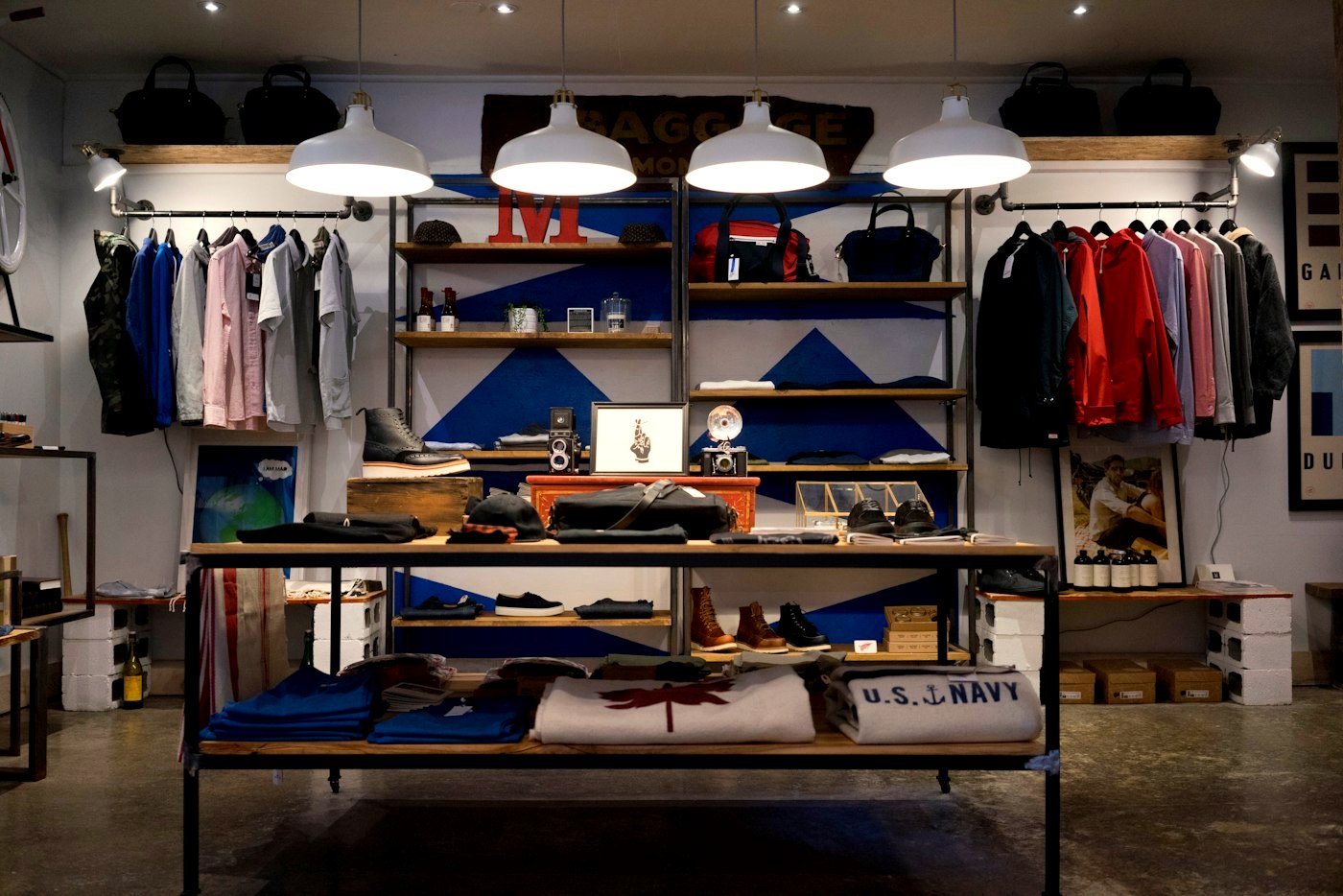
The Todd Snyder want is the American classics with the homework done: better cloth, corrected fits, a designer standing over the rail. The ranking below scores who else is actually selling that, what the correction is worth, and where it stops being worth it.
Checked and updated October 2026
The verdict, up front: the anchor stands fifth at home. Todd Snyder is scored at 79, a standing number reproduced exactly, rows and all, on the page where inflating it would be easiest. Above it: Asket at 92, the fabric-first answer with the receipts published; Buck Mason at 90, the same uniform without the designer premium; Taylor Stitch at 85, the heritage rebuild in organic cloth; and A.P.C. at 83, the French read of the same restraint. Noah, the street-adjacent read, is sixth at 77. The skip is Ralph Lauren at 70, convicted on the same record this series set on the Buck Mason page: a value row of 6 under a $395 jean, the uniform sold as scenery by the very house the anchor's founder trained in.
What people actually want from Todd Snyder
Nobody searches for brands like Todd Snyder because they need another sweatshirt. They search because Todd Snyder answered a specific question better than anyone else in American menswear: what happens to the classics when a designer who loves them is allowed to fix the fits and buy better cloth? Snyder, Iowa-born, cut his teeth at Ralph Lauren and J.Crew before founding his label in New York in 2011, and the range is that answer worn daily: Italian-mill fabrics on American silhouettes, tailoring that behaves like sportswear, a camp collar shirt treated as a serious garment, a sweatshirt given a chest pocket borrowed from an Oxford and sewn with archival respect through the long Champion collaboration. The want is the wardrobe with a point of view already installed: the classics, corrected.
The ceiling is priced in, and this page names it before the anchor's card can be accused of hiding it. The correction costs money: prices that already sting a little at the core of the range climb steeply at the top of it, and the value row of 9 on the anchor's standing record is the sting, itemised. The collection also turns with the seasons in a way the permanence houses refuse to, so the piece you loved is a memory by spring. The alternatives below are graded on the only question this search is really asking: how honestly does each one sell the corrected classic? Four tests, applied to every card. Is the cloth real, with its weight and origin stated? Are the fits the corrected ones, or the boxy originals? Is the garment buyable next year, or gone with the season? And is the price the garment's price, or the designer's name rented by the hour?
How the scores work
Every brand here is scored on the house basis for this series: fabric and cloth out of 30, construction and craft out of 20, fit range and sizing honesty out of 20, value out of 15, longevity out of 15. No brand is scored fresh on this page. All seven numbers are standing scores, reproduced with their rows from the pages that set them, because a score that changes from page to page is marketing. Asket's 92 was set in our Scandinavian ranking. Buck Mason's 90, Taylor Stitch's 85 and the anchor's 79 were set in our American ranking. A.P.C.'s 83, Noah's 77 and Ralph Lauren's 70 were set on their own pages of this series, A.P.C., Noah and Ralph Lauren. Two more names are answered in the open rather than ranked. J.Crew, scored 73 in the American ranking and graded in full on its own page of this series, is the alma mater: the Ludlow silhouette is the anchor's inheritance, its rows stand at fabric 21, value 12 on the strength of the perpetual promotion, longevity 8, and a school is not ranked on its graduate's page; the lineage is the anchor's story, told in his card below. Aimé Leon Dore, scored 68 on its own page, is the drop-model version of this want, Queens prep at a value row of 6 and a fit row of 12 that print the drop tax plainly; the seven above answer the search at retail, in stock, all year. New prose, standing arithmetic.
Seven brands like Todd Snyder, ranked
Asket
US price checked today: the T-Shirt $65 at the maker's store.
The fabric-first answer: the same permanent wardrobe the anchor corrects each season, iterated instead, with every cost published.
The case for a Stockholm house at the top of a page about a New York designer is that the Snyder search was never really about the designer's hand. It is about cloth and fit taken seriously, and Asket takes both further than the anchor does, in print. One permanent collection since 2015, no seasons, no sales calendar, sizes graded from body measurements in three lengths, the fit row's perfect 20, the only one this franchise has awarded, and a published cost breakdown on every garment: the receipts the anchor's value row of 9 wishes it could show. The garment evidence on this site agrees without being the brand score: the T-shirt scores 88 in our white tee ranking, the Oxford shirt 87 in the Oxford ranking, the linen shirt 85 in the linen ranking. On its own page of this series it won from the other side. The order does not change because the page did.
The case against is taste, and it is legitimate. Asket's design hand is deliberately plainer than the anchor's: there is no camp collar with a point of view, no tailoring that flirts with sportswear, no collaboration archaeology, and a reader who came for Snyder's eye will find the rail correct and quiet. The T-shirt is $65 at the maker's US store at this check, and its value row of 12 prints the honest middle: cheaper than the anchor's corrected pieces, dearer than the uniform houses. Buy Asket when the fabric and the fit are the whole point. Buy the anchor when the point of view is part of the purchase. The ranking grades the first want higher, and says so in the open.
Buck Mason
US price checked today: the Pima Curved Hem Tee $48 at the maker's store.
The uniform without the designer premium: the same classics the anchor corrects, iterated in place and priced to be worn out.
If the anchor is the American uniform with a designer standing over it, Buck Mason is the uniform standing alone, and the ranking prefers it by eleven points. The catalogue is the same canon, the curved-hem tee, the Oxford, the five-pocket jean, the field shirt, each standard improved in place rather than replaced each season, garment-dyed and pre-washed, with garment measurements published and honest graded sizing behind a fit row of 19. Its rows, set in our American ranking and reproduced exactly, have no weak line, and the value row of 14 is the best on this page: the Pima Curved Hem Tee is $48 at this check, against the anchor's $178 camp shirt and $98 pocket sweatshirt. That gap is the whole argument, priced.
The deductions are the two the anchor exists to answer. There is no designer's correction here: the fits are honest rather than edited, the cloth is sturdy rather than Italian, and nothing on the rail flirts with tailoring the way the anchor's range does at its best. Much of the line is sewn overseas now, Portugal and beyond, so the made-in-America story is true of the tee and not of the whole catalogue. Neither touches the placing for this search's most common form: the reader building the base wardrobe first. Build it here, at value 14, then spend the designer money where a designer actually adds something. The anchor's own card, three places down, names where that is.
Taylor Stitch
US price checked today: The Jack Oxford shirt $132 at the maker's store.
The rebuild: the heritage catalogue the anchor riffs on, rebuilt in organic cloth under a published responsibility standard.
Taylor Stitch is what the Snyder want looks like with the materials question answered before the design question. Founded in San Francisco in 2008 on custom shirting, it grew into the clearest statement of what American heritage became after the workwear boom: the chore coat, the Oxford, the selvedge jean, rebuilt with organic cotton and hemp blends under a published responsibility standard, the house line Responsibly Built for the Long Haul. Its 85 was set in our American ranking, where its full rows are printed, and its fabric row of 25 matches the winner's end of this page rather than the anchor's 24. The test garment is the shirt: The Jack, its signature Oxford, is $132 at the maker's store at this check, forty-six dollars under the anchor's camp shirt, in organic cotton with felled construction.
The deductions are reach and range. The fit row of 16 prints a size run that stops where the bigger houses keep going, and the catalogue has widened into categories, down jackets and anoraks, where its authority is thinner than in shirting and denim. The workshop model, garments funded and released in batches, means the piece you want is not always on the rail today. What it never does is rent you a name: the value row of 13 is the anti-Snyder row, the same heritage register with the designer layer left off the invoice. For the reader whose Snyder want is really about cloth with a stated origin, this is the closest answer on the page, six points ahead of the anchor.
A.P.C.
US price at last check: the Petit New Standard jeans about $275.
The same restraint read from Paris: no logos, no noise, and the reference slim jean of the last thirty years.
A.P.C. is the anchor's register translated, and the translation predates the original. Jean Touitou founded the house in Paris in 1987 on the refusal Snyder later built a career beside: no logos, no seasons chased, plain clothes cut properly in serious cloth. Its 83 was set on its own page of this series and is reproduced exactly, and its fit row of 17 matches the anchor's, because the corrected silhouette the Snyder shopper wants is the silhouette this house never abandoned. The garment the page is graded on is the jean: the Petit New Standard, stiff Japanese selvedge worn raw, about $275 at last check, still one of the most reliable denim purchases anywhere, the buy our French ranking names first for the house.
The deductions rhyme with the anchor's, one row kinder. The value row of 10 against the anchor's 9 prints Paris charging slightly less for the restraint, but charging it all the same: prices have climbed with the reputation, and the non-denim range is solid rather than inspired, plain sweatshirts and knits that ask denim-grade faith at designer-grade prices. Buy the jeans at full price without flinching. Buy the plain sweatshirt second. Interrogate everything else, which is, not coincidentally, the same buying pattern the anchor's card prescribes. The four points between them are the Atlantic and a designer's name; the method underneath is one method.

Todd Snyder
US prices checked today at the maker's store: the Brushed Camp Shirt $178; the Foundation Pocket Sweatshirt $98.
The anchor: American classics rebuilt with better cloth and a designer's eye, priced like the correction.
The case for the anchor is the eye, and the garment evidence is the strongest any brand here can show in a single category. Todd Snyder, an Iowa-born designer who cut his teeth at Ralph Lauren and J.Crew, founded his label in New York in 2011 to answer the question this page opened with, and the range is the answer: Italian-mill fabrics on American silhouettes, tailoring that behaves like sportswear, and the camp collar shirt treated as a serious garment. Its camp collar shirt won our camp collar ranking outright at 84, a garment score cited here as evidence, never as the brand number, and the current season's brushed version is $178 at the maker's store at this check, the top of the band that ranking printed. The Foundation Pocket Sweatshirt, the Champion idea rebuilt in Portuguese cotton terry, is $98. Its brand score of 79 was set in our American ranking, and this page reproduces its family rows exactly: fabric 24, construction 17, fit 17, value 9, longevity 12.
The deduction is the value row, and it is structural, not a mood. Nine of fifteen is the designer layer billed honestly: at the core of the range the correction is worth it, the camp shirt and the sweatshirt earn their prices in cloth and fit, but the range climbs fast from there, a henley at $148, tailoring at four figures, and the American ranking named the shape of it in one line: at the top of this range you are paying New York rent on an Iowa idea. The collection also turns with the seasons, which the three permanence houses above refuse to do, and the longevity row of 12 prints the difference. He stands fifth on his own page, behind two houses that sell his canon without his markup and one that publishes its costs. That is not a snub. It is the arithmetic of a brand whose product is the correction itself: worth buying, piece by piece, on sale where the calendar allows, and never the cheapest honest way into any single garment he sells.
Noah
US prices checked today at the maker's store: the Classic Pocket Tee $58; the Core Classic Hoodie $168.
Prep with a conscience and a skate inheritance: the Snyder register's New York cousin, politics printed on the product page.
Noah is the anchor's register with the street left in. Brendon Babenzien, a former design director at Supreme, founded the label in New York in 2015 to sell classic American clothes, the pocket tee, the hoodie, the rugby, the Oxford, made responsibly and argued for in public, down to published cost breakdowns on individual garments that show every cent and the markup on top of it. Its 77 was set on its own page of this series and is reproduced exactly: fabric 24, level with the anchor's, a longevity row of 14 that beats his 12, and garment evidence that supports the number, its Core Classic Hoodie scoring 80 as a garment in our hoodie ranking. The Classic Pocket Tee is $58 and the Core Classic Hoodie $168 at the maker's store at this check. The Snyder circle closes neatly here: the man who runs this label also runs J.Crew's men's design, the alma mater the anchor graduated from.
The deductions are price and patience, the same two the anchor charges, in a different currency. The value row of 9 is the conscience billed at retail: the pocket tee costs ten dollars more than Buck Mason's, the hoodie considerably more than the fleece it improves on. The fit row of 14 prints a drop model, sizes that sell through and stay gone, which fails the buy-it-again test the permanence houses pass. Against the anchor specifically, the trade is polish for position: Snyder's clothes are the more finished objects, Noah's are the more argued ones. Buy Noah when the piece and the position are both the point. Buy the anchor when only the piece is.

Ralph Lauren
US price checked today: the Double RL Vintage 5-Pocket East-West Selvedge Jean $395 at the maker's store.
The costume department, and the anchor's old school: real cloth at collector prices, a value row of 6, convicted on the standing record.
The skip on this page is not a bad-clothes verdict, and its rows say so: fabric 24 and construction 15 are respectable numbers, set on its own page of this series and reproduced exactly. Double RL, the house's vintage line, makes real garments: the Vintage 5-Pocket East-West Selvedge Jean is $395 at the maker's store at this check, genuine selvedge, honestly built. The conviction is in the value row, 6, the lowest on this page, and in what the $395 is buying: not a better jean than the specialists sell for less, but the set dressing of an America assembled in a design studio, the ranch, the regiment and the Ivy League art-directed into one catalogue and priced as collectibles of a past that is largely the brand's own invention. This page does not retry the case: the Buck Mason page of this series convicted it on this record last time, and consistency is the house rule.
The Snyder connection is what puts the house on this page at all, and it cuts against the house. The anchor's founder learned the trade inside these walls, then left and rebuilt the same classics as clothing: corrected, priced at $178 at the camp shirt and $98 at the sweatshirt, meant to be worn out and bought again. The school he left sells the same inheritance as scenery, at $395 at the jean, under a group that also rents the flag to outlet malls at a tenth of the price. Every other brand on this page sells clothes that quote this house. The anchor sells clothes that answer it. On a page grading how honestly a brand sells the corrected classic, the house that invented selling the classic as a poster finishes last, and the receipts are its own.
The pattern under the ranking
Read the ladder as one argument about what a designer's eye is worth. The top three sell the wardrobe without one: permanence, organic cloth, published receipts, their value rows at 12, 14 and 13, and not one of them asking you to pay for a name. The anchor sells the eye itself, and the eye is real: the camp collar verdict at 84 is a garment judgement this site stands behind, not a courtesy. But the eye bills by the piece and turns with the seasons, and the rows print the trade exactly: fit 17 matched by A.P.C., fabric 24 matched by Noah, value 9 matched by nobody above him and beaten by everyone there. The bottom sells the eye's inheritance as scenery. The gradient on this page is not cloth. It is the distance between the garment's price and the story's, measured seven times.
The second pattern is that the Snyder circle is small and the scores map it. The founder trained at the skip and at the alma mater answered above; the man running the alma mater's men's design also runs the sixth-place label; the winner runs the anchor's own method from Stockholm with the receipts he does not publish. American menswear's corrected classic is a family business, and this page is its seating chart: the method at the top, the uniform beside it, the graduate in the middle with his hand still raised, and the school that taught them all at the bottom, charging admission to the museum of itself.
| Brand | Score | The piece to buy | US price |
|---|---|---|---|
| Asket | 92 | The T-Shirt, then the permanent grid | $65 |
| Buck Mason | 90 | The Pima Curved Hem Tee | $48 |
| Taylor Stitch | 85 | The Jack Oxford shirt | $132 |
| A.P.C. | 83 | The Petit New Standard jean | About $275 |
| Todd Snyder | 79 | The camp shirt, on sale | $178 |
| Noah | 77 | The Classic Pocket Tee | $58 |
| Ralph Lauren | 70 | None | $395 |
The Skip · 70/100
Ralph Lauren. Costume Americana, convicted by its own arithmetic and not retried here: a value row of 6, a $395 selvedge jean sold as a collectible of an invented past, and the same flag rented out at outlet prices. The anchor learned the trade in this house and left to sell the uniform as clothing. This house sells the poster of it.
Which one to buy
Buy the method: Asket (92), when the receipts are the point, for the permanent grid, the graded sizing and the published costs.
Buy the uniform: Buck Mason (90), for the base wardrobe itself, the tee first, at the best value row on this page.
Buy the rebuild: Taylor Stitch (85), for shirting and denim where the cotton's origin matters as much as the cut.
Buy the French read: A.P.C. (83), the Petit New Standard first, the restraint at a slightly kinder value row than the anchor's. Buy the anchor: Todd Snyder (79), for the camp shirts, the sweatshirts and the tailoring, on sale where the calendar allows. Buy the conscience: Noah (77), when the piece and the position are both the point. The rest of the family: brands like Asket, brands like Buck Mason, brands like A.P.C., brands like Noah, brands like J.Crew and brands like Ralph Lauren.
Questions, answered
What brand is most like Todd Snyder?
Buck Mason, at 90 out of 100 in this ranking, for the wardrobe itself: the same American classics, the tee, the Oxford, the five-pocket jean, iterated instead of replaced, without the designer layer and at a value row of 14 against the anchor's 9. A.P.C., at 83, is the answer when the want is the tailored half of the Snyder register, the restraint and the denim, read from Paris. Asket, at 92, tops the page on method rather than resemblance: the permanent wardrobe with the receipts published. The anchor itself stands fifth at 79, because the number was set before this page existed.
Is Todd Snyder worth the money?
Selectively, and the score says where. The brand stands at 79 with a value row of 9: the cloth and the fits earn their keep, the designer layer bills you for the rest. The garment evidence is the strongest single-category proof on this page: the camp collar shirt scored 84 in our camp collar ranking, the best in its field, and the current brushed version is $178 at the maker's store at this check. The Foundation Pocket Sweatshirt is $98. Buy the camp shirts, the sweatshirts and the tailoring, on sale where the calendar allows. At the top of the range, a henley at $148 and tailoring at four figures, you are paying New York rent on an Iowa idea, and the value row has already charged it.
Todd Snyder or Buck Mason: which should I buy?
Buck Mason for the base wardrobe, Todd Snyder for the pieces with a point of view, and the scores frame the split: 90 to 79 in this ranking. Buck Mason sells the uniform undecorated, the curved-hem tee at $48 at this check, standards improved in place, measurements published, the best value row at the top of this page. Todd Snyder sells the same classics after a designer has corrected the fits and upgraded the cloth, the camp shirt at $178, the sweatshirt with a chest pocket borrowed from an Oxford. If the purchase is a staple you will replace in five years with the same staple, Buck Mason. If the purchase is the shirt a room notices, the anchor, ideally on sale.
Todd Snyder or J.Crew: which should I buy?
Todd Snyder, and it is not only the score, 79 to J.Crew's 73, both standing numbers from our American ranking. Snyder cut his teeth at J.Crew, and the Ludlow silhouette the mall house still sells is partly his inheritance; what he built in New York in 2011 is that eye with better cloth and an honest list price. J.Crew's garment evidence on this site is genuinely mixed: the Ludlow Oxford scored 78 in our Oxford ranking, the lambswool crew 62 in our crew ranking, and its list price is an opening bid under a perpetual promotion. Buy J.Crew on promotion for the picture. Buy the anchor for the graduate version of the same picture, in cloth that holds it.
Why is Ralph Lauren the skip on a page about Todd Snyder?
Because the conviction is already on this site's record and this page does not retry settled cases. Ralph Lauren stands at 70 with a value row of 6, the lowest in this field: the Double RL Vintage 5-Pocket East-West Selvedge Jean is $395 at the maker's store at this check, real cloth priced as a collectible of an America assembled in a design studio. The Snyder connection sharpens rather than softens it: the anchor's founder learned the trade inside this house, then left and rebuilt the same classics as clothing, priced to be worn out and bought again. The teacher sells the poster of the uniform. The student sells the uniform. The full case is printed on the Ralph Lauren page of this series, and this page reproduces its score and rows exactly.
How this ranking stays honest
All seven scores on this page are standing scores, reproduced with their rows from the pages the method section cites, including the anchor's, on the page where inflating it would be easiest; the anchor stands fifth here because the number was set before this page existed. Where a country ranking and this family's pages print different row splits of the same total, the anchor is the live case: this page follows the family split for Todd Snyder, fabric 24, construction 17, fit 17, value 9, longevity 12, as printed on the Buck Mason page of this series, which is this series' own record; the American ranking prints a different split of the same 79, the totals agree everywhere, and a canonical ruling between the two splits is pending rather than improvised here. Prices were re-checked today: the anchor's camp shirt at $178 and pocket sweatshirt at $98 were read off the maker's own product pages today, and the remaining figures are this series' standing verified prices of the same date. Three doors are what they are and are named: A.P.C.'s link goes to the maker's US storefront, the same door its own page in this series uses, because no product page on the maker's own domain surfaced for the Petit New Standard at this check; Noah's goes to the maker's storefront, where the core range and today's prices are listed on the front page; and Buck Mason's goes to the maker's own tee search, as it does in our American ranking. The photography is this magazine's licensed bank photography throughout; no brand's campaign imagery is used, and the bank holds no frame of the anchor's garments, so the still-life photographs stand for the register, as the captions say. When a maker changes cloth, price or model materially, the score moves and the move is noted here.