
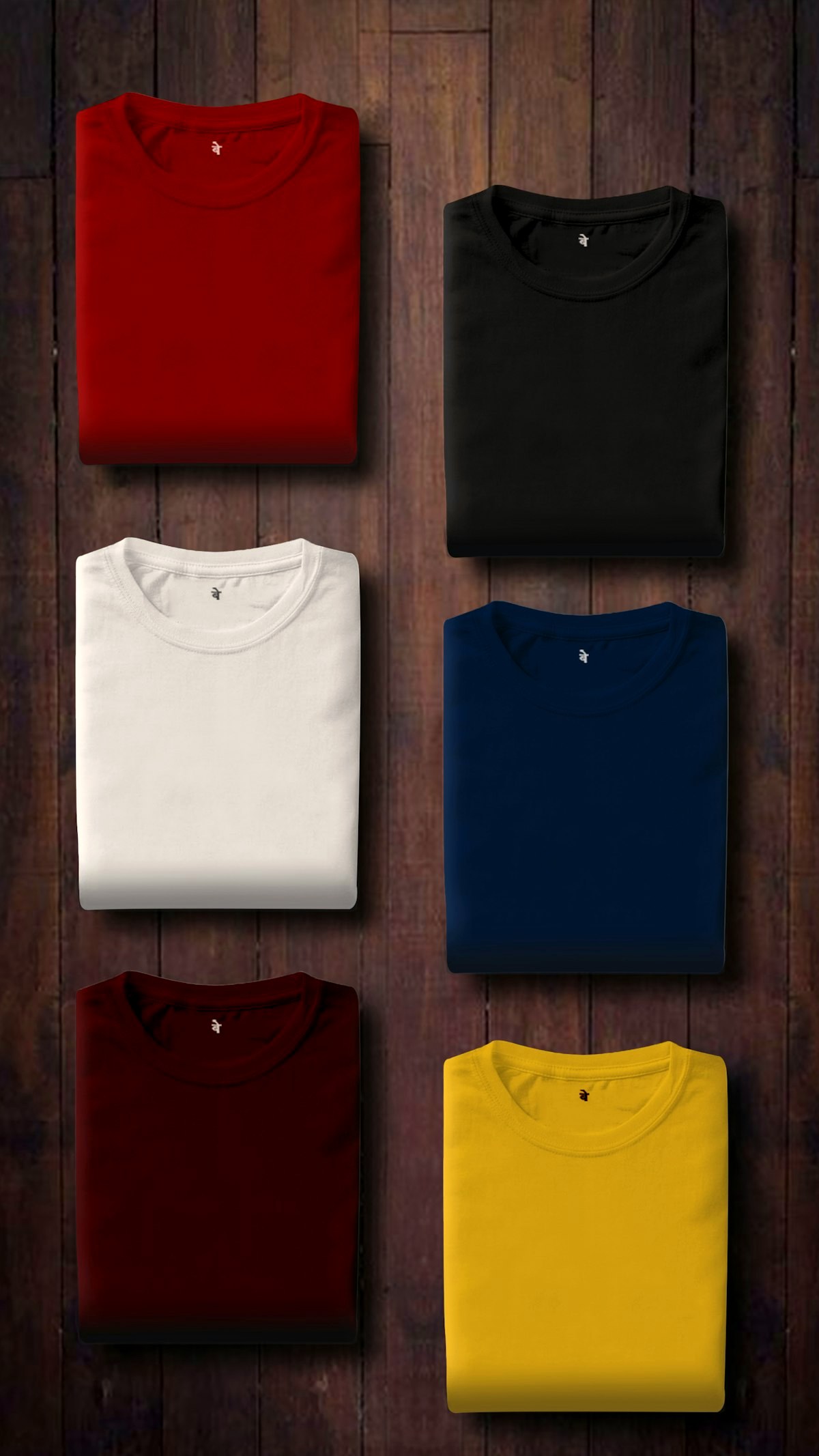
The Buck Mason want is the American uniform with the work left in: garment-dyed, pre-washed, no logos, the same standards on the rail year after year. The ranking below scores who else is actually selling that, and who is selling the poster of it.
Checked and updated October 2026
The verdict, up front: the anchor finishes second at home. Buck Mason is scored at 90 and holds the American end of the argument, but Asket, the Stockholm house running the same wager with the receipts published, takes the page at 92, the same order the Asket page printed from the other side, because a score that changes from page to page is marketing. Taylor Stitch, the heritage catalogue rebuilt in organic cloth, is third at 85. Todd Snyder, the designer bridge, is fourth at 79. Noah and Carhartt tie at 77, Noah ahead on the fabric row. The skip is Ralph Lauren at 70: not a bad-clothes verdict, a costume verdict, a value row of 6 under a $395 jean, the uniform sold as a poster of itself.
What people actually want from Buck Mason
Nobody searches for brands like Buck Mason because they need another T-shirt either. They search because Buck Mason made the opposite wager to the fashion calendar, in the uniform's home country, and the searcher has noticed. The wager, kept since Erik Allen Ford and Sasha Koehn founded the label in Los Angeles in 2013, is a catalogue of American standards: the curved-hem tee, the Oxford, the five-pocket jean, the field shirt, each one iterated rather than replaced, garment-dyed and pre-washed so it arrives already broken in, with no logo anywhere on it. The furniture that makes it checkable is published garment measurements, honest graded sizing, and prices a first salary survives at the core of the range. The want is the American uniform, perfected rather than performed: Venice Beach light, Midwest plainness, nothing on the chest but cloth.
The ceiling is real, and this page names it before the anchor's card can be accused of hiding it. Much of the line is sewn overseas now, Portugal and beyond, so the made-in-America story is true of the tee and not of the whole rail. The receipts are measurements, not costs: you can check the garment, but not the margin. And the top of the range has wandered, tailoring and shearling at four figures, territory where a basics brand's discipline is younger and less proven. The alternatives below are graded on the only question this search is really asking: how honestly does each one sell Americana? Four tests, applied to every card. Is the uniform a wardrobe, standards you can buy again next year, or a season's costume? Is the cloth real, with its weight and origin stated? Are the fits honest and the measurements published? And is the price the garment's price, or the story's?
How the scores work
Every brand here is scored on the house basis for this series: fabric and cloth out of 30, construction and craft out of 20, fit range and sizing honesty out of 20, value out of 15, longevity out of 15. No brand is scored fresh on this page. All seven numbers are standing scores, reproduced with their rows from the pages that set them, because a score that changes from page to page is marketing. Asket's 92 was set in our Scandinavian ranking. Buck Mason's 90, Taylor Stitch's 85 and Todd Snyder's 79 were set in our American ranking, where all three carry their full printed rows; this page is Taylor Stitch's first card in this series. Noah's 77 and Carhartt's 77 were set on their own pages of this series, Noah and Carhartt, and Ralph Lauren's 70 on its own page. One tie needed a ruling: Noah and Carhartt both stand at 77, and Noah is placed ahead on the fabric row, 24 against 22, the lead row of the basis. One more name is answered in the open rather than ranked: J.Crew, scored 73 in the American ranking and graded in full on its own page of this series. It is the uniform at mall scale, the door most readers walk through first, and its card would tell you nothing the seven above it do not: the purest forms of the wager are ranked here, and so is its cautionary tale. New prose, standing arithmetic.
Seven brands like Buck Mason, ranked

Asket
US price checked today: the T-Shirt $65 at the maker's store.
The method twin, and the winner: the anchor's wager run from Stockholm, one permanent collection, every cost published, sizes graded in three lengths.
The case for putting a Stockholm house at the top of a page about an American uniform is that the search was never really about geography. Asket runs the anchor's exact play with the receipts half kept harder: one permanent collection since 2015, no seasons, no sales calendar, sizes graded from body measurements in three lengths, the fit row's perfect 20, the only one this franchise has awarded, and a published cost breakdown on every garment. The garment evidence on this site agrees with the brand score without being it: the T-shirt scores 88 in our white tee ranking, the linen shirt 85 in the linen ranking, the Oxford shirt 87 in the Oxford ranking. On its own page of this series, the anchor of this page finished second to it. The order does not change because the page did.
The case against is the one the reader came here with, and it is legitimate: Asket sells no Americana at all. There is no five-pocket jean with a Midwest childhood in it, no field shirt, no garment-dyed Venice wash, and the design hand is deliberately plainer than the anchor's. The T-shirt is $65 at the maker's US store at this check, against the anchor's $48, and its value row of 12 prints the difference. Buy Asket for the method at its purest. Buy the anchor for the uniform itself. The two pages of this series that grade them side by side agree on the order and on the reason, which is what a ranking is for.

Buck Mason
US price checked today: the Pima Curved Hem Tee $48 at the maker's store.
The anchor: the American uniform perfected, standards iterated instead of replaced, measurements published, and the best value row at the top of this page.
The case for the anchor is the catalogue read as one argument. The curved-hem tee in American-grown Pima, the Oxford, the five-pocket jean in Japanese loomstate selvedge, the field shirt, the knits in real wool: each is a standard, improved in place rather than replaced each season, in garment-dyed cloth that arrives pre-washed and stays buyable. Its rows, set in our American ranking and reproduced exactly, show a brand with no weak row: fabric 25, construction 18, a fit row of 19 earned on honest graded sizing with the garment measurements published, and a longevity row of 14, the joint highest on this page. The Pima Curved Hem Tee is $48 at this check, and its value row of 14 is the best at the top of the ladder, which is what a first salary notices first.
The deductions are the ones named at the top of this page, and the score already carries them. The sewing has moved: much of the line is made overseas now, Portugal and beyond, and only parts of the rail, the tee among them, keep the American-made story whole. The receipts stop at measurements; the margin stays private, which is the two-point gap to the winner and no more mysterious than that. And the range's premium end, shearling at four figures, asks designer money from a basics brand, in territory where the permanence discipline is unproven. None of it touches the conclusion for this search: if the wager is the thing and you want it in the uniform's own language, this is the answer, two points behind the method's purest form and seventeen dollars cheaper at the tee.
Taylor Stitch
US price checked today: The Jack Oxford shirt $132 at the maker's store.
The rebuild: the same American classics as the heritage houses sew, rebuilt in organic cloth under a published responsibility standard.
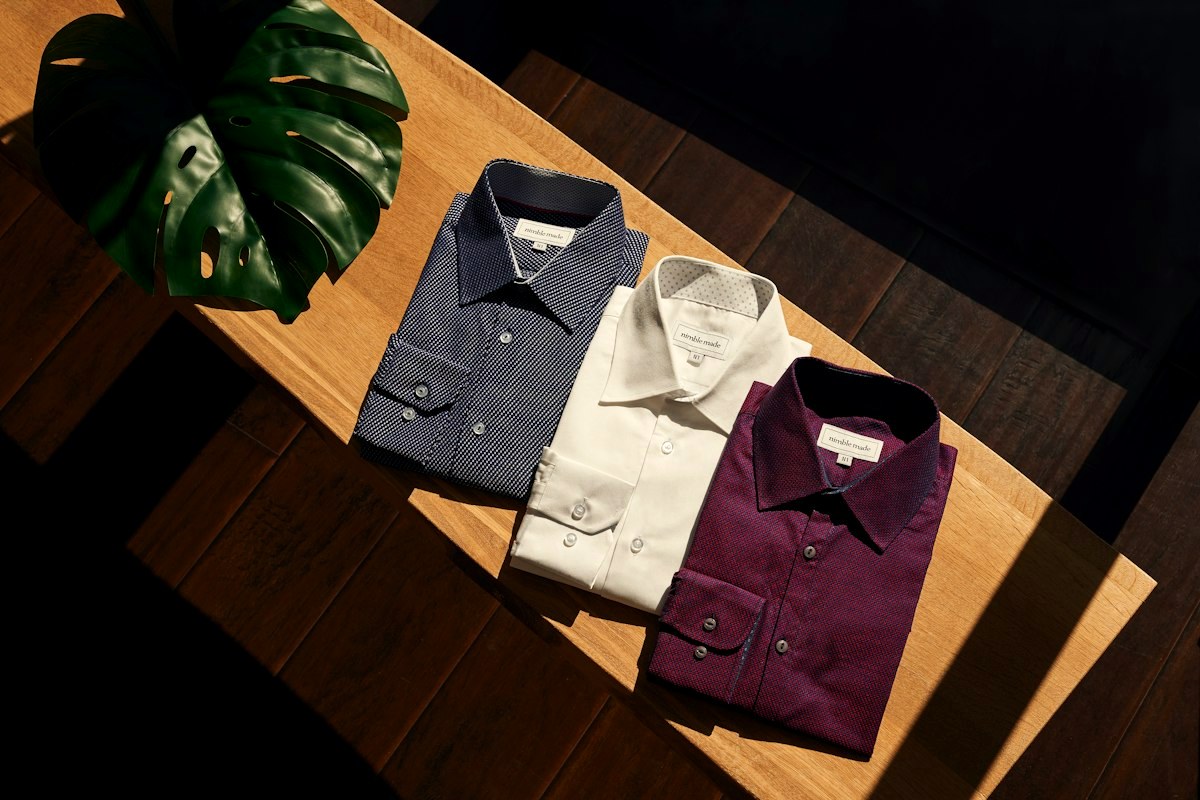
Taylor Stitch is what the anchor's wager looks like with the materials question answered first. Founded in San Francisco in 2008 on custom shirting, it grew into the clearest statement of what American heritage became after the workwear boom: the chore coat, the Oxford, the selvedge jean, rebuilt with organic cotton and hemp blends under a published responsibility standard, the house line Responsibly Built for the Long Haul. Its 85 was set in our American ranking, where its full rows are printed, and this page is its first card in this series. The fabric row of 25 matches the anchor's, and the test garment is the shirt: The Jack, its signature Oxford, is $132 at the maker's store at this check, in organic cotton with the collar and the felled construction the ranking praised.
The deductions are reach and range. The fit row of 16 prints a size run that stops where the bigger houses keep going, chest sizes rather than the anchor's graded measurements, and the catalogue has widened into categories, down jackets and anoraks, where the brand's authority is thinner than it is in shirting and denim. The workshop model that built the brand, garments funded and released in batches, also means the piece you want is not always on the rail today, a small asterisk on the buy-it-again test. None of it dents the placing: of the brands actually selling Americana on this page, this is the closest to the anchor, five points back, with the cleanest materials story in the country.

Todd Snyder
US price checked today: the Brushed Camp Shirt $178 at the maker's store.
The uniform with a designer standing over it: American classics, fits corrected, Italian cloth, priced like the correction.
Todd Snyder answers a different version of this search: the same uniform, after a designer who loves it has been allowed to fix the fits and buy better cloth. The Iowa-born founder cut his teeth at Ralph Lauren and J.Crew before founding the label in New York in 2011, and the range is American sportswear with the homework done: Italian-mill fabrics on American silhouettes, tailoring that behaves like sportswear, and a long-running Champion collaboration that treats the sweatshirt with archival respect. Its brand score of 79 was set in our American ranking, and the garment evidence is the strongest any brand here can show in a single category: its camp collar shirt won our camp collar ranking outright at 84, and the current season's brushed version is $178 at the maker's store at this check, the top of the band that ranking printed.
The deduction is the value row, 9, and the American ranking named it in one line: at the top of this range you are paying New York rent on an Iowa idea. A henley at $148 and a chore coat in wool and cashmere at four figures are beautiful objects, and they are not the wager this page grades; the standards here are bought to be replaced by better versions of themselves, not iterated in place, and the collection turns with the seasons in a way the top three refuse to. Buy the camp shirts, the sweatshirts and the tailoring, on sale where the calendar allows. As a bridge from the uniform to a wardrobe with a point of view, nothing American-built does it better. As the uniform itself, it is the anchor with a designer's markup, and the score says so.
Noah
US prices checked today at the maker's store: the Classic Pocket Tee $58; the Core Classic Hoodie $168.
The uniform with its politics printed on the product page: New York prep rebuilt by an ex-Supreme hand, costs broken down in public.
Noah is the anchor's wager with a conscience attached, and the attachment is documented rather than decorative. Brendon Babenzien, a former design director at Supreme, founded the label in New York in 2015 to sell classic American clothes, the pocket tee, the hoodie, the rugby, the Oxford, made responsibly and argued for in public, down to published cost breakdowns on individual garments that show every cent and the markup on top of it. Its 77 was set on its own page of this series and is reproduced exactly: fabric 24, a longevity row of 14 that matches the anchor's, and garment evidence that supports the brand number, its Core Classic Hoodie scoring 80 as a garment in our hoodie ranking. The Classic Pocket Tee is $58 and the Core Classic Hoodie $168 at the maker's store at this check.
The deductions are price and patience. The value row of 9 is the conscience billed at retail: the pocket tee costs ten dollars more than the anchor's, the hoodie considerably more than the fleece it improves on, and the fit row of 14 prints a drop model, sizes that sell through and stay gone, which fails this page's buy-it-again test in the plainest way; at this check, several core styles on the maker's own storefront showed sold-out sizes. What you are buying past the cloth is the argument, and the argument is a good one, made by a man who also runs J.Crew's men's design, which makes Noah the uniform's research lab as much as its rival. Buy it when the piece and the position are both the point.
Carhartt
US price checked today: the Iconic J01 Duck Detroit Jacket $129.99 to $139.99 at the maker's store.
The original the uniform was copied from: Detroit workwear since 1889, graded on the work line, with the fashion line's tax named on the card.
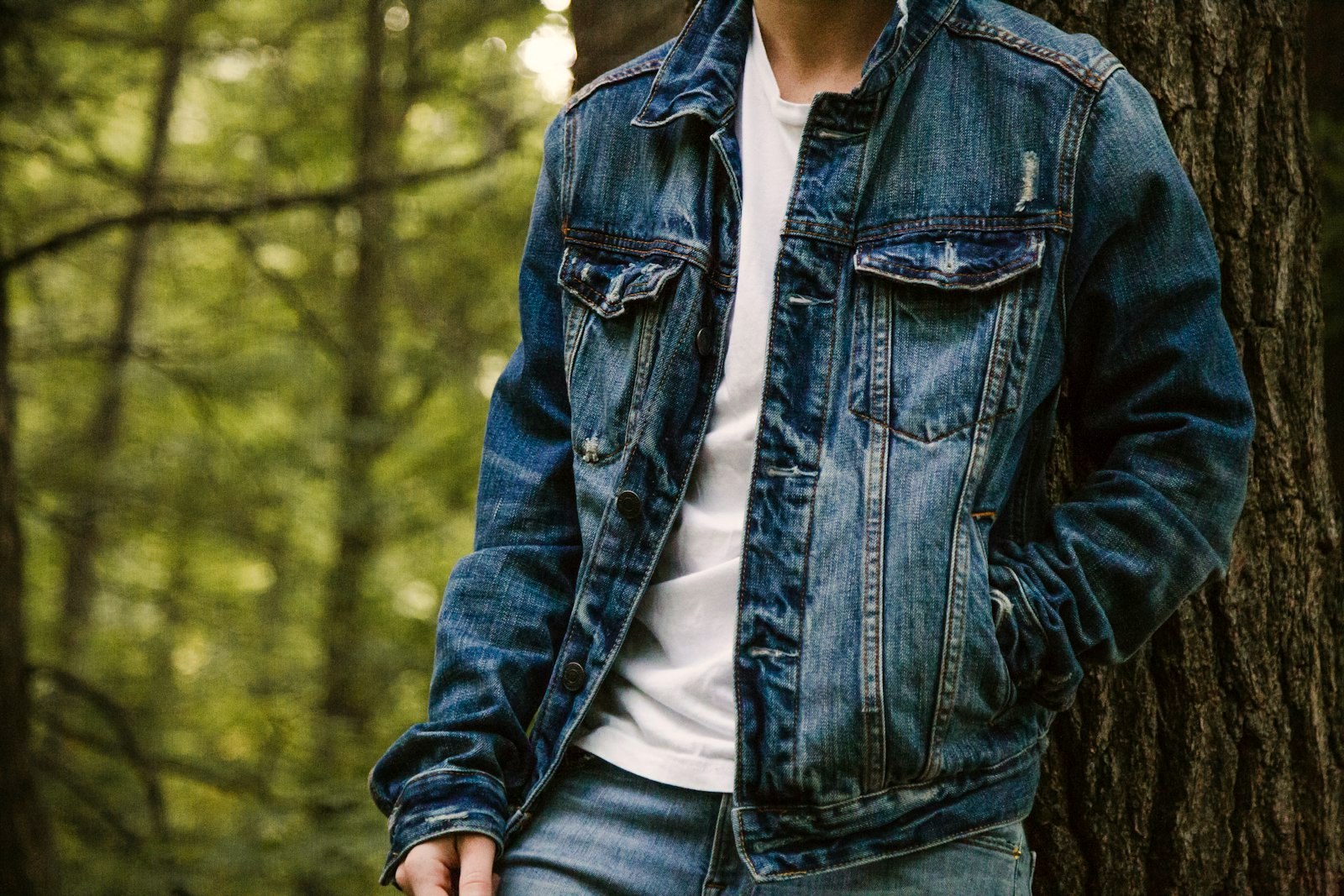
Every brand above this one is, in some part, quoting Carhartt, and the page grades the original fairly before it grades the quotation. Founded in Detroit in 1889, the work line still sells the garment the whole register descends from: the Iconic J01 Duck Detroit Jacket, 12-ounce cotton duck, blanket-lined, triple-stitched, at $129.99 to $139.99 at the maker's store at this check. Its 77 was set on its own page of this series and is reproduced exactly, on the work line's evidence: honest cloth, construction that outlasts the job it was built for, and a value row of 13 that reflects work prices for work clothes. As a tool, nothing on this page is more honest. The anchor's whole aesthetic begins as an homage to this rail.
The deductions are fit and the split personality. The fit row of 15 prints work cuts, boxy and generous, sized for layering over a hoist, not for the silhouette this search is building, and the work line's range beyond the icons thins into commodity fleece and tees that trade on the label. Then there is the second label: the company's own fashion arm, Carhartt WIP, sells its OG Detroit Jacket at $298 at this check, the same silhouette, stone-washed, at well over twice the work line's price. That is the costume tax, charged inside the original's own house, and it is the clearest proof on this page that the tax is real and itemised when you see it. Buy the work line for work and for the icon. The anchor exists because the uniform deserved a version cut for the rest of life.

Ralph Lauren
US price checked today: the Double RL Vintage 5-Pocket East-West Selvedge Jean $395 at the maker's store.
The costume department: the uniform assembled as a period set, real cloth at collector prices, a value row of 6.
The skip on this page is not a bad-clothes verdict, and its rows say so: fabric 24 and construction 15 are respectable numbers, set on its own page of this series and reproduced exactly. Double RL, the house's vintage line, makes real garments: the Vintage 5-Pocket East-West Selvedge Jean is $395 at the maker's store at this check, genuine selvedge, honestly built. The conviction is in the value row, 6, the lowest on this page, and in what the $395 is buying. Not a better jean than the specialists sell for less, but the set dressing of an America that was assembled in a design studio: the ranch, the regiment and the Ivy League, art-directed into one catalogue and priced as collectibles of a past that is largely the brand's own invention.
Set it against the anchor and the argument completes itself. Buck Mason's uniform is also a constructed idea of America, Venice Beach by way of the Midwest, and this page does not pretend otherwise. The difference is the business the idea runs. The anchor's version is sold as clothing, iterated, measured, priced at $48 at the tee so it can be worn out and bought again. This version is sold as scenery, at $395 at the jean, under a group that also rents the same flag to outlet malls at a tenth of the price. Our American ranking called it the design tax, deluxe. On a page grading how honestly a brand sells Americana, the house that invented selling it as a poster finishes last, and the receipts are its own.
The pattern under the ranking
Read the ladder as one argument about what the American uniform is for. The top three treat it as a wardrobe: standards iterated in place, buyable next year, their longevity rows at 13, 14 and 14, and every one of them publishing something checkable, costs, measurements or a materials standard. The middle treats it as a wardrobe with a point of view: Todd Snyder's designer correction at 79, Noah's conscience at 77, both honest, both billing you for the addition. The original treats it as a tool, and Carhartt's work line, at the work price, is the most innocent money on the page. The bottom treats it as a poster. The gradient is not really about cloth, though the cloth rows rhyme with it. It is about whether the price on the tag is the garment's price or the story's, and the scores are simply that question, answered seven times.
The second pattern is that the costume tax is itemised, if you read across brands. The same Detroit jacket silhouette costs $129.99 to $139.99 on Carhartt's work line and $298 under its own fashion label. The same five-pocket jean idea costs a working price at the anchor's rail and $395 as a Double RL collectible. Nobody on this page is confused about what the extra money buys: it buys the feeling of the thing, finished and faded for you, over the thing itself, broken in by wearing it. The brands at the top of this ranking sell the second kind. The skip sells the first, at the highest price here, which is why a respectable fabric row cannot save it.
| Brand | Score | The piece to buy | US price |
|---|---|---|---|
| Asket | 92 | The T-Shirt, then the permanent grid | $65 |
| Buck Mason | 90 | The Pima Curved Hem Tee | $48 |
| Taylor Stitch | 85 | The Jack Oxford shirt | $132 |
| Todd Snyder | 79 | The camp shirt, on sale | $178 |
| Noah | 77 | The Classic Pocket Tee | $58 |
| Carhartt | 77 | The J01 Detroit Jacket, work line | $129.99 |
| Ralph Lauren | 70 | None | $395 |
The Skip · 70/100
Ralph Lauren. Costume Americana, convicted by its own arithmetic: a value row of 6, a $395 selvedge jean sold as a collectible of an invented past, and the same flag rented out at outlet prices. The anchor sells the uniform as clothing. This house sells the poster of it.
Which one to buy
Buy the method: Asket (92), when the receipts are the point, for the permanent grid, the graded sizing and the published costs.
Buy the anchor: Buck Mason (90), for the American uniform itself, the tee first, then the Oxford and the jean, at the best value row at the top of this page.
Buy the rebuild: Taylor Stitch (85), for shirting and denim where the cotton's origin matters as much as the cut.
Buy the bridge: Todd Snyder (79), when the uniform needs a designer's hand, the camp shirts and sweatshirts first, on sale where the calendar allows. Buy the conscience: Noah (77), when the piece and the position are both the point. Buy the original: Carhartt (77), the work line, for the icon and for actual work. The rest of the family: brands like Asket, brands like Noah, brands like Carhartt, brands like J.Crew and brands like Ralph Lauren.
Questions, answered
What brand is most like Buck Mason?
On method, Asket, at 92 out of 100 in this ranking: the same permanent standards, iterated instead of replaced, with the receipts published. It finishes two points ahead of the anchor on its own page, the same order the Asket page printed from the other side. The closest American answer is Taylor Stitch at 85, the heritage catalogue rebuilt in organic cloth under a published responsibility standard. The honest answer includes the anchor itself: Buck Mason, at 90, is the only brand here running the wager at full strength in the uniform's home country, and for the reader who wants the American version specifically, it is the answer.
Is Buck Mason worth the money?
On the arithmetic this site prints, yes, at the core of the range. The Pima Curved Hem Tee is $48 at the maker's store at this check; worn sixty times a year for five years, it costs about $0.16 a wear, and the design in year five is the design in year one, because the catalogue improves its standards instead of replacing them. What the premium buys is cloth with weight to it, garment measurements published, and fits that admit more than one kind of body. What it does not buy is a made-in-America label across the range: much of the line is sewn overseas now, Portugal and beyond, and the top of the range, shearling at four figures, asks designer money from a basics brand. Buy the tee, the Oxford and the jean. Argue with the shearling.
Buck Mason or Taylor Stitch: which should I buy?
Buck Mason, for most readers, and the gap is the score: 90 to 85 in this ranking. The two brands run the same play, a catalogue of American standards iterated rather than replaced, and the difference is emphasis. Buck Mason publishes garment measurements and leads with the tee, $48 at this check, the cheapest honest way into the wager. Taylor Stitch publishes a materials standard, organic cotton and hemp blends under its Responsibly Built for the Long Haul line, and leads with the shirt: The Jack Oxford is $132 at the maker's store at this check. If your wardrobe's weak point is shirting and you care where the cotton grew, Taylor Stitch argues back hard. For the base wardrobe itself, the anchor's fit range, a 19 against 16, settles it.
Buck Mason or Asket: which should I buy?
It depends which half of the promise you need kept, and the ranking is built to show the split. Asket, at 92, keeps the receipts half: published cost breakdowns, sizes graded from body measurements in three lengths, a take-back programme. Buck Mason, at 90, keeps the uniform half: the American standards themselves, the curved-hem tee, the five-pocket jean, the field shirt, in garment-dyed cloth that arrives pre-washed and stays buyable. The tee multiple runs the other way from the score: $48 at Buck Mason against $65 at Asket. Readers building the permanent wardrobe piece by piece will end up owning both, the anchor for the American core, Asket for the pieces where fit precision matters most.
Why is Ralph Lauren the skip on a page about Buck Mason?
Because Ralph Lauren is the control group for the costume argument, and its own numbers make the case: a value row of 6, the lowest on this page, under a brand score of 70 that its fabric and construction rows keep respectable. The Double RL Vintage 5-Pocket East-West Selvedge Jean is $395 at the maker's store at this check, a real jean in real cloth, priced as a collectible of an America assembled in a design studio. The anchor sells the same uniform as clothing: a tee at $48, iterated, measured, buyable again next year. One brand's money is made when you wear the garment out. The other's is made when you buy the poster of it. The full case is printed on the Ralph Lauren page of this series, and this page reproduces its score and rows exactly.
How this ranking stays honest
All seven scores on this page are standing scores, reproduced with their rows from the pages the method section cites, including the anchor's, on the page where inflating it would be easiest; the anchor finishes second here, as it did on the Asket page, because the number was set before this page existed. Where a country ranking and this family's pages print different row splits of the same total, for Todd Snyder, Carhartt and Ralph Lauren, this page follows the family pages, which are this series' own record; the totals agree everywhere, and the reader holding two pages side by side will find the same verdict at the top of both. Prices were all re-checked today, and two of them had moved since this site last printed them: the anchor's curved-hem tee is $48 at the maker's store, not the roughly $60 our American ranking printed, and Taylor Stitch's Jack Oxford is $132, not $138; this page prints today's figures, and the older pages are flagged for correction at the next check rather than quietly left wrong. Two doors are what they are and are named: Noah's link goes to the maker's storefront, where the core range and today's prices are listed on the front page, the same door this series' Noah page uses, and Buck Mason's goes to the maker's own tee search, as it does in our American ranking. The photography is this magazine's licensed bank photography throughout; no brand's campaign imagery is used, and the bank holds no frame of the anchor's garments beyond the tee photograph it shares with the American ranking, so the still-life photographs stand for the register, as the captions say. When a maker changes cloth, price or model materially, the score moves and the move is noted here.