

The want underneath the search: prep that left the clubhouse, worn on real streets, by a house that publishes its own limits. This page scores who else sells it, in stock, at a repeatable price.
Checked and updated October 2026
The verdict, up front: seven brands scored out of 100 on the published brand basis: fabric and cloth 30, construction and craft 20, fit range and sizing honesty 20, value 15, longevity 15. A.P.C. wins at 83, keeping the standing score from its own page in this series, rows intact. Noah, the anchor, is second at 77, keeping the standing score from the Aimé Leon Dore page in this series, where it ranked as an entry; its rows are reproduced exactly below and, for the first time, explained at the length they deserve. Stüssy and J.Crew tie at 73 beneath it, and the named skip is H&M at 38, keeping the standing score from its own page, rows intact.
What people actually want from Noah
The want under this search is prep with a pulse, and a conscience that shows its working. Noah took the oldest uniform in American menswear, the Oxford shirt, the rugby, the Shetland sweater, the chino, and re-cut it through skate and surf culture and New York hardcore flyers, then did something none of its peers do: it published the limits of its own virtue. This is the house that announced, in writing, that it is not a sustainable company, while pricing its recycled tee at the same $58 as its regular one. None of that is in dispute on this page, and none of it is the reader's problem. The reader's problem is reach. The line is narrow, the seasonal pieces come and go, the house sells through its own stores and its website with no wholesale net underneath, and the tailoring the look leans on is a sideline rather than a programme. Every brand below is scored against the double brief the anchor sets and only partly meets: does it sell grown-up prep with a pulse, and can a working wardrobe actually get it, in a size, at the printed price, this season and next.
A note on who is writing. This magazine is a fellow New York publication, born in SoHo, in the same downtown blocks the anchor's flagship trades in. Proximity buys the anchor no points here and costs it none. Its 77 was published on another house's page before this one existed, and it is reproduced here exactly, because a score this desk has already printed is a record, not a draft. What this page adds is the reasoning the earlier page had no room for, printed in full, below.
How the scores work
Same ruler as every brand ranking on this site, published on our methodology page: fabric and cloth out of 30, construction and craft out of 20, fit range and sizing honesty out of 20, value out of 15, longevity out of 15. Every score on this page is a standing score reproduced exactly with its rows: A.P.C. keeps its 83 from its own page, Stüssy its 73, Kith its 71 and Aimé Leon Dore its 68 from the Aimé Leon Dore page, J.Crew its 73 from its own page, and H&M its 38 from its own page, where the number was derived in the open from thirteen ranked garments. No brand was scored fresh for this page. The anchor least of all.
The anchor's 77, explained. Noah took its 77 as the second-ranked entry on the Aimé Leon Dore page, where the card carried the rows and one paragraph of reasoning. The desk does not re-derive a number it has already published; it explains it, and the explanation has three parts: the founder's record, the rows themselves, and the positions the house publishes and prices.
The record first, because at Noah the founder is the design programme. Brendon Babenzien spent over a decade as a design director at Supreme, through the years that store's reach broadened from a Lafayette Street skate shop into a global one, and left in 2015. He had founded Noah once already, in 2002, and relaunched it in 2015 with Estelle Bailey-Babenzien. In 2021 he took a second job that makes this page's strangest loop: men's creative director at J.Crew, the attainable door ranked fourth below. His chapter there is a matter of public record: the giant-fit chino that loosened a decade of tapered trousers, revivals of the rollneck sweater and the barn coat, the print catalog restored in 2024 after seven years away, a dedicated men's store on Bond Street. The chapter closed in 2026, publicly, with J.Crew announcing he would be completing his work there and shifting his focus to Noah. A designer who has run a skate institution, his own house, and a mall giant's menswear inside one career is the reason the anchor's prep reads lived-in rather than themed, and it is also the reason the J.Crew card below is graded on the clothes alone: his work there earns that house no family discount here, and costs it none.
The rows, one at a time. Fabric 24: heavyweight fleece is the house cloth and it is the real thing, alongside recycled cotton tees knit and sewn in Los Angeles, pocket tees made in the United States since 2020, and Shetland and Donegal knits at the seasonal end. Construction 16: the core is finished to be kept rather than cycled, a level above the drop field, a level below the winner's thirty-eight years of the same jean. Fit range 14: the core runs XS to XXL and the grading inside it is honest, but the line is narrow, the seasonal range turns over, and with no wholesale layer there is exactly one door in, which is what holds this row under J.Crew's 17 and Stüssy's 17. Value 9: the core is priced like a promise, a $58 pocket tee and a $168 hoodie against the sibling's $85 to $95 tees and $195 hoodie on the page where this score was set; the seasonal tail, knitwear to $298, is priced closer to the designers and keeps the row at 9. Longevity 14: the highest mark on this page, because the house philosophy is the row. Add them: 24, 16, 14, 9, 14. The brand score is 77, standing as published, and printed as such. When a Noah garment is ranked on this site, the derivation will be printed again, from the garment up.
The positions, last, because they are priced and therefore gradeable. In 2018 the house published a post on its own site titled "We Are Not A Sustainable Company," writing that the way it operates is not even close to sustainable and that there is really no such thing as a sustainable clothing company. In 2020 it recommitted to 1% for the Planet, one percent of annual sales directed to grassroots environmental organizations. Damaged and incorrectly produced garments are sold at a discount rather than discarded. And the recycled cotton tee sits on the maker's homepage today at $58, the same price as the core pocket tee beside it: the conscience is carried in the margin, not added at the till. This desk grades claims the way it grades cloth, and a modest claim, published and priced, is worth more than a grand one. It is part of why the fabric and longevity rows stand where they do.
Seven brands, ranked
A.P.C.
US price at last check: the Petit New Standard jeans $275 at the maker's store.
The call: the quiet winner, keeping the 83 and the rows from its own page in this series. A.P.C. is what the anchor's look becomes when the pulse is turned down and the programme is turned up: the same navy, grey and cream discipline, the same refusal of logos, carried by a house that has sold the same jean since 1987 and will sell it next year. Against Noah it wins on construction and range, thirty-eight years of one pattern against a narrow seasonal line, and it loses on warmth: there is no skate flyer in A.P.C.'s inheritance and no conscience published on its product pages. If the anchor's appeal for you is the tailoring half of prep, buy here and buy once. If it is the pulse, the winner is not your house and the anchor, second below, is.
Noah
US prices at last check: the Classic Pocket Tee $58; the Core Classic Hoodie $168 at the maker's store.
The call: the anchor, keeping the 77 and the rows from the Aimé Leon Dore page, where it stood second as an entry: fabric 24, construction 16, fit range 14, value 9, longevity 14, explained at full length above. The case for the anchor is coherence with a pulse: no house on this page holds prep, skate, surf and hardcore in one line without any of them reading as costume, and none publishes its own limits the way this one does. The case against is reach, and it is the fit row: a narrow line, a seasonal tail that turns over, one door in, and stores in a handful of cities. Buy the core here, the pocket tee and the fleece, at the printed prices on the maker's homepage today. It is the rare anchor in this series that this page recommends buying from directly, because the core is the honest part and the core is in stock.
Stüssy
US prices at last check: the Basic Stüssy Tee $45; the long-sleeve $55 at the maker's store.
The call: the elder, keeping the 73 and the rows from the Aimé Leon Dore page, and tied with the house below it. Every brand in this ranking descends from the surf-and-skate inheritance Shawn Stüssy started by writing his surname on boards, the anchor included, and the elder's current offer remains the refutation of scarcity standing in plain sight: the Basic Tee at $45, in stock, in a full size run, as it has been for four decades. The cloth is not the anchor's cloth and the rows say so, 20 of 30 against 24. What it sells instead is the tee and fleece half of this page's uniform at the price the whole look should cost at the base layer. The tie with J.Crew is broken here on longevity and on lineage: the elder was first, and its basics outlast the mall's. Buy the base layers here without ceremony.
J.Crew
US list price at last check: the Secret Wash shirt about $90 at the maker's store, before the promotions that run most weeks.
The call: the attainable door, keeping the 73 and the rows from its own page in this series, and the strangest card in this family: the anchor's founder designed this house's menswear from 2021 until the chapter closed in 2026, and the current J.Crew, the giant-fit chino, the rollneck and barn coat revivals, the shirting graded in our Oxford ranking, is partly his work sold at mall scale and mall prices. The rows record both halves of that. Fit range 17 and value 12 are what scale buys: every size, every mall, a $90 list shirt that the promotion calendar sells for less most weeks. Longevity 8 is what scale costs, cloth specced to a price the anchor's core does not answer to. Buy the shirting and the archive revivals here, in a promotion week, and let the anchor keep the fleece.
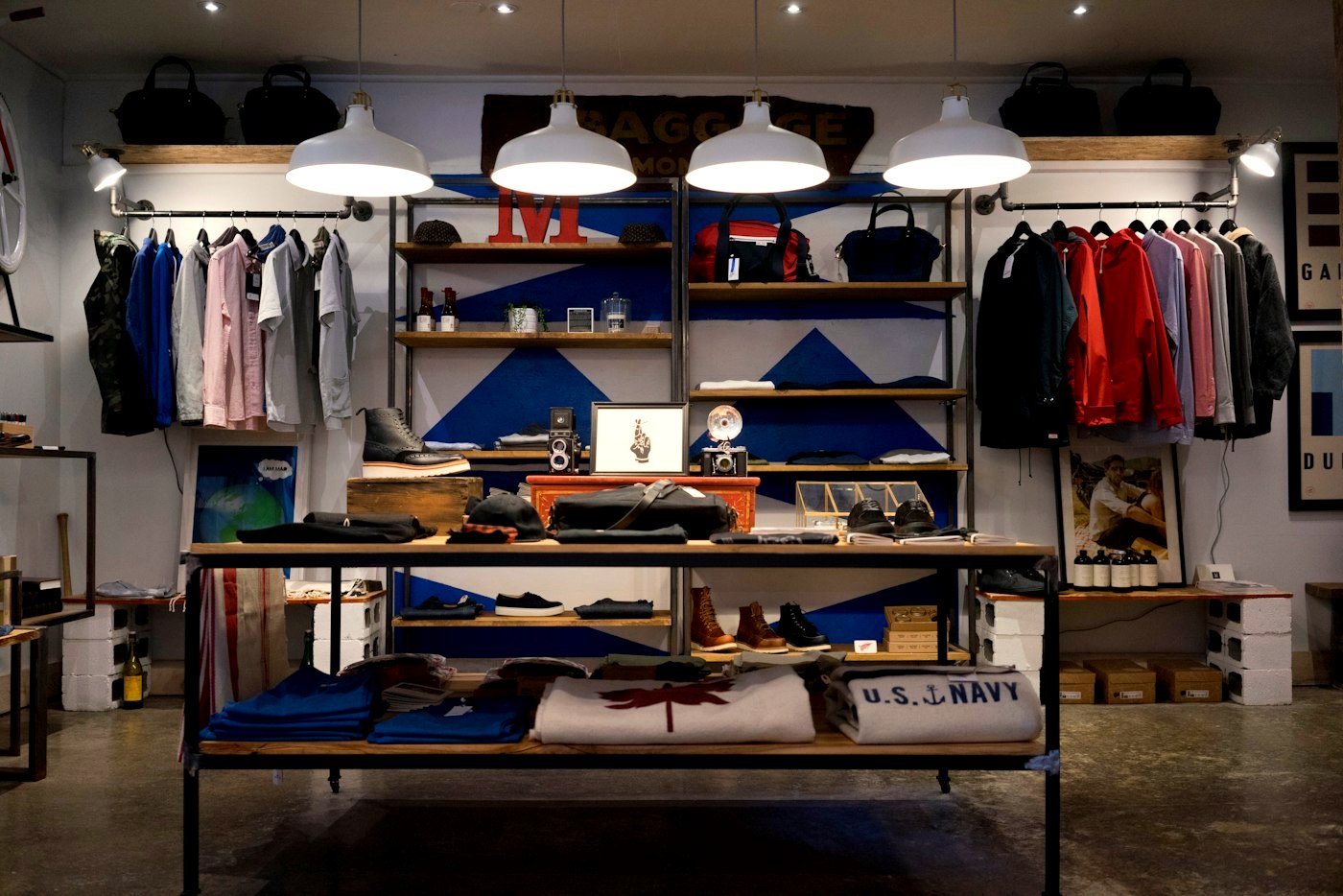
Kith
US price at last check: the Kith for the New York Knicks Gold Vintage Jones Tee $75 at the maker's store.
The call: the retail machine, keeping the 71 and the rows from the Aimé Leon Dore page. Kith is the same New York inheritance run at the opposite scale from the anchor: flagships on three continents, a Monday programme, retail polish nobody else in this field matches. The product is real, a 230 GSM vintage-washed jersey on the $75 Jones Tee linked below, and the construction row credits it. The grading problem is the anchor's problem inverted: where Noah's line is narrow because it is small, Kith's is narrow because it is scheduled, and the product page linked here, checked today, shows every size sold out, which is the fit row's 13 stated by the merchant itself. Buy it when the calendar and your size agree. The anchor's core, in stock at a printed price, is the standing rebuke to that agreement.
Aimé Leon Dore
US prices at last check: the Unisphere hoodie $195; logo tees $85 to $95; the Linen Knit Crewneck Sweater $295 at the maker's store.
The call: the scene sibling, keeping the 68 and the rows from its own page in this series, graded here head-to-head against the anchor it hosted there. The cloth rows tie, 24 and 16 apiece: this is the same inheritance at the same standard, Queens prep finished two ways. The nine points between the houses live in exactly two rows. Fit range, 12 against 14: the sibling's size run exists inside drops and empties between seasons, while the anchor's core, however narrow the line around it, stays on sale. Value, 6 against 9: tees at $85 to $95 and a hoodie at $195 against $58 and $168 for the comparable core pieces, with resale setting the sibling's real price on the basics. Same city, same cloth, opposite transactions, and the table is the whole argument. Buy the sibling in its store, at retail, for the pieces the anchor does not make, the linen knits and the café end of the palette.
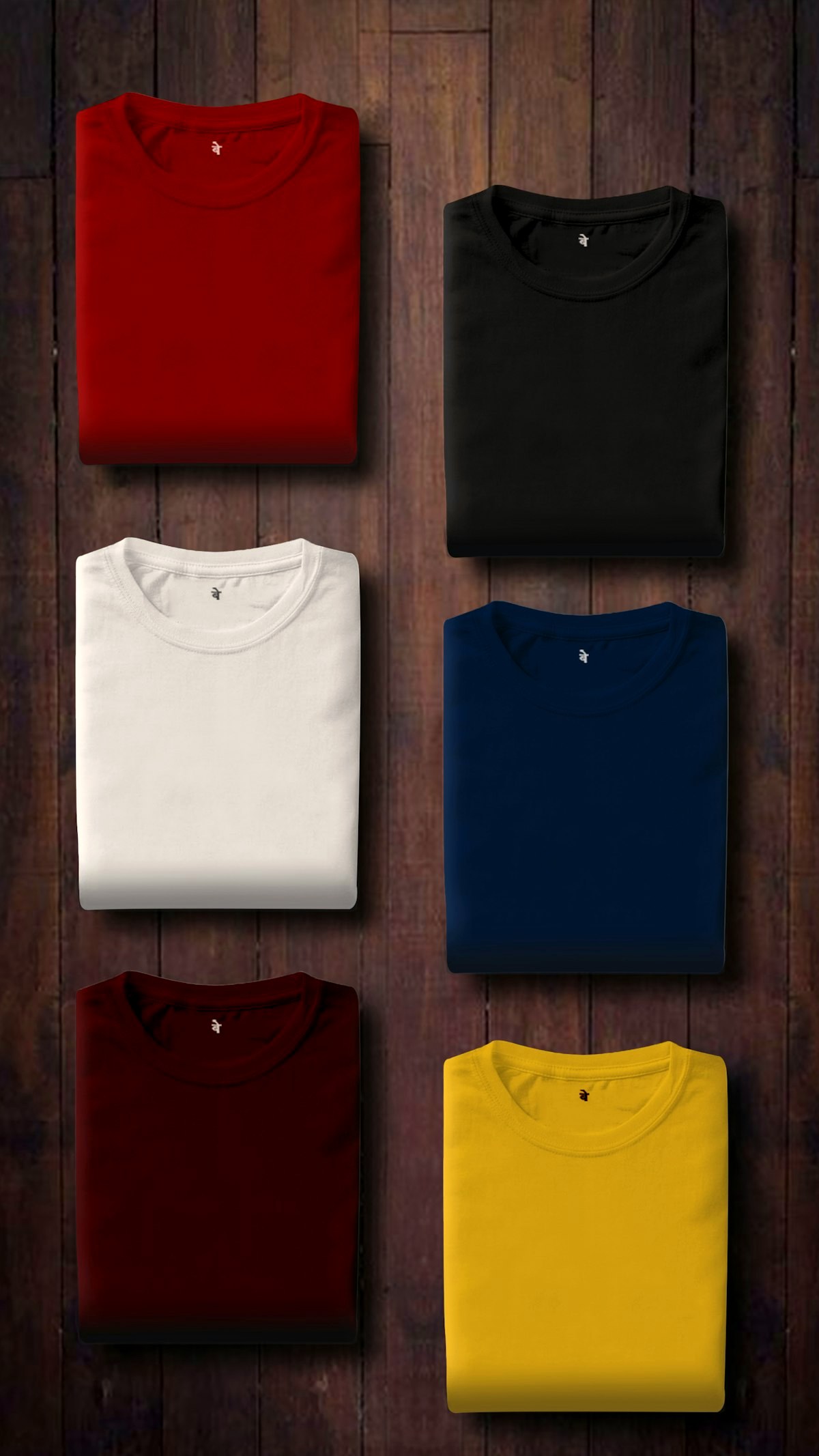
H&M
US price at last check: the Relaxed-Fit Wool-Blend Polo Sweater $49.99; the knit polos and sweaters run $39.99 to $59.99.
The call: the look, copied, keeping the 38 and the rows from its own page in this series: fabric 9, construction 7, fit range 12, value 7, longevity 3, a number derived in the open there from thirteen garments this site has ranked, the best of them at 48. The exhibit is the wool-blend polo sweater at $49.99, this page's prep silhouette reproduced in a blended knit, and it is a fair copy for exactly one season. Against this anchor the charge sharpens: Noah's entire published position is buy less and keep it longer, and the skip is the industrial form of the opposite position, a copy priced to be replaced. The longevity row of 3 is the published record of thirteen garments, reported one wash at a time. A wardrobe built to the anchor's brief cannot be built here.
The pattern under the ranking
Read the ladder and the inheritance explains itself: the source code is prep, and the argument is over what the city did to it. The prep itself descends from Ralph Lauren, 70 on its own page in this series, the house that codified the Oxford, the rugby and the Shetland for America. One downtown skate store then re-cut that inheritance twice in one generation, through two design directors who both left to found houses on this page, and the split between their houses is not taste, it is the transaction: the anchor keeps a core line at printed prices as a matter of published philosophy, the sibling rations a comparable line through drops as a matter of strategy. The ladder's third lesson is scale. J.Crew, graded 73 with the anchor's own founder lately at its drawing board, proves the look survives the mall; its longevity row of 8 proves what the mall charges for the trip. And the elder at 73 proves the base layer of the whole uniform was solved forty years ago at $45. When you shop this look, run the test the table below is built on: is the core in stock, at the printed price, in my size, and will the cloth still be respectable in five years. The houses that pass all four are the top of this ranking.
| Brand | Score | The piece to buy | US price |
|---|---|---|---|
| A.P.C. | 83 | The Petit New Standard jeans | $275 |
| Noah | 77 | The Classic Pocket Tee | $58 |
| Stüssy | 73 | The Basic Stüssy Tee | $45 |
| J.Crew | 73 | The Secret Wash shirt | About $90 |
| Kith | 71 | The Vintage Jones Tee | $75 |
| Aimé Leon Dore | 68 | The Unisphere hoodie | $195 |
| H&M | 38 | None | Knit polos and sweaters $39.99 to $59.99 |
The Skip · 38/100
H&M is this page's named loser, and against this anchor the charge is philosophical before it is technical. Noah's published position, in its founder's words and its own posts, is that clothing should be bought less often and kept longer, and the house prices its conscience at zero, the recycled tee at the same $58 as the regular one. The skip sells this page's silhouette, the knit polo, the relaxed sweater, the prep palette, in blends whose tiredness is a matter of published record on this site: thirteen ranked garments, a mean of 38, a longevity row of 3. Every house above it, including the sibling whose transaction this page grades hardest, is at least selling cloth built to be kept. The skip sells the look of keeping things, on a replacement cycle. Between those two positions sits the entire ranking, and the cheapest house on the right side of it charges $45.
Which one to buy
If you buy one thing: the Noah Classic Pocket Tee at $58, the anchor's core at its honest price, the piece this whole page is about. If you want the tailored half: A.P.C., the Petit New Standard at $275, bought once and worn for years. If the budget is the brief: Stüssy, the uniform's fleece and tee half from $45, in your size, today. If you want the prep at scale: J.Crew, the Secret Wash shirt at about $90 list, bought in a promotion week, from the line the anchor's founder lately drew. If the scene matters more than the stock: the sibling, in its store, at retail, and let resale keep its markup. The other pages in this family score the sibling on its own page, the door in on brands like J.Crew, the source code in brands like Ralph Lauren, and the honest high street in brands like Uniqlo.
Questions, answered
What brand is most like Noah?
Aimé Leon Dore, in spirit: same city, same prep and skate inheritance, a founder who also came up through Supreme. It scores 68 on this page, below the anchor's 77, because the two houses run opposite transactions: Noah keeps its core line on sale at printed prices while the sibling sells through drops. The page itself is won by A.P.C. at 83, which delivers the tailored half of the same grown-up prep, in stock, all year. The closest relative is the sibling. The steadier buy is the winner.
Is Noah worth the money?
The core line, yes, and the core is most of the point. The Classic Pocket Tee is $58 and the Core Classic Hoodie is $168 at the maker's store, heavyweight cloth priced a clear step under the sibling house on this page, and both stay on sale at retail instead of vanishing in a drop. That is the value row's 9 of 15 inside the anchor's standing 77. The seasonal tail is priced closer to the designers, knitwear to $298, and the page grades it as such. Buy the core at the printed price and the house keeps its promise; the promise is the product.
Is Noah a sustainable brand?
Noah says no, in writing, and has since 2018, when it published a post titled We Are Not A Sustainable Company: the house wrote that the way it operates is not even close to sustainable and that there is really no such thing as a sustainable clothing company. What it publishes instead is a responsibility record: membership of 1% for the Planet, which takes one percent of annual sales for grassroots environmental groups, recycled cotton tees knit and sewn in Los Angeles, pocket tees made in the United States, and damaged stock sold at a discount rather than discarded. The recycled tee costs the same $58 as the core pocket tee. The conscience is not a surcharge.
Who founded Noah, and what happened at J.Crew?
Brendon Babenzien, who spent over a decade as a design director at Supreme before leaving in 2015. He first founded Noah in 2002 and relaunched it in 2015 with Estelle Bailey-Babenzien. In 2021 he also became men's creative director at J.Crew, where his chapter produced the giant-fit chino, revivals of the rollneck sweater and the barn coat, the return of the print catalog in 2024 after seven years away, and a dedicated men's store on Bond Street. The chapter closed in 2026, publicly, with J.Crew announcing he would focus on Noah. J.Crew is ranked on this page at 73, and part of that score is his work, graded without a discount in either direction.
What is the cheapest way into the Noah look?
Build the uniform from the two ends of this page. Stüssy sells the fleece and tee half from $45, in stock, in every size, as it has for forty years. J.Crew sells the shirting half, the Secret Wash shirt at about $90 list and less in the promotion weeks that run most of the year. Then buy one piece of the anchor's core, the $58 pocket tee, as the anchor purchase. The look is navy, grey and cream fleece, an Oxford or a rugby shirt, plain chinos and loafers or clean runners, and none of it requires a drop calendar.
How this ranking stays honest
Scores follow our published methodology and are re-checked on the cadence in the byline. Every score on this page is a standing score reproduced with its rows: A.P.C.'s 83, J.Crew's 73 and H&M's 38 from their own pages in this series, the 73, 71 and 68 of Stüssy, Kith and Aimé Leon Dore from the Aimé Leon Dore page, and the anchor's 77 from that same page, where Noah ranked second as an entry. No number was set fresh here. The anchor carries the plainest label of all: this desk published its 77 before it published the full reasoning, the reasoning is printed in the method section above and follows the number rather than inventing it, and when a Noah garment is ranked on this site the derivation will be printed again, from the garment up. Prices are US prices at last check, from the makers' own stores where they publish them: the anchor's core from its homepage shop, checked today with the pocket tee at $58 and the hoodie at $168 both on sale at retail, Kith's from the product page linked in its card, which today shows every size sold out. The founder record is the public one, reported by the trade press at each step: the Supreme decade, the 2015 relaunch, the J.Crew appointment in 2021 and its public close in 2026. The house's environmental positions are quoted from its own published posts, including the 2018 post whose title is its position. The photography is this magazine's licensed scene photography from our own bank; no brand's campaign or lookbook imagery is used anywhere on the page, and the bank holds no frame of the anchor's own storefront or its fleece being worn on a New York street, so those photographs are a stated gap rather than a borrowed one. When a maker changes cloth, price or model materially, the score moves and the move is noted here.