
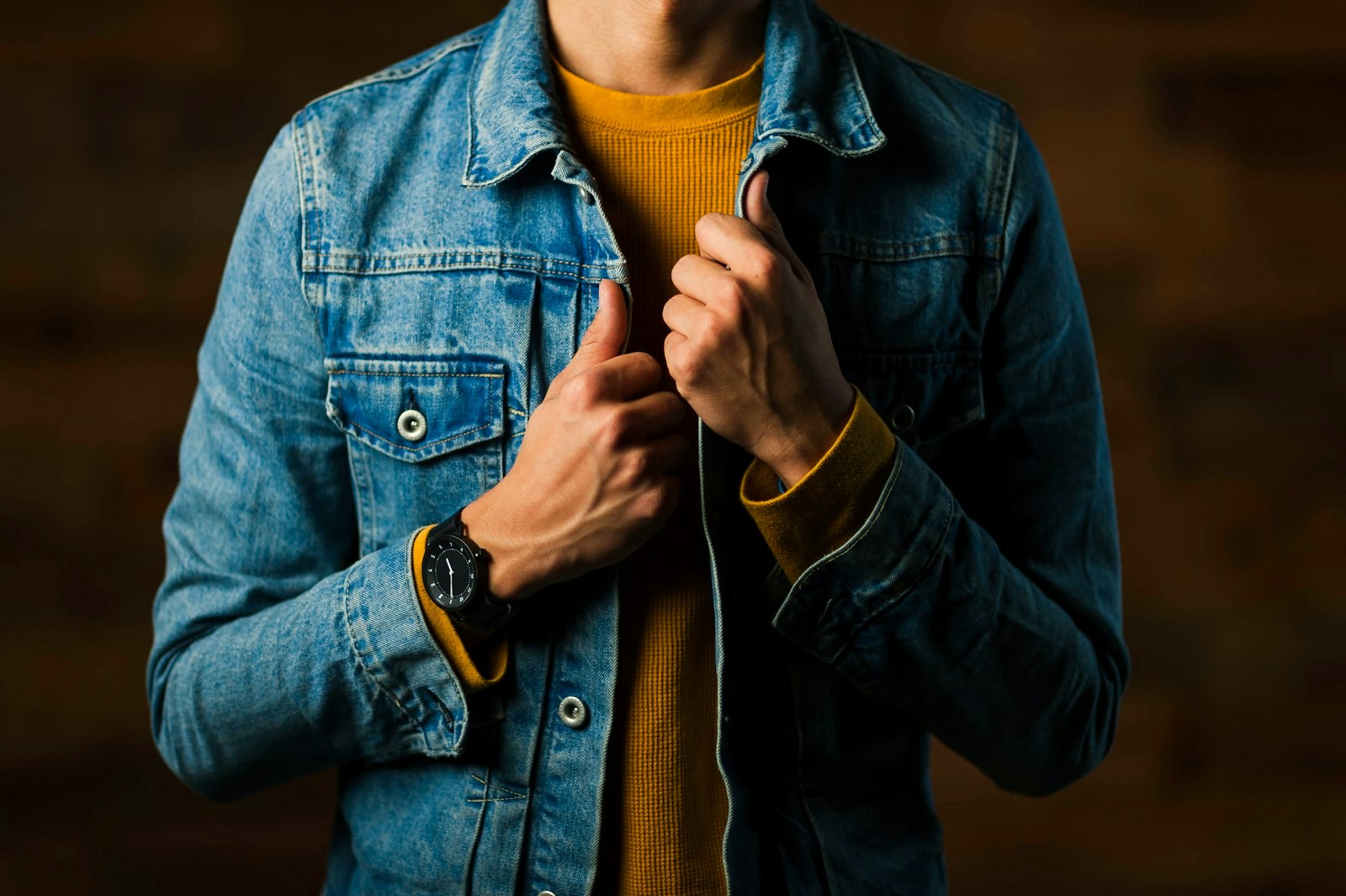
The trucker worn the way the styling record wears it, over knitwear, the colour break doing the work. The frame is the bank's, not a ranked jacket; the harvest list in the honesty section below names the frames still missing rather than let a stranger's jacket stand in for a ranked one.
Checked and updated October 2026
The verdict, up front: seven denim jackets scored out of 100 on cloth & weight 30, construction & hardware 20, fit & species 20, value 15, longevity & fade 15, plus the impostor sent home. The Iron Heart IH-526PJ wins at 86, a modified Type III in the field's heaviest published cloth, 21 ounce Japanese selvedge, at $455. The Pure Blue Japan 18 oz. Type II is second at 84, ruled ahead of the 3sixteen Type 3s, also 84, on the cloth row, 28 to 27. And the jacket sent home, at 25, is boohooMAN's denim-washed hooded puffer, a quilted jacket wearing a western yoke, whose shell is 15 percent polyester. The count underneath the ranking is the story: five makers in eight publish the denim's weight, two name the mill that wove it, and the two biggest sellers in the field publish neither.
The finding: five makers print the weight, two name the mill, and the biggest names print neither
A denim jacket is a cloth with a collar. Strip the silhouette away and everything a buyer is paying for lives in the fabric: its weight, its weave, its dye, the mill that made it and the split that says what else is in it. The silhouette, by contrast, is free. It has been public property since the 1960s, and every maker on this page, from the $455 specialist to the £52 impostor at the bottom, is selling some version of the same pointed collar and flap pockets. So this page grades the cloth, on the only evidence a buyer gets before the box arrives: what the maker publishes. The count is the finding. Five of the eight makers publish the denim's weight, and they print it like a headline, inside the product's name: 21 ounces at Iron Heart, 18 at Pure Blue Japan, 14.5 at 3sixteen, 14.5 at Unbranded, 12.5 at Naked & Famous. Two name the mill. 3sixteen prints Kuroki Mills of Okayama on the garment's own specification, yarn counts and all, and Pure Blue Japan weaves its cloth in its own mill house in Kojima, which is the strongest provenance a jacket can carry, the weaver and the maker being the same company. Four print a full fibre split, and the four are a strange parliament: the two Canadian specialists at 100 percent cotton, Levi's with a split that changes by wash, and the skip, whose 85/15 confession is the most honest line on its page. And then the silence at the top of the market: the jeans pillar found three of its seven makers publishing a weight, and the jacket field does better, five of eight, because the same specialist houses carry the habit across the rail. But the two biggest sellers of denim jackets on earth, Levi's and Uniqlo, publish no weight and no mill between them. The specialists sell cloth. The volume sellers sell the silhouette, and the silhouette is the part that costs nothing.
The species map matters as much as the cloth census, because a ranking of seven Type IIIs would grade one silhouette's paperwork seven times. The field below runs the classic forms: the Type III in standard, modified and lengthened cuts, the field's only true Type II, a regular trucker from a designer's capsule line, and, as the skip, a garment that is not a trucker at all. How to Wear No. 16 has styled this garment on this site from the beginning, files the trucker at formality 2 and warmth 2, and prints its buying rule whole: never the same wash as the jeans, because the colour break is the outfit. What that page has never had, until now, is a ranking to point at. This is the ranking. The cloth classes themselves, weight bands, stretch rules and fade behaviour, are defined in the Denim Index, and the scores below spend its vocabulary without reprinting it.
How the scores work
Every jacket is scored out of 100 on the same five rows, the basis carried unchanged from the jeans pillar so the two denim rankings can be read against each other. Cloth & Weight (30) reads the published record first: a printed weight scores, a named mill scores again, a printed split a third time, and a dye or weave specification (rope-dyed, shuttle-loomed, slub yarns numbered) a fourth, because each is a claim a buyer can check. The split is graded the way the overcoat Card graded fibre splits: 100 percent cotton is the reference cloth, 1 to 2 percent elastane is the comfort class the Denim Index names and is scored as a different garment rather than a defective one, and a double-digit synthetic share ends the conversation. Silence is charged at each step, and it is charged hardest where the price is highest. Construction & Hardware (20) is the build as published: felled or chain-stitched seams where printed, hardware named by metal or by maker, pockets and reinforcement where the maker files them. Fit & Species (20) applies each form's own law: a Type II judged as a Type II, a modified Type III credited for what the modification buys, size range and garment measurements published or not. A tie is ruled on the cloth row, the house's standing tiebreak, and one occurs on this page. Value (15) divides the price by the published record and by the years the longevity row scores, printed in the cost table below. Longevity & Fade (15) is the ownership audit: how the cloth ages, whether the fade runway is intact or spent at purchase, and whether the house will still sell the model when the jacket needs a button. Row scores add to the total, on every card. Garment scores are evidence about garments. Where a house holds a brand score elsewhere on this site, the brand number is printed on the card and kept separate, in both directions.
The ranking
Iron Heart Type III 21oz Indigo Jacket with Hand Pockets, IH-526PJ
Modified Type III · The Winner
US price at last check: $455 at Self Edge (sizes 36 to 46).
Buy it as the ceiling of the category: the heaviest published cloth in the field, felled seams, steel hardware, and a maker that prints the weight inside the product's name.
The cloth: 21 ounce Japanese selvedge denim, the house's flagship cloth, the same denim as its 634S jean, woven from long-fibre American cotton and printed at the top of the product's own name, where a buyer cannot miss it. This is the heaviest jacket cloth in the field by three ounces, deep in the heavyweight-plus class the Denim Index reserves for commitment garments, and the cloth row takes 29 of 30: docked the single point for the field's one remaining silence at the top, a mill named by town and reputation (the cloth is woven in Kojima) rather than by company. The jacket arrives rinsed, shrinkage minimal, so the size bought is the size kept, which is the honest way to sell an unsanforized-class cloth to a first-time buyer.
The build and the fit: a Type III modified with hand pockets, the one alteration the classic form always needed, executed without breaking the species: felled internal seams, poly/cotton constructional stitching, and Iron Heart's own steel donut buttons, the hardware named by material and maker because the maker is the hardware's author. Construction 19. Fit 15 on six sizes with full garment measurements published, chest, length and sleeve, on a cut that runs trim the way the form should. Value 8 is the ceiling priced plainly: $455 is the most money on this page, and per dollar the Pure Blue Japan below gives 18 ounces for $125 less. What the premium buys is the cloth itself and a twenty-year scoring life, about $23 a year, with longevity at the field maximum, 15: the 21 ounce cloth's fade record is the house legend, tracked in public by its wearers for a decade. Iron Heart's IH-634S jean scored 80 on the jeans pillar; that number belongs to the jean. This 86 is the jacket's own, and Iron Heart holds no brand score on this site.
Pure Blue Japan 18 oz. Type II Denim Jacket, Indigo/Black
Type II · The Mill Is the Maker
US price at last check: $330 at Blue in Green (sizes S to XXL).
Buy it as the connoisseur's form: the field's only true Type II, in an 18 ounce cloth the maker wove in its own mill, at $125 less than the winner.
The cloth: 18 ounce custom denim, 100 percent cotton selvedge, a pure indigo warp over a sulphur-dyed black weft, printed whole on the retail record: weight, split, dye and weave in four lines. The provenance is the field's best answer to the mill question, because Pure Blue Japan is a mill's own brand: the cloth is woven by the maker's own house in Kojima, Okayama, so the mill is not a supplier to be named but the company itself. The cloth row takes 28, one behind the winner on weight alone, three ounces being three ounces. The indigo-over-black recipe is a fade program in itself, the black weft holding the garment dark while the warp wears toward electric blue, the contrast the maker's own copy promises and its wearers document.
The build and the fit: a true Type II, the 1950s form with its pleated front, two chest pockets and waist adjusters, cut slim and sold one-washed so the measurements on the page are the measurements on the body. Iron buttons and riveted pockets are published, with a leather patch; the seam specification is not printed, which is where construction lands at 17 rather than higher. Fit 15 on the published size table, five sizes with chest, waist, opening, length and sleeve all measured, the fullest measurement record in the field. Value 10 at $330, about $18 a year across an eighteen-year life, and longevity 14 on the 18 ounce cloth and a house that has woven in Kojima since the 1990s. Pure Blue Japan holds no brand score on this site and this card creates none: 84 is the jacket's own, ruled ahead of the 3sixteen below on the cloth row, 28 to 27, under the house tiebreak.
3sixteen Type 3s Denim Jacket, Indigo 14.5oz
Type III · The Named Mill
US price at last check: $285 at Self Edge (sizes S to XXXL).
Buy it as the complete record at a middle price: weight, mill, yarn and dye all printed on one specification, cut and sewn in San Francisco, at $285.
The cloth: 14.5 ounce Japanese selvedge, and then the line this ranking exists to reward, printed on the garment's own specification: exclusive 3sixteen denim by Kuroki Mills of Okayama, Japan. The mill is named. So is everything else: pure indigo dyed warp yarns, warp No. 7 slub against weft No. 6 slub, red line selvedge, sanforized, skewed and slightly singed, a cloth described down to the yarn numbers a buyer could check against the mill's own books. The cloth row takes 27, the highest disclosure mark in the field after the two heavyweights, charged for the midweight class itself and for a fibre percentage the specification leaves implied by the selvedge record rather than printed. The same model is sold in a Double Black cloth at the same $285, the black answer on this page's record, and in a Shadow selvedge whose indigo-over-black fades are the model's legend.
The build and the fit: custom steel buttons, a cowhide leather patch, canvas-lined cuffs and pocket lining, cut and sewn in San Francisco, all published. Construction 17. The fit is the Type III modernised with intent: the body lengthened past the vintage crop, 25.5 to 28.5 inches across six sizes with the full measurement table printed, which fit scores at 16, the field's best combination of an honest pattern and an honest size record. Value 11 at $285, about $19 a year across fifteen years, undercuts both jackets above it while naming a mill neither of the volume sellers will name at any price. Longevity 13 on the sanforized midweight cloth and a model the house has sold, revised and restocked for a decade. 3sixteen the brand stands at 86 on Brands Like Rag & Bone, scored on its whole range; this 84 is the jacket's own, and the two points between them are the difference between a house's average and one garment's file.
Naked & Famous Denim Jacket, Natural Indigo Selvedge
Type III · The Natural Indigo
European price at last check: €239 at Cultizm (about $277 at €1 = $1.16), in stock in sizes S to XXL.
Buy it for the dye: natural indigo from the fermented plant, on a shuttle-loomed 12.5 ounce cloth, sewn in Canada, at the field's gentlest specialist price.
The cloth: 12.5 ounce Japanese selvedge denim, rope-dyed, woven on vintage shuttle looms in a right-hand twill, and dyed with natural indigo, the pigment fermented from the indigofera plant rather than synthesised, printed on the record with the dye's origin named. The split is printed at 100 percent cotton and the weight inside the product's name. What is missing is the mill: the cloth is Japanese and anonymous, and the cloth row, 23, charges the anonymity against the two named provenances above while crediting a fuller dye record than either of them prints. At 12.5 ounces this is the lightest specialist cloth in the field, the classic band's lower edge, a spring-weight trucker rather than a commitment garment, scored as one.
The build and the fit: dark copper buttons and rivets, a full-grain leather patch, blue selvedge ID, and a pocket architecture published in full: two chest flap pockets, two slash pockets and two large interior pockets, the most pockets any card here files. Construction 16. Made in Canada, in the maker's own Montreal ecosystem, in a regular fit across five sizes; fit 15. Value 11 at €239, about $18 a year across fifteen years, and longevity 13 on the natural dye's fade behaviour, which is the garment's whole argument: plant indigo fades faster and brighter than synthetic, a feature the maker prints rather than a flaw it hides. Naked & Famous holds no brand score on this site; the house appears again at No. 5, in its own sister brand, and the kinship is printed there rather than smoothed over.
Unbranded UB901 Denim Jacket
Type III · The Value Spoiler
UK price at last check: £185 at Jeanstore (about $248 at £1 = $1.34).
Buy it as the cheapest honest selvedge trucker in the field: a named weight, a rope-dyed warp, copper hardware, and nothing spent on a logo.
The cloth: 14.5 ounce sanforized raw indigo selvedge, rope-dyed warp yarns against a white weft, printed at the top of the retail record with the weight inside the product's name, the same 14.5 ounce class as the 3sixteen at No. 3. The kinship is literal and is printed rather than hidden: Unbranded is the sister brand of Naked & Famous at No. 4, founded by the same house to sell the same class of Japanese cloth without the name, the marketing or the patch budget. The cloth row takes 22, charged for the two silences the record keeps, a mill unnamed and a fibre percentage unprinted (the raw selvedge record implies the cotton; this desk grades what is printed), and credited for a weight and a dye method published at a price where silence would be cheaper.
The build and the fit: dark copper tin buttons, an exposed selvedge inner placket, the house's blue-ear selvedge ID, chest flap pockets and side slash pockets, all published; no chain-stitch or felled-seam claim is printed for the jacket, and construction, 14, scores the record as filed rather than borrowing the maker's jeans specifications, which do print chain-stitched hems and are a different garment. The make is published as China and Macau, printed on the card because it is printed on the record: at £185 it is the honest trade the whole brand is built on, Japanese cloth, offshore sewing, no advertising. Fit 14 on the classic Type III shape. Value 13 is the field's spoiler arithmetic, about $21 a year across twelve years for a named-weight selvedge trucker, and longevity 12 on the raw cloth's full fade runway. Unbranded holds no brand score on this site and none is created here.
Levi's Trucker Jacket
Type III · The Reference Garment
US list price at last check: $90 at Levi's (seen promoted at $59); the door below is the maker's outerwear department, flagged in the honesty section.
Buy it knowing which cloth is in the box: the original pattern, graded here on the record its maker publishes now, not on the one its legend remembers.
The cloth: this is the jacket that invented the species, and its current published record is the thinnest on this page relative to its fame. No weight is published anywhere in the maker's record. No mill is named. And the split, where the maker's own specification data prints one, is not the rigid cloth of the legend: blue is 98 percent cotton and 2 percent elastane, labelled Stretch Denim; black is 98.5 and 1.5, while other washes of the same jacket are 100 percent cotton, a fact a buyer can only learn wash by wash. The Denim Index classes 1 to 2 percent elastane as comfort stretch, a legitimate and different garment, softer-fading and slower to keep its shape; the cloth row, 14, grades the ambiguity itself, because a reference garment whose cloth changes under the same name is a record problem before it is a cloth problem. Scored as a class figure, the current cloth sits near 12 ounces, midweight, and the page marks that as a class figure rather than a published one.
The build and the fit: the Type III architecture the whole field copies, branded metal buttons, tapered V stitches, button-flap chest pockets, welt side pockets and side hem adjusters, published as design rather than as specification; construction 13. Fit takes 17, the field's highest fit mark, because the pattern is the template and the range is the widest here: standard, relaxed and vintage fits, sizes to 3XL with big and tall runs, a size record no specialist matches. Value 13 at a $90 list, about $11 a year across eight years, the cheapest jacket on this page to own, which is the volume model's genuine virtue and is scored as one. Longevity 9 prices the prewashed cloth and the elastane's fatigue honestly: the washed colours arrive with their fades spent, and the stretch washes will tire before a rigid cloth does. Levi's holds no brand score on this site. Its 501 jean scored 81 on the jeans pillar on a fuller record; this 66 is the trucker's own, and the distance between the two numbers is the distance between the house's best paperwork and its most famous garment's.
Uniqlo : C Denim Trucker Jacket
Regular Trucker · The Anonymous Cloth
US price at last check: $59.90 at Uniqlo US.
Buy it as the one-season answer only with the record understood: a wearable trucker shape at the field's floor price, whose maker publishes almost nothing about its cloth.
The cloth: the entire published cloth record, quoted from the maker's own product page, is yarn-dyed coloured denim with a subtle washed finish. No weight. No mill. And no fibre split captured on the maker's US, Canadian or French product pages at this check, all three rendering the same two-sentence description; the gap is flagged for direct re-verification in the November pass and graded here as an uncaptured record, not a convicted one, the same treatment this desk gave the COS overcoat. What can be graded is what the description admits: the jacket arrives washed, its fade spent at purchase, in a coloured-denim programme (olive, navy, black, blue) that treats denim as a colour rather than a cloth. The cloth row takes 12, the lowest a ranked jacket receives, and the number is the record's fault rather than the garment's, which by every wearer's account is a decent light trucker. A ranking graded on the published record cannot pay for quality the maker declines to publish.
The build and the fit: a regular silhouette with a shorter length, minimal design and understated stitch colour, the maker's own words, in a unisex run from XXS to 3XL. Construction 11 on the published minimalism, fit 13 on the honest short-regular cut and the wide size range. Value 14 is the floor price doing its work: $59.90, about $15 a year across a four-year scored life, and for a reader who wants the shape for two springs the arithmetic is real. Longevity 7 prices the washed finish and the capsule's nature: the : C line is a seasonal collaboration range, and a garment whose line will not restock is a garment bought against a clock. Uniqlo the brand stands at 84 on the Japanese ranking, scored across its whole range; this 57 is the jacket's own, and the gap between them is the gap between a house that publishes fibre lines on its knitwear and a capsule page that publishes two sentences about denim.
boohooMAN Boxy Fit Denim Washed Western Yoke Hooded Puffer Jacket
Hooded Puffer · The Skip: Sent Home
UK price at last check: £52 at boohooMAN (list £65). No buy pill: this desk does not link what it sends home.
Send it home: a hooded puffer in a denim-washed shell, merchandised as a denim jacket, whose entire cloth record is an 85/15 split.
The cloth: the maker's complete material record for a garment it sells inside its denim jacket rail, quoted entire, is Main: 85% Cotton, 15% Polyester. Fifteen percent polyester is not the comfort class; it is seven times the elastane share this page charged Levi's for, in a garment whose warmth comes from a puffer's loft rather than from denim at all. No weight is published, no mill, no weave, no dye, and the wash arrives pre-spent, the maker's own copy promising a broken-in appearance straight out of the bag. The cloth row takes 5. A denim jacket is a cloth with a collar; this is a quilt with a denim costume, and the record, unusually, says so itself, for anyone who reads to the bottom of the page.
The build and the fit: the published architecture is a boxy cropped puffer with an oversized hood and a western yoke stitched across the chest, the yoke being a trucker's quotation worn by a garment that shares nothing else with the species: no button front in the trucker's sense, no waist cut, no fade future. Construction 6, fit 5. The pricing completes the record the label began: £65 struck to £52 as a standing condition, under a house pricing policy that states on its own product pages that its percentage-off promotions are based on its own opinion of the value. Value 6 and longevity 3 close the card at 25, about $35 a year across a two-year life, the most expensive jacket on this page per year of wear. The full conviction is written in the skip section below. boohooMAN the brand stands at 32 on Brands Like Represent; this 25 is the garment's own, and it is the record, not the silhouette, that earned it.
The record table: what each maker actually publishes
| Jacket | Weight, as published | Mill, as published | Split, as published | Hardware, as published |
|---|---|---|---|---|
| Iron Heart IH-526PJ | 21 oz | Not named (woven in Kojima, Japan) | 100% cotton (retailer record) | Steel donut buttons, maker's own |
| Pure Blue Japan Type II | 18 oz | Maker's own mill, Kojima | 100% cotton selvedge | Iron buttons, riveted pockets |
| 3sixteen Type 3s | 14.5 oz | Kuroki Mills, Okayama, named | Not printed (raw selvedge record) | Custom steel buttons |
| Naked & Famous Natural Indigo | 12.5 oz | Not named (Japanese cloth) | 100% cotton | Dark copper buttons and rivets |
| Unbranded UB901 | 14.5 oz | Not named | Not printed (raw selvedge record) | Dark copper tin buttons |
| Levi's Trucker Jacket | Not published | Not published | Wash-dependent: 98/2 elastane (blue), 98.5/1.5 (black); rigid washes 100% cotton | No (branded shank buttons) |
| Uniqlo : C Trucker | Not published | Not published | Not captured on the maker's pages read | No |
| boohooMAN Hooded Puffer (skip) | Not published | Not published | 85% cotton, 15% polyester (maker's words) | No |
Read the table as the category's confession. The five weights cluster exactly where the specialists live, and two of them are printed inside the product's name, because a maker that weighs its cloth wants the number found. The two named mills are the two strongest provenances in the field, and neither belongs to a famous brand. The split column holds the page's strangest pattern: the bottom of the market prints its split because it must, the specialists print theirs because they can, and the reference garment in the middle prints one that changes by wash, so the most famous denim jacket in the world is the only ranked garment here whose cloth cannot be stated in a single line.
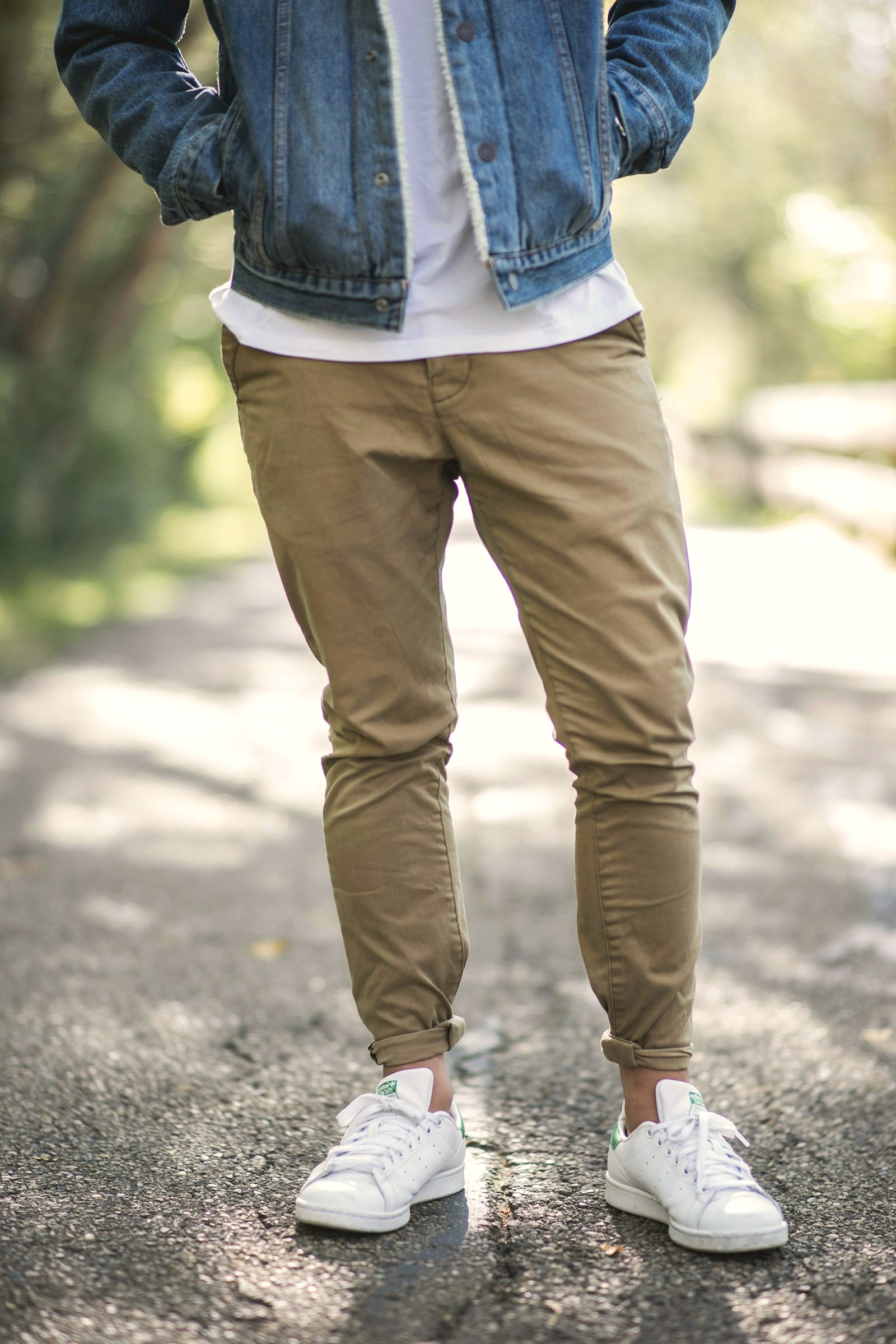
The fade audit: five raw runways, three spent at purchase
A denim jacket is bought twice: once at the till, and once across the years it takes the cloth to record the wearer's life. The makers' own pages print which purchase each jacket is. Five of the eight arrive with the runway intact: the Iron Heart rinsed but unfaded, the Pure Blue Japan one-washed, the 3sixteen sanforized, the Naked & Famous and the Unbranded raw, each ready to spend its indigo at the creases, the elbows, the button placket and the pocket edges, which is where a trucker's biography is written. The sulphur-black weft under the Pure Blue Japan's indigo warp and the black weft in 3sixteen's Shadow cloth are fade engineering, dye recipes designed to change colour in two directions at once. Three jackets arrive with the story pre-spent: the washed Levi's colours, the Uniqlo : C's subtle washed finish and the skip's broken-in appearance straight out of the bag, the last of those being the audit's bleakest line, a garment selling the photograph of a life it will never live. The care terms are the fade contract, and they are printed in the Questions below: wash rarely, cold, inside out, because a wash spends indigo evenly and wear spends it beautifully. The heavy cloths ask one more term, patience: an 18 or 21 ounce jacket is stiff for its first season, and the desk scores that stiffness as the price of the second decade rather than as a defect, because the jackets filling the vintage rails in twenty years are being broken in, somewhere, tonight.
Cost per year, printed in the open
| Jacket | Price | Score | Life scored | Cost per year |
|---|---|---|---|---|
| Levi's Trucker Jacket | $90 | 66 | 8 years | About $11 |
| Uniqlo : C Denim Trucker Jacket | $59.90 | 57 | 4 years | About $15 |
| Pure Blue Japan Type II | $330 | 84 | 18 years | About $18 |
| Naked & Famous Natural Indigo | €239 (about $277) | 78 | 15 years | About $18 |
| 3sixteen Type 3s | $285 | 84 | 15 years | About $19 |
| Unbranded UB901 | £185 (about $248) | 75 | 12 years | About $21 |
| Iron Heart IH-526PJ | $455 | 86 | 20 years | About $23 |
| boohooMAN Hooded Puffer (skip) | £52 (about $70) | 25 | 2 years | About $35 |
The table's last line is its argument. The skip, the cheapest jacket here to buy, is the most expensive jacket here to own: about $35 a year for a two-year costume. The specialists cluster between $18 and $23 a year, which is the honest premium for a published cloth, and the reference Levi's is the cheapest line in the table despite its thin record, because a $90 jacket that lasts eight years is the volume model working as intended. What no line defends is the middle failure this page keeps finding: paying for a legend whose paperwork stopped being printed.
The skip: boohooMAN's denim-washed hooded puffer at 25
Every Verdict Card on this site sends one garment home, and the honest ones are convicted out of their makers' own mouths. This one's name is the confession, read slowly: a boxy fit, denim-washed, western-yoke, hooded puffer jacket. It is four garments in a trench coat of a name, and the one it is merchandised as, inside the maker's own denim jacket rail, is the one it is not. A puffer is a quilted shell around synthetic loft; its warmth, its shape and its lifespan have nothing to do with denim. The denim here is a wash printed on a shell the maker's own care line reads at 85 percent cotton and 15 percent polyester, a synthetic share seven times the stretch content this page charged the reference garment for, with no weight, no weave and no mill behind it. The western yoke, the trucker's one quotation, is stitched across the chest as a photograph of heritage on a garment built for a season. Add the shape of the pricing, £65 struck to £52 as a standing condition under a house policy that calls its own discounts its opinion of the value, and the record is complete: a jacket that cannot be sold on its cloth is sold on its costume. Buy the Uniqlo : C and own an honest light trucker for less money. Buy the Unbranded and own a named-weight selvedge cloth for a decade. A denim jacket is a cloth with a collar. This is a collar with a costume.
Which denim jacket to buy
If you buy one: the 3sixteen Type 3s, the complete record at a middle price, weight, mill, yarn and dye on one specification, at about $19 a year. If you buy the best: the Iron Heart IH-526PJ, the heaviest published cloth in the field and a twenty-year garment. If the Type II is your form: the Pure Blue Japan, the field's only true one, woven by the maker's own mill. If the dye is the point: the Naked & Famous, natural indigo on a shuttle-loomed cloth. If the money is the argument: the Unbranded UB901, a named-weight selvedge trucker at £185, or the Levi's at $90 with the wash's cloth checked before paying. If the shape is all you need for two springs: the Uniqlo : C at $59.90, bought with its two-sentence record understood. The wearing system is How to Wear No. 16, the double-denim law is How to Wear No. 05, the cloth classes are the Denim Index, the species map is the jackets index, and every garment in the stack is mapped in the Body Map.
Questions, answered
What are the best denim jackets for men?
The Iron Heart IH-526PJ, scored 86 out of 100: a modified Type III in the house's flagship 21 ounce Japanese selvedge denim, the heaviest published cloth in this field, with felled seams and steel donut buttons, at $455. The Pure Blue Japan 18 ounce Type II follows at 84, ruled ahead of the 3sixteen Type 3s, also 84, on the cloth row, 28 to 27: the field's only true Type II, in an 18 ounce cloth woven by the maker's own mill, at $330, against the Type 3s and its named Kuroki Mills cloth at $285. The jacket sent home, at 25, is boohooMAN's denim-washed hooded puffer, a quilted jacket with a western yoke whose shell is 85 percent cotton and 15 percent polyester, sold inside the denim jacket rail at £52.
How heavy should a denim jacket be?
The classic band is 12 to 14 ounces, the midweight range this site's Denim Index prints: heavy enough to hold the trucker's architecture and fade in ridges, light enough to wear as a layer in spring. Five of the eight jackets ranked here publish a weight, and they span the whole map: 21 ounces at Iron Heart, 18 at Pure Blue Japan, 14.5 at 3sixteen and Unbranded, 12.5 at Naked & Famous. Above 16 ounces the jacket becomes a commitment garment, stiff for a season and warm like a coat; below 12 it reads as a shirt with buttons. The problem is not choosing a weight. It is that the two biggest sellers in the field, Levi's and Uniqlo, publish no weight at all, so the buyer chooses blind exactly where the specialists print the number inside the product's name.
Does the mill that weaves the denim matter?
It matters the way a tannery matters on a leather jacket: a named mill is a checkable claim, and an anonymous cloth is a request for trust. Two of the eight makers ranked here name one. 3sixteen prints Kuroki Mills of Okayama on the Type 3s specification itself, and Pure Blue Japan weaves its cloth in its own mill house in Kojima, the strongest provenance in the field because the weaver and the maker are the same company. Iron Heart prints the weight and the weaving country and keeps the mill's name to itself, Naked & Famous and Unbranded print Japanese cloth with no mill attached, and Levi's, Uniqlo and boohooMAN print neither a weight nor a mill. A named mill does not guarantee a better jacket. It guarantees the maker can be caught lying, which is why the honest ones name it.
Is a stretch denim jacket a worse jacket?
It is a different garment, and the maker's own record says so. Levi's current Trucker Jacket, the reference garment of this category, is published in the maker's own specification data at 98 percent cotton and 2 percent elastane in blue, 98.5 and 1.5 in black, and labelled Stretch Denim, while other washes of the same jacket are 100 percent cotton. This site's Denim Index classes 1 to 2 percent elastane as comfort stretch: it moves with the body and holds a slimmer cut, and it gives back two things over the years, the sharpness of its fades, which soften, and its recovery, because elastane tires. A rigid jacket fades in ridges and keeps its architecture for a decade. Neither cloth is a fraud. The failure is selling the stretch cloth under the rigid legend without printing which cloth is in the box, and the fix is the one this page grades: print the split, wash by wash.
Type I, Type II or Type III: which denim jacket should you buy?
The Type III, the 1960s trucker with the pointed flap pockets and the tapered V seams, is the default because it is the most balanced: waist length, close cut, two chest pockets and side adjusters, the form this site's styling record files at formality 2. The Type II, the 1950s form with front pleats and a single-button cuff, is the connoisseur's pick, boxier and rarer; the Pure Blue Japan jacket ranked second here is the field's only true Type II. The Type I, the oldest form, with its single chest pocket and back cinch, is a heritage reproduction garment, sold by Levi's itself as a selvedge special at a $110 list price rather than as the mainline jacket. How to Wear No. 16 styles all three against the same wardrobe law: never the same wash as the jeans, because the colour break is the outfit.
How long does a denim jacket last, and how should you wash it?
A rigid selvedge trucker is a ten-to-twenty-year garment: the 21 ounce Iron Heart on this page is scored on twenty years, and the midweight specialists on twelve to fifteen. The care contract is the fade contract. Wash rarely, cold, inside out, and never tumble a jacket you are trying to fade, because every wash spends indigo evenly across the whole garment while wear spends it at the creases, which is where fades come from. Pre-washed jackets, the Uniqlo : C and the washed Levi's colours, arrive with the fade already spent, which is a legitimate choice and a shorter story. Store a heavy jacket on a wide hanger rather than a hook, and let a new 18 or 21 ounce cloth have its stiff season: the break-in is the price of the second decade.
How this ranking stays honest
The rests, the prose answers and the capture notes, printed. Asket is rested because its range carries no denim jacket at this check; the brand stands at 92, the highest on this site, untouched, and a house that declines the category is not charged for the absence. Taylor Stitch and Buck Mason are rested because neither house's denim jacket could be pinned to a single live maker record at this check; their brand scores, 85 and 90, stand untouched, and the desk does not grade a garment it cannot open. Levi's own selvedge specials, its Type I at a $110 list price and its Type II selvedge, are rested as garments so this Card grades the mainline jacket buyers actually meet; they are named in the Questions above so the reference card cannot be read as the whole house. Zara is rested, its brand score of 48 untouched. H&M was rested deliberately, as it has been rested through this run of Cards; the jeans pillar already carries its denim record, its derived brand score stands untouched on its own page, and no garment here triggers its fourteenth derivation entry. On capture: the Iron Heart record is graded from the Self Edge product page with the felled-seam and stitching specification read on Rivet & Hide's page for the same garment; the Pure Blue Japan record and price were read on Blue in Green's own store, the house's US specialist; the 3sixteen record was read in full on its Self Edge product page, the maker's own store not listing the jacket at this check, which is why the card's door is the retailer's exact product page rather than the homepage exception this site has logged for the house before; the Naked & Famous record was read on Cultizm's product page in euros, the maker's own jacket page resisting isolation at this check, converted at €1 = $1.16; the Unbranded record was read on Jeanstore's product page in sterling, the maker's own store not currently listing the jacket, converted at the £1 = $1.34 rate this desk uses across its rankings; the Levi's price and split were read from the maker's published retail and specification data, its standard product page resisting verbatim capture across three attempts, which is why the card's door is the maker's outerwear department, the garment-class door the rules allow; and the Uniqlo : C fibre line could not be captured on the maker's US, Canadian or French product pages, which render the same two-sentence description, so the card grades the record as uncaptured rather than convicted and flags the fibre line as the November pass's first revisit on this page. On photography: the bank holds a small set of true denim-jacket frames, which front this page and its figure, captioned for what they show; the cards run without images, and the harvest list names what is missing, in order: a Type II worn on a body, a black trucker on a body, a heavyweight jacket at macro range showing the slub, and a selvedge placket detail at reading distance. One flag for the record: How to Wear No. 16 states in its final FAQ that Young Cotton has not ranked denim jackets as a Verdict Card and offers its own buying rule instead; that line is stale from this page's publication. The amendment is the parent desk's to make, and it is flagged in this page's state file rather than made here. Prices and specifications were checked against the makers' own published pages in October 2026; where a figure could not be verified from the maker's page, the page says so at the figure's elbow. The full method is written out on the methodology page.