
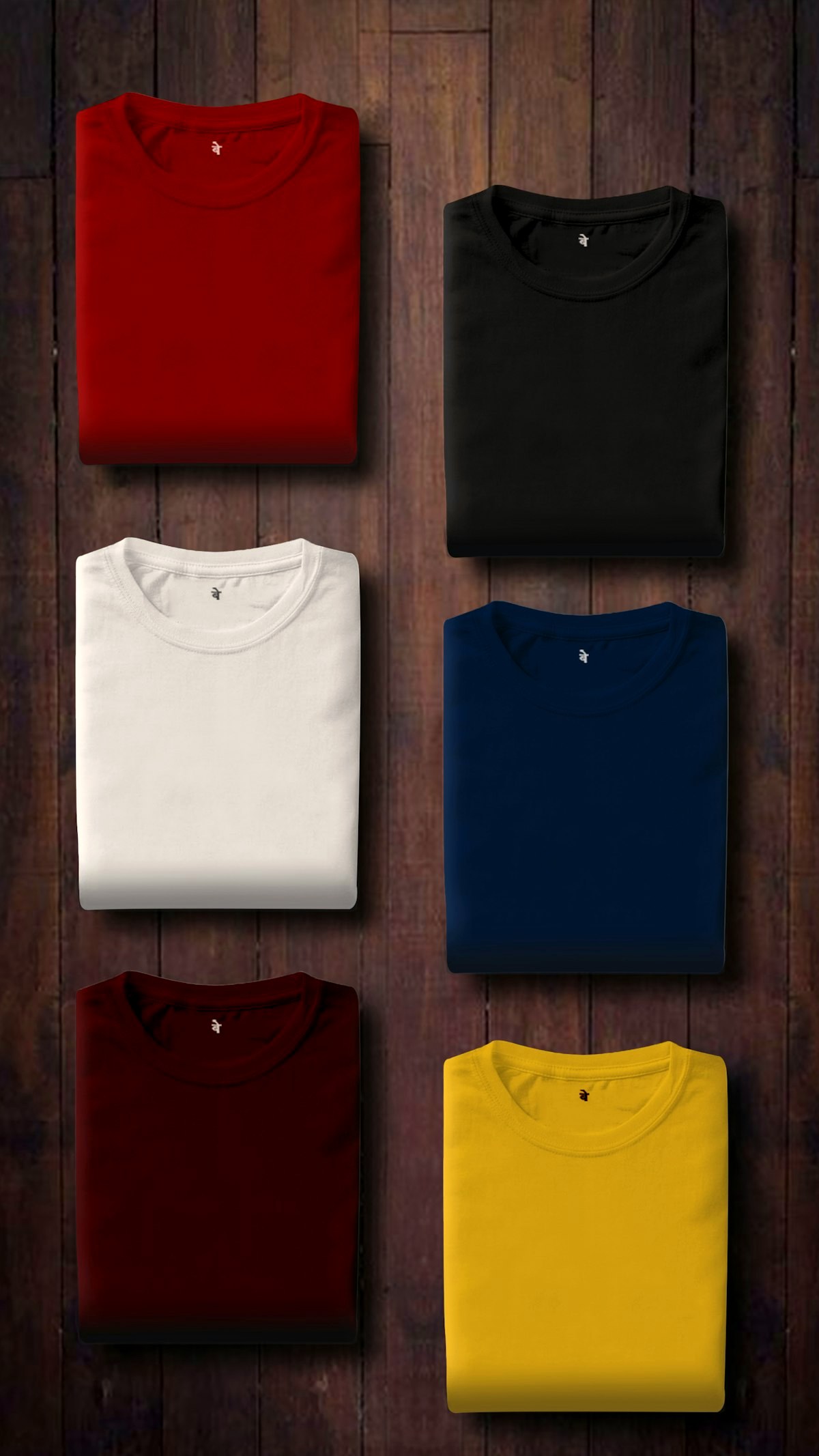
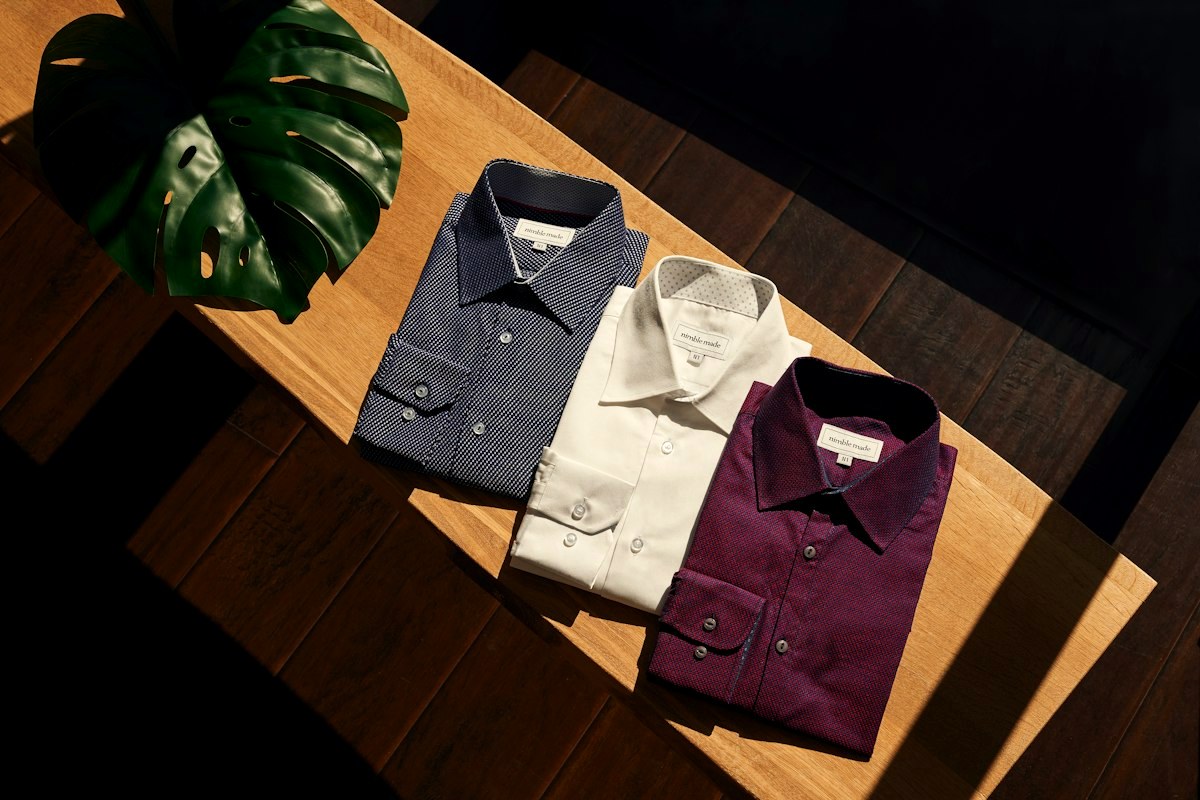
The American staples rail, the register this page ranks. No garment by any ranked house is pictured: the bank holds no Alex Mill garment and no frame of the Elizabeth Street shop, the ranking is built from the makers' published records cited on the page, and the photography gaps are printed in the honesty section below.
Checked and updated October 2026
The short answer: brands like Alex Mill are graded here on what each house publishes about the same uniform: the chore coat, the Oxford, the washed shirt, the five-pocket trouser. Buck Mason finishes first at its standing 90, the uniform iterated with the measurements printed. Taylor Stitch keeps 85, the specification standard. The anchor, Alex Mill, is audited in the open at its standing 83 and finishes third at home: the best fits on the page below the winner, the hand trusted where the houses above it publish. Todd Snyder keeps 79, Flint and Tinder keeps 74, and J.Crew keeps 73, the school the anchor's founders graduated from. The skip is Gap at 57, derived on the Taylor Stitch page and reproduced exactly: the uniform's first draft, now sold on a feeling and a discount.
What people actually want from Alex Mill
Nobody buys Alex Mill for a logo, because the clothes barely carry one. What the searcher means by "brands like Alex Mill" is the American uniform with the thinking taken out of it: a chore coat that has already been washed soft, a shirt that agrees with everything, trousers in neutrals that have been garment-dyed into submission. The maker's own About page states the brief in its first line: wake up, get dressed, don't overthink it. And behind the clothes sits a lineage no other house on this page can claim. The label was founded in 2012 by Alex Drexler to make the perfect shirt, out of a former bakery on Elizabeth Street in SoHo, and rebuilt in 2019 with Somsack Sikhounmuong, who spent sixteen years designing at J.Crew and ran design at Madewell, introduced through Alex's father Mickey, his former boss. The family had already built this uniform twice, at Gap and at J.Crew, at mall scale. Alex Mill is the third draft, written small.
That want has a failure mode, and it is the rest of this ranking: the uniform kept, the argument dropped. Three tests separate the drafts. Is the cloth specified, a weight, a mill, a certificate, or merely described, soft, washed, easy? Are the fits a programme, graded for real bodies with the honesty printed, or a sample size with a size run attached? And is the printed price the price, or an opening bid under a permanent promotion? The anchor passes the second and third tests better than anyone below the winner and fails the first more gracefully than the houses under it. The page is graded on all three.
How the scores work
Every brand is graded out of 100: fabric and cloth out of 30, construction and craft out of 20, fit range and sizing honesty out of 20, value out of 15, longevity out of 15. The anchor's 83 is audited in the open here, because no Alex Mill garment has ever been ranked individually on this site: the audit rebuilds the rows from the maker's published record and lands on the standing number, it does not re-derive it. Standing scores set elsewhere are reproduced exactly and are never re-tried on a page that is not theirs.
The audit, row by row, from the maker's own store and About page, read for this page. Fabric 23: the cloth is chosen for the hand and named by kind across the rail, recycled denim, moleskin, herringbone, washed merino, and where the garment is simple the fibre line is printed plainly: the Mill Shirt, $145 at this check, reads 100 percent cotton poplin, garment-dyed, in its own details. The deduction is the specification habit, and it is consistent: no cloth weight, no mill, no certification appears on the product pages checked, and the core garment's own page, the Garment Dyed Chore Jacket in Canvas at $225, prints no composition line in its details at all, selling the wash in its place, with the copy remarking that Somsack loves the wash. The hand is the argument, and a hand cannot be checked from a screen; at exactly the point where the houses above publish, this record asks to be trusted. Construction 16: the details that are printed are real and checkable, corozo buttons, a natural material with a name, a hidden button placket, four front pockets and one big back pocket on vintage hunting lines, garment dyeing run as a finishing discipline across the whole rail. It is docked because the list is four bullets long: no felled seam, no stitch count, no construction claim beyond hardware and pockets anywhere on the pages checked. Fit 18: the row our American ranking named when it set the score, and the audit agrees with it. The fits are the product, relaxed cuts graded for real bodies and described in plain language, and one chore jacket pattern carried across canvas, corduroy, denim and merino at one price, which is a fit programme rather than a season. The two points to the winner's 19 are the tape measure: no garment measurements are published, so the welcome is wide and the proof is a returns policy. Value 13: the printed price is the price, the anti-Gap arrangement, with no perpetual promotion on the maker's store, and at this check the core has actually eased: the chore jacket reads $225 against the $250 our ranking printed, shirts sit at $145, and the range still tops out at $450 for coats. It is docked because the core sits a step above the attainable tier: $225 buys a thinner published record than the $298 trucker two seats below buys in full, and a $145 shirt is not the everyman price the family name evokes. Longevity 13: the deduction the ranking's own entry prints, kept because it is still true. A label rebuilt in 2019 has not yet shown a decade of wear. The uniform promise argues upward, permanent essentials, not more clothes but the right clothes in the maker's own words, and no repair programme is published to argue further. The rows sum to 83, the standing score, and the audit commits to this: if the house publishes weights, mills or garment measurements, fabric and fit are the first rows revisited; if a repair programme appears, longevity moves; and if the core prices climb through the band the ranking printed, or the permanent rail starts turning with the seasons, value and longevity move the other way.
The bookkeeping on this page, in full. There is no divergence to rule on for the anchor, and the page says so rather than performing one: our American ranking prints Alex Mill at 83 with all five rows in its entry, fabric 23, construction 16, fit range 18, value 13, longevity 13, and the Taylor Stitch page of this series, the anchor's first family card, prints the identical split. Both sources were read directly for this page and they agree row for row, so the audit follows the only split the tree prints. Our cool brands page has never scored this house, so there is no design-language number to refuse. One score on the page is not the anchor's and is labelled wherever it appears: Gap's 57 was derived in the open on the Taylor Stitch page from that maker's own published record, and it is carded here with those exact rows, the derivation's home printed on its card.
The rest of the American shelf is cited in prose, by total, numbers untouched. The heritage originals rest: L.L.Bean at 87 and Filson at 85, their rows on their own pages under the family splits those pages print. The specialists rest: Pendleton at 82, 3sixteen at 82, Schott at 81, Battenwear at 80. The French read of this same restraint stands at 83 on its own page, A.P.C., cited by total: the anchor's total, reached from Paris, with the denim as the buy. Noah stands at 77 and Banana Republic at 69 on their own pages; Aimé Leon Dore stands at 68, the drop-model version of this want. Ralph Lauren stands at 70 and was the skip on the Todd Snyder page of this series on its own record; it is not re-tried here. Two totals are cited without cards under the standing discipline: Patagonia's 83 and Carhartt's 77 are printed in this magazine with row splits that diverge between the ranking and their family pages, so this page cites the totals their audits left standing and leaves their rows at home.
One name is answered in prose because the search expects it, and left unranked for a stated reason. H&M is the attainable end of this uniform at a tenth of the anchor's prices, and its compositions are printed per garment, which is more paperwork than the skip below manages; what its record does not carry is a standard a stranger can check, and its fits are cut to a sample the anchor's rail refuses. Its brand record in this magazine is maintained on its own page in this series; it is not restated, re-derived, or scored against here, and no garment of its ranges is ranked on this page.
The specification ledger
| House | The cloth record, as published | The signal on the garment |
|---|---|---|
| Buck Mason | Garment measurements published piece by piece; cloth named across the rail, Pima, slub, twill, with the fits graded in print | None on the core tee |
| Taylor Stitch | 6.5-ounce organic cotton and a GOTS certificate printed on the Jack's own product page; a published responsibility standard behind the range | None on the core |
| Alex Mill | Fibre printed where the garment is simple (100 percent cotton poplin on the Mill Shirt); cloths named by kind on the rail, recycled denim, moleskin, herringbone, washed merino; no weights, mills or certificates on the pages checked | None |
| Todd Snyder | Italian-mill cloth at the top of the range, Portuguese terry on the sweatshirt; the designer layer itself is the record | The collaborations carry the marks |
| Flint and Tinder | 7-ounce Martexin Original Wax sailcloth from Fairfield Textile of Bridgeton, New Jersey, named in the product copy, at $298 | The retailer's house label |
| J.Crew | Named Italian cloth at the top of the rail, Thomas Mason among the Ludlow mills; the perpetual promotion as the pricing record | None on the core shirts |
| Gap | One line on the flannel, organically grown cotton with no weight and no mill; 40 percent off at checkout printed on the product page itself | A knit line named CashSoft, for a fibre the garment does not contain |
Seven brands like Alex Mill, ranked

Buck Mason
US price at last check: the Pima Curved Hem Tee $48 at the maker's store.
The call: keeps its standing 90 and wins the page: the same uniform the anchor sells, iterated instead of replaced, with the garment measurements published and the value row, 14, that the whole page is chasing.
Its standing 90 and rows (25, 18, 19, 14 and 14) are reproduced from our American ranking and its own page in this series, where they agree exactly. Read against the anchor, the difference is a temperament: Buck Mason improves a standard in place and publishes the tape measure, Alex Mill washes the stiffness out and trusts the hand. The seven-point gap lives mostly in fit, 19 to 18 on published measurements against described ones, and in a value row built on a $48 tee the anchor's $145 shirt cannot answer. Buy the tee and the five-pocket first. This is the uniform as a system, and it remains the fullest version of the bargain this page grades.
Taylor Stitch
US price at last check: The Jack in Washed Indigo Oxford $132 at the maker's store.
The call: keeps its standing 85: the anchor's uniform with the paperwork attached, organic cloth under a published standard and the fullest specification in the cluster printed on the shirt that built the house.
Its standing 85 and rows (25, 17, 16, 13 and 14) are reproduced from our American ranking, where its own page in this series audited them in the open and landed where they stand. The two-point gap to the anchor is printed in the rows and nowhere else: fabric 25 to 23 and construction 17 to 16 are the specification habit, 6.5 ounces and a GOTS certificate on a single shirt against a hand and a wash; fit runs the other way, the anchor's 18 against the tailored 16, and value is level at 13, the Workshop's published mechanism against the anchor's honest list. Buy The Jack. It is the proof garment of the specification argument, and at $132 it undercuts the anchor's shirt while out-publishing it.

Alex Mill
US prices checked today on the maker's own store: the Garment Dyed Chore Jacket $225; the Mill Shirt $145; the range runs about $50 to $450.
The call: the anchor, at its standing 83 from our American ranking, audited in the open above: the uniform softened for the city, garment-washed and garment-dyed, with the best fit row below the winner and the shortest track record on the page.
The house began in 2012 as one man's search for the perfect shirt, in a former bakery on Elizabeth Street in SoHo, and was rebuilt in 2019 around Alex Drexler and Somsack Sikhounmuong into the perfect closet of uniform essentials instead: not more clothes, but the right clothes, in the maker's own words. The rail at this check is the ranking's rail, confirmed: the chore jacket carried across canvas, corduroy and recycled denim at one honest price of $225, the painter jacket in herringbone at $250, work jackets in washed merino and wool above them, the Mill Shirt at $145 with its fibre line printed. What the audit could not find is equally specific: a weight, a mill, a garment measurement, a repair programme. None of it moves the 83 today, because the fits carry the argument the paperwork declines to make, and the fits are genuinely the point. Buy the work jacket and the shirts. It is the uniform at its most wearable, with the proof, as its ranking entry said, still to come.

Todd Snyder
US prices at last check: the Brushed Camp Shirt $178; the Foundation Pocket Sweatshirt $98.
The call: keeps its standing 79 on the family split: the same classics after a designer has corrected the fits and upgraded the cloth, priced like the correction, with a value row of 9 that prints the bill.
Its rows (24, 17, 17, 9 and 12) are reproduced from its own page in this series, the family split this series prints for the house. Against the anchor the comparison is cloth against ease: Snyder's fabric row of 24 beats the anchor's 23 on Italian-mill cloth at the top of the range, and its garment evidence is the strongest any house here shows in a single category, the camp collar shirt at 84 in our camp collar ranking, a garment score cited as evidence and never as this number. What the anchor beats it on is the point of this page: value, 13 to 9, and fit honesty at the core, where Snyder's range climbs from a $98 sweatshirt to four-figure tailoring and the anchor holds one rail at one register. Buy the camp shirts and the sweatshirts, on sale where the calendar allows. Buy the anchor for the everyday version of the same eye.
Flint and Tinder
US price at last check: the Flannel-Lined Waxed Trucker $298.
The call: keeps the 74 derived in the open on the Barbour page of this series: the full workwear specification published at $298, a named mill and all, under a retailer's house label.
Its rows (21, 15, 17, 13 and 8) are reproduced exactly from the page that derived them. Read against the anchor, this is the attainable test the anchor's value row has to answer: the Flannel-Lined Waxed Trucker publishes a 7-ounce Martexin Original Wax sailcloth from Fairfield Textile of Bridgeton, New Jersey, the mill named in the copy, waxed on both sides and re-waxable, cut and sewn in Los Angeles, which is more specification than the anchor prints on any garment at any price. The nine-point gap is range and proof: one jacket's named sailcloth against a whole wardrobe, fit level at 17 on a retailer's size library, value level at 13, and longevity 8, the lowest of the ranked seats, because there is no bench, no repair covenant, and the label cannot be maintained by its maker. Buy the trucker as the honest floor of the category, and notice what it proves about the anchor: the specification habit is available at this altitude, and the anchor's register is a choice, not a constraint.
J.Crew
US list price at last check: the Secret Wash shirt about $90 at the maker's store, before the promotions that run most weeks.
The call: keeps its standing 73 on the family split: the school the anchor's founders were trained in, the eye intact, the variance priced in, and the list price an opening bid.
Its rows (21, 15, 17, 12 and 8) are reproduced from its own page in this series, where the anchor of that page finished sixth at home on the same arithmetic this page runs. The lineage is not decoration here: Somsack Sikhounmuong spent sixteen years at this house and ran design at its sister label, and Mickey Drexler ran the whole company through its golden age, so Alex Mill is in part this house's eye, rebuilt small with the discount removed. What the ten-point gap buys at the anchor is consistency: J.Crew's garment evidence on this site runs from the Ludlow Oxford at 78 in our Oxford ranking to a lambswool crew at 62 whose blend proportions move by season, while the anchor's narrow rail holds its register piece after piece. The value row of 12 is the promotion's, because nobody pays the printed price and the ranking scores the price actually charged. Buy Wallace & Barnes and the Ludlow, on promotion, with your eyes open. Buy the anchor when you want the graduate version without the lottery.
Gap
US prices as derived on the Taylor Stitch page from the maker's own store: the flannel shirt $69.95 with 40 percent off at checkout printed on its product page; the CashSoft crew sweater $89.95, one colourway already chained to $35. This card ships without a buy link, and the honesty section prints why.
The call: keeps the 57 derived in the open on the Taylor Stitch page of this series, reproduced exactly and labelled as derived: the uniform's original mall edition, faithfully stocked, with a one-line fabric record and a price that is not the price.
The derivation is that page's, argued there from the maker's own published record, and its rows are these: fabric 17, construction 11, fit 16, value 7, longevity 6. The conviction in one paragraph: the flannel's product page prints $69.95 with 40 percent off at checkout beside it and a fabric record that reads, in full, made with 100 percent organically grown cotton, no weight, no mill, no construction term anywhere on the page; and the bestselling knit line is named CashSoft, for cashmere, while its own description calls the garment a supersoft cotton-blend pullover, the name promising a fibre the garment does not contain and the record underneath it a feeling. The fairness stands as that page printed it: the fits are generous, extra small to 3XL with tall fits, honestly credited at 16, and at the checkout price nobody is robbed. What this page adds is only the frame, and it is context, not a second conviction: the house that invented the mall edition of this uniform was run in its golden age by the anchor's own family, and the anchor exists because that family left and rebuilt the same rail small, with the specification restored and the discount removed. Read side by side, the two records are the before and after of one idea. Buy the uniform from the six houses above it.
The pattern under the ranking
Read the ladder as a specification gradient and the scores explain themselves. At the top, records a stranger can audit: garment measurements published piece by piece, a shirt whose page prints its weight and its certificate, a trucker whose copy names a New Jersey mill. In the middle, records that are real but thinner: cloths named by kind and fibre printed where the garment is simple, the hand offered where the number would go. At the bottom, a record one line long standing next to a discount, and a knit named for a fibre it does not contain. The fabric row tracks the gradient almost exactly, which is the point of the page: in this cluster, the score is the paperwork, and the anchor's third place is what honest fits and honest prices earn when the paperwork is a paragraph instead of a dossier.
The second pattern is the three drafts of one uniform. The first draft was the mall: Gap and then J.Crew, the washed neutrals stocked everywhere, run in their golden ages by the same merchant family that stands behind the anchor. The second draft was the correction, designers rebuilding the classics with better cloth and a point of view, at designer prices. The third draft is the anchor's: the uniform small, permanent and soft, the specification traded for the hand. The ranking is not a resemblance contest, it is an audit of what survived each draft. What survived best is the least romantic version, a Los Angeles label iterating a tee with the tape measure published, which is why the winner of a page about Alex Mill is not Alex Mill, and why the anchor's defenders should read that as the compliment it is: the third draft is the most wearable one, and wearability was the point of all three.
Alex Mill and its alternatives, at a glance
| Brand | Score | The piece to buy | Price |
|---|---|---|---|
| Buck Mason | 90 | The Pima Curved Hem Tee | $48 |
| Taylor Stitch | 85 | The Jack shirt | $132 |
| Alex Mill | 83 | The work jacket | $225 |
| Todd Snyder | 79 | The camp shirt | $178 |
| Flint and Tinder | 74 | The Flannel-Lined Waxed Trucker | $298 |
| J.Crew | 73 | The Ludlow shirt, on promotion | About $90 at list |
| Gap | 57 | None | Not the printed price |
The one to skip: Gap. Not for the clothes, which are pleasant, generously fitted and honestly cheap at the price actually charged, and not on a fraud charge this page does not make: the organic flannel is a real line and the fits are credited in full. Skip it on this page's test, which is the record. A printed price that is not the price, a fabric record one line long, and a bestselling knit named for a fibre it does not contain are the uniform with its argument removed, and the anchor two generations of one family later is the argument restored. Buy the look where the paperwork survives reading: any of the six houses above it.
Which one to buy
Buy Buck Mason if the uniform is a system: the iterated standards, the published measurements, and the best value row on the page at the top.
Buy Taylor Stitch if you want the record to check: the specification printed on the garment's own page, the discount run as a mechanism.
Buy Alex Mill if the fit and the hand are the product: the work jacket and the shirts, garment-washed into their final form before you meet them, at an honest printed price.
Buy Todd Snyder for the pieces with a point of view, the camp shirts and the sweatshirts, on sale where the calendar allows.
Buy Flint and Tinder for the trucker: the fullest specification at the attainable end, the honest floor of the category.
Buy J.Crew for the picture, on promotion, Wallace & Barnes and the Ludlow, never at list.
Skip Gap on this page's test: the first draft of the uniform, sold now on a feeling and a checkout discount, by the company the anchor's family left to do it properly.
Questions, answered
What brand is most like Alex Mill?
Taylor Stitch, at 85, is the nearest relative in spirit: the same American uniform, the chore coat and the Oxford, rebuilt with the specification printed instead of the stiffness washed out. Buck Mason, at 90, is the answer for the base wardrobe itself, the uniform iterated with published measurements and the page's best value row at the top. Todd Snyder, at 79, is the same classics after a designer has corrected them, and J.Crew, at 73, is where the anchor's founders learned the trade. The anchor's own verdict piece is the work jacket: garment-dyed, honestly priced at $225 at this check, and cut for a body rather than a sample size.
Is Alex Mill worth the money?
At its standing 83, audited in the open on this page, yes for the core rail: the fits are the product, graded for real bodies, the list prices are honest and actually printed (the chore jacket is $225 at this check, below the $250 our ranking recorded), and there is no perpetual promotion making the printed price a fiction. The deductions are printed on the page: the specification habit is thin, no weights, mills or garment measurements on the product pages checked, and a house rebuilt in 2019 has not yet shown a decade of wear. Buy the work jacket and the shirts; that is where the score lives.
Alex Mill or Taylor Stitch?
Two points apart, and the points are a philosophy. Taylor Stitch scores 85 (25/17/16/13/14): the uniform rebuilt in organic cloth under a published standard, the Jack's full specification printed beside its $132 price, the Workshop discount run as a mechanism. Alex Mill scores 83 (23/16/18/13/13): the same uniform softened, garment-washed and garment-dyed, with the better fit row, 18 to 16, and the thinner paperwork. Buy Taylor Stitch when you want the record to check; buy Alex Mill when you want the garment to feel broken in on the first morning and you trust the hand over the spec sheet.
How does the anchor finish third on its own page?
Because a family page reproduces standing scores instead of flattering the anchor. Buck Mason's 90 and Taylor Stitch's 85 were set in our American ranking and on their own pages, and the anchor's 83, audited in the open here, lands beneath both: the fits earn the best row below the top two, and the thin specification and the short track record cost the points that separate it from the houses above. Third at home is the honest result, and the audit is printed so the arithmetic can be checked.
Why is Gap the skip?
Gap keeps the 57 derived in the open on the Taylor Stitch page of this series, rows 17/11/16/7/6, from its maker's own published record: a flannel at $69.95 whose product page prints 40 percent off at checkout beside the price and a fabric record one line long, no weight, no mill, no construction term; and a bestselling knit line named CashSoft, for cashmere, whose own description calls the garment a cotton-blend that feels cashmere soft, a fibre the garment does not contain named as the product. The lineage makes it the pointed skip on this page rather than a repeated one: the family behind the anchor ran Gap in its golden age and built Alex Mill as the uniform done properly, small. The fits are honestly credited at 16. What failed is the record and the price, and both are printed on Gap's own pages.
How this ranking stays honest
Every score on this page has a home. Buck Mason's 90 and Taylor Stitch's 85 were set in our American ranking and reproduced here exactly, rows included; the anchor's 83 stands from the same ranking and is audited in the open above, rows rebuilt from the maker's published record, with the re-audit commitment printed. Step zero found no divergence to rule on for the anchor: the ranking prints all five rows in its entry and the Taylor Stitch page prints the identical split, and the page says so rather than performing a ruling. Todd Snyder's 79 is reproduced on the family split its own page prints, Flint and Tinder's 74 is the derivation the Barbour page argued in the open, and J.Crew's 73 is reproduced on the family split its own page and the Tyrwhitt page print. Gap's 57 is the one derived score on the page, derived on the Taylor Stitch page from that maker's own published record, carded here with its exact rows and labelled as derived wherever it appears; the lineage framing on its card is this page's context and is printed as such, not as a second conviction. H&M is engaged in prose as a comparison only: its brand record is maintained on its own page, is not restated or reopened here, and no garment of its ranges is scored on this page. Houses cited in prose, L.L.Bean, Filson, Pendleton, 3sixteen, Schott, Battenwear, A.P.C., Noah, Banana Republic, Aimé Leon Dore, Ralph Lauren, Patagonia and Carhartt, keep the numbers their own pages set.
Doors follow the deep-link rule: the maker's standing search door where that is the door the scoring pages print (Buck Mason, Alex Mill), the exact garment where a card names one (Taylor Stitch's Jack, Todd Snyder's camp shirt), the retailer's exact product page where that is the door the deriving page established (Flint and Tinder), and the door its own page prints for J.Crew. The SKIP ships with no buy link, by the standing rule. Photography: every frame is from this magazine's credited bank, each extends the family's established assignment for its house, none shows a ranked house's garment, and the captions say so; the bank holds no Alex Mill garment, no frame of the Elizabeth Street shop, and no chore coat on a body in workshop light, and those frames are on the standing harvest list rather than faked. Prices and records were checked against the pages cited in October 2026; the full method is written out on the methodology page.