
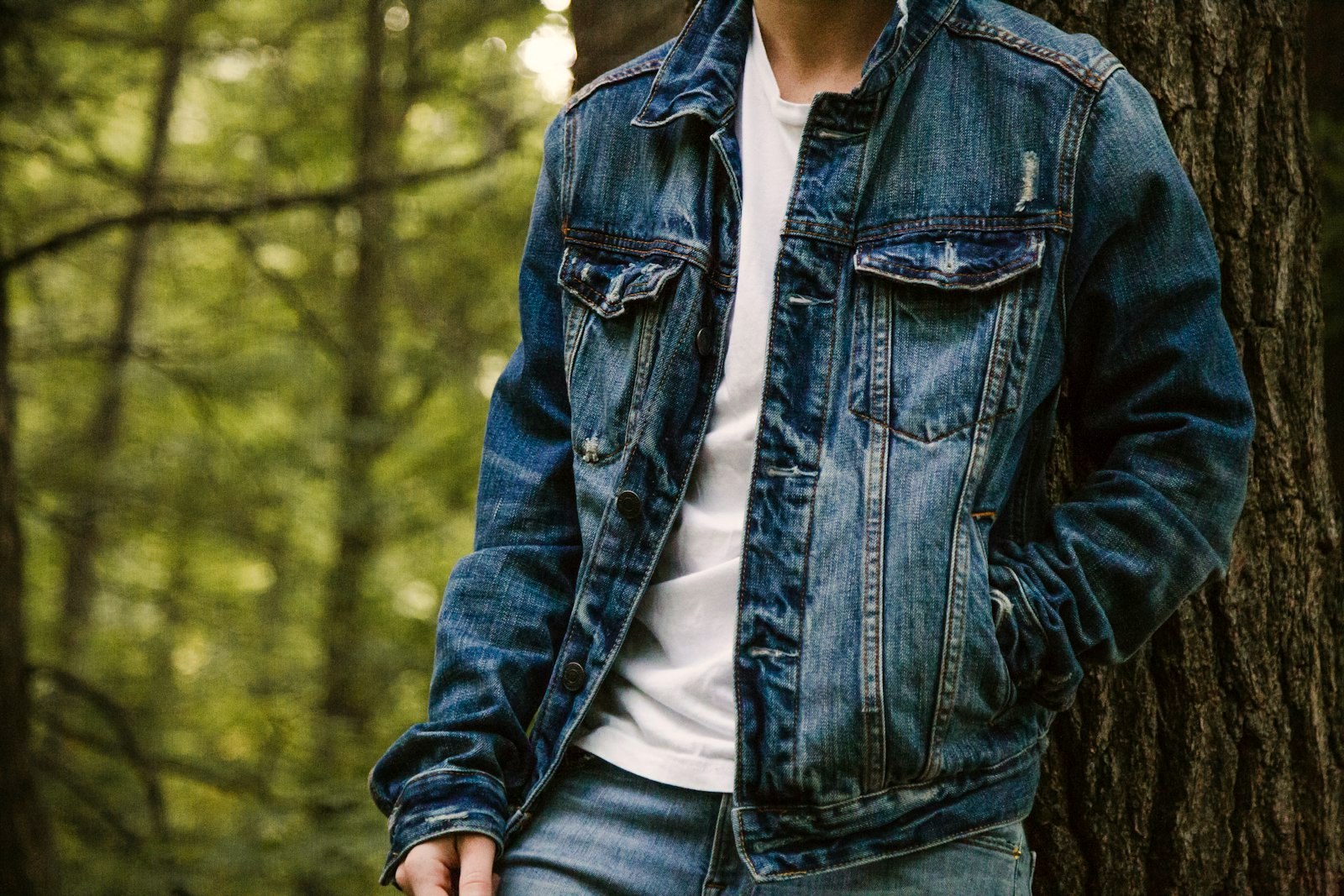
The anchor's register, captioned as exactly that: a denim trucker over a white tee in woodland light, the American uniform the San Francisco house rebuilds. This frame also illustrates the anchor's entry in our American ranking. Our bank holds no photograph of a Taylor Stitch garment, worn or folded, so no frame on this page is captioned as one. The ranking below is built from the published records of the seven houses: the American ranking where the anchor's score was set, this series' own pages where the rows around it are printed, the makers' stores where the prices and specifications were checked, and, for the skip, the maker's own product pages, read for this ranking.
Checked and updated October 2026
The verdict, up front: the anchor holds its number and takes its honest seat. Taylor Stitch keeps its standing 85, audited in the open below against its published record: the Jack's full specification, the Workshop mechanism, the cleanest materials in the American rebuild. Above it, Buck Mason keeps 90 and L.L.Bean keeps 87, carried unchanged. Filson ties the anchor at 85 and takes the seat above it on the fabric row, 27 to 25, in the open, because a clothing ranking breaks its ties on cloth. Alex Mill keeps 83, the uniform softened for the city, and Flint and Tinder keeps 74, the attainable test. The skip is scored new on this page, derived in the open from its own published record: Gap, at 57, the mall original of the same uniform, priced by a permanent discount and described by a feeling.
What people actually want from Taylor Stitch
Nobody searches for brands like Taylor Stitch because they need a shirt either. They search because the San Francisco house is the proof that the American uniform can be rebuilt honestly: the Oxford, the chore coat, the selvedge jean and the work shirt, sewn again in organic cotton and hemp under a published responsibility standard, Responsibly Built for the Long Haul, at prices a working salary survives. The want is that rebuild without the leap of faith: cloth with its weight and its certification printed, construction named on the product page, and a price that is the price.
The ceiling is real, and this page names it before the anchor's card can be accused of hiding it. The house is one generation old, its size range stops where the century-old institution's keeps going, its catalogue has widened into categories where its authority is thinner, and two of the houses above it have been running versions of this wager since before the aeroplane. So the alternatives below are graded on the three tests this search is really asking, the same tests this series runs in every register. Is the cloth the product: weights published, certifications named, mills identified, or a standard asserted in the marketing and nowhere else? Is the construction printed: felled seams and lock stitching on the product page, or silence where the specification should be? And does the price survive arithmetic: a printed price that is the price, or a number wearing a permanent discount? Taylor Stitch set the first of those tests for the whole rebuild school. This page runs all three on Taylor Stitch first.
How the scores work
Every brand here is scored on the house basis for this series: fabric and cloth out of 30, construction and craft out of 20, fit range and sizing honesty out of 20, value out of 15, longevity out of 15. Six of the seven scores on this page are standing scores, reproduced with their rows: the anchor's 85, Buck Mason's 90 and Alex Mill's 83 from our American ranking; L.L.Bean's 87 and Filson's 85 on the family splits this series prints, ruled on below; and Flint and Tinder's 74, derived on the Barbour page of this series. One score is new: the skip's, derived in the open from its maker's own published record, and labelled as derived wherever it appears. The audit the page owes, the anchor's, is run in the open below.
The audit of the anchor, then, from its record, because an anchor in this series is audited where it stands. The 85 was set in our American ranking, and two garments carry individual crowns in this magazine, the Moto jacket at 88 in our leather jackets Verdict Card and a sixth place for the Ojai chore coat at 70 in the chore coats Card; those are garment scores, used here as evidence and never blended into the brand number. The audit rebuilds the brand rows from the published record. Fabric 25: the test garment publishes its whole line on the maker's own product page, checked for this page: 6.5 ounces of 100 percent organic cotton, the organic claim certified to the Global Organic Textile Standard, and the same habit runs through the range, hemp blends, organic twills weighed to the ounce, a responsibility standard printed where the cloth is sold; the five points below the summit are the programme gap, cloth specified superbly rather than woven to Filson's densities. Construction 17: the Jack's page prints double-needle felled construction throughout and lock-stitched buttons and buttonholes, and the house's leather is handmade in San Francisco by Golden Bear, a maker named on the record; sound, printed, and a step below the covenant houses' benches. Fit 16: chest-based sizing in six stops, 36 to 46, on a tailored close fit that works tucked or not, docked exactly where our ranking docked it, against the institution above whose range runs regular, tall and genuinely big without apology. Value 13: The Jack is $132 at the maker's store at this check, and the house's founding mechanism is the honest form of a discount: new products are crowdfunded through its Workshop, backers funding production in advance for 20 percent off and a six-to-eight-week wait, a price reduction printed as a mechanism rather than hung on the rail as a permanent promotion; the counterweight is printed too, the Moto's price has drifted from $875 at launch to $1,248 today, and the leather Card prints that drift rather than smoothing it. Longevity 14: the maker prints a decade of solid wear as the Jack's design life, repairs what it sells through its Restitch programme, and builds its icons as permanent Essentials rather than seasonal drops, held a point below the perfect row because a programme is not a lifetime guarantee and eighteen years is the record so far, not a century. Add them: 25, 17, 16, 13, 14. The audit lands where the number stands. The brand score is 85, and this desk commits in print to re-running the audit when the record moves, and to moving the rows in the open if they move.
Two pieces of bookkeeping belong in the open, because a reader checking our pages will look for them. First, the anchor's own rows do not diverge: the American ranking prints 25, 17, 16, 13, 14, and the two family cards that have carried this house since, on the Buck Mason and Todd Snyder pages, print the same five rows for the same 85, so there is no split for this page to rule on. Its price has a smaller drift of the same kind: the ranking's table prints The Jack at $138, the family pages print $132, and the maker's store reads $132 today, checked for this page, so the family figure stands and the table's is the stale one. Second, two neighbours' splits do diverge, and this page rules on both the way this series rules: on the family split. L.L.Bean's 87 is printed in the ranking as 22, 17, 19, 15, 14 and on its family pages as 23, 16, 19, 15, 14; Filson's 85 is printed in the ranking as 27, 19, 13, 11, 15 and on its family pages as 27, 19, 15, 9, 15. The family splits are carded below, because the family pages are where these houses were audited garment by garment, and a ranking that quietly ran two arithmetics for one house would be marketing. The tie the page rules on is the ladder's: the anchor and Filson both stand at 85, and under the standing rule the seat goes on the fabric row, 27 to 25.
The rest of the American field is answered in the open rather than ranked, with its numbers untouched. Asket keeps 92, the permanent collection with the cost of every garment published, anchored on its own page in this series. Pendleton keeps 82 from the American ranking, the wool shirt from its own Oregon mills. Red Wing keeps 84 and Danner keeps 80, the boot specialists, scored as the specialists they are. 3sixteen keeps the 86 set on its own page in this series, the denim specialist. Schott keeps 81 from the ranking; its Perfecto's garment score of 85 in our leather Card is a garment number and is not this one. Battenwear keeps 80, the insider's outdoor label. Todd Snyder keeps 79, the designer bridge, fourth on the Buck Mason page and fifth on its own. Rancourt keeps 79, handsewn in Maine. Topo Designs keeps 78 and Gramicci keeps 77, the attainable outdoor end. Carhartt keeps 77 and Patagonia keeps 83, both cited by total only here: their ranking and family splits diverge, their rows live on their own pages of this series, and neither total moves. J.Crew keeps 73, graded in full on its own page. Faherty keeps the 74 set on the Tommy Bahama page: the softness answer belongs to the resort register, and its own pages publish their blends in full, which is why it is answered here and not sent home below. And Ralph Lauren, at 70, is this cluster's standing cautionary tale, the skip on both the Buck Mason and Todd Snyder pages of this series, convicted there on a value row of 6 under a $395 jean; it is not re-tried a third time, and The North Face keeps 64, the American ranking's own skip, a mountaineering name neither neighbour here needs to borrow.
The fast copy of this uniform is answered the way this series always answers it, in prose, because its brand number is a living derivation maintained on the H&M page of this series, from that house's ranked garments, and this page does not borrow it, restate it or re-derive it. Its method here is its method everywhere: the anchor's outline copied within the season, the Oxford and the chore coat printed on cloth that thins and shines where the rebuilt original is weighed and certified, because a specification is a fabric behaviour before it is a silhouette. On this page the copy worth pricing is not the cheapest one. It is the skip below, the uniform's own inventor selling it back at a permanent discount with the specification left off.
The disclosure ledger, read from the houses' own published records, is the spine of the ranking, so it is printed before the cards. Read down the cloth column and the ladder below explains itself: at the top, houses that publish weights, mills and measurements; at the bottom, a house whose product page publishes a feeling and a discount.
| House | The cloth record, as published | The signal on the garment |
|---|---|---|
| Buck Mason | American-grown Pima, Japanese loomstate selvedge, real wool in the knits, and the garment measurements published with the fits; the receipts stop at the margin, which stays private. | None on the core |
| L.L.Bean | Cloth published on the icons: a 24-ounce canvas tote with a 500-pound handle test printed by the maker, flannel and chamois graded garment by garment across this magazine. | None on the core |
| Filson | Mackinaw wool woven to densities modern mills rarely attempt, tin cloth finished until it sheds water, bridle leather from a named tannery, Wickett & Craig. | None on the core |
| Taylor Stitch | The Jack's full line on its own product page: 6.5 ounces, 100 percent organic cotton, GOTS certified, felled construction and lock-stitched buttons printed beside the price. | None, anywhere |
| Alex Mill | Garment-washed cloth with a hand to it, described honestly and specified more thinly than the four houses above; the fits carry the argument. | None on the core |
| Flint and Tinder | A 7-ounce Martexin Original Wax sailcloth from Fairfield Textile of Bridgeton, New Jersey, the mill named in the product copy, waxed on both sides and re-waxable. | None on the core |
| Gap | A flannel whose fabric record is one line, made with 100 percent organically grown cotton, with no weight, no mill and no construction term on the page; a knit line named CashSoft whose own description reads cotton blend; 40 percent off at checkout printed beside both prices. | The arch, on the leisure end |
Seven brands like Taylor Stitch, ranked

Buck Mason
US price checked today: the Pima Curved Hem Tee $48 at the maker's store.
Keeps its standing 90 from our American ranking: the same wager as the anchor, run at full strength, with the garment measurements published and the best value row at the top of this page.
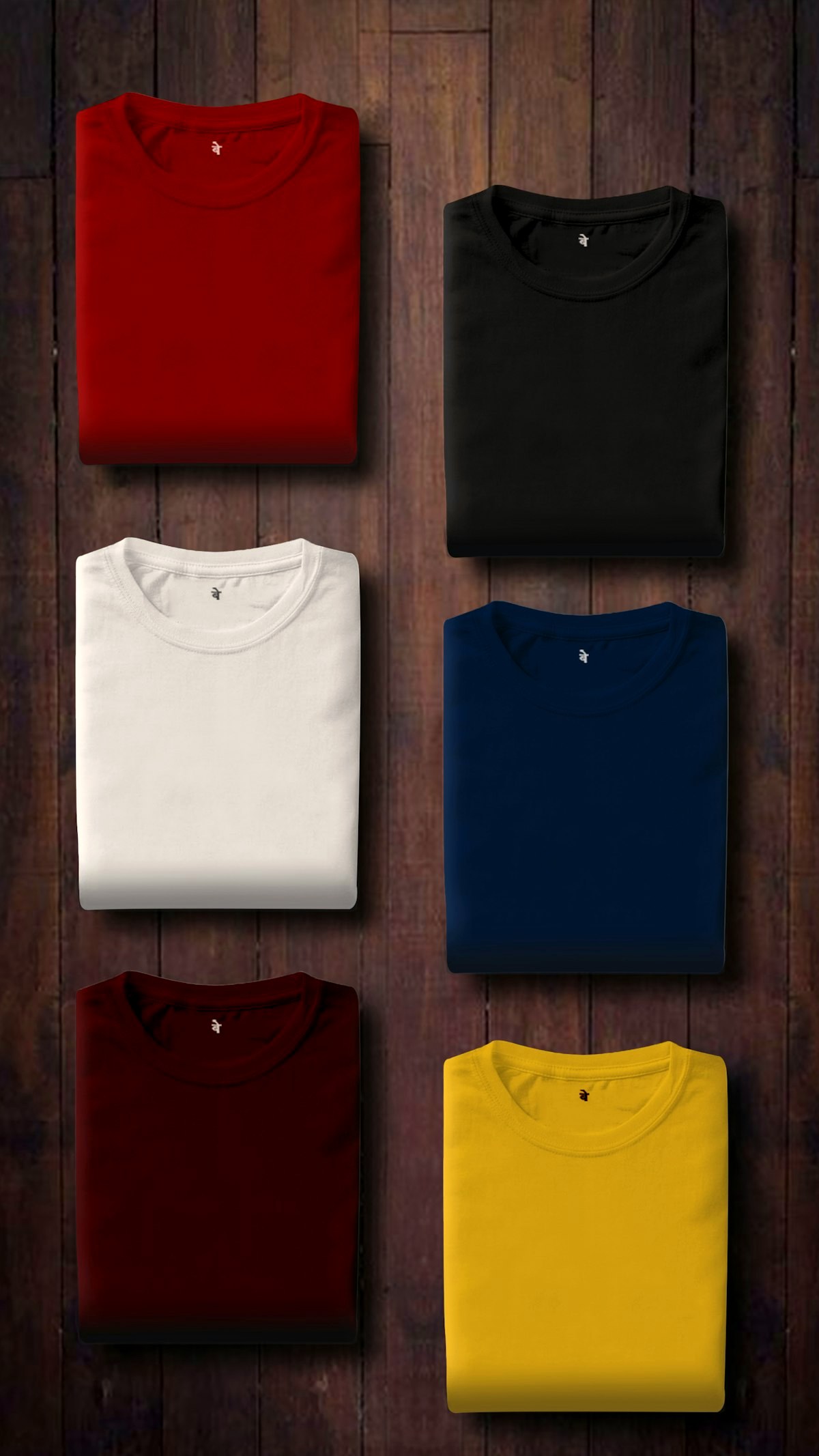
The winner, keeping the 90 and the rows from our American ranking, audited in the open on its own page in this series, where this anchor finished third. Erik Allen Ford and Sasha Koehn founded the Los Angeles house in 2013 on the complaint the anchor shares: American basics had become bad, thin cloth, worse fits, prices set by marketing departments. The answer is the same catalogue the anchor sells, the curved-hem tee, the Oxford, the five-pocket jean in Japanese loomstate selvedge, chore coats and knits in real wool, each iterated rather than replaced each season. Read against the anchor, the kinship is total and the difference is emphasis: this house leads with the tee and publishes garment measurements; the anchor leads with the shirt and publishes a materials standard.
What the five-point gap buys is printed in the rows. Fit is 19 to 16, the widest honest welcome at the top of this page, graded sizing with the measurements on the page. Construction is 18 to 17 and value 14 to 13, the $48 tee being the cheapest honest way into the wager either house sells. Fabric is level at 25, which is the anchor's compliment and its ceiling in one row: the rebuild school specifies cloth as well as the winner does, and wins its arguments elsewhere. The deductions stand from its own page: much of the line is sewn overseas now, Portugal and beyond, and the receipts stop at measurements. Buy the tee and the Oxford first. This is the rail the anchor gets measured against, and on this page it keeps the top of it.

L.L.Bean
US prices at last check: Bean Boots from $140 at the maker's store, the 8 inch at $150; the Scotch Plaid flannel $59.95; the Boat and Tote $59.95.
Keeps its standing 87, on the family split this series prints: the institution the anchor's catalogue descends from, with a perfect value row and the widest fit welcome on the page.
The institution, keeping the 87 from our American ranking on the family split its own pages of this series print, 23, 16, 19, 15, 14, audited in the open on its own page, where ten of its garments were rebuilt into the number one by one. Leon Leonwood Bean founded the house in Freeport, Maine in 1912 on a boot of his own design, and when ninety of the first hundred pairs came back he refunded every buyer, fixed the boot, and built a century on the story. Read against the anchor, this is the original the rebuild descends from: the flannel, the chamois shirt, the field coat and the tote are the anchor's catalogue in its first edition, still sewn, still priced as equipment.
The two-point gap to the anchor is printed in the rows, and it runs in both directions. Value is a perfect 15 against the anchor's 13: almost nothing in the store carries a fashion premium, and the Scotch Plaid flannel at $59.95 is the price the anchor's whole school is measured against. Fit is 19 to 16, regular, tall and genuinely big without apology. The anchor wins fabric back, 25 to 23, its organic specifications a generation ahead of the institution's workmanlike cloth, and construction, 17 to 16. The deduction its own page prints stands: the guarantee that made the house a byword retreated in 2018 from lifetime to a year and a consideration, charged in the longevity row at 14. Buy the icons first: the boot, the flannel, the tote, the slippers. They are the argument the anchor inherited.
Filson
US price at last check: the Wool Jac-Shirt $349 at the maker's store; the Mackinaw Wool Cruiser about $550.
Keeps its standing 85, on the family split this series prints: the heaviest cloth in American workwear and a lifetime guarantee, tied with the anchor and placed above it on the fabric row.
The cloth king, keeping the 85 from our American ranking on the family split its own pages print, 27, 19, 15, 9, 15, anchored on its own page in this series. C.C. Filson opened in Seattle in 1897 to outfit men stamping north to the Klondike, customers for whom a failed seam was not an inconvenience, and the house has never entirely stopped designing for them: Mackinaw wool woven to a density modern mills rarely attempt, tin cloth finished with wax until it sheds water like a roof, bridle leather from Wickett & Craig in the bags. Read against the anchor, this is the same heritage with the brakes off: where the anchor rebuilds the uniform for the city, this house still builds it for the weather.
In the tie at 85 this house takes the seat above the anchor on the fabric row, 27 to 25, and the page prints the ruling rather than burying it. The rest of the rows explain why the tie is a tie. Construction is 19 to 17 and longevity is the perfect 15, a lifetime guarantee against failure of materials and workmanship with a repair bench behind it, where the anchor's is a programme. The anchor wins fit, 16 to 15, its tailored close fit a wider welcome than the house's boxy work cuts, and value outright, 13 to 9: the Cruiser at about $550 costs what four Jack shirts cost, and the Jac-Shirt at $349 costs what the anchor's whole shirt rail costs. Buy the Cruiser or the tin cloth jacket and keep it for thirty years. The anchor is what you buy when the thirty years have to fit under a city coat.
Taylor Stitch
US price checked today: The Jack in Washed Indigo Oxford $132 at the maker's store; the range runs $65 to $800, with the Moto leather jacket at $1,248.
The anchor, at its standing 85 from our American ranking, audited in the open above: the uniform rebuilt in organic cloth under a published standard, with its fullest specification printed on the shirt that built the house.
The anchor, keeping the 85 and the rows from our American ranking, where the audit above rebuilt them from the house's published record and landed where they stand. Taylor Stitch began in San Francisco in 2008 making custom shirts and grew into the clearest statement of what American heritage became after the workwear boom: the chore coat, the Oxford, the selvedge jean, rebuilt with organic cotton, hemp blends and a published responsibility standard. Its garments hold two crowns in this magazine, the Moto jacket at 88 in our leather Card, the fullest published record in that field, and the Ojai chore coat at 70 in the chore Card, the city register of the work coat; both are garment scores, cited here as the evidence they are and never blended into this number.
Read against the field, the seat is honest and so is the altitude. The winner above runs the same wager with published measurements and a wider fit welcome; the institution invented the catalogue and prices it as equipment; the cloth king ties the score and wins the cloth. What the anchor holds against everyone is the specification habit: fit 16 is a tailored welcome rather than a work cut, value 13 carries the Workshop, the one discount in American menswear that is a mechanism instead of a mirage, and the range's icons are permanent Essentials restocked rather than replaced. The ranking's verdict stands as this page's: the shirt and the denim are the buy. Nobody rebuilding American classics is doing it with cleaner materials, and The Jack, at $132 with its whole specification printed beside the price, is the proof garment.

Alex Mill
US prices at last check: the work jacket about $250 at the maker's store; the range runs $50 to $450.
Keeps its standing 83 from our American ranking: the same uniform garment-washed and softened for the city, with the best fit row below the top two and the shortest track record on the page.
The soft register, keeping the 83 and the rows from our American ranking, its only printed split and this house's first card in this series. Alex Drexler rebuilt the New York label in 2019 on a slogan that functions as a design brief: uniforms for the creative class, clothes that do not shout. Garment-washed shirts, chore coats, easy knitwear and trousers in washed neutrals, cut relaxed and made from cloth with a hand to it. Read against the anchor, this is the rebuild with the stiffness washed out: the same work jacket and Oxford, softened for a SoHo rail, the anchor's felled specification traded for drape and ease.
The two-point gap to the anchor is printed in the rows. Fit is 18, two points ahead of the anchor and the best below the top two, the fits being the point, graded for real bodies and described honestly. Fabric is 23 to 25 and construction 16 to 17: the cloth has a hand to it and the specification habit is thinner, fewer weights and certifications published than the anchor prints on a single shirt. Value is level at 13, the work jacket at about $250 sitting a step above the attainable tier the house's name promises. Longevity is 13, the honest deduction its ranking entry prints: a label rebuilt in 2019 has not yet shown a decade of wear. Buy the work jacket and the shirts. It is the anchor's uniform at its most wearable, with the proof still to come.
Flint and Tinder
US price at last check: the Flannel-Lined Waxed Trucker $298.
Keeps its derived 74 from the Barbour page of this series: the full workwear specification published at $298, a named mill and all, under a retailer's house label.
The attainable test, keeping the 74 derived in the open on the Barbour page of this series and reproduced exactly, rows and all. Flint and Tinder is Huckberry's house label, barely a decade old, and its founding proof is that the anchor's specification habit can survive at $298: the Flannel-Lined Waxed Trucker publishes a 7-ounce Martexin Original Wax sailcloth from Fairfield Textile of Bridgeton, New Jersey, the mill named in the product copy, the finish named beside it, waxed on both sides and re-waxable, cut and sewn in Los Angeles. Read against the anchor, this is the rebuild's argument run by a retailer: fewer icons, no shirting programme, and the same insistence that the cloth be named before it is sold.
The eleven-point gap to the anchor is printed in the rows. Fabric is 21 to 25, one jacket's named sailcloth against a whole range's certified standard. Construction is 15 to 17. Fit is a point ahead of the anchor, 17 to 16, extra small to 3XL with tall sizes published, a retailer's size library beating the specialist's, and the rows print it without commentary because the rows are the commentary. Value is level at 13. Longevity is 8, the lowest of the ranked seats: the label cannot be maintained by its maker, there is no bench and no repair covenant, and re-waxing the trucker is an exercise left to the owner. Buy the trucker as the honest floor of the category. It is everything the anchor promises about cloth, at the lowest price the promise is currently kept for.
Gap
US prices checked today on the maker's own store: the flannel shirt $69.95 with 40 percent off at checkout printed on its product page; the CashSoft crew sweater $89.95, one colourway already chained to $35. This card ships without a buy link, and the honesty section prints why.
Scored new on this page, derived in the open from the maker's own published record: the uniform's original mall edition, faithfully stocked, with a one-line fabric record and a price that is not the price.
The derivation first, because this card sets a number and says so. Gap has no standing score in this magazine; the 57 is derived here, in the open, from the maker's own published record, checked for this page, and every row below is argued from that record and nothing else. The house founded in San Francisco in 1969 invented the mall edition of this page's uniform: the flannel, the Oxford, the chore coat, the five-pocket jean, stocked in every mall in America in washed neutrals, and its range overlaps the anchor's at the rail, shirts at $59.95 to $79.95, sweaters at $89.95, jackets above both. What its own product pages publish about the cloth is the whole conviction. The flannel's page, checked today, prints a price of $69.95 with 40 percent off at checkout beside it, and a fabric record that reads, in full, made with 100 percent organically grown cotton, followed by pattern notes: no weight, no mill, no construction term anywhere on the page. Its bestselling knit line is named CashSoft, for cashmere; the same page calls the fabric one that feels cashmere soft, in a midweight plush yarn, and its own description line reads supersoft cotton-blend pullover sweater. The name promises a fibre the garment does not contain, and the record underneath it is a feeling.
The rows follow from that record. Fabric 17: honest fibres appear, the organic flannel is a real line, and nothing is weighed, milled or certified anywhere the garments are sold, against an anchor that prints 6.5 ounces and a GOTS certificate on a single shirt. Construction 11: no construction claim is published on the pages checked, no felled seam, no stitch count, nothing to grade but a back yoke seam listed as a pattern note. Fit 16: the genuine credit on the card, extra small to 3XL with tall fits is a wider welcome than the anchor's, level with its 16, docked against the top of this page because the fits arrive as names without the published garment measurements the winner prints. Value 7: the printed price is not the price, 40 percent off at checkout standing on the product page itself and a sweater colourway already chained from $89.95 to $35, which is the anchor's Workshop read backwards, a discount as a permanent mirage rather than a published mechanism. Longevity 6: a seasonal cadence, no repair programme, and a flagship knit whose selling point is a brushed feeling, which is a finish with a lifespan. Add them: 17, 11, 16, 7, 6. The total is 57. The fairness is printed with the conviction: the fits are generous, the flannel is a pleasant shirt, and at the checkout price, rather than the printed one, nobody is robbed. What is sold at the printed price is the anchor's uniform with the anchor's argument removed, the specification, the standard and the honest number, and under a rubric that pays for those three things, that is where it lands. Buy the uniform from the six houses above it.
The pattern under the ranking
Read the ladder as one argument about what a specification is worth. At the top, it is the product: measurements published in Los Angeles, cloth weighed and certified in San Francisco, a mill named in New Jersey by a retailer's house label, the receipts getting longer as the prices get more honest. In the middle, it is an inheritance: the institution that invented the catalogue and prices it as equipment, and the cloth king that still builds it for the weather, both a century deep in the same garments. And at the bottom, it is a mood: the uniform's own inventor selling the flannel back with the specification left off and a discount hung where the standard used to be. The ranking is the audit of those three answers, and the audit is reproducible: find the fabric line, find the price mechanism, and the score follows.
The second pattern is the discount's direction, and it is this page's reason for existing. The anchor was founded on a discount that tells the truth: fund the garment before it is sewn, take 20 percent off for the wait, and the mechanism is the marketing. The skip runs the same arithmetic in reverse: print a price nobody is expected to pay, take 40 percent off at checkout in perpetuity, and let the mechanism be the margin. Both houses discount. Only one of them publishes what the discount is for. The reader this page exists for is the one holding The Jack in one tab and the flannel in the other, wondering what the $62 between the printed prices buys. The rows above are the answer, printed in numbers instead of adjectives: 6.5 ounces of certified cotton, felled seams, a standard with a name, and a price that stays where it was printed.
| Brand | Score | The piece to buy | Price |
|---|---|---|---|
| Buck Mason | 90 | The Pima Curved Hem Tee | $48 |
| L.L.Bean | 87 | Bean Boots | From $140 |
| Filson | 85 | The Mackinaw Wool Cruiser | About $550 |
| Taylor Stitch | 85 | The Jack Oxford shirt | $132 |
| Alex Mill | 83 | The work jacket | About $250 |
| Flint and Tinder | 74 | The Flannel-Lined Waxed Trucker | $298 |
| Gap | 57 | None | $69.95, before the discount |
The one to skip: Gap
The skip: Gap, scored new on this page at 57, derived in the open from its maker's own published record. The conviction rests on that record and nothing else: a flannel shirt whose product page prints $69.95 with 40 percent off at checkout beside the price and a fabric record one line long, with no weight, no mill and no construction term anywhere on it; a bestselling knit line named for a fibre its garments do not contain, sold on a feeling its own page describes as cashmere soft over a cotton blend; a colourway of that sweater already chained from $89.95 to $35 at the same check. The fairness is printed with the conviction: the fits are the widest on this page, the organic flannel is a pleasant shirt, and at the checkout price the arithmetic is merely ordinary rather than dishonest. What is sold at the printed price is the uniform this page's anchor rebuilt, with the specification, the standard and the honest number removed, by the house that invented the uniform's mall edition. Under a rubric that pays for fabric, construction and years of wear, that mix lands where it lands. Buy the uniform from the six houses ranked above it, and if you buy this house, buy it the way its own pricing tells you to: never at the printed ticket.
Which one to buy
Buy Buck Mason for the wager at full strength: the tee at $48, the Oxford, the jean, with the measurements published and the best fit welcome at the top of the page. Buy L.L.Bean for the originals: the boot, the flannel at $59.95, the tote, priced as equipment by the house that invented the catalogue. Buy Filson for the cloth itself: the Cruiser or the tin cloth jacket, registered in your mind as furniture and sent back for repair when the decade asks. Buy Taylor Stitch for the rebuild: The Jack first at $132, its whole specification printed beside the price, then the denim and the chore coat, funded through the Workshop when patience is cheaper than money. Buy Alex Mill for the uniform softened: the work jacket and the washed shirts, the city register of the same rail. Buy Flint and Tinder for the honest floor: the waxed trucker at $298, a named mill and the full specification, and re-wax it yourself. Skip Gap at the printed price, and let the six houses above it sell you the uniform with its receipts attached.
Questions, answered
What brand is most like Taylor Stitch?
Buck Mason, at 90 out of 100 in this ranking: the same wager, a catalogue of American standards iterated instead of replaced, run from Los Angeles with the garment measurements published. L.L.Bean, at 87, is the heritage original the anchor's catalogue descends from, and Filson, at 85, is the same argument with the brakes off, heavier cloth and a lifetime guarantee at two to four times the prices. Below the anchor, Alex Mill at 83 is the soft register of the same uniform, and Flint and Tinder at 74 is the attainable test, the full workwear specification at $298. The anchor's own verdict, from our American ranking, is the piece to start with: The Jack shirt, $132 at the maker's store at this check.
Is Taylor Stitch worth the money?
On the record this page audits, yes, at the shirt and the denim, with the deductions printed. Fabric is 25 of 30: The Jack publishes its whole specification, 6.5 ounces of 100 percent organic cotton, GOTS certified, double-needle felled construction, lock-stitched buttons, and that standard runs through the range. Fit is 16, the honest deduction: chest-based sizing in six stops, 36 to 46, tailored close, a range that stops where L.L.Bean's keeps going. Value is 13 of 15, and it carries the house's founding mechanism: new products are crowdfunded through its Workshop at a 20 percent discount for the backers who wait, which is a discount printed as a mechanism rather than a permanent promotion. Buy The Jack first. It is the garment the whole score is about.
Taylor Stitch or Buck Mason: which should I buy?
Buck Mason, for most readers, and the gap is the score: 90 to 85 in this ranking, the same answer this series printed on the Buck Mason page from the other side. The two brands run the same play, a catalogue of American standards iterated rather than replaced, and the difference is emphasis. Buck Mason publishes garment measurements and leads with the tee, $48 at this check. Taylor Stitch publishes a materials standard, organic cotton and hemp blends under its Responsibly Built for the Long Haul line, and leads with the shirt: The Jack Oxford is $132 at the maker's store at this check. If your wardrobe's weak point is shirting and you care where the cotton grew, Taylor Stitch argues back hard. For the base wardrobe itself, the fit row, 19 against 16, settles it.
How does the anchor finish fourth on its own page?
Because this series reproduces standing scores instead of flattering its anchors, and three houses stand at or above this one on numbers set elsewhere. Buck Mason's 90 and L.L.Bean's 87 were set in our American ranking and audited on their own pages of this series; they are carried here unchanged. Then the tie at 85 is ruled on the fabric row, the standing rule, and Filson's 27 beats the anchor's 25: the anchor and the cloth king cost the same score and do not buy the same cloth. Fourth of seven, behind the ranking's winner, its institution and the heaviest fabric programme in American workwear, is the honest shape of this cluster, and the anchor's 85 survives its audit below intact. A page in this series that moved its anchor up the ladder would be advertising.
Why is Gap the skip?
Because of what its own product pages publish, checked for this page. Gap sells this page's exact uniform, the flannel, the Oxford, the chore coat, the five-pocket jean, and its flannel's product page carries the whole method in two lines: a price of $69.95 with 40 percent off at checkout printed beside it, and a fabric record that reads, in full, made with 100 percent organically grown cotton, with no weight, no mill and no construction term anywhere on the page. Its bestselling knit line is named CashSoft for a fibre the garment does not contain; its own description calls the sweater a cotton blend that feels cashmere soft, and one colourway was already chained from $89.95 to $35 at this check. Scored new on this page and derived in the open from that record, it totals 57. The uniform is faithfully copied. The receipts are a feeling and a discount. Buy the uniform from the six houses ranked above it, whose pages argue about cloth.
How this ranking stays honest
Every score on this page but one is a standing score, and its home is printed on its card: Taylor Stitch's 85, Buck Mason's 90 and Alex Mill's 83 from our American ranking, with the anchor's 85 audited in the open above; L.L.Bean's 87 and Filson's 85 on the family splits this series prints, the ruling and both arithmetics stated in the method section, because the ranking's splits for those two houses differ from the splits their audited family pages set and this page follows the family; and Flint and Tinder's 74, derived on the Barbour page of this series and reproduced exactly. One score is new, and it is labelled wherever it appears: Gap's 57 is derived on this page from that maker's own published record, its product pages' fabric lines, prices and printed discount, checked for this ranking, because the house had no standing score and the search this page answers is incomplete without the original priced. Two totals are cited without cards, under the same discipline: Patagonia's 83 and Carhartt's 77 are printed in this magazine with row splits that diverge between the ranking and their family pages, so this page cites the totals their audits left standing and leaves their rows on their own pages rather than running a third arithmetic. No other number was derived, moved or rounded for this page. And our cool brands ranking scores on a different basis, design language rather than this series' five rows; its numbers belong to that page and are never carried onto this one, and this page's numbers should not be carried back.
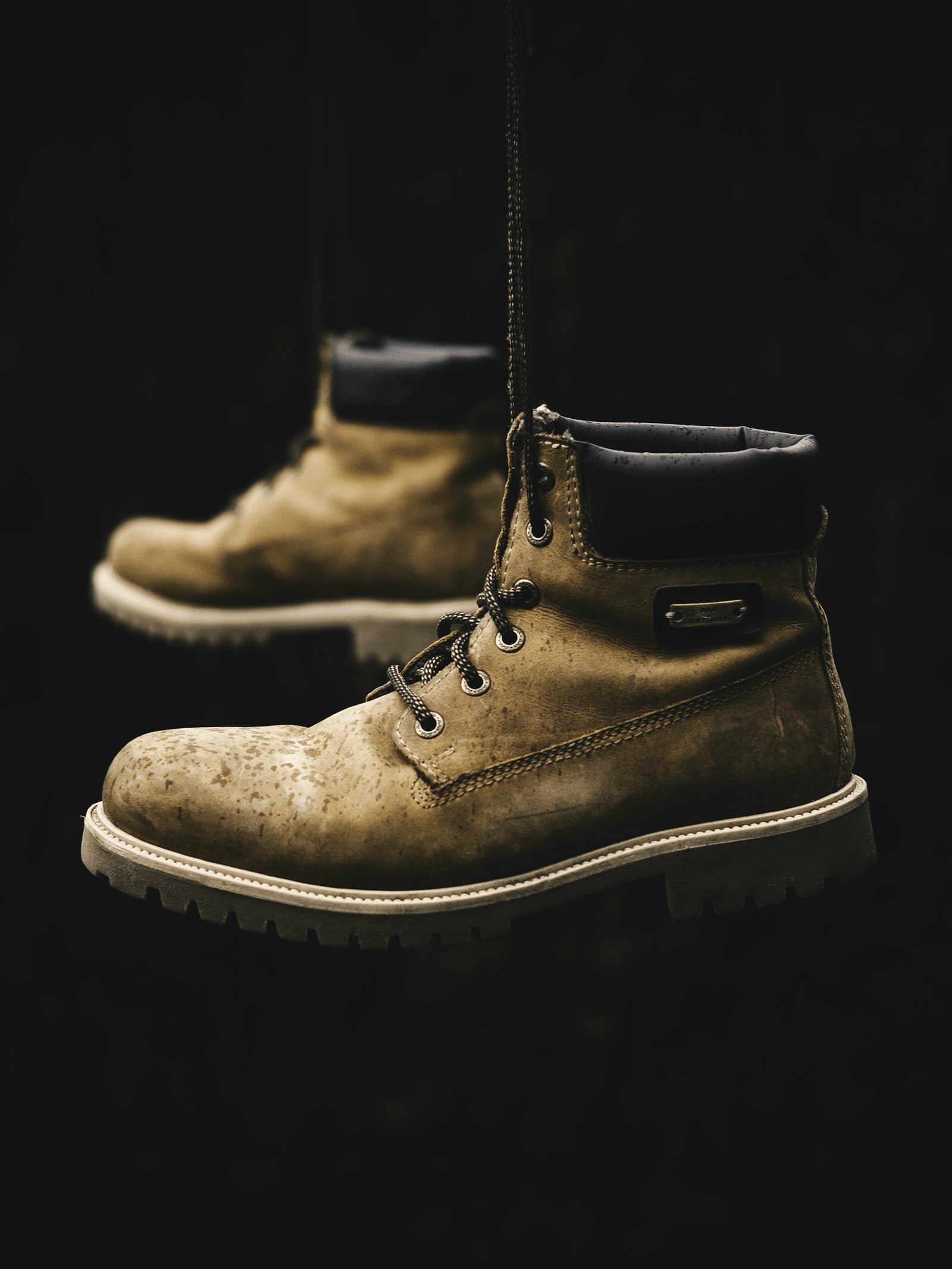
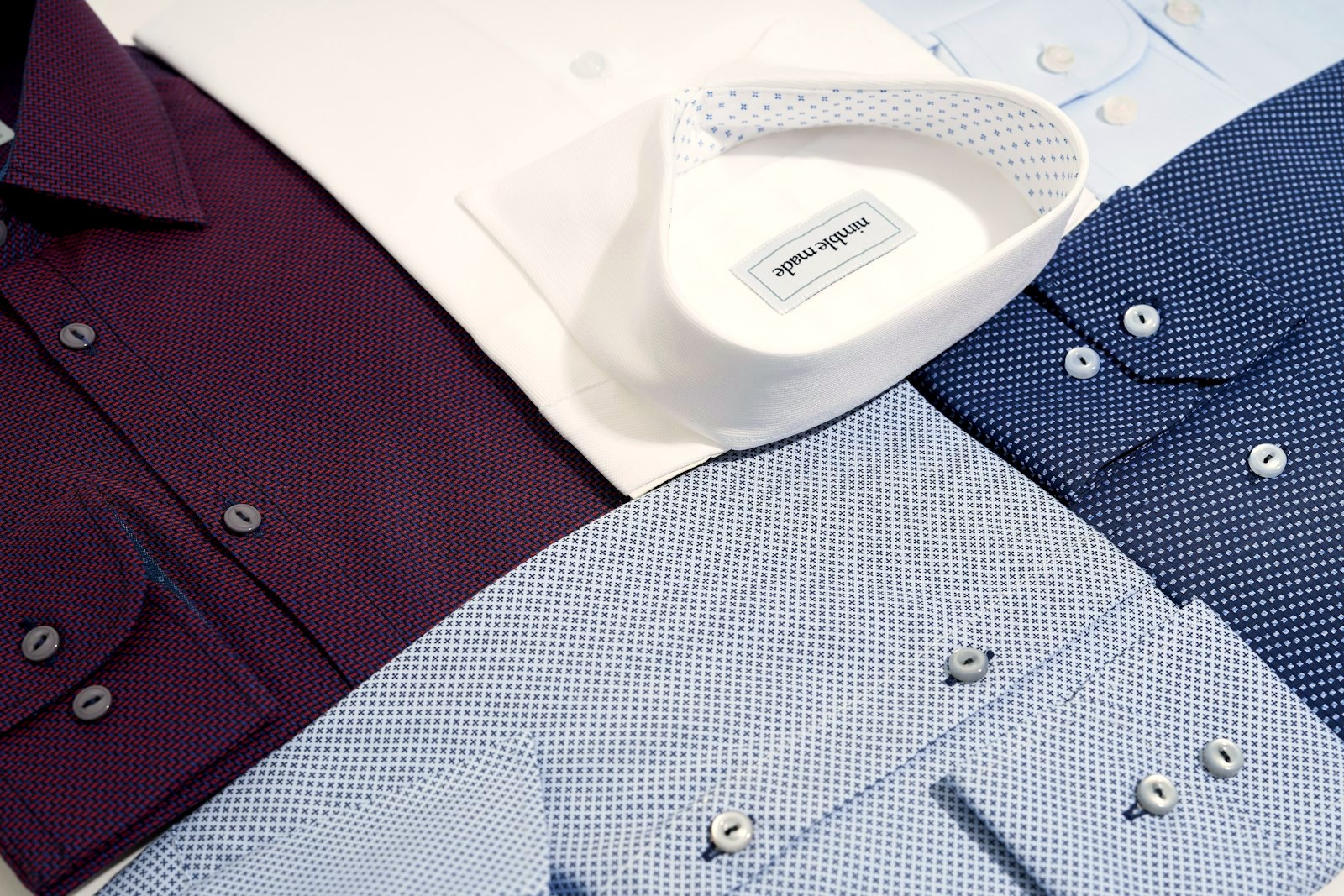
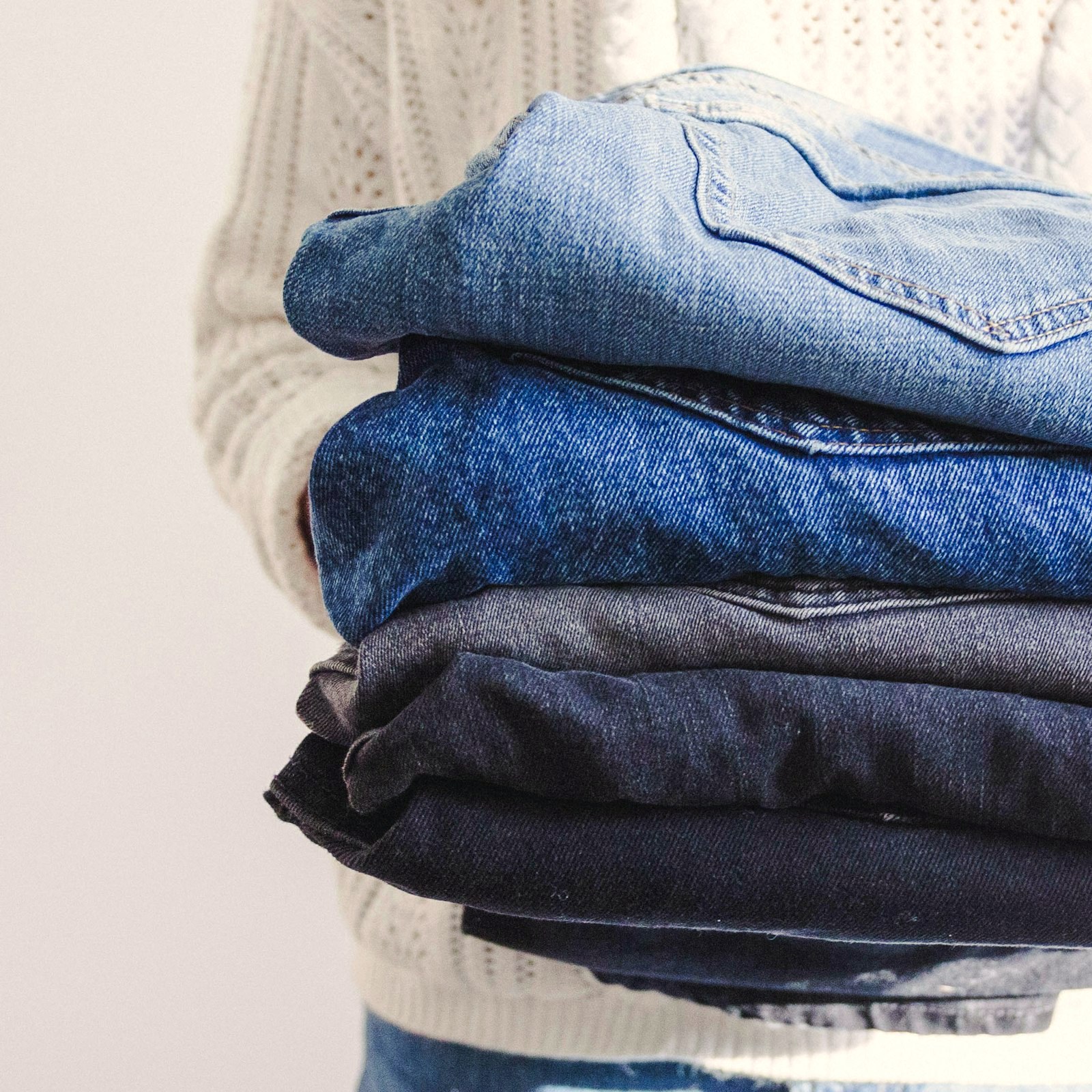
On doors: the Buck Mason card links the merchant search door its card on its own page of this series prints, on the maker's own domain; the L.L.Bean card links the door the Bean page of this series prints; the Filson card links the exact Jac-Shirt product page at the maker's store; the Taylor Stitch card links the exact Jack product page at the maker's store, the door the Buck Mason page of this series established for this house; the Alex Mill card links the merchant search door our American ranking prints, on the maker's own domain; and the Flint and Tinder card links the exact product page at the national sporting retailer carrying the maker's own copy, the door the Barbour and Filson pages of this series print. The Gap card ships without a buy link, the way this site's convicted cards do: this desk does not link what it sends home, and the skip's prices, fabric lines and printed discount above were verified on the maker's own store for this ranking. On photography: the magazine's bank holds no photograph of any ranked house's garment, and no frame on this page is captioned as one; the hero is a denim trucker in woodland light, the anchor's register and the frame our American ranking hangs on this house's entry, the cards carry the tee, the flannel, the boots, the Oxford stack and the jeans of the register, each captioned for exactly what it shows, and the harvest list names what is missing: a chore coat on a body in workshop light, a folded Jack beside its specification card, and selvedge cloth at macro range with the maker's name in the caption. Prices and records were checked against the pages cited in October 2026; the full method is written out on the methodology page.