
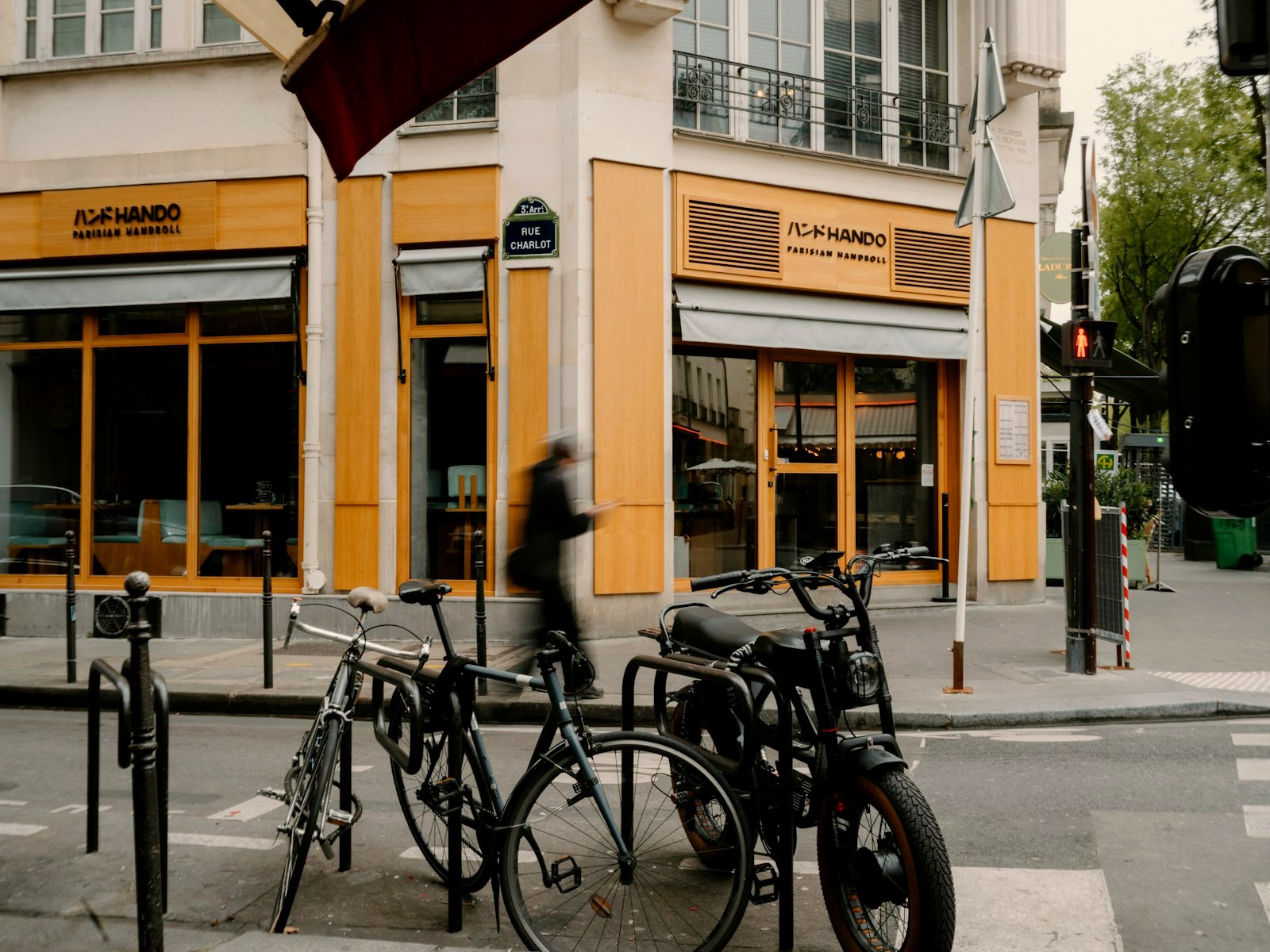
The chore coat's home city: a Paris street, the ground the bleu de travail was standardised on. It is not any ranked coat; our bank holds no photograph of the seven below, and the honesty section prints that gap and the harvest list rather than let a stranger's jacket stand in for a ranked one.
Checked and updated October 2026
The verdict, up front: seven chore coats scored out of 100 on cloth 30, construction 20, fit 20, value 15, longevity 15, plus the factory-aged coat sent home. The L.C. King Brown Duck wins at 87, and it wins the way this garment is supposed to win: a 12-ounce duck from a named mill, felled seams, bar tacks, rivets, five pockets including the inside one, sewn in Bristol, Tennessee since 1913, at $165. The Patagonia Iron Forge is second at 86, the fullest published specification in the field and the back that actually moves. The Carhartt icon is third at 82 and keeps the title our Carhartt page already gave it, the value benchmark of the category, now with a garment score under it. And the coat sent home, at 58, is sold by the winner's own tradition: Le Mont St Michel's Vintage Washed jacket, the reference house charging about $58 more than its own honest jacket, on the same rail, for age applied at the factory. How to Wear No. 13 printed that this site had not ranked chore coats. It has now.
First, know what a chore coat is, because the name is being rented
A chore coat is a definition before it is a silhouette, and this page prints the definition because half the garments sold under the name fail it. The architecture: three or four working patch pockets on the outside and one on the inside, a plain collar, a button front, a body long enough to be a coat and not a shirt. The inside pocket is not a garnish. It is the garment's second half, the pocket that carries what the day cannot afford to lose, and the French pattern has carried it for a century: Le Mont St Michel sews its label inside it, a house slogan in the pattern itself. The cloth: a woven work cloth with a job in it, duck and canvas in America, moleskin and twill in France, denim in both, at a weight the maker can name. The build: stitching and hardware specified like equipment, because the coat was equipment: it descends from the bleu de travail, the issued jacket of French workshops and farms, and from the American barn and railroad coats that answered it across the Atlantic. Our jackets index files the type at formality 2 and warmth 2, season spring through autumn layered, and prints its buying rule in one sentence: buy the cloth heavy and the colour honest; it should fade, not pill. Every card below is those three tests with numbers on them.
The definition convicts before the ranking starts, and the conviction is printed here rather than buried. Uniqlo sells a jersey garment in the chore coat's shape whose own product copy says its fabric has the feel of authentic workwear. Read that sentence again: the feel of the thing, offered in place of the thing. It is a knit, its pockets are two flapped doubles, and no inside pocket appears in its published copy. By the line How to Wear No. 10 drew and No. 13 stands on, a shirt's cloth and a shirt's build file with the overshirts whatever the pockets are doing, so it is answered here and ranked nowhere. The same maker's canvas and twill Utility Jacket, ranked at No. 7, passes the architecture test on its own published copy and takes its charges there instead. One house, two garments, opposite rulings: that is what a definition is for.
Two species notes, printed in the open. The American work branch runs wider than the French pattern: Carhartt's icon carries four pockets outside and two inside, L.C. King four outside and one in, and both are graded as the complete architecture in its American register. Filson's cruiser, at No. 5, is the northwest branch of the same family, a logging country's work jacket whose four pockets all face outward; it is admitted to this ranking as the work jacket its house actually sells in the chore coat's slot, with the missing inside pocket charged on its card rather than forgiven. And the blanket lining question: a chore coat is an unlined or lightly lined garment by pattern, and Carhartt's blanket-lined icon is graded as what it is, the cold-weather form of the American coat, its lining scored as the warmth system it publishes.
How the scores work
Every coat is scored out of 100 on the same five rows. Cloth (30) reads the work record: a published weight in ounces scores, a named mill or a full fibre split scores again, and each withheld figure is charged in the open, at every price, especially the high ones. Construction (20) counts the pocket architecture against the definition above, then reads the stitching and hardware the maker publishes: felled seams, bar tacks, rivets and triple stitching score; metal buttons score above plastic; silence scores as silence. Fit (20) is the layering and movement test: the coat is bought over the thickest knit it must cover, the maker's stated cut is scored as printed, an action back earns what it earns, and a published sizing warning is credited as the honesty it is. Value (15) divides the price by the published record, not by the silhouette. Longevity (15) is the decade audit: how the cloth breaks in, whether the fade will read as patina or failure, the model's continuity, and the house's repair culture where one exists. Row scores add to the total, on every card.
The ranking
L.C. King Brown Duck Chore Coat
The Winner
US list price at last check: $165 at the maker's store.
Buy it as the reference American chore coat: the fullest build sheet in the field, sewn in Tennessee by the family that has made it since 1913. This card ships without a buy link, for the reason printed on it.
The cloth: 12-ounce, 100 percent cotton duck, and the maker names the mill: Mount Vernon Mills, the Georgia weaver whose duck also feeds the American icon at No. 3. A named mill is a checkable claim, and in a field where the French reference publishes no weight at all, an American maker printing both the ounces and the source is the record this page exists to reward. The coat is sold unwashed, ready to shrink to fit, which the maker prints as a feature and this page scores as one: the buyer finishes the garment, and the first wash is the final fitting. The cloth row gives the duck 27, docked only because the house's own copy is carried in pieces across its listings rather than printed in one place a buyer can read whole.
The build and the fit: read the build sheet against the definition and it is complete at every line. Double-needle felled seams, the seam that folds the raw edges inside itself and is the workwear seam for a reason. Bar tacks at the stress points. Riveted seams. Heavy thread, named as such. The signature 1913 pewter shank button, metal, on a coat whose buttons will be worked by gloved and dirty hands. And five pockets: two oversized lower pockets, an upper left patch pocket, an upper right flap pocket, and an inside patch pocket, the full architecture, outside and in. Nineteen of twenty, the field's highest construction mark. The fit is where the tradition charges its price: the pattern is the straight, boxy work cut with no action back and no gusset, and the comparative record against the Patagonia below is that overhead reach pulls where the bi-swing back does not. Fourteen, printed as the honest cost of an unmodified century-old pattern. The longevity row scores the rest: a family factory in Bristol, Tennessee, the great-great-grandson of the founder running it, a model that has outlived every fashion cycle thrown at it, and duck that breaks in for a decade. This card ships without a buy link because the maker's direct listings move in and out of stock and its retail partner's listing for this coat read sold out at this check; the desk prints the maker's price and sends the reader to the maker's own store rather than to a dead door.
Patagonia Iron Forge Hemp Canvas Chore Coat
The Fullest Published Record
US list price at last check: $165 at the maker's listings.
Buy it as the modern work coat: the heaviest fully specified cloth here, the back that moves, and a zippered inside pocket, from the house that publishes its whole recipe.
The cloth: the fullest specification in the field, printed by the maker in full: 12.9-ounce canvas of 55 percent industrial hemp, 27 percent recycled polyester and 18 percent organic cotton. Every number a buyer could divide is on the record, and one claim rides with them, graded here as a claim in the maker's own words: the fabric is said to be 25 percent more abrasion resistant than conventional cotton duck. Hemp is the argument's substance, a bast fibre with a work record older than cotton duck's, and the blend is the honest modern version of the work cloth, recycled content included rather than implied. The cloth row lands at 26, one behind the winner: the split is published and the weight is the field's second heaviest, and the point goes to the duck romantics' counter, which is that a blend's fade record is a decade deep where duck's is a century deep, and the longevity row will charge the same fact again from the other side.
The build and the fit: the pockets pass the definition with a design idea attached: two lower drop-in pockets with hidden side-entry handwarmers behind them, a chest pocket, and an internal zippered pocket, the inside pocket of the French pattern upgraded with a zip. The separator is the back. A bi-swing gusset lets the shoulders open without the body following, the one piece of genuine pattern engineering in the field, and the fit row gives it the field's highest mark, 18: a relaxed cut built for layering that also moves, which the straight traditional patterns cannot say. Construction lands at 17 because the stitching specification is not published to the Tennessee depth: the architecture is complete and the back is better, and the seams are a silence beside L.C. King's printed felled and riveted sheet. The house stands at 83 in the American ranking as a brand record; this 86 grades the coat. Longevity scores the repair culture and the secondhand channel the house runs behind its garments, twelve, against the blend's shorter fade record. Fair Trade Certified sewing is printed on the garment's record and credited here as part of the price's evidence.
Carhartt Firm Duck Blanket-Lined Chore Coat
The American Icon
US list price at last check: $129.99 at the maker's store.
Buy it as the category's value benchmark, the title this site's Carhartt page already gives it: the fullest pocket architecture here and a blanket lining, at the price the icons are supposed to cost.
The cloth: 100 percent ringspun cotton duck, firm-hand, the 12-ounce cloth of the maker's chore line, with a system over it that no other coat in this field publishes: a blanket lining in the body and quilted lining in the sleeves, which makes this the cold form of the American chore coat and the only ranked coat here that answers November by itself. The corduroy-trimmed collar is the icon's signature, unchanged in the maker's own copy since the late 1930s. The cloth row lands at 24: the duck is the field's reference weight and the lining is a genuine addition, and the deductions are the two the record carries, that the current coat is an imported garment where its ancestors were sewn at home, and that the maker's own store copy is thinner than the specification its retail listings carry, which is where this card's facts were read.
The build and the fit: count the pockets, because this coat wins the count: two rivet-reinforced chest pockets, two rivet-reinforced lower pockets lined with brushed tricot, and two inside pockets, six in total, the fullest architecture in the field alongside the winner and the only one that doubles the inside pocket. Triple-stitched main seams, printed. Construction 17, held from the winner's mark by hardware and seam detail published less deeply, not by anything missing. The fit is the maker's loose fit, the work register in its purest commercial form, sized to close over everything, in the widest library here once big and tall are counted. Fifteen: the looseness is the job's own answer and the office's wrong one, and both facts are the garment's. The brand stands at 77 on Brands Like Carhartt, scored there on its whole range; its page already calls this coat the value benchmark of the whole category at real duck canvas and about $130, and this garment score, 82 at a verified $129.99, is that sentence with the arithmetic done. The fashion arm of the house is not re-tried here: the two Detroit prices on that page, about $130 against $298, remain the standing account of the tax.
Le Mont St Michel The Real Work Jacket
The Original
US list price at last check: $335 at the maker's store.
Buy it as the garment's original: the bleu de travail from the house that has made it since 1913, in the moleskin the copies copy. Buy it knowing its maker publishes less about it than any maker in this field.
The cloth: French cotton moleskin, and the lineage first, because here the lineage is documented rather than decorative. The house was founded in 1913 at Pontorson, made the work clothing of Breton and Norman farmers and artisans for a century, and its own history page tells the garment's birth in its workshops plainly. Moleskin is the bleu de travail's true cloth: a dense cotton with a brushed, suede-like face, woven tight enough to turn a thorn, the warmest of the index's chore cloths inside warmth 2, and the jacket this house sells in it is, as our French ranking prints, the reference the copies copy. Now the charge, printed at the same size: the maker publishes no weight for this cloth on its store. Not in ounces, not in grams. The reference house names the cloth, the colour and the century, and withholds the number this page grades first, and the cloth row scores the cloth and the silence together at 25.
The build and the fit: the architecture is the authentic pattern the definition is drawn from: three outside pockets, the two lower pockets and the small chest pocket of the French work jacket, and one inside pocket, the one the house's old slogan told buyers to check for its label in. Construction lands at 16: the pattern is complete and a century proven, and the stitching and hardware specification is, like the weight, unpublished on the maker's store, so the row scores the pattern's record rather than a build sheet. The fit is the box silhouette in French numeric sizing across a wide run, the contemporary version of the work cut, neither the Tennessee box nor the city tailoring of the Ojai below. The value row is where the original pays for its paperwork: $335 is two times the winner's price and two and a half times the icon's, for a record thinner than either, and the row gives it 8. The brand stands at 79 in the French ranking; this 78 is the garment's own, and the near-meeting of the two numbers is a coincidence this page notes rather than engineers. Longevity is the moleskin's century and the model's continuity, 14: of the coats here, this is the one whose grandchildren's version is easiest to picture, which is precisely why its maker's silence about the cloth is worth charging.
Filson Tin Cloth Short Lined Cruiser Jacket
The Northwest Branch
US list price at last check: $359 at the maker's store.
Buy it as the heaviest work cloth in the field and the weather answer: 14 ounces of waxed Tin Cloth that you maintain like a tool. Read the pocket charge on this card before you buy: it is the trade the cruiser makes.
The cloth: 14-ounce oil finish Tin Cloth, the heaviest published cloth in this field by two ounces, a waxed cotton from England's historic British Millerain mill, named on the maker's page, woven tight enough that the maker prints it at twice the weight of imitations. The body is lined with the house's 6-ounce dry finish Cover Cloth and the sleeves with polyester twill, so the cruiser is a lined weather system where the chore pattern is a shell. The cloth breaks in the way heavy denim does, moulding to the wearer's flex patterns, and its care line is a tool's care line, printed by the maker in full: do not wash, brush clean, rewax as needed. Cloth 27, tied with the winner at the top of the row, because on weight, mill and weather record this is the field's most serious fabric.
The build and the fit: metal shank buttons at the front, the cuffs and the hem adjustment tabs; bar-tack reinforced hand pockets; a slotted utility chest pocket sized for a carpenter's pencil and a flap-covered chest pocket beside it. And now the charge this page's definition requires, printed plainly: there is no inside pocket. The maker's published feature list names the four outside pockets and no inside one, and an owner's account of the jacket confirms the absence. Against the definition the cruiser is a pocket short, and construction gives the fact its price, 15, in a build that is otherwise the field's most tool-like. The fit is the cruiser's own: hip-length for access to a tool belt, cut trim, with the maker's warning printed on its page and credited here as published honesty, that it runs small and a layering buyer should order up; the library runs XS to 3XL. The brand stands at 85 on the Carhartt page as the step up in American workwear, a brand record; this 75 grades the jacket, and the gap between them is mostly the $359 in the value row, 6, the price of the heaviest cloth and the name woven into it. Longevity 14: a rewaxable shell is a renewable garment, and the house's repair culture stands behind the decades the care line promises.
Taylor Stitch The Ojai Jacket
The City Register
US list price at last check: $198 at the maker's store.
Buy it as the chore coat tailored for the city: the French silhouette cut closer, every pocket bar-tacked, in a cloth half the work coats' weight. It is the dressed end of the definition, and it stays inside it.
The cloth: 8-ounce, 100 percent organic cotton twill, published to the ounce on the maker's page, reverse-engineered, the maker says, from deadstock military fabric. Eight ounces is the light end of this field by four full ounces, a spring and autumn cloth where the duck coats are three-season armour, and the cloth row scores it as exactly that, 18: an honest, fully published light cloth in a category whose definition runs heavy. The garment is washed for softness before sale, and the distinction matters to this page, so it is printed: a wash that softens a new cloth is the city's version of the first month of wear, disclosed by its maker in plain words. It is not the factory distressing sent home at the bottom of this ranking, which sells damage, not softness.
The build and the fit: the build sheet is the surprise of the lower half of this table. Ring-back buttons with brass pins and rings, real metal hardware with a mechanism to it. A single chest pocket with a pen slot. Two lower patch pockets with top and side entry, two pockets doing the work of four openings. All pockets bar-tacked at the stress points, printed. Double-needle stitching throughout, printed. Against that sheet, the one absence: no inside pocket appears in the maker's published specification, and it is charged here as it is charged on the cruiser above, construction 16 with the point taken in the open. The fit is the card's reason to exist: the French chore silhouette tailored to a modern, closer cut that its maker prints as true to size, the coat that layers over a shirt and under nothing it cannot handle, in sizes XS to XXL. Fit 17, the register argued plainly: the boxy work cut is for work, this cut is for the city the work coat now lives in, and the page scores the intention it can verify. The brand stands at 85 in the American ranking; this 70 is the jacket's own, and the value row, 9, is where $198 for 8 ounces of twill is priced against $165 for 12 ounces of Tennessee duck. Longevity 10: twill at this weight is a years garment, not a decades one, and the model's standing as a restocked house essential is credited as the continuity it is.
Uniqlo Utility Jacket
The Attainable, Graded
US list price at last check: $79.90 at the maker's US store.
Buy it as the cheapest complete architecture in the field: the pockets are all there, outside and in, at eighty dollars. Buy it as a two to three season garment, because nothing its maker publishes says otherwise.
The cloth: cotton twill, fabric-dyed, garment-washed, in the maker's own published words, and there the published record stops: no weight appears anywhere in the maker's copy for this jacket, at any price, in any of its stores. Set that silence beside the field. The winner names its mill. The runner-up prints a three-fibre split to the percentage. The attainable jacket prints a fibre and a feeling, and the cloth row scores the pair at 15, the lowest mark any ranked coat takes here. The wash deserves its sentence: like the Ojai's, it is a softening disclosed by its maker, not damage sold as character, and it is charged as a term of the price rather than as a fraud.
The build and the fit: what saves this card from the ruling that exiled its jersey sibling is the architecture, and it is complete. The maker's US copy names oversized front pockets in a design it describes as inspired by vintage workwear, and its specification line confirms inside pockets, plural in the maker's own parenthesis. The definition's test is passed, outside and in, at $79.90, which is the cheapest pass in the field and worth printing as one. Construction lands at 12 because the rest of the build sheet is unpublished: no stitching specification, no hardware material, nothing a buyer can check beyond the pocket count. The fit is a relaxed, unisex cut in the widest size library in the field, and the row credits the library at 14. The brand stands at 84 in Brands Like Uniqlo as the value benchmark of its market; this 61 is the jacket's own, and the distance between them is the difference between a house's method and one garment's paperwork. Longevity 7, the class's honest clock: at this price the shorter life is a term of the deal, and the value row, 13, says the deal is still a fair one for a reader whose chore coat works weekends rather than decades.
Le Mont St Michel Vintage Washed Work Jacket
The Skip
US price at last check: about $393 at the maker's store, against $335 for the same house's honest jacket on the same rail.
Leave it, on its maker's own description: a washed finish that mimics the wear and tear of time, sold by the house that invented the garment, at a premium over the same house's unworn one. Buy the unworn one. It is ranked No. 4 on this page.
The cloth: begin with what is not wrong with it. The cloth is the reference house's work cloth, the pattern is the pattern, and nothing on this card accuses Le Mont St Michel of making a bad jacket; the house's honest version of this coat is ranked fourth on this page and its brand stands at 79 in the French ranking, sentenced nowhere and re-tried nowhere. What is sold here is a finish. The maker's retail copy, carried by its stockists, describes a unique washed finish that mimics the wear and tear of time, a textile process that ages the fabric in a controlled manner, and a hand-numbered label on each jacket affirming its uniqueness. Read the three claims as one: the wear is simulated, the ageing is administered, and the certificate numbers the simulation. The cloth row gives the underlying cloth its due at 20 and the finish none.
The build, the fit and the bill: the build and fit are the house pattern's, scored at the honest jacket's level less the points a pre-spent surface cannot earn back, because a finish that consumes the cloth's first chapters of break-in before the wearer arrives has spent part of the garment's life as a manufacturing step. Longevity 7 prices exactly that: the fade a chore coat is supposed to earn across seasons arrives pre-earned, and what remains is the second half of the record at the full price of the whole. And the price is the conviction's arithmetic: about $393 at the maker's store, against $335 for the Real Work Jacket, the same house, the same rail, the same pattern, unworn. The premium for the factory's ageing is about $58, which is to say the buyer pays extra to receive less garment: less break-in left, less fade to earn, less of the record that How to Wear No. 13 calls the coat keeping the minutes of its wearer's days. Value 1, the lowest mark on this page. It ships without a buy link, the way this desk sends home the garments it convicts. The bleu de travail was issued to men who would wear it out themselves. Its inventor's house now sells it pre-worn-out, numbered by hand. The unworn one is forty feet up this page, and it is the buy.
The record table: what each maker actually publishes
Every cell below is the maker's own published position at this check. Where a maker publishes nothing, the table prints the silence rather than an estimate: read down the weight column and you have read this page's findings.
| Coat | Cloth, as published | Weight, as published | Pockets, as published | Stitching and hardware, as published |
|---|---|---|---|---|
| L.C. King Brown Duck | 100% cotton duck, Mount Vernon Mills named by the maker | 12 oz | Five: two oversized lower, upper-left patch, upper-right flap, one inside patch | Double-needle felled seams, bar tacks, rivets; pewter shank buttons |
| Patagonia Iron Forge | 55% hemp, 27% recycled polyester, 18% organic cotton canvas | 12.9 oz | Two lower drop-in with hidden handwarmers, one chest, one internal zippered | Bi-swing back; seam specification not published to the same depth |
| Carhartt Blanket-Lined Chore Coat | 100% ringspun cotton duck; blanket-lined body, quilted sleeves | 12 oz, the chore line's published firm-hand duck | Six: two chest, two lower, two inside; rivet-reinforced outside | Triple-stitched main seams |
| Le Mont St Michel Real Work Jacket | French cotton moleskin | None published | Three outside, one inside carrying the brand label | Not published |
| Filson Short Lined Cruiser | Oil finish Tin Cloth, British Millerain; 6 oz Cover Cloth lining | 14 oz | Four outside: two hand, one slotted utility, one flapped chest; no inside pocket | Metal shank buttons; bar-tack reinforced hand pockets |
| Taylor Stitch Ojai | 100% organic cotton twill | 8 oz | One chest with pen slot, two lower with top and side entry; no inside pocket published | Double-needle throughout, bar-tacked pockets; ring-back buttons, brass pins |
| Uniqlo Utility Jacket | Cotton twill, fabric-dyed | None published | Oversized front pockets; inside pocket(s) named in the maker's spec line | Not published |
| Le Mont St Michel Vintage Washed | The house's work cloth, washed finish | None published | The house pattern's pockets | Hand-numbered label, printed as the finish's certificate |
Read the table as the ranking does. Two makers publish a weight and a build sheet a buyer can check seam by seam. One publishes a three-fibre split and a zippered inside pocket. The heaviest cloth in the field arrives with a mill named and a pocket missing. The original publishes a cloth, a colour and a century, and no number at all. And the cheapest complete architecture in the field publishes a fibre and a feeling, at $79.90, which is still more paperwork than its jersey sibling offers at any price.

The break-in: why canvas rewards the wearer and the washed coat cannot
The chore coat is the rare garment whose ageing is a mechanism rather than a decay, and the mechanism is worth printing because the skip at the bottom of this ranking exists by misunderstanding it. Duck, canvas and Tin Cloth are plain, tight weaves of cotton that begin board-stiff: the fibres sit where the loom left them, and the coat wears like its own packaging. Wear changes the geometry. At every flex point, the elbow, the shoulder, the pocket mouth, the weave loosens along the body's own map, the cloth softens exactly where the wearer bends and stays armour where he does not, and the dye leaves first where the work rubs, so the fade draws the same map in colour. A broken-in chore coat is therefore a fitted garment in the literal sense: fitted by use, to one body, over seasons. It cannot be transferred, rushed or bought, because the fitting agent is time under load. Our jackets index states the ethic as a buying rule, fade, not pill: the honest cloth thins in colour and thickens in character, while the light cloth or the blend that was never up to the job pills in its first season and announces the fraud itself.
The washed coat's error is now visible in mechanical terms. A factory finish can imitate the map's appearance, uniformly, on a coat that has never been worn: the colour is lifted where a decade of elbows would lift it, whether or not this buyer's elbows will ever bend there. What it cannot imitate is the geometry, because the softness in a real break-in lives in the weave's rearrangement, not in the dye's departure. The buyer of the washed coat receives the photograph of the fitting without the fit, at a premium, with the cloth's own first chapters already spent getting the photograph. The honest version of pre-softening exists and is ranked on this page: the Ojai's disclosed wash, the Uniqlo's garment wash, both printed by their makers as washes and priced as conveniences. The line this page draws is the line between softening a new cloth and simulating an old garment. One is a service. The other is a biography for sale, and the bleu de travail's biography is the one thing about it that was never supposed to be transferable.
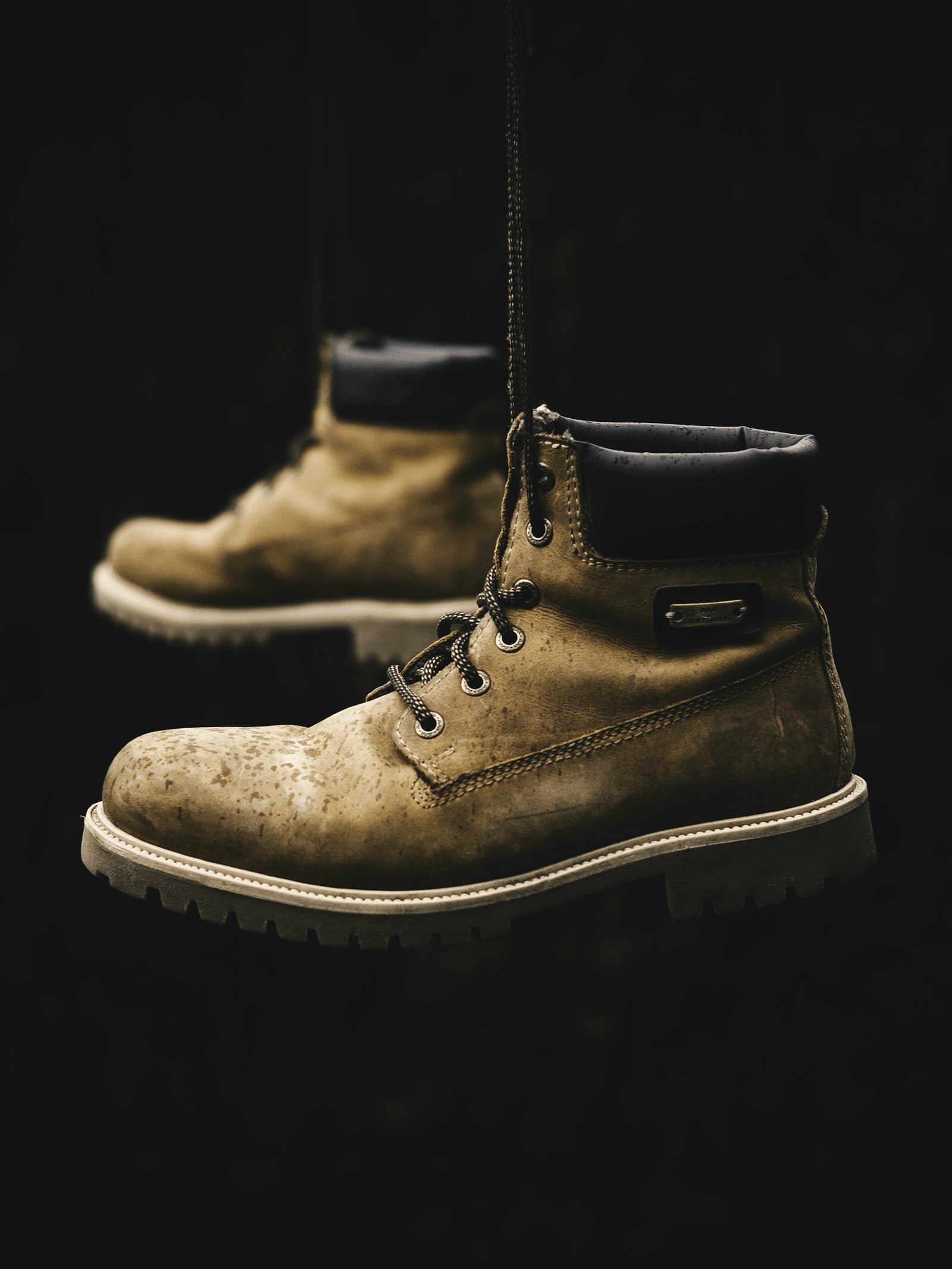
Cost per wear, printed in the open
The assumption, printed before the numbers: a chore coat in rotation is worn about 50 times a year across its spring-through-autumn season, layered. The life column is the service life our longevity row scores for, counted in years before the cloth, the finish or the seams retire the garment from the front of the rotation, not a promise.
| Coat | Price | Scored life | Cost per wear |
|---|---|---|---|
| L.C. King Brown Duck Chore Coat | $165 | 15 years | $0.22 |
| Carhartt Blanket-Lined Chore Coat | $129.99 | 12 years | $0.22 |
| Patagonia Iron Forge Chore Coat | $165 | 10 years | $0.33 |
| Filson Short Lined Cruiser | $359 | 20 years | $0.36 |
| Uniqlo Utility Jacket | $79.90 | 4 years | $0.40 |
| Le Mont St Michel Real Work Jacket | $335 | 15 years | $0.45 |
| Taylor Stitch Ojai Jacket | $198 | 7 years | $0.57 |
| Le Mont St Michel Vintage Washed | About $393 | 12 years | $0.66 |
The table's shape is the ranking's economics in one view. The two American duck coats tie at twenty-two cents a wear, one on a build sheet, one on an icon's scale, and either is the correct first chore coat for nearly any reader. The Patagonia buys its movement at thirty-three. The Filson's thirty-six is a twenty-year amortisation of the heaviest cloth here, an honest rate for an expensive coat. And at the bottom, the same house twice: forty-five cents for the jacket that will earn its fade across fifteen years, sixty-six for the one that arrives with the earning done for it, the most expensive wear on the page buying the least garment left.
The skip: Le Mont St Michel's Vintage Washed jacket at 58
Every house rule that governs this site's rankings lands on this garment at once, and it lands there by the garment's own description. The specification is not the problem; the house that invented this coat makes it properly, and its honest version stands fourth on this page with the desk's respect. The problem is a finish sold as a feature: age, administered at the factory, certified with a hand-numbered label, at about $58 more than the unworn coat hanging on the same rail of the same maker's store. How to Wear No. 13 printed this site's position before this ranking existed: a chore coat distressed by a factory to look lived-in is a costume, because the fade is the record of a working life and the record is the one part of the garment that cannot honourably be transferred. The Vintage Washed jacket is that position with a price tag, and the price tag is the conviction: the buyer is charged a premium to receive a coat with less of its life left in it. Buy the Real Work Jacket and wear it for a decade. Buy the L.C. King and wear it for longer than that. The numbered label certifies that someone else, a process, did the wearing. That is the whole of what the extra $58 purchases.
Which chore coat to buy
If you buy one: the L.C. King Brown Duck. It is the complete garment, cloth, architecture and build sheet, at the price work clothes are supposed to cost, and its one flaw, the straight back, is the tradition's own. If you move in your coat: the Patagonia Iron Forge, whose bi-swing back is the field's only real pattern engineering and whose specification is the field's fullest. If your winter starts early: the Carhartt, the blanket-lined icon, six pockets and the category's value benchmark at $129.99. If you want the original: the Le Mont St Michel Real Work Jacket, moleskin from the garment's home, bought with its maker's silence about the cloth priced in. If weather is the job: the Filson cruiser, 14 ounces of rewaxable Tin Cloth, one inside pocket short of perfect and priced like it knows it. If your chore coat lives in the city: the Ojai, tailored, bar-tacked and light. If the money is the argument: the Uniqlo, the complete architecture at $79.90 on a shorter clock. The wearing system for whichever one you buy is How to Wear No. 13, and every layer in the wardrobe is mapped in the Body Map.
Questions, answered
What are the best chore coats for men?
The L.C. King Brown Duck Chore Coat, scored 87 out of 100: 12-ounce cotton duck from a named American mill, double-needle felled seams, bar tacks, rivets, pewter shank buttons and five pockets including the inside one, sewn in Bristol, Tennessee by the house that has made it since 1913, at $165. The Patagonia Iron Forge follows at 86, the fullest published specification in the field and the fit that moves best. The coat sent home, at 58, is Le Mont St Michel's own Vintage Washed jacket: the reference house charging about $58 more than its honest jacket for age applied at the factory.
What makes a coat a chore coat?
Architecture and cloth, both checkable. The architecture is three or four working patch pockets on the outside and one on the inside, a plain collar and a button front. The cloth is a woven work cloth, canvas, duck, moleskin or twill, heavy enough for the job and honest enough to name. A garment missing the inside pocket is charged for it on this page, and a garment missing the cloth as well is not a chore coat at all: Uniqlo's jersey version, whose maker describes its fabric as having the feel of authentic workwear, is a knit overshirt wearing the chore coat's pockets, and this page rules it out by the same line our overshirt brief draws.
Is a chore coat a jacket or an overshirt?
A jacket. Our jackets index files the chore coat among the twelve jacket types at formality 2 and warmth 2, and How to Wear No. 10 drew the line this page stands on: patch pockets and a coat's length put a garment under a coat's rules, while a shirt's collar and a shirt's hem put it among the shirts. It is bought over the thickest knit it has to cover, worn as the outside layer of a working outfit from spring through autumn, and in real cold it goes under a coat like every warmth-2 garment on this site. Filson's cruiser, ranked here at No. 5, is the family's northwest branch: a work jacket of the same blood whose four pockets all face outward.
How should a chore coat fit?
As a coat, not as a shirt: room through the body to work in, sleeves to the wrist bone, a hem past the hip, and closed buttons over the thickest knit in the rotation. The field's cuts are the two registers of that rule. The work register is boxy and straight, L.C. King's traditional pattern, which its maker sells unwashed to shrink to fit, so the first wash is part of the fitting; the same straightness is its one cost, because it carries no action back and overhead reach pulls. The city register, Taylor Stitch's Ojai at No. 6, is the same architecture tailored closer, in a cloth half the weight. And read the maker's own warnings where they exist: Filson prints that its cruiser runs small and to order up for layering, which is a fit fact published by the only party who knows.
Why do chore coats fade, and is the fade damage?
Because of what the cloth is. Duck and canvas are dyed cotton woven tight; work and sun take the dye where the garment rubs, at the pockets, the cuffs, the fold lines, and the cloth underneath stays sound for years after the colour has moved. That is break-in, the garment's physics, and our jackets index prints the buying rule that follows from it: buy the cloth heavy and the colour honest; it should fade, not pill. Fading is the record of wear the owner did. Pilling is the opposite signal, a cloth too light or too blended for the job announcing itself in the first season. Which is why this page sends home a jacket whose fade was applied at the factory: the record was bought instead of lived, and the cloth's best chapters were spent before the coat was worn once.
Is the French chore coat worth two to three times the American ones?
On the published record, not as this field stands. Le Mont St Michel's Real Work Jacket is the garment's original, moleskin from the house that has made the bleu de travail since 1913, and it scores 78 here, fourth, because its maker publishes the least about it: no cloth weight on its store, no stitching specification, at $335. The American duck coats publish more and charge less: L.C. King's 12-ounce named-mill duck, felled seams and five pockets at $165 wins the page, and Carhartt's blanket-lined icon carries the field's fullest pocket count at $129.99. What the French premium buys is the pattern's home and the moleskin itself, which is a real cloth with a real century behind it. What it does not buy, at this check, is a record a buyer can verify before paying.
How this ranking stays honest
The rests, the prose answers and the capture notes, printed. Arpenteur stands at 84 in the French ranking, whose verdict on its work jacket is the strongest sentence any chore coat has earned on this site, and it is answered here rather than ranked: at this check its maker's own store could not be read to this desk's standard for the current jacket, and the desk does not score a garment it cannot capture. Vetra, making the bleu de travail in France since 1927, its hydrone blue twill jacket at $199 through its American stockist, is rested because two French seats would crowd out a species and its record is told on the French side of this site's family. Stan Ray, the winner of Brands Like Carhartt at 80, stands as that page's answer for the American make at honest prices; its chore and coverall jackets are brand-page evidence there, and no American door for the garment met this desk's standard in this check. Carhartt WIP, the anchor's fashion arm at 69 on the same page, is not re-tried: the two-Detroit arithmetic printed there is the standing account of the fashion tax in this family. L.L.Bean holds no chore coat in its current line that this desk could verify; the house's work record on this site is the Chamois cloth overshirt that wins the overshirts Verdict Card at 83, an adjacent species, and the brand stands at 87. On capture: the Carhartt specification was read from the maker's own feature copy as its retail listings carry it, its maker's store being unreadable to our reader at this check; the Patagonia specification is the maker's published figures as its listings carry them, its store serving category pages rather than the product page; the Le Mont St Michel door on its card is the maker's homepage, the same door this site's French ranking uses for the house, its store's category doors in this check being mismatched to the garment's line; and the L.C. King card ships without a buy link because the maker's listings move in and out of stock, with the price printed from the maker's store as its stockists carry it. Those four captures are flagged for direct re-verification in the November pass. On photography: the magazine's bank holds no chore coat, on a body or off one, a gap How to Wear No. 13 prints about its own page as well. The hero is the coat's home city, captioned as exactly that; the frames inside are the workshop register and the patina standard, captioned for what they show; the cards run without images; and the harvest list names what is missing: a duck chore coat worn in a real workshop, a moleskin jacket on a body in street light, a felled seam and a bar tack at macro range, and a ten-year fade beside a new coat of the same cloth. Prices and specifications were checked against the makers' own listings in October 2026; where a figure could not be verified from the maker's page, the page says so at the figure's elbow. The full method is written out on the methodology page.