

The whole brief in one frame: the overshirt open over a plain tee, doing the jacket's job in a shirt's cloth. Open is one of its two legal states. This page rules on the other, and on the third state that is neither.
Checked and updated October 2026
The ruling, up front: an overshirt is the jacket slot filled by a shirt's construction, and it has exactly two legal states. Worn open over a plainer layer, it is the jacket: the layer that carries the shoulder seasons. Worn buttoned, in a cloth heavy enough to be the top woven layer, it is the shirt itself. The failure is the third state, the half-buttoned shrug over a graphic tee, which is neither jacket nor shirt and reads as indecision worn on purpose. Fit follows from the same rule: it is sized as a layer, bought over the thickest knit it has to cover. Which overshirt is worth buying is a scored question, answered in Verdict Card No. 06, where the L.L.Bean Chamois Cloth Shirt took the category at 83 and the fashion market's shacket was sent home at 33.
This brief: the two-state rule · the four names · cloth decides the season · the stack, in order · the office ruling · the outfit matrix · the mistakes · cloth care
The decisive rule: two states, no third
Every other garment in this series has one way to be worn well. The overshirt has two, and they are opposites. Open, it is outerwear. The buttons are undone, the layer beneath is visible and deliberate, and the overshirt does the work a light jacket does: it finishes the outfit, carries the pockets, takes the weather of a mild day. Closed, it is the shirt. Buttoned to a sensible height, it becomes the top woven layer of the outfit, the garment the rest of the clothes answer to, and it earns that position only when the cloth is heavy enough to hold it: chamois, wool, heavy twill. A shirt-weight overshirt worn closed is just a shirt with ambitions, which is the ranking's phrase for its loser.
The third state is the mistake the whole brief exists to prevent: two buttons done at the middle, the rest open, a printed tee loud underneath. It borrows the open state's casualness and the closed state's coverage and delivers neither. The eye cannot tell whether the garment is coming or going, so it reads the wearer the same way. Choose the state before you leave the house. Open means the layer under it was chosen to be seen. Closed means the overshirt itself was.
The fit is the rule expressed in cloth. Our shirt index files the overshirt with one buying line: buy it over the thickest knit it has to cover; it is sized as a layer. The ranking's fit ruling prints the rest: room through the body for a knit underneath, sleeves to the wrist bone with the layer beneath showing below, and a hem that ends at the hip, straight rather than shirttailed if it will be worn open. A shirttail hem is the closed state's tailoring; the straight hem is the open state's, and it is why the same garment can be sold in both cuts. If it fits perfectly over a t-shirt in the shop, it is one size too small for its job.
The four names for one silhouette
No garment in the wardrobe is confused with more of its neighbours, because four different names circle the same shape: a collar, a button front, cloth heavier than a shirt's. The distinctions this site publishes are not dictionary work. They are filing decisions, printed in two indexes, and they decide how the garment may be worn.
| Garment | Where this site files it | The numbers | The distinction |
|---|---|---|---|
| Overshirt | The shirt index, among the shirts | Formality 2 | A shirt by collar, a jacket by build: wool, heavy twill, moleskin or chamois, chest pockets built to carry, cut with room to close over knitwear. Sized as a layer. |
| Shacket | No index of its own; ranked with the overshirts | The same silhouette; the one sold under the name scored 33 | The fashion market's word for the overshirt, usually in thinner cloth at a lower price. Not a different garment: a warning about the cloth. The wearing rules are identical, and the thin version fails them by November. |
| Chore coat | The jackets index, among the jackets | Formality 2, warmth 2 | A true jacket that happens to be soft: three or four patch pockets on heavy cotton canvas, moleskin or denim, the French workshop's coat. It is what the wardrobe reaches for when a blazer is too much and a shirt is not enough. Its pockets are on the outside and built for tools; the overshirt's are a shirt's chest pockets, built to carry. |
| Flannel shirt | The shirt index | Formality 2.5 | A shirt, full stop: brushed cotton twill worn as the shirt itself. Its index rule is to judge the weight and the brushing, never the plaid; the pattern is decoration. The same cloth can be cut as either garment, and the build decides which: shirttail and shirt room make a flannel shirt, jacket build and layering room make an overshirt. The ranking's winner is a flannel cloth cut the second way. |
Two consequences follow. First, the flannel shirt at formality 2.5 stands half a rung above the overshirt at 2, which surprises men who assume the heavier garment is the dressier one. It is not: the flannel shirt is a finished shirt that can present itself in a smart room, and the overshirt is a layer, and a layer is always one rung below the garment it covers. Second, the chore coat and the overshirt share formality 2 and part on everything else: the coat is filed with the jackets because it faces outward, longer in the body, patch-pocketed, a spring-through-autumn shell. If the garment in your hand has patch pockets and a coat's length, it is a chore coat and takes a coat's rules. If it has a shirt's collar and a shirt's hem, it is an overshirt and takes this brief.

Cloth decides the season
The ranking's central finding governs this brief: in this category the score follows the cloth weight until value intervenes, and warmth is a range, not a number. The windows below are the ones Verdict Card No. 06 printed for its seven, generalised by cloth class. Read your climate off the table before you read anything off a photograph.
| Cloth | Weight class | Its window | The wearing consequence |
|---|---|---|---|
| Cotton chamois flannel | Mid | Over a tee from 40 to 60 degrees; under a coat below that | The default. The winner's cloth, brushed both sides, the layer for the whole shoulder season. |
| Wool, jac-shirt weight | Heavy, 18 ounces in the Card's ceiling garment | A true outer layer to below freezing, with a knit under it | The winter overshirt. Wool insulates wet or dry and resists odor, which is why it is also the travel version. |
| Quilted flannel | Heavy | The warmest layer per ounce; outer layer deepest into winter | 9-ounce flannel with insulation quilted through: the warmth pick, bought when winter is the point. |
| Cotton twill and canvas, unlined | Mid | Three seasons as the outside; a mid layer in January | The workwear cut, the CPO pattern's cloth: it layers under a coat instead of competing with it. |
| Knit blends | Light to mid | Cool evenings; an indoor layer in winter | A knit wearing an overshirt's shape. It stretches where an overshirt should hold, so it is worn closed, as a soft shirt, never asked to be the outside in weather. |
| Thin cotton flannel | Light | Mild days only | The honest budget cloth: two or three mild seasons, fairly traded at its price, and never a winter garment. |
| Thin blended cloth | Light | No window worth the name | The shacket's cloth: neither warm nor structured. It occupies the overshirt's place in an outfit while doing none of the overshirt's work. |
The practical translation: one mid-weight chamois or twill overshirt covers more days of the year than any other single layer a man owns, which is the arithmetic under the winner's 83. The heavy wool version is a second purchase for a cold climate, not an upgrade of the first. And any overshirt whose maker will not print a cloth weight is telling you the weight: the heritage makers print theirs because the number is the garment's résumé.
The stack, in order
An overshirt is never worn alone in the sense that matters: it is always one rung of a stack, and the stack has a published order. The rule that governs every rung is the shirt index's law of surface order: the layer underneath should be smoother than the layer above it. Texture climbs as you go out. Reverse it, a rough knit under a smooth overshirt, and the stack snags visually and literally.
The base: a tee, then a henley. The ranking's ladder for what goes under an overshirt runs in order of formality: a white or washed tee first, then a henley, then a fine knit. The tee is the base of the whole system for a reason the index prints in its own row: it is judged like a garment, cloth weight and a neckband that recovers, and it is what shows in the open state, so it is chosen, not grabbed. The henley is the same rung with a placket: an under-layer that may be seen, in the index's words, and never the layer that dresses up. Both sit at formality 1, the floor the overshirt's 2 is built on.
The shirt rung: an Oxford, worn as the shirt. When the overshirt is the commute layer or the day is cold, the base becomes a real shirt, and the Oxford is the partner: its cloth is smoother than any overshirt cloth above it, its collar sits inside the overshirt's collar without a fight, and its formality carries the outfit if the overshirt comes off indoors. This is the one assembly where the overshirt is worn open over a collared shirt, and the collar rule is the crew brief's applied one layer up: both collars lie flat, neither escapes.
The knit rung: fine and mid gauges only. Over the base, under the overshirt, sits the knit, and its gauges are How to Wear No. 09's bands, unchanged. Fine gauge, roughly 24 to 30, goes under a mid-weight overshirt without bulk at the arm. Mid gauge, roughly 12 to 20, goes under the heavy wool and chamois, and is the standard winter assembly: the Card's own best outfit is a roll neck under a wool jac-shirt, the turtleneck version of the same rung. Heavy gauge, 7 and below, is not an under-layer at all: No. 09 rules it a top layer that stands alone, and what covers it is a coat, not an overshirt. Two heavy layers do not make a warm outfit; they make a stiff one.
Over the overshirt: the coat takes over. Below the overshirt's window, the stack does not get thicker at the overshirt rung; it gets a rung above it. The Card's windows say it plainly: chamois and twill work over a tee from 40 to 60 degrees and go under a coat below that, and the unlined workwear cuts become the mid layer in January. The coat that closes the system is chosen by the jackets index's logic and assembled in the Fall Edit: the overshirt beneath it is worn closed, so the stack reads as one garment from the street. The knit chapter of the same logic, the cardigan worn over the woven layers, is How to Wear No. 01, and its rule is the stack's rule seen from above: woven under knit in winter, knit under woven in the shoulder seasons, and never two loose layers arguing at the same rung.
The office ruling
Plainly, as the number requires: the overshirt is formality 2, and formality 2 does not present in rooms that measure formality. The blazer it would be substituting for stands at formality 4 in the jackets index. Two full rungs is not a styling gap; it is a different outfit. So the overshirt's office life has exactly two legal forms. It is the commute layer: worn open or closed over the Oxford and office trousers on the way in, doing a light coat's work in the shoulder seasons, and it comes off at the desk. Or it is the top layer in a genuinely casual room, worn closed in a heavy cloth, chamois or wool, with tailored trousers and clean shoes, in a workplace where a shirt alone would already suffice: a studio, a workshop, a Friday that is a fact and not a costume. What it never is, is the answer to a room that wants a jacket. That room is answered by How to Wear No. 03, and borrowing the overshirt for it is the first mistake below.
The outfit matrix: six ways, no improvisation needed
| Setting | The overshirt | With | The judgment |
|---|---|---|---|
| The default, 40 to 60 degrees | Chamois, worn open | A washed white tee, dark straight denim, boots | The Card's centre of gravity at work: the layer that carries the year, in its first legal state |
| Double denim, held apart | A denim or dark twill overshirt, open | A white tee between it and a jean in the clearly opposite wash | No. 05's wash-break law: the two denims never share a wash, and the tee is the third surface that widens the break |
| The formality ceiling | Heavy wool, worn closed as the shirt | Spier & MacKay tropical wool trousers, loafers | The trousers are the 87 of Verdict Card No. 15; the overshirt at formality 2 is the one deliberate casual fact, and the room must be a smart one, not a tailored one |
| Below freezing | The wool jac-shirt class, the Card's 82, over a mid-gauge crew | An open overcoat above the whole stack, heavy denim or corduroy, boots | The overshirt changes jobs: no longer the outside, now the middle. No. 09's mid gauge is the rung beneath it |
| Shorts weather | Light twill or chamois, open | A plain tee, shorts, clean sneakers | The assembly No. 03 assigns to this garment in the ruling that keeps the blazer out of shorts: the overshirt is heat's sanctioned layer |
| The commute | Chamois or twill, over an Oxford and office trousers | Worn as the outer layer to the office door, then off | Formality 2 travelling over formality's working clothes: it presents the man to the street, not to the room |
The ruling
Decide what the overshirt is today, the jacket or the shirt, and dress the rest of the outfit to that decision: the layer beneath plainer and smoother, the cloth heavy enough for the state you chose, the fit bought for the thickest knit it must cover. Every failure of this garment is a refusal to decide: the half-buttoned middle, the light cloth asked to be a coat, the layer bought to fit the tee it was tried on over. Worn decided, it is the hardest-working layer in the closet, the one that carries the year between the tee and the coat. That is not a small job. It is most of the calendar.
The mistakes
The shacket at a wedding. The gravest version of the formality fraud: a formality-2 layer, in the thinnest cloth the market sells, worn where the room has asked for a jacket. It fails twice, once on the rung, a layer where tailoring was required, and once on the cloth, because the garment the ranking sent home at 33 cannot even do its own job, let alone a blazer's. The wedding is the blazer brief's home ground, and its ruling has no overshirt clause. If the invitation says jacket, the answer is a jacket; the overshirt's turn is the morning after, over a tee, at breakfast.
The half-buttoned graphic tee. The third state as a personality: two buttons done, chest open, a printed tee doing all the talking underneath. It breaks two published rules at once. The tee's own index row judges it on cloth and a recovering neckband, with no print doing the talking; and the open state of an overshirt is a frame, which means whatever it frames becomes the outfit. A slogan in that frame is not a layer under a garment. It is a poster in a frame, and the man is the wall. A plain tee under an open overshirt is a decision. A loud one is a confession that the overshirt was bought to surround it.
The flannel worn as a winter coat. A light flannel overshirt, or worse the thin shacket, buttoned to the throat in January and asked to be outerwear. The cloth windows on this page are not suggestions: chamois goes under a coat below 40 degrees, thin flannel is mild days only, and nothing in the light classes has a winter window at all. January's assembly is printed in the matrix: knit, overshirt, coat. The man shivering in a checked shirt in a cold month has not dressed down. He has dressed wrong, one rung short, and the fix is above the overshirt, not inside it.
Bought to fit the tee. The fitting-room failure the ranking names: an overshirt that fits perfectly over a t-shirt in the shop is one size too small for its job. Its job begins the first morning it has to close over a mid-gauge crew, and a garment bought without its layer has no layer to give. The index rule exists because this mistake is made at the till and paid for all winter: buy it over the thickest knit it has to cover, and let the tee-only days wear it loose, which is how the open state is supposed to look anyway.
Cloth care, briefly
The ranking's longevity row is the care brief, because in this category care is mostly a matter of what the cloth can forgive. The service lives it prints are the expectations to hold an overshirt to: the chamois winner is costed at ten seasons and 24 cents a wear; the 18-ounce wool at fifteen seasons; the honest budget flannel at three; and the thin shacket at one season and a dollar a wear, the most expensive layer on the page precisely because nothing about it can be maintained into a second year. Wool is the low-effort fibre the Card's evidence keeps rewarding: it insulates wet or dry and resists odor, so the wool overshirt is aired on a hook between wears and washed rarely, which is part of how it reaches fifteen seasons. Chamois and heavy twill take the opposite virtue: brushed cotton softens with washing and asks only to be washed cold and dried out of direct heat, so the cloth that started stiff ends the decade as the softest thing in the closet. And every overshirt announces its retirement at the same place: the collar. The ranking's loser is described by its collar giving up by November. When a collar stops standing and a cuff frays past tidying, the garment has printed its own season count, and it moves to work duty with its record intact.
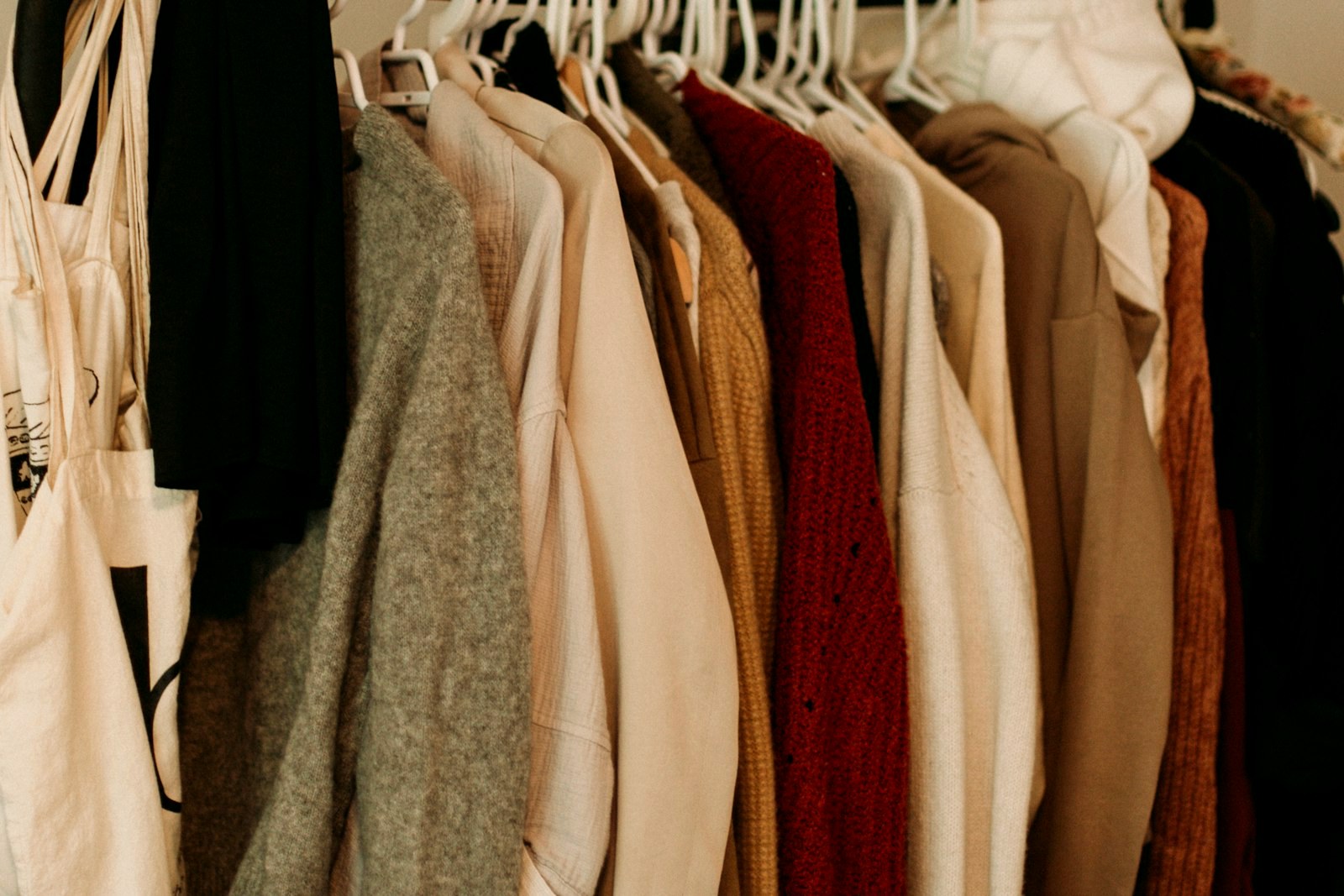
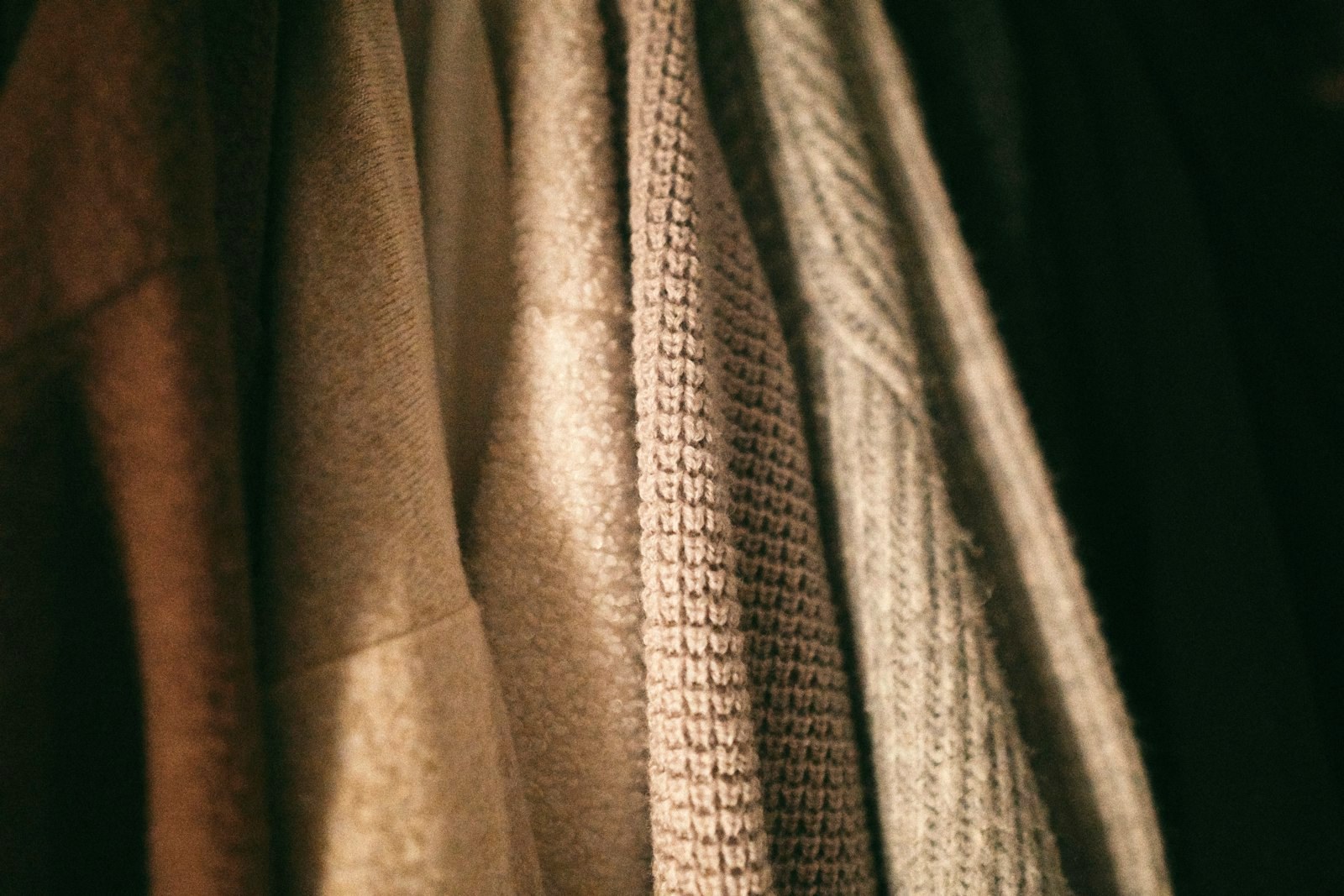
A note on our own photography, printed because this page believes in saying so: our photo bank holds two honest overshirt frames, the open red flannel at the top of this page and the checked flannel worn closed in the four-names section, and both also serve the ranking, because they are the frames that exist. There is no canvas chore-weight overshirt worn in the street yet, and no wool jac-shirt frame, so the cloth table runs on those two frames, the knit rail and the wardrobe rail rather than borrowed shots. The gaps are on the harvest list, named.
Questions, answered
What is the difference between an overshirt and a shacket?
Nothing in the dictionary and everything in the cloth. Both names describe a shirt built like a light jacket: shirt collar, button front, room to layer over a knit. Overshirt is the word the workwear and heritage makers use, for cloth with a weight they will print. Shacket is the fashion market's word for the same silhouette, usually in thinner cloth at a lower price. The wearing rules are identical; the garments are not. In our overshirt ranking the heritage end clusters at the top, and the one sold as a shacket finishes last at 33.
How should an overshirt fit?
Like a jacket that happens to button like a shirt: room through the body for a knit underneath, sleeves to the wrist bone with the layer beneath showing below, and a hem that ends at the hip, straight rather than shirttailed if it will be worn open. Size for the layer you will actually wear under it, not for the tee you tried it on over. If it fits perfectly over a t-shirt in the shop, it is one size too small for its job.
What do you wear under an overshirt?
A plainer layer than the overshirt itself, in the ladder our ranking prints: a white or washed tee first, then a henley, then a fine knit, in that order of formality. The governing rule is surface order, from our shirt index: the layer underneath should be smoother than the layer above it. In knit terms the gauges are the crew brief's bands: fine gauge, roughly 24 to 30, under a mid-weight overshirt; mid gauge, roughly 12 to 20, under the heavy wool and chamois. Heavy gauge goes under a coat instead.
Can you wear an overshirt to the office?
As the commute layer, yes. As the outfit, only where the room is truly casual. Our shirt index files the overshirt at formality 2, smart casual's floor, two full rungs below the blazer's formality 4. Worn closed in a heavy cloth with tailored trousers, it holds a room where a shirt alone would suffice. In any room with a tailoring expectation it is the layer over the office clothes, and it comes off at the desk.
Can you wear an overshirt with shorts?
Yes. It is one of the three garments our blazer brief assigns to shorts, in the ruling that keeps the blazer out of them: shorts take the camp collar shirt, the knit polo and the overshirt. Wear it open over a plain tee, in a light twill or chamois, hem at the hip. The tee stays plain: the moment a print does the talking, the overshirt becomes a frame around a poster.
Is an overshirt a jacket?
It sits on the border, and this site scores it on the shirt side of the line: a shirt by collar, a jacket by build, worn as a layer rather than as weather protection, which is why our shirt index files it at formality 2 among the shirts. The distinction that matters is function. A jacket faces weather or formality; an overshirt sits between a shirt and a jacket, and in real cold a coat goes over it.
Next
The buy itself is scored in Verdict Card No. 06, where the Bean chamois's 83, the Filson wool's 82 and the shacket's 33 were earned on cloth, warmth and wear. The layer above this one in real cold is ruled by the jackets index and assembled in the Fall Edit. The knit that goes under it is briefed in How to Wear No. 09, the coat-substitute it must never impersonate in How to Wear No. 03, and the denim it so often stands over in How to Wear No. 05. The garment's own family, all twelve types with their formality scores, is indexed in types of shirts.