

The coat's home ground: Paris, the city whose workshops standardised it. The chore coat was a uniform there before it was a style anywhere, and this brief treats it as equipment first, which is the only way it ever looks right.
Checked and updated October 2026
The ruling, up front: a chore coat is a tool worn as a jacket, and everything about wearing it follows from that. Its pockets are the point: three or four patch pockets on heavy cotton, built to carry the day's kit, not to decorate a silhouette. Its formality is fixed: our jackets index files it at formality 2 and warmth 2, and no styling, no shoe, no tailored trouser moves it off that rung, because the rung is the garment's honesty. It is bought over the thickest knit it has to cover, worn as the outside of a working outfit from spring through autumn, and in real cold it goes under a coat like every warmth-2 garment on this site. Which chore coat is worth buying is a record this site keeps in pieces: the American icon is garment evidence on the Carhartt page, and the coat's French home houses are scored in the French ranking. This brief is the wearing system.
This brief: the tool rule · the French lineage · the four cloths · the stack, in order · the office ruling · the outfit matrix · the mistakes · care and the patch
The decisive rule: a tool worn as a jacket
Most garments in this series are worn to be looked at. The chore coat is worn to be used, and it is the only jacket in the index whose design argument is a set of pockets. Three or four of them, patched onto the outside of heavy cotton where a hand can find them without looking, sized for the tools and paper of a working day. That is the whole invention. The soft shoulder, the plain collar, the button front and the straight body exist to hold the pockets up and stay out of their way. Wear it as what it is: the outside layer of an outfit that has something to do, carrying what the day needs, in cloth that can take a knock against a door frame, a workbench, a life. The moment it is worn as a costume of work rather than as equipment for it, it fails, and the mistakes section below names the costumes.
The formality is not negotiable, because it is not a styling outcome. The jackets index prints the type at formality 2, the same rung as the overshirt in How to Wear No. 10, two full rungs below the blazer's 4. Men keep trying to style their way off that rung: a chore coat over a pressed shirt, a chore coat with tailored trousers and polished shoes, presented as a blazer alternative. It is not one, and the index's own sentence for the type says why it does not need to be: it is the jacket the wardrobe reaches for when a blazer is too much and a shirt is not enough. That is a real job, most of the year's job, and a garment doing it well has nothing to apologise for. What it cannot do is borrow the blazer's authority by proximity to tailored pieces. Formality 2 worn with confidence reads as a man dressed for his actual day. Formality 2 dressed up reads as a man hoping nobody checks.
The fit is the rule expressed in cloth. A chore coat is sized as a coat: bought over the thickest knit it has to cover, with room through the body to work in, sleeves to the wrist bone, and a hem past the hip, longer in the body than any shirt, which is the jackets index's own dividing line between this garment and the overshirt. The soft shoulder should fall where a shoulder falls, not droop into a costume of slouch, and the coat should button closed over its full stack without pulling, because a work jacket that cannot close is a work jacket that cannot work. If it fits perfectly over a t-shirt in the shop, it is one size too small for its job, the same sentence the overshirt brief prints, because the error is the same error at the same till.
The French lineage, told plainly
The chore coat begins as the bleu de travail, the blue work jacket of France: the coat of factory hands, railway men, farmers, mechanics and, in time, the painters and photographers who worked alongside them. The blue was not a style decision. Indigo dye was cheap, it hid grime honourably, and it faded where the work rubbed, so the coat kept a record of its own use. The pattern barely changed across a century because it did not need to: a straight body that fits over layers, a collar that lies flat under a strap or a scarf, buttons a gloved hand can manage, and pockets placed where the trade's tools actually live. It was a uniform in the true sense, issued by the work itself, and the houses that still make it properly are making that pattern, not interpreting it.
Our French ranking scores the lineage's two ends. Le Mont St Michel, 79, is the coat's home: a house making work clothing since 1913, whose Genuine Work Jacket in moleskin is the reference the copies copy, dense cotton that starts stiff and softens into the shape of its wearer. Arpenteur, 84, is the refined end, Lyon workwear remade in French workshops with every pattern tightened, and the ranking's verdict on its work jacket is the strongest sentence any chore coat has earned on this site: of every chore coat on any of our country lists, it is the one that will outlive its owner. The American branch of the family is scored on the Carhartt page, where the chore coat stands in the anchor's icon group, the Detroit, the double-knee pant and the chore coat, real duck canvas at $130, called there the value benchmark of the whole category. That is garment evidence, printed as such: Carhartt the brand keeps the 77 from our American ranking, and its page is won by Stan Ray at 80, a Texas maker sewing fatigues and chore coats in the USA since 1972 at prices that still describe work clothes.
One warning belongs in the lineage itself, before the cloth table: the bleu de travail is a uniform with a history, not a costume with a mood. The fashion version of this coat arrives pre-faded, pre-softened, sometimes pre-patched, priced like tailoring and built like a shirt, and it asks the wearer to borrow a working life he has not led. This page's position is the index's buying rule applied to the whole garment: buy the cloth heavy and the colour honest, and let the coat earn its fade on your own days, in your own work, whatever your work is. A chore coat worn by a designer, a teacher or a man who fixes bicycles on Saturdays is not cosplay. A chore coat distressed by a factory to look like one is. The difference is not the job. It is who did the wearing.

The four cloths
The jackets index prints the type's cloth line in three words, cotton canvas, moleskin, denim, and this brief adds the twill the lighter work jackets are cut from. All four sit inside the index's warmth 2: none of them insulates like a coat with filling, and their differences are differences of work, wind and wear, not of temperature class. Read the cloth for the life the coat will actually lead.
| Cloth | What it is | Warmth and work | The ruling |
|---|---|---|---|
| Cotton canvas, duck | The American work cloth: a plain, tight weave that starts board-stiff and breaks in over seasons | Warmth 2 with the best wind resistance of the four; shrugs off abrasion, sheds a light shower by weave alone | The default. The Carhartt icon's cloth, and the one that rewards repair longest. Buy it stiff and let it soften on you |
| Moleskin | The French reference cloth: dense cotton with a brushed, suede-like face, woven tight enough to turn a thorn | The warmest of the four inside warmth 2; the brushing holds still air and the density blocks wind | The winter-leaning buy, and the bleu de travail's true cloth. Le Mont St Michel's jacket is the measure of it |
| Denim | The coat cut from jean cloth, usually a mid-weight indigo twill | Mid warmth, less wind-tight than duck; the fastest of the four to fade, and the fade is the record | Bought for the fade, worn under the wash-break law below. Over jeans it is the one cloth that owes a ruling before it leaves the house |
| Cotton twill | The lighter work weave, chino's cousin: softer from the first wear, thinner than canvas | The cool end of warmth 2; three seasons honest, a mid layer in the fourth | The summer and travel version. It gives up the canvas coat's armour and buys ease; do not ask it to be the winter coat |
The index's buying rule for the type governs all four rows: buy the cloth heavy and the colour honest; it should fade, not pill. Fading is what honest cotton does under sun and work. Pilling is what a blend does when the cloth was never heavy enough for the job, and a chore coat that pills has announced, in its first season, that it was a photograph of a work jacket rather than the thing itself. The weight test is the same one the overshirt brief prints for its own category: a maker who will not tell you the cloth's weight is telling you the weight.
The stack, in order
The chore coat is the outside of its stack, and the stack has the same published order as every layered brief in this series. The governing law is the shirt index's rule of surface order, carried through No. 10: the layer underneath should be smoother than the layer above it. Heavy cotton canvas over everything satisfies the law almost automatically, which is part of why this coat is so hard to wear badly from the neck down.
The base: a tee, then a henley. The plain tee is the coat's oldest partner, judged as the shirt index judges it, on cloth weight and a neckband that recovers, with no print doing the talking. In the coat's open state the tee is what shows, and a washed white or grey tee under navy or brown canvas is the assembly the garment was standardised around. The henley is the same rung with a placket, an under-layer that may be seen and never the layer that dresses up.
The shirt rung: an Oxford, worn as the shirt. When the day wants a collar, the Oxford goes under the coat and the coat becomes the jacket over it: the Oxford's cloth is smoother than any of the four coat cloths above it, its collar sits inside the coat's plain collar without a fight, and its formality carries the outfit in the rooms where the coat comes off. This is the assembly the office ruling below is built on. What never joins this rung is a tie, for reasons the mistakes section prices in full.
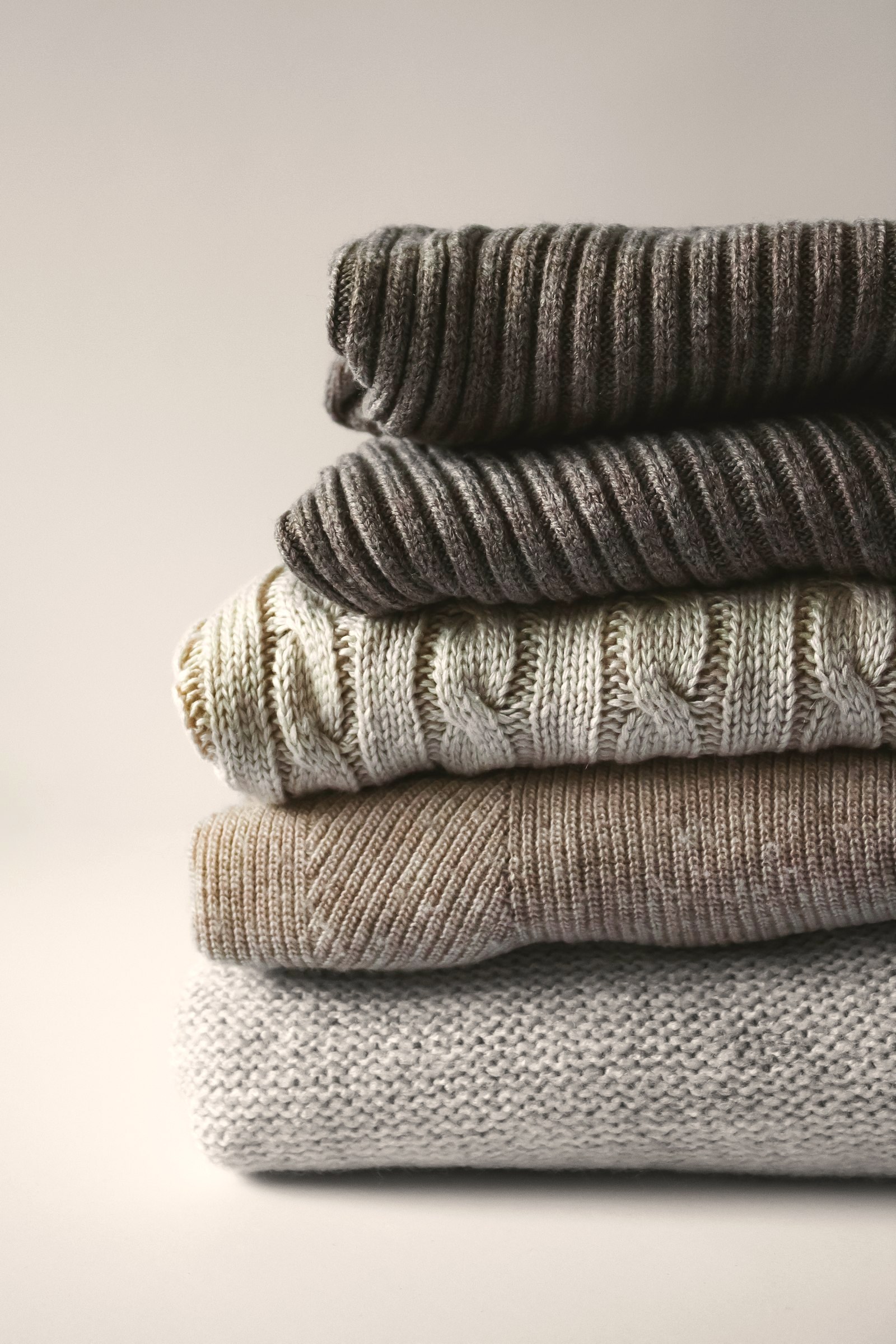
The knit rung: fine and mid gauges only. Between the shirt and the coat, or straight over the tee, sits the knit, and its gauges are How to Wear No. 09's bands, unchanged. Fine gauge, roughly 24 to 30, under a twill or denim coat. Mid gauge, roughly 12 to 20, under canvas and moleskin, and the standard cold-day assembly: the coat closed over a mid-gauge crew is the warmest outfit warmth 2 can build. Heavy gauge, 7 and below, is not an under-layer at all: No. 09 rules it a top layer that stands alone, and a coat sized to close over it was bought a size up for a pairing that should not happen. The roll neck deserves its own sentence: the turtleneck brief's smart-casual row already prints a navy roll neck under an open chore coat as the roll neck's home ground, and this brief confirms the pairing from the coat's side.
Over the chore coat: real cold adds a rung above, not bulk below. The index prints the type's season as spring through autumn, layered, and layered is the operative word. Below that window the chore coat changes jobs the way the overshirt does in No. 10: it becomes the middle. The coat that closes the system is chosen by the jackets index's logic, the trench of How to Wear No. 02 in the rain, a heavier coat in the dry cold, with the chore coat worn closed beneath it so the stack reads as one garment from the street. January's assembly is knit, chore coat, coat. The man who answers January by buttoning a twill chore coat over two tees has dressed one rung short, and the fix is above the chore coat, not inside it.
The office ruling
Plainly, as the number requires: the chore coat is formality 2, and formality 2 works exactly where formality 2 is the room's code. Those rooms are real and numerous: the studio, the workshop, the gallery, the site visit, the studio-flat office where a shirt alone would suffice and a jacket would be theatre. In them, the coat worn over an Oxford or a fine knit, with tailored trousers and clean shoes, is not a compromise. It is the correct garment, the one the index names for the gap between a blazer being too much and a shirt not being enough. Everywhere else, its office life is the overshirt's second legal form: the commute layer. It travels over the office clothes, does a light coat's work between the street and the desk, and comes off in any room with a tailoring expectation, because that room is answered by How to Wear No. 03 and the blazer stands at formality 4. Two rungs is not a styling gap. It is a different outfit, and the chore coat's dignity is that it never pretended otherwise.
The outfit matrix: six ways, no improvisation needed
| Setting | The chore coat | With | The judgment |
|---|---|---|---|
| The default | Brown or navy canvas, worn open | A washed white tee, dark straight denim, work boots or suede boots | The garment at home: the coat carrying the day's kit, the tee the third surface, the whole outfit inside formality 2 and proud of it |
| Double denim, ruled head-on | A denim chore coat in a wash clearly opposite the jean | Dark coat over a faded jean, or the reverse, a white tee open at the front between them | No. 05's wash-break law at full strength: the two denims never share a wash, the tee widens the break, and the matched mid-wash set is banned as a one-piece work suit read |
| The formality ceiling | Moleskin, worn closed over an Oxford | Spier & MacKay tropical wool trousers, suede loafers | The trousers are the 87 of Verdict Card No. 15. The loafer moves the outfit one notch up, per No. 11, and the coat stays formality 2: the one deliberate casual fact, in a smart room only |
| The white sneaker row | Twill, worn open over a plain tee | Fatigue trousers or washed chinos, clean minimal white sneakers | No. 12's solvent rule: under cloth this casual the sneaker dissolves nothing, because there is no level to spend. Its condition still holds its rung, formality 3 when clean |
| The roll neck row | Canvas or moleskin, worn open | A navy roll neck, dark denim, suede boots | The pairing the turtleneck brief prints as the roll neck's home ground, confirmed from the coat's side: the knit dresses the coat up half a step without asking it to lie |
| Real cold | The chore coat closed over a mid-gauge crew, demoted to the middle | A trench or overcoat above the whole stack, heavy denim or corduroy, boots | Warmth 2 layered, as the index's season line prints it. The coat over the top is No. 02's territory; the chore coat beneath it is this brief's stack, closed |
The ruling
Buy the cloth heavy and the colour honest, size it over the thickest knit it must cover, load the pockets with the day's kit and nothing heavier, and wear it as the outside of a working outfit in the rooms where formality 2 is the code. Every failure of this garment is a refusal of its terms: the tie that asks it to be tailoring, the factory fade that asks it to have lived a life it has not, the pockets stuffed until a jacket becomes luggage. Worn on its own terms, it is the most useful jacket in the index, the one that carries the year between the tee and the coat while carrying everything else in its pockets. A tool does not need to be versatile. It needs to be the right tool, kept ready. This one is.
The mistakes
The chore coat over a tie. The formality fraud in its purest form: a tie is a claim, the most concentrated formality signal a shirt can send, and it is being made under a garment the index files two rungs below the blazer. The pairing satisfies neither code. The tie reads as a man who was told to dress up and stopped at the neck; the coat reads as a man who was not told at all. If the day requires a tie, the day requires the blazer of No. 03, and the chore coat's turn is the commute home after the tie comes off. There is no version of this pairing that works, and the brief does not offer one.
Pristine canvas playing at patina. The chore coat bought pre-faded, pre-softened or, worst of all, bought new and kept precious: wiped down, hung away from the work, its fade feared instead of earned. It fails the lineage section's test from both directions. The factory-distressed version borrows a life; the protected version refuses to live one, and both read the same way at ten paces, as a costume. Canvas is the cloth the Carhartt page prices at a decade of use. The coat is supposed to come back with the day on it. A chore coat that looks new in its third year is not being cared for. It is being wasted.
Four pockets used as a handbag. Phone, wallet, keys, notebook, sunglasses, a paperback and a water bottle, distributed across four patch pockets until the coat pulls at its buttons and prints every object through the cloth. The pockets are the garment's point, but the point is a working kit, not storage: what the day needs at hand, laid out so the coat hangs straight. Everything beyond that belongs in a bag, and the coat worn over a carried bag looks better than the coat worn as one. A loaded chore coat is not a prepared man. It is a man wearing his luggage.
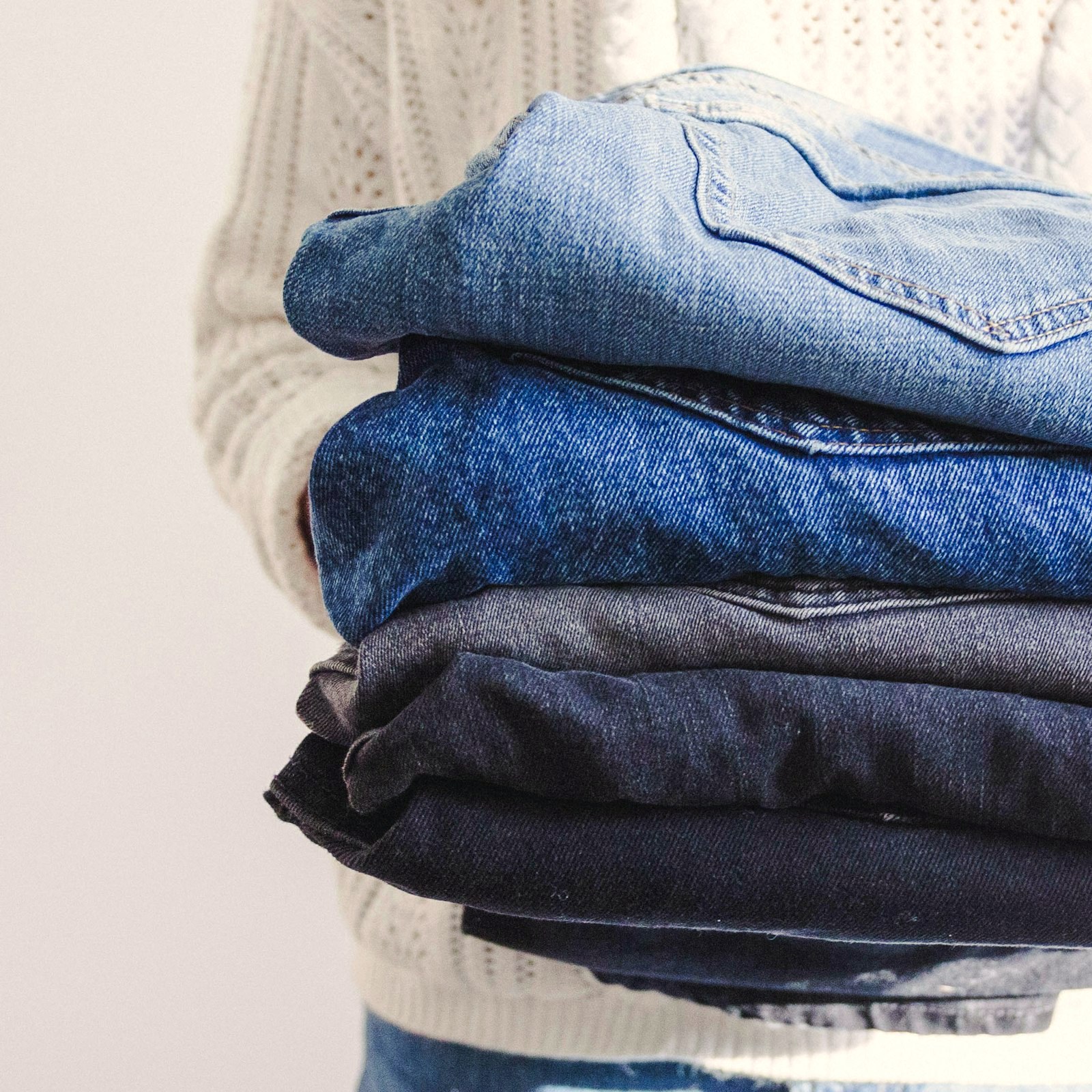
The matched denim set. A denim chore coat in the same mid wash as the jean under it, bought together, worn together, head to toe in one cloth at one fade. No. 05 names the uniform read as the first denim failure, and the chore coat is where it bites hardest, because a coat's length covers enough of the body to complete the illusion: the outfit stops reading as a jacket over trousers and reads as a one-piece work suit. The wash-break law exists for exactly this pairing. Opposite ends of the wash stack, a third surface at the front, or a different cloth entirely. Canvas over jeans never has this problem, which is one more reason canvas is the default.
Care, and the patch
Canvas care is mostly restraint. Wash cold and rarely: every wash takes a little of the dye the index tells you to buy honest, and the coat that is washed weekly fades to a verdict it did not earn. Spot-clean the day off it, hang it by its loop, and let the cloth soften at the pace of wear rather than the pace of the machine. Moleskin asks for a brush instead of a wash, its nap raised and its dust taken off dry. Denim follows the denim brief's own care logic, and twill asks for nothing the chino does not. None of the four cloths wants heat, and all four repay the hook by the door more than any product sold for them.
The patch is where this garment's philosophy becomes visible, so the position is stated plainly: canvas rewards repair, and a repair is honest when it answers damage the wearer actually did. A chore coat worn thin at the pocket corner, torn at the cuff, abraded where the strap crosses, is a coat with its record on it, and a mend in a near thread, or in a contrasting one that admits itself, extends the record instead of editing it. The visible mend is not a style here. It is maintenance that does not pretend to be invisible, the same ethic the Carhartt page records at the top of the category, where Filson's repair programme is the standing answer when the decade is up. What this page will not bless is the decorative patch: a mend sewn onto undamaged cloth, damage quoted rather than suffered. That is the pre-faded coat's fraud continued with a needle. Patch what you tore. Wear what you patched. The coat keeps the minutes of both.
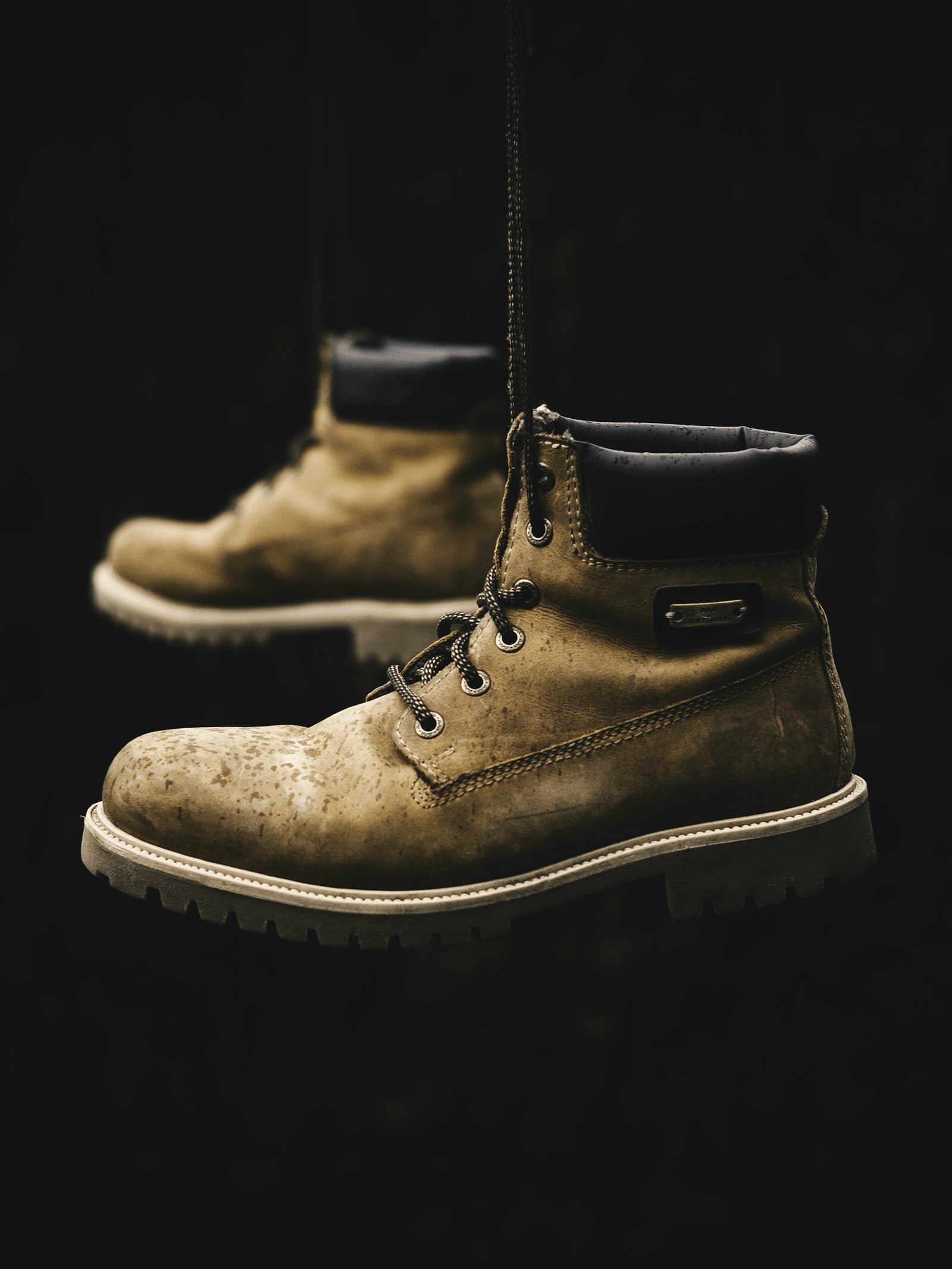
A note on our own photography, printed because this page believes in saying so: our photo bank holds no honest chore-coat-on-body frame yet. The bank's workwear frames are a welder in overalls, used above in the lineage section where the workshop register is the point, and a set of denim truckers, which are this coat's cousins in the jackets index and are not passed off here as the coat itself. So this brief runs on the coat's home city, its cloth, its knit rung and its boots rather than a borrowed shot of a garment it cannot show. A canvas chore coat worn in a real street or workshop is on the harvest list, named, and this page will take the frame the week it exists.
Questions, answered
What is a chore coat?
A soft-shouldered work jacket in heavy cotton: three or four patch pockets on the outside, often one more inside, a plain collar, a button front, and cloth with a job in it, canvas, moleskin or denim. Our jackets index files it among the twelve jacket types at formality 2 and warmth 2, season spring through autumn, layered. It descends from the French workshop coat, the bleu de travail, and it is worn the way that coat was worn: as the outside layer of a working outfit, pockets loaded with the day's kit and nothing dressier claimed for it.
Is a chore coat a jacket or a shirt?
A jacket, and this site has already drawn the line. How to Wear No. 10 separated the chore coat from the overshirt it is most often confused with: patch pockets and a coat's length put a garment in the jackets index under a coat's rules, while a shirt's collar and a shirt's hem put it among the shirts. The chore coat faces outward, is bought over the thickest knit it has to cover, and comes off indoors the way a coat does. The overshirt shares its formality 2 and nothing else.
Can you wear a chore coat to the office?
In the rooms whose code is formality 2, yes: studios, workshops, galleries, site days and genuinely casual offices, worn over an Oxford or a knit with tailored trousers. In a room with a tailoring expectation, no: the blazer stands at formality 4, two full rungs above the chore coat, and the coat's office life there is the commute, over the office clothes and off at the desk. And never over a tie. A tie is a formality claim the coat cannot cash, and the pairing is this brief's first named mistake.
Can you wear a denim chore coat with jeans?
Yes, under the wash-break law from How to Wear No. 05, applied at full strength: the coat and the jean are never the same wash. One is clearly dark and the other clearly faded, or black runs under indigo, and a third surface, the tee or shirt at the open front, widens the break. The banned version is the matched mid-wash set, which stops reading as a jacket over trousers and reads as a one-piece work suit. The easier answer is a canvas or moleskin chore coat over jeans, which is a different cloth family and owes the law nothing.
What should you actually carry in a chore coat's pockets?
The day's working kit, distributed: phone in one lower pocket, a notebook or glasses case in the other, keys and small tools in the chest pockets, so the coat hangs straight and nothing prints through the cloth. The pockets are the garment's point, but they are four, not a bag: a coat loaded until it pulls at the buttons has stopped being a jacket and become luggage. The wallet stays in the trouser, where this site's wallet ranking puts it.
Has Young Cotton ranked chore coats?
Not as a Verdict Card, and this page will not pretend otherwise. What exists in print is the garment's record across the site: the jackets index files the type at formality 2 and warmth 2 with its buying rule, the Carhartt page holds the American icon, real duck canvas at $130, as garment evidence inside a brand ranking the anchor finishes third in at 77, and the French ranking scores the coat's home houses, Le Mont St Michel at 79 and Arpenteur at 84. This brief is the wearing system those records imply, printed so any chore coat can be judged before a ranking exists.
Next
The garment this one is confused with is briefed in How to Wear No. 10, whose four-names table drew the line this page stands on. The coat that goes over this one in real cold is How to Wear No. 02. The denim under it, and the wash-break law the denim row obeys, is How to Wear No. 05. The type's place among all twelve jackets, with its formality and warmth in the table, is the jackets index. The American icon's evidence is on the Carhartt page, the French home houses are scored in the French ranking, and the shoes in the matrix are ruled by How to Wear No. 11 and How to Wear No. 12.