
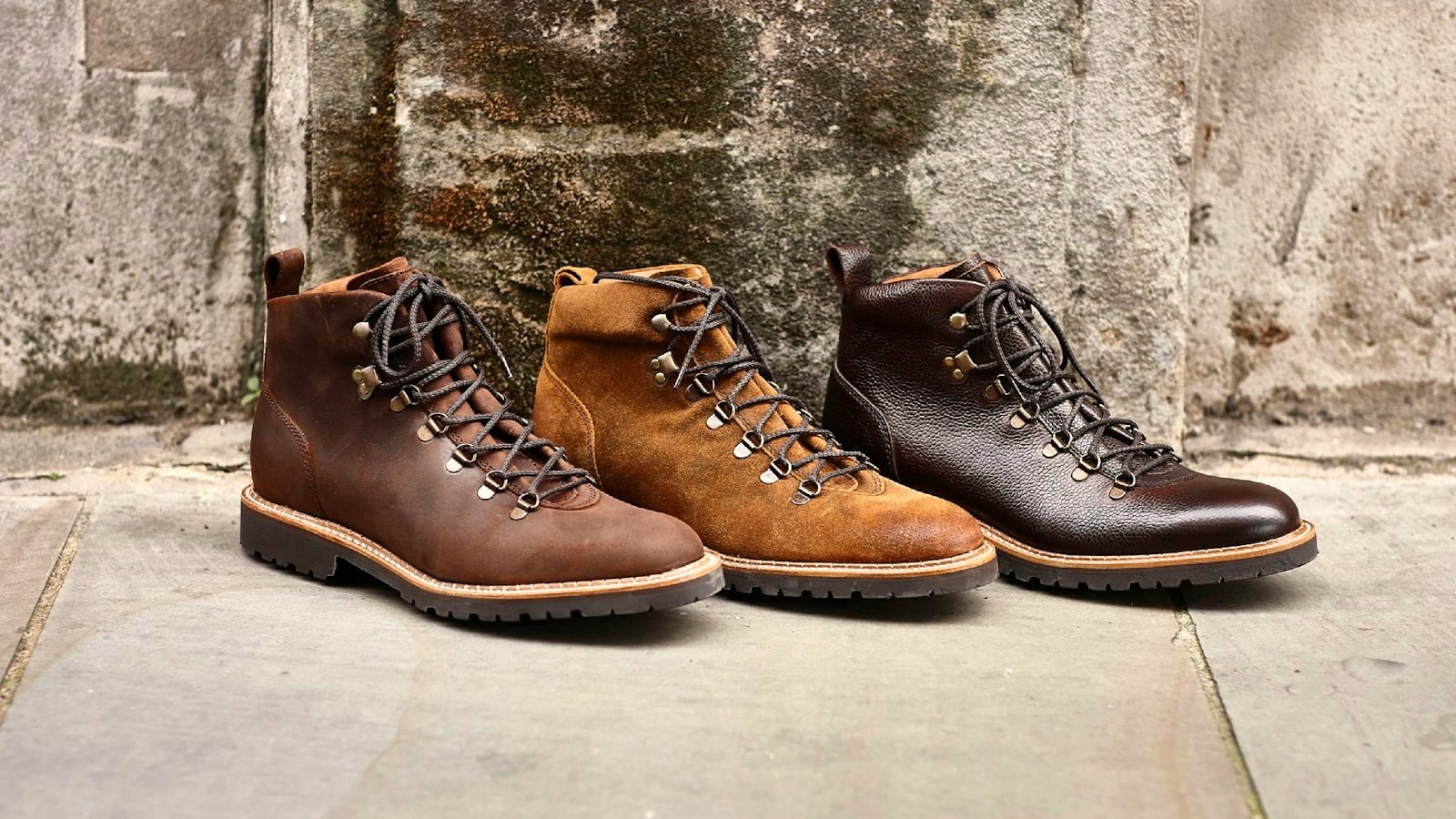
The northern register, leather against stone: the register this page ranks is equipment whose warmth and provenance can be checked before they are paid for. No garment by any ranked house is pictured: the ranking is built from the makers' published records cited on the page, and the photography gaps are printed in the honesty section below.
Checked and updated October 2026
The short answer: brands like Mountain Equipment are graded here on whether the warmth, and the down inside it, can be checked before they are paid for: both down numbers published, a certifier named and audited, the batch traceable, construction printed per garment, prices that are honest lists, and terms standing behind the garment when it tears. The anchor, Mountain Equipment, was derived at 75 on the Rab page of this series from the flagship's specification and the guarantee text; this page audits that number in the open against the maker's current pages and confirms it, the derivation retired in favour of the audit. Mountain Equipment finishes fourth at home, behind Houdini at 84, Patagonia at 83 and its neighbouring bench Rab at 77. Arc'teryx and Montbell tie at 73, the tie ruled on fabric. The skip is Moncler at its standing 55: the ratio and the badge, at about eight times the anchor's flagship price.
What people actually want from Mountain Equipment
Nobody searches for brands like Mountain Equipment because they need another badge for the summit photograph. The want underneath the search is the hill-walker's version of the traceable promise: a down jacket whose warmth is printed before the money moves, whose fill can be followed back to the farm it came from, built by a bench that has made expedition kit in Manchester since 1961, and priced for people who buy their own kit. The house's centre of gravity is that transaction, the specification sold straight, with a code inside the garment that proves the batch, and a repair bench behind it for the day the hill wins.
That want has two failure modes, and they are the rest of this ranking. The first is the number withheld: fill power printed without the fill weight, or a ratio printed instead of either, so the warmth is a claim the buyer cannot check until the box is open and the season is started. The second is provenance replaced by story: traceability sold as a heritage paragraph, or longevity as membership of a badge. Three tests separate the field. Are both warmth numbers published, the power and the weight, with a certifier a buyer can look up and an audit cadence in print? Can the down itself be followed, batch by batch, from the code inside the garment? And does the afterlife exist in the maker's own text, a guarantee with its horizon defined and a repair route for the damage it excludes, or is longevity a word in the brand story? The anchor passes the first two more completely than any house at its price, and is honestly beaten on the third by the houses above it. The page is graded on all three.
How the scores work
Every brand is graded out of 100: fabric and cloth out of 30, construction and craft out of 20, fit range and sizing honesty out of 20, value out of 15, longevity out of 15. The anchor's 75 is audited in the open here, because the number began as a derivation on another page of this series and a derivation is a promissory note: this page is the payment. Standing scores set elsewhere are reproduced exactly and are never re-tried on a page that is not theirs; there is no new score on this page, derived or otherwise.
The audit, row by row, from the maker's own Codex, guarantee, care and responsibility pages, its down buying guide, and the flagship's specification in the maker's own spec as carried at retail, read for this page. Fabric 24: the flagship's record is confirmed in its current form. The Lightline publishes both numbers, 296 grams of duck down in a size large with a minimum content of 90/10 stated, at 700 fill power, in a named shell, DRILITE Loft at 40 denier, its finish now specified as a PFAS-free DWR where the derivation read a fluorocarbon-free finish, the wording printed here rather than smoothed. Behind the garment the system stands as derived, and its current text is stronger than the derivation had it: the Down Codex, running since 2009, adopted the Responsible Down Standard in February 2022 and switched to annual audits within the RDS framework in 2023, with the house and its supply chains both certified to the standard, and the recycled down in its range certified to the Global Recycled Standard; the 12-digit code inside every down garment returns that batch's source, the audit relating to that source, and its test results. The row stands where the derivation set it, held level with the neighbouring bench rather than lifted above it for the derivation's reason: the down is duck at 700 where Rab's ladder climbs to 1000 fill-power goose, and the membrane end of this range publishes less per garment than its insulation end. Construction 16: the maker's own down buying guide prints the house's construction doctrine in its own words, stitched-through and box-wall as the two main types and two house constructions developed in-house, Firestorm, built over three years of tests, and Dual Offset baffles; the flagship itself is stitched-through by deliberate design, its insulation optimised baffle by baffle in the maker's copy. One below the neighbouring bench, whose product page prints its zoning per garment. Fit 11: the named Mountain fit, alpine blocks honestly dimensioned for layering under load, and the narrow library behind them; nothing in today's read widens it, and the row stands. Value 13: the Lightline's £240 list is confirmed as the current price, and it still buys 296 grams of certified 700 fill-power down, nearly double the neighbouring flagship's fill weight at a lower price, the best warmth-per-pound arithmetic in the cluster, level with Montbell's row. Longevity 11: the guarantee page, read in full today, guarantees every product to the original purchaser against defects in components, materials and workmanship for the reasonable life of the product, defines the term on the page, and prints the guide the derivation charged, verbatim in the current text: the majority of products should be expected to last anywhere between 3 and 5 years, longer for packs and certain sleeping bags, considerably less under professional or expedition use; repair or replacement follows at the maker's discretion, and claims route through the retailer of purchase first, proof of purchase required. Behind it the Revere Your Gear pages publish a wash and repair service and genuine spare parts. One fact is new since the derivation and is credited as what it is: the maker's responsibility pages publish that its UK wash and repair service repaired over 700 items in 2024, so the bench is used and counted, not merely offered. It was weighed against the derivation's three deductions and retires none of them: the horizon is defined and short, the route runs through the retailer, and no repair price list is published. The row holds, docked one below the neighbouring bench, whose promise runs to the product's usable lifetime and whose centre takes the excluded damage directly. The rows sum to 75, the standing score, and the audit commits to this: if a repair price list is published, or a resale or rental programme, longevity is revisited first, upward; if the 3 to 5 year guide ever leaves the guarantee page, longevity is revisited downward, because the definition is the house's honesty and its removal would be a narrowing dressed as tidying; if the flagship's list climbs while its file stands still, value is revisited first; and if the fill weight ever leaves the maker's specification, fabric moves down, because the second number and the code are the house's whole claim on this page.
The bookkeeping on this page, in full. There is no divergence to rule on for the anchor, and the page says so rather than performing one: the Rab page printed Mountain Equipment at 75 with all five rows argued on its card, fabric 24, construction 16, fit 11, value 13, longevity 11, and no other page in the tree prints a split for the house, the country rankings and the cool brands page never having scored it. Every source was read directly for this page and the audit follows the only split the tree prints, replacing the derivation as the number's home; the label changes, from derived to audited, and the number does not. One tie does need its ruling printed: Arc'teryx and Montbell both stand at 73, set on different pages of this series, and the tie is ruled on the fabric row, 25 to 24, Arc'teryx above, the same instrument this series used on the ties the Houdini, Klättermusen and Rab pages recorded. The skip's 55 is a standing score whose rows were derived to its total on the Arc'teryx page, reproduced here and labelled the same way.
The rest of the outdoor shelf is cited in prose, by total, numbers untouched. The Swedish bench rests: Klättermusen at 79, audited on its own page in this series, the field's best fabric and construction rows bought at expedition prices. The elder rests: Fjällräven at 72, its rows on the Patagonia page, and Norrøna at 69, the fullest page and the fullest price, on the Arc'teryx page. The attainable tier rests: REI Co-op at 73, set beside the anchor's neighbours on the Arc'teryx page, Cotopaxi at 66, the young covenant, and Marmot at 65, one strong budget shell away from a better paperwork grade. The recent skips rest where their pages left them: Peak Performance at 66, the skip on the Houdini page, and The North Face at 64, the skip on the Klättermusen page; neither is re-tried here. Two names are rested without numbers, because they hold none in this magazine. Montane, the other British bench, whose record, fill powers and fill weights in print over RDS-certified supply, would contend on this page; it was rested on the Rab page for the same reason it is rested here, that the family's audit slot belongs to the house that prints a traceability code inside the garment, and it is named so the omission reads as a choice rather than an oversight. And Cumulus of Poland, whose down pieces publish their fill weights as a habit; this page opens no new derivation, its one audit belonging to the anchor, and the house is named for the same reason.
One name is answered in prose because the search expects it, and left unranked for a stated reason. H&M is the attainable end of the insulated look, shells and puffers at a tenth of the anchor's prices, and its compositions are printed per garment, which is more paperwork than the skip below manages on its volume lines; what its record does not publish at this check is a system behind the garment, no repair bench, no rental, no own-label resale rail and no take-back at anything like the anchor's register. Its brand record in this magazine is maintained on its own page in this series; it is not restated, re-derived, or scored against here, and no garment of its ranges is ranked on this page.
The disclosure ledger
| House | The fabric record, as published | The afterlife, as published |
|---|---|---|
| Houdini | Hard facts per garment: composition, weight and origin printed, bluesign certification on the flagship fabric; mono-material doctrine, two cycles never blended; the flagship fabric's recycled share not stated | The full system: repairs since 2008, Reuse second-hand and Rental since 2012, take-back in all own stores accepting every worn-out garment |
| Patagonia | Per-garment recycled percentages under GRS certification; the line figure published, 96 percent of the Fall 2025 line by weight using recycled inputs | Worn Wear trade-in and resale; repairs under the guarantee; the covenant graded on its own pages |
| Rab | Both warmth numbers published on the key piece, 700 fill power and 153 grams of down; the recycled down GRS-certified and the house's down supply RDS-certified by Control Union, licence CU839597 printed; the shell yarn traceable, its recycled share printed above 75 percent | The Rab Promise: defects in the product's usable lifetime made right by repair or replacement; an in-house Service Centre for the excluded damage, washes and spare parts; a UK down recycling programme since 2021; no rental or resale programme published |
| Mountain Equipment | Both numbers published, 700 fill power and 296 grams in the flagship duvet, minimum 90/10 stated; RDS-certified under the Down Codex, annual audits since 2023, with a 12-digit code inside every down garment returning its batch's source, audit and test results | A guarantee against defects for the reasonable life of the product, the term defined on the maker's page with a printed guide of 3 to 5 years for most products; a published Wash & Repair Service, over 700 items repaired in 2024 by the maker's count, and genuine spare parts; no resale or rental programme published |
| Arc'teryx | Laminated construction specified per garment; the specification is the record | ReBIRD trade-in and resale since 2021; repairs capped at one repair or replacement per purchase in the warranty text |
| Montbell | Both numbers, always: the Plasma 1000 parka prints 1000 fill power, 96 grams of fill, a 7-denier shell and 237 grams total at $479 | Fee-based repairs at a reasonable rate under a lifetime-of-the-product warranty, three to five week turnaround, printed by the maker |
| Moncler | A 90/10 down split and a trademarked claim on the flagship; neither the fill power nor the fill weight published at about $1,900 (the Arc'teryx page's finding, reproduced) | No repair service and no product guarantee was found in the house's published record at this check; what stands behind the garment is the retailer's returns window (the Arc'teryx page's finding, reproduced) |
Seven brands like Mountain Equipment, ranked
Houdini
US price at last check: the Power Houdi $240 at the maker's US store (2,400 kronor in its home store).
The call: keeps its standing 84, audited in the open on its own page in this series: the complete circular system, sold as clothing rather than as a campaign, and the fullest afterlife in the cluster.
Its rows (24, 17, 16, 12 and 15) are reproduced from the audit that set them. Against the anchor the comparison is exact, because fabric is level: the nine points are construction, fit and longevity, the deeper making library, the range the system is proven on, and the afterlife behind it. Houdini publishes the garment's record, repairs it, rents its kin, resells its used clothing and takes back the corpse; the flagship, the Power Houdi, is unchanged since 2003 at $240 with the maker's survey counting 1,287 average uses. The bench below it publishes the harder provenance file and keeps the afterlife in-house and defined. Buy the Power Houdi and the shells when the garment is a kept thing and the system is the point. Its full record is on its own page in this series.
Patagonia
US price at last check: the Synchilla Snap-T pullover about $139 at the maker's store.
The call: keeps its standing 83: the anchor's conviction at continental scale, the guarantee, the trade-in rail and the published line figures, beaten here on nothing in the garment and winning on everything around it.
Its standing 83 and rows (24, 17, 15, 12 and 15) are reproduced from our American ranking, where its own page in this series audited them in the open and landed where they stand. Read against the anchor, fabric is level again, and the eight points are fit and longevity with a point each of construction and value handed back: the wider library a continent of stores stocks, and the covenant's full weight, a guarantee with a trade-in rail behind it. The anchor's file is the more checkable provenance record, the batch itself traceable from a code inside the garment; the covenant's answer is everything that happens after the purchase, at a scale no bench matches. Buy the Synchilla and the workwear where the anchor's register runs out. Its full record is on its own page in this series.
Rab
US list price at this check: $325 at the maker's US store; the maker's product page moved with the garment's redesign, and this card prints the current address, as the Rab page of this series established.
The call: keeps the 77 derived on the Arc'teryx page of this series and audited in the open on its own page there: the complete record at the attainable end of the technical tier, certified down, both warmth numbers published, a service centre behind the garment.
Its rows (24, 17, 12, 12 and 12) are the audit's rows, reproduced exactly. Against the anchor, this is the two-point argument the whole page turns on, and it is printed rather than split: fabric level, construction and fit and longevity a point each to Sheffield, value a point back to Manchester. The Microlight Alpine publishes 700 fill power and 153 grams, its shell yarn traceable to recycled fishing nets, its zoning printed per garment, and behind it the Promise's usable-lifetime instrument and a service centre that washes, repairs and holds spare parts for the damage the warranty excludes. The anchor answers with nearly double the fill weight at a lower list and the deeper provenance, the code that traces the batch. Buy the Microlight line as the honest floor of certified warmth. Buy the anchor when the traceability itself is the point.
Mountain Equipment
Price at last check: the Lightline jacket £240 list at the maker's GB store; no stable maker product address surfaced in our fetching, re-tested for this page, so this card ships without a buy link.
The call: the anchor, at the 75 derived in the open on the Rab page of this series, audited in the open above against the maker's current pages and confirmed: the deepest per-garment provenance in the cluster, both numbers published and the batch traceable by the code inside the garment, at a duvet's price.
Its rows (24, 16, 11, 13 and 11) are the derivation's rows, now the audit's. What the audit found changed since the number was set is printed in the open rather than folded into it: the flagship shell's finish is now specified as a PFAS-free DWR, the Codex's RDS audits are now annual in the maker's text, and the maker publishes a repair volume, over 700 items repaired in 2024, that the derivation did not have. What it found standing is the substance: 296 grams of 700 fill-power down with the minimum content stated, RDS certification with the Codex's audit chain behind it, a guarantee whose horizon the maker defines in print at 3 to 5 years for most products, and a wash and repair service with genuine spare parts. The garment evidence is the anchor's own: the Lightline has been the benchmark duvet at its price for decades on the strength of the same published specification this page grades. Buy the Lightline when the provenance is the point and the warmth-per-pound arithmetic is the argument. Buy the bench above it when the afterlife matters as much as the specification.
Arc'teryx
Price at last check: $400 at the maker's store.
The call: keeps its standing 73: laminated construction and a resale platform from the other alpine bench, charged for the register it charges and for a warranty that caps its own generosity in print.
Its rows (25, 18, 12, 7 and 11) are reproduced from the derivation on the Patagonia page of this series, audited since on its own page there. The tie at 73 with the house below is ruled on the fabric row, 25 to 24, printed here and on that card: the bench's cloth and lamination record is the deeper one. Against the anchor, this is the nearest construction argument on the page, and the bird wins it, fabric 25 and construction 18 against 24 and 16; the two points come back on value, 7 against 13, a $400 flagship against a £240 duvet whose file publishes more, and longevity is level at 11, a resale platform and a per-purchase repair cap against a defined horizon and an in-house bench. Its insulation file is also the page's standing lesson in the withheld second number: the Cerium line publishes its fill power and not its fill weight, and the withholding is charged inside this score rather than retried as a conviction. Buy the Beta for the mountain it was laminated for. Its full record is on its own page in this series.
Montbell
US list price at last check: the Plasma 1000 Alpine Down Parka $479 at the maker's US store; no stable maker product address surfaced in our fetching, so this card ships without a buy link.
The call: keeps the 73 derived in the open on the Arc'teryx page of this series: the disclosure purist of the insulation tier, both warmth numbers on every piece, the tier's best value row beside the anchor, and paperwork a warranty lawyer could frame.
Its rows (24, 15, 11, 13 and 10) are reproduced exactly from the page that derived them. The tie at 73 is ruled against it on the fabric row, 24 to 25, and the page prints the ruling rather than hiding it: the bench above publishes the deeper cloth record, and Montbell publishes the deeper numbers. The Plasma 1000 prints a 1000 fill power, 96 grams of fill, a 7-denier shell and a 237 gram total weight at $479, the standard of arithmetic the cluster's insulation pieces are graded against elsewhere in this magazine. Against the anchor, the two-point gap is construction and the afterlife, with value level at 13: sewn-through ultralight making as a deliberate trade, and fee-based repairs on a three to five week turnaround across the Pacific, against expedition making and a bench on the same continent as most of its buyers. Buy the Plasma line when warmth per gram per dollar is the whole question.
Moncler
US price at last check: the Maya Short Down Jacket about $1,900 at the maker's US store; its cards on this site ship without a buy link, and this one follows them.
The call: keeps its standing 55 from our Italian brands ranking, the rows below derived on the Arc'teryx page of this series to the standing total and labelled as such: the logo tax, applied to the mountain.
The provenance first, because this card grades a standing score and says so. Moncler stands at 55 in our Italian brands ranking, where it finished last of twenty, was that page's named skip beside Stone Island, and took this site's Logo Tax Award: the ranking titled its entry, in print, the logo tax, itemised, and costed its flagship Maya at about $14.40 per wear on printed assumptions. This page does not re-try that number. What it prints, in the open, is the rows the Arc'teryx page derived to the total, each argued there from the house's record on this site. Fabric 16: the cloth itself is bought well, and the paperwork is the offence: the Maya publishes a 90/10 down split and a trademarked claim, and at about $1,900 publishes neither the fill power nor the fill weight, so its warmth cannot be checked before paying. Construction 15: the Maya's own garment row, the well made jacket underneath the silence. Fit 12: the same garment row, fashion blocks cut for the photograph. Value 3: the Logo Tax row, the badge priced as the product across the range. Longevity 9: the Maya's garment row; no repair programme and no product guarantee was found in the house's published record at this check, and the technical line is restyled by the season. Add them: 16, 15, 12, 3, 9. The brand score is 55, the standing score, with its rows printed and labelled derived.
Fairness requires two things printed with the sentence. The first is the shape of the conviction: it is not a sewing judgment, and two of this card's rows are the Maya's own garment rows. The conviction is the proposition the technical line sells, membranes bought from the same licensors the real benches use, wrapped in seasonal styling, priced past every bench on this page, and published with less specification than a £240 duvet. The second is this page's own field test, printed rather than implied: the brief's preferred failure shape, a fill power published with the fill weight withheld and no traceability scheme behind it, was looked for at the anchor's prices, where a fresh conviction would have been more useful, and it is not there in the current record. The in-band technical houses publish both numbers as a habit; the one famous withholding case at a cluster price belongs to a house already carded and charged on this page; the Canadian houses sit at two to four times the band, and the loudest of them publishes a fill-power range and its RDS certification. What remains at $1,900 is the standing conviction, and it stands. Buy the mountain's tools from the six houses above it.
The pattern under the ranking
Read the ladder as one argument about the second number and it explains itself. A down jacket has two warmth numbers, the fill's power and its weight, and the houses on this page divide almost perfectly by whether they print both. The anchor prints both, and adds a third thing the rest of the field does not attempt: the code that traces the batch back through its audit to the farm. The neighbouring bench prints both, with two certifiers behind them, and finishes above the anchor only on the afterlife and the goose ladder. Montbell prints both, on everything, at the insulation end of the world. The bird prints the power and withholds the weight, and is held at 73 by the withholding as much as by its prices. The skip prints a ratio at about $1,900, and finishes last at a score set on another continent's ranking before either of its garments was graded. A reader does not need to memorise the arithmetic. The reader needs one habit: before paying bench money for any house here, find the second number, and where the house offers it, run the code. If the maker will not print the number, the maker has graded itself, and this page's job is only to agree in public.
The second pattern is the honest guarantee, the lesson this cluster keeps teaching in different dialects. The anchor defines its promise's horizon in years, in print, 3 to 5 for most products, and is docked for the shortness and credited for the definition in the same row. The neighbouring bench promises the product's usable lifetime and prints its exclusions. The system at the top publishes no horizon at all because its answer is a service, renewed garment by garment. The bird caps its repairs per purchase in its own text. The skip publishes neither the numbers nor a bench. A ranking that grades longevity on published terms will keep rewarding the houses that publish their terms, including the unflattering ones, because a defined 3 to 5 years that a buyer can read is worth more on the day the seam fails than an undefined forever that a claims department defines later.
Mountain Equipment and its alternatives, at a glance
| Brand | Score | The piece to buy | Price |
|---|---|---|---|
| Houdini | 84 | The Power Houdi | $240 |
| Patagonia | 83 | The Synchilla Snap-T | About $139 |
| Rab | 77 | The Microlight Alpine jacket | $325 |
| Mountain Equipment | 75 | The Lightline jacket | £240 |
| Arc'teryx | 73 | The Beta jacket | $400 |
| Montbell | 73 | The Plasma 1000 parka | $479 |
| Moncler | 55 | None | About $1,900 not spent |
The one to skip: Moncler. Not a new sentence, and the page does not pretend otherwise: the house finished last of twenty in our Italian brands ranking, took this site's Logo Tax Award, and had both of its graded garments sent home on withheld numbers, the Grimpeurs at 36 and the Maya at 52. Its rows were derived in the open on the Arc'teryx page and are reproduced here untouched, labelled as such. Skip it on the test this page applies, the record at the price: a flagship down jacket at about $1,900 whose maker publishes neither warmth number, from a house in whose published record no repair programme was found. This page looked for the same failure at the anchor's prices first, in the shape the brief preferred, power published and weight withheld with no traceability behind it, and printed what it found on the skip's card: at the cluster's prices the failure is not there, because the houses there publish both numbers. The specification, and the traceability behind it, are for sale on this page, from six houses, at every price from $139 to $479 and £240. Buy it from one of them.
Which one to buy
Buy Houdini if the garment is a kept thing: the mono-material rail, the repair bench, the rental and resale system, and the flagship that has not needed replacing since 2003.
Buy Patagonia for the same covenant at scale: the guarantee, the trade-in rail, and a store in your town.
Buy Rab for certified warmth with both numbers printed, the goose ladder above the flagship, and a service centre behind it.
Buy Mountain Equipment when the provenance itself is the point: both numbers, two certifier layers, and the batch of down in your jacket traceable by the code inside it, at a duvet's price.
Buy Arc'teryx for the laminated shell itself, with your eyes open about the warranty cap and the withheld fill weight.
Buy Montbell when warmth per gram per dollar is the whole question, and buy it knowing the door is the maker's own store.
Skip Moncler on this page's test: the ratio and the badge, with neither number published, at about eight times the anchor's flagship price.
Questions, answered
What brand is most like Mountain Equipment?
For the same paperwork discipline on the same island, Rab at 77, audited on its own page in this series: both warmth numbers published, certified down, a service centre behind the garment. For the system around the garment, Houdini at 84: repair, rental, resale and take-back services the British benches do not publish. For the covenant at scale, Patagonia at 83, with per-garment recycled percentages under GRS certification and the guarantee behind them. The anchor's own verdict piece is the Lightline: 296 grams of certified 700 fill-power down at a £240 list, with a traceability code inside the garment that returns the batch's source and its test results.
Is Mountain Equipment worth the money?
At its audited 75, yes, and the audit is printed on this page so the arithmetic can be checked. The Lightline at £240 publishes both warmth numbers, 296 grams of 700 fill-power down with a minimum 90/10 content stated, carries RDS certification with annual audits under the Down Codex, and puts a 12-digit code inside the garment that returns that batch's source, its audit and its test results. Behind the garment stands a guarantee whose horizon the maker defines in print, 3 to 5 years for most products, and a wash and repair service that repaired over 700 items in 2024 by the maker's own published count. The honest objections are printed with the score: the down is duck at 700 fill power where the neighbouring bench's ladder climbs to 1000, and the guarantee's defined horizon is shorter than a usable-lifetime promise.
Mountain Equipment or Rab?
Two points apart, and the points are the fork between the two British benches. Mountain Equipment scores 75 (24/16/11/13/11) and Rab 77 (24/17/12/12/12): fabric is level, and Rab takes construction, fit and longevity by a point each, per-garment zoning printed on the flagship's page, an in-house service centre, and a usable-lifetime defects promise; Mountain Equipment hands one point back on value, 296 grams of certified down at £240 against 153 grams at $325. Buy Rab for the goose ladder and the bench behind the garment. Buy Mountain Equipment when the provenance itself is the point: the batch of down in your jacket, traceable by the code inside it, at a duvet's price.
Why was Mountain Equipment's score audited, and did it move?
Because the 75 began as a derivation, created in the open on the Rab page of this series from the flagship's published specification and the maker's guarantee text, before any page of this series had rebuilt the house row by row. This page is that audit: the rows were rebuilt from the maker's current Codex, guarantee, care and responsibility pages and the flagship's current specification, and the audit lands on 75 exactly, so the number stands and the derivation is retired in its favour. Two facts moved underneath it and are printed rather than smoothed: the flagship shell's finish is now specified as a PFAS-free DWR, and the maker now publishes a repair volume, over 700 items repaired in 2024, which was weighed against the guarantee's defined 3 to 5 year horizon, its retailer-first claims route and its unpublished repair price list, and retires none of them. If a repair price list or a resale programme is published, longevity is revisited first; that commitment is printed on the page.
Why is Moncler the skip?
Because its standing score says so, and this page does not move standing scores. Moncler stands at 55 from our Italian brands ranking, where it finished last of twenty and took this site's Logo Tax Award. Both garments of its that we have graded were sent home on their paperwork: the Grimpeurs at 36 in our rain ranking, $995 for water-repellent nylon, and the Maya at 52 in our puffer ranking, its warmth unverifiable because the maker publishes neither the fill power nor the fill weight at about $1,900. This page first tested the brief's preferred failure shape at the anchor's prices, a fill power published with the weight withheld and no traceability scheme behind it, and at the cluster's prices the technical houses publish both numbers, while the one famous withholding case is already carded and charged on this page; no honest new conviction exists at that price, so the skip is the standing one rather than a manufactured one. The rows on its card were derived on the Arc'teryx page to reproduce the standing total and are labelled as such.
How this ranking stays honest
Every score on this page has a home. The anchor's 75 was derived in the open on the Rab page of this series and is audited in the open above, rows rebuilt from the maker's current published record, with the re-audit commitments printed; the audit confirms the number, the derivation is retired in its favour, and step zero found no divergence to rule on, BL44 being the only page that prints the house's split. Houdini's 84 was audited on its own page in this series, Patagonia's 83 on its own, and Rab's 77 on its own, where the anchor's derivation was set. Arc'teryx's 73 is the derivation the Patagonia page argued, audited since on its own page, and Montbell's 73 is the derivation the Arc'teryx page argued; both are reproduced exactly, rows included. The tie at 73 is ruled on the fabric row in the open, on both cards. The skip's 55 is a standing score from our Italian brands ranking; its rows are the derivation the Arc'teryx page printed to the standing total, labelled as such, and this page's own addition to that card is a field test, printed on it: the brief's preferred skip shape was checked against the live field for this page and does not fit any house at the cluster's prices honestly, the log kept with this page's working notes. Garment scores on this site, the Microlight Alpine's 84 and the Power Houdi's 86 among them, are cited as evidence only and are never promoted into brand numbers. H&M is engaged in prose as a comparison only: its brand record is maintained on its own page, is not restated or reopened here, and no garment of its ranges is scored on this page. Houses cited in prose, Klättermusen, Fjällräven, Norrøna, REI Co-op, Cotopaxi, Marmot, Peak Performance and The North Face, keep the numbers their own pages set; Montane and Cumulus are cited without numbers because they hold none.
Doors follow the deep-link rule, and the anchor's repeats the disposition its deriving page set, re-tested rather than assumed: Mountain Equipment ships with no buy link, no stable maker product address having surfaced in our fetching, its Codex, guarantee, care and responsibility pages read directly on the maker's site and its product record read in the maker's own specification as carried at retail, and the reason is printed on its card. The other doors are the ones the scoring pages print: the maker's standing search door (Houdini), the maker's storefront where that is the door its own scoring pages print (Patagonia), the maker's current product page where a card names one (Rab's Microlight Alpine, whose address and price the Rab page of this series corrected in the open), and the exact garment where a card names one (Arc'teryx's Beta jacket). Montbell ships with no buy link under the precedent its deriving page set, and the SKIP ships with no buy link, by the standing rule. Photography: every frame is from this magazine's credited bank, each extends the family's established assignment for its house where one exists, none shows a ranked house's garment, and the captions say so; the bank holds no Manchester frame, no repair bench scene and no service centre frame, and those frames are on the standing harvest list rather than faked. Prices and records were checked against the pages cited in October 2026; the full method is written out on the methodology page.