

Linen's home ground: the terrace hour, warm light, nowhere formal to be. The rules below are for everywhere else the cloth goes.
Checked and updated October 2026
The ruling, up front: linen is worn well when its creases are governed rather than fought: the crease map that follows the body's joints is the cloth's texture and is worn on purpose, the total collapse called rumple is neglect and is not, the fit skims instead of clinging, the shirt goes under tailoring only in its soft-collared form and into the office only at the top of its class, and the colours are chosen knowing which ones fade first and where. Most linen failures are not taste failures. They are doctrine failures: a shirt ironed back to cardboard, a white shirt worn transparent, a whole outfit in one flat tone of the same cloth. This page prints the wrinkle doctrine, the tailoring row, the office ruling, the colour rules, the outfit matrix, and the four ways men ruin it. The seven linen shirts the rules are drawn from are ranked in Verdict Card No. 13.
On this page: the wrinkle doctrine, linen with tailoring, the office ruling, the colour rules, the skim rule, the outfit matrix, the mistakes, the buying note, questions.
The wrinkle doctrine: creases versus rumple
Our shirt index prints the type's law in one line: the cloth breathes, it slubs, and it creases immediately and completely, which is the texture rather than a defect. Wearing the garment starts by splitting that sentence in two, because there are two kinds of wrinkle and they say opposite things. Creases are the map. Flax fibre is inelastic: where cotton bends and recovers, flax bends and keeps the bend, so a worn linen shirt takes sharp lines exactly where the body folds it: across the elbow, at the waist where it meets the trouser, at the seat, down the back of the shoulder. Those lines are a record of a body moving in heat, they deepen through the day, and they are what the cloth is worn for. A linen shirt with no crease map by evening has not been worn. It has been displayed. Rumple is the collapse. Rumple is the whole garment crushed at once, with no geography to it: the collar flat and wavy, the placket curling, the body creased in every direction including the ones no joint explains, because the shirt was balled in a bag, slept in, or worn a second day past its wash. Rumple does not say the cloth is honest. It says the wearer stopped governing it.
The line the cloth is allowed to cross is exactly there, and it can be checked in a mirror in two seconds. If the creases follow joints, the shirt is linen being linen, and it reads as ease. If the creases are everywhere and the architecture has gone, collar, placket, shoulder line, the shirt has crossed into rumple, and it reads as neglect in any room that can see it. Governing the line is care, and it is a short list: hang the shirt, never fold it into a drawer; steam it, or press the collar and placket and let the body be; one day on, one day resting on the hanger; and start every morning with the architecture intact, because a shirt that begins the day crisp in structure earns its crease map honestly by evening. That is the whole doctrine. Linen is not the shirt you keep smooth. It is the shirt whose wrinkles you are in charge of.
Linen with tailoring: the soft-collar condition
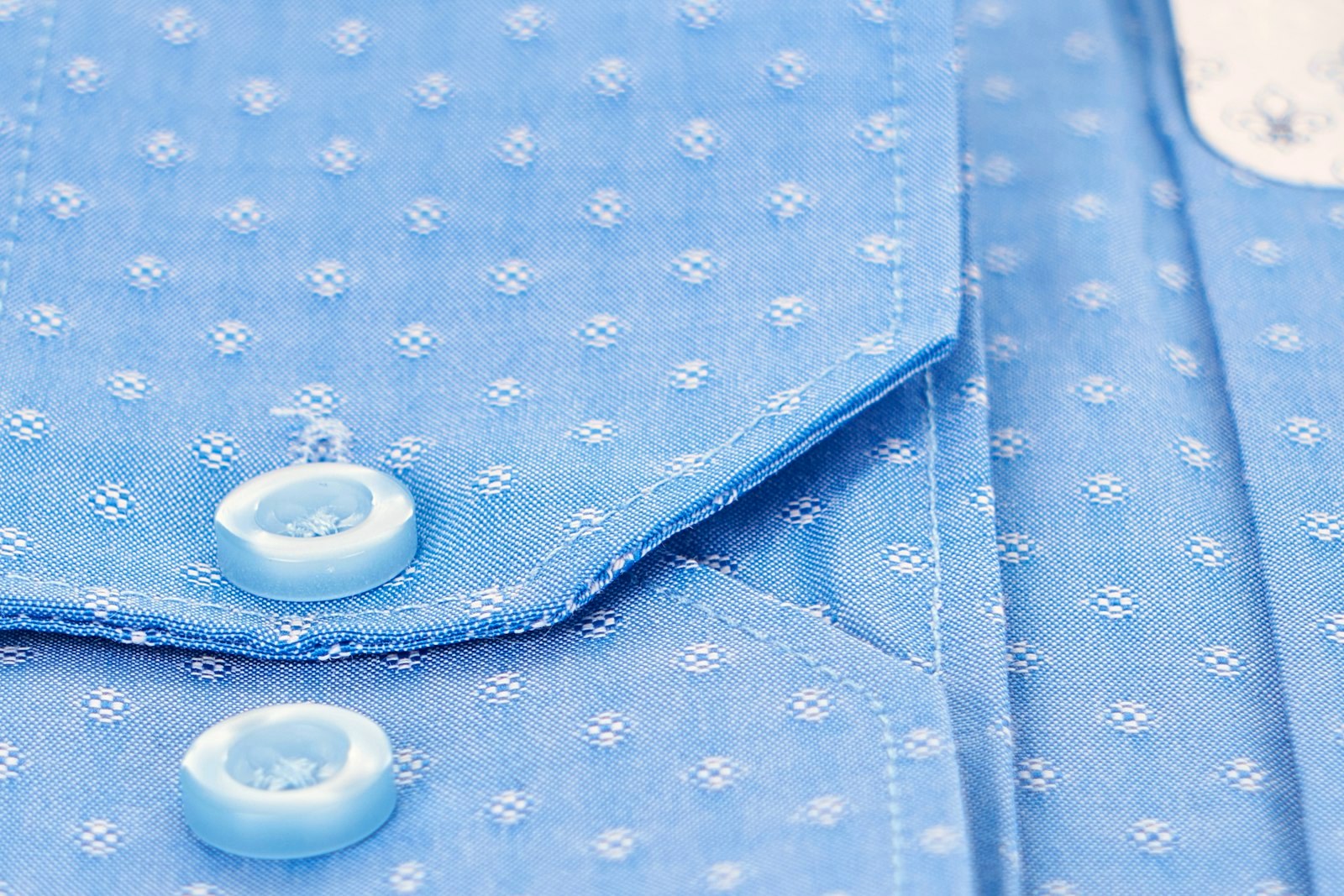
The second assembly is the linen shirt against a jacket, and the contract runs from both sides: How to Wear No. 03 prints the blazer's summer rows, and this brief states the shirt's side of the same agreement. Under a blazer, the linen shirt keeps its soft collar. The index's construction law for the type is a point or camp collar in a soft, unfused build, because a structured collar on linen is architecture fighting weather: the cloth wants to roll and the fusing wants a fold, and by noon the fight is visible at the neck. The ceiling of the assembly is the one-piece collar, cut from a single piece of cloth so that it rolls as a curve instead of folding as a crease; the Portofino on Verdict Card No. 13 is built that way and finishes second at 83 largely on the strength of it. The jacket keeps the blazer brief's specification: unstructured, textured, and ideally in the same family of cloth, linen or a cotton-linen weave, born alone and never a smooth suit jacket, whose pressed formality the shirt's crease map cannot answer and should not be asked to. Tuck the shirt when the jacket is on, because the jacket is a claim of structure and the untucked hem contradicts it in the one place the eye lands. Nothing else in the outfit is allowed to be ambiguous: the trousers are clean, the shoes are leather, and the tie is absent, because a tie on a soft linen collar fails the way it fails on a polo, a knot with nothing built to hold it. One honest cloth under one honest jacket, and the assembly is the deliberate summer version of tailoring rather than its apology.
The office ruling: formality two and a half, worn at its top
The office question is the one this cloth gets asked most, so the ruling is printed as a ruling. Our shirt index files the linen shirt at formality two and a half, between the polo and the grandad collar shirt, with its territory named in the same row: heat, worn wrinkled on purpose. That number produces the ruling's shape. The linen shirt enters a smart-casual office at the top of its class and in exactly one specification: a darker colour, navy, deep olive, a dyed shade rather than white; tucked into trousers with a belt; creases mapped and rumple governed, per the doctrine above; and a collar that still holds its line in the last meeting of the day. Worn so, it is the dress code's high-summer clause, the shirt a hot office actually runs on in July. The ruling's honesty limit is printed with the same emphasis. Linen is not a dress shirt, and it does not become one by being expensive: the ceiling's $220 shirt is as closed to a boardroom as the budget's, because the boardroom runs on pressed cloth and a crease map by ten in the morning reads, in that room, as the morning the wearer has had. In a room that measures formality, a finance floor, a formal client, a ceremony of any kind, the answer is not a finer linen. It is the Oxford at formality four, ranked in the Oxford ranking, or the poplin dress shirt above it. This brief does not pretend its cloth outranks the rooms it cannot enter. What it genuinely owns is the wide warm middle: the summer office, the evening terrace, the travel day, owned there in the one legal specification.
The colour rules: white, ecru, and what fades first
Linen's colours are not interchangeable, because the fibre takes dye unevenly and gives it back unevenly, and the rules run by shade. White is the brightest and the least forgiving. It reads the freshest of any shirt in heat and shows the crease map the most honestly, which is doctrine working as intended. Its second fact is structural: at summer weight, white linen is translucent against backlight, and the wearing rule for it is printed among this brief's mistakes, because it is broken more often than any other on this page. Ecru, the undyed natural shade, is the forgiving first buy. The colour of the flax itself, it hides the crease map better than any dyed shade, forgives the small stains of a summer day, and pairs with every trouser in the matrix below. If the wardrobe holds one linen shirt, the doctrine's candidate is ecru or navy, chosen by which rooms the shirt works in. The dyed shades fade where the creases live. Flax holds dye less evenly than cotton, and the colour leaves first along the fold lines, the collar edge and the placket, so a navy or black linen shirt develops pale seams at exactly the places it bends: this is patina on a good cloth and shabbiness on a thin one, and the difference is the cloth's weight and the evenness of the original dye. Pale blues, soft pinks and sage fade gracefully and evenly, which is why they are the summer rail's working colours. Black is the demanding end: it fades toward charcoal at every fold, faster than any other shade, and earns its place only in the evening rows where the light is kind to it.
The skim rule: the fit is bought whole
The index's law for the type is four words, buy the skim, not the cling, and it is a fit rule before it is a style one. Linen works by standing off the skin: the open weave moves air across a gap, and a shirt cut tight to the body closes the gap it was bought to create. The tight linen shirt therefore fails twice, once on physics, wearing the sweat it was bought to avoid, and once on the doctrine, creasing harder across every strain line until the map reads as stress. The skim is measurable: a finger's ease at the chest and more at the waist, the cloth falling from the shoulder rather than tracing the torso, sleeves to the wrist bone so they can be rolled to the forearm in one turn each, which is the type's built-in thermostat. The hem works tucked or out, the office rows tucked, the terrace rows out, and its length is the polo brief's rule in a second cloth: ending around the belt line worn out, never past the fly. Size by the shoulder and the collar, as with the polo: if the collar stands away from the neck the shirt is a size too large whatever the body does, and if the placket strains across the chest it is a size too small whatever the mirror says in the shop's kind light.
The outfit matrix
The data team's assemblies, by occasion. The constant in every row is the doctrine: creases governed, fit skimming, and the colour chosen for the room, because in linen the colour is half the formality the garment has.
| Occasion | The shirt | Bottom half | The layer | Shoes |
|---|---|---|---|---|
| Office | Linen shirt, navy or deep shade, tucked, soft collar | Tailored trousers or chinos, belt | None, or an unstructured linen blazer | Leather loafers or derbies |
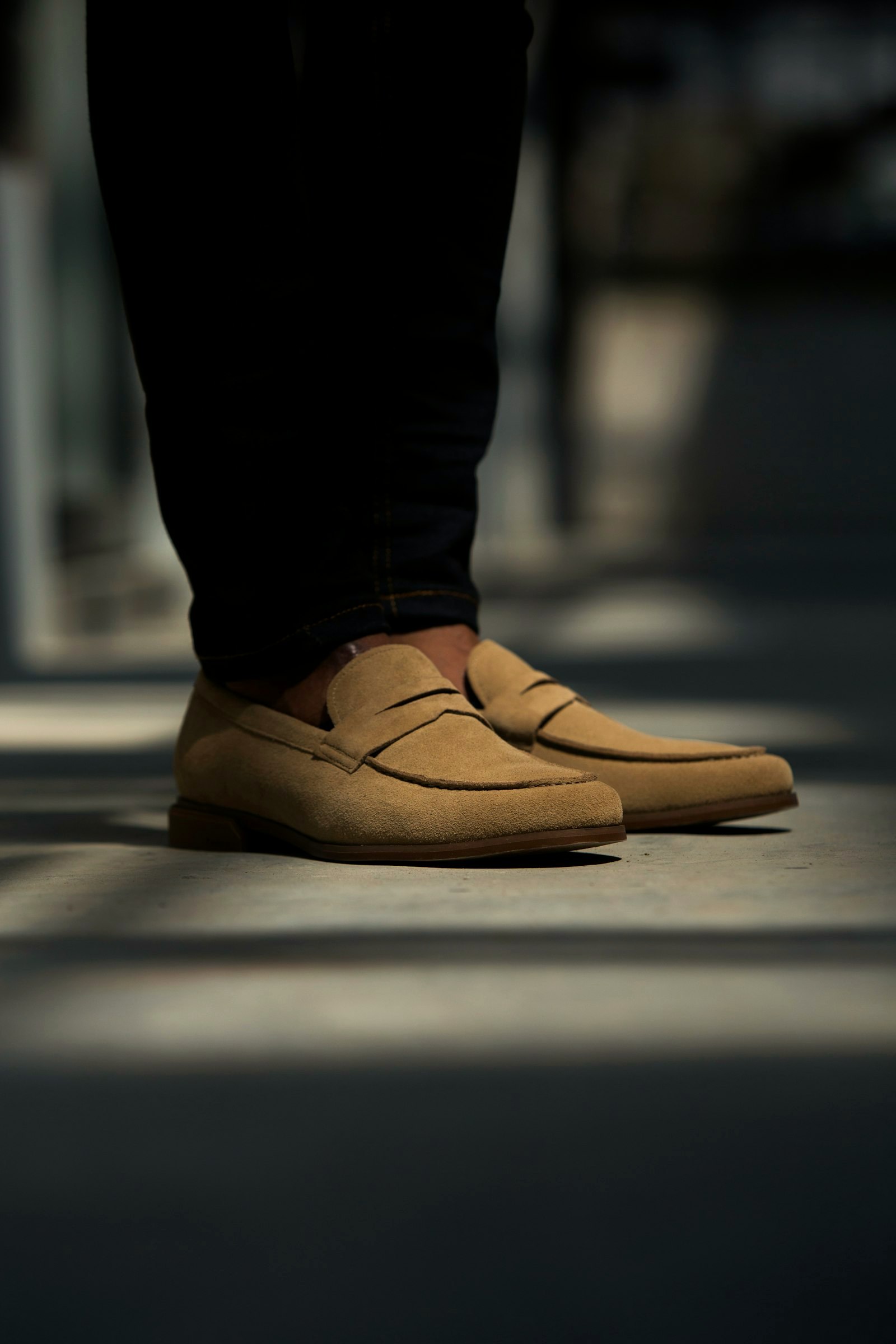
| Evening | Linen shirt, white or black, untucked or tucked by the trouser | Dark trousers or cream linen trousers in a different tone | None; the shirt is the layer | Suede loafers |
| Weekend | Linen shirt, ecru or pale shade, sleeves rolled to the forearm | Chinos or straight denim | None, or an open overshirt in the cool of the evening | Clean minimal trainers or suede boots |
| Heatwave | Linen shirt, white or palest shade, worn open over a fine cotton undershirt | Shorts, hem above the knee, or linen trousers in a broken tone | None | Loafers without socks, or canvas trainers |
| Travel | Linen shirt, navy or ecru, the forgiving shades | Chinos that can sit all day | Unstructured blazer, the blazer brief's travel row in summer cloth | Shoes that can walk all day |
The office row is this brief's ruling dressed in full, and its bottom half leans on the trouser deliberately: the seven worth owning are ranked in the chinos ranking. The heatwave row carries the brief's transparency rule inside it, the undershirt as part of the assembly rather than an afterthought. The torso every row dresses is the one this site's figure wears in the Body Map, where the tee, the Oxford and the coat hold the torso's variants: read the linen shirt as the heat rotation of that same slot, the layer the map's figure reaches for when the Oxford's season ends, with no linen variant on the map and this brief as its standing instructions.
The Linen Ruling
Wrinkle: creases that map the joints are the texture and are worn on purpose; rumple is neglect and is governed by hanging, steaming and rest days. Tailoring: the soft-collared shirt only, under an unstructured jacket in a summer cloth, tucked, no tie. Office: formality two and a half worn at its top, dark, tucked, mapped not rumpled, and never as a dress shirt's understudy in a boardroom. Colour: ecru forgives, white declares, dyed shades fade at the folds and black fades first. Fit: the skim, never the cling, sized by the shoulder and the collar.
The mistakes
Linen head to toe in one tone. The full linen outfit bought as a set and worn as one: shirt and trouser in the same shade from the same dye lot, one flat field of cloth from collar to hem. On the rail it reads as coordination. On the body it reads as sleepwear, because a single unbroken tone of a soft, creasing cloth is exactly what pyjamas are, and the crease map then covers the whole figure at once, doubling the effect. Linen on linen is a good assembly and the matrix above uses it twice. The rule is the break: the tones differ, ecru against white, navy against cream, and one of the two pieces holds some structure, a belted trouser, a tailored short, so the outfit has a joint in it where the eye can rest. The set is sold as one decision. It has to be worn as two.
The transparent white shirt, nothing under it. White linen at summer weight is translucent, and against backlight, a window, the low sun of the terrace hour, the shirt stops being opaque in a way the mirror at home never warned about. This is not a taste failure. It is a physics fact the fitting room's lighting conceals, and it is checkable before purchase: hold the cloth to a window and look through it. The fixes are the two honest ones: a fine cotton undershirt in white or a skin tone, invisible under the cloth and part of the assembly in this brief's heatwave row, or a heavier weight of linen, which blocks more light at some cost to the airflow that is the garment's point. What does not fix it is a darker or printed tee underneath, which shows through as a second, worse shirt haunting the first.
Linen in a boardroom. The linen shirt carried into the one room whose whole language is pressed cloth: the boardroom, the formal client meeting, the ceremony. It fails on the room's terms before it fails on taste. By the first hour the shirt carries its crease map, honestly earned, and in a room where every other surface is smooth and every other shirt is poplin, the map does not read as ease. It reads as the morning the wearer has had, and it spends his authority on a texture nobody in the room agreed to price in. The office ruling above admits linen to the smart-casual floor at the top of its class. The boardroom is not that floor, and the cloth's answer to it is the same as the polo's answer to a formal room: absence, and an Oxford in its place.
Ironing it back to cardboard. The linen shirt pressed flat and starched into a board, every crease hunted out of it, worn in the belief that smooth is the goal. It is the doctrine's opposite error, and it fails twice. The cloth's drape, the soft fall that is the entire reason for the fibre, is destroyed by the starch, so the shirt hangs like a sign rather than a garment. And the promise is unkeepable: flax re-creases at the first joint it crosses, so by mid-morning the ironed shirt carries the same map as the governed one, except that now the map reads as failure, because the shirt declared itself a crisp shirt and broke its own declaration. The governed shirt never promised smooth, so its creases cost it nothing. Press the collar and the placket if you must. Leave the body to its texture. Cardboard is a different cloth's job.
The buying note: the flax share first
The garments themselves are ranked in Verdict Card No. 13, where the Asket Linen Shirt wins at 85. What follows is the buying system behind that ranking, printed so it can be applied in any shop, including to shirts the Card has never handled. Buy the flax share first: read the fibre line before the colour, because the share is the cloth's behaviour, and a share under half means the garment is a blend wearing linen's name in first position. Buy the skim: the index's rule, a finger's ease and more, because the cling spends the garment's one advantage. Buy the collar soft: unfused, rolling rather than folding, and check it the way the Card checks it, between finger and thumb at the rail. Buy the forgiving colour first: ecru for the terrace rows, navy for the office rows, white when the wardrobe already holds the undershirt it requires. On price, the honest shape of the market is the familiar one: real flax starts where the honest budget shirt sits at about sixty dollars, the permanent tier runs to about one eighty, the Italian ceiling above it, and the shirts far below the sixty are below it for reasons the fibre line prints in percentages. The type is defined among its eleven fellow shirts in the shirt index; where the torso hangs among this site's winners is mapped in the Body Map.
Questions, answered
Can you wear a linen shirt to the office?
In a smart-casual office, yes, at the top of the linen shirt's class: a darker colour, tucked, the creases mapped rather than rumpled, and a collar that still holds its line at the end of the day. Our shirt index files the type at formality two and a half, heat, worn wrinkled on purpose, and prints the limit with it: linen is not a dress shirt, and in a room that runs on pressed cloth, a boardroom, a formal client, a ceremony, the answer is the Oxford or the poplin. Worn inside its ruling, the linen shirt is the dress code's high-summer clause, read carefully.
How do you keep a linen shirt from wrinkling?
You do not, and the attempt is one of this brief's named mistakes. Flax fibre is inelastic, so the shirt creases where the body bends, and that crease map is the cloth's texture rather than its failure. What can be governed is the line between creases and rumple: hang the shirt rather than folding it, steam it or press the collar and placket only, wear it one day and rest it one, and never send it into the day already crushed from a bag or a drawer. A linen shirt that starts the morning with its architecture intact earns its creases honestly by evening.
What do you wear under a white linen shirt?
Something, because at summer weight a white linen shirt is translucent against backlight: hold it to a window before you buy it and the cloth will tell you. The honest fixes are a fine cotton undershirt in white or a skin tone, which disappears under the cloth, or a heavier weight of linen, whose weave blocks more light at some cost to airflow. What does not work is a printed or coloured tee underneath, which shows through as a second, worse shirt, or nothing at all in a room with windows behind you.
Can you wear a linen shirt under a blazer?
Yes, under the conditions our blazer brief prints for its summer rows: the jacket is unstructured and textured, ideally linen or a cotton-linen cloth itself, and the shirt's collar is soft and unfused, because a structured collar on linen is architecture fighting weather. The ceiling of the assembly is the one-piece collar, cut from a single piece of cloth so it rolls inside the lapel instead of folding against it. Tuck the shirt when the jacket is on, keep everything else unambiguous, leather shoes, clean trousers, and the assembly reads as the deliberate summer version of tailoring rather than an apology for it.
Linen or cotton: which is better for hot weather?
Linen, on the physics: flax absorbs moisture and gives it back to the air quickly, the weave is open, and the cloth stands off the skin, so it dries while you wear it. Cotton absorbs more and holds it, which is why a cotton shirt is still damp at lunch. The blend question is decided by the share, which is why our linen ranking prints the flax percentage of every shirt: at 100 percent you get the fibre's whole behaviour, at half you get a compromise, and at a third you get a cotton shirt with linen in the name's first position.
Has Young Cotton ranked linen shirts?
Yes: Verdict Card No. 13 ranks seven linen shirts on the linen basis this brief wears by, cloth and flax share, seams and collar, fit range, value and longevity, with every flax percentage printed and the cost per wear in the open. The Asket Linen Shirt wins it at 85, one hundred percent French flax at about $180. The Luca Faloni Portofino, the one-piece collar this brief sends under blazers, is second at 83, and the blend sold as linen is sent home at 34.
Next
The family this brief belongs to: the seven linen shirts ranked in Verdict Card No. 13; the linen shirt among its eleven fellow shirts in types of shirts; the tailored half of the contract in How to Wear a Blazer; the summer sibling brief in How to Wear a Polo Shirt; and the torso among the site's winners in the Body Map.