

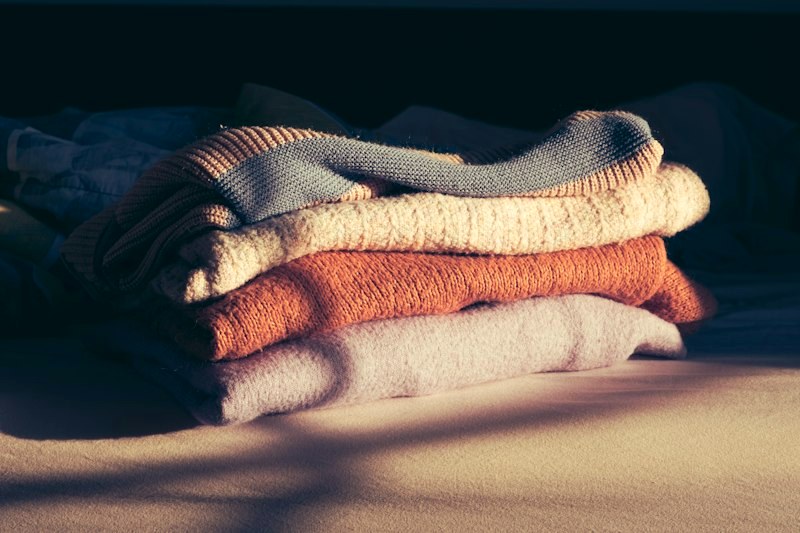
The garment rail in window light: the fragrance ranking's own hero frame, standing at the head of a Take argued from that Card, because scent on this site is graded against the rail it is worn over, as the last layer of getting dressed. The photo bank holds no fragrance bottle frame, no decant vial and no bathroom shelf, the category's standing harvest gap, named on the ranking itself and admitted in the honesty section below rather than filled with a borrowed bottle.
Checked and updated October 2026
The thesis, up front: fragrance is the one step in the kit where the central specification is a word. Every other shelf this column has argued from keeps a number somewhere: the drug shelves print percentages because the law compels a panel, and the cosmetic shelves print ordered lists whose positions can at least be read as a trace of strength. The scent shelf prints a name. Parfum, eau de parfum, eau de toilette and cologne are concentration words, and the fragrance ranking prints the trade’s conventional bands behind them: 20 to 40 percent oil, 15 to 20, 5 to 15, 2 to 5. The dosed percentage inside any actual bottle is printed by none of the seven bottles that ranking graded: 0 of 7. Inside the single word eau de toilette sits a threefold spread, and the eau de toilette band’s top and the eau de parfum band’s bottom are the same number, 15, so the ladder’s rungs touch. This is the shelf where the unit price is stated most exactly, to the cent per millilitre, from $0.69 to $3.48, and the contents are stated least exactly, to the nearest band. The winner of that ranking, the Bleu de Chanel Eau de Parfum at 85, is the record that publishes the most around its unnamed number: a named perfumer, a published pyramid, materials with an origin named. This Take argues the word is a poem until a house prints the number, and that until one does, the rest of the published record is the whole game.
In this issue
The thesis: the specification is a word
The second issue of this column argued that an ingredient list with no number in it is a table of contents, not a specification. The scent step is that argument in its purest form, and the purification is worth stating precisely. On the underarm shelf there was at least a list: ingredients in descending order, positions that could be read, a drug side where the law compelled the percentage itself. On the fragrance shelf the corresponding document does not exist. What a bottle publishes about the substance it is sold for, the perfume oil and its strength, is a category name. Take No. 2 asked the natural shelf for one printed number. This issue is about the shelf where the number has been replaced by a word so completely that the replacement goes unnoticed: the word is printed on the front of the bottle, in the position a specification would occupy, and it specifies a range.
The words themselves, with the ranking’s bands printed beside them, because the bands are the whole subject. Parfum or extrait: 20 to 40 percent oil. Eau de parfum: 15 to 20. Eau de toilette: 5 to 15. Eau de cologne: 2 to 5. The ranking prints its caution in its own decision section and repeats it in its FAQ: the words are bands, not laws, and houses dose within them as they please. A band honestly labelled is not a deception, and this page does not argue deception by any house in the field. It argues something colder. A range is not a specification. A specification is the figure that can be checked, compared and caught when it moves, and a band spanning five to fifteen percent can be checked against nothing, compared with nothing, and moved inside of forever without the label changing at all.
The arithmetic of the bands, printed as arithmetic, because the ladder’s shape is the finding. Inside the one word eau de toilette, the band runs from 5 to 15 percent: a threefold spread, the widest silence on the shelf, worn by the field’s office answer and its evening bottle alike. Inside eau de parfum, 15 to 20: the top of the band carries a third more oil than the bottom, under the identical word. And the rungs touch. The eau de toilette band’s ceiling, 15, is the eau de parfum band’s floor, 15; the cologne band’s ceiling, 5, is the toilette band’s floor, 5. Two houses dosing the same juice at the same strength can sell it under two different words, and two bottles a third apart in oil can carry the same one. A ladder whose rungs overlap is not a scale. It is a set of neighbourhoods, each with a flag planted in it, and the flags are what the shelf sells.
Set that beside the one set of numbers the shelf does print exactly, and the asymmetry completes itself. The ranking computes every bottle’s price per millilitre in the open, to the cent: $0.69 at the attainable end, $1.73 for the winner, $3.48 for the steepest millilitre on the page, figures verified on sellers’ own pages and divided in public. Money on this shelf is audited to two decimal places. The substance the money buys is described to the nearest band of five, ten or twenty points. No other Card in the grooming run prices its subject by the millilitre at all, because no other subject is sold in units this small at prices this steep; the fragrance shelf is where the per-unit arithmetic matters most, and it is the one shelf where the unit’s contents are a word. The invoice is a specification. The concentration is a poem. The rest of this issue is the working out of that sentence on the published record.
One discipline before the evidence, the same one the previous issues print. Nothing is scored here. Every score, price, band and reported wear figure below belongs to Verdict Card No. 22, reproduced exactly, and the only derived figures on the page are arithmetic on the Card’s printed bands and its per-millilitre table, printed as arithmetic wherever they appear. The argument is built out of the one record read closely, and the reading closely is the only new act this page performs.
The record, counted
The finding first, in the Card’s own shape. Seven bottles stand on the fragrance ranking. A concentration word is carried by 7 of 7. A dosed percentage of perfume oil is printed by 0 of 7. What is published, bottle by bottle, is everything around the number: a note pyramid for each of the seven, printed in the Card’s comparison table as the published core; reported wear for each of the seven, labelled as reported; and a named perfumer in the published credits of 5 of 7. The Card’s composition row runs on a rule it prints in its own method section: a house that publishes its composition earns more than a house that publishes a mood. Read the field through that rule and the ranking becomes a census of publication itself, of who prints what around the one figure nobody prints.
The winner is the census’s fullest entry, and its card is the exhibit for what publishing looks like when a house decides to do it. The Bleu de Chanel Eau de Parfum, 85, carries a named perfumer, Jacques Polge, and a published composition the Card prints in full: a citrus accord opening over labdanum, dry cedar and New Caledonian sandalwood, the sandalwood’s origin named rather than gestured at. Behind the pyramid stands the house record: a perfumer working inside a house that owns its own fields and its own supply, a formula kept in continuous, recognisable production since the eau de toilette of 2010, a bottle weighted like a paperweight with an atomiser that doses in fine, even mist. Its composition row of 27 is the joint highest in the field. And still, at the centre of the fullest record on the page, the same silence: the bottle is an eau de parfum, which is to say somewhere in the band of 15 to 20 percent, and where in the band is printed nowhere. The winner is not the bottle that prints the number. There is no such bottle. It is the bottle that publishes the most in the number’s absence, and the distance between those two sentences is this issue.
Now set the word against the wear, because the ranking does, and the comparison is where the word’s poverty shows. The Card grades reported wear beside the printed concentration precisely because the word cannot be trusted to order the wear, and its field proves the caution three ways. The Replica Jazz Club, an eau de toilette at 71, reports six to eight hours, the identical span reported for the Le Labo Thé Noir 29, an eau de parfum at 73; the field’s office answer, the Dior Homme eau de toilette at 82, reports the same six to eight, worn close. The Acqua di Parma Colonia, an eau de cologne at the lightest band on the page, reports three to four hours, and the Card grades the short wear as the class working as designed in 1916 rather than as a failure, pricing it instead of convicting it. If the word were a specification, the wear column would be a formality, the stronger word wearing longer by construction. Instead the wear column is the evidence and the word is the caption, and on two of the field’s seven bottles the caption and the evidence point in opposite directions.
The two bottles without a named perfumer complete the census, and they could not be less alike. The Card prints the fact plainly: five of the seven carry a named perfumer in their published credits, and the two that do not ask the buyer to trust the house, or the mood film, instead. One of the two is the Colonia of 1916, whose trust is cashed in a published pyramid, a formula made in Parma through a century of everything, and the field’s only perfect house row, 15 of 15: a record so full that the missing byline reads as history rather than as hiding. The other is the Parfums de Marly Layton, the ranking’s skip at 56, where the trust is asked for in the opposite currency: a house founded in 2009, an eighteenth-century court costume, horse statuary on the bottle, and a composition the field’s own roundups describe with the word generic, at $3.20 a millilitre. And the Layton carries one more lesson this issue needs, printed in its best row. Its reported wear, eight hours and beyond, is the longest in the field, a wear row of 16, because the bottle is dosed and built to project and last. The strong word, honestly worn, still did not save the record, because the rest of the record is the thinnest at its price. The missing number is the charge that applies to all seven bottles. It is not the only charge the Card knows how to bring, and the skip is where the two are read together: a poem for a specification, and a story for a composition.
What the honest end of the field looks like, then, is not a number. It is density of print. The Versace Pour Homme at 76 publishes its perfumer, Alberto Morillas, its full pyramid, and a price the Card verifies at the discounters where the category actually trades, $0.69 a millilitre, with the $129 full-retail figure printed beside it rather than smoothed away; its value row of 15 is the field’s only perfect one. The Thé Noir 29 publishes its perfumer, its pyramid and its black tea extraction, is compounded and labelled to order, and sells its discovery size first, which the Card calls the honest way into a $348 bottle. None of these houses prints the dose. All of them print more of everything else than the skip prints of anything. Until a percentage exists to grade, that density is the gradeable thing, and the ranking already grades it. This Take simply names what the ranking’s rows have been measuring all along.
What the missing number costs
The first cost is comparability, and it is the cost Take No. 2 itemised on a shelf where the comparison was merely difficult. A specification’s whole use is portability: it is the one figure a buyer can carry from one package to the next and set two products side by side on the axis they exist on. A jacket’s cloth weight travels. A sunscreen’s filter percentage travels. A fragrance’s concentration does not travel, because it is not a figure. Two eau de parfums side by side at the counter may stand at 15 and 20 percent, a third apart in the substance being sold, and the labels read identically; an eau de toilette at the top of its band and an eau de parfum at the bottom of its own are the same strength wearing different flags. The buyer is not comparing concentrations. The buyer is comparing vocabulary, and vocabulary is the one thing on the shelf that costs the houses nothing to print beautifully.
The second cost is drift with no tripwire, and the field contains its exhibit at second place. The Dior Homme name was rebuilt in 2020: the iris-led original of 2005 that collectors write elegies about effectively left the line, and the bottle now sold under the name is François Demachy’s woody composition of bergamot, Atlas cedar and Iso E Super. The ranking prints that disclosure at the top of the card, in the open, because without it the name lies politely: a buyer hunting the powdery iris would buy the wrong juice under the right name and the right word, eau de toilette, unchanged across the rebuild. A printed percentage would not prevent a reformulation, and this page does not pretend otherwise. What it would do is what Take No. 2 said a number does on the underarm shelf: make one axis of the change visible, datable, priceable into a score. As the record stands, the word can survive any rebuild untouched, because it never said anything exact enough to be contradicted. The pyramid changed and the Card caught it. The concentration could have changed with it, and nothing anywhere would have moved.
The third cost is paid at the one act the category asks for daily: the dose. The ranking’s own rule is printed by the word, because the word is all there is to print it by: two sprays of an eau de parfum is a full dose in shared air, three is the ceiling and belongs to the lighter eau de toilettes in summer. Read that rule as a specification and its oddity surfaces. The desk doses by category because the category is the finest grain the record offers; the same two sprays deliver a third more oil at the top of the parfum band than at its bottom, and the rule cannot say so, because the rule’s unit is a range. Everywhere else in the grooming run, the printed instruction and the printed strength live on the same label: the clinical stick prints its percentage and its bedtime protocol together. On the scent shelf the protocol is printed and the strength is a poem, and the wearer titrates by flag.
The last cost is the one the till collects, and the Card’s per-wear table states it without commentary. The skip, at $0.64 a wear, costs more per wear than the winner and the office answer combined, $0.35 and $0.23. The attainable bottle costs $0.14 a wear and outlasts its price by years of daily wear. At the category’s floor, the unranked aerosol tier is not sold by the millilitre at all, which the Card prints as the point: about $12 a can, about $144 a year at a can a month, for the shortest wear in the category. At every rung of this shelf, from the aerosol can to the $348 bottle, the money is numbered to the cent and the substance is named to the band. A buyer can audit the invoice line by line and the contents not at all. That division of precision is not an accident of labelling law, the way the underarm shelf’s silence was. No panel is compelled here and none is forbidden. The word is simply what the trade agreed to print, and the agreement holds because a poem cannot be caught being wrong.
The other side, stated fairly
The case against the number, stated as strongly as it can be, has three parts. First, scent is art, not specification. A fragrance is a composition, and compositions are judged the way paintings and songs are judged, by being experienced; nobody asks a canvas for its pigment percentages, and the percentage of oil in a bottle describes the solvent the art is suspended in, not the art. Second, the bands are trade convention, honestly labelled. The ranking itself prints them as conventions rather than as law; every house sells in the same vocabulary, no buyer who reads is deceived, and inside a single house’s line the ladder does its ordering work, the parfum above the toilette of the same juice. Third, and strongest, the desk’s own buying rule already settles where scent is judged: on skin, not on paper. The ranking forbids blind buying outright and sends every bottle through a 2ml decant and two full afternoons on two different days. If the final instrument is skin, the paper record is a preliminary, and a missing figure in a preliminary is a small loss being priced as a large one.
There is a fourth part, and it is the one Take No. 2 had to answer on the underarm shelf in a harder form. An exact percentage is formula intelligence, handed free to every competitor with a label printer. And a printed percentage would be misread in the crudest way available: the bigger number taken as the better juice, league-tabled across compositions that differ in kind and not merely in strength, until the shelf’s one new number did more misleading than the word ever did. A range, on this account, is not evasion. It is the trade declining to print a figure it knows will be read wrongly.
They are answered by the discipline the ranking already prints. To the art: this desk grades the art on this shelf, on paper, and has done since the Card was published. Composition rows, named perfumers and published pyramids are paper facts, and they separated a 27 from a 17 across this field without a single wearing by this desk. The ask is not that the art be graded by its solvent. The ask is that the object the art is sold in be specified, the way a cloth weight specifies a jacket without presuming to judge the cut, a figure the outerwear Cards on this site print and grade as a specification on every page. Art is not injured by a printed number. The Colonia has been art since 1916, and its house publishes its notes in full; the fullest record in the field belongs to the winner, and nothing in its density has cost it its standing. What a number injures is only the option to let the word do the specifying, and that option is the seller’s, priced in the section above.
To the convention: a convention honestly labelled explains the silence, and explanation is not acquittal, which is Take No. 2’s distinction between structural and harmless restated for a shelf with no law in the room at all. The underarm shelf’s silence was compelled by a labelling rule. This shelf’s is chosen by a vocabulary, and a chosen silence is graded as a choice. Inside one house’s line the ladder may well order the flankers; the counter is where houses meet, and at the counter the bands touch and overlap, and the ordering dissolves. To the skin: the ranking’s discipline is both instruments, not one. The sample judges the juice on one skin across two days. The record is the only part of the purchase that can be checked before the money moves and audited after it, and its central figure is the one stated as a word. To the misreading: this desk has never graded a percentage as performance on any shelf it runs. On the fragrance Card, wear is graded as reported wear, beside the word, precisely so the two cannot be confused, and the bottle with the strongest word and the longest reported wear in the field was sent home at 56. A desk that can hold those two facts apart can be trusted with a third.
One concession, because the steelman deserves its strongest surviving form. No house in the graded field is convicted here of concealment, and the bands, as the Card prints them, are the trade’s honest vocabulary, older than any living house on the page. The charge is not that the word is a lie. The charge is that the word is a poem wearing a specification’s position on the bottle, and that poems get priced the way the skip is priced: by story. The houses that publish densely around the word are named on this page with their scores. The first house to retire the word in favour of the number will be named the same way, at the top of a re-argued column.
The Take Rule
A concentration is a number or it is a poem, and the desk buys the number. Until a house prints its dosed percentage, grade what it does print: the perfumer it names, the pyramid it publishes, the wear reported beside the word, and the price per millilitre it states to the cent.
The picks: what the record supports
No new verdicts have been minted for this page. Every line below is Verdict Card No. 22’s own ruling, with its score and its price as the Card publishes them, and the skip is printed in the same table because a record with the loser left off it is the shelf’s format, not this site’s.
| Item | The record | Price, as published |
|---|---|---|
| Bleu de Chanel Eau de Parfum | The winner, 85: Jacques Polge’s composition, a named perfumer, a published pyramid and materials with an origin named; reported wear seven to nine hours, and the fullest published record in the field | $173 for 100ml at Chanel ($1.73 a millilitre) |
| Dior Homme Eau de Toilette | The office answer, 82: Demachy’s 2020 woods, six to eight hours as reported and worn close, with the card’s reformulation disclosure printed on it | $171 for 150ml at Ulta ($114 per 100ml) |
| Versace Pour Homme Eau de Toilette | The attainable pick, 76: Morillas, 2008, at the field’s only perfect value row; four to six hours as reported | $68.65 for 100ml at FragranceX ($0.69 a millilitre) |
| Acqua di Parma Colonia Eau de Cologne | The original, 75: the lightest word on the page, three to four hours as reported and graded as the class working as designed; the field’s only perfect house row | $93.99 for 100ml at Perfume.com ($0.94 a millilitre) |
| Le Labo Thé Noir 29 Eau de Parfum | The niche bottle done properly, 73: a composition row of 27, level with the winner’s, at the page’s steepest millilitre | $348 for 100ml at Le Labo ($3.48 a millilitre) |
| Maison Margiela Replica Jazz Club Eau de Toilette | The evening bottle, 71: an eau de toilette reporting an eau de parfum’s hours, six to eight as reported | $158.90 for 100ml at OzCosmetics; $170 at Sephora |
| Parfums de Marly Layton Eau de Parfum | Sent home, 56: the strong word and the field’s longest reported wear over its thinnest record at the price, a court costume over a crowd-pleaser composition | $400 for 125ml at HDYS Parfums ($320 per 100ml) |
The buying discipline is the Card’s, unchanged: sample first, at decant or discovery size, twice on skin on two different days, through a full afternoon and the dry-down at hour five, and then buy once. The one-bottle answer stands where the first issue of this column left it, at 85, and it stands on the fullest published record in the field, which is the only kind of answer this shelf currently offers. The decants travel in the dopp kit the site ranks at Verdict Card No. 18. And the standing offer, printed where the shelf can read it: the first house to print its dosed percentage turns this column into its exhibit. Until then, buy the record that publishes the most, and let the word be what it is, a poem that has learned to stand where a number should be.
What this page does not claim
Four limits, printed rather than implied. First, the evidence: this Take scores nothing, ranks nothing and wears nothing as a measurement. This desk runs no laboratory and owns no testing panel; every score, price and percentage band above is Verdict Card No. 22’s, reproduced exactly, and wherever a sentence reports hours of wear, it is reporting the consensus of published wear reports, labelled as reported on the Card and here, never this page’s finding. The only derived figures on the page are arithmetic on the Card’s printed bands, the threefold spread inside the toilette band and the touches at 15 and at 5, and on its per-millilitre table, printed as arithmetic wherever they appear. Where this page argues, it argues about records: what is printed, what is missing, and what the missing piece costs a comparison.
Second, the claims: none of this desk’s. Scent is described as scent throughout, and no bottle on this page is credited with changing how a room feels about the wearer, because that claim belongs to the advertisements, and the advertisements are graded as advertisements on the Card where they appear. Performance language, where it appears, is the makers’ and the wearers’, graded as claims and reports on the Card. Nothing here asserts how long a fragrance lasts on any particular skin, and nothing here treats, prevents or diagnoses anything.
Third, the scope, because the record has edges and the edges should be printed. Seven bottles are graded, and this Take rules on the vocabulary those seven are sold in, not on the contents of any bottle: this desk does not know the true dosed percentage of a single product on the page, and that ignorance is the subject of the page, printed rather than estimated around. Houses outside the field may publish more or less than the seven do. Any house, in the field or out of it, that prints its percentage changes the record, and the FAQ below names that as the event that reopens the column. The bands themselves are the trade’s conventions as the Card prints them, not law and not this desk’s measurements of anything.
Fourth, the photographs, and the moving record. The bank this page draws on holds no fragrance bottle frame, no decant vial, no application frame and no bathroom shelf; the category’s product frames are its standing harvest gap, named on the Card as well. The hero is the fragrance ranking’s own hero frame, the garment rail it was graded against, and the figure is folded knitwear in window light, both captioned for exactly what they show, and no ranked product is pictured anywhere on this page rather than borrowed to fill the space. And the record itself will move: names are rebuilt under unchanged words, as the Dior Homme card’s disclosure documents inside this very field, prices drift, as the Thé Noir 29’s figure read through a retailer’s listing on the Card already shows, and any maker in the field can print a percentage the week after this page is checked. If one does, the column reopens, and the stamp at the top of this page will say when it was last argued.
FAQ
What do parfum, eau de parfum, eau de toilette and cologne actually mean?
Concentration: how much of the bottle is perfume oil, named as a band rather than stated as a figure. The trade’s conventional bands, as our fragrance ranking prints them, run parfum or extrait at 20 to 40 percent oil, eau de parfum at 15 to 20, eau de toilette at 5 to 15, and eau de cologne at 2 to 5. More oil generally means longer, closer wear and less opening brightness; less oil means a brighter first hour and a shorter day. The words are bands, not laws: houses dose within them as they please, which is why the ranking grades reported wear beside the printed concentration, and why no bottle on that page prints the dosed percentage behind its word.
Does any fragrance print its actual oil percentage?
None in the graded field. Of the seven bottles on Verdict Card No. 22, seven carry a concentration word and zero print the percentage of perfume oil in the bottle. What is printed exactly is the price, computed on that page to the cent per millilitre, from $0.69 to $3.48 a millilitre. The specification is a word and the invoice is a number, and this Take argues the word is where the number should be.
What is the best fragrance on this site’s record?
The Bleu de Chanel Eau de Parfum, 85 out of 100 on Verdict Card No. 22: Jacques Polge’s composition, a citrus opening over labdanum, cedar and New Caledonian sandalwood, reported at seven to nine hours of wear, $173 for 100ml, printed there as the one bottle to buy if one bottle is the plan. It is also the fullest published record in the field: a named perfumer, a published note pyramid with named materials, and a house that owns its own fields and its own supply. The Dior Homme Eau de Toilette is second at 82, and the honest cheap answer is third, the Versace Pour Homme at 76 and $0.69 a millilitre.
Does a higher concentration mean a better fragrance?
No, and the record proves it in both directions. The Replica Jazz Club is an eau de toilette reporting six to eight hours, the same span as the Le Labo Thé Noir 29 eau de parfum beside it. The Acqua di Parma Colonia, at the lightest band on the page, scores 75 on a composition row of 26 and the field’s only perfect house row. And the Parfums de Marly Layton, an eau de parfum with the longest reported wear in the field at eight hours and beyond, was sent home at 56 on the rest of its record. A printed percentage would be a specification, a checkable fact about what is in the bottle. It would not be a score, and this desk would not grade it as one.
Should scent be judged on skin instead of on paper?
On both, and the fragrance ranking already rules so. Its buying discipline is skin first: never blind buy; take a 2ml decant or a house discovery set; wear the sample twice, on skin, on two different days, through a full afternoon. What the paper record adds is everything the sample cannot say: the price per millilitre, the published pyramid, the named perfumer, the house behind the bottle, and the reported wear of everyone who published a report. The sample judges the juice. The record judges the purchase. This Take’s complaint is narrow: the record’s central specification is the one figure on it stated as a word.
What would change this Take?
One printed number. The first house to print the dosed percentage of perfume oil on the bottle or the product page turns its concentration word into a specification, and this column gets re-argued the day it happens, the way the deodorant column waits on the first natural maker to print a strength. Until then, the shelf is graded on what it does print: the perfumer it names, the pyramid it publishes, the wear reported beside the word, and a price stated to the cent per millilitre.
Next
The record this Take argues from: the fragrance ranking, Verdict Card No. 22, where every score, price and reported wear figure quoted here was earned, and whose concentration ladder this issue reads at full length. The franchise it belongs to: Grooming Take No. 1, whose scent section answered this shelf with one bottle, an answer this issue leaves exactly where it stood; Grooming Take No. 2, on the number nobody prints, of which the scent shelf is the purest case; Grooming Take No. 3, on the one tube with two honesties; and Grooming Take No. 4, on the pair sold as one system. The neighbouring records: the dopp kit ranking, where the decants this page keeps recommending travel, and the skincare Decoder, whose fragrance-free ruling governs skin that is settling. How any of it is graded is on the Methodology page. The Takes continue by number: The Grooming Take No. 6 takes the styling shelf, where the name is not in the list.