
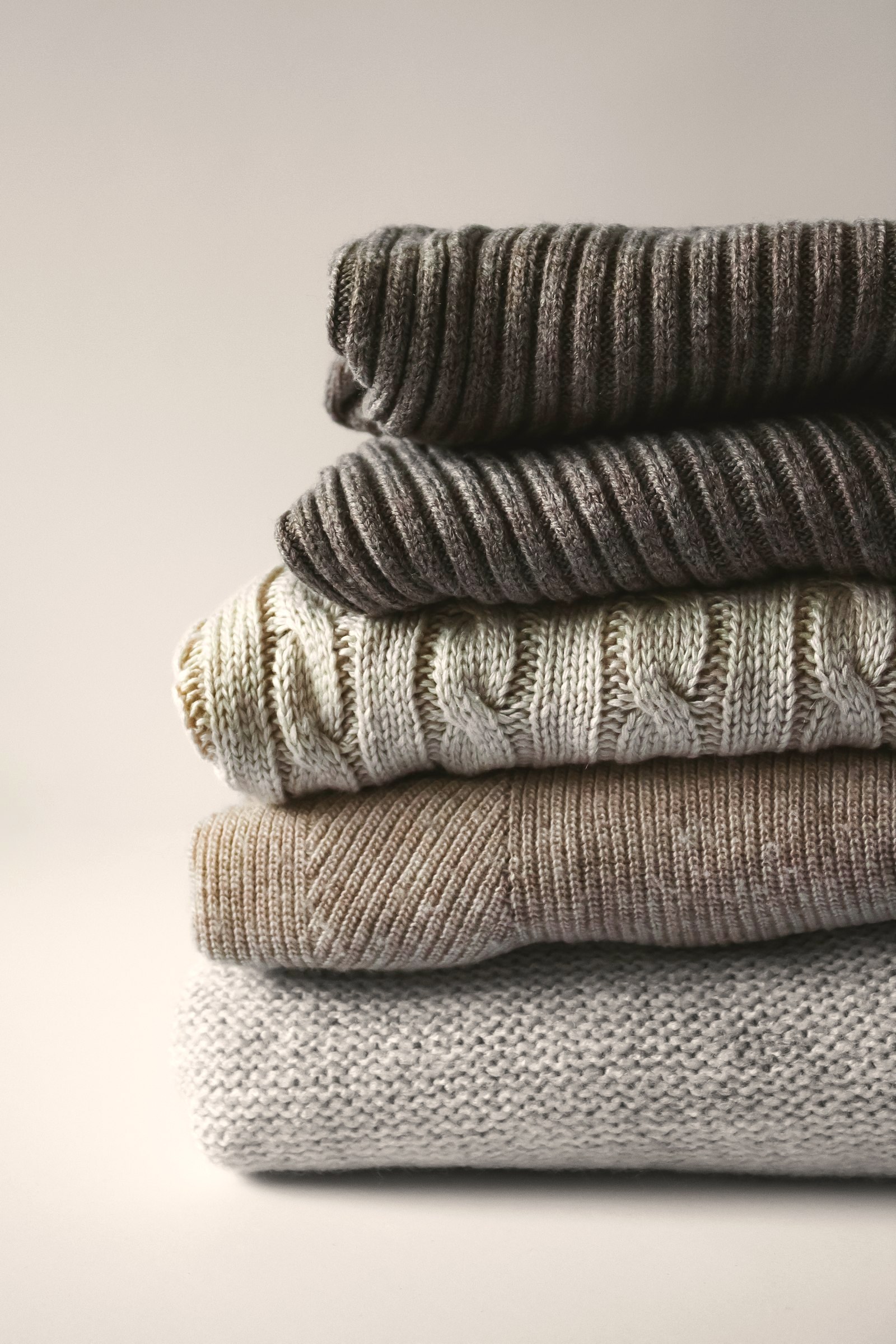
The bank holds no henley worn on a body, so this page opens on the cloth the category is made of and says so, rather than dressing a crew neck as its placketed sibling.
Checked and updated October 2026
The verdict, up front: seven henleys scored on the basis this category deserves: cloth out of 30, construction out of 20 with the placket itself graded as the craft test, fit and register out of 20 with the button states ruled as arithmetic, value out of 15, longevity and wash out of 15, with the fibre line printed for every garment below. The Filson Waffle Knit Henley wins at 84. The Merz b. Schwanen 206 is second at 82. And the Origin CORE is sent home at 42: a 69% polyester waffle sold under cotton-heritage copy at $69, the worst cloth honesty in the field. The category ruling, in one line: a henley is a base layer that learned one formal trick, and it is bought for how the placket is built, not for how the model wears it.
An undershirt that learned one trick, judged properly
The henley's provenance is honest and it is not glamorous: it began as underwear and as a working shirt, the collarless layer railroad crews and labourers wore because it vented at the throat without a collar to catch on machinery or a mate's hand, and the name arrived later, borrowed from the rowing crews of Henley-on-Thames who raced in the style. No costume is required and none is supplied here. What the garment kept from both lives is its position: one rung above the undershirt, one rung below the tee it shares its cloth with, and distinguished from both by a single piece of engineering, a short placket with buttons that are supposed to work.
That placket is the whole garment, and it is why this ranking exists. A crew neck tee is judged on its cloth and its cut, and our Verdict Card No. 02 did exactly that, Asket at 88, the Merz 215 loopwheel tee at 82. The henley takes the same cloth and adds a failure mode and a register the tee does not have. The failure mode is mechanical: an opening cut into a knit, stressed every time it is worn, that curls or sheds its buttons when it is built cheaply. The register is arithmetic, and this page prints it as law. All closed is a crew neck with decoration. One open is the working state, the vent the garment was invented for, and the only state that justifies the buttons' existence. All open is the undershirt confession, the layer admitting it was never dressed. Every fit score below is graded against those three states, with long and short sleeves judged separately where a maker offers both, because a short-sleeve henley is a summer tee with the same arithmetic and a long-sleeve one is a thermal layer with a collar decision at the throat.
The comfort question sits underneath the whole category, and it is the one our audience research keeps returning: comfortable cannot look sloppy. The henley is the garment that answers it at the base layer. Worn in its working state under an overshirt or a chore coat, it is the soft layer that still presents a finished neckline when the outer layer comes off, which is precisely the trick the tee cannot do and the undershirt was never asked to. Bought well, it is lounge cloth with a public face. Bought badly, it is a tee with three loose buttons and a wavy neckline by October. The cards below separate the two.
How the scores work
Cloth carries 30 points because a henley is its fibre and its knit before it is anything else: jersey, waffle and slub graded on their published construction, the fibre line read as the maker prints it, and a weight credited where the maker publishes one. The waffle knit is the category's thermal cloth and is graded as a structure, air held in the grid, not as a texture photograph. Construction carries 20, and here the placket is the craft test, graded the way our quarter-zip ranking grades the zip: the button material named (mother-of-pearl and river shell score; unnamed plastic is charged as silence), the placket reinforcement published, stitched-down facing against a raw cut edge. Fit and register carries 20: the three button states graded separately, the sleeve question answered, and the size range printed. Value carries 15 and longevity and wash 15, cross-checked by the cost-per-wear table further down, where the failure modes are costed by name: the placket curls first, the buttons shed second, and a garment is costed on the years those two parts give it.
Where a maker publishes its fibre line or its button material, the table below prints it as the maker's figure. Where it does not, the desk prints what is published and charges the silence in the row it belongs to. Nothing in the spec table is dressed up as measured when it was compiled.
Seven henleys, ranked
Filson Waffle Knit Henley
US price at last check: $119 at Backcountry.
The waffle champion done properly: 100% Peruvian cotton in a true thermal waffle knit, from the house the workwear provenance actually belongs to, with a limited lifetime warranty behind the placket.
This is the henley in its native cloth. The waffle knit is not a texture choice; it is the thermal structure the garment was born in, a grid that holds air against the skin, and Filson cuts it from 100% Peruvian cotton, the long-staple fibre named by origin on the retailer's spec sheet, in a relaxed fit with ribbed detailing at the cuffs and hem. Worn one open under a flannel or a chore coat, it is the working state the register law prints, and the relaxed cut is built for exactly that layering job rather than for a photograph. The house's brand record elsewhere on this site is garment evidence only; this henley is scored fresh, and it wins on the cloth row and the warranty.
The deductions are printed, not buried. The maker does not publish a cloth weight, and this category sells its thermals by substance, so the cloth row charges for the missing number even while it credits the knit: 26 of 30. The button material is likewise unpublished, which caps construction at 17; what is published is the build around it, ribbed structure that holds the placket's line, and a limited lifetime warranty, the strongest guarantee published in this field, which is a maker's own longevity claim stated in enforceable language. Six years of presentable service is the costing, $0.40 a wear, and the warranty is why the desk believes the six.
Merz b. Schwanen 206 Loopwheel Henley
US price at last check: $130 at Withered Fig, down from $140, with most sizes gone.
The 215 loopwheel tee's cloth with a placket built the old way: mother-of-pearl buttons, triangular underarm inserts, a seamless tubular body knitted on vintage loopwheelers in Germany.
The cloth is a known quantity on this site, which is the strongest evidence a garment can bring. The 206 is cut from the same two-thread loopwheel organic cotton as the 215 crew neck tee, 7.2 ounces, seamless and tubular, that our white tee ranking scored at 82 as a garment. The henley lands on the same 82 by its own road: the cloth row is the field's best at 27 because the weight is published and the knit has no side seams to twist, and construction at 18 is the field's best because the buttons are real mother-of-pearl, named on the spec sheet, the underarms carry the house's triangular inserts, and the cuffs are flat-knit rather than ribbed tubes. This is the placket as craft test, passed in full.
What keeps it second is the fit tax, and it is documented rather than rumoured. The retailer's own guidance is to size up a full size: the length and sleeves shrink roughly two inches in the first washes, a figure its long-term wear review confirms after years of use, alongside a neckline that widens slowly with wear. A garment you must buy a size too long is spending fit points on its own cloth behaviour, and the fit row's 15 records it. Stock is the other honesty: at the US stockist most sizes and colourways were gone on check day, at $130 for the size that remained. Buy it when your size exists, in the size above yours, and it will outlast everything else on this page.
Uniqlo Waffle Henley Neck T-Shirt
Maker's price at last check: $29.90 in the US.
A pre-washed waffle knit with ribbed cuffs and a round hem at $29.90, in the widest size run in the field: the attainable pick, inside the first three, where this series puts it.
Uniqlo's henley runs the formula this site knows well. The brand holds an 84 in our Brands Like series; its garments are scored fresh, and this one earns its 75 the Uniqlo way: a real waffle knit, pre-washed so the first-wear softness is the garment's actual state, ribbed cuffs that push up and stay, a round hem that reads as a design decision rather than a cost saving, and a size run from XXS to 3XL that no other garment here attempts. At $29.90 and $0.20 per wear in the cost table, it is the henley most wardrobes should start with, and it wears its one-open state as convincingly as garments at four times the price.
The deductions are the known ones. The US store does not publish a fibre line for this garment on the listing the desk could read, and the cloth row charges for the silence: the knit is graded on its published construction, not on a percentage nobody printed. The button material is unpublished, three winters is the honest costing for a waffle at this price before the grid relaxes, and the US range the desk read is long-sleeve, so the short-sleeve summer state belongs to a different product. None of it dents the arithmetic or the recommendation.
L.L.Bean Unshrinkable Mini-Waffle Henley
US price at last check: $69.95.
The catalogue thermal: 100% cotton mini-waffle with a three-button placket and a maker's promise in the name, graded against the maker's own review page.
Bean publishes the essentials and the essentials are decent: 100% cotton in a mini-waffle knit, a three-button placket, a Traditional Fit relaxed through the chest, sleeve and waist, and a fabric the maker describes as fade and pill resistant and, in the product's own name, unshrinkable. As a layering thermal at $69.95 it is a rational garment, machine wash and dry, from a house whose flannel shirt won our flannel ranking at 85 as a garment. The cloth row credits the published line at 22, with the unshrinkable claim graded as a treatment claim rather than a structure.
The fit row pays for the maker's own evidence. Bean's product page carries its customers' complaints in the open: recent reviews fault the length, one reporting a small running to the knees, and the consistency between purchases, which is the review record of a garment whose pattern discipline has slipped. A ranking that prints fibre lines cannot ignore a maker's own review page, so fit sits at 14 and longevity at 11: the promise is unshrinkable, the record is inconsistent, and the score believes the record. Buy it on sale, in the tall or regular cut your height actually needs, and check the length before the tags come off.
Industry of All Nations Super Henley
Maker's price at last check: $90 undyed, $115 dyed.
Organic cotton grown and made in one region, river shell buttons at the placket, plant-based dyes: the fullest provenance in the field, graded as a maker's account because no certifier is named.
The provenance is the most complete on this page. The cotton is 100% organic, grown and made into the finished garment in Tamil Nadu, undyed and unbleached in the base version, coloured with plant-based natural dyes in the dyed ones, pre-shrunk in an enzyme wash, and finished with river shell buttons at the placket, a real named material that puts construction at 16, second only to the winner of that row. The cloth is a published medium weight with a relaxed, substantial hand. The house's woven boxer scored 69 on its own page as garment evidence; this henley is scored fresh and lands four points higher, carried by the button material and the cloth story.
The cap is the same one this desk applied to the boxer, applied consistently: the maker publishes its organic provenance in full and names no certifier and no licence anywhere the desk could read, so the organic claim is graded as a maker's account and the certification is not scored. On a site whose underwear pillar prints a GOTS licence number on the page, that distinction is the standard, not a grudge. The natural dyes will also fade by design, which the maker treats as character and the longevity row treats as a cost: 9. Buy the undyed at $90; it is the version the whole system was built to make.
The Great. The Men's Boxy Henley
Maker's price at last check: $125.
A Los Angeles-made cotton henley cut slouchy and square with a deep placket: a fashion register bought honestly, and graded as one state of the three.
The facts first, because they are better than the category's average: 100% cotton, cut and sewn in Los Angeles, garment-washed for a lived-in hand, with a deep placket and a boxy, dropped-shoulder cut in sizes numbered 1 to 5. As a piece of California ease it is coherent, and the cloth row credits the published fibre line and the domestic make at 21. The house is a womenswear line that cuts a small men's range, and the garment reads exactly like that: the silhouette is the proposition, and the placket is part of the silhouette.
Which is where the register arithmetic collects its tax. The boxy cut has one state: open, slouched, worn as a look. Closed, the volume has nowhere to go; as a layer, the dropped shoulder fights every overshirt and jacket in the wardrobe. A henley bought for one state of three is a fashion garment, and the fit row's 12 prices it as one, beside a construction row that charges for a button material and a reinforcement the maker does not publish. At $125 it costs Filson money without the warranty or the thermal cloth. Buy it if the look is the point and the point is honestly fashion; the five garments above it are bought for work.
Origin CORE Waffle Knit Henley
Maker's price at last check: $69.
A 69% polyester waffle sold under cotton-heritage copy at $69: the category's cloth-honesty failure, convicted on the maker's own fibre line.
Read the maker's two texts side by side, because the gap between them is the whole review. The story copy sells the waffle knit America lived in, simple, honest and dependable, in the language of cotton workwear heritage. The fibre line, printed on the same product page, reads 69% polyester and 31% cotton, with a trademarked freshness finish doing the rest of the talking. A waffle knit is a thermal structure for holding air in cotton; in majority polyester it is a photograph of that structure, warmer in the wrong way, prone to pill, and finished with a coating whose wash life is the garment's real lifespan. The cloth row's 8 is what a fibre line that contradicts its own story earns.
The desk costs it at two years, which at $69 is $0.69 per wear, the worst arithmetic on this page, worse than the $130 German loopwheel at $0.37 and worse than doing nothing at all. The American-made supply chain the house is proud of is a real thing, and it deserves a real fibre to run on; the same $69 buys the L.L.Bean in 100% cotton two places above it, and $29.90 buys the Uniqlo. The henley to leave on the rail, not for its fit or its buttons, but because a category built on cloth honesty cannot rank a polyester waffle in cotton's clothing.
The fibre lines, printed
A base-layer ranking that hides its inputs is a mood board. Here is the data spine of this page: every garment's fibre line and its knit, with each figure marked as the maker's own or a desk note compiled for the category.
| Garment | Fibre line | Knit | Button material | Figure |
|---|---|---|---|---|
| Filson Waffle Knit | 100% cotton (Peruvian) | Waffle | Unpublished | Maker's figures |
| Merz b. Schwanen 206 | 100% organic cotton, 7.2 oz | Loopwheel jersey, 2-thread | Mother-of-pearl | Maker's figures |
| Uniqlo Waffle Henley Neck | Not published on the US listing | Waffle, pre-washed | Unpublished | Knit maker's; fibre unprinted |
| L.L.Bean Mini-Waffle | 100% cotton | Mini-waffle | Unpublished | Maker's figures |
| Industry of All Nations Super | 100% organic cotton (no certifier named) | Jersey, medium weight | River shell | Maker's figures |
| The Great. Boxy Henley | 100% cotton | Jersey, knit unpublished | Unpublished | Maker's figures |
| Origin CORE Waffle Knit | 69% polyester / 31% cotton | Waffle | Unpublished | Maker's figures |
Read the fibre column against the scores and the ranking explains itself. Five of the seven are 100% cotton in some honest form, two of them organic with the claim graded two different ways: Merz's, from a mill whose cloth this site has already scored, and IOAN's, a maker's account with no certifier named. The bottom of the table is a majority-polyester cloth in a cotton garment's story, and the cloth row, the biggest row on the page, is where that difference is priced. The buttons column tells the same story in miniature: the two makers who name a real material finish first and second in the construction row.
What each henley costs per wear
The maths, assumptions printed. A henley in regular rotation is worn about 50 times a year, the base-layer assumption: it works across three seasons as a layer and the fourth as a shirt. Expected life is presentable service: the years the garment keeps its placket flat, its buttons on and its surface clean, not the years it merely exists. The IOAN row uses the undyed price stated on its card. Divide price by wears.
| Garment | Price used | Expected life | Cost per wear |
|---|---|---|---|
| Uniqlo Waffle Henley Neck | $29.90 | 3 years (150 wears) | $0.20 |
| L.L.Bean Mini-Waffle | $69.95 | 5 years (250 wears) | $0.28 |
| Merz b. Schwanen 206 | $130 | 7 years (350 wears) | $0.37 |
| Filson Waffle Knit | $119 | 6 years (300 wears) | $0.40 |
| Industry of All Nations Super | $90 | 4 years (200 wears) | $0.45 |
| The Great. Boxy Henley | $125 | 4 years (200 wears) | $0.63 |
| Origin CORE Waffle Knit | $69 | 2 years (100 wears) | $0.69 |
Two lessons, both printed rather than implied. First, the table flatters neither end of the ranking: the winner costs twice per wear what the third-place Uniqlo costs, and the page says so beside its 84, because what the extra money buys is the thermal cloth, the warranty and six years of the working state, not cheaper arithmetic. Second, the most expensive garment to wear here is the mid-priced one. The $69 skip, with a coated blend's two-year life, costs more per wear than the $130 loopwheel that finishes second. In a base layer, price divided by life is the whole argument, and a short life loses it at any price.
The Skip · 42/100
Origin CORE Waffle Knit Henley. A 69% polyester waffle under cotton-heritage copy, at $69 and $0.69 per wear over a two-year costing. The waffle knit is a cotton thermal structure; printed on a majority-polyester cloth it is a costume, and this page grades fibre lines, not stories.
Which one to buy
Buy the best once: the Filson Waffle Knit (84), the category's native cloth with a warranty behind the placket, the layer for every cold morning the wardrobe contains. It is the henley this category is judged by.
Buy the cloth: the Merz 206 (82) if the placket as craft is the point; the same loopwheel cotton our tee ranking scored, mother-of-pearl at the throat, sized up one and kept for years.
Buy the bargain: the Uniqlo waffle henley (75), a genuine waffle knit at $29.90 and $0.20 a wear, in more sizes than the rest of the field combined. Start here, and upgrade when the drawer asks, not before.
Buy the provenance: the IOAN Super Henley (73) in the undyed at $90, river shell buttons and all, from the one maker that grows, dyes and sews in a single region. The category inside the wardrobe's system is mapped in the shirt index, the layer beneath this one is ranked in the undershirt Verdict Card, and the layer above it, the flannel it was born to sit under, is ranked in the flannel Verdict Card.
Questions, answered
What is the best henley shirt for men?
The Filson Waffle Knit Henley, at 84 out of 100 in this ranking. It is 100% Peruvian cotton in a true waffle knit, the thermal cloth the garment was born in, with a working placket and a limited lifetime warranty behind it. The Merz b. Schwanen 206 is second at 82, the loopwheel purist's henley, and the Uniqlo waffle henley at 75 is the value answer at $29.90 and $0.20 per wear in the cost table on this page.
What is a henley, and where does it come from?
A collarless knit shirt with a short buttoned placket, born as underwear and as a working shirt: it was the layer railroad crews and labourers wore because it ventilated without a collar to catch, and the name is borrowed from the rowing crews of Henley-on-Thames, who raced in the style. Its whole wardrobe life since has been spent one rung up from the undershirt it began as, which is why this ranking grades it as a base layer that learned one formal trick, not as a shirt with buttons missing.
How many buttons should you leave open on a henley?
One, as the default. This page rules the button states as register arithmetic: all closed is a crew neck with decoration, and the placket is being spent on nothing; one open is the garment's working state, the vent the railroad crews used it for, and the state that separates a henley from a tee; all open is the undershirt confession, the layer admitting it was never dressed. Two open on a three-button placket is the all-open state by another count. Buy the henley for the one-open state and wear it there.
Henley or crew neck tee: which is better?
They are the same garment with one decision between them, and this site has scored both sides of it. Our white tee ranking put the Merz b. Schwanen 215 loopwheel tee at 82, and the 206 henley ranked second here is cut from the identical two-thread loopwheel cloth, scoring the same 82: the placket, done properly with mother-of-pearl buttons, neither adds nor subtracts cloth quality. What it adds is a state the crew does not have. If you will wear the one-open state, buy the henley; if the buttons would live closed, buy the crew and spend nothing on decoration.
What fails first on a henley?
The placket, two ways. It curls: a placket facing cut from self cloth with no reinforcement rolls at the edge within a season of washes, and the neckline goes wavy and stays wavy. And it sheds: buttons sewn without shank or reinforcement work loose under the exact stress the placket exists to take. That is why construction carries 20 points here and grades the placket the way our quarter-zip ranking grades the zip, by the button material named, the reinforcement published, and the silence charged where neither is printed.
Are expensive henleys worth it?
The loopwheel ones are, on the printed maths. The Merz 206 at $130 returns $0.37 per wear over seven years of presentable service, and the winning Filson $0.40 over six. The garment this page sends home costs more per wear than both, $0.69, because a majority-polyester waffle at $69 lives two years: the expensive mistake in this category is not the $130 German knit, it is the mid-priced blend wearing a cotton story. The Uniqlo at $0.20 a wear remains the arithmetic champion, as it usually is.
The layers this garment lives between are ranked on their own pages: the tee it shares its cloth with in Verdict Card No. 02, the tank it becomes in summer in the tank top Verdict Card, and the chore coat it was born to sit under in How to Wear a Chore Coat. Where the torso hangs among this site's winners is mapped in the Body Map.
How this ranking stays honest
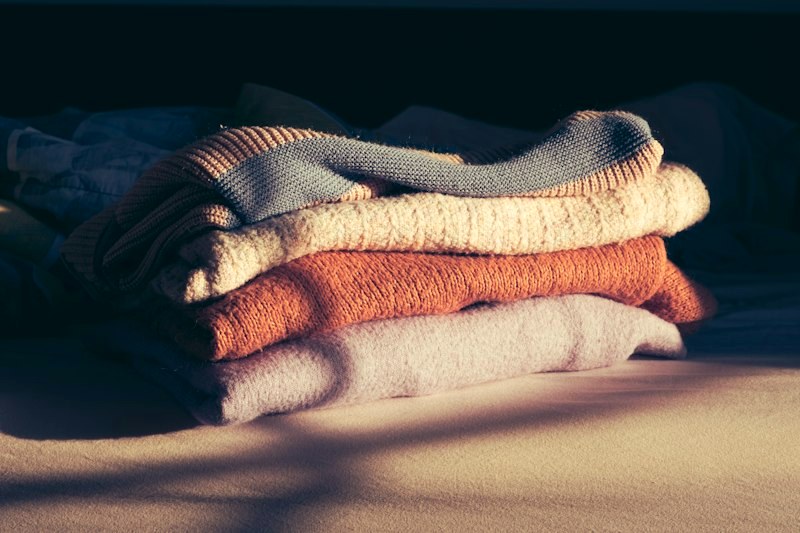
The basis is printed on every card and the inputs are printed in the spec table: fibre lines and button materials are the makers' published figures where makers publish them, and charged as silence where they do not, because a percentage or a button a brand will not name is itself a finding. Three honest notes on the field. First, the desk looked for the category's cardinal sin, the decorative fake placket with buttons that do not open, and did not find one buyable to this page's standard today; the skip was therefore convicted on the hardest evidence the field offered, a fibre line contradicting its own story. Second, the honest rests: RRL's henleys showed every size unavailable in today's checks; Homespun Knitwear's Coalminer, the category's craft legend, is not buyable new; Indigofera's Hank could not be verified on a live merchant page to the desk standard; and Buck Mason, a brand that stands at 90 on this site, sells no henley in its current line, so no garment of its is ranked here and its standing is untouched. Third, prices are stated as they were found: the Filson at its US retailer, the Merz at its US stockist with the thin stock disclosed on its card, the IOAN at the maker's undyed and dyed prices, and the Uniqlo priced on the maker's US store, whose US listing does not publish the garment's fibre line, a silence the cloth row charges. H&M is not scored here; the desk rested it, and no re-derivation of its brand score is owed or implied. Photography: the bank holds no henley worn on a body, no placket close frame and no waffle macro, so the cards run without garment photographs and the two frames on this page are knit cloth, captioned as cloth, rather than a crew neck dressed as its placketed sibling. The harvest list names what is missing: a waffle henley worn one-open under an open overshirt, a placket and button close frame, and a waffle grid macro. If a garment is reformulated, repriced or quietly cheapened, the score moves at the next check, and the date at the top of this page moves with it.