
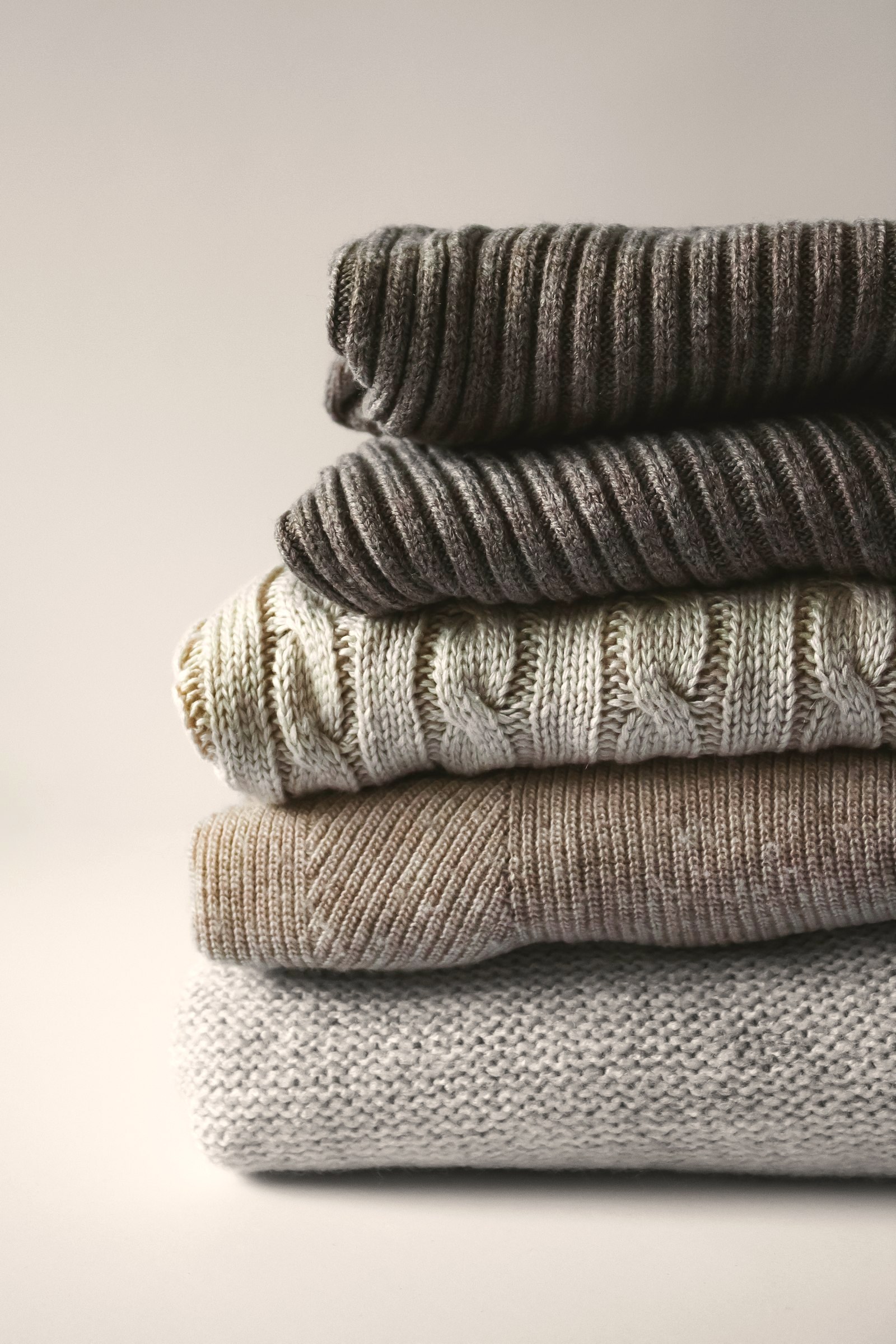
The cloth this page grades from. The bank holds no photograph of a mock neck sweater worn in any species, so this page's frames show the knit itself and the senior sibling's collar, captioned for exactly what they are; the gap and the harvest list are named in the honesty section below.
Checked and updated October 2026
The verdict, up front: seven mock neck sweaters scored out of 100 on fibre 30, construction 20, fit 20, value 15, longevity 15, plus the one sent home. The Artknit Studios Ultrasoft Wool Mock-Neck wins at 83, 100 percent merino at a published 17.5 microns, an 18 gauge and a seamless knit, the fullest record in the field. The Uniqlo Extra Fine Merino Mock Neck follows at 74, 100 percent wool with its micron printed at $49.90, the value answer, sold out at Uniqlo US at this check and graded on its record while it restocks. The Uniqlo U 3D Knit Mock Neck is third at 68, a sweater knitted in one piece by the field's most modern construction, whose maker declines to print what the piece is made of. And the sweater sent home, at 32, is the Zara Plain-Knit Mock-Neck Sweater, 66 percent viscose and 34 percent polyester, a mock neck containing no wool at all, at ten dollars above this page's 100 percent merino. The count underneath the ranking is this Card's test, printed in full below: six of eight makers publish a complete fibre split, one of eight publishes a gauge, and not one of the eight publishes the height of the collar, the measurement the garment is named for. Two scope rulings before the ranking starts. The collar that folds is not here: the roll neck and turtleneck are ranked on Verdict Card No. 05, and the crew beneath is Verdict Card No. 10; this Card grades the stand that never folds, the garment the sweaters index files at formality 3 and warmth 3, bought close. And the zipped stand is ruled a species, not an exile: a sweater its maker files as a mock neck is graded here as one, zip or no zip, while the stand collar filed by its maker as a half zip stands on the quarter-zip Card, No. 33, where this garment's zipped kin tops out at 86.
The finding: the split slipped, the gauge vanished, and the collar height is published by nobody
The V-neck Card, No. 57, set the disclosure baseline this Card inherits, and it was a good one: all eight of its makers published a complete fibre split, three of eight published a gauge, and the field's one blank was the depth of the V. The mock neck was expected to publish less. It is sold as the turtleneck without the commitment, the easier sibling, and its makers' paperwork behaves like it. The split column, perfect on the V, slips here: six of the eight makers scored publish their percentages in full. The two who do not are instructive. One is a Uniqlo line that prints the words merino blend and no numbers behind them, on the same site where its sibling line prints 100 percent wool and a micron count at the same price. The other is the high street's quietest house, which names its sweater for merino wool and lets the name carry a record its percentages were never captured behind. The gauges fall further: one maker in eight prints one, against three of eight on the V, and it is the winner, an Italian direct house whose designer notes print gauge, ply and micron on a single product page. Two of eight print a micron count. Three of eight say anything at all about how the collar itself is built.
Then the count reaches the garment's own dimension and stops dead, for the second neckline running. A mock neck is a collar: its whole design purpose, printed in the sweaters index, is to finish the throat at about half the roll neck's height, standing, never folding, and its failure mode is written in the same index, that when the yarn tires the mock neck bags first, because the short collar has nowhere to hide. Height and rib are therefore the garment's specification, as printable as a chest size. Not one maker in this field prints the height. The number is not unprintable in principle: Uniqlo's own size tables carry a collar point column, and a women's mock neck tunic in the same system prints a collar point of 1 and three-quarter inches for every size. For the men's garment, the column goes unprinted, and the only height in print anywhere is the index's own phrase, an inch or so. So the fit rows below credit what is printed, the one maker who publishes garment measurements takes the value end's best fit row, and the collar each maker leaves unmeasured is charged once, in the audit below, rather than eight times in disguise. Buy the record, buy it close, and judge the stand in the shop, under the jacket it will live under, because on this evidence the fitting the makers declined to publish is yours to do. Every score is a garment score. Where a house holds a brand score elsewhere on this site, the brand number is printed on the card and kept separate, in both directions.
How the scores work
Every sweater is scored out of 100 on the same five rows. Fibre (30) reads the published fibre record, on the disclosure law this desk applies everywhere: the split as printed, percentage by percentage; a complete single-fibre claim above a blend; a blend read by its first fibre, because the first fibre is the one doing the work; provenance credited where the maker prints it, a named lambswool grade, a ply, a micron, a spinner, a mill; and silence charged as silence. Construction (20) is the knit built around the fibre: the gauge where a maker publishes it; the collar's own construction, the ribbed stand, the seamless body, the zipped stand where its maker files it as a mock neck, as published; seams and fashioning as published. Fit (20) is the index test graded as published: bought close, the stand standing rather than bagging, sized in a range a reader can actually enter, with the maker's own fit language and garment measurements credited where printed. Value (15) divides the price by the published record and by the seasons the longevity row scores, printed in the cost table below. Longevity (15) is the ownership audit: how the cloth ages, how the collar in particular ages, whether the house still sells the model, and whether a making culture stands behind the garment. Row scores add to the total, on every card.
The ranking
Artknit Studios Ultrasoft Wool Mock-Neck
The Winner · The Fullest Record in the Field
Maker's price: €169 at Artknit Studios, about $195, in stock, ships worldwide.
Buy it as the mock neck bought on paperwork: the only maker in the field that prints its gauge, and one of two that prints its micron, in a seamless knit with a ribbed stand.
The fibre: 100 percent merino wool, and the provenance printed to a depth nobody else in the field attempts. The maker's own material notes give the yarn's thickness as 17.5 microns, the finest fibre figure published on this page, a micron and a half finer than the Uniqlo ranked second, in a house that describes the yarn as its Ultrasoft precisely because the number backs the adjective. Fibre takes 27, the row the Smedley Blenheim took on the V-neck Card, earned the opposite way: the Blenheim's yarn carried a mill's name and no micron, and this one carries a micron and no mill. The split is total, the fineness is printed, and the row pays for the paperwork in full.
The build and the fit: construction 17, carried by the field's only gauge: 18, printed in the maker's designer notes beside the ply, one ply, in the spelling the maker gives it, and by the seamless knit those notes name, a body with no side seams to twist or give. At 18 the knit sits at the top of the mid band the crew ranking buys by, the visible layer over a shirt rather than the film under a blazer, which is the fine mock's honest posting and is graded as such. The collar is a ribbed stand, published as such, with ribbed hem and cuffs. Fit 15 on the regular fit the maker names and the model it prints, six foot two wearing a large, with no garment measurements published and the point charged for their absence. Value 12 at €169 prices the record per euro better than anything above the $49.90 rows: a micron, a gauge, a ply and a seamless build at under two hundred dollars. Longevity 12 charges the youth of the house, a direct maker with stores in Biella, Milan and Rome and no repair programme printed, against a one-ply fine knit that wants the hand wash its care line prescribes. Artknit Studios holds no brand score on this site; this 83 is the garment's own, won on the strength of its paperwork alone.
Uniqlo Extra Fine Merino Mock Neck Sweater
The Value Answer · The Micron at $49.90
US list price: $49.90. No buy pill: sold out at Uniqlo US at this check, with a restock notification offered; the record graded is the maker's own page for the garment.
Buy it when it restocks, as the field's standing arithmetic problem for everyone above it: 100 percent merino with its micron printed, its measurements published as a line's habit, at a quarter of the winner's price.
The fibre: 100 percent wool, extra fine merino at 19.5 microns, the micron count printed in the maker's own description of the line this garment belongs to, with the anti-pilling press processing and the machine-washable finish printed beside it in plain language. Fibre takes 19, the row its V-neck sibling took on Card No. 57, because the fibre record is the same record: a genuinely fine natural fibre, totalled and microned, specified by number rather than by mill, and the row prices exactly that depth and no more.
The build and the fit: construction 13: the line's fine jersey knit, efficiently made, filing no claim about fashioning and graded on the claims it files, a point under its V sibling's construction row because the V's page carried its neckline ruling in words and this garment's captured page carries no sentence about its collar at all, an absence charged once here rather than disguised. Fit 17 on the line's paperwork habit: Uniqlo publishes full garment measurements for its knitwear as a matter of course, the practice that took its V sibling's fit row to the field's best on No. 57, and this Card charges the mock one point its sibling did not pay, because the mock's own table resisted capture whole at this check and the backfill is owed rather than assumed. Value 15, the ranking's perfect score, as its siblings took before it: $49.90 for 100 percent merino with its micron printed is the cheapest complete record in the field, and the cost table prices it at $0.42 a wear. Longevity 10 prices the known deductions, a thinner knit than the heritage stands and a three-winter honest costing. The landing, printed in the open: 74 sits a point under this yarn's crew sibling at 75 on the crew ranking and two under its V at 76, and all of the distance is paperwork, none of it yarn. The garment was sold out at Uniqlo US when this Card was built, in the middle of knit season, and ships without a pill for that reason; the restock notice on its page is the door, when it opens. Uniqlo the brand stands at 84 on its family page; this 74 is the mock neck's own.
Uniqlo U 3D Knit Mock Neck Sweater
The Seamless Answer · The Blend Withheld
US list price: $49.90, seen at $29.90 on sale. No buy pill: sold out in the colourway captured at this check; graded on the maker's own page.
Buy it as the construction experiment: a sweater knitted in a single piece, by the most modern method in the field, whose maker declines to print what the piece is made of.
The fibre: fine merino blend yarns, the maker's whole fibre sentence on the garment's own page, and fibre takes 15 for what that sentence does and does not do. It names the working fibre's family, merino, which is worth more than silence. It prints no percentages behind the word blend, which on the disclosure law is charged as the silence it is, and the charge is sharpened by the comparison its own house provides: the sibling line ranked second on this page prints 100 percent wool and a 19.5 micron count at the same $49.90, so the percentages exist in the building and were withheld from this page. What the blend's partners are, and in what shares, the buyer learns from the care label after the box arrives.
The build and the fit: construction 16, the second-best construction row in the field, and it is earned on process: the garment is constructed with WHOLEGARMENT technology, knitted in one piece on Shima Seiki machines with no seams to twist, chafe or give, the maker printing the trademark and the caveat, tags and care label excepted, in its own description. Raglan sleeves are published beside it, for ease of movement. No gauge is printed, and the row stops there. Fit 13 on the regular fit the maker names, cut like a T-shirt to sit sleeker than an ordinary sweater, with a body-size table only and no garment measurements of the kind its sibling line publishes. Value 14 at the $49.90 list, a point under its sibling's perfect score because the fibre record bought at the same price is thinner. Longevity 10 prices a seamless body, which ages without seam failure, inside a seasonal designer line, the U collection from the house's Paris research centre, which replaces its garments rather than keeping them. Two Uniqlo sweaters stand second and third on this page, from two different lines of the same house, graded on two different records: the desk prints both because the records, not the house, are what is ranked. Uniqlo the brand stands at 84, unmoved; this 68 is the U garment's own.
Ash & Erie Mock Neck Sweater
The Proportional Answer · The Collar Specified
US price checked today: $108 at Ash & Erie, in stock in M to XXL, with XS and S sold out.
Buy it if standard lengths have never fit you: the only maker in the field that publishes a fit thesis for a named body and the collar's rib in the same breath.
The fibre: 55 percent extra fine merino wool, 45 percent cotton, printed in full in the maker's own materials line, merino first and in the majority, which is the honest order the blend law asks for: the fibre doing the warmth work leads, and the cotton behind it is the softness and the washability, the maker's own framing being a knit designed to wear casually. Fibre takes 18, above the cotton answer on the V Card and below every total-wool row here: the split is complete and checkable, the merino is a genuine majority, and the deductions are the unprinted figures, no micron behind the words extra fine, no gauge, no ply.
The build and the fit: construction 13, carried by the most specific collar sentence in the field after the winner's: a 1x1 rib mock neck, printed in the maker's feature list, with 1x1 rib cuffs and hem beside it. A rib specification is a bagging defence stated in the open, the 1x1 rib being the tightest common rib, and the collar's construction is the thing this Card's audit asks the whole field for; this maker, alone with the winner, answers it. Fit 16, the field's most argued fit row: the house cuts for men under five foot eight, proportional sleeves and body length printed as features, its model printed at five foot seven wearing a medium, so the fit can be judged against a named body rather than a fit adjective. For the reader inside that thesis it is the best fit paperwork on the page after Uniqlo's tape; for the reader outside it, the card says plainly that the garment is not cut for him. Value 10 at $108 prices an honest blend at an honest maker's margin. Longevity 10 on a washable merino and cotton cloth from a young direct house, with the maker's own reviewers noting the knit runs thin, a fact the card prints because the maker publishes the reviews that say it. Ash & Erie holds no brand score on this site; this 67 is the garment's own.
Zara Mock Neck Zip-Up Knit Sweater
The Zipped Species · The Honest Split, Zipped
US price checked today: $130 at Zara's US store.
Buy it as the proof that disclosure is a choice, not a price point: a complete, wool-led split at the fashion end, in the stand collar that opens.
The species, ruled in the open: this sweater carries a zip in its stand collar, and it is graded on this Card because its maker files it as a mock neck, in the garment's own name, mock neck zip-up knit sweater. The rule this desk applies is that a garment is graded where its maker files it: the stand collar that opens is this Card's zipped species, and the stand collar filed by its maker as a half zip or zip neck, the Smedley Tapton being the type, stands on the quarter-zip Card, whose field it tops at 86. A zip does not exile a garment its maker calls a mock neck, and the zip earns its keep in the wearing, venting the stand the fixed collar keeps closed.
The fibre: 95 percent wool, 5 percent cashmere, printed in the maker's own composition line on its US product page, a complete split at $130. Fibre takes 20, the row its V-necked stablemate took on Card No. 57 for the identical split, graded exactly as the law reads it: the split is total and checkable, wool carries nineteen twentieths of the cloth, the 5 percent cashmere sits in the honest position, second and small, and the deductions are what the split does not say, no grade for the wool, no ply, no micron. The build and the fit: construction 10: a mock neck with zip and ribbed trim, the complete published build, with nothing filed on the zip's make, the gauge, the seams or the fashioning. Fit 11 on the whole of the published fit record, which is a neckline, a zip and a sleeve length. Value 10 at $130, twenty dollars above the V that carried the same split, and the landing is printed for that reason: 58 sits one point under its stablemate's 59 on No. 57, and the whole point lives in this row. Longevity 7 prices a style built for a season's range in a house whose brand longevity row stands at 3, against a cloth that deserves longer. Zara the brand stands at 48 on Brands Like Zara; this 58 is the garment's own.
COS Slim Merino Wool Mock-Neck Sweater
The Quiet Answer · The Name Without Numbers
US price at last check: $99 at COS, listed at €69 in its European stores. The door runs to the maker's knitwear range: this garment's own product page resisted capture at this check, and this desk does not guess a slug.
Buy it as the silhouette: a slim merino mock from the high street's quietest house, bought on its name, because its numbers could not be captured behind it.
The fibre: merino wool, asserted in the garment's own name, slim merino wool mock-neck sweater, and fibre takes 16 for a claim graded exactly as far as it can be checked. The name is a single-fibre claim, which stands above the U garment's unnamed blend two cards above, and the percentages behind it resisted capture on the maker's pages at this check, which stands it below every published split in the field, the winner's totalled merino included. The flag is printed rather than smoothed: the split is owed, it is in the November ledger, and the row will be regraded when the maker's own product page yields it. What can be said from the record is that the house's slim merino line is its staple knit, sold at $99 in the US and €69 in its European stores, tagged as a runway piece in the latter, and that the name has been consistent across both listings.
The build and the fit: construction 10: nothing is published about this garment's build beyond its name, no gauge, no collar construction, no seam claim, and the row grades the silence at the fashion end's standard rate. Fit 12 on the slim fit the name carries: the house's product pages print a back length for its knits as a matter of pattern, and this garment's figure could not be captured with its split, so the row charges the absence rather than crediting the pattern. Value 10 at $99, the record bought per dollar beaten in this field by both Uniqlos and by the zipped Zara's published split at $130. Longevity 9 on a staple silhouette in a seasonal range. COS the brand stands at 70 on its family page; this 57 is the garment's own, thirteen points of unpublished paperwork between the house and its sweater.
Zara Mock Neck Knit Sweater
The Honest Cheap Synthetic
US price checked today: $35.90 at Zara's US store.
Buy it knowing exactly what it is: a synthetic knit at a synthetic price, the only cheap sweater on this page whose name promises nothing its composition does not deliver.
The fibre: 67 percent polyester, 25 percent acrylic, 6 percent wool, 2 percent elastane, the maker's complete published composition, and fibre takes 7 for the cloth exactly as printed: a synthetic knit with a token wool share, the same family of cloth as the skip's, graded a point under the skip's fibre row on the cloth alone. What separates this garment from the one sent home is not the yarn, it is the honesty around it. The name promises a mock neck knit sweater and nothing more, no fibre is led with, and the price, $35.90, is the price of the record it prints. The 6 percent wool is a garnish the name never mentions, which is the garnish in its only innocent form.
The build and the fit: construction 7: a mock neck and long sleeves, the complete published build, a garment with nothing behind its description and nothing claimed beyond it. Fit 10 on the same record, no fit name, no measurements, no collar height, the stand sold unmeasured like the rest of the field. Value 10 at $35.90 refuses both available errors: it is not the bargain its price tag performs, because the cost table prices its short presentable life at $0.60 a wear, and it is not a fraud, because nothing on its page pretends the cloth is other than it is. Longevity 5 on a polyester-led knit in a fashion house's range, a cloth that will pill and shine its way down inside two winters. The garment is ranked, not sent home, and the reason is the page's whole thesis in one card: on a ranking that grades records, an honest cheap record outranks a dishonest dear one, and this sweater's stablemate below is the proof. Zara the brand stands at 48; this 39 is the garment's own.
Zara Plain-Knit Mock-Neck Sweater
The Skip: Sent Home · Zero Percent Wool
US price checked today: $59.90 at Zara's US store. No buy pill: this desk does not link what it sends home.
Send it home: a mock neck in the merino's seat at a merino's price, whose maker's own composition line contains no wool at all.
The fibre: 66 percent viscose, 34 percent polyester, the maker's complete published composition, and credit where it is due before the sentence lands: the split is published, in full, which is more than two makers ranked above it managed. What the split says is the conviction. There is no wool in this sweater. None: not a majority outvoted, as on the V Card's skip, not a garnish, as on the cotton knit there, but zero, in a garment sold in the mock neck's seat at $59.90, ten dollars above the 100 percent merino ranked second on this page, whose maker prints its micron count on the same kind of page. The mock neck is a wool garment by the index's filing, its yarns merino and cotton blends, judged harder than its siblings on yarn because the short collar has nowhere to hide; a mock neck with no natural fibre but a plant-based one, at a wool price, is the category's promise withdrawn while its price is kept. Fibre takes 6: the disclosure is real, and what it discloses is the skip. The V Card's skip held 30 percent of its name fibre and took 8; this cloth holds none of the fibre its family runs on, and the row prices the difference.
The build and the fit: construction 7: a plain-knit sweater with a mock neck and long sleeves, the maker's complete description, honest in its plainness and empty behind it, no rib specified for the collar that the index says bags first. Fit 10 on the same record, no fit name, no measurements, no collar height. Value 6 at $59.90 refuses the cheapness defence in advance, on the arithmetic printed on its sibling Cards: the sweater costs ten dollars more than a 100 percent merino mock with its micron published, and the cost table finishes the point, at about sixty presentable wears it costs $1.00 a wear, more than six of the seven ranked sweaters, the identical figure the V Card's skip produced at the identical price. Longevity 3 is the house's own brand row, applied to the cloth that earns it fastest. The full conviction is written in the skip section below. Zara the brand stands at 48, printed here unmoved: this 32 is the garment's own, two points under the V Card's skip, and its two stablemates ranked above it are the proof the sentence is about the sweater, not the house.
The record table: what each maker actually publishes
| Sweater | Fibre, as published | Gauge, ply and micron, as published | The collar, as published | Price |
|---|---|---|---|---|
| Artknit Studios Ultrasoft Wool Mock-Neck | 100% merino wool | 18 gauge, 1 ply and 17.5 microns, all published | Ribbed stand published; height not published | €169 |
| Uniqlo Extra Fine Merino Mock Neck | 100% wool, 19.5 microns published | Micron published; gauge not published | Height not published (the line publishes full garment measurements) | $49.90 |
| Uniqlo U 3D Knit Mock Neck | Merino blend yarns (percentages not published on the page) | Not published (WHOLEGARMENT seamless construction published) | Height not published | $49.90 |
| Ash & Erie Mock Neck | 55% extra fine merino wool, 45% cotton | Not published | "1x1 rib mock neck" published; height not published | $108 |
| Zara Mock Neck Zip-Up Knit | 95% wool, 5% cashmere | Not published | Zipped stand with ribbed trim published; height not published | $130 |
| COS Slim Merino Wool Mock-Neck | Merino wool (the garment's name; percentages not captured) | Not published | Not described | $99 |
| Zara Mock Neck Knit | 67% polyester, 25% acrylic, 6% wool, 2% elastane | Not published | Not described | $35.90 |
| Zara Plain-Knit Mock-Neck (skip) | 66% viscose, 34% polyester (no wool) | Not published | Not described | $59.90 |
Read the columns in order, because together they are the finding scored. The first column fills six times in eight, a worse showing than the V field's perfect column and the same showing the vest field made, and its two gaps are a withheld blend and an uncaptured split rather than lies. The second column fills once: the winner's page prints its gauge, its ply and its micron in one specification, Uniqlo's extra fine line adds a micron beside it, and then the column closes for the remaining six, houses among them that publish their shirt specifications to the thread count. Then read the fourth column, which contains no number at all. Three makers describe their collar's construction, a rib, a rib with a gauge of its own, a zip in a ribbed stand, and not one of the eight prints the collar's height, the dimension the garment is named for and the one its failure mode is measured in. A buyer can compare most of the fibre on this page from his chair. The collar he must go to a shop and judge standing, which is where the audit below leaves it.
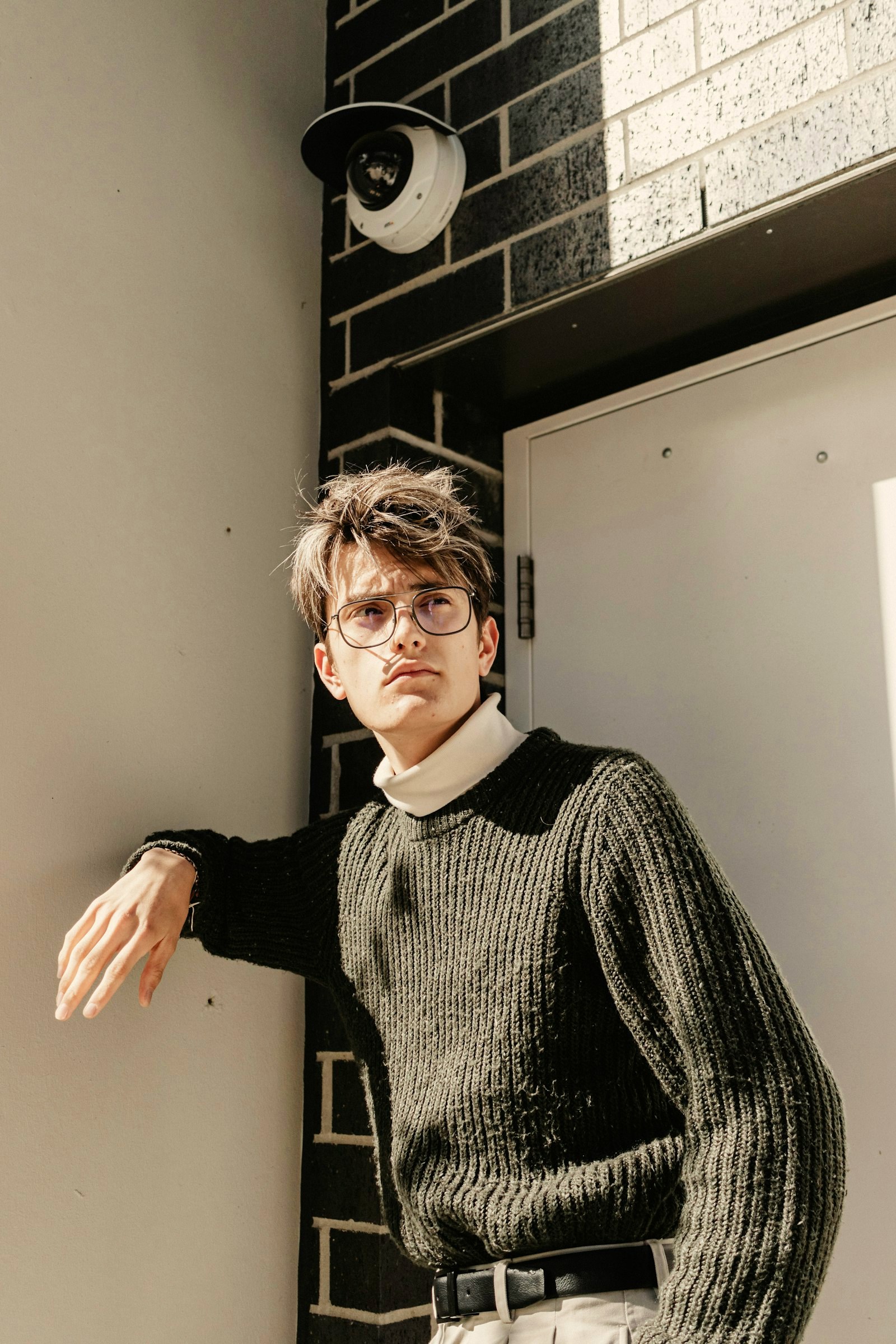
The collar audit: the measurement nobody prints
The collar's height is not a styling detail. It is the garment's specification, the number that decides all three of its jobs. It decides whether the stand finishes the throat or merely suggests it: too short and the garment is the crew it is so often misread as, a band with ambitions. It decides whether the sweater sits under a blazer as the index files it, the stand clearing the jacket's collar cleanly, or fights it at the neck. And it decides the index's ageing law: the mock neck bags first when the yarn tires, and bagging is a function of the two facts this field publishes least, the collar's height and its rib. A tall, loosely ribbed stand slumps by Christmas; a short, tight one stands for a decade, and no buyer can tell them apart from any page in this field. This desk buys knitwear by published bands where bands exist: the crew ranking's gauge bands, fine roughly 24 to 30 and mid roughly 12 to 20, govern the postings on every knitwear Card since. No collar bands can be published, because the input does not exist. Of the eight makers scored here, three describe their collar's construction in words, a ribbed stand, a 1x1 rib, a zipped stand with ribbed trim; none prints a height in inches or centimetres, and the only height in print for the garment anywhere is the sweaters index's own, an inch or so.
The paperwork culture is there, which is what makes the blank a choice rather than a limit. The same field publishes, between its eight makers, six complete fibre splits, two micron counts, a gauge, a ply, a seamless construction method with its trademark holder named, and full garment measurements as one line's standing habit. Uniqlo's own size tables carry a collar point column in their system, and a women's mock neck tunic in that system prints its collar point, 1 and three-quarter inches, for every size it sells. The tape exists in the sample rooms. The column exists in at least one maker's tables. It is simply never printed for the men's garment whose name is a collar. The first maker in this family to print a collar height takes the audit's point and, on this evidence, a ranking advantage with it: the number costs nothing to publish, and its absence across eight makers at every price from $35.90 to €169 is a habit, not a necessity. Until then, the fitting is the reader's, done standing in a shop with the stand up, under the exact jacket the sweater will live under, which is the wearing brief's advice and now the audit's as well: the height law is printed there, with the finished-stand rule and the outfit matrix, for a garment whose makers print nearly everything except its height.
Cost per wear, printed in the open
The maths, assumptions printed. A mock neck in rotation is worn about 40 times a year across the cold half of the year, the same assumption as our crew and V-neck rankings. Expected life is presentable service: the winters the sweater keeps its shape, its stand and its surface, not the winters it merely exists. The Artknit is costed at €169, read as about $195 at this check; both Uniqlo garments are costed at their $49.90 list. Divide price by wears.
| Sweater | Price used | Expected life | Cost per wear |
|---|---|---|---|
| Uniqlo Extra Fine Merino Mock Neck | $49.90 | 3 winters (120 wears) | $0.42 |
| Uniqlo U 3D Knit Mock Neck | $49.90 | 3 winters (120 wears) | $0.42 |
| Zara Mock Neck Knit (ranked seventh) | $35.90 | About 60 presentable wears | $0.60 |
| Artknit Studios Ultrasoft Wool Mock-Neck | €169 (about $195) | 8 winters (320 wears) | $0.61 |
| Ash & Erie Mock Neck | $108 | 4 winters (160 wears) | $0.68 |
| COS Slim Merino Wool Mock-Neck | $99 | 3 winters (120 wears) | $0.83 |
| Zara Plain-Knit Mock-Neck (skip) | $59.90 | About 60 presentable wears | $1.00 |
| Zara Mock Neck Zip-Up Knit | $130 | 3 winters (120 wears) | $1.08 |
Two lessons, both printed rather than implied. First, the table does not flatter the ranking's order: the winner's $0.61 is beaten by both $49.90 Uniqlos and by a cent by the $35.90 synthetic ranked seventh, because cost per wear rewards cheapness and punishes it only when the garment dies young; you buy the Artknit for the record and the hand of a 17.5 micron seamless knit, knowing the arithmetic, exactly as the V Card's readers buy its cashmere at the top of its table. Second, the skip's line repeats the V Card's skip to the cent: $59.90, about sixty presentable wears, a dollar a wear, produced there by a cloth that was 70 percent synthetic under a wool name and here by a cloth with no wool in it at all, at ten dollars above a real merino. The honest synthetic ranked seventh costs forty cents less a wear than the dishonest one sent home, at twenty-four dollars less to buy. Cheap per garment and dear per wear is the fast pattern's whole arithmetic, and on this page it is printed in two rows of the same house, one ranked and one sent home, which is the difference the composition line makes.
The skip: the Zara Plain-Knit Mock-Neck Sweater at 32
Every Verdict Card on this site sends one garment home, and the honest ones are convicted out of their makers' own mouths. This one's maker published the conviction itself, in the composition line on its own US product page, under the garment's plain name. The name is Plain-Knit Mock-Neck Sweater. The composition is 66 percent viscose and 34 percent polyester. There is no wool in it: no majority to argue about, no minority garnish to price, not one percent of the fibre the mock neck's family runs on, in a sweater the sweaters index's filing describes by its yarns, merino and cotton blends, and grades harder than its siblings on yarn precisely because its short collar has nowhere to hide. What the garment sells is the silhouette alone, the stand at the throat, knitted from a cloth with no warmth claim worth the name and no rib specified for the collar that will bag first, at $59.90. The ten dollars matter, because they are the comparison the maker invites by its own price ladder: ten dollars above it, on this page, sits nothing; ten dollars below it sits a 100 percent merino mock neck whose maker prints its micron count. The reader is asked to pay a premium over a real wool sweater for a wool-free one wearing the wool garment's shape. What acquits the house and convicts the garment is printed above this section, twice: the same maker, in the same range, publishes a 95 percent wool mock neck with its complete split at $130, and an honestly priced synthetic mock at $35.90 whose name promises nothing. Both are ranked on this page. The fibre was available at one end and the honesty at the other. For the sweater in the middle, neither was chosen, because the shape was expected to sell the garment by itself, and on the evidence of its own composition line, the shape is all there is. Buy the split, not the silhouette. The ranking above is what that sentence buys.
Which mock neck to buy
If you buy one: the Artknit Ultrasoft, the complete record at 83, a micron, a gauge and a seamless build at €169 and $0.61 a wear across eight winters. If you buy on arithmetic: the Uniqlo Extra Fine Merino, 100 percent merino with its micron printed at $49.90 and $0.42 a wear, when its restock notice fires. If the build is the appeal: the Uniqlo U 3D Knit, the one-piece sweater, bought with its withheld blend known and priced in. If standard lengths have never fit you: the Ash & Erie, the proportional cut with the specified rib, the only garment here designed for a named body. If the register is fashion: the zipped Zara, the honest split in the stand that opens, over every quiet name in its row. If the silhouette is the whole point: the COS, bought on its name with its missing numbers known. If the budget is the whole point: the $35.90 Zara, the honest synthetic, over the wool-free sweater at $59.90 every day of the winter. The garment's wearing system, its height law, its species and its outfit matrix, is written in the mock neck brief; its place in the drawer is filed in the sweaters index; the collar above it is ranked in Verdict Card No. 05 and the baseline beneath it in Verdict Card No. 10.
Questions, answered
What is the best mock neck sweater for men?
The Artknit Studios Ultrasoft Wool Mock-Neck, at 83 out of 100 in this ranking: 100 percent merino wool at a published 17.5 microns, an 18 gauge and one ply printed in the maker's own designer notes, a seamless knit with a ribbed stand, at 169 euros, the fullest published record in the field and the only gauge any maker in it prints. The value answer is the Uniqlo Extra Fine Merino Mock Neck at 74, 100 percent wool with its 19.5 micron count published, at $49.90 and $0.42 a wear in the cost table on this page, sold out at Uniqlo US at this check and graded on its record while it restocks. The sweater sent home, at 32, is the Zara Plain-Knit Mock-Neck Sweater, 66 percent viscose and 34 percent polyester, a mock neck containing no wool at all, at $59.90, ten dollars above the 100 percent merino ranked second.
What is a mock neck, and how is it different from a turtleneck?
A mock neck is a short stand collar that stands and never folds, roughly half the height of a roll neck: the sweaters index gives it an inch or so of height, and files it fourth of its ten types at formality 3 and warmth 3, the roll neck's easier sibling, against the roll neck's formality 4 and warmth 4. The turtleneck, or roll neck, is the collar that folds, ranked on Verdict Card No. 05, where the John Smedley Cherwell stands at 85. That 85 is a turtleneck garment's score, earned on a folded collar's record, and this desk never carries a garment score across a neckline: the mock is graded on its own record here, the turtleneck in the wearing brief No. 08 and the mock in No. 38.
How tall should a mock neck collar be?
Tall enough to stand clear of the neck and short enough never to fold, and the honest complication is that no maker in this field prints the measurement: of the eight sweaters scored here, none publishes the height of its collar, and the only height in print anywhere for the garment is the sweaters index's own phrase, an inch or so. The number exists in at least one maker's paperwork: Uniqlo's size tables carry a collar point column, and its women's extra fine merino mock tunic prints 1 and three-quarter inches for every size. No men's mock in this field prints one. Until one does, the test is the index's buying rule: buy it close, because cheap yarn bags at the half collar first, and a stand that has bagged is a crew neck with a taller band.
Why are three Zara sweaters on this page, with three different verdicts?
Because the house publishes all three records and this page grades records, not houses. The Zara ranked fifth, at 58, is a mock neck with a zip, filed by its maker as a mock neck and graded as one, printing a complete split of 95 percent wool and 5 percent cashmere at $130. The Zara ranked seventh, at 39, is an honest synthetic knit, 67 percent polyester and 25 percent acrylic with 6 percent wool, at $35.90, a price that matches its record. The Zara sent home, at 32, is the plain-knit mock neck at $59.90 whose composition line reads 66 percent viscose and 34 percent polyester: no wool in it at all, at ten dollars above this page's 100 percent merino. Same house, three composition lines. Buy the split, not the name. Zara the brand stands at 48 on its family page; all three numbers here are the garments' own.
Should you buy a mock neck or a crew neck sweater?
They are separated by about an inch of collar and one rung of formality. The crew neck is the drawer's baseline, a closed band that is finished alone and asks nothing of an outfit, filed at formality 3 and warmth 3 and ranked on Verdict Card No. 10, where the Smedley Lundy stands at 87, a crew garment's score on a crew's record. The mock neck is the same knit with the stand added, filed at the same formality and warmth, for smart casual and under jackets: it finishes the throat the crew leaves open, and it asks one thing in return, that the stand keep standing. Buy the mock when the throat is meant to look finished without a fold or a collar above it; buy the crew when you want the plainer garment, or when you know you will not maintain the stand, because a bagged mock reads as a tired crew.
How should a mock neck sweater fit?
Close, on the sweaters index's own rule: buy it close, because the short collar has nowhere to hide and cheap yarn bags at the half collar first. The collar should stand clear around the neck without gripping it, the body should sit flat enough to disappear under a blazer, and the hem should meet the belt. Fit paperwork is where this field divides. Uniqlo publishes garment measurements for its knit lines as a matter of course, and its fit rows lead this ranking's value end; Ash and Erie publishes a proportional thesis instead, sleeves and body cut for men under five foot eight, with its model printed at five foot seven. The collar itself cannot be fitted from paperwork at all, because no maker in the field publishes its height: that fitting happens in the shop, under the jacket the sweater will live under.
How this ranking stays honest
The rests, the capture notes and the flags, printed. The stale-FAQ flag, first, because this Card creates it: the mock neck brief on this site was written in anticipation of this ranking, and its FAQ answers the question "Has Young Cotton ranked mock neck sweaters?" in the negative, in the standing not-as-a-Card form, speaking of judging the garment "before a ranking exists". That was true when the brief shipped and it goes stale at this one. The amendment, citing this Card's verdict, is owed in the wiring of this page and is flagged in this Card's state file for the parent; this page does not quietly pretend the brief says something it does not. The brief's own record is otherwise respected throughout: its height law and finished-stand rule are this Card's audit, and its boundary table, the roll neck above and the crew below, is this Card's scope. John Smedley was researched for the fine-gauge seat and rested on the garment, not the house: the maker's range files crews, Vs, polos and roll necks, the Blenheim at 87 on No. 57 and the Cherwell at 85 on No. 05 among them, and no mock neck could be verified in it at this check; the fine-gauge seat went to the maker that publishes one, in Biella. William Lockie was rested on the same ground: its stock brochure files the Leven as slipover, waistcoat, crew, Vee, cardigan and zip neck, and the Rob as Vee and crew, and no plain mock neck stands in either; the Leven garments' 82s elsewhere on this site are untouched. Luca Faloni sells a chunky knit cashmere mock neck, attested in the house's own winter campaign coverage, roomier in fit and ribbed throughout; its own product page for the garment resisted capture to this desk's standard at this check, no price or ply could be pinned to the garment itself, and the desk does not score what it cannot source, so the house rested here with its 91 on the Italian ranking and its garments' scores on Nos. 42 and 57 untouched, and the capture is in the November ledger. Asket was rested on filing: the house sells no men's mock neck, and its stand collar is filed by its maker as a half zip, which belongs to the quarter-zip Card's family, No. 33. Banana Republic's merino mock neck, at $90, was researched and rested on capture: the fabric percentages behind its product page's fabric tab could not be captured verbatim at this check, and the desk does not grade a fibre it could not read; the backfill is in the November ledger. Massimo Dutti's verified men's mock at this check is a short-sleeved oversize knit, a different garment class from this Card's long-sleeved field, and its long-sleeve 100 percent wool mock could not be pinned to the men's range; the brand stands at 71, untouched. H&M was rested deliberately, as it has been rested through this run of Cards; its derived brand score stands untouched on its own page, and no garment here triggers its fourteenth derivation entry. On doors: the two Uniqlo cards ship without buy pills because both garments were sold out at Uniqlo US at this check, the reasons printed on their cards; the COS door runs to the maker's knitwear range, the logged exception on its card, its own product page having resisted capture; the skip ships without one, as skips do; every other door is the garment's exact product page, verified live at this check. On photography: the bank holds no photograph of a mock neck sweater worn in any species, the gap the V, vest, fleece and quilted Cards admitted for their garments before us; this page's frames show folded knits, knit textures in macro, and the roll neck worn, captioned as the roll neck, the cards run without images, and the harvest list names what is missing, in order: a fine mock neck worn under a blazer in daylight, a mock neck in profile showing the stand clear of the neck, and a zipped mock worn open over a tee. Prices and specifications were checked against the makers' own published pages in October 2026; where a figure could not be verified from the maker's page, the page says so at the figure's elbow. The full method is written out on the methodology page.