

The species' rail, captioned as exactly that: shirts and a folded knit on a wooden rail in window light. No garment on this rail is a ranked polo, and our bank holds no polo on a body in any species, piqué or knit, the gap Verdict Card No. 86 admits in its own hero caption; this page repeats the admission rather than covering it with a borrowed shot.
Checked and updated October 2026
The ruling, up front: a knit polo is not a softer piqué. It is a different construction, a polo knitted as knitwear with its collar grown from the garment's own making, and it is worn the way its construction says: as a shirt. Our shirt index files the polo at formality 2, smart casual's floor, and prints its law in one line, that a polo stands or falls on whether the collar still stands at 4pm; Verdict Card No. 86 has now ranked the knit species entire, the Luca Faloni Amalfi winning at 88, the Sunspel merino at 84, the Artknit rib at 82, and a knitted polo t-shirt sent home at 30 for wearing the knit's name over 100 percent acrylic. So this brief begins where the Card ends: the collar is the garment, and because the collar is knitted in, the polo is buttoned, tucked and tailored by the rules of a shirt, not eased by the rules of a sport shirt. The polo family's standing laws from How to Wear No. 06 are carried across where they govern and adjusted where the knit differs, and each carrying is printed as one. This page prints the species and its seats, the collar test that shops for a construction no maker will state, the gauge line, the outfit matrix that assembles the whole thing, and the five ways the garment is ruined.
This brief: the decisive rule · know which knit you are holding · the collar test · the gauge line · the buttoned rule · under tailoring · the tuck and fit rules · the season line · the looks · the mistakes · care and our photography
The decisive rule: the collar is knitted in, so the polo is worn as a shirt
Every brief in this family has a rule that decides the garment, and the knit polo's is a law of construction. The piqué polo is a cloth with a collar attached: textured cotton knit cut to a body, a ribbed band sewn at the neck, and its wearing rules are a sport shirt's rules, the top button open, the hem out over shorts, the collar a band that does its best. The knit polo is built the other way. The cloth is knitted to the garment, fine gauge, in merino, silk blends or fine cotton, and the collar is grown from the same making, shaped on the frame with the body it finishes. That is why the species behaves the way it does at the neck, sitting the way a shirt collar sits, and why No. 06 already rules, in its tailoring section, that the knit polo is the only polo class allowed under a blazer. That is this brief's decisive rule, printed as new: a knit polo is bought on its collar's construction and worn as a shirt, buttoned to the top as its complete form, tucked by the bottom half it sits over, and seated under tailoring where the piqué polo must stand beside it, because a collar that is knitted in has a shirt's obligations, not a band's excuses.
The rule's first corollary is about buying, and it is stranger than any this family has printed: the fact the rule turns on is a fact no maker states. No. 86 ran the count across its eight graded records and the collar column came back empty entire: the collar construction, knitted in or sewn on, is stated by 0 of 8. A gauge is published by three of eight, a button's material by one of eight, mother-of-pearl at the Faloni, and the two garments in this species that state how the collar is made are not in the field at all: they stand graded on Verdict Card No. 12, the Asket Merino Wool Polo at 83 with its cutaway collar knitted in, and the John Smedley Isis at 79 with its fashioned collar knitted in. So the buyer cannot shop this garment off the product page's construction column, because the column is blank. The collar test below is the buying form of the rule: three checks, two of them run by hand at the rail, each one a proxy the Card's record supports.
The second corollary is about wearing, and No. 06 prints its half already: on a knitted polo, buttoned to the top is the complete read, the collar sitting like a shirt's, the outfit gaining a rung. This brief extends the same logic down the whole outfit. A garment whose collar behaves like a shirt's collar takes the shirt's other disciplines with it: the tuck decided by the bottom half rather than by mood, the office admitted at the top of its class and refused above it, the tie refused outright, and the blazer admitted under conditions. The sections below print each ruling once, with its source: carried across from No. 06 where the law is the family's, ruled here where the knit changes the answer.
Know which knit you are holding: the species and its seats
The rail sells several garments under the knit polo's name, and No. 86 separates them in print before it grades any of them: the knit polo against the piqué of No. 12, and against the cut-and-sew jersey polo, flat t-shirt yardage with a collar band sewn on, the polo's look without the knit's construction. The wearing rules differ by seat, so the seats come first.
| Form | Build | Its seat on the Card |
|---|---|---|
| The fine-gauge shirt knit | Fine gauge, plain, jersey or Milano stitch, the collar grown from the making; the shirt end of the species | The Luca Faloni Amalfi at 88, the Sunspel merino at 84, and the benchmarks cross-referenced from No. 12, the Asket at 83 and the Smedley Isis at 79 |
| The mid knit | Knitted entire, the record thinner: a full split or a counted closure carrying a page that states little else | The Uniqlo Washable Knitted Polo at 73, the Zara merino at 62, the Abercrombie cotton sweater polo at 61 |
| The heavy rib | Heavy gauge, rib stitch, a winter-weight polo with its weight class declared | The Artknit Studios Woolen Ribbed Polo at 82, 7 gauge at two ply, the field's cold end |
| The benchmark name | The species' reference house, graded on the listing a buyer is actually shown | The John Smedley Belper at 71, on its United States listing at $470.90, its house record credited as evidence on its card |
| The jersey class | Cut-and-sew jersey, a collar band sewn onto t-shirt yardage | Not graded as this species: the stitch is graded where it is a true knit structure, and the class is sent home where it wears the knit's name |
| The name-only form | The word knitted over a body with no natural fibre in it | The skip at 30, the ASOS DESIGN knitted polo t-shirt, 100 percent acrylic, doorless |
One word on the rail causes most of the confusion, and No. 86 rules on both of its senses, as this brief does: jersey. As a stitch, single jersey is a true knit structure, printed by two makers in the field on knitted garments, the Faloni's mill and the Uniqlo, and it is graded on its record. As a class, jersey is the smooth cloth cut from the roll, and a polo built that way has given up the structure the collar needs before it is ever worn. The collar test is the instrument that tells the two apart in a shop, in the hand, in under a minute.
The collar test: three checks at the rail
The Card grades the collar as a record; the wearer meets it as a garment on a hanger, in a field where the record is blank. These checks are the same facts in shopping form, and the counts behind them are No. 86's, run across its eight graded records.
The seam check. Turn the collar over and look at where it meets the body. A knitted-in collar is continuous with the garment: the knitting runs from the body into the collar at the garment's own tension, shaped on the frame, with no band of different cloth stitched around the neck opening. A sewn-on construction announces itself exactly there, a ribbed or folded band, a seam circling the neck, a collar that is a part attached to a garment rather than a part of it. The check takes seconds and it is decisive, because the two constructions age differently: the knitted collar holds its line as long as the body does, and the sewn band is the first thing on the garment to curl, which is the shirt index's 4pm law read as a construction fact.
The stand check. Button the polo to the top on its hanger and look at the collar the way the index tells you to judge it, as a stand. A knit polo's collar should sit the way a shirt collar sits: upright against the neck, its points lying in order, framing the face rather than spreading flat across the chest or collapsing into the placket. This is the wearing form of the same fact, and it is the check the tailoring section depends on, because a collar that will not stand on a hanger will not sit against a lapel. A collar that has to be arranged into standing has already given its answer.
The record check. What the hand cannot settle, the page sometimes can, and No. 86's counts are the shopping list of what to look for. A gauge stands on three of the eight records, the Faloni's 28, the Belper's 30 and the Artknit's 7 at two ply; a stitch is named on four; a button's material is named by one maker, the Faloni's mother-of-pearl; and wash terms a buyer can act on stand on four. None of it proves the collar's construction, and the brief does not pretend otherwise. What it proves is the maker's habit: the Card prints the pattern across its field, that the garments which publish are the garments that place, and a maker who prints a gauge, a split and a care block is a maker whose collar was built to be asked about. The silence is also information, priced on the Card: the field's dearest listing withholds its percentages, its care terms and its collar alike.
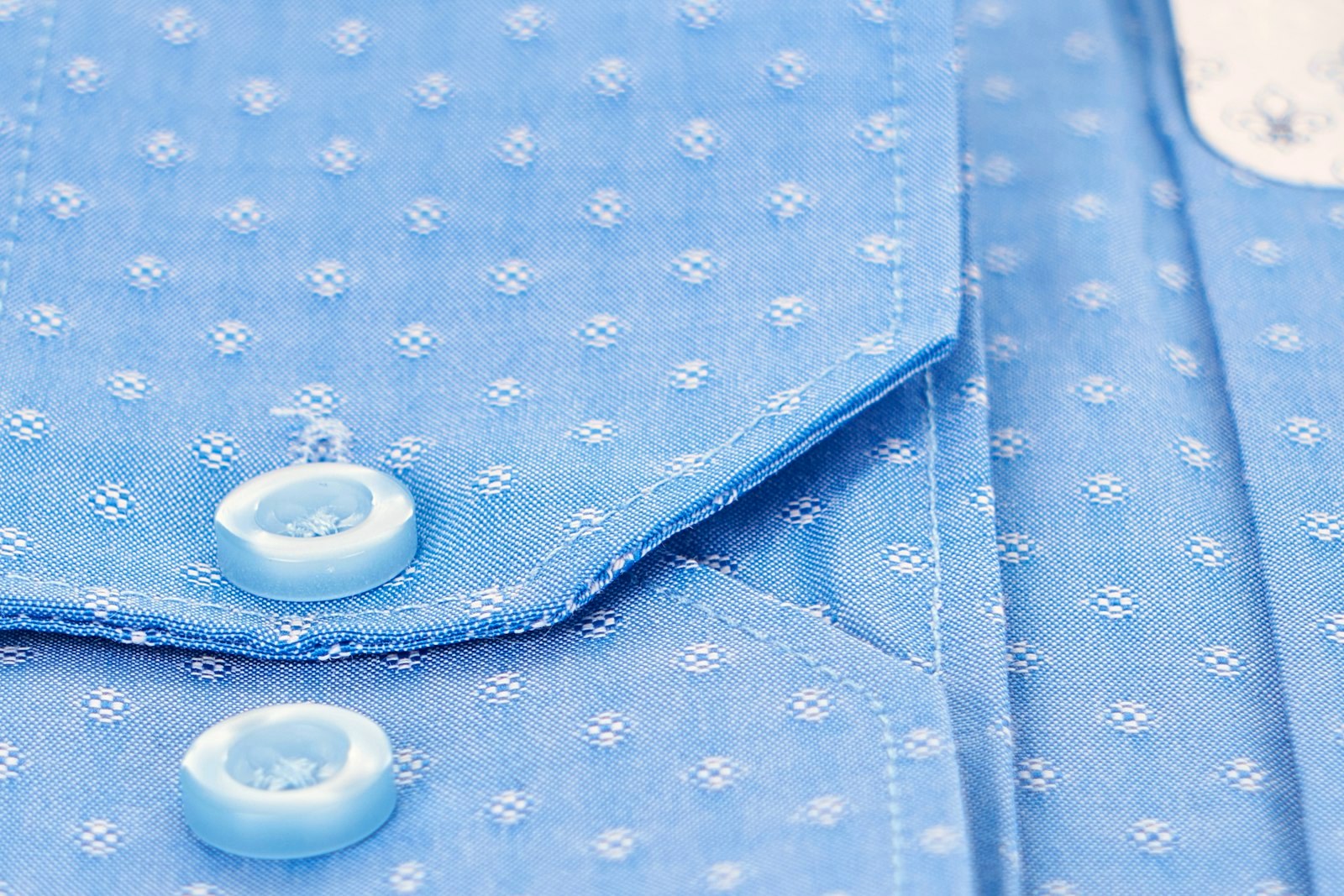
Worn, the collar has one job beyond standing: it has to keep standing. The index's law is timed for a reason, at 4pm, after a day of movement, a jacket on and off, a seatbelt, weather. A knitted collar's advantage is structural, the shape knitted into the cloth rather than pressed into a band, and it is spent or kept by the care section's two constants: dried flat, stored folded. The test at the rail buys the construction; the care keeps it.
The gauge line: the knit polo's weight classes
A knit polo is bought in a weight class whether the buyer names it or not, and the scale is this site's own: the crew ranking's gauge bands, carried into No. 86 entire, fine at roughly 24 to 30 gauge, mid at 12 to 20, heavy at 7 and under. The field's three published gauges sit one in each band that matters, and the bands are wearing instructions before they are specifications. The fine band is the shirt band: the Faloni at 28 and the Belper at 30, with the Asket's 24 from No. 12 beside them, cloth fine enough to sit under a lapel and smooth enough to read as shirting at a room's distance. The heavy band is the sweater band: the Artknit at 7 gauge, two ply, a polo built at a winter knit weight, which is worn the way a sweater is worn, as the outfit's warm layer, and never asked to disappear under tailoring. Between them the mid band and the unpublished records, the Sunspel's gauge never printed beside its 19 microns, the Uniqlo's, the Zara's and the Abercrombie's nowhere stated, are worn by cloth rather than by number: if the knit reads as a shirt's weight, it takes the shirt rows; if it reads as a sweater's, it takes the sweater rows, and a polo whose weight cannot be read either way is a polo to leave on the rail.
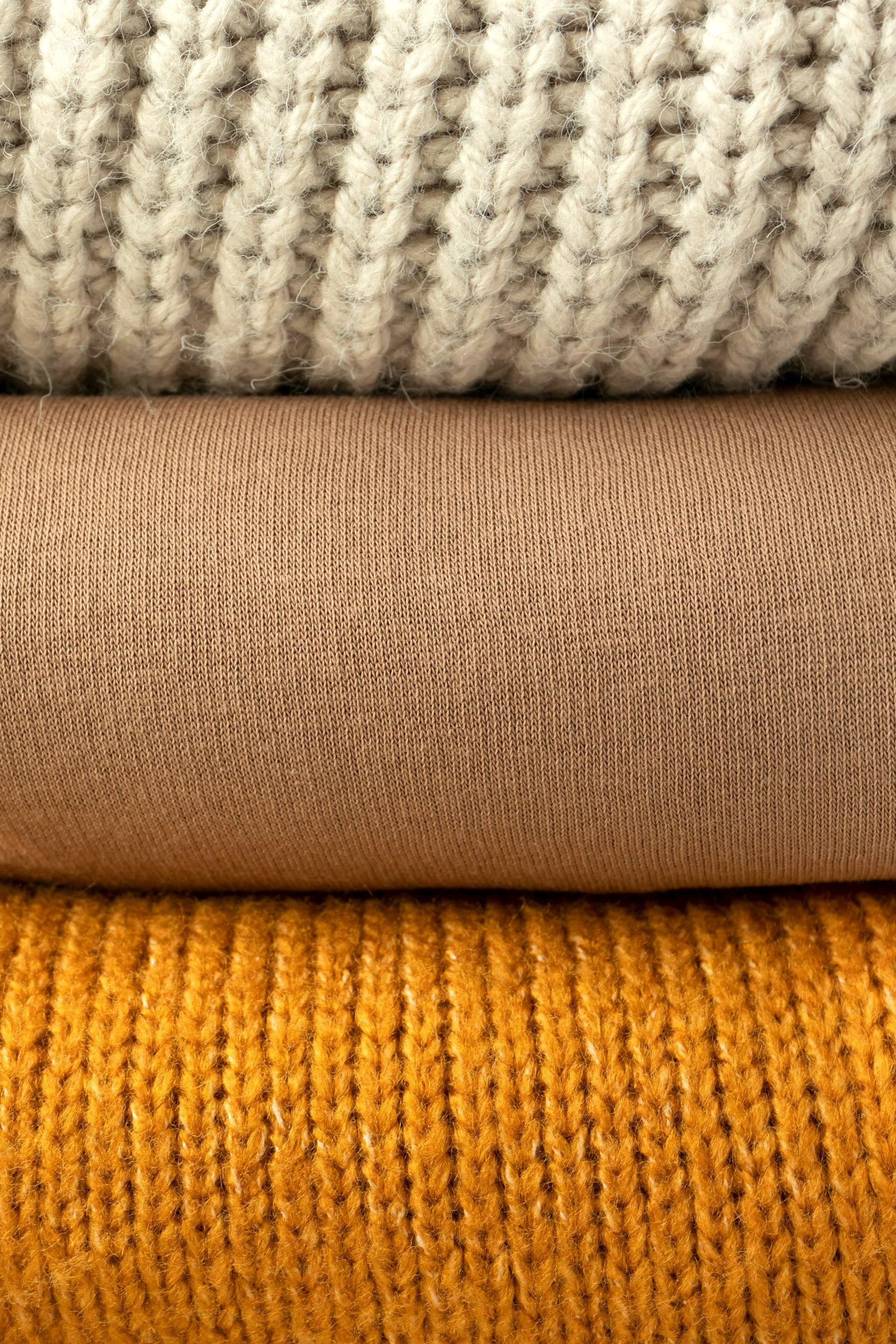
The gauge line has one consequence the matrix below is built on: gauge decides the layer, not the taste of the wearer. A fine-gauge knit polo under a blazer is the species doing its best work. A 7-gauge rib under the same blazer is a sweater forced into a shirt's seat, its bulk spent making the jacket sit badly, the same waste the storey rule names in the shawl brief at a different gauge. And the reverse holds in summer: the fine knit is the polo that survives a warm evening with its collar standing, where the heavy rib has no honest work at all. Read the weight first. The rows follow from it.
Under tailoring: the blazer row and the office ruling
The knit polo is the only polo this site allows under a blazer, and the conditions are already printed twice, in How to Wear No. 03, where the blazer's weekend and travel rows are both filled by a knit polo, and in No. 06, which states the polo side of the same contract. This brief adopts the contract entire and adds only the field's names to it. The polo is a knitted one, fine gauge, its collar sitting the way a shirt collar sits. The blazer is unstructured and textured, hopsack, flannel or cotton twill, born alone, never a smooth suit jacket, whose formality the polo cannot answer. And nothing else in the outfit is ambiguous: no tie, the trousers clean, the shoes leather. The piqué polo goes beside tailoring, not under it, worn with tailored trousers and a belt and no jacket, because its ribbed band and the lapel are two rolls of cloth arguing over the same inch of neck. One knitted element under one tailored element, and the polo stops being the casual fact in the room and becomes the deliberate one.
The field's tailoring seats, in the Card's order: the Faloni Amalfi at 88, its Paramontura collar the shirting system of its maker's own shirts, the seat this assembly was described around; the Sunspel at 84, 19-micron merino in a slim fit, the fibre record the blazer row deserves; and the two benchmarks from No. 12, the Asket at 83, whose cutaway collar knitted in is the construction the whole row assumes, and the Smedley Isis at 79, Sea Island cotton with its fashioned collar knitted in. The Belper at 71 is the row's caution rather than its seat: the house is the species' benchmark and its 30 gauge is the field's finest figure, and the garment is bought, if it is bought, on that house record knowingly, its United States listing being the thinnest point-of-sale record among the ranked seven. The heavy rib does not take this row at any score: the Artknit's 82 is a sweater's grade, and the gauge line above rules it out of the lapel's seat before the matrix is consulted.
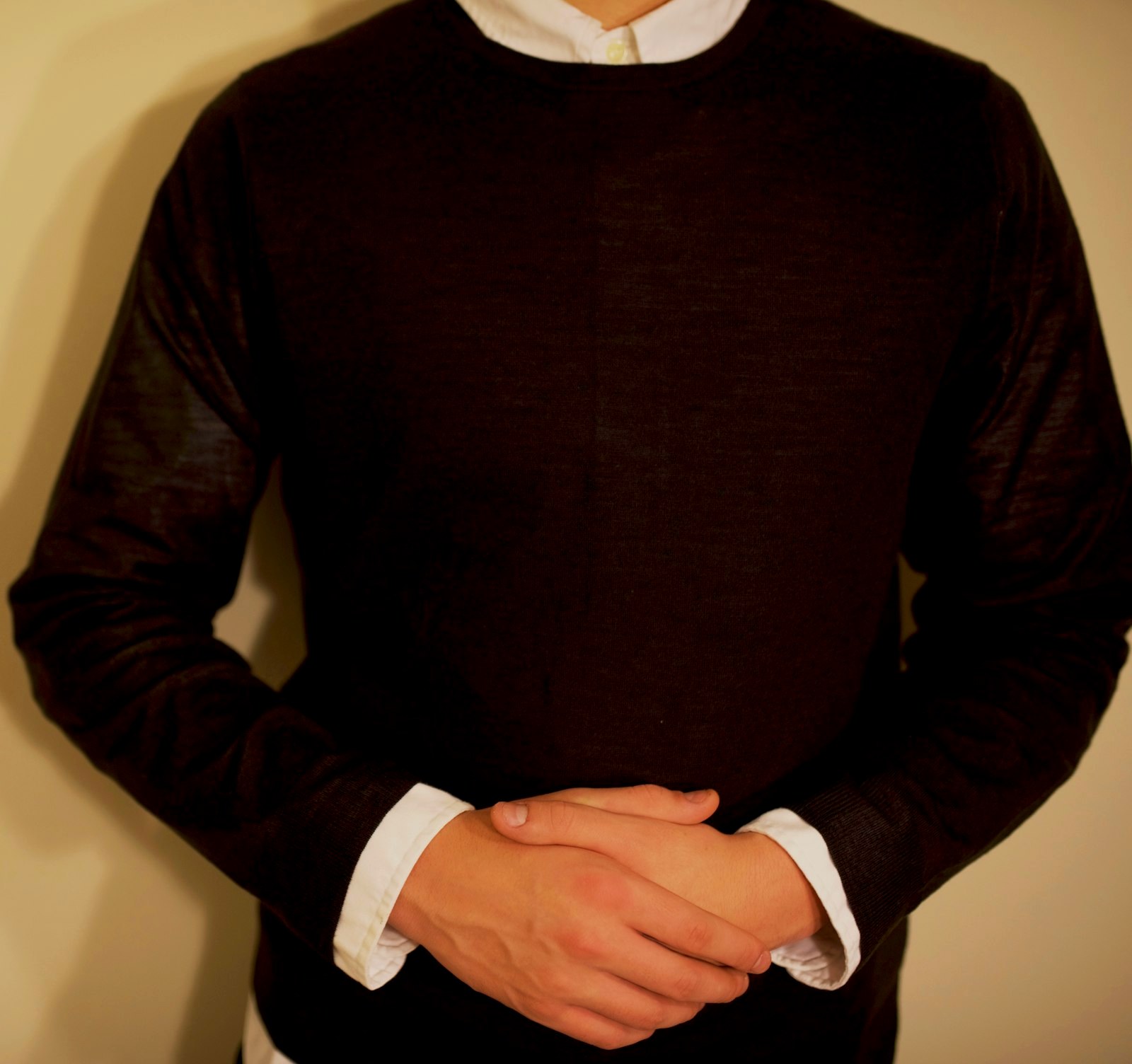
The office ruling is No. 06's, carried across: the polo enters a smart-casual office at the top of its class and in exactly one specification, dark or neutral colour, collar standing on its own construction, tucked into trousers with a belt, leather shoes below, and the knitted polo first among equals because its collar behaves like a shirt's. The index files the polo at formality 2, smart casual's floor, and the number produces the ruling's honesty limit, printed beside the polo's name in No. 06 and repeated here because the knit tempts its owner past it: the polo is not a dress shirt substitute, and in a room that measures formality the answer is not a finer knit polo. It is the Oxford at formality four, ranked in the Oxford Verdict ranking. What the knit polo genuinely owns is the wide warm middle of office life, owned there in the one legal specification, its collar doing at 4pm what the piqué's band has stopped doing by lunch.
The tuck and fit rules: the family's lines, the knit's adjustments
No. 06 prints the tuck law for the whole polo family, and it carries across to the knit without amendment: the tuck is a property of what the polo is worn over. Tailored trousers, a belt, leather shoes: tuck, because the outfit has asked for a clean waist at every other point and the untucked hem is the one untidy fact left standing. Shorts, denim, chinos worn open and casual: leave it out, provided the hem ends around the belt line, a sliver below at most, and never past the fly, where an untucked polo stops being a shirt and becomes a tunic. The half-tuck is not a third option on this brief either: it reads as an accident that has been photographed too often, and the matrix below contains no row for it. The knit changes one fact inside the law, and it is printed as the adjustment it is: the garment's own vote. On a piqué, a longer back hem, the tennis tail, was tailored to stay tucked, and wearing it out turns its design into a skirt of extra cloth. No garment in No. 86's field carries a tennis tail. The knit polo's hem is a straight hem, ribbed on several of the field's records, and it casts no vote; the bottom half decides, entire, which is the law in its cleanest form.
The fit lines are the family's two measurements, carried across: the sleeve ends at mid-bicep, its band close against the arm without gripping it, because a sleeve that ends at the elbow reads as a borrowed shirt and a band that grips reads as a size too small worn as an argument; and the body skims, the cloth following the torso with a finger's ease at the chest, the placket lying flat, the shoulder seam sitting on the shoulder's edge, because a knitted shoulder that slides down the arm takes the collar's line with it. Size by the collar and the shoulder, not by the chest's vanity: if the collar gapes away from the neck, the polo is a size too large whatever the body does, and if the placket strains, it is a size too small whatever the mirror says. The knit's adjustment is through the body, and it runs against instinct: a knitted cloth gives where a woven one does not, so the knit polo is bought at its true size and never sized up for comfort. The give is already in the garment. A size up spends it on slouch, drops the shoulder, and takes the collar's stand with it, which on this species is the whole garment spent on one sizing decision. The field's libraries run from the Uniqlo's XXS to 3XL with a full published size chart to the Belper listing's silence; where a maker publishes measurements, buy on them, and where it publishes nothing, the collar and the shoulder in the mirror are the chart.
The season line: formality 2, three seasons by gauge
The shirt index files the polo at formality 2, and the knit polo keeps the filing: it is the dressed end of a casual type, not a new rung on the ladder, and the office ruling above is the filing doing its work. Warmth is where the species splits from its piqué brother, and the gauge line splits it again. The piqué is a warm-weather cloth, the summer row of No. 06's matrix, worn when a woven shirt is too much clothing. The knit polo is a three-season garment at fine gauge, spring and autumn entire and summer's evenings, the layer a rotation reaches for when the piqué reads thin and a sweater reads heavy; the Faloni's silk and cotton and the Sunspel's treated merino are costed on the Card across exactly that rotation. At heavy gauge the species is a cold-half garment: the Artknit's 7-gauge rib is a winter polo, worn as the warm layer of its outfit in the months the Fall Edit and the Winter Edit assemble, and in July it has no honest work, which is not a commitment to the garment but a refusal to read its gauge. In high summer the knit polo yields its rows to the piqué and the camp collar, and takes them back in September with its collar standing. That rotation, each class in its season, is why the buying ruling below is one of each class before two of either.
The looks: the Card's field, worn in its order
Six assemblies from this brief's rulings, each built on the published records around the garment. The polos are No. 86's, in the Card's order and at the Card's scores; the garments around them are the rankings named in the sections above; nothing in the judgments is scored here.
| Setting | The polo | With | The judgment |
|---|---|---|---|
| The tailored knit | The Luca Faloni Amalfi, 88, buttoned to the top | An unstructured hopsack blazer over it, tailored trousers, leather shoes, no tie | The assembly the species exists for, executed on the Card's winner: the Paramontura collar sitting as a shirt's sits, mother-of-pearl at the placket, the mill's 28 gauge in print behind it. The £170 ticket is the row's known price, and the Card's £0.71 a wear across six years is its defence |
| The office knit | The Sunspel Extra-Fine Merino, 84, tucked | Dark trousers and a belt, leather loafers, nothing over it in the room | The office ruling dressed in full on the field's best fibre paperwork: merino printed at 19 microns, its spinner and its frames named, machine washable on its maker's treatment, so the office polo is also the rotation's easiest care. The judgment carries the Card's charge with it, that its collar record is the field's honest minimum at £235, bought for the fibre knowingly |
| The cold knit | The Artknit Woolen Ribbed Polo, 82, worn as the layer | Dark denim or cords below, suede boots, a coat over the outfit in real cold, never a blazer | The gauge line's heavy end at work: seven gauge at two ply worn as the warm surface of the outfit, its buttonless collar answered by its design. This is the row the brief recommends for the cold half, because it is the knit polo as a sweater, bought on the fullest care block in the field at €269 |
| The attainable knit | The Uniqlo Washable Knitted Polo, 73, buttoned up | Chinos or tailored trousers, belt, the blazer admitted on the same conditions as any fine knit | The species at its honest entry price: fibres and stitch named, the field's widest size library behind it, and wash terms more explicit than makers charging five times the price offer, at $49.90 and $0.62 a wear. The judgment carries its charge entire, that its split is unpublished and its collar record the thinnest among the ranked seven; at this price the record is honest about both |
| The benchmark name | The John Smedley Belper, 71, buttoned to the top | Tailored trousers, the knit worn as the dressed layer, its house's making the argument | Bought knowingly or not at all: the field's finest published gauge, 30, and its most famous name, standing on a United States listing that prints no percentages, no care terms and no collar construction, and charges $24 to give the garment back. The assembly takes the house at its Lea Mills record, credited on the Card as evidence; the row is printed so the buyer knows which of the two records he is paying $470.90 for |
| The casual cotton knit | The Abercrombie Sweater Polo, 61, top button open | Straight denim or shorts in its season, canvas trainers or suede boots | The knit at its most relaxed: a full cotton split carried in the garment's own name, a counted two-button placket and a chest pocket with a buttoned closure no dearer record prints, worn in the casual rows where its thin paperwork costs nothing. At $59.99 it is the field's weekend knit, and the matrix seats it last because the dressed rows belong to finer records |
The Zara merino at 62 stands outside the matrix on purpose: it is the honest split bought knowingly, 100 percent merino in print at $130 and almost nothing else in print around it, a garment the brief seats in the office and evening rows only for a buyer who has read its card and accepted its silences. And the skip is worn nowhere: a knitted polo t-shirt in 100 percent acrylic at a £26 list is not the cheap seat in any row of this matrix, because at £0.65 a wear across the year its fibre is unlikely to finish unpilled, it is not even the cheap option it poses as. The attainable row is the Uniqlo's, at ten dollars more than the skip's sale price and a record that tells you how to wash it.
The ruling
Buy the species on the collar test: a collar continuous with the body at the seam, standing buttoned on its hanger, from a maker whose page prints a gauge, a split or a care block, which in the Card's field means the Faloni at £170 for the complete record, the Sunspel at £235 for the fibre, the Artknit at €269 for the cold half, and the Uniqlo at $49.90 for the attainable start, with the Asket at 83 waiting in No. 12 for the buyer who finds it first. Wear it as a shirt: buttoned to the top in the dressed rows, tucked by the bottom half, under an unstructured blazer on the contract's three conditions and beside tailoring never in piqué's place. Keep the gauge line: fine under the lapel, heavy as the layer, each in its season. Size it at its true size, dry it flat, fold it, and let the piqué keep the summer rows it was invented for. The knit polo is the polo that grew up into knitwear, and worn on its construction it is the hardest-working collar in the casual wardrobe: a shirt's behaviour at a polo's ease, standing at 4pm because it was knitted to.
The mistakes
The band bought as a knit. The buying error the Card exists to catch: the species believed from the product name, without the seam check. The convicted form is a polo t-shirt in 100 percent acrylic wearing the word knitted, sent home at 30, and the honest version of the same error is the cut-and-sew jersey polo, smooth t-shirt yardage with a collar band sewn on, sold at knit prices under the knit's name. The seam check takes seconds at the rail: the collar continuous with the body, grown from the making, or it is not this garment. A collar that is a band on a body will curl on the body's schedule, and no wearing rule in this brief can spend a structure the garment does not have.
The piqué rules on a knit. The class error, in its two halves. Worn with the top button open and the hem out as a default, a fine knit polo is a shirt being worn as a sport shirt, its collar's whole construction spent on a read the piqué does better and cheaper. And sized the way a relaxed piqué is sized, a size up for ease, the knit slouches at the shoulder and gaps at the neck, the give that was already in the cloth spent twice. The classes are not interchangeable, which is the boundary No. 86 prints and this brief wears by: the knit is buttoned, tucked by the bottom half and bought at its true size; the piqué keeps its own rules in No. 06.
The knit under a suit jacket. The tailoring error: the blazer contract breached at its second condition. A knit polo under a smooth worsted suit jacket is two formalities arguing, the jacket's structure demanding a woven shirt's collar and cuff, the polo answering with a soft collar and a knitted sleeve, and the assembly reads as the suit's owner caught without a shirt. The contract's jacket is unstructured and textured, born alone; the suit's partner is the Oxford, at formality four, and the polo brief does not pretend its garment outranks the rooms it cannot enter. The same breach in miniature is the tie over a knit polo, which No. 06 names and this brief adopts: a knot needs a collar band with the height and stiffness to sit against, and a knitted collar has neither, so the knot slides and the collar folds, a costume of business rather than business.
The hanger and the hot wash. The care error, and the one that retires more knit polos than any wearing mistake: a knitted garment hung in the wardrobe, its own weight re-cutting its shoulders week by week, and washed hot or tumble dried against terms its maker may have printed in full. The field's care column is the instruction set, and it agrees with itself at every price: the Faloni's fold to store because hanging distorts knits, dry flat; the Artknit's roll in a towel, dry flat; the Uniqlo's mesh bag; the Sunspel's wool cycle. Three records publish nothing where the garment is sold, and on those the care label on the garment governs, read before the first wash rather than after it. A knit polo's collar stands at 4pm in its third year for the same reason it stood in its first: the construction was bought honestly and the care kept it.
The logo doing the talking. The family's standing mistake, carried across from No. 06 because the knit is not exempt from it: the chest logo scaled from a signature into signage, the mark readable across the room. On a garment whose whole argument is a quiet construction, a collar knitted in, a gauge in the small print, the billboard logo reverses the polarity the species exists for: the shirt stops being worn and starts being carried. A small embroidered mark at handshake distance is a maker's signature. Anything larger is the wearer paying to display an advertisement, and it demotes the collar, the cloth and the fit work into the logo's supporting cast.
Care, and a note on our photography
A knit polo's care follows from its construction, and the field's records print the terms at four of eight. The garment is a knit, so it is stored folded, never hung: the winner's maker prints the reason on its care record, that hanging distorts knits, and a fine-gauge polo on a hanger is a garment slowly re-cutting its own shoulders and dragging its collar's stand down with them. It is dried flat for the same reason, rested between wears the way the knitwear Cards' costings assume, and washed by its own record where one is published: hand wash at 30 degrees for the silk and cotton, a wool cycle for the treated merino, the mesh bag for the washable knit. Where the record is silent, the Belper's listing, the Zara's page, the Abercrombie's page as captured, the care label on the garment is the only record and it governs; the November data pass owes those three a fuller capture, and this brief prints the debt rather than inventing terms. The watch points are the species' own: the collar's stand, checked the way the rail test checks it, buttoned on its hanger after a wash; the placket's line, the first place a knit front tells the truth about its care; and the hem's rib, which a hot dryer shortens before anything else shows it.
A note on our own photography: our photo bank holds no frame of a polo on a body in any species, piqué or knit, the gap Verdict Card No. 86 admits in its hero caption and repeats in its honesty section, and this page repeats it rather than covering it with a mislabelled picture. There is no photograph of a ranked knit polo here, no macro of a knitted-in collar at the seam the collar test describes, and no frame of a fine-gauge polo under a blazer, the assembly this brief exists to rule on. This page will take those frames the week they exist, in the Card's own harvest order: a knit polo worn, a knitted-in collar in close-up, a fine-gauge polo under a blazer. Until then the bank's rail, its collar macro, its gauge stack and its one fine knit on a body carry the page, captioned for exactly what they show.
Questions, answered
How do you wear a knit polo?
As a shirt, because that is what its construction makes it. A knit polo is knitted as knitwear, its collar grown from the garment's own making rather than sewn onto a cut body, and the wearing follows the construction: buttoned to the top as its complete form, tucked or untucked by the bottom half it sits over, and seated under an unstructured blazer where the piqué polo must stand beside the tailoring instead. Our shirt index files the polo at formality two and prints its law, that a polo stands or falls on whether the collar still stands at 4pm; the knit polo is the polo built to answer that law, and this brief is its wearing system.
Should you button a knit polo all the way up?
Yes. How to Wear No. 06 prints the polo family's button polarity, and this brief carries it across whole: on a piqué polo the working default is the top button open, the sport garment at ease, and on a knitted polo the polarity reverses, because buttoned to the top the collar sits the way a shirt collar sits and the outfit gains a rung. The buttonless design is the one legal exception, answered by the design itself, the Artknit Studios Woolen Ribbed Polo at 82 in Verdict Card No. 86. What never works on either class is the strained placket, buttons working as load-bearing members across a chest the size cannot serve: that is a size problem, and the answer is the next size, not a button strategy.
Can you wear a knit polo under a blazer?
Yes, and it is the assembly this species exists for. The conditions are the ones our blazer brief and our polo brief both print: the polo is a knitted one, fine gauge, whose collar sits the way a shirt's collar sits; the blazer is unstructured and textured, hopsack, flannel or cotton twill, never a smooth suit jacket; and nothing else in the outfit is ambiguous, no tie, clean trousers, leather shoes. The piqué polo goes beside tailoring rather than under it, because its ribbed collar band and the lapel are two rolls of cloth arguing over the same inch of neck. In Verdict Card No. 86's field the tailoring seats are the fine end: the Luca Faloni Amalfi at 88, the Sunspel merino at 84, and the two benchmarks cross-referenced from No. 12, the Asket Merino Wool Polo at 83 and the John Smedley Isis at 79.
Should you tuck in a knit polo?
By the bottom half, the polo family's standing law in How to Wear No. 06, carried across to the knit whole. With tailored trousers, a belt and leather shoes, tuck: the outfit has asked for a clean waist at every other point, and the untucked hem is the one untidy fact left. With denim, chinos worn open or shorts, leave it out, provided the hem ends around the belt line and never past the fly. The knit adds one fact the piqué does not have: no garment in Verdict Card No. 86's field carries a tennis tail, the longer back hem cut to stay tucked, so the knit polo's hem is a straight hem and the vote the tail casts on a piqué is not cast here. The bottom half decides, entire.
Knit polo or piqué polo: which should you buy?
They are different classes of one family, and the wardrobe wants one of each before it wants two of either. The piqué polo, the textured cotton knit of the tennis shirt, is the warm-weather and weekend garment, ranked across Verdict Card No. 12 and won there by the Lacoste L.12.12 Original at 85. The knit polo is knitted the way a fine sweater is knitted, in merino, silk blends or fine cotton, and it is the dressed end: the office, the evening and the blazer rows, ranked across Verdict Card No. 86. Buy the piqué for the summer rows and the knit for the rows where a collar has to behave like a shirt's. The third class, the cut-and-sew jersey polo, flat t-shirt yardage with a collar band sewn on, is the polo's look without the knit's construction, and neither ranking sends you to it.
How do you wash a knit polo?
By the maker's published terms, which is why Verdict Card No. 86 grades them: wash terms a buyer can act on stand on four of its eight records. The Faloni's are written for its cloth, hand wash at 30 degrees, dry flat, fold to store because hanging distorts knits. The Sunspel's merino carries a treatment for machine washability, a gentle 30-degree wool cycle. The Artknit's block is the field's fullest, hand wash inside out, roll in a towel, dry flat, steam held an inch off. The Uniqlo's are the most explicit at any price, machine wash inside out in a mesh laundry bag. Three records, including a 470.90 dollar listing, publish nothing where the garment is sold; on those, the care label on the garment is the only record, and it governs. Whatever the terms, the two constants are flat drying and folded storage: a knit on a hanger is a garment re-cutting its own shoulders.
How should a knit polo fit?
On the polo family's two measurements, carried across from How to Wear No. 06, with the knit's own adjustment. The sleeve ends at mid-bicep, its band close against the arm without gripping; the body skims, the cloth following the torso with a finger's ease at the chest, the placket flat, the shoulder seam on the shoulder's edge. Size by the collar and the shoulder, not by the chest: if the collar gapes away from the neck the polo is a size too large whatever the body does. The knit's adjustment is through the body: a knitted cloth gives where a woven one does not, so the knit polo is bought at its true size and never sized up for comfort, because the give is already in the garment and a size up spends it on slouch. The widest published library in Verdict Card No. 86's field is the Uniqlo's, XXS to 3XL with a full size chart, at 73.
Has Young Cotton ranked knit polos?
Yes. Verdict Card No. 86 ranked seven knit polos on their published records and sent one home: the Luca Faloni Amalfi Silk-Cotton Polo winning at 88 on a published 28 gauge and a full silk and cotton split at £170, the Sunspel Extra-Fine Merino Knitted Polo second at 84 with its fibre printed at 19 microns, the Artknit Studios Woolen Ribbed Polo third at 82 with its gauge and ply in its designer notes, the Uniqlo Washable Knitted Polo the attainable answer at 73 and $49.90, and the one sent home at 30, a knitted polo t-shirt whose body is 100 percent acrylic. Two knit polos graded earlier stand cross-referenced on that Card from No. 12, the Asket Merino Wool Polo at 83 and the John Smedley Isis at 79. This brief is the wearing system that ranking implies: it styles the Card's field in the Card's order, carries the polo brief's standing laws across where they govern, and scores nothing of its own.
Next
The family this brief belongs to: the ranking it styles is Verdict Card No. 86, and the polo family's founding brief is How to Wear No. 06, whose laws this page carries across and adjusts. The polo family entire is ranked in Verdict Card No. 12, where the Asket and the Smedley Isis hold the knit benchmarks this brief cross-references. The tailored half of the contract stands in How to Wear No. 03; the gauge bands this brief buys by are printed on the crew neck Card, No. 10; the polo among its eleven fellow shirts is filed in the shirt index; and where the collar lands on the body is drawn in the Body Map.