
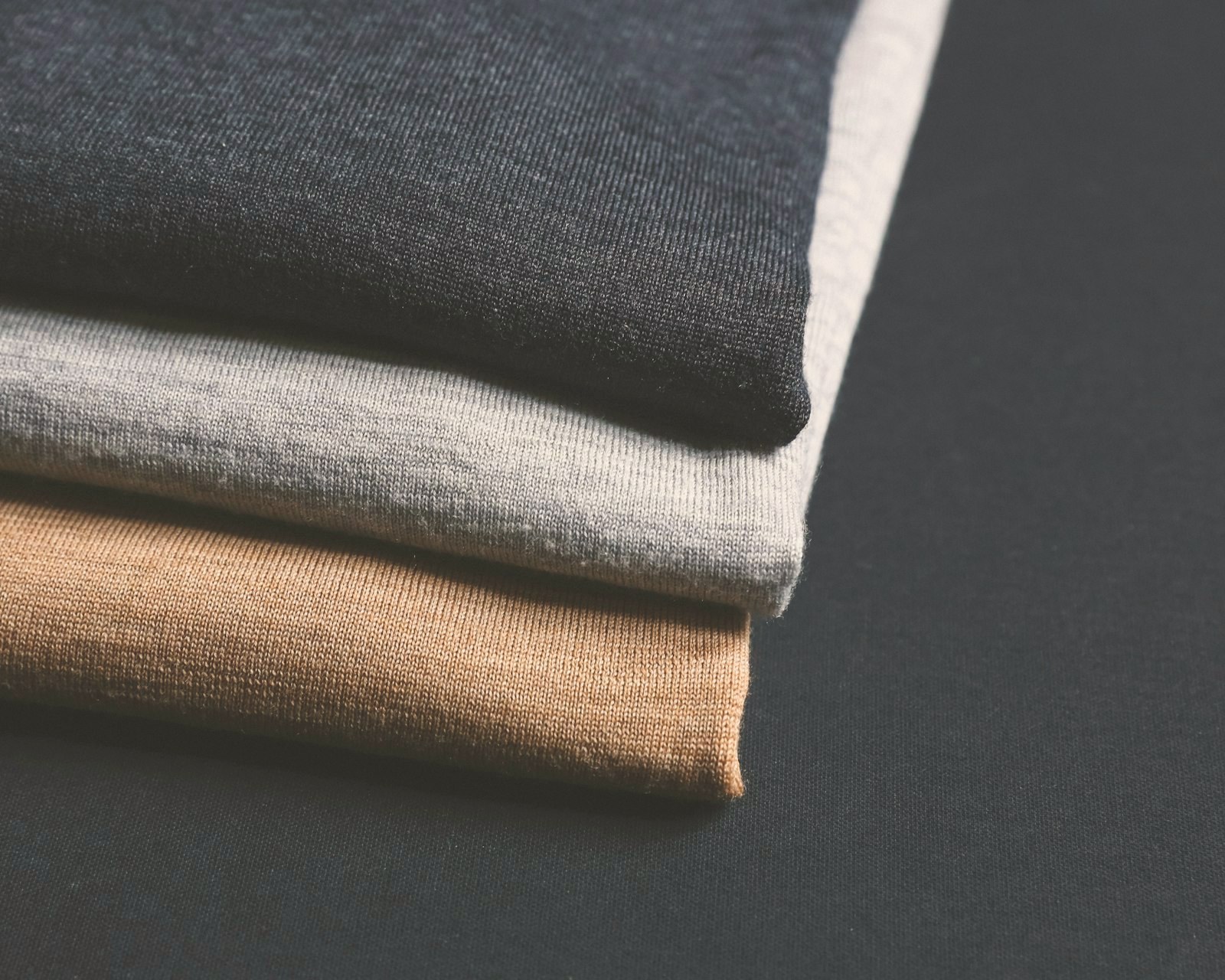
The first-buy colours, folded: navy, grey and camel, the order this brief argues for the drawer. Our bank holds no true quarter-zip frame, no zipped collar on a body in any state, and this page prints that gap in its care section rather than dress a crew neck as the subject.
Checked and updated October 2026
The ruling, up front: the quarter-zip is a neckline instrument, and most of the ways it is worn wrong are zip positions, not garment choices. Verdict Card No. 33 prints the category ruling this brief is built on: a quarter-zip is a collar decision; it borrows the shirt's formality when the zip is up and returns it when the zip is down. Our sweater index files it at formality 2, warmth 3, one rung below the crew neck, with the warning on its row: knitted, not fleece. Everything here unfolds that record. The zip has two legal states, fully closed for structure and two inches open over a collar, and one banned state, zipped to the throat over a bare tee. What goes under it decides what it is: an Oxford makes it a dressed sweater, a tee makes it a casual layer, another knit makes it an argument. The ranked field is the Card's and it is not re-scored here: the Smedley Tapton at 86, Sunspel at 82, Uniqlo at 76 the attainable pick, Quince at 74, Peter Millar at 58 graded as a jersey, Rhone at 52 a different animal, Greyson at 36 sent home. This brief is the wearing system for the garment those numbers describe, published in October, the month this layer earns its keep.
This brief: the zip states · what goes beneath · knit, fleece, jersey · the fit rulings · the office line · the colour order · the looks · the mistakes · care and the repairs
The decisive rule: the zip is a neckline instrument
Every other sweater in the drawer has a fixed neckline. The crew is closed by construction, the turtleneck is high by construction, the cardigan opens on buttons you set in the morning. The quarter-zip is the one knit whose neckline is a decision you make every time you put it on, and the decision is visible from across the room: the same garment reads as a dressed layer or as weekend equipment depending on where the pull stops. That is why the Card scores it at formality 2 across both states instead of at the crew's 3. The garment does not have a register. It has two, and the zip chooses between them.
State one: fully closed, the structure state. Zip to the top, collar standing, the neckline closed clean. This is the state for structure: under a coat, where the closed collar holds the stack's line at the neck the way How to Wear No. 20's stack wants a finished layer under the weather layer; over a collared shirt in a working room, where the closed knit borrows the crew's register and the shirt's collar sits inside it; and in real cold, where the closed collar is a seal, the same gasket logic every brief in this series prints for a collar in weather. The closed state makes a demand in return: the collar has to stand. The Card grades the collar stand by name, because a collar that curls at the tips in the closed state is not a collar, it is a countdown, and the winner's 24-gauge Derbyshire collar holds its shape open and closed, which is most of what its 86 is paying for.
State two: two inches open, over a collar. The pull dropped about two inches, the collar of the knit falling open around the collar of the shirt beneath it. This is the state's whole geometry: two collars, each doing half the work, the shirt's collar points visible inside the knit's opening, the neck divided rather than covered. It is the dressed-casual state, the one for rooms where a closed knit reads stiff and a bare tee reads underdressed. The two inches are a measurement, not a mood: at one inch the opening is a hesitation, the pull visibly undecided; at four the collar splays, the shirt's chest shows, and the garment has handed back more formality than the outfit can spare. Park the pull where the two collars meet their balance and leave it there for the day.
The banned state: zipped to the throat over a bare tee. Name it plainly, because it is the commonest way this garment is worn in the world: the zip run all the way up, the collar closed tight, and beneath it nothing but a crew neck tee, its collar band showing in a thin ring at the throat, or nothing at all against the skin. It fails on the instrument's own logic. The closed state borrows its structure from what it closes over: a shirt collar gives it a frame, a coat gives it a stack, cold gives it a job. Over a bare tee it closes over nothing, and the street reads exactly that, a sealed neckline with no reason to be sealed, the fleece-dad silhouette, the quarter-zip as a tube. If the tee is the layer, the zip stays open, two inches at least, and the garment admits what it is that day: a casual layer. The states are chosen by what is underneath, which is the next section's law, and wearing the closed state without earning it is the one error no quality of knit can rescue, not even the winner's.
The states, against the field:
| The state | The zip | What it needs beneath | What it reads as |
|---|---|---|---|
| Closed | To the top, collar standing | A collared shirt, or a coat over the top of the whole stack | Structure: the sweater doing dressed work, the crew's register borrowed at formality 2 |
| Two inches open | Pull parked about two inches down | A collared shirt, its points showing inside the opening | Dressed casual: two collars dividing the neck, the state the Sunspel at 82 is honest about preferring |
| Open over a tee | Down, collar relaxed | A plain tee in a real weight, never an undershirt | A casual layer, admitted as one: the weekend state, the Quince at 74's home ground |
| To the throat over a bare tee | Closed, over nothing | Nothing, and that is the failure | Banned: the fleece-dad tube, a sealed neckline with no frame, no stack and no weather to justify it |
What goes beneath: the underlayer decides what it is
A crew neck is forgiving about its underlayer because nobody sees it. The quarter-zip's underlayer is on display in two of its three legal states and implied in the third, so the pairing is not a detail of the outfit. It is the outfit's thesis. Three underlayers are legal. One is not.
The Oxford: the dressed pairing, and the default. A button-down Oxford under a fine-gauge quarter-zip is the assembly this garment was born for, the two collars nesting, the shirt's cloth giving the knit its frame. The pairing is specific on this site: the Oxford to reach for is the one our Oxford Verdict Card ranked first, the Kamakura button-down at 93, an unlined button-down collar that sits inside a knit collar without bulk or fight. Wear the knit closed over it for the structure state, or two inches open with the collar points showing for the dressed-casual state. The shirt's tail stays tucked, always: an untucked Oxford under a belt-line hem stacks two hems at the waist and spends the fit ruling in the next section before the neckline gets a vote. White and pale blue are the shirts; a striped Oxford is legal and spends the outfit's one pattern, everything else in the row going quiet around it.
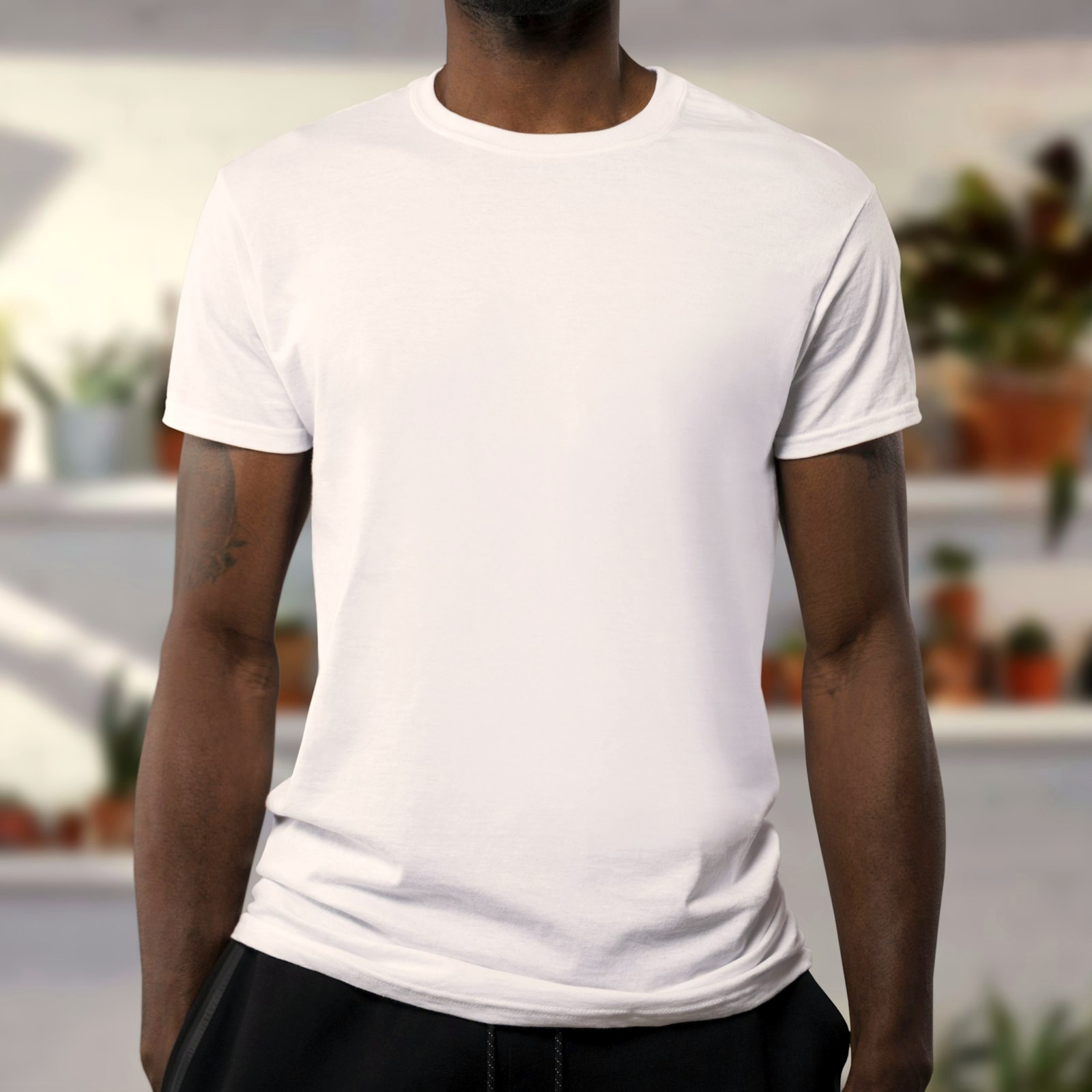
The tee: the casual pairing, with a standard attached. Open over a tee, the quarter-zip is a layer, and a layer is judged by what it layers over. The tee has to be a garment, not an undergarment: a real cloth with a collar band that holds its own line inside the knit's opening. The standard on this site is the white tee ranking's winner, the Asket at 88, a heavyweight tee whose neckline survives being framed by a knit collar all day. A thin undershirt fails twice, its band sagging inside the opening and its cloth reading as underwear the moment the zip opens past two inches, which over a tee it always does. Colour discipline is simple: white and grey tees under everything, a black tee only under a black or charcoal knit, and no graphics, ever, because a logo surfacing through a two-inch opening is the banned state wearing a costume.
The ban: knitted on knitted, with one exception. A crew neck sweater under a quarter-zip, a chunky knit under a fine one, any knit layered on a knit: refused, on mechanics rather than taste. The two cloths bind at the shoulder and sleeve, so the arms move as one stiff tube; the textures double at the neck, two ribs or two cables arguing in the two inches where the outfit is read closest; and the whole stack reads as one garment that cannot decide its own weight. The exception is real and narrow: the fine-gauge turtleneck under the open zip. A roll neck in the fine band, its class scored in Verdict Card No. 05, the Smedley Cherwell at 85, worn under a quarter-zip left open, is a deliberate cold-weather layer, the turtleneck's column rising through the knit's opening in a single texture contrast that works because the gauges are far apart and the intention is unmistakable. It is the exception that proves the rule's shape: knit on knit is legal only when one of the knits is fine enough to read as a base layer and the pairing is chosen, not defaulted into. How to Wear No. 08 rules the turtleneck's own wearing; here it is a guest, and it behaves like one.

Knit, fleece, jersey: three garments sharing a zip
The silhouette is one shape. The garments are three, and the confusion between them is the category's whole commercial history. The Card draws the boundary on cloth, and this brief draws the rooms on the same line: each species belongs somewhere, and wearing one in another's room is the error, not the garment.
| Species | What it is | Its room | The ranked record |
|---|---|---|---|
| The knit | A sweater: yarn knitted at a gauge, fine 24 to 30 for dressed work, mid 12 to 20 as the all-purpose band, heavy 7 and below for the weekend, on No. 09's bands | The wardrobe: the office in fine gauge, the dressed week, under coats, over shirts. The only species this brief styles | The Card's top four are all knits: Smedley Tapton 86, Sunspel 82, Uniqlo 76, Quince 74, each a single named natural fibre at 100% |
| The fleece | A brushed synthetic pile in the sweater's silhouette, the conference giveaway's cloth, usually carrying a chest logo because it was born carrying one | The conference, the commute in bad weather, the sideline: rooms where being ruined is a risk and being read closely is not | Not ranked as a sweater on this site, by the index's printed rule: knitted, not fleece. The fleece version is office merchandise, and this brief's office section grades the species, not the silhouette |
| The jersey | A smooth cotton-blend or synthetic jersey, sweatshirt cloth in a sweater's cut: the Peter Millar's cotton-modal, the Rhone's majority-polyester tech knit, the golf brands' home cloth | The course, the airport, the travel day: rooms where stretch, recovery and a suitcase matter more than a collar stand | Graded as what it is in the Card: Peter Millar 58, the uniform done well; Rhone 52, a different animal with the field's best chin guard; Greyson 36, the skip, a jersey priced above real knits with a hood where the collar decision should be |
The styling consequence is total: the zip states in this brief are knit law. A fleece has no collar stand to grade and no register to borrow, so closing it to the throat over a tee is not a banned state, it is just a fleece being warm, and nobody's outfit was riding on it. A jersey's open state is the only state it really has, as the Card says of the Rhone, closed it still reads as equipment. Only the knit moves between registers, which is why only the knit can be misworn. When this page says quarter-zip from here down, it means the knitted garment, the Tapton's species, worn in the rooms the table assigns it. The other two species are fine clothes for their rooms. They are simply not this brief's subject, and dressing them as if they were is how the silhouette got its reputation.
The fit rulings: hem, blouse, sleeve
Three rulings, all printed as new, all measurable in a mirror in ten seconds. A quarter-zip that passes all three reads as a sweater that was chosen. One that fails any of them reads as a garment that was issued.
The hem ends at the belt line. The knit's hem covers the waistband of the trousers and stops there, the same landing as a crew's. Above the belt, the underlayer's shirt or tee shows a band at the waist and the stack reads unfinished at the exact line the eye crosses to reach the neckline. Below the belt, the garment lengthens into a tunic, the silhouette lengthens with it, and a sweater starts doing a dress's geometry over trousers. The belt line is also where the underlayer law cashes out: over an Oxford, the shirt is tucked and its line disappears into the trousers at the same point the knit ends, so the waist shows one hem, the knit's, sitting on the belt. Two hems at the waist is the tell of a stack assembled rather than dressed.
No blousing. The hem sits flat against the body. It does not balloon out over the waistband and gather, and the body of the knit does not pouch above it. Blousing is the fleece's silhouette, cut generous for movement and warmth over base layers on a sideline, and on a knit it spends the register the whole garment was bought for: a bloused quarter-zip over an Oxford is the office failure in one detail, the dressed underlayer correct, the states correct, and the waist announcing merchandise. The test is the side view: the line from chest to hem runs clean, with the hem's rib sitting on the body rather than tenting off it. A knit that blouses in your size is the wrong size or the wrong cut, and the Card's fit rows price exactly this, the generous cuts marked down for spending the silhouette a sweater is bought for.
The sleeve ends at the wrist bone. The cuff lands where a shirt cuff's sibling lands, at the wrist, with the knit covering the forearm fully and stacking nothing above the hand. Spare sleeve pushed up the forearm all day is not a style, it is a size reporting itself, and it unravels the closed state's whole claim: a man adjusting his sleeves reads as a man in borrowed clothes, at any price point, in any gauge. The cuff should also survive the underlayer: over an Oxford, the shirt's cuff may show a sliver below the knit's when the arm is down, the same sliver a blazer's sleeve allows a shirt, and that sliver is correct, the two garments shaking hands at the wrist. What is not correct is the knit's cuff swallowing the hand or the shirt's cuff bunched inside it, both of which are the sleeve ruling failing at its other end.
The office question, answered plainly
Plainly, then: a knitted quarter-zip in a fine gauge, worn closed over a collared shirt, is office clothing. A fleece or a jersey in the same silhouette is a golf course that has wandered indoors. That is the whole ruling, and the rest of this section is its evidence.
When it reads as tailoring-adjacent. The assembly has four parts and all four are checkable. The cloth is a knit, merino in the fine band, 24 to 30 gauge, the gauges that slide under a blazer on the Card's rule and lie flat enough to read as a layer of tailoring rather than a layer of sport. The state is closed, or two inches open over the collar, never wide open over a tee. The underlayer is a collared shirt, the Oxford pairing, tucked. And the garment carries no logo at the chest, because a chest logo is a brand renting the wearer's torso and no tailored garment in the wardrobe carries one. Run that way, the quarter-zip is the crew's understudy, one rung down the index's ladder at formality 2 against the crew's 3, and in the knit-and-trouser office it finishes the outfit the way No. 09's crew does, at one state's distance. The winner is the reference: the Tapton closed over a shirt reads as a Derbyshire sweater doing office work, because that is precisely what it is.
When it reads as a golf course. The tells are the species and the state, in that order. A jersey or a fleece, whatever its price: the cloth has no gauge, the surface has no knit texture, and the room reads sport through it. A chest embroidery, which converts any species into merchandise at a glance. The wide-open state over a tee, which is a weekend outfit that has kept its calendar wrong. And the heavy gauge worn indoors as office dress, the Quince's honest 5-gauge rib, a cold-platform garment whose warmth is its virtue and whose register is the outdoors: zipped up it still reads weekend, as its Card entry prints. None of these is a moral failure. Each is a garment in the wrong room, and the fix is never a more expensive version of the same species. The Card's arithmetic proves it in one line: the $230 Greyson jersey finishes last at 36, and the knitted Uniqlo at a fifth of its price finishes third at 76. The office line is drawn by cloth and state. Price does not move it.
The colour order: first buy, second buy
First buy: navy. Navy takes the widest range of everything the garment will ever touch. Beneath it, the white Oxford, the pale blue Oxford, the white tee and the grey tee all sit without an argument. Below it, charcoal trousers, grey flannel, dark indigo denim and black denim on their own monochrome logic all work. Over it, every coat colour in the wardrobe from camel to charcoal closes without a clash at the collar. It is also the colour that flatters the closed state most: a navy collar standing against the face reads as structure, where the same collar in a pale colour reads as sport. The first quarter-zip is bought in the fine band, in navy, in the closed state's service, and it is the Uniqlo at 76 for most drawers and the Tapton at 86 for the drawer that can cost it, the Card's value and winner picks doing the same job at two prices.
Second buy: the grey family. Charcoal first within it if the wardrobe runs dark trousers, mid grey if it runs denim and stone chinos. Grey takes the shirts navy refuses, the pink and lavender Oxfords, the darker striped shirts, and it softens the dressed-casual state: two inches open over a collar in mid grey is the least corporate version of this garment that still reads dressed, which is a real slot in a fall week. Grey is also where texture starts to pay, a marl or a subtle rib reading at conversational distance in a way navy flattens, so the second buy is where a mid-gauge or a textured knit earns its place beside the fine first buy.
Third buys, and the colour refused. Olive, stone and camel are bought for specific trousers, in that order of usefulness, and usually in the mid or heavy bands as the weekend end of the drawer, the Quince's slot. Burgundy is the deep third colour for a wardrobe that already owns the first two and wears brown shoes. Black is bought last if it is bought at all: it flattens the knit texture that is this garment's only surface detail, it argues with navy trousers at close range, and in the closed state it reads as a uniform's base layer rather than a sweater. The man whose first quarter-zip is black has bought the colour of not having decided, in the garment whose whole value is decision.
The looks: the field, worn
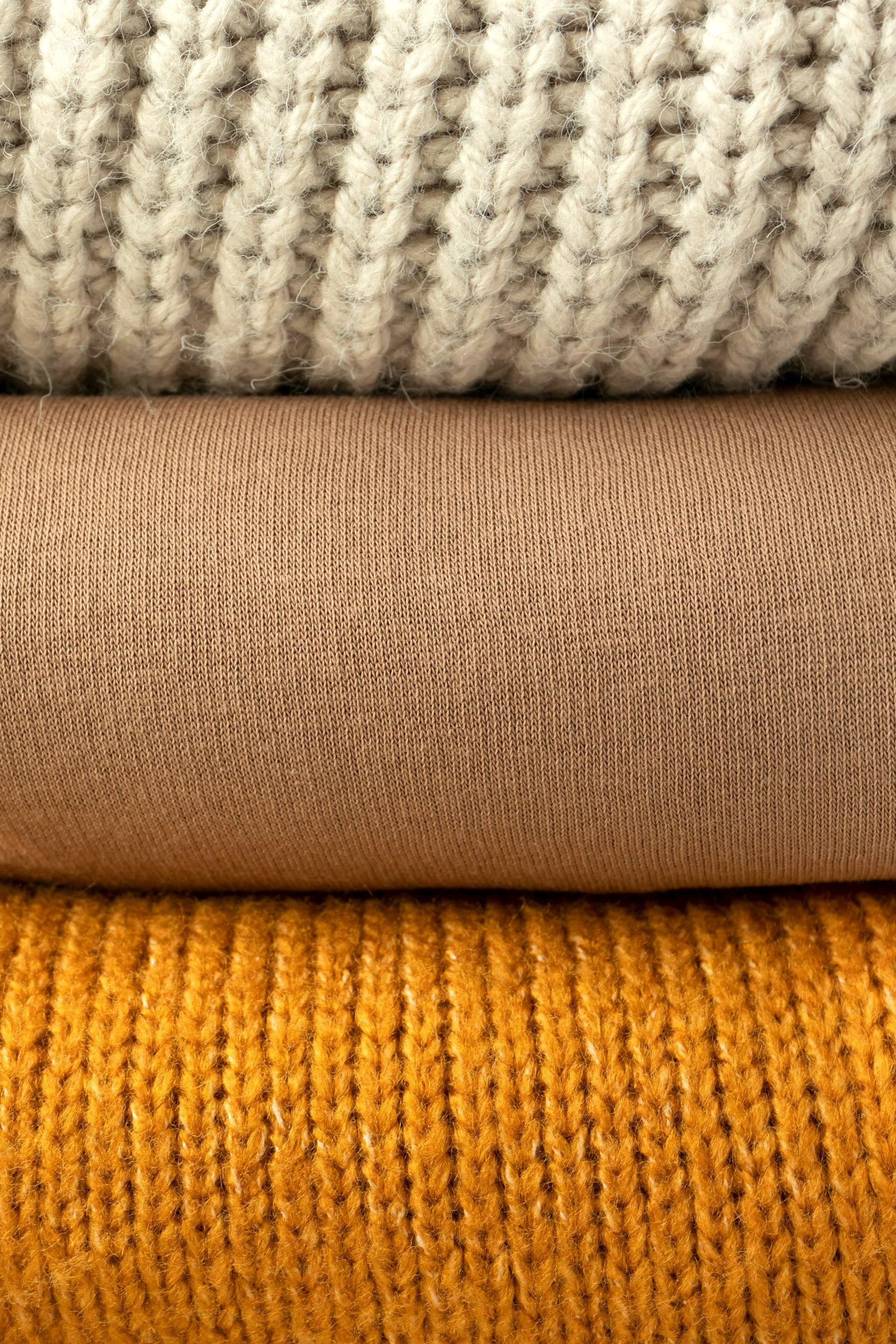
Four assemblies, each built from the ranked field and the underlayer law. The frames are the bank's honest knit and collar frames, captioned for what they show; the bank holds no quarter-zip on a body, and the care section prints that gap rather than let a crew stand in for its zipped sibling.
Look one: the office default. The Tapton at 86, navy, fine gauge, closed over the Kamakura Oxford at 93, charcoal trousers, a leather shoe with structure. The structure state at full employment: two collars nested, the hem on the belt line, nothing bloused, and the whole assembly one rung below a blazer and entirely sufficient for the rooms that rung covers. This is the look the garment's reputation should have been built on.
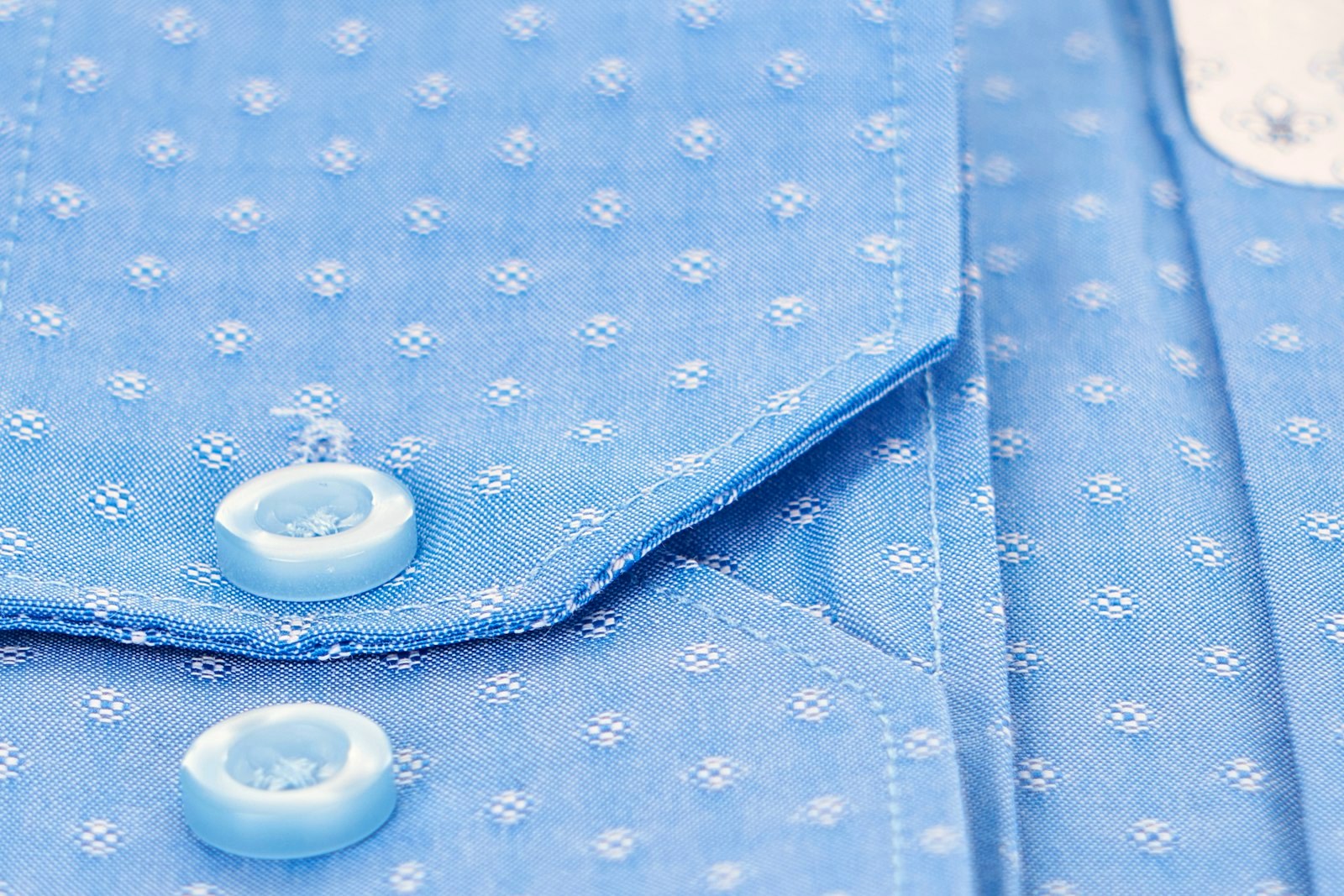
Look two: the dressed-casual state. The Sunspel at 82, two inches open over a pale blue Oxford, mid grey trousers or dark denim below. The Sunspel's own honest preference, printed on its Card, is the open state, and this is that state worn at its best: the pull parked at the collars' balance point, the shirt's points showing, the formality handed back by exactly one notch and no more. The weekend version of the same garment is look three, and the difference between them is two inches of zip and a collar.
Look three: the admitted casual layer. The Uniqlo at 76 or the Quince at 74, open over the Asket tee at 88, dark denim, clean leather sneakers or suede boots. The tee is a garment, the zip is open because the tee is the layer, and nothing about the assembly pretends to the office. The Quince's heavy rib makes this the cold version, the platform-and-market version, and it is the look that keeps the fine knits' registers honest by giving the casual state its own correct clothes.
Look four: the turtleneck exception. A fine-gauge roll neck, the Cherwell's class at 85, black or charcoal, under a mid-gauge quarter-zip left open, grey trousers, in the coldest weeks. The one legal knit-on-knit, run at full intention: the roll neck's column rising through the open collar, the gauges far apart, the textures in contrast rather than in competition. It is also the stack that goes under the overcoat best of any in this brief, the closed coat over the open zip over the roll neck, three necklines handing the cold down the line.

The ruling
Buy the knit, in navy, in the finest gauge your rooms ask for, and wear it as the instrument it is. Closed over an Oxford when the day needs structure, the collar standing, the hem on the belt line, no blouse at the waist and the sleeve at the wrist bone. Two inches open over the same Oxford when the day relaxes by exactly one notch, the pull parked at the collars' balance and left there. Open over a real tee when the day is casual, and honest about it. Never closed to the throat over a bare tee, never layered on another knit outside the one turtleneck exception, never asked to be a fleece in the office or a sweater on the golf course. The field is ranked and this brief has not touched a number: the Tapton at 86 is the reference, the Uniqlo at 76 is where most drawers should start, and the Greyson at 36 is the standing proof that the silhouette forgives nothing. The quarter-zip is the most-worn layer of the fall wardrobe and the most-misworn, and the distance between the two is not money, taste or brand. It is two inches of zip, one honest underlayer, and the discipline to know which room the garment is in. Wear it in its states and it is what the index calls it, a collar decision made well, forty wears a year, for as many winters as the zip and the collar give it, which on the winner is ten.
The mistakes
Zipped to the throat over a bare tee. The banned state, and the commonest sight in the garment's life. It fails on the closed state's own logic: the closure borrows structure from a collar beneath it, a coat over it or weather around it, and over a bare tee it has none of the three, so the neckline seals around nothing and reads as a tube. The fix costs nothing. If the tee is the layer, open the zip. The garment admits the casual state gracefully; what it cannot survive is pretending to the dressed one with no collar to show for it.
The chest logo, at any price. An embroidered chest mark converts a sweater into merchandise at conversational distance, and it does so in both legal states, because the logo sits exactly where the eye lands when it reads the neckline. The Card prices the economy in one figure: the collegiate version of the Peter Millar adds $37 to the plain garment's $158 for a university's embroidery alone. A logo the wearer chose rather than received is still a logo, the golf wolf included, and on the Greyson it rides a $230 jersey to the bottom of the ranking at 36. The knit's chest is blank because the collar is the detail. Anything printed there is a second, worse detail shouting over it.
The half-zip worn as a quarter-zip's excuse. A longer zip is not a longer leash. Garments cut with a half or full zip belong to the overshirt and jacket families, with their own briefs and their own states; worn open to the chest over a tee they are not this garment in a relaxed state, they are outerwear indoors. The quarter in quarter-zip is a specification: a short zip that adjusts a neckline and does nothing else. The moment the opening reaches the sternum the instrument has changed, the underlayer is fully on display, and the outfit is being read on the overshirt's terms whether the wearer filed it there or not.
Buying the jersey at the knit's price. The field's standing trap, priced by the Card to the dollar. A cotton-modal or polyester jersey in a sweater's cut feels soft in the hand, photographs like knitwear and costs what knitwear costs, and it has no gauge, no yarn story and a sweatshirt's service life: the Greyson at $230 returns $1.92 per wear, the worst arithmetic in the field, against the Derbyshire winner's $1.05 at nearly twice the price. The defence is the fibre line, printed before purchase: 100% of a named natural fibre is a sweater; a blend with a percentage ladder is a jersey asking a sweater's rent. The silhouette is identical across all seven rows of the Card's table. The garments are not, and neither are their rooms.
Care, and the repairs
The Card prints the failure order for this garment and care follows it: the zip dies first, the collar second, the knit last. Work the zip gently and park it honestly: a pull forced at an angle is a slider being bent toward its failure, and the two-inch state should be set by moving the pull, not by dragging the collar open around a parked one. Zip the garment before washing or storing it, so the collar keeps its set and the teeth are not snagging its neighbours in the drawer. Where the maker fits a garage or a chin guard, the Rhone's the field's best at its end of the table, use it: the pull parked in its housing is a pull not fretting the chin or the cloth.
The collar is a shape, and shapes are kept, not restored. A collar that stands is a collar whose finishing still has its spine; once the tips curl, no ironing brings the stand back for more than an hour, as the Card prints. So the collar is never crushed: the garment is folded with the collar lying as it closes, never hung by the neck on a hook, never stored under a stack heavy enough to press the stand flat. Folded storage on the crew's rule from No. 09, in the drawer rather than on a hanger that stretches the shoulders, and a day of rest between wears for the knit to give up the day's shape. The merinos in this field are machine washable in the Uniqlo's case by the maker's own finish and hand-wash gentle in the heritage cases; either way the garment dries flat, because a wet knit hung by its hem is a fit ruling being repealed by gravity. Budget the garment's life the way the Card costs it, on the zip and the collar: a Tapton cared for this way is a ten-winter garment at $1.05 a wear, and the same garment with a bent slider and a curled collar is a three-winter one wearing a ten-winter price.
A note on our own photography: our photo bank holds no true quarter-zip frame. No zipped collar on a body in either legal state, no zip-and-collar close frame, no fine-gauge quarter-zip closed over a collared shirt exists in the bank, a gap Verdict Card No. 33 prints about its own page as well. The hero is the first-buy colours folded; the frames inside are the underlayers and the cloth, the knit over a collared shirt, the Oxford's collar at macro range, the tee at its standard and the roll neck of the exception, each captioned for exactly what it shows and none dressed as the subject. The harvest list names what is missing, a fine-gauge quarter-zip worn closed over a collared shirt, the same garment two inches open, and a collar-and-zip close frame, and this page will take those frames the week they exist.
Questions, answered
How should a quarter-zip be zipped?
In one of two states, chosen on purpose. Fully closed, collar standing, when the garment needs structure: under a coat, over a collared shirt, in any room where it is doing a sweater's formal work. Or open about two inches over a collared shirt, the pull parked where the shirt's collar and the knit's collar divide the neck between them. The state this brief bans is the third one: zipped to the throat over a bare tee, collar strangling a naked neck with nothing beneath it to justify the closure. That is the fleece-dad failure, a closed neckline with no collar under it and no coat over it, and it is a state problem, not a garment problem. Verdict Card No. 33 prints the underlying rule: the quarter-zip borrows formality when the zip is up and returns it when the zip is down, so the state you wear most is the garment you actually bought.
What do you wear under a quarter-zip?
A collared shirt or a tee, and the choice decides what the garment is. Over an Oxford, zip closed or two inches open, it is a sweater in a dressed register: the pairing this page recommends is the Oxford our Verdict Card ranked first, the Kamakura button-down at 93. Over a plain tee, worn open, it is a casual layer, and the tee should be the best one you own rather than an undershirt: the white tee ranking's winner, the Asket at 88, is the standard. What does not go under it is another knit. Knitted on knitted binds at the shoulder, doubles the texture at the neck and reads as one garment arguing with itself. The single exception is a fine-gauge turtleneck, worn under the open zip as a deliberate layer, its class scored in Verdict Card No. 05, the Smedley Cherwell at 85.
Can you wear a quarter-zip to the office?
Yes, in the knitted version, in a fine gauge, in the right state. Our sweater index files the quarter-zip at formality 2 against the crew neck's 3, and the zip is the reason: closed over a collared shirt it borrows the crew's register. A fine-gauge merino knit, 24 to 30 gauge on How to Wear No. 09's bands, zipped closed over an Oxford, reads as tailoring-adjacent in most offices and slides under a blazer without bunching. What reads as a golf course instead is the other two species that share the silhouette: the fleece and the performance jersey, logo or no logo, and the heavy-gauge knit worn open over a tee. The office line is drawn by cloth and state, not by the zip's existence.
Is a quarter-zip a sweater or a fleece?
It depends on the cloth, and our sweater index prints the rule: knitted, not fleece. In a knitted yarn the quarter-zip is a sweater. In fleece or performance jersey it is a different garment sharing a silhouette, and Verdict Card No. 33 grades the field exactly that way: the knitted Smedley Tapton wins at 86, the Peter Millar Crown Comfort is graded as the jersey its maker describes at 58, the Rhone Commuter is graded as a different animal at 52, and the Greyson golf jersey is sent home at 36. Three garments, three rooms: the knit belongs in the wardrobe, the fleece belongs at the conference, the jersey belongs at the course and the airport. Buy and wear each as what it is.
How should a quarter-zip fit?
By three rulings this brief prints. The hem ends at the belt line, covering the waistband and no more: a quarter-zip is a sweater, not a tunic, and length past the belt turns it into a dress over trousers. There is no blousing: the hem sits flat against the body rather than ballooning over the waistband, because the bloused hem is the fleece's silhouette and it spends the knit's register on the spot. And the sleeve ends at the wrist bone, the cuff sitting where a crew's cuff sits, with no stacking of spare cloth up the forearm: a sleeve that needs pushing up all day is a size or a cut telling you it was graded generous, in the Rhone's published word, rather than tailored.
What colour quarter-zip should you buy first?
Navy first, charcoal or grey second, on this brief's order. Navy is the first buy because it takes the widest underlayer range: a white or pale blue Oxford beneath it, a white tee beneath it, dark denim and grey trousers below it, and it closes over all of them without an argument. The second buy is the grey family, charcoal for dressed rows and mid grey for casual ones, which takes the darker shirts navy refuses and softens the closed state. Olive, stone and camel are the third-buy colours, bought for specific trousers rather than for the drawer in general. Black is bought last if at all: it flattens the knit texture that is the garment's detail and argues with navy trousers at close range.
Has Young Cotton ranked quarter-zips?
Yes. Verdict Card No. 33 ranks seven, scored on cloth and gauge, the zip and collar as construction, fit and register, value and longevity. The John Smedley Tapton Zip Neck wins at 86, 100% extra-fine merino at 24 gauge, at $420.90 and $1.05 per wear over ten winters. The Sunspel merino half zip is second at 82, the Uniqlo merino half-zip is the attainable pick at 76 and $0.42 per wear, and the Greyson Calgary golf jersey is sent home at 36. This brief styles that ranked field; it does not re-score it, and every styling ruling here is written against the garments the Card graded.
Next
The ranked field this brief styles is Verdict Card No. 33, every score and fibre line printed. The underlayer's own ranking is the Oxford Verdict Card, and the tee's is the white tee ranking. The closed-neck sibling is briefed in How to Wear No. 09, the gauge bands' home; the exception is briefed in No. 08. The layer that completes the stack over all of it is briefed in How to Wear No. 20, and the full map of the family, every neckline and weight, is the sweater index.