
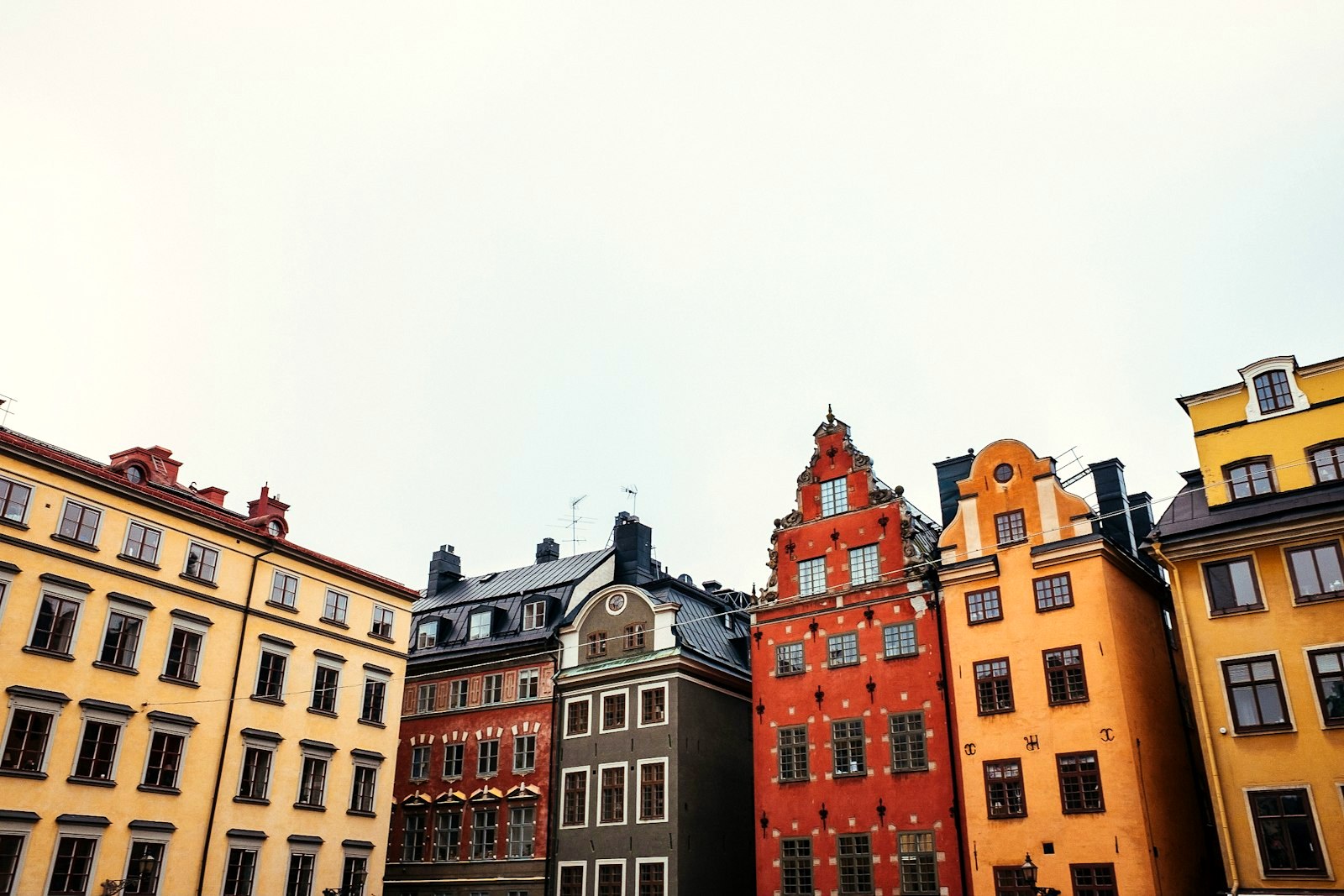
The register this brief rules, photographed as the street it belongs to: northern old-town facades under a flat, pale winter sky, the light this coat was cut for. Our bank holds no true overcoat frame, no long wool coat on a body in any species, and this page prints that gap in its care section rather than dress a shorter coat, or the condemned catalogue suit, as the subject.
Checked and updated October 2026
The ruling, up front: the overcoat is the wardrobe's ceiling garment, the only coat that completes a suit instead of covering it. Our jackets index files it at formality 5, warmth 4, in wool or a wool and cashmere cloth, season late autumn through winter, and describes it in one sentence: the formal ceiling of outerwear, and the only type built to be worn over a suit as a matter of course. Everything in this brief is that record unfolded: the length is the knee or below, because the coat's first job is to cover the jacket beneath it whole; the shoulder is built for tailoring, roomed for structure, on the index's buying rule, buy it to fit over a blazer; and the front is a closure, worn buttoned in weather and open only in rooms. This brief prints the full system: the three species separated, the length law set against the trench's and the pea coat's, the stack it completes from suit to denim, the scarf and glove register, the office ruling that is this coat's home ground, and a six-outfit matrix. Which overcoat to buy is a record this site keeps in its index. This brief is the wearing system.
This brief: the decisive rule · the three species · the length law · what goes beneath · scarf and gloves · the office ruling · the outfit matrix · the mistakes · care and the repairs
The decisive rule: length, shoulder, and room for the suit
Start where the index starts, with the job. Every other coat in the wardrobe is worn instead of something. The overcoat is worn over something, and that something is tailoring: a structured jacket with its own shoulder, its own lapels, its own hem. The coat's pattern is drawn around that fact. Its shoulder is built wider and softer in the cap than a jacket's own, so the suit's shoulder sits inside it without a fight. Its chest is roomed for layers of structure, not for a shirt. Its body is long enough to take the jacket's entire silhouette inside its own line, so from the street there is one garment, not a coat with a suit leaking out of the bottom of it. A coat that fails any of the three is not a bad overcoat. It is a long jacket that has been mislabelled, and the species table below separates them on exactly those terms.
The length floor is the knee, and this brief rules it as new. The index prints the overcoat as a long coat without a hemline ruling, and the floor follows from its printed job: built to be worn over a suit as a matter of course. A suit jacket's hem sits at the seat. A coat that ends at mid-thigh covers the jacket's chest and abandons its skirt, and the street reads two hems arguing, the failure How to Wear No. 19 names for the hip-length coat over tailoring. At the knee, the jacket disappears whole. Below the knee, the coat gains the movement and the weather seal that are the long coat's whole case. The full height-matched law is printed in the length section; the floor itself admits no exception for fashion, because the cropped long coat is not a shorter overcoat. It is the costume named in the mistakes.
The shoulder and the fit test ride on the index's buying rule, quoted whole: buy it to fit over a blazer; a coat that only fits over a t-shirt is a costume. The fitting room protocol is No. 19's stack test moved up a rung: this coat is sized over the heaviest thing it will close over, which is the suit itself, jacket on, knit beneath it if the winter stack runs that way, per the Fall Edit's order. Closed over the suit, the front holds a clean line, no pull at the button that works, the lapels lying flat over the jacket's own. A coat that fits beautifully over a shirt and strains over the suit has failed the only fitting that matters, in the only season it will be worn. The extra room over a single layer in October is not sloppiness. It is the pattern's specification, visible in every good version of this coat ever cut.
Its warmth is density, like the pea coat's, and the number is the same 4. Heavy wool woven tight holds heat the way melton does, by refusing to let wind through the cloth, and it keeps the coat's clean line while it does it, where loft would spend the silhouette that formality 5 is made of. That is the trade printed on the index's ladders: the puffer reaches warmth 5 by loft and falls to formality 1; the overcoat holds warmth 4 by density and keeps the ceiling. In the coldest week of the year the index sends you to the puffer with the wool coats' blessing. For every dressed day of winter, density is the mechanism and this is the coat.
The numbers, against the coats it is confused with:
| The coat | Formality | Warmth | What the numbers mean |
|---|---|---|---|
| The overcoat | 5 | 4 | The subject. The wardrobe's formal ceiling, knee length or below, the only coat on the index built to be worn over a suit as a matter of course |
| The trench coat | 4 | 2 | One rung down and half the warmth: a rain instrument per How to Wear No. 02. It goes over tailoring to keep it dry; the overcoat goes over tailoring to keep it warm, and the index prints them as different weather, not different tastes |
| The pea coat | 3 | 4 | The same warmth at two rungs lower, in a hip-length body: No. 19's coat, the warmest short coat on the index, and it refuses the suit outright on the index's own reservation |
| The puffer | 1 | 5 | The only warmer coat on the index, warming by loft where the overcoat warms by density. The coldest week's answer, and the ceiling's opposite: maximum warmth, minimum formality, never the dressed week's coat |
| The topcoat | 5 | Below 4, by cloth | The same silhouette and rung in a thinner cloth, the index's lighter sibling: the overcoat's shape for the shoulder months, bought knowingly as less coat, never confused with the winter original |
The three species, separated
The rail sells three shoulders under this name, and the shoulder is the species: what differs is how the coat takes the tailoring beneath it, and how much ceremony the front carries while it does. All three stand at formality 5 when the cloth and length are honest. They differ in register, and the register decides the rows in the matrix.
| Species | What it is | Its register | The ruling |
|---|---|---|---|
| The Chesterfield | Single-breasted, a clean notch lapel, the front closing flat with no belt and no hardware, often a velvet collar on the formal versions. The plainest long coat ever cut, and deliberately so | The default register: the coat as a frame, in No. 02's phrase for its own coat, never the picture | The first buy and the species this brief's matrix is written for. Its plainness is the mechanism of formality 5: nothing on it competes with the suit beneath, so the whole outfit reads as one intention. Charcoal and navy are its honest colours. The velvet collar is a ceremony detail, legal on the coat that goes to evening rooms, costume on the coat that goes to the office every day |
| The polo coat | Double-breasted, broad peak lapels, patch pockets, often a half belt at the back, born in camel hair cloth and still most itself in camel and tan | The altitude: the same formality with presence added, the coat as a statement made inside the rules | Placed honestly: it is not more formal than the Chesterfield, it is more visible, and visibility is a budget. In camel it is the colour section's second-coat argument worn as a first principle. The double front overlaps like the pea coat's and is worn closed on the same logic. Bought as a first coat it spends the wardrobe's one long-coat slot on its loudest option; bought as a second, over grey tailoring, it is the best coat in this brief |
| The raglan | The sleeve set on the diagonal, running to the collar with no shoulder seam, over a single or double front. The shoulder line is continuous, soft, and unstructured by design | The softer shoulder: the species that trades the built shoulder's ceremony for drape and ease of layering | The knit stack's coat. Where the Chesterfield's built shoulder is drawn for tailoring, the raglan's sleeve swallows layers without a seam to strain, which makes it the long coat for the roll-neck-and-heavy-gauge rows and for the man whose overcoat works over knitwear more often than over suits. Graded plainly: over a suit it reads a half-step softer than the built-shoulder species, this brief's grade, printed as new, and in soft-check and herringbone cloths it leans country in a way the plain species never do |
The topcoat stands apart from the three, as the index prints it: the lighter sibling. Same silhouette, same rung, thinner cloth, warmth below the overcoat's 4 by construction. It is a legal garment with a narrow honest job, the dressed coat of the shoulder months and of mild-winter cities, and its failure mode is only ever a labelling one: sold as, or bought as, the winter original. A man in a cold city who owns one coat owns the overcoat. The topcoat is the second long coat of a wardrobe that already has its ceiling, or the only long coat of a wardrobe whose winter never asks the question.
The length law: three long and short coats, one system
Length is where the long coats separate, and the wardrobe's three wool-and-rain coats print as one system when their hems are laid side by side. The pea coat ends at the hip and covers nothing below the seat, because its job is a working compression, warmth without a skirt. The trench runs long, matched to height, because rain needs the leg covered to the knee and no further. The overcoat runs longest of the dressed coats, because its hem has a specific garment to swallow: the suit jacket, whole. Three hems, three jobs, no overlap. A coat worn at the wrong length is not a variant of its type. It is a coat doing another type's job with the wrong numbers.
| The coat | The hem | Formality / warmth | What the hem is for |
|---|---|---|---|
| The pea coat | The hip, covering the seat | 3 / 4 | Freedom of the legs for work and movement; the suit refused, per No. 19, because this hem cannot cover a jacket |
| The trench coat | Mid-thigh to just below the knee, by height | 4 / 2 | Rain shed off the leg in the wet months; No. 02's bands, printed there and adopted here as the long coats' shared law |
| The overcoat | The knee or below, toward mid-calf on tall frames | 5 / 4 | The suit jacket covered whole, hem and skirt inside the coat's line; the longest dressed hem in the wardrobe |
Within the floor, the bands follow No. 02's law, applied to this coat. How to Wear No. 02 matches the trench's hem to height: below about five foot eight, between mid-thigh and just above the knee; through the middle heights, at the knee or just below; above six foot, below the knee and toward mid-shin, with leg showing beneath the hem at every height. The overcoat takes the same bands and shifts each one down a step, this brief's application, printed as new: below five foot eight, at the knee, exactly, the floor and the band arriving together; through the middle heights, just below the knee; above six foot, below the knee toward mid-calf, where the length reads deliberate on the frame that can carry it. The drowning line is shared with the trench's and identical in wording, because it is the same failure: once the hem takes the leg's whole line, the man reads shorter and the coat reads borrowed.
The sleeve and the vent take their own short rulings. The sleeve covers the suit jacket's sleeve and the shirt cuff beneath it, ending at the wrist bone with the layers inside it invisible: a coat sleeve that shows the jacket's cuff has failed at the arm the way a short hem fails at the leg. The back vent is worn as cut, single and centred on the tailored species, and it is a movement seam, not a display: it opens when the leg strides and closes when it stands, and a vent that gapes at rest is the fit telling you the chest and seat were sized over a shirt, in breach of the buying rule, before any mirror gets a vote.
What goes beneath: the stack it completes
The overcoat is the weather layer of the Fall Edit's four-layer order, base, warmth, structure, weather, and it is the only coat on the index whose structure layer is assumed rather than optional. The Edit's buying order puts the coat last, bought once you know exactly which stack it has to cover, and its test governs this whole section: if taking the coat off ruins the outfit, the stack was a costume, not a system. Under an overcoat the layers are complete outfits in their own right, a suit that stands alone in the room, a knit row that stands alone at the table. The coat is the roof of a finished building, and a roof is judged by whether the building needed exactly it.
The suit: the coat's home stack. How to Wear No. 04 defers the winter coats over a suit to the jackets index, and the index's answer is this garment, so the pairing runs on No. 04's own record: the Spier & MacKay sport coat class at 85 and its tropical wool trousers at 87, garment evidence, in winter weights beneath this coat. The mechanics are the decisive rule restated at the neck: the coat's collar sits over the jacket's collar without swallowing it, the coat's lapel line runs outside the jacket's and parallel to it, and the tie, where the day wears one, shows in the V of the closed coat exactly as it shows in the V of the jacket. Two collars, two lapels, one line each, nothing doubled into bulk. The roll neck alternative runs on How to Wear No. 08: a fine-gauge turtleneck replaces the shirt under a soft-shouldered suit, its class scored, the Smedley Cherwell at 85 in Verdict Card No. 05, and under the overcoat the substitution is invisible until the coat comes off, which is the highest compliment the stack pays.
The knits: the full gauge range, on No. 09's bands. Beneath the coat and without a jacket, the knit is the structure layer, and it runs the whole width of No. 09's gauge bands: fine gauge, 24 to 30, for the dressed rows and for every row where a blazer might join the stack, on No. 09's printed rule, fine gauge under tailoring, always; mid gauge, 12 to 20, as the daily layer under the Chesterfield and the polo coat; heavy gauge, 7 and below, licensed under the raglan species and the long coat's room, the class of the Smedley Lundy at 87 in the crew ranking, garment evidence. The coat's room, bought on the index's rule, is what makes the full range legal: the short coats size against their stacks and strain at the heavy end; this coat was sized over a suit, and a heavy knit is a lighter load than the one it was built for.
The casual ceiling: denim, dressed by the coat, on conditions. The overcoat over knitwear and denim is the coat's most modern row and its most conditional, and this brief rules it as a ceiling, printed as new: the assembly works only at its best version. The denim is dark indigo or black, on How to Wear No. 05's laws, the wash-break law governing any second denim surface and black denim running its own monochrome logic, a black jean never asked to impersonate a dress trouser in a room where that distinction is read. Above it, a knit of substance, mid gauge or the roll neck, collared shirts and tees alone reading underdressed against the coat's rung. Below it, leather with structure: the sleek calf Chelsea at 4.5 on No. 15's scale, suede at 4 in dry cold, a clean derby at the same register. Assembled so, the coat lifts the whole outfit one register, which is the ceiling working as designed. The failure version, light denim, thin layers, trainers, is named in the mistakes, because it is the same coat and the same man with every condition dropped.
Scarf and gloves: the register at the edges
The overcoat shows less of its wearer than any coat in the wardrobe: a face, a V of the layer beneath, hands, and the leg below the hem. What fills those edges is therefore the whole of the outfit's visible detail, and the scarf and the gloves are ruled as the coat's finishing instruments, not as afterthoughts grabbed at the door.
The scarf has two legal positions, and both are inside the coat's line. Worn in the V: looped once at the neck, its ends hanging inside the open or lightly closed front, filling the gap between the coat's collar and the layer beneath, the position for rooms' thresholds and mild cold. Worn as the seal: wound at the neck and tucked inside the buttoned front, ends disappearing into the closure, the position for real weather, the same gasket logic No. 19 prints for its own coat. Draped over a closed coat with the ends flying is decoration on a garment whose formality is built on having none, and it is refused on the same grounds. Cloth and colour obey the coat's discipline: plain wool or a wool and cashmere cloth, in the coat's family or one clear step from it, charcoal, navy, camel, burgundy at the deepest, and one pattern in the whole outfit as the ceiling, the Harrington brief's lining law applied at the neck, everything else in the row going quiet around it.
The gloves are the outfit's second leather decision, and they are made with the shoes. A plain leather glove in the family of the footwear beneath the hem, black with black shoes, dark brown with brown, suede reserved for the coat's casual rows and never glossier than the boot below it. The glove is removed with the coat, at the door, in the same motion: gloves kept on indoors read as a man who has not arrived, and the overcoat's whole register is arrival. Knitted gloves belong to the short coats' working rows; under the ceiling garment they spend a register the outfit cannot spare, the same arithmetic that refuses trainers at the casual ceiling. None of this is scored and none of it is precious. It is the edge discipline of a coat that shows its wearer in four places and gets all four right.
The office ruling
Plainly, and in one breath: this is the office ruling, the coat the section exists for. Every other brief in this series prints an office ceiling, the highest assembly a garment may wear into a working room before it stops. The overcoat prints no ceiling, because formality 5 is the top of the index's ladder: there is no rung above it for a coat to be refused at. In the tailoring office it is not the tolerated coat or the commute coat. It is the correct coat, the one the index built to be worn over a suit as a matter of course, worn over the suit from door to door and taken off in the room it was completing. Where every other coat's office life ends, at the suit, this one's begins.
What it replaces, stated so the wardrobe math is plain. The pea coat over tailoring is a commute arrangement, off at the door, its hem and the suit's hem arguing until it comes off. The trench over tailoring is a rain arrangement, correct in wet weather and an instrument worn past its weather in dry cold. The overcoat over tailoring is neither arrangement. It is the outfit, finished: the suit's own outer layer, cut for it, roomed for it, long enough to take it whole. A man whose winter includes a suit owns this coat before he owns either of the others, which is the index's three-coat system read from the dressed end: the long coat chosen by climate is, wherever winters bite, this one. Below the suit, in knit-and-trouser offices, it works on the same numbers with the jacket simply absent, the stack section's rows. Its only office limit is the honest one: in rooms where formality 5 itself is overdressed, the coat is not wrong, the day is casual, and the short coats take the shift under their own briefs.
The outfit matrix: six ways, no improvisation needed
| Setting | The coat | With | The judgment |
|---|---|---|---|
| The default | Charcoal Chesterfield, worn closed, at the knee or below | A navy suit, white shirt and tie, black sleek calf Chelsea boots | The home assembly, the one the garment was issued for: two collars, two lapels, one line each, the suit covered whole. The boot is No. 15's sleek calf at 4.5; the suit's class is No. 04's record, the sport coat's 85 and the trousers' 87 as garment evidence |
| The roll-neck row | Navy Chesterfield, worn closed | A charcoal soft-shouldered suit, a black fine-gauge roll neck in place of the shirt, suede Chelsea boots | No. 08's substitution under the ceiling coat: the roll neck replaces the shirt completely, its class the Cherwell's 85, and the coat renders the swap invisible until it comes off. Suede at 4 on No. 15's scale, in dry cold |
| The knit row | Charcoal or navy overcoat, single or raglan, worn closed | A mid-gauge crew in No. 09's 12 to 20 band, tailored wool trousers, sleek calf Chelsea boots | The office without the suit: the knit as structure layer, the trousers the 87 class of Verdict Card No. 15. The raglan species takes its home row here, its soft shoulder over the gauge the built shoulder strains at |
| The camel altitude | Camel polo coat, double-breasted, worn closed | A grey flannel suit, a pale shirt, dark brown leather shoes | The second-coat row and the species' best argument: the double front closed as designed, the colour doing the outfit's one loud job while every layer beneath it goes quiet. The row that justifies the polo coat's existence, over the grey tailoring it was born on |
| The casual ceiling | Navy or charcoal overcoat, worn closed | A charcoal roll neck or mid-gauge crew, dark indigo or black jeans, sleek calf Chelsea boots | The ceiling at its conditions, all of them met: denim on No. 05's dark laws, black denim on its monochrome logic, a knit of substance above it, the boot at 4.5 below it. The coat lifts the row one register, and not one condition is dropped to do it |
| The evening row | Black or midnight Chesterfield, worn closed | A dark suit or a roll neck and wool trousers, a scarf in the V, leather gloves matched to the shoes | The coat after dark: the edge register at full employment, scarf filling the V inside the line, gloves in the footwear's family, removed with the coat at the door. The loafer beneath it moves the outfit one notch up per No. 11, where the evening is seated rather than walked |
The ruling
Buy the Chesterfield first, single-breasted and plain, in charcoal or navy, at the knee or below, and buy it on the index's rule before any mirror gets a vote: fitted over the blazer you actually wear, closed over the full winter stack without a pull at the working button, the suit's hem invisible inside the coat's line. Wear it buttoned in weather as the closure it is, open only in rooms and doorways, the scarf inside its line in one of two positions and the gloves in the family of the shoes beneath its hem. Let it finish every suited day of winter as the outfit's outer layer, run the full gauge range beneath it when the suit rests, and take the casual ceiling only at its full conditions, dark denim, substance above, structure below. Refuse it nothing it was built for, and refuse on its behalf the copies that fail its construction: the hem cut above the knee, the shoulder sized over a shirt, the volume bought as a blanket against a cold the cloth was meant to answer. Every failure of this garment is a refusal of its pattern, length, shoulder or room. Worn on its numbers, the overcoat is what the jackets index calls it, the formal ceiling of outerwear, the one coat that does not cover the suit but completes it, and the standard the rest of the wardrobe's coats are measured down from. The ceiling is not a metaphor on this page. It is a formality number, and this coat is the only one that holds it.
The mistakes
The overcoat two sizes up, worn as a blanket. The oversized long coat is a periodic fashion position, and on this garment it spends the two properties the whole pattern exists for. Volume past the built shoulder's specification drops the shoulder seam off the bone, so the coat's one tailored line dissolves; the extra cloth at the hem turns the length law into drape, and the outfit reads as a man inside a coat rather than a man wearing one. The index's room is already in the pattern: sized over a blazer, the correct size has all the ease the design allows, built in by the cutter. Room added past that is not comfort and not style. It is the blanket version of a tailored garment, and the cold it seems to answer is answered better by the stack the coat was sized to close over.
The cropped overcoat that is a long jacket in costume. The rail's recurring invention: the overcoat's cloth, collar and name cut to mid-thigh and sold as the modern version. It fails the length floor on arithmetic printed in this brief: above the knee, the suit jacket beneath it shows its hem below the coat's hem, and the garment inherits the pea coat's suit refusal without the pea coat's warmth excuse, since its thinner fashion cloth rarely cashes the 4 either. Judged honestly it is a long jacket, and judged as one it competes with the blazer at formality 4, a rung down, in a shape with no job: too long to be a jacket with intent, too short to be the coat on its label. The man who wants a shorter dressed coat owns correct options, the blazer, the pea coat, the topcoat's honest label in its season. The costume version is none of them.
Worn unbuttoned in wind, defeating the line. The overcoat's silhouette is a closed line: one column of cloth from collar to hem, and its formality lives in that column. Worn open in real wind, the two fronts become sails, the column breaks into flapping halves, the layers beneath, which were dressed to be seen in a room, are shown to the street half at a time, and the coat presents as its own negation at the exact moment it was for. The open state is legal and this brief prints it: indoors, in doorways, in mild air for the length of a pavement café. Past that line, button the coat. The pea coat's law is the same law and No. 19 prints it for the double front; a single-breasted front in a January wind is not a styling position either. It is the ceiling garment declining its closure in public.
Black as the default, when navy and charcoal do more work. Black is the first colour reached for and the last this brief recommends as a first coat, for printed reasons. It shows the weather: every fleck of rain, salt and lint stands on black wool at conversational distance, on the garment whose entire register is composure. It flattens what is beneath it, taking the texture out of charcoal knits and mid-grey tailoring at the exact V where the outfit shows itself. And against the wardrobe's commonest suit colour, navy, it argues at close range, two near-dark surfaces close enough to clash and too close to separate, the colour version of No. 05's distance failures. Charcoal takes grey and black tailoring and black shoes without a murmur; navy takes brown shoes, camel knits and every denim the casual ceiling allows. Black is a third coat, an evening coat, bought when the first two exist. As a default it is the colour of not having decided, worn at the wardrobe's most decided garment.
Care, and the repairs
Heavy wool's care is a brush and a rest. Brush the coat after wearing, downward strokes with a clothes brush, lifting the day's dust, rain flecks and city grit out of a cloth woven tight enough to hold them at the surface, which is where black's weather-showing habit is answered nightly rather than admired weekly. Wet wool dries on its hanger at room temperature, never at a radiator, whose heat can set a shine into the cloth that no brushing reverses. Rest it between wears on the rotation every structured garment in this series keeps: a day off the body, hanging on a wide hanger that fills the built shoulder, for the cloth and the canvas inside it to give up the weather and the shape of the day. A coat worn daily without rest sags at exactly the shoulder the pattern is famous for. It washes rarely and professionally, dry-clean cloth cleaned on evidence, a spill, a season that earned it, and it is stored out of summer in a breathable bag with cedar, because dense wool is what moths are looking for and this is the wardrobe's most expensive square yardage of it.
The buttons and the hem are the scheduled repairs, and they are this garment's appointments. The working buttons of a long coat carry a winter of closures under the tension of layered tailoring, the thread flexing against heavy cloth at every fastening, the pea coat's consumable at a longer lever. Inspect them as No. 19 inspects its own: a button with play gets re-sewn before it goes, shanked so the button stands off the cloth and the front closes without strain over the suit it was sized for. The hem is the second appointment: a knee-length hem lives a life of chair edges, car doors and boot heels, and a hem coming down is caught and re-stitched at a tailor's smallest price the week it frays, not the month it tears, because a hanging hem on the ceiling garment spends the composure the whole coat exists to project. Budget both the way this series budgets every consumable, as the construction's own timetable, at small prices against the coat's longest life: a brushed, rested, buttoned overcoat is a twenty-year garment wearing a ten-minute routine.
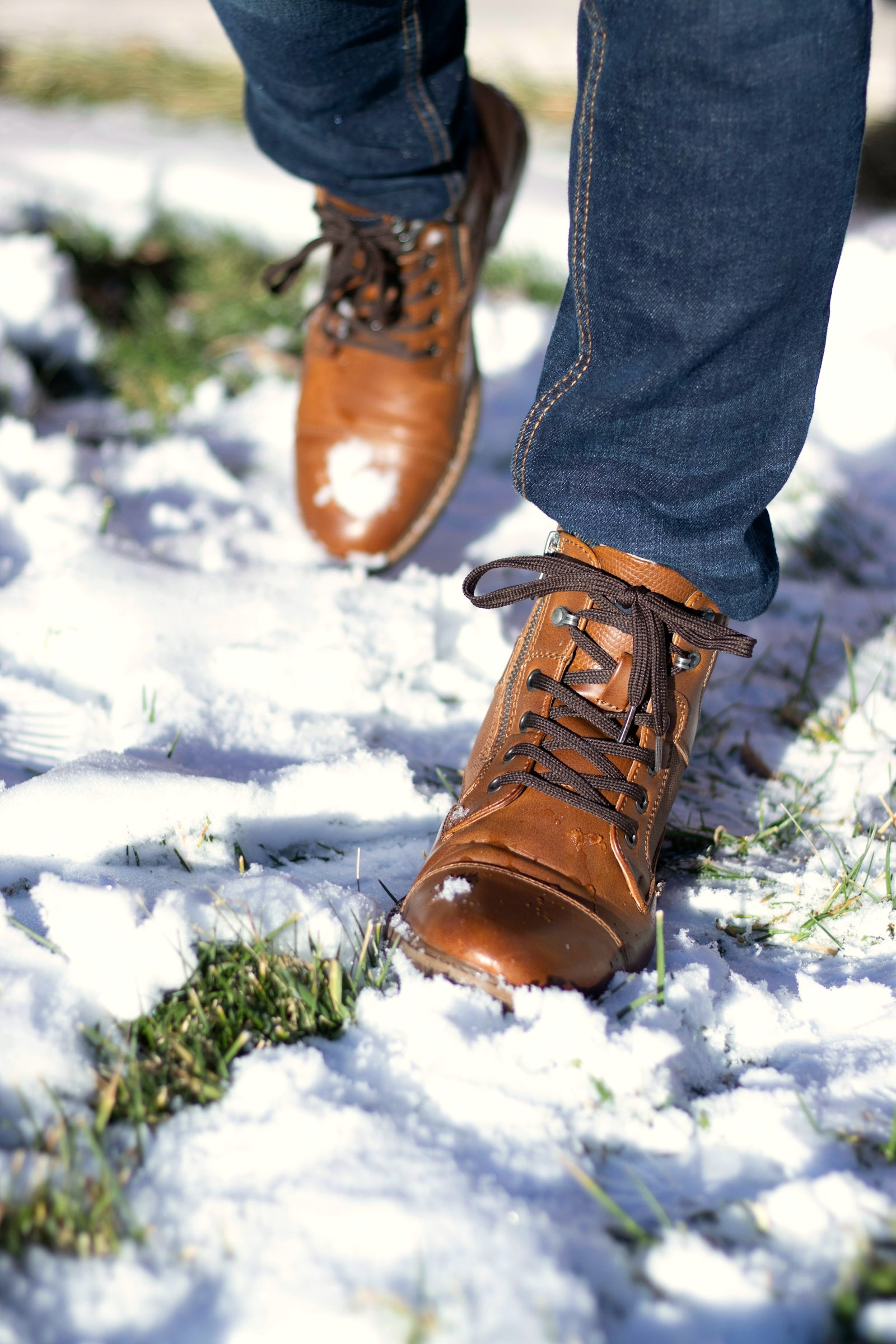
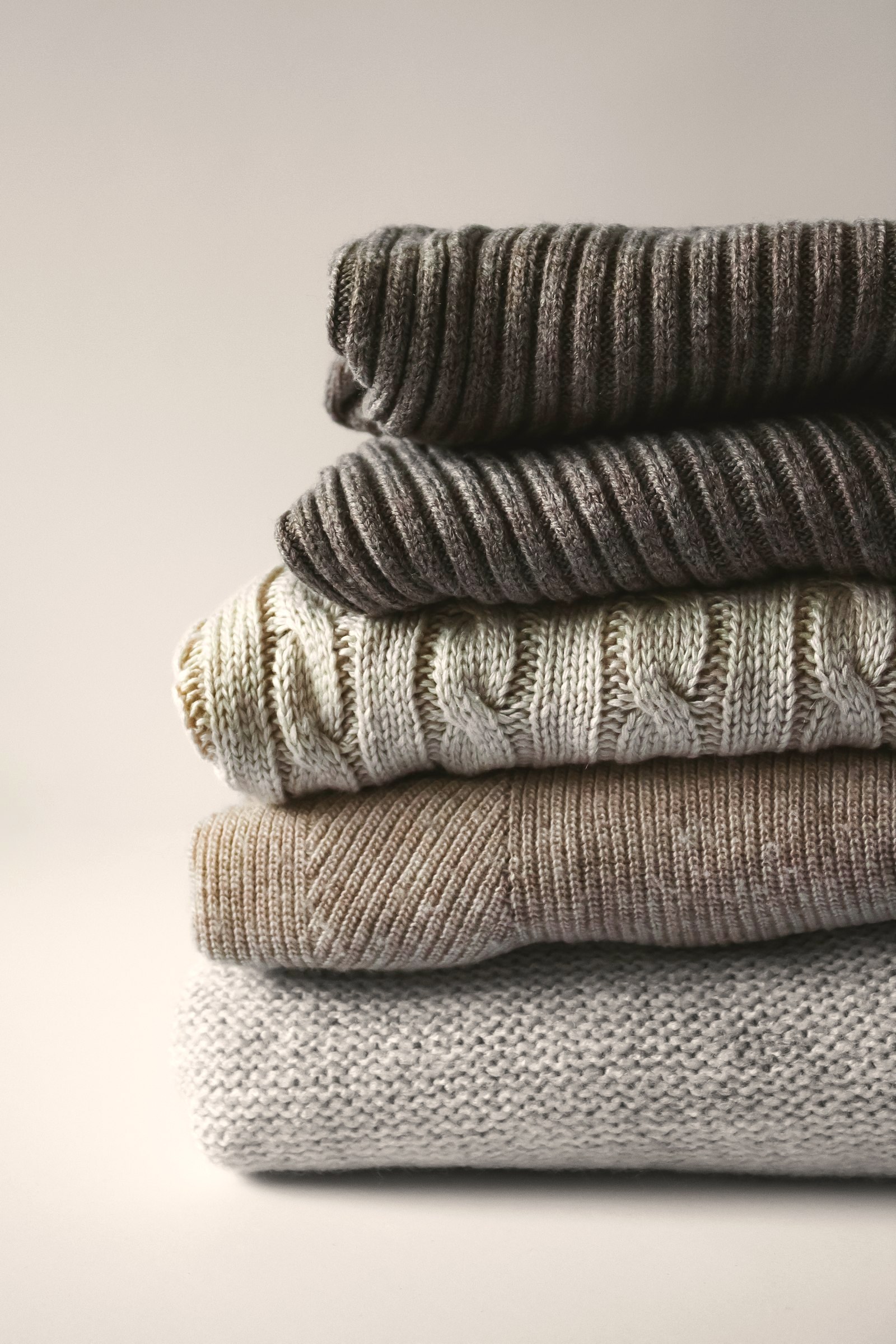
A note on our own photography: our photo bank holds no true overcoat frame. The hero figure is a northern street in winter light, printed for the register rather than dressed as the subject; the frames inside are the knit stack, the scarf and boots in snow, each captioned for exactly what it shows. The bank's two suit portraits stand at zero placements on this site for a printed reason, the corporate catalogue register the house excludes, and they were not borrowed for this page either. The bank holds no long wool coat on a body in any species, no Chesterfield shoulder over a suit, no raglan drape, no polo coat in camel and no scarf sealed inside a closed front, so those sections run without frames rather than borrow wrong ones. All five are on the harvest list, named, and this page will take the frames the week they exist.
Questions, answered
What is an overcoat?
A long wool coat, at the knee or below, built to be worn over tailoring: the formal ceiling of outerwear. Our jackets index files it at formality 5 and warmth 4, in wool or a wool and cashmere cloth, season late autumn through winter, and calls it the only type on the index built to be worn over a suit as a matter of course. Its buying rule is printed with the type: buy it to fit over a blazer; a coat that only fits over a t-shirt is a costume. The topcoat is its lighter sibling, the same silhouette in a thinner cloth for the months when the full overcoat is too much coat.
How long should an overcoat be?
At the knee or below it. That is the floor this brief rules, and it is structural: the coat's first job over a suit is to cover the jacket beneath it whole, hem, skirt and all, and a coat that ends above the knee leaves the suit's hem showing below its own, the two-hems argument How to Wear No. 19 refuses for the pea coat. Within the floor, length is matched to height on the law How to Wear No. 02 prints for the long coats: shorter frames take the hem at the knee or just below, taller frames carry it toward mid-calf, and at every height leg shows beneath the hem. A coat cut above the knee and sold as an overcoat is a long jacket in costume, judged on the short coats' terms.
Can you wear an overcoat over a suit?
Yes. It is the one coat on our jackets index built for exactly that, as a matter of course: a long body that covers the suit jacket's hem, a shoulder built to take tailoring beneath it, and room in the cut for the structure under it. The fit is tested over the suit, not over a shirt, on the index's buying rule: sized over a blazer, closed without strain at the button that works, the lapels lying where the pattern puts them. Every other long coat stops somewhere short of this job: the trench at formality 4 keeps the suit dry in rain, the pea coat at formality 3 is hip length and refuses it outright. Over tailoring, in cold weather, the overcoat is not the dressed option. It is the only one.
Can you wear an overcoat with jeans?
Yes, on this brief's casual ceiling, and the ceiling has conditions. The denim is dark: indigo at its darkest or black denim on How to Wear No. 05's monochrome logic, never a faded pair asked to do a dark pair's job. Above it a knit with some substance, a mid-gauge crew or a roll neck, not a tee alone in winter. Below it a boot or a leather shoe with structure, the sleek calf Chelsea at 4.5 on No. 15's scale. Run that way, the coat dresses the outfit up a full register, which is the ceiling working. Run it over light-wash denim, a hoodie and trainers and the coat is not dressing anything up. It is a formal garment standing in a casual outfit, and both halves read worse.
What colour overcoat should you buy first?
Charcoal or navy, and this brief argues the order. Charcoal first if the wardrobe runs grey and black tailoring and black shoes; navy first if it runs brown shoes and warmer knits; either does the other's job in a pinch, which black does not return. Black is the colour men default to and the one this brief moves to third: it shows every fleck of weather, it flattens the knits beneath it, and against a navy suit it argues at close range. Camel is the altitude colour, the second coat, bought once the dark coat exists: magnificent over grey tailoring and denim, and a commitment in a wet month. The first overcoat is bought for the wardrobe's centre, not its edge.
Overcoat, trench coat or pea coat?
Three different instruments on the jackets index, separated by both ladders and by length. The overcoat is formality 5 and warmth 4, knee length or below, the only coat built over a suit as a matter of course: the ceiling. The trench is formality 4 and warmth 2, a rain coat, longer than the pea coat and shorter in purpose: it keeps tailoring dry and holds almost no heat. The pea coat is formality 3 and warmth 4, hip length, the warmest short coat on the index, and it refuses the suit outright. Buy the trench for wet months, the overcoat for tailoring and the longest cold, and the pea coat for the dressed winter week that stops below a suit. A wardrobe with a suit in it buys the overcoat first, because it is the only one of the three that finishes the suit's own outfit.
Has Young Cotton ranked overcoats?
Not as a Verdict Card, and this page will not pretend otherwise. What exists in print is the garment's record across the site: the jackets index files the overcoat at the top of both ladders it tops, formality 5 and warmth 4, with its buying rule; the Fall Edit carries a coat of this class, the Mango wool double-breasted at 74, garment evidence, printed there as the edit's necessary coat and drawn as the Body Map's coat layer; and this brief is the wearing system those records imply, the length floor, the species, the stack it completes and the outfit matrix, printed so any overcoat can be judged before a ranking exists.
Next
The coat's place at the top of all twelve jackets, with its formality and warmth in the table, is the jackets index. The short wool coat that shares its warmth is briefed in How to Wear No. 19, and the long rain coat it is most often confused with is No. 02. The tailoring beneath it is ruled in No. 04; the layers at its neck are ruled in No. 08 and No. 09; the boots beneath its hem are ruled in No. 15. The stack it completes is ordered in the Fall Edit, and its class is drawn on the figure at the Body Map's coat layer.