
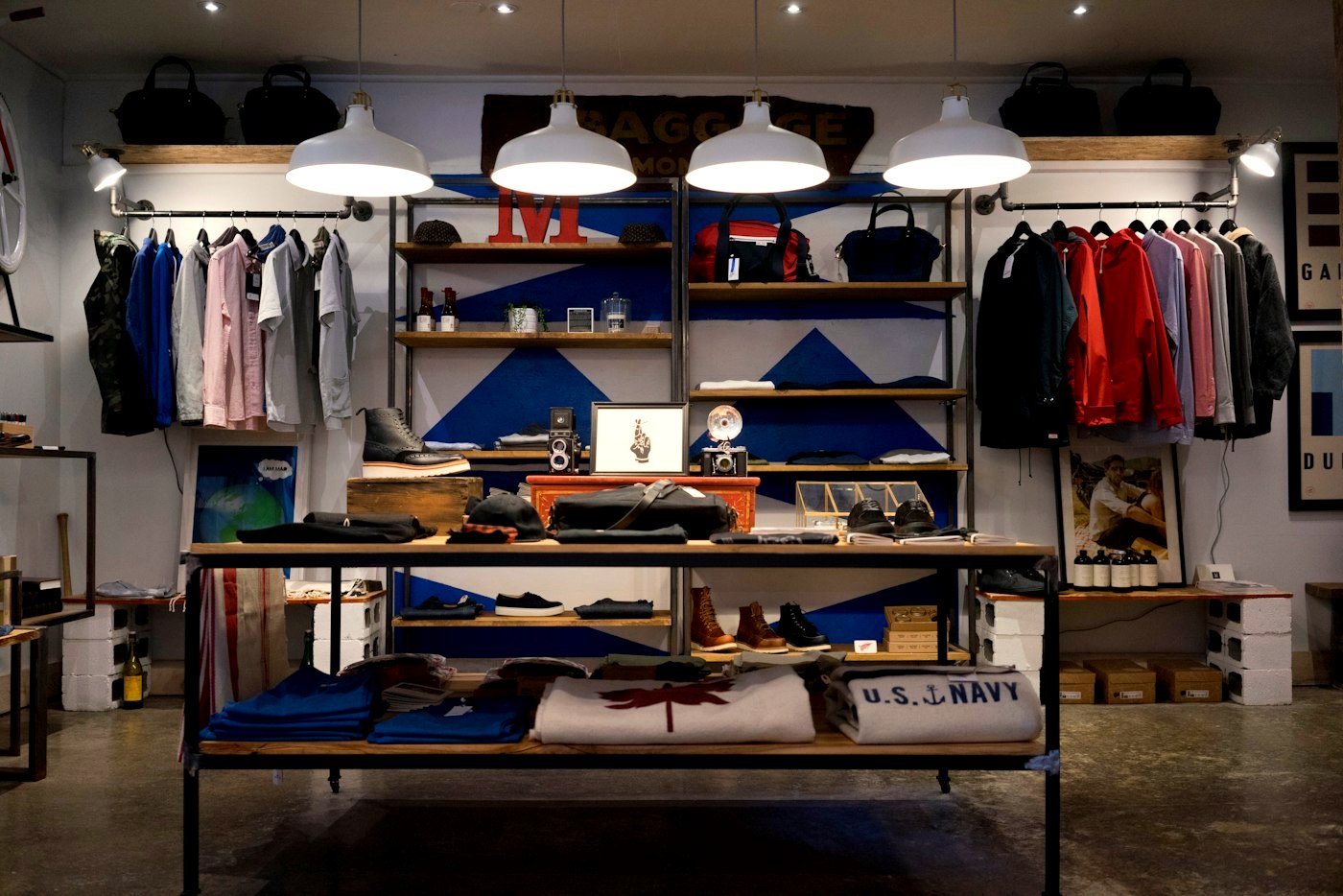
The rail this page grades from. The bank holds no photograph of a Harrington jacket worn in any species, so this page's frames show the rail the garment hangs on, the sibling it is separated from, and the outfit it completes, captioned for exactly what they are; the gap and the harvest list are named in the honesty section below.
Checked and updated October 2026
The verdict, up front: seven Harrington jackets scored out of 100 on cloth 30, construction and hardware 20, fit and species 20, value 15, longevity 15, plus the one sent home. The Grenfell Harrington wins at 86: 100 percent cotton in the maker's own densely woven cloth, a 100 percent cotton lining, horn buttons, made in London, at £295. The Baracuta G9, the original itself, follows at 81, the pattern's full furniture and the licensed Fraser tartan at $499, beaten on the cloth row by the blend its maker publishes and on price by two hundred pounds. The Ben Sherman Signature is third at 76, the pattern intact at £110. And the jacket sent home, at 30, is the ASOS DESIGN Oversized Wool Look Harrington, whose name promises wool and whose maker's own composition line prints 100 percent polyester. The count underneath the ranking is this Card's test, printed in full below: five of eight makers publish a shell split, two of eight publish a lining composition, one of eight publishes what its ribbing is made of, and not one of the eight names the maker of its zip. The garment these jackets copy is defined on this site by its furniture: the jackets index files the Harrington at formality 3 and warmth 2 and prints the test, the stand collar and the ribbed cuff decide it, everything else is a windbreaker; the wearing system is How to Wear No. 18. This Card grades the buying record the brief assumed.
The finding: an original, a licence, a hundred copies, and the paperwork thins as the price falls and rises
No garment in the short family is copied the way this one is. The G9 pattern, drawn in Manchester in 1937, is sold today at $499 by its maker, at £110 by the house that dressed the mods in it, at £80 by two high street names, at $1,795 by a luxury house, and at $139 by a fast fashion label that keeps the silhouette and deletes every specification that defines it. The pattern is not protected in any way that stops this, and this page does not argue it should be: the G9's makers kept their advantage the honest way, in a tartan carried under clan permission and a name the garment earned on television. What the copies owe the buyer is not royalty. It is paperwork: the shell's composition, the lining's, the rib's, printed where the buyer can read them before the box arrives. Counted across the eight jackets scored here, that paperwork is a column of holes. Five of the eight publish a shell split the buyer can reach from the maker's own channels. The other three name a cloth and stop: a poly/cotton blend with no percentages on the maker's own American page, a cotton shell carried by retail partners while the maker's own product page resisted this desk's capture, and a cotton rich claim whose full composition sits behind a details block this desk could not capture and has flagged rather than guessed. Two of eight publish what the lining is made of. One of eight, the $1,795 luxury jacket, publishes what its knitted trims are made of; the ribbed cuff and hem, the furniture How to Wear No. 18 prints as this garment's declared consumable, the part that wears out first, is specified by nobody else in the field at any price. And the zip, the one piece of hardware every Harrington shares, is named by its maker in none of the eight: the original's is logoed, the cloth maker's is metal, and the rest are silent, the same shutout the leather ranking recorded on Verdict Card No. 50, where one maker in eight named its zip.
Then the count reaches the collar, and the field divides in a direction price does not predict. The two-button stand collar in the jacket's own cloth is the furniture the index's test names first, the thing that files this garment at formality 3 and separates it from every windbreaker and bomber on the rail. It survives intact at the original, at the £110 mod copy, and, on one of its two conflicting retail records, at the £80 golf label. It does not survive at the two most respectable addresses in the field. The heritage cloth maker, whose own golf jacket predates the G9 and whose claim to the pattern is arguably the older one, publishes a ribbed collar in its specification. The luxury house replaces the collar with a knitted check band and publishes the replacement in full, mother-of-pearl buttons and all: the completest paperwork in the field attached to the garment that has deleted the pattern's defining part. Neither is a fraud; both are printed on their cards below, graded on the furniture they publish. But together they state the finding plainly: in this field the specification is a choice at every price, the collar is negotiable everywhere except where the pattern is cheapest, and the buyer who wants the original's furniture and the original's paperwork together will find, on this evidence, that no single jacket in the field sells both. Every score is a garment score. Where a house holds a brand score elsewhere on this site, it is printed on the card and kept separate; the houses graded here for the first time carry no brand score, and none is implied.
How the scores work
Every jacket is scored out of 100 on the same five rows. Cloth (30) reads the published cloth record: the shell's split as printed, percentage by percentage; a named cloth with a published mechanism, a weave density, a named mill, credited above a bare adjective; the lining as published, because on this garment the lining is half the signature; and water resistance graded as a claim unless a maker prints the mechanism or the number behind it, the rain instruments' law applied to a jacket that is not one. Construction & Hardware (20) is the furniture built around the cloth: the two-button stand collar in the jacket's own cloth, the ribbed cuff and hem, the umbrella yoke where the pattern carries it, the pockets as published, and the zip, two-way or not, its maker named or not, the column the leather Card opened. Fit & Species (20) is the index test graded as published: formality 3 and warmth 2 honoured, the neat body No. 18 rules, the collar test's terms, and the maker's own fit paperwork, fits named, size guides, garment measurements where printed. Value (15) divides the price by the published record and by the seasons the longevity row scores, printed in the cost table below. Longevity (15) is the ownership audit: the pattern's continuity in the maker's range, the country of make as published, and the ribbing's known ageing, the consumable No. 18 declares, priced against any repair or restock culture the maker prints. Row scores add to the total, on every card.
The ranking
Grenfell Harrington Jacket in Grenfell Cloth
The Winner · The Cloth Is the Specification
Maker's price: £295 at Grenfell (about $390), in stock, made to order in the maker's London factory with delivery quoted at 14 to 21 days.
Buy it as the Harrington bought on cloth: the only shell in the field that is 100 percent cotton with its weather mechanism published, lined in 100 percent cotton, at £200 under the original.
The cloth: 100 percent cotton, and not a bare claim: the cloth is the maker's own, Grenfell Cloth, a gabardine woven at a density the maker's cloth record publishes, 600 threads per inch, so the fibres swell when wet and close against rain with no coating and no membrane, the mechanism printed where any buyer can read it. The lining is 100 percent cotton in the house check, the second of only two lining compositions published in this field. Cloth takes 28, the field's best row: a total natural shell, a total natural lining, and the only weather claim in the eight with a number inside it. The deductions are the ones the record states itself: the cloth is water repellent, in the maker's own word, not waterproof, and no rating is printed or claimed here.
The build and the fit: construction 16, carried by the hardware the page publishes: real horn buttons, a metal zipper, front pockets with button-down flaps, internal pockets and the back yoke, made in the maker's own London factory. What the row charges is printed in the maker's own specification: the collar is ribbed, listed in one breath with the cuffs and waist, and the two-button stand collar in the jacket's own cloth, the furniture our index's test names first, is not what this page describes. The house's defence is its own and it is printed here fairly: its Harrington descends from its own golf jacket of 1931, six years before the G9, and its pattern was never Baracuta's to lend. The desk grades the furniture, not the genealogy, and a ribbed collar is the bomber's furniture, priced as such. The zip's maker is unnamed, the field's universal silence. Fit 16 on the field's best fit paperwork after the original: two fits published, Classic and Standard, with the difference explained in words, a size guide running 34 to 50, and a true-to-size ruling with the model printed wearing his own size. Value 12 at £295 prices a London-made, all-cotton, horn-buttoned jacket at £204 less than the original it outscores. Longevity 14 on a house weaving its own cloth since 1923 and cutting this pattern's ancestor since 1931, in a factory it still owns, in cloth that ages by softening rather than delaminating. Grenfell holds no brand score on this site; this 86 is the garment's own.
Baracuta G9 Harrington Jacket
The Original · The Pattern Itself, at the Pattern's Price
Maker's price: $499 at Baracuta's US store, in stock in the tan colourway at this check.
Buy it as the original: the only jacket that can sell you the pattern, the licence and the name together, bought knowing its cloth is a blend and its split lives one step from its own page.
The cloth: a 50/50 cotton and polyester shell, with the main lining at 80 percent cotton and 20 percent polyester and the secondary lining at 100 percent polyester, the Fraser tartan printed in breathable Coolmax fabric. Cloth takes 24, and the row's shape is the card's whole argument. The blend itself is no disgrace: it is the cloth the pattern has worn for decades, it sheds weather the pure cottons work harder to shed, and the tartan lining is the genuine article, carried under the permission Brigadier Simon Fraser granted the house a year after the jacket's creation, a licence no copy in this field can buy at any price. What the row charges is where the numbers live. The maker's own American product page sells the shell under a brand name, Baracuta Cloth, and prints the tartan's Coolmax claim beside it; the percentages themselves are published in the maker's retail specification, carried by its authorised stockists, and it is that published spec, named here, that this card grades. The original's paperwork is complete, but it is complete one step away from the page that takes the money, and the row prices the step.
The build and the fit: construction 18, the field's best, because this is the furniture the test was written from: the two-button stand collar in the jacket's own cloth, the umbrella back yoke cut to shed rain off the shoulders, the slanted flap pockets with their single button, the ribbed cuff and hem, the internal pocket in external cloth, and a two-way zip the maker describes as logoed, its manufacturer unnamed, the field's universal silence costing the row its last points. Fit 16 on a slim fit published with unusual honesty: the maker's page warns the jacket is slim and close-fitting and instructs the layering buyer to size up, printing its model at 192 centimetres wearing a 44. No garment measurements are published on the maker's page, and the point is charged for their absence. Value 9 at $499 is the original's tax, printed without apology and without discount: the numbered archive editions the house now sells at £570 show the direction of the premium, and the ranking's winner delivers a completer cloth record for £295. Longevity 14 on the pattern's own continuity, in the maker's range without interruption since 1937, in a cloth whose ageing is the best documented in the field because the field has been wearing it for eighty-eight years. Baracuta holds no brand score on this site; this 81 is the garment's own, and it is the highest score this desk has given a jacket that finishes second on its own pattern.
Ben Sherman Signature Harrington Jacket
The Value Answer · The Pattern Intact at £110
List price: £110 at Ben Sherman (about $145); the maker's own store has sold it at £65 in sale, and its retail partners discount it in season.
Buy it as the pattern at the honest price: the collar, the cuffs and the check lining of the original's design, in cotton, for a quarter of the original's money.
The record, and its limits, printed first: this maker's own product page resisted this desk's capture across repeated attempts, its storefront serving the category and the outlet but not the garment's specification block. The card is therefore graded on the house's published pattern as carried by its retail partners, the sources named here as the fleece ranking named its stockists before us: a cotton shell, the house check lining in gingham, ribbed cuffs and hem, at a £110 list confirmed at John Lewis and in the maker's own sale history. What no captured page publishes is a percentage: the shell is cotton, the lining is check, and the split behind either word is not in print at this check. The capture is in the November ledger, and the row will be regraded when the maker's own page yields it.
The cloth and the build: cloth 22 for a cotton shell and a cotton-family check lining at £110, the percentages' absence charged once, here, rather than disguised: the record is a fibre named and a pattern named, which stands above every blend adjective in the field and below every printed split. Construction 15: the furniture is the pattern's, the stand collar, the ribbed cuff and hem, the zip front, kept by the house that has sold this jacket, in this form, to the same customers for decades; the zip's maker is unnamed, and the pocket and yoke detail in the captured record is thinner than the original's, the deductions printed. Fit 14 on the house fit its retail record describes, a generous, boxy cut: the index's neat law prices the ease honestly, because volume is the one liberty this silhouette does not spend well, and the maker publishes no garment measurements in the captured record to argue otherwise. Value 14, a point under the perfect score, at £110 for the pattern intact in cotton: the G9's furniture at a quarter of the G9. Longevity 11 prices a catalogue staple of unusual continuity, the same jacket in the same form across decades of the house's ranges, made offshore at a high street volume, against a rib that will age on No. 18's schedule. Ben Sherman holds no brand score on this site; this 76 is the garment's own, graded on a thinner capture than its neighbours and saying so.
Fred Perry Made in England Harrington Jacket
The England Answer · The Blend Without Numbers
US price: $460 at Fred Perry. No buy pill: the maker's US page offered notification signup rather than stock in the checked sizes at this check; the record graded is the maker's own page for the garment.
Buy it for the make and the tartan: an English-made Harrington from the pattern's other heritage house, bought knowing its own page declines to print what the cloth is made of.
The cloth: a cotton and polyester blend, described on the maker's own American page as durable and water-resistant, and cloth takes 20 for what that sentence does and does not do. It names both fibres, which stands above an adjective. It prints no percentage behind either, which stands below every split in the field, and the charge is sharpened by the comparison the maker's own house provides: its page for the sibling Harrington in its current Made in England line prints 100 percent cotton, woven by Halley Stevenson, the Scottish cotton house, in full. The percentages, or the pure cloth, exist in the building. On the page that sells this jacket in America, at $460, neither is printed, and the buyer learns the blend's proportions from the care label after the box arrives. The water resistance is graded as the claim it is published as: no mechanism, no number.
The build and the fit: construction 16 on a published build that honours the pattern: the buttoned neck, the ribbed hem and cuffs, the buttoned flap pockets, an internal zip pocket the original does not publish, and the Red Stewart tartan lining, the house's own tartan answer to the Fraser, printed by name. The zip's maker is unnamed. Made in England is published and credited in the longevity row, where it belongs. Fit 14 on the regular fit the maker names, with a size guide that maps chest sizes to the numbered range and prints body measurements rather than the garment's: the buyer can size himself, and cannot measure the jacket, the field's common arrangement, charged at the common rate. Value 8 at $460 refuses the heritage discount in advance: forty dollars under the original buys a blend whose split is unpublished, from the one house in the field whose provenance could have argued for more paperwork rather than less. Longevity 13 on the Made in England line's continuity and the house's own history with this garment, the mod uniform's other half, sold in this form for decades. Fred Perry holds no brand score on this site; this 71 is the garment's own.
Lyle & Scott Harrington Jacket
The Golf Answer · Two Records, One Jacket
Price: £80 to £85 at its retail partners (about $108); the maker's own store did not surface the jacket at this check, and the door below is the retail page carrying its specification.
Buy it as the two-button collar at the field's lowest honest price: 100 percent cotton on the published spec, bought knowing its own retail records argue about the lining.
The cloth, and the argument about it: the outer is 100 percent cotton, published in the specification its retail partners carry, and cloth takes 21 for a total natural shell at £80. Then the record argues with itself, and the argument is printed rather than smoothed. One retail specification lists the jacket with a classic tartan lining and a funnel neck closed by two buttons, the pattern's furniture complete. Another, from the field's largest clothing platform, lists the same jacket with no lining at all and names its collar a mandarin. Both records are the maker's garment travelling under the maker's style code; they cannot both be right about the inside of the jacket, and this desk does not pick a winner it cannot verify. The split, when the maker's own page yields it, is in the November ledger. What is not in dispute is the shell, and the shell is what the row chiefly grades.
The build and the fit: construction 13, the row where the disagreement is paid for: on the fuller of its two published records the build is the pattern's own, the two-button funnel neck, the ribbed cuffs and hem, the tartan lining, the branded zip pull; on the thinner record it is a collar of another name over an unlined body. A buyer cannot tell from the published pages which jacket arrives, and a ranking that grades records grades that uncertainty as a cost, once, in this row. The zip's maker is unnamed in both records. Fit 13 on the regular fit both records agree on, with neither publishing a measurement a buyer can check. Value 13 at £80 to £85 prices a 100 percent cotton shell with the pattern's collar at the cheapest honest ticket in the field, a point under the Ben Sherman for the paperwork's quarrel. Longevity 10 on a golf house founded in 1874 whose eagle has marked knitwear for a century and a half, selling this jacket as a seasonal line rather than a permanent pattern: the house is old, the model's continuity is not published, and the row prices the difference. Lyle & Scott holds no brand score on this site; this 70 is the garment's own.
M&S Autograph Textured Harrington Jacket
The High Street Answer · The Claim Graded as a Claim
Maker's price: £80 at Marks & Spencer (about $105), in stock at this check.
Buy it as the premium high street's version: a lined, cotton-rich Harrington at the price of the fast copies, bought on a claim this desk could not capture to the percentage.
The cloth: cotton rich, the maker's whole fibre sentence on the part of its page this desk could capture, and cloth takes 18 for a claim graded exactly as far as it can be checked. The house is the high street's most reliable publisher of compositions, and its full split for this jacket exists in its details block; that block resisted this desk's capture at this check, and the flag is printed rather than smoothed: the percentages are owed, they are in the November ledger, and the row will be regraded when they are read. What the captured record supports is the shape of the garment: a subtly textured cotton-led cloth, fully lined, from the house's premium Autograph line. A cotton rich claim stands above a blend adjective and below every printed split in the field, and the row prices exactly that distance.
The build and the fit: construction 13 on the maker's published build: a zip-through front, a collared neck, a chest pocket the pattern does not usually carry, ribbed finishing implied by the style and not itemised in the captured copy, and the full lining, which at £80 acquits the jacket of the unlined windbreaker charge our index prints. The collar is named a collared neck and no more: whether it closes with the pattern's two buttons the captured copy does not say, and the row charges the omission rather than assuming the furniture. The zip's maker is unnamed. Fit 13 on the regular fit the maker names, the house's standard block, with no garment measurements in the captured record. Value 13 at £80: the Autograph premium over the same rail's £45 core version buys the lining and the texture, and the arithmetic in the cost table below is the field's second best per wear. Longevity 9 on a seasonal high street line, however reliable the house: the model is a season's garment in a range that replaces it, and the row prices the churn the Ben Sherman's continuity avoids. Marks & Spencer holds no brand score on this site; this 66 is the garment's own, graded on a partial capture and saying so in its first paragraph.
Burberry Gabardine Glenfields Harrington Jacket
The Luxury Answer · Perfect Paperwork, Another Collar
Maker's price: $1,795 at Burberry's US store, in stock at this check.
Buy it as a Burberry gabardine jacket with a Harrington's name and a knitted collar: the field's completest record, bought with its eyes open about which garment it actually is.
The cloth: 100 percent cotton gabardine, and the paperwork around it is the completest in this field by a distance: the trims published in two splits, 100 percent cotton and 90 percent cotton with 8 percent polyamide and 2 percent elastane, the buttons specified as mother-of-pearl, the length printed at 67 centimetres for the stated size, the model printed wearing it. Cloth takes 26, two points under the Grenfell's row, and the two points are the gabardine's own story: it is a fine, lightweight cloth, woven for the house's trench tradition, and nothing on the page publishes its weight or its density, where the winner's cloth record quantifies the very property the cloth is bought for. The record is total and still thinner than the winner's where it matters. Burberry's trench stands at 83 on Verdict Card No. 49, a trench garment's score on a trench's record; it is evidence of the house's cloth culture and it is not carried onto this jacket, in either direction.
The build and the fit: construction 12, and the row is the card: the collar of this Harrington is knitted, a Burberry Check band in the house's sand colourway, which is to say the garment deletes the two-button stand collar in the jacket's own cloth, the furniture our jackets index prints as the type's deciding test, and substitutes the bomber's knit register at $1,795. The rest of the published build is luxury standard and is credited: a two-way zip, side press-stud pockets, rib-knit trims, an embroidered motif. The zip's maker is, as everywhere in this field, unnamed. Fit 12 on a relaxed fit the maker publishes and names as a looser cut than its classic: No. 18's law prices relaxation honestly, because the Harrington's silhouette is the neat one of the short family, and a relaxed Harrington spends the register the garment exists to hold. Value 3 at $1,795, three point six times the original's price, for a shell of the same single fibre the winner sells at £295 with its mechanism published. Longevity 11 on the house's gabardine culture and a construction built to be kept, against a fashion line's seasonal cycle. This jacket is ranked, not sent home, and the reason is the page's thesis in one card: its record is honest and complete, and a ranking that grades records does not convict paperwork for the sin of being attached to the wrong collar. Burberry holds no brand score on this site; this 64 is the garment's own.
ASOS DESIGN Oversized Wool Look Harrington Jacket
The Skip: Sent Home · The Wool Is a Look
US price: $139 list at ASOS, seen at $69.50 in sale at this check. No buy pill: this desk does not link what it sends home.
Send it home: a Harrington whose name promises wool, whose cloth is 100 percent polyester, and whose collar is not the collar the garment is named for.
The cloth: 100 percent polyester, printed in full by the maker on its own American product page, and credit where it is due before the sentence lands: the split is published, completely, which is more than three makers ranked above it managed. What the split says is the conviction. The garment is named Wool Look. There is no wool in it: not a majority outvoted, as on the V-neck Card's skip, not a garnish, as on the mock neck's, but none, in a jacket whose name leads with the fibre the Harrington's family runs on, the index filing the type in cotton twill and suede with wool standing behind the whole short family's cold-weather half. What the buyer receives is the word look doing the work the fibre declined to do, over a polyester shell whose published description offers soft, warm fabric, two adjectives where the winner prints a weave density and the original prints a blend. Cloth takes 5: the disclosure is real, and what it discloses is a name the cloth does not cash.
The build and the fit: construction 7: a zip fastening and side pockets, the maker's complete published build, with a point collar, which is not the two-button stand collar the index's test names as the garment's deciding furniture, and no rib composition published for the cuff and hem the pattern is filed by. Fit 8 on the maker's own word, oversized, a fit the wearing brief refuses for this silhouette on arithmetic rather than taste: the Harrington's register is tidiness, its body cut neat over the belt line, and volume bought at the top of a cropped jacket has nowhere to go but out. Value 6 at $139 list refuses the sale defence in advance: halved in the maker's own sale at this check, the jacket still costs within five dollars of the M&S Autograph's cotton-rich, fully lined record, and the cost table below prices its short presentable life at $2.32 a wear at list, the dearest line in the field after the luxury jacket it shares nothing else with. Longevity 4 on a seasonal fast fashion line in a cloth that shines and pills its way down inside two springs. The full conviction is written in the skip section below. ASOS DESIGN holds no brand score on this site; this 30 is the garment's own.
The record table: what each maker actually publishes
| Jacket | Shell, as published | Lining, as published | The collar and the zip, as published | Price |
|---|---|---|---|---|
| Grenfell Harrington in Grenfell Cloth | 100% cotton, the maker's own cloth, its weave density published in the maker's cloth record | 100% cotton house check | Ribbed collar published; metal zipper, maker unnamed; horn buttons published | £295 |
| Baracuta G9 Harrington | 50% cotton, 50% polyester (the maker's retail specification; its own page names the cloth Baracuta Cloth) | 80% cotton, 20% polyester main; 100% polyester secondary; Fraser tartan in Coolmax | Two-button stand collar published; two-way logoed zip, maker unnamed | $499 |
| Ben Sherman Signature Harrington | Cotton (the house's record via its retail partners; percentages not published) | House check (composition not published) | Stand collar and ribbed cuff published; zip maker unnamed | £110 |
| Fred Perry Made in England Harrington | Cotton/polyester blend, water-resistant (percentages not published on the maker's US page) | Red Stewart tartan (composition not published) | Buttoned neck published; zip maker unnamed | $460 |
| Lyle & Scott Harrington | 100% cotton (retail specification) | Tartan lining on one retail record, no lining on another; the records conflict | Two-button funnel neck on one record, mandarin collar on the other; zip maker unnamed | £80 to £85 |
| M&S Autograph Textured Harrington | Cotton rich (the maker's full split not captured at this check; flagged, not guessed) | Fully lined (composition not captured) | Collared neck published, its fastening not specified; zip maker unnamed | £80 |
| Burberry Gabardine Glenfields Harrington | 100% cotton; trims 100% cotton and 90% cotton, 8% polyamide, 2% elastane | Not separately published | Knitted check collar published; two-way zip, maker unnamed; mother-of-pearl buttons | $1,795 |
| ASOS DESIGN Oversized Wool Look Harrington (skip) | 100% polyester | Not published | Point collar published; zip maker unnamed | $139 |
Read the columns in order, because together they are the finding scored. The first column fills five times in eight, and its three gaps are three different species of the same refusal: a blend with no proportions, a fibre with no split, and a claim with its composition behind a block this desk could not capture and has flagged instead of inventing. The second column fills twice. The third contains the field's strangest pattern: the zip's maker is named zero times in eight, by houses that publish horn buttons, mother-of-pearl and a tartan's clan history, and the collar the index's test names first is intact at the original and at the two cheapest honest copies, and replaced, by ribbing or by knit, at the two most expensive heritage addresses after it. A buyer can compare most of the cloth on this page from his chair. The collar he must check against the index's test himself, which is where the audit below leaves it.

The collar audit: the furniture is the garment
The Harrington is the rare garment whose definition fits in one sentence of furniture: a two-button stand collar, ribbed cuffs and a ribbed hem, a body that ends at the belt. Of those four facts, the collar is the one that does the ranking work, because it is the one that files the garment at formality 3, the highest of the short family, and separates it from the two garments it is confused with: the bomber below it, whose knit collar reads sport at any price, and the windbreaker beneath both, which is what our jackets index calls everything in this shape without the collar. A Harrington audit is therefore a collar audit. Of the eight jackets scored here, the collar survives exactly as the pattern drew it in five: the original, the £110 copy, the England-made blend, and, on the fuller of its two conflicting records, the golf label's, with the high street's premium line naming a collared neck it does not specify further. It does not survive in three. The cloth maker's own specification lists a ribbed collar, a choice with a genealogy behind it, printed on its card: its pattern descends from its own golf jacket of 1931 and was never borrowed from the G9, and the desk accepts the history and grades the furniture, because a buyer ordering the jacket receives the rib, not the genealogy. The luxury house knits its collar in its house check, a signature where the pattern puts a fastening. And the skip wears a point collar, a shirt's furniture, on a jacket whose name it shares with the original.
The paperwork culture is there, which is what makes the substitutions choices rather than limits. Between its eight makers, this field publishes five shell splits, two lining compositions, a complete trim specification with button material, a tartan's clan permission dating to 1938, a cloth's thread count, garment lengths, two-fit systems and an internal pocket in external cloth. These are houses that can specify anything they decide to specify. The collar each of them prints, or declines to print, is therefore a decision about what the garment is, taken at the exact point where the garment is defined, and the ranking above prices those decisions in the construction and fit rows of every card rather than in a single sentence here. The first maker in this family to publish the whole specification together, shell, lining, rib and zip's maker on one page, takes the audit's point outright: on this evidence the page does not exist yet, at $499, at £295, or at $1,795. Until it does, the test is the index's, applied standing in the shop with the collar in both positions, closed and open, which is the wearing brief's advice and now the audit's as well: the collar test is printed there, with the fit law and the outfit matrix, for a garment whose makers publish nearly everything except the whole record at once.
Cost per wear, printed in the open
The maths, assumptions printed. A Harrington in rotation is worn about 50 times a year across its two seasons, spring and mild autumn, the window our jackets index files for the type. Expected life is presentable service: the years the jacket keeps its shape, its rib and its surface, not the years it merely exists. Sterling prices are read at £295 as about $390, £110 as about $145, £82 as about $108 and £80 as about $105, the rates this page's cards use. Divide price by wears.
| Jacket | Price used | Expected life | Cost per wear |
|---|---|---|---|
| Lyle & Scott Harrington | £82 (about $108) | 6 springs and autumns (300 wears) | $0.36 |
| M&S Autograph Textured Harrington | £80 (about $105) | 5 springs and autumns (250 wears) | $0.42 |
| Ben Sherman Signature Harrington | £110 (about $145) | 6 springs and autumns (300 wears) | $0.48 |
| Grenfell Harrington in Grenfell Cloth | £295 (about $390) | 12 springs and autumns (600 wears) | $0.65 |
| Baracuta G9 Harrington | $499 | 12 springs and autumns (600 wears) | $0.83 |
| Fred Perry Made in England Harrington | $460 | 10 springs and autumns (500 wears) | $0.92 |
| ASOS DESIGN Oversized Wool Look Harrington (skip) | $139 | About 60 presentable wears | $2.32 |
| Burberry Gabardine Glenfields Harrington | $1,795 | 10 springs and autumns (500 wears) | $3.59 |
Two lessons, both printed rather than implied. First, the table's head is the field's paperwork tail: the three cheapest lines per wear are the £80s and the £110, jackets whose records are a named fibre and an argument, because cost per wear rewards a low ticket and a decent life and asks nothing about documentation; you buy the Grenfell or the G9 for the record and the cloth, knowing the arithmetic, exactly as this site's readers buy its fine knits at the top of their tables. Second, the table's foot is the finding in numbers: the luxury jacket at $3.59 and the fast fashion skip at $2.32 are the field's two dearest lines per wear, separated by everything except the arithmetic, one because its price is enormous and one because its life is short. Between them sits the whole honest field under a dollar. Cheap per garment and dear per wear is the fast pattern's whole arithmetic; dear per garment and dearer per wear is the logo pattern's; and on this page both are printed in rows of the same table, which is what the composition line and the price line say when they are read together.
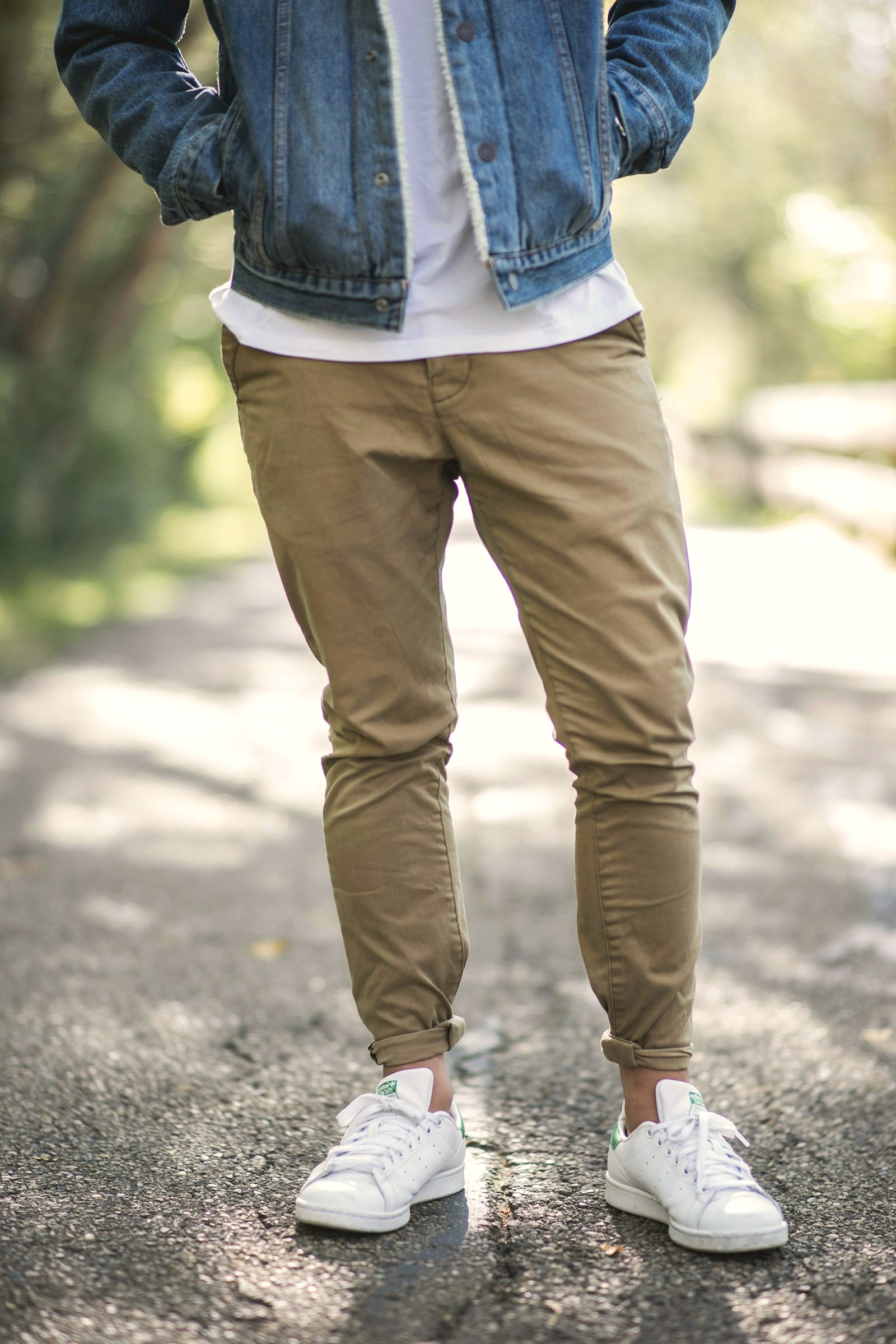
The skip: the ASOS DESIGN Oversized Wool Look Harrington Jacket at 30
Every Verdict Card on this site sends one garment home, and the honest ones are convicted out of their makers' own mouths. This one's maker published the conviction itself, twice, on its own American product page. The first is in the garment's name: Wool Look Harrington Jacket. The second is in the composition line printed beneath it: Main: 100 percent polyester. There is no wool in this jacket, none in the shell and none anywhere else its maker specifies, and the word look is asked to carry the entire difference between the fibre the Harrington's name promises and the fibre the buyer receives. The mock neck skip on No. 58 held no wool at a wool price; this garment goes it one further and puts the missing fibre in the title, as a style effect, the way a flavour is printed on a drink that contains no fruit. Nor is the cloth the whole of it. The garment's collar, on its maker's own bullets, is a point collar: not the two-button stand collar our jackets index prints as the type's deciding furniture, the thing that separates a Harrington from a windbreaker, but a shirt's collar on a blouson's body. And its fit is named by its maker as oversized, the one silhouette the wearing brief refuses for this garment on arithmetic, a neat cropped body being the whole of its register. What acquits the market and convicts the garment is printed above this section: the same retail floor, in the same price band, sells a fully lined cotton-rich Harrington at £80 and a 100 percent cotton shell at £82, and the original's pattern stands intact at £110 with its check lining. The cloth was available at one end, the collar at the other, and the honest name at both. None of the three was chosen, because the silhouette was expected to sell the garment by itself, and on the evidence of its own page, the silhouette, a look of wool, and a point collar are all there is. Buy the split, not the look. The ranking above is what that sentence buys.
Which Harrington jacket to buy
If you buy one: the Grenfell, the complete cloth record at 86, a 100 percent cotton shell with its weather mechanism published and a 100 percent cotton lining, made in London at £295 and $0.65 a wear across twelve of the garment's two-season years. If you buy the original: the Baracuta G9 at 81, the pattern, the licence and the name in one jacket, bought with its blend and its $499 printed in the open; nothing else in the field is the original, and nothing in this ranking pretends the original is the best buy. If the budget is the whole point: the Ben Sherman Signature at 76, the pattern intact in cotton at £110; below it, the Lyle & Scott at 70 for the cheapest 100 percent cotton shell, with its records' quarrel read first, and the M&S Autograph at 66 for the lined high street version at £80. If the make must be English and the tartan red: the Fred Perry at 71, its blend's proportions unpublished and priced as such. If the badge is the point: the Burberry at 64, a fine gabardine jacket with the completest paperwork in the field, bought as what it is, which is not, by this site's printed test, the collar the garment is named for. The garment's wearing system, its collar test, its three species and its outfit matrix, is written in How to Wear No. 18; its place in the wardrobe is filed in the jackets index; and the sibling it is separated from by one rung is ruled in How to Wear No. 17.
Questions, answered
What is the best Harrington jacket for men?
The Grenfell Harrington in Grenfell Cloth, at 86 out of 100 in this ranking: a shell of 100 percent cotton in the maker's own densely woven cloth, a lining of 100 percent cotton in the house check, real horn buttons, made in London at £295, the completest published record in the field and the only quantified weather mechanism in it. The original follows: the Baracuta G9 at 81, the full pattern furniture and the licensed tartan at $499, beaten on the cloth row by its own maker's blend and on price. The value answer is the Ben Sherman Signature at 76, the pattern intact at £110. The jacket sent home, at 30, is the ASOS DESIGN Oversized Wool Look Harrington, a jacket with wool in its name and none in its cloth: its maker's own page prints Main: 100 percent polyester.
What is a Harrington jacket?
A waist-length jacket defined by three pieces of furniture: a two-button stand collar, ribbed cuffs and a ribbed hem, and a body that ends at the belt. The pattern is the Baracuta G9, made in Manchester since 1937 and lined in the Fraser clan tartan its makers were granted the use of; the name arrived in the 1960s, borrowed from Rodney Harrington, the television character who wore one. Our jackets index files the type at formality 3 and warmth 2, in cotton twill and suede, for spring and mild autumn, and prints its test in one line: the stand collar and the ribbed cuff decide it; everything else is a windbreaker. The wearing system, the collar test, the species and the outfit matrix, is written out in How to Wear No. 18.
Is the Baracuta G9 worth $499?
On its published record it scores 81 on this page, second, and the money buys three things no copy can sell you: the pattern itself, drawn by the house in 1937; the Fraser tartan lining, carried under clan permission since 1938; and the full furniture, the two-button stand collar, the umbrella back yoke and the two-way logoed zip, all published on the maker's own page. What the money does not buy is the field's best cloth or its best paperwork. The shell is a 50/50 cotton and polyester blend, published in the maker's retail specification rather than on its own product page, which sells the cloth under a brand name, Baracuta Cloth, instead of a split; and at $499 the jacket costs £200 more than the Grenfell that outscores it with a 100 percent cotton shell and a 100 percent cotton lining. Buy the G9 for the original, knowing exactly what the original's premium is and is not paying for.
What is the difference between a Harrington jacket and a bomber jacket?
One piece of furniture and one rung. The two jackets share a waist length, a ribbed hem and a season, and our jackets index separates them by exactly one rung of formality: the bomber is formality 2, the Harrington formality 3, the highest of the short family. The difference is at the throat. The bomber's collar is a low rib of knit, the flight pattern's seal, and it reads as sport at any price. The Harrington's collar is a stand collar in the jacket's own cloth, closed by two buttons, and it reads the way a shirt collar reads, as an intention: it is what lets the Harrington take the polo, the Oxford shirt, the wool trouser and the smart room that the bomber is refused. The bomber gives warmth back, filing at warmth 3 against the Harrington's 2. How to Wear No. 17 rules the bomber and No. 18 the Harrington, and the two briefs print the same boundary from opposite sides.
How should a Harrington jacket fit?
Neat, on the wearing brief's published tests. The ribbed hem lands on the belt line with the belt visible below it; the shoulder is clean; the body is tidy rather than bloused, because ease bought as volume turns this silhouette into a blouson. Then the test that is this garment's alone, the collar test: closed, the two-button stand collar fastens at both buttons without pulling at the throat and stands clean around the neck; open, it settles into two points that lie flat and do not curl. A collar that fails closed is a size wrong; a collar that fails open is a cloth wrong, too soft to hold the one shape the garment is filed for. Fit paperwork is where this field divides: the Grenfell publishes two fits and a size guide on its product page, the Baracuta publishes a slim fit with a printed size-up warning, and half the field publishes nothing a buyer can measure at all.
Are Harrington jackets waterproof?
No, and this ranking prints the claims as claims. The jackets index files the Harrington at warmth 2, a spring and mild-autumn garment: the cotton twill stops wind and sheds a shower, and that is the end of its weather. Of the eight jackets scored here, four claim water resistance in words and none quantifies it: no hydrostatic head, no coating specification, no seam claim is published by any maker in the field. The one published mechanism is the oldest one: Grenfell Cloth is woven at a density its maker publishes, 600 threads per inch in the maker's cloth record, so the cotton swells and closes against rain without a coating, a claim with a number inside it, graded here as the field's strongest weather paperwork and still not a waterproof rating. For real rain this site ranks rain jackets on their own Card, by specification; a Harrington is the jacket for the days either side of it.
How this ranking stays honest
The rests, the capture notes and the flags, printed. The stale-FAQ flag, first, because this Card resolves it: the Harrington brief on this site was built ahead of this ranking and wrote its FAQ answer to "Has Young Cotton ranked Harrington jackets?" in the negative, in the standing not-as-a-Card form. That was true when the brief shipped and it goes stale at this one. The amendment, citing this Card's verdict, the Grenfell Harrington at 86, is owed in the wiring of this page and is flagged in this Card's state file for the parent; this page does not quietly pretend the brief says something it does not. Barbour is the boundary, not a rest: the brand stands at 81 on its family page, and no garment filed as a Harrington could be captured in its current range at this check, so the waxed house is not carded in a cloth jacket's ranking. Baracuta's own product page rendered in full except its composition block, and its shell and lining splits are graded from the maker's published retail specification as carried by its authorised stockists, Number Six London named, with the house's own brand listing in agreement; the provenance is printed on the card, and the maker's own-page capture is in the November ledger. Ben Sherman's own product page resisted capture across repeated attempts, its storefront serving categories and the outlet but not the garment's specification; the card is graded on the house's published pattern as carried by its retail partners, John Lewis among them, sources named on the card, and the maker's own capture is owed. The M&S composition block likewise resisted capture inside the maker's details section; the garment is graded on the maker's captured claim, cotton rich, with the flag printed on its card rather than a split invented for it. Fred Perry's American page is graded as it stands; the 100 percent cotton record printed for its sibling style number in the same line is reported on the card as the maker's own inconsistency and is not transferred to the graded garment. H&M was rested deliberately, as it has been rested through this run of Cards; its derived brand score stands untouched on its own page, and no garment here triggers its fourteenth derivation entry. On photography: the bank holds no photograph of a Harrington jacket worn in any species, the gap the quilted, fleece, vest and mock neck Cards admitted for their garments before us; this page's frames show the rail the garment hangs on, the sibling bomber it is separated from, and the outfit assembly from the belt down, each captioned for exactly what it is, and the cards run without images. The harvest list names what is missing, in order: a Harrington worn on a street in stone or navy with the stand collar readable, a stand-collar close frame showing both buttons, a tartan lining visible in an open jacket, and a suede Harrington worn, for the altitude species. Prices and specifications were checked against the makers' own published pages in October 2026; where a figure could not be verified from the maker's page, the page says so at the figure's elbow. The full method is written out on the methodology page.