
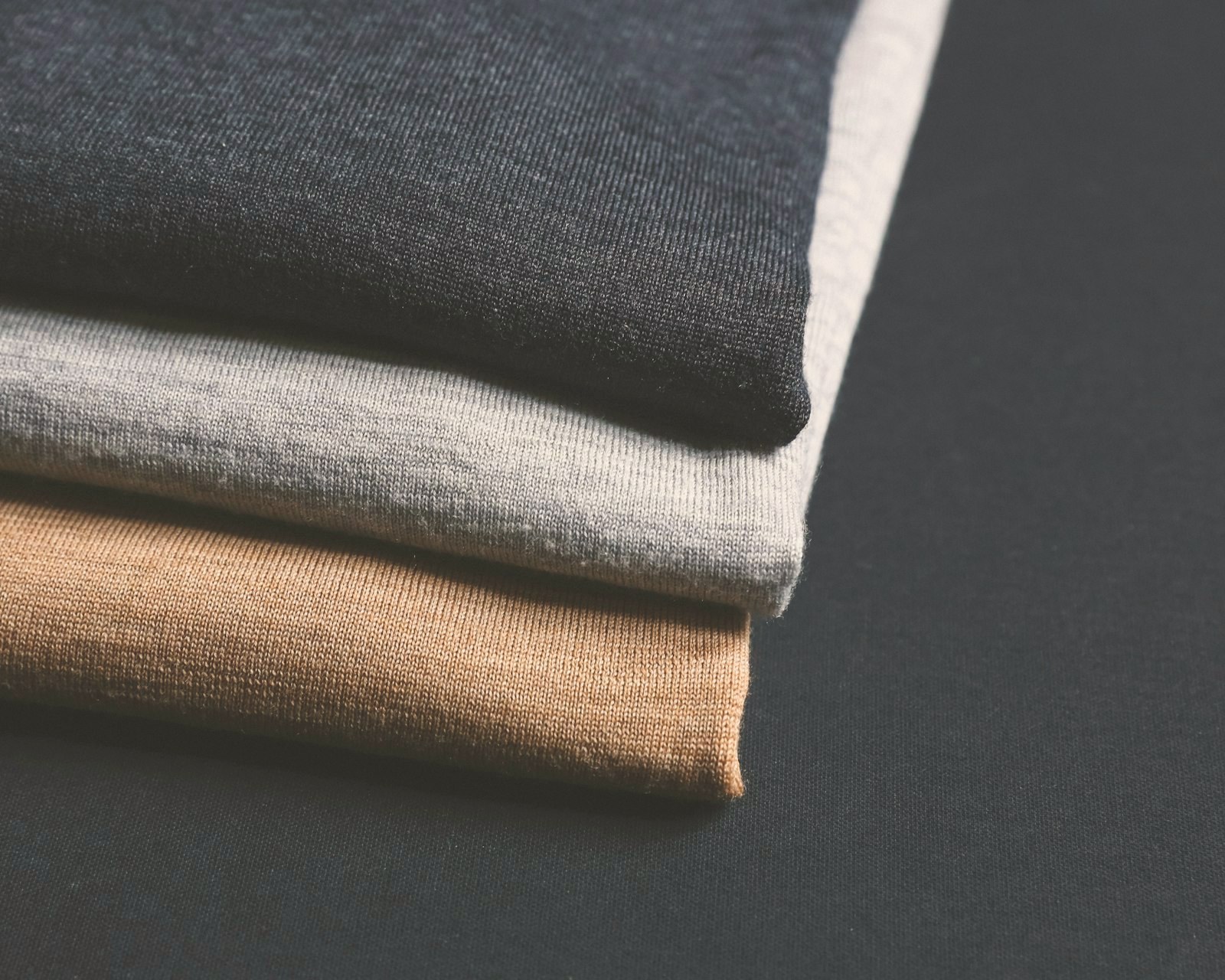
The night drawer's palette, folded: navy, grey and camel cloth kept flat and plain. Our bank holds no photograph of a Derek Rose garment and no true sleep frame, the same gap our pajama ranking admitted, so no frame on this page is captioned as one.
The short answer: Derek Rose stood at 69, its rows derived in the open on our Sunspel page from the published record, fabric 22, construction 17, fit 13, value 5, longevity 12, and reproduced exactly on our Zimmerli page. This page audits the anchor against the maker's current published record and holds the number entire, every row. The audit's findings are a split and a rise. The split: the maker's own product pages print the cotton flagship's origin as the Czech Republic and the silk's as the United Kingdom, so the English-making shorthand survives only on the silk rail. The rise: the Kelburn set this site graded at 320 dollars stands at 440 dollars at the maker's own till today. Above the anchor: Asket at 92, Sunspel at 85, Zimmerli at 73 and Organic Basics at 70. Below it: Quince at 59, and Calvin Klein at 47 as this ladder's skip.
What people actually want from Derek Rose
The want under this search is the night drawer finished like tailoring: pyjamas cut the way a shirt is cut, piped, pocketed, buttoned in mother of pearl, in batiste and brushed cotton and silk, from the London family house that has dressed the hours around sleep since 1926. It is the finish search of the premium basics register, the name a reader meets when the high street's pyjama set felt thin and the budget stopped being the argument. The Sunspel page derived this anchor's 69 in the open and printed its centre of gravity in the same breath: the neighbour rests on knitwear pages because its argument is the night drawer, not the layer worn all day. The Zimmerli page reproduced the number and the rows, seated sixth. This page is the audit that derivation was always owed: what does the house publish now, about its cloth, its making, its prices, its ownership and its promises, and does the derived number survive the reading?
It survives, and the audit's interest is in what has moved around it. The family is intact and in its centenary year. The finish record on the flagship's own page is intact entire. What moved is where the cotton rail is made, printed by the maker itself, and what the flagship costs, up 120 dollars on the figure this site already printed for the same set.
How the scores work
Same ruler as every page in this series, published on our methodology page: fabric and cloth out of 30, construction and craft out of 20, fit range and sizing honesty out of 20, value out of 15, longevity out of 15. One score on this page is audited, the anchor's; every other number already stands in this series, and each card names its home.
The standing record, in full. The Sunspel page set the anchor's rows in the open, derived from the published record: fabric 22, construction 17, fit 13, value 5, longevity 12, summing to 69. The Zimmerli page reproduced all five rows exactly. This page audits the anchor against the maker's current published record, verifies each row, and becomes the score's family home. The two citing pages keep their numbers and rows; what changes at the next pass is the status word, derived to audited, and one price on a fourth page, the pajama ranking's, and the honesty section prints the whole bookkeeping.
Fabric, 22, stands, verified live. Every product page this audit read prints its composition in full: 100 percent cotton on the Kelburn flagship, its fabric weight named as heavyweight; 100 percent silk on the Brindisi set; the Basel modal's split printed at retail. The cloths are named the way this register asks, batiste, brushed cotton, satin stripe, and the record is a tier below the Sea Island fibre paperwork two seats above it, exactly where the derivation put it: polished cottons, honestly printed, against an island fibre with its origin on the page. No house on this ladder prints a plainer cloth record for the night drawer, and the row the derivation set is the row the audit finds. The 22 stands.
Construction, 17, stands, verified live, with the record's one movement printed at the same size. The finish the derivation credited stands entire on the flagship's own page: fully piped throughout, a piped breast pocket, mother of pearl buttons, three practical pockets, an adjustable two-button waistband with elasticated sides for a flat fit. What has moved is the making's geography, and the maker prints it itself: the Kelburn's product details give its country of origin as the Czech Republic, while the Brindisi silk's give the United Kingdom. The manufacturing base at Congleton in Cheshire belongs to the house's history, the base named when the brand launched in 1975, and no page read at this check names it today. The audit prints the split rather than absorbing it, and rules that it does not reach the row: the derivation's 17 argued finish, and never rested on a printed English-making claim for the cotton rail, and the finish record is unchanged. The 17 stands, and the origin split stands beside it in the same type.
Fit, 13, stands, verified live. The flagship runs S to 3XL on the maker's store today, six sizes, a wider library than the derivation era printed, across classic and modern fits on the rail. The two-button adjustable waistband is a fit instrument printed on the product page rather than implied by a photograph, and the elasticated sides are stated as what they are, a flat fit at the front and back. The deduction the derivation took also stands: this is a classic cut at classic prices, sold through the maker's own store and the department stores, and nothing in the size record has become a system. The 13 stands.
Value, 5, stands, verified entire, and this is the row that carries the audit's price ruling. The maker's United States store, read at this check: the Kelburn Brushed Cotton Pajamas at 440.00 dollars, in stock, and the cotton rail stands at 440 with it, the Ledbury batiste, the Lingfield, the James. The Basel MicroModal set stands at 640 dollars and the Brindisi silk at 1,165. Against this site's own record the movement is exact: our pajama ranking graded the same Kelburn set at 320 dollars at Neiman Marcus, the best-made set in its field, held back by its price even then. At the maker's own till the price has risen 120 dollars since, and conforming the ranking's card, tables and answers to 440 is owed to the next pass, printed in the honesty section. The row was never a claim that the garment is poor value in the hand; it is the arithmetic of pyjamas priced past tailoring money, and at 440 the arithmetic has hardened. The 5 stands.
Longevity, 12, stands, verified live, and the audit prints the whole of what stands behind the clothes. The house record is intact in a way this series has learned not to assume: Jack Lewis Rose started the business in 1926, his son Derek launched the brand under his own name in 1975 and ran it until his death on August 29, 2025, at 93, and the third generation has held it since 2003, Sacha Rose as chief executive and Nancy Rose-Pagani as design director. The maker's story page states three standalone London stores and names no parent group, and the pyjama collection page marks the centenary in the house's own words: One Hundred Years. One Collection. What stands behind the garments is thinner, and the row has never hidden it: the maker's published terms give a 30-day return window on items in new condition, and no guarantee term and no repair service is published on any page this audit read. A century of family permanence is what the 12 was set on. The 12 stands.
The bookkeeping, printed: Asket's 92, Sunspel's 85, Zimmerli's 73, Organic Basics' 70, Quince's 59 and Calvin Klein's 47 are standing scores from their pages in this series, reproduced with their rows; nothing here re-derives them. The consequence of this audit for the pages that carry the anchor is printed as plainly as the Zimmerli and Officine Générale audits printed theirs: the number and the rows are unchanged, 69, fabric 22, construction 17, fit 13, value 5, longevity 12, and what changes is the status of the score, derived to audited, on the Sunspel and Zimmerli pages where it stands, and the pajama ranking's Kelburn price, 320 to 440, with this page as the ruling's home for both.
One name is deliberately handled in prose, as the Sunspel page handled it before this one. Hanro, the Austrian house founded in 1884, makes mercerised cottons and nightwear that are real, and its record in these pages is empty: no Hanro garment has been scored on this site, so no brand number waits for it, and the seven places went to houses with a published record here. If a Hanro garment is scored, the family reopens, and this page prints the omission as a decision rather than an oversight. One more house belongs in prose. H&M sells the pyjama set and the plain tee at prices that undercut every card on this page, and this series derives its brand score from its ranked garments on its own page rather than borrowing one; nothing here restates or re-derives that number, and no H&M garment is scored on this page.
The disclosure ledger
What each house publishes, in its own words where words exist. The audit reads this table before it reads any marketing.
| House | The fabric record, as published | The afterlife, as published |
|---|---|---|
| Asket | The register systematised: cloth named, costs published, the size system graded in the open | The permanent wardrobe's staying power, graded 13: the same garments, carried across years, restocked rather than replaced |
| Sunspel | An English mill record behind the plainest garments on the page: long-staple cotton worked in England, printed by the maker for over a century | A longevity row of 13: the basics outlast the argument, and nothing is published behind them but the record |
| Zimmerli | The flagship's composition printed in full, the fibre's island and the knit named on the product page itself | Thirty days and a free return label, unopened packs only; the statutory warranty and no repair service; one company under one name since 1871 |
| Organic Basics | The certification printed with its licence: GOTS, Control Union CU 1067589, in the house's own impact report, and cloth weights per garment | Longevity graded 11: a 2016 house under a 2022 owner, the receipts still checking out and the re-check printed as part of the buy |
| Derek Rose | Compositions printed in full on every product page read, cloths and fabric weights named: batiste, brushed cotton, silk | A 30-day return window in new condition; no guarantee term and no repair service published; one family under one name since 1926, in its centenary year |
| Quince | Real fibres with real specifications, micron and staple printed, under a struck-through traditional-retail figure nobody ever charged | Longevity graded 7: no permanent garment to buy again, and the receipt is a comparison rather than a record |
| Calvin Klein | The category sold on a waistband: the cloth specification the famous name leaves out | Longevity graded 7: the licence's permanence, not the garment's |
Seven brands like Derek Rose, ranked
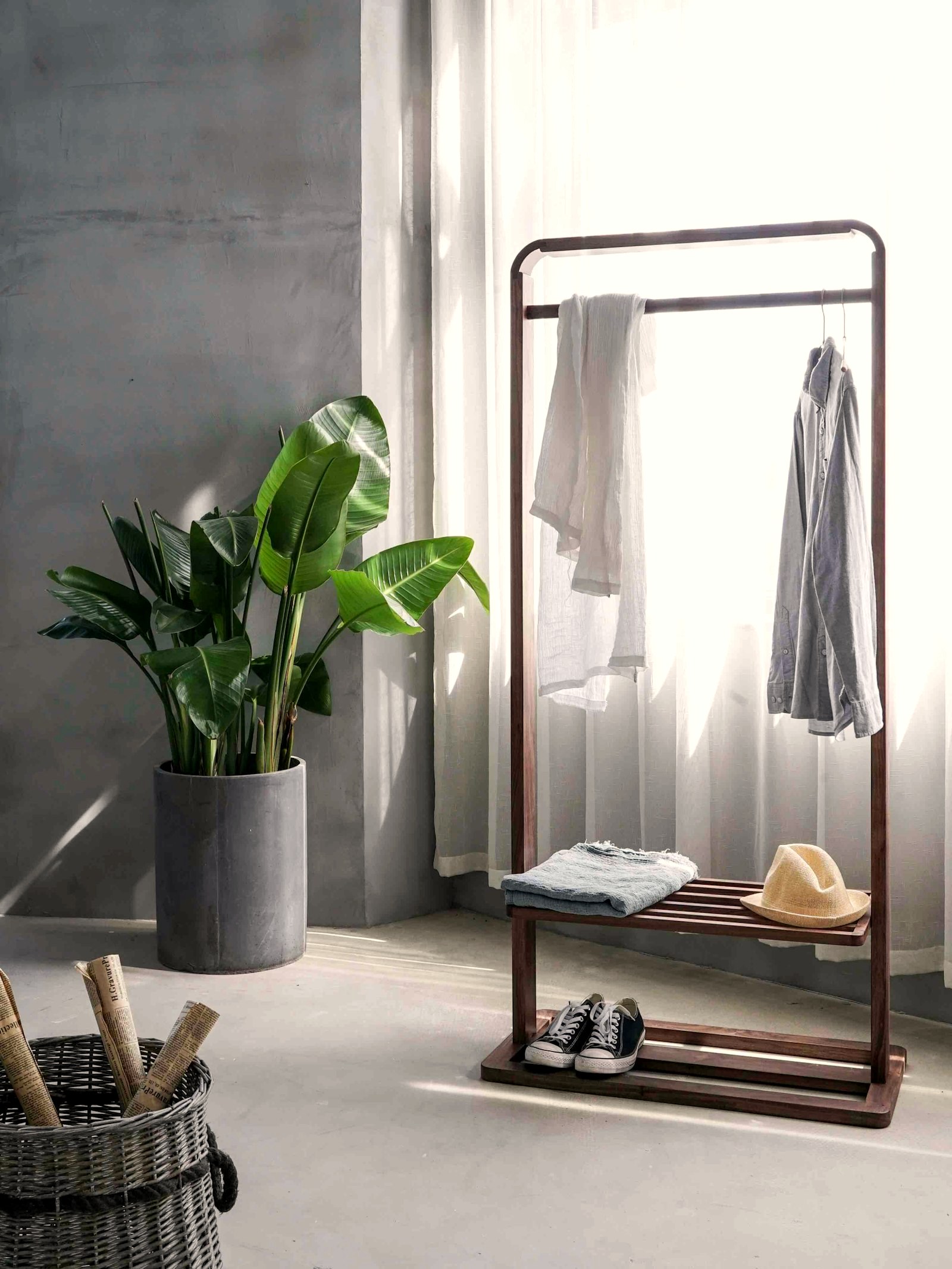
Asket
US price at last check: The T-Shirt $65 at the maker's US store.
Keeps its standing 92 and its rows from its own page of this series: the register's private discipline made public, sizes graded, costs published.
The register systematised, seated at this ladder's head for height, because the anchor's proposition is measured against it. Asket took the fine-basics discipline, name the cloth, grade the sizes, publish the costs, and industrialised it: a T-shirt in a size system no other house on this page attempts, at 65 dollars, a seventh of the anchor's cotton pyjama set. Against the anchor the rows print the honest distance: fit 20 to 13, the difference between a published size system and a classic range honestly printed; value 12 to 5, the same register's arithmetic at a system's prices. Fabric 28, construction 19, fit 20, value 12, longevity 13: 92, set as the anchor of its own page of this series.
Buy the T-Shirt first, the register's best system at its own game. The reader who came here for the night drawer should read this card as the fork in the road: everything the anchor does by inheritance, this house does by publication, and the 23 points between 92 and 69 are almost exactly the price of the receipts.

Sunspel
US prices at last check: the Classic T-shirt $98; the Superfine Cotton Vest $50 at the maker's US store.
Keeps its standing 85 and its rows, audited on its own page of this series: the cloth against the skin, and the page that first derived the anchor's number.
The closest house in spirit, and the anchor's first home in this series: it was on Sunspel's page that Derek Rose's 69 was derived in the open, seated sixth there as the neighbour across London doing the night drawer. The houses are the same discipline pointed at different hours: an English mill record behind plain garments, long-staple cotton worked against the skin, the Classic T-shirt at 98 dollars against the anchor's 440-dollar pyjama set. The rows print the shape of the difference: value 13, the best on this ladder, against the anchor's 5; fabric 24 to the anchor's 22, the mill's cloth a tier above the polished cottons. Fabric 24, construction 17, fit 18, value 13, longevity 13: 85, set as the anchor of its own page of this series and audited there against the garments this site has scored since.
Buy the Classic T-shirt and the Superfine vest, the garments where this house wins its category outright. The reader deciding between this card and the anchor's is deciding which hours the money dresses: the day, at this card, or the night, at the anchor's, and the page prints both numbers so the decision is made with them in hand.
Zimmerli
US price checked today: the Sea Island T-Shirt $229 at the maker's US store.
Keeps its standing 73 and its rows, derived on the Sunspel page and audited on its own page of this series: Sea Island cotton knitted in Switzerland and sewn by hand, its price settled at $229 on the maker's own page.
The altitude above the anchor, and the audit's immediate predecessor: the Zimmerli page in this series held its anchor entire the day before this one, settled its flagship's price at 229 dollars on the maker's own page, and printed the widening of its making badge, Switzerland and the EU, at the size of the credit. The parallel with this page's anchor is the family's own: two old houses, two printed origins, and the difference that Zimmerli's flagship still claims Swiss knitting and hand sewing in its own words while Derek Rose's cotton flagship now prints the Czech Republic in its details table. Against the anchor the rows are the register's honest contest: fabric 25 to 22 for the island fibre, value 5 apiece, the same arithmetic at two altitudes. Fabric 25, construction 18, fit 12, value 5, longevity 13: 73, derived on the Sunspel page and audited on its own page of this series.
Buy the Sea Island tee and the Royal Classic line here if the layer against the skin is where your money goes. The reader building the whole drawer reads this card and the anchor's as a pair, as the Zimmerli page printed them: the Swiss house for the day, the London one for the hours at either end of it.
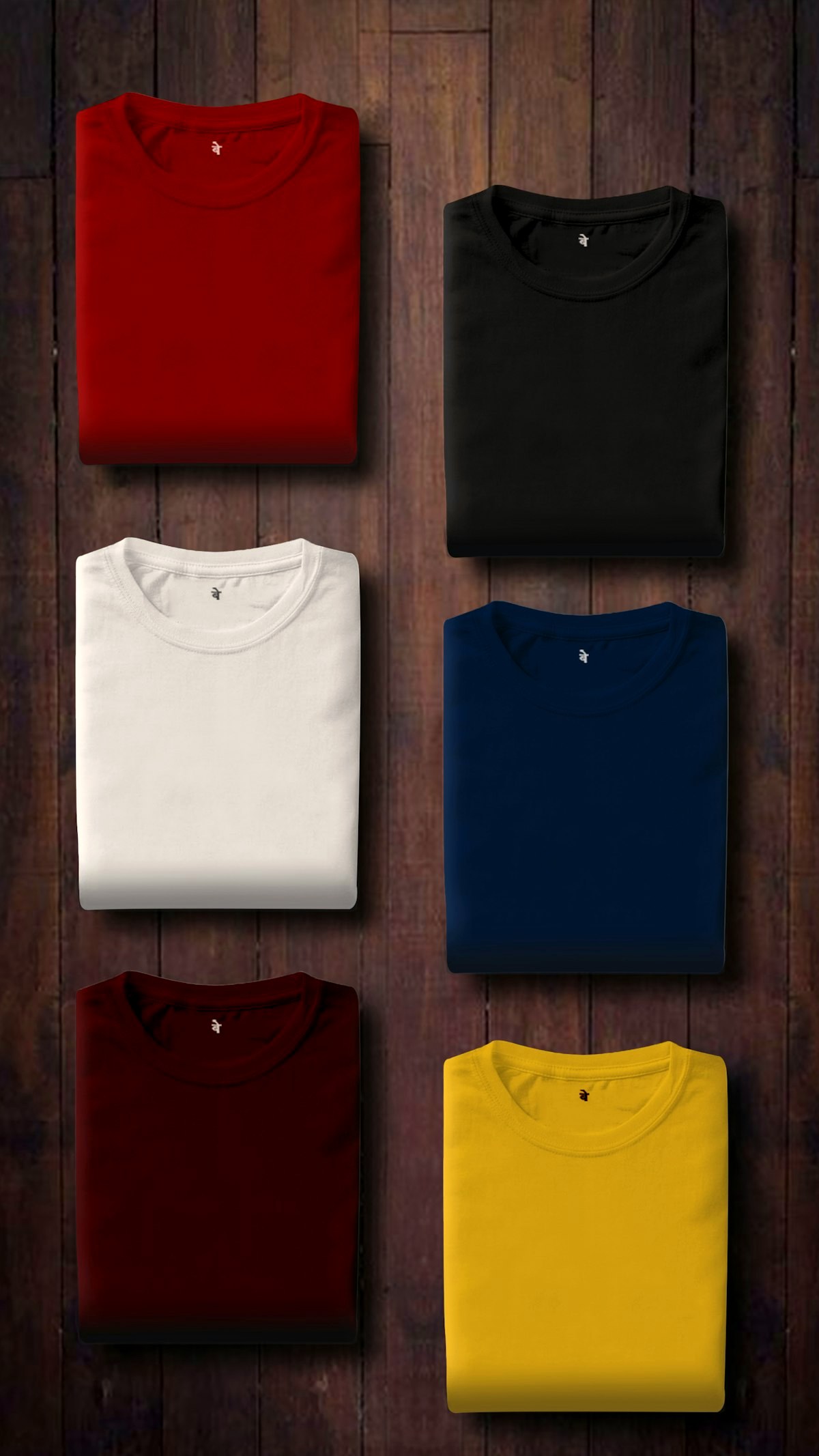
Organic Basics
US prices at last check: the True Boxy Fit Tee $37; the Core Boxer Briefs $95.20 for six at the maker's US store.
Keeps its standing 70 and its rows, derived in the open on the Quince page of this series: the certification pitch with a licence number a reader can actually check.
The certified answer, seated one point above the anchor because its receipts are the newest thing on this ladder. Organic Basics prints its GOTS licence, Control Union CU 1067589, in its own impact report, and this desk has checked the number the slow way: it is the licence printed on the underwear ranking its Core Boxer Brief won at 87. The cloth weights are printed per garment, and the prices are honest ones, 37 dollars for the boxy tee against the anchor's four-figure silk rail. Against the anchor the rows print a generational argument: fabric 23 to 22, the certified organic cottons a point above the polished conventional ones; construction 13 to 17, the anchor's finish the thing a young house has not yet built. Fabric 23, construction 13, fit 12, value 11, longevity 11: 70, derived in the open on the Quince page of this series, where its derivation and its deductions, the 2022 change of owner and the spread of production, are printed in full.
Buy the Core range, the briefs first, at honest prices, and re-check the receipts the way this series does. The reader who wants the night drawer's cloth claims with a number attached starts here; the reader who wants them finished like tailoring reads on to the anchor.
Derek Rose
US price checked today: the Kelburn Brushed Cotton Pajamas $440 at the maker's US store.
Audited at 69 on this page and held entire: the night drawer finished like tailoring, a family house in its centenary year, its cotton flagship at $440 and made in the Czech Republic, its silk at $1,165 and made in the United Kingdom.
The house first, stated plainly, because the audit grades an intact house and the intactness is the record. Jack Lewis Rose started the business in 1926; his son Derek launched the brand under his own name in 1975 and ran it until his death in August 2025; the third generation, Sacha Rose and Nancy Rose-Pagani, has held it since 2003, and the maker's collection page marks the centenary in its own words: One Hundred Years. One Collection. The flagship this audit read entire, the Kelburn Brushed Cotton Pajamas on the maker's United States store today: 100 percent cotton printed in full, heavyweight, fully piped throughout with mother of pearl buttons, three pockets, a two-button adjustable waistband, sizes S to 3XL, 440 dollars, in stock. The silk rail stands above it, the Brindisi set at 1,165 dollars, 100 percent silk, and the Basel MicroModal set, the house's best seller, at 640. Fabric 22, construction 17, fit 13, value 5, longevity 12: 69, derived in the open on the Sunspel page, reproduced on the Zimmerli page, audited and held here.
And the two movements the audit found, printed at the size of the credit. The maker's own product pages split the making: the Kelburn's details table gives its country of origin as the Czech Republic, the Brindisi silk's as the United Kingdom, so the English-making shorthand now survives only on the silk rail, and the Congleton base of the 1975 launch stands as history rather than as the current printed record. And the price has moved against the buyer: the same Kelburn set this site graded at 320 dollars at a department store stands at 440 at the maker's own till, which the value row prints rather than absorbs. Buy the Ledbury batiste boxer and the Kelburn set here, the garments this site has already scored at 73 and 72 on the boxer ranking and the pajama ranking, if the night drawer is where your money goes. It is the one house on this page that finishes pyjamas like tailoring, and at 440 dollars it charges like it knows.
Quince
US price at last check: the Mongolian Cashmere Crew $59.90, beside a struck traditional-retail figure, at the maker's store.
Keeps its standing 59 and its rows, derived in the open on the Everlane page of this series: real cloth and real low prices under a receipt that is a comparison.
The value answer with an asterisk, seated below the anchor because its paperwork scores what its prices promise only in part. The fibres are real and the specifications are published with a precision half this ladder cannot match, micron and staple printed on the cashmere crew's page, and its garments have scored on this site, the merino half zip at 74 in our quarter-zip ranking and the waffle robe at 79 in our robe ranking. The charge stands as derived on the Everlane page: the headline transparency device is a struck-through traditional-retail figure nobody ever charged, the certification claims have needed public correction, the factories are described by their systems and never named, and there is no permanent garment to buy again. Fabric 18, construction 11, fit 11, value 12, longevity 7: 59, kept from its own page of this series.
Buy a garment if you like it, at the price printed in black, and ignore the price printed in grey. Against the anchor this card is the control at the other end of the century: a tenth of the silk set's price buys real fibre and no permanence, and the ten points between 59 and 69 are the measured width of a hundred years.
Calvin Klein
US price checked today: the Icon Cotton Stretch 3-Pack Boxer Brief $52.50 at the maker's US store.
Keeps its standing 47 and its rows from the Sunspel page of this series, and keeps its seat: the most famous underwear name on earth, selling the category with the cloth left out.
The floor, and the reason this ladder has one. Calvin Klein sells more of this category than every other card on the page combined, and sells it the way the Sunspel page's skip verdict printed it: a waistband where the spec should be, the letters doing the work the cloth record does everywhere above it. The Icon Cotton Stretch 3-Pack stands at 52.50 dollars on the maker's store today, in stock, and its page prints the blend's virtues in the language of comfort while the houses above it print islands, mills, licences and gauges. The rows are the verdict in arithmetic: fabric 12, little more than half the anchor's 22; value 4, below even the anchor's 5, because a famous name at a multipack price is still charging for the name. Fabric 12, construction 10, fit 14, value 4, longevity 7: 47, set on the Sunspel page of this series and reseated here because a reader cross-shopping the night drawer will meet this name first, and its number should be waiting.
Buy it only knowing what it is: underwear as branding, adequate and everywhere. Every card above it is a house that prints its cloth; this one prints its initials, and the 22 points between it and the anchor are the measured width of that difference.
The pattern under the ranking
Read the ladder and the night drawer's register explains itself: finish is a cloth strategy pursued at night. The head answers with a system, sizes graded and costs published. The middle answers with a mill and a licence, Derbyshire by way of Switzerland, and Copenhagen's certificate with its number attached. The anchor answers with inheritance, a hundred years of one family's patterns, piped and pocketed and buttoned in pearl. The value answer delivers the fibres and prints its savings in grey. And the floor charges for letters. The anchor sits fifth on its own page, which is the honest outcome the derivation predicted: its finish is still the register's reference for the hours around sleep, and its paperwork has been beaten by houses that publish more.
The second pattern is this page's own, and it is the audit's real subject. This series has now audited a guarantee narrowed to 90 days, a name sold in two pieces, a badge widened to a second country and a flagship price settled at a maker's till. Derek Rose adds the quieter movement: nothing about the house broke, and two things drifted, the cotton rail's making across a border the maker's own table prints, and the flagship's price up 120 dollars against the figure this site had already published for the same set. Neither costs anything to print and both cost everything to hide. The audit prints them at the size of the credit, holds the number the derivation set, and settles the family's open price at the maker's own store. Grade the house on its record, and grade the record-keeper on his.
The ranking at a glance
| Brand | Score | The piece to buy | Price |
|---|---|---|---|
| Asket | 92 | The T-Shirt | $65 |
| Sunspel | 85 | The Classic T-shirt | $98 |
| Zimmerli | 73 | The Sea Island T-Shirt | $229 |
| Organic Basics | 70 | The True Boxy Fit Tee | $37 |
| Derek Rose | 69 | The Kelburn Brushed Cotton Pajamas | $440 |
| Quince | 59 | The Mongolian Cashmere Crew | $59.90 |
| Calvin Klein | 47 | The Icon Cotton Stretch 3-Pack | $52.50 |
The verdict: the anchor holds
Derek Rose keeps its 69, every row verified against the maker's current published record at this check, and the status of the score changes from derived to audited with this page as its family home. The audit's findings are mostly in the reader's favour: a family house in its centenary year with the third generation in charge, compositions printed in full on every product page read, a finish record, piping, pearl buttons, pockets, an adjustable waist, that stands entire on the flagship's own page, and a price disagreement inside this magazine settled at the maker's own till. What did not hold is printed at the same size: the cotton flagship is made in the Czech Republic today, not England, whatever the house's history says, the silk alone prints a United Kingdom origin, the flagship's price has risen to 440 dollars from the 320 this site printed for the same set, and nothing stands behind the clothes beyond a 30-day window and no published repair service. Buy the anchor if the night drawer is where your money goes. Buy Asket for the system, Sunspel for the discipline at a quarter of the pyjama money, Zimmerli for the fibre, Organic Basics for the certificate, and read the skip as the measure of what the famous name leaves out.
Which one to buy
For the system: Asket, 92. The T-Shirt at $65, sizes graded and costs published.
For hand-feel at an honest price: Sunspel, 85. The Classic T-shirt at $98, the register's discipline without the night-drawer tariff.
For the finest layer itself: Zimmerli, 73. The Sea Island tee at $229, sized carefully, because the pack has to stay sealed to go back.
For the certificate: Organic Basics, 70. The Core range, its licence number printed where a reader can check it.
For the night drawer: Derek Rose, 69. The Kelburn set at $440 and the Ledbury boxer, the finish this site has already scored garment by garment.
For real fibre on a budget: Quince, 59. Buy at the price in black; ignore the price in grey.
For the name only: Calvin Klein, 47. Printed here so its number is waiting when you meet it, which you will.
Questions, answered
What brand is most like Derek Rose?
For the drawer itself, Zimmerli at 73, audited on its own page in this series: the same discipline of plain garments in serious cloth at the layer against the skin, its Sea Island T-shirt at 229 dollars. For the system rather than the finish, Asket at 92, sizes graded and costs published, its T-shirt at 65 dollars. For the cloth against the skin at half the altitude’s price, Sunspel at 85, the page that first derived Derek Rose’s 69. For certification with a licence number that checks out, Organic Basics at 70. Derek Rose itself, audited at 69, remains the answer to one exact want: the night drawer finished like tailoring, piped, pocketed and buttoned in mother of pearl, from a family house in its centenary year.
Are Derek Rose pyjamas still made in England?
Partly, and the maker’s own product pages print which part. The Brindisi silk pyjamas, 1,165 dollars on the maker’s United States store, print Country of Origin: United Kingdom, with the composition, 100 percent silk, in full beside it. The brushed-cotton flagship, the Kelburn set at 440 dollars, prints Country of Origin: Czech Republic, its composition, 100 percent cotton, also in full. The manufacturing base at Congleton in Cheshire belongs to the house’s history, the base named when the brand launched under Derek Rose’s own name in 1975; no page this audit read names it today. The audit grades the printed record as it stands: the cotton rail is made in the Czech Republic, the silk in the United Kingdom, and both facts are on the maker’s own pages for any reader to check.
How much do Derek Rose pyjamas cost now?
On the maker’s own United States store at this check: the cotton sets stand at 440 dollars across the rail, the Kelburn brushed cotton, the Ledbury batiste, the Lingfield and the James among them; the Basel MicroModal set, the house’s best seller, stands at 640 dollars; the Brindisi silk set stands at 1,165 dollars. One figure from this site’s own pages is superseded by that reading: our pajama ranking graded the Kelburn set at 320 dollars at Neiman Marcus, and the same set at the maker’s own till is 440 today, a rise of 120 dollars on a garment already scored here. Conforming the ranking’s price cells is owed to the next pass, with this page as the ruling’s home.
Who owns Derek Rose?
The Rose family, in its third generation, and the record is printed on the maker’s own pages and in the family’s own statements. Jack Lewis Rose started the business in 1926. His son Derek joined in 1953, launched the brand under his own name in 1975, and ran it until his death on August 29, 2025, at the age of 93. His son Sacha Rose has been chief executive since 2003, and his daughter Nancy Rose-Pagani is design director. The maker’s story page states three standalone London stores and names no parent group, and 2026 is the house’s centenary year, marked on its own collection page: One Hundred Years. One Collection. No sale, no buyout and no licensing of the name stands on any record this audit read.
Is Derek Rose worth the money?
Its value row of 5 is the anchor’s most honest number, and the audit hardens rather than softens it: the cotton flagship is 440 dollars on the maker’s United States store today, up 120 dollars on the 320 this site printed for the same set at a department store, the modal set is 640 and the silk 1,165. What the money buys is printed on the maker’s own pages: compositions in full on every product page read, cloths and fabric weights named, a pyjama jacket fully piped with mother of pearl buttons, three pockets and a two-button adjustable waistband, from a family house that has done this for a hundred years. What it does not buy is any instrument behind the garment: a 30-day return window on items in new condition, and no guarantee term or repair service published on any page this audit read. Buy it if the night drawer is where your money goes and finish is the point; size and cloth are printed plainly enough to decide with the numbers in hand.
The honesty section
Six scores on this page already stand in this series, and each card names its home: Asket set at 92 as the anchor of its own page; Sunspel set at 85 as the anchor of its own page and audited there; Zimmerli derived at 73 on the Sunspel page and audited on its own page; Organic Basics derived at 70 in the open on the Quince page; Quince derived at 59 on the Everlane page and kept on its own; and Calvin Klein set at 47 as the Sunspel page's skip. The anchor's 69 was derived in the open on our Sunspel page, from the published record, and reproduced with its rows on our Zimmerli page. This page audited the anchor against the maker's current published record and holds it entire: fabric 22, construction 17, fit 13, value 5, longevity 12. What the audit changes is the score's status, derived to audited, on the two pages that cite it, and one price on a fourth: the Kelburn Brushed Cotton Pajamas stand at 440 dollars on the maker's United States store at this check, and our pajama ranking's card, per-year table and answers, which print the same set at 320 dollars at Neiman Marcus, are owed a conforming edit at the next pass, with this page as the ruling's home for both changes. The audit's sourcing is printed rather than smoothed over: the flagship findings rest on the maker's own current product pages, read entire at this check, which print the Kelburn's price, 440.00 dollars, its composition, 100 percent cotton, and its country of origin, the Czech Republic, and the Brindisi silk set's price, 1,165.00 dollars, its composition, 100 percent silk, and its country of origin, the United Kingdom; the ownership findings rest on the maker's own story page, which states the family's 1926 start and three standalone London stores and names no parent group, and on the family's published statements on the founder's death in August 2025 and the third generation's tenure; and the returns findings rest on the maker's published terms, a 30-day window on items in new condition, with no guarantee term or repair service published on any page read. Three premises this page was briefed with are corrected in the open. Basel is not a place or an acquisition: it is the house's best-selling MicroModal collection, its full set at 640 dollars on the maker's store today. No Savile Row address or claim stands on the maker's current pages: its story page prints three London stores, Notting Hill pictured, and the tailoring inheritance stands in the garment's cut rather than in an address. And the cotton flagship is not made in England today: its own details table prints the Czech Republic, the silk prints the United Kingdom, and the Congleton base belongs to the house's history. Hanro was considered and not ranked, as the Sunspel page recorded before this one: a real house, an empty record in these pages, and the family reopens if a Hanro garment is scored here. Prices and programmes were checked in October 2026 against the makers' own published pages and current retail listings, following the method on our methodology page.
Buy links follow the deep-link rule: each card keeps the door its scoring page established, and every door on this page was verified live at this check, the anchor's flagship product page read entire, the Asket, Sunspel, Zimmerli, Organic Basics and Quince doors returning live, and the Calvin Klein door standing at the maker's Icon 3-Pack product page, read at the Zimmerli page's check today behind its known bot wall. One door changes on this page only, by the precedent the Officine Générale and Lands' End audits set: the anchor doors at its flagship's own product page rather than at the underwear collection the Sunspel page established, because an audit page doors at the garment it read; the citing pages keep their doors, and no card on this page doors at a homepage, so no exception is logged. Photographs come from the bank credited in CREDITS.md; the bank holds no photograph of a Derek Rose garment and no true sleep frame, the same gap our pajama ranking admitted, and the cards run on the bank's stack, rail and profile frames rather than on borrowed product photography. The anchor's card frame is the one the Sunspel and Zimmerli pages gave it, neutral garments on a wardrobe rail, captioned as exactly that; no frame on this page is captioned as a garment it does not show.