
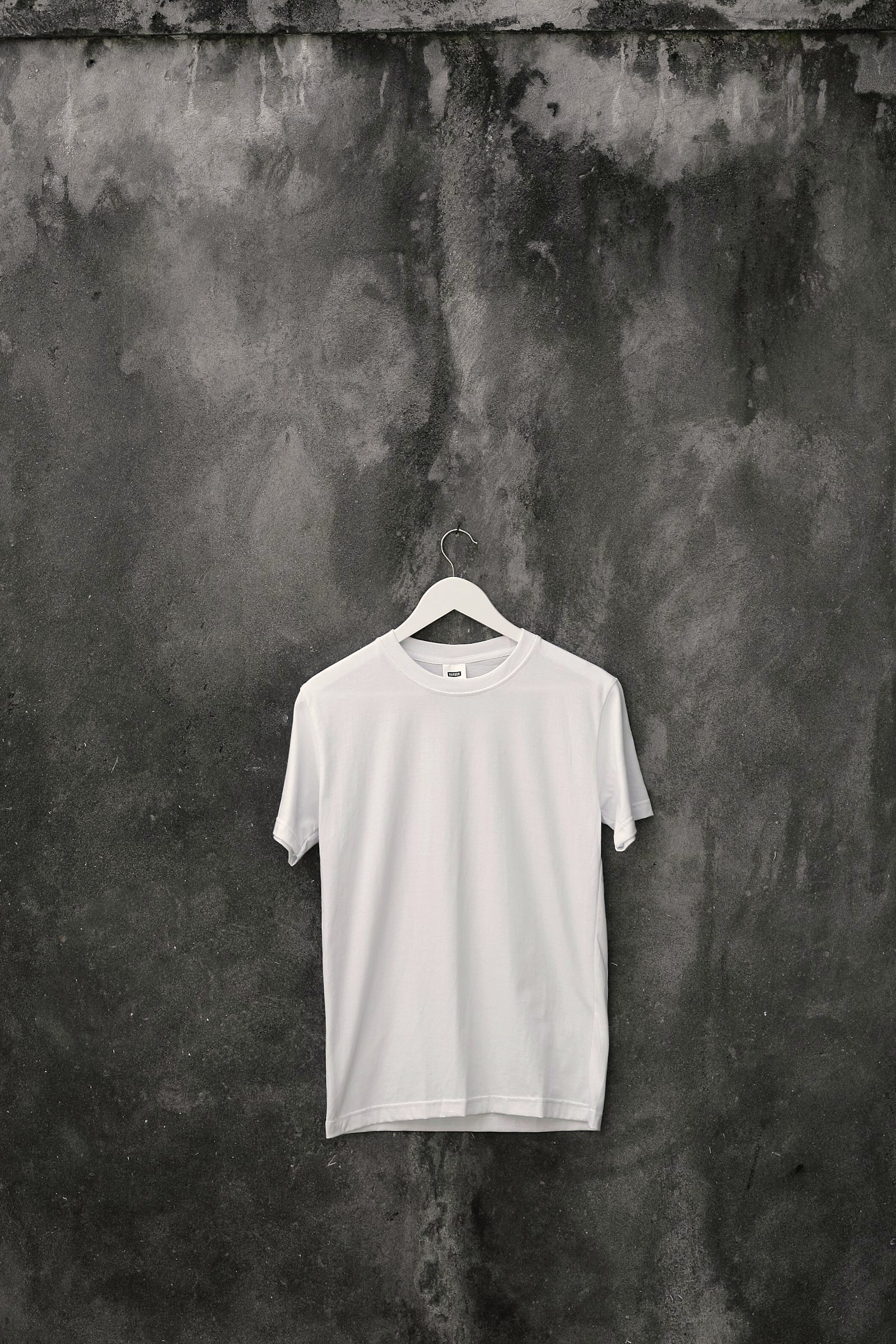
The want underneath the search: the plainest garments in the wardrobe, a tee, a vest, a pair of boxers, cut from one fine cotton in one factory until they cannot be made better. This page scores who else works that way, and what the discipline costs at every altitude.
Checked and updated October 2026
The verdict, up front: seven names scored out of 100 on the published brand basis: fabric and cloth 30, construction and craft 20, fit range and sizing honesty 20, value 15, longevity 15. Asket wins at 92, keeping the standing score from its own page in this series, rows intact: it took the anchor's wager, one garment perfected forever, and added the two things the anchor never published, graded sizes in three lengths and a cost breakdown for every piece. Sunspel is second at 85, and the number is handled differently from a fresh derivation, on purpose: the anchor already carries a score on this exact basis, set on our Quiet Luxury Index, so this page audits it in the open against the six Sunspel garments this site has scored, vest to sweatpants, rather than renumbering its own magazine. Uniqlo is third at 84, standing. The named skip is Calvin Klein at 47, a new score derived on this page: the house that sells its name on a waistband, graded against houses that sell cloth.
What people actually want from Sunspel
The want under this search is the basics drawer, perfected: the garments worn against the skin, made from one fine cotton, by one factory, for longer than anyone has been alive to argue about it. Sunspel was founded in 1860 in Nottingham by Thomas Hill, a hosiery and underwear maker, and it has worked from its Long Eaton factory since 1937. The house's whole argument fits in one cloth: Q82, a two-fold yarn spun from long-staple cotton, knitted into the jersey its tees, vests and underwear share, refined for a century and a half instead of replaced each season. The receipts are unusual and checkable. The house introduced the boxer short to Britain in 1947, when John Hill came back from an American honeymoon and re-engineered the underwear he had seen there. Its Riviera polo dressed James Bond in Casino Royale, because the costume designer wanted a polo that read as nothing but cloth and fit. Nothing in the line is printed with the name. The reader's question is the one this series exists to answer: who else perfects instead of expands, and at each altitude, what does the same discipline cost?
A note on altitude. This page reads the fine-basics register at four heights, because that is how the search is actually shopped: the systematiser, Asket in Stockholm, which industrialised the anchor's own idea; the mills, John Smedley in Derbyshire and Zimmerli in Switzerland, which charge for time and handwork; the neighbour and the scale answer, Derek Rose across London doing the night drawer, and Uniqlo doing the same fibres at a tenth of the ticket; and the floor, where the most famous underwear name on earth sells the category with the cloth left out. The anchor sits second on its own page, which is the honest outcome: its hand-feel is still the register's reference, and its system has been beaten by a house that publishes more.
How the scores work, and the audit of the anchor
Same ruler as every brand ranking on this site, published on our methodology page: fabric and cloth out of 30, construction and craft out of 20, fit range and sizing honesty out of 20, value out of 15, longevity out of 15. Two scores on this page are standing scores reproduced exactly: Asket keeps its 92 and its rows (28, 19, 20, 12, 13) from brands like Asket, and Uniqlo keeps its 84 and its rows (22, 16, 19, 15, 12) from the same page. Four numbers are set on this page and labelled where they stand: John Smedley's, Zimmerli's, Derek Rose's and the skip's, each derived in the open from the published record named in its call.
The anchor gets the open treatment too, but it is an audit, not a fresh derivation, and the distinction is the discipline. The Quiet Luxury Index already scored Sunspel on this identical basis at 85: fabric 24, construction 17, fit range 18, value 13, longevity 13. A second number for the same house on the same ruler would be this magazine renumbering itself, so the standing rows stand, and what this page adds is the evidence they rest on, which has grown since the Index was published. This site has now scored six Sunspel garments, more than any other house in the basics drawer: the Superfine Cotton Vest, 84, the winner of the tank ranking; the Superfine Cotton Underwear T-Shirt, 83, the cloth winner on the undershirts ranking; the Classic Boxer Short, 81; the Supima Loopback Sweatpants, 81; the Stretch Cotton Boxer Brief, 76; and the Classic T-Shirt, 76. The mean is 80, and the census is what the brand rows predict. Fabric 24: the garment cloth rows run 25, 26, 27, 27, 26, 25, the most consistent cloth record on the site, no garment below 25 in six categories; the brand row sits a point under the best of them because it grades the whole range, and cotton jersey, however fine, is not the fibre aristocracy. Construction 17: the garment rows run 16 to 18, one factory, hand-finished tees, no construction theatre. Fit range 18: the garment rows run lower, 14 to 18, because each grades one cut; the brand row grades the welcome, and the maker's US store sells the Classic T-shirt from XS to XXXL, verified on the product page for this ranking. Value 13: read it against the garment rows of 7 to 11, which price one garment against its category; the brand row prices the ladder, and the ladder's doors are the $50 vest and the $65 underwear tee, the cheapest entries into any house on this page above the scale answer. Longevity 13: founded 1860, in the same factory since 1937, still making the garment it is famous for. Add them: 24, 17, 18, 13, 13. The brand score is 85, audited, not altered. One neighbouring number is deliberately not carried: the cool brands ranking prints Sunspel at 86 on a different published ruler, design language 40, cloth 30, value 30. Different basis, different number, both labelled. If a future Sunspel garment is scored and the census moves, the audit will be printed again.
Seven brands, ranked
Asket
US price checked today: The T-Shirt $65 at the maker's US store.
The call: the anchor's wager, taken further than the anchor takes it, keeping the 92 and the rows from brands like Asket, where this house won its own page as the first anchor in the series to do so. Sunspel perfects one cloth in private; Asket perfects one permanent collection in public, and the difference is the score. Its T-shirt is built from long-staple cotton like the anchor's, graded in sizes across three lengths, which is what the fit row of 20 records, the only perfect fit score in this series, and every garment carries a published cost breakdown, the receipt the anchor has never printed in 165 years. The price of the comparison is printed on the maker's own store today: $65 for its tee against $98 for the anchor's Classic. What the winner does not beat is the hand-feel: the anchor's two-fold Q82 jersey against the skin is still the register's reference, and Asket's heavier, more utilitarian cloth is a different pleasure, durability argued over softness. Buy the tee here if the system, the sizes and the receipts are the point. It is the discipline the search is looking for, with the working shown.

Sunspel
US prices checked today: the Classic T-shirt $98; the Superfine Cotton Vest $50 at the maker's US store.
The call: the anchor, standing at the 85 the Quiet Luxury Index set on this basis, audited above against the fullest garment census on this site: six scored garments, a tank ranking won outright, an undershirt that took the cloth honours, and cloth rows between 25 and 27 every single time. The case for the house is the drawer it owns. Nobody else here has spent 165 years on the garments worn under the garments, and it shows in the only place it can: the feel of a two-fold long-staple jersey that the maker's US product page traces to a single Californian farm, cut and sewn in the factory the house has occupied since 1937. The deductions are printed with the praise. The range has drifted beyond the drawer it perfected, out to a suede jacket at $1,795 that the discipline cannot explain, and the home store still prices in sterling, which is why two of its garment cards on this site carry pounds. Buy the vest at $50 first, the garment where the anchor wins its category at the lowest ticket it sells, then the underwear tee at $65. It is the hand-feel champion of this page, beaten only by the house that turned its private discipline into a public system.
Uniqlo
US price checked today: the U Crew Neck T-Shirt $19.90 at the maker's US store.
The call: the same want answered by a supply chain, keeping the 84 and the rows from brands like Asket, where this house was scored in this series. Uniqlo sells the anchor's fibres at the anchor's opposite prices: a Supima cotton crew neck at $24.90 and the U tee, heavyweight jersey with a bound collar, at $19.90 on its US store today, a fifth of the Classic T-shirt's ticket. The value row of 15 is the highest on this page and it is not close. The fit welcome is nearly the winner's, sizes running wider than the anchor's, honestly graded, which the fit row of 19 records. The deductions stand from its scoring page: the cloth has a ceiling the mills above it do not, the jersey is good rather than memorable, and the top of the range is rented out to collaborations that churn by season, which is what the longevity row of 12 is pricing. Buy the U tee and the Supima here if the budget is the brief, and know exactly which rows the savings came out of: fabric 22 against the anchor's 24, and the hand-feel that goes with it. It is the discipline's arithmetic without the discipline's romance, and for most drawers it is enough.
John Smedley
Price checked today: the Isis Sea Island Cotton Polo £200 at the maker's store; US retail typically $250 to $300.
The call: the closest relative, and a new brand score set on this page from the fullest knitwear record on this site. Four Smedley garments have been scored here and three of them won their rankings: the Lundy crew neck at 87, the Cherwell roll neck at 85, the Bryn cardigan at 84 and the Isis polo at 79, with garment yarn rows of 26 to 28 and longevity rows of 14 to 15. The brand rows are built from that record: fabric 26, for Sea Island cotton and extra-fine merino knitted at the finest gauges in one Derbyshire mill; construction 18, fully fashioned, each piece passing through fifty pairs of hands by the maker's count; fit 13, the honest deduction, classic English cuts in a narrower welcome than the anchor's; value 8, the Isis at £200 on the maker's store today; longevity 14, founded 1784, eighth generation, same mill. Add them: 26, 18, 13, 8, 14, and the brand score is 79. It loses to the anchor on range: Smedley is knitwear only, with no underwear drawer to audit, and its discipline stops at the sweater. Buy the Lundy here if knitwear is the gap in the wardrobe. It is the anchor's argument, 76 years older, one category narrower.
Zimmerli
US price checked today: the Sea Island T-Shirt $219 at the maker's US store.
The call: the altitude above the anchor in its own category, and a new brand score derived in the open from the published house record, printed plainly because this site has not yet scored a Zimmerli garment. Fabric 25: Sea Island cotton, hand-picked in Barbados and worked by this house longer than anyone, plus the superfine rib of the Royal Classic line. Construction 18: underwear cut and sewn in Switzerland on hand-guided machines, with the seams given time the anchor's factory would recognise; the most thorough outside reporting on the house, Permanent Style's underwear project, found the material quality consistently noticeable across everything it tried, and this page treats that as evidence, not as our measurement. Fit 12: twelve shapes in Royal Classic alone, and the deduction is the cuts themselves, classic to the edge of dated, in a range sold through a thin distribution. Value 5: the Sea Island T-shirt is $219 on the maker's US store today, more than double the anchor's Classic, and the Royal Classic tank top is $92. Longevity 13: founded by Pauline Zimmerli in 1871, Swiss-made for over 150 years. Add them: 25, 18, 12, 5, 13, and the brand score is 73. Buy the Royal Classic here if underwear is where your money goes and the anchor felt almost fine enough. It is the one house on this page that out-fines Sunspel, and it charges like it knows.
Derek Rose
US price checked today: the Ledbury Cotton Batiste Boxer $100 in classic fit, $120 in modern fit, at the maker's US store.
The call: the neighbour across the same city, and a new brand score derived in the open from the two garments this site has scored: the James boxer short at 73, whose construction our boxers ranking said reads like tailoring, and the Kelburn pajamas at 72, the best-made set on that page. The brand rows follow the garments: fabric 22, for the signature cotton batiste and silk at the top of the range, a level below the anchor's single-cloth record; construction 17, back panels, hand-finished fly fronts, the garment rows of 18 and 19 discounted for a range that also sells printed leisurewear; fit 13, two fit families, classic and modern, honestly labelled; value 5, the Ledbury batiste boxer at $100 in classic fit on the maker's US store today, $120 in modern fit, and pajamas at $320; longevity 12, a London house founded in 1926 and still family-run in its third generation. Add them: 22, 17, 13, 5, 12, and the brand score is 69. It beats the anchor at night and loses to it all day: its pajamas and boxers are the finer evening drawer, and it has no answer to the vest, the underwear tee or the loopback. Buy the boxer here if the night drawer is the project. It is what the anchor would look like if it had chosen sleep over skin.
Calvin Klein
US price checked today: the Icon Cotton Stretch 3-Pack Boxer Brief $52.50 at the maker's US store.
The call: the anti-anchor, and a new score set on this page so the charge is graded rather than asserted: fabric 12, construction 10, fit range 14, value 4, longevity 7. Sunspel's name appears nowhere on its garments and everywhere in its cloth spec; this house reverses the trade, and its one garment scored on this site is the proof: the Ultra Soft Modal Boxer Brief is the underwear ranking's named skip at 52, convicted there as a logo tax, itemised. The brand rows are the garment's rows grown up. The cloth is commodity cotton and modal blends, spun anywhere, specified nowhere; the construction is licensed and rotating, which is why the same product name fits differently by year; and the price architecture is a permanent promotion, the Icon three-pack listed at $52.50 on the maker's own store today, $17.50 a pair for cloth that costs what the anchor's vest money buys outright at the winner's end of this page. The fit row of 14 is real and it is the only one: the sizes are broad, the grading is consistent, and a man can buy his size in any airport on earth. The anchor charges $98 for a tee with nothing on it. The skip charges for the letters and lets the cloth confess. The six names above are where the money goes instead.
The pattern under the ranking
Read the ladder and the fine-basics register explains itself: perfection is a cloth strategy, and every row on this page is a way of paying for it or avoiding it. The winner took the anchor's private discipline and made it a public system, sizes graded, costs published, and the seven-point gap between 92 and 85 is almost exactly the price of the receipts Sunspel never printed. The anchor keeps the crown that matters most to the search: the cloth against the skin, proven six garments deep. The mills charge for time, Smedley in decades of gauge refinement, Zimmerli in Swiss minutes per seam, and both are honest trades at honest altitudes. The neighbour charges for finish and stops at the night drawer. The scale answer charges for none of it and delivers the fibres at a fifth of the price, with the hand-feel as the declared casualty. And the floor charges for letters: a waistband where the spec should be. One name is deliberately handled differently on this page, and it is the anchor itself: already scored on this basis by the Quiet Luxury Index, audited here against a garment census that did not exist when the Index was published, and confirmed rather than renumbered. When you shop this register, run the test the table below is built on: open the product page and look for the cloth's name, its staple, its farm, its mill. The houses that print them are the ranking. The house that prints only its own name, in elastic, is the skip.
| Brand | Score | The piece to buy | US price |
|---|---|---|---|
| Asket | 92 | The T-Shirt | $65 |
| Sunspel | 85 | The Superfine Cotton Vest | $50 |
| Uniqlo | 84 | The U Crew Neck T-Shirt | $19.90 |
| John Smedley | 79 | The Isis Polo | £200 at the maker's store |
| Zimmerli | 73 | The Sea Island T-Shirt | $219 |
| Derek Rose | 69 | The Ledbury Batiste Boxer | $100 |
| Calvin Klein | 47 | None | Icon 3-pack $52.50 |
The Skip · 47/100
Calvin Klein is this page's named loser, and the charge is specific to this register. Every name above it, including the anchor at 85 and the scale answer at 84, is selling a version of the same idea: a fine cotton, a known factory, a garment that has been refined instead of replaced. The skip sells the idea's packaging. Its underwear is the most recognised in the world and the least specified: commodity blends, licensed production that rotates by contract, and a waistband doing the work a fabric row should do, at $17.50 a pair inside a three-pack that is permanently on promotion. This site has handled the garment once, on the underwear ranking, and sent it home at 52 as a logo tax itemised; the brand score of 47 derived here is that garment's record read at house level, with the fit row of 14 kept because the sizes honestly are broad and consistent. A man building the drawer this page is about will touch these garments more than anything else he owns. The six names above the skip are selling the touch. The skip is selling the letters he will see in the mirror, and charging for them by the pack.
Which one to buy
If you buy one thing: the Asket T-Shirt at $65, the register's best system at the anchor's own game, or the Sunspel Superfine Cotton Vest at $50 if you were really shopping the anchor, the garment where it wins its category outright. If hand-feel is the brief: the anchor's Classic T-shirt at $98 and its underwear tee at $65, the two-fold jersey nothing else on this page matches against the skin. If knitwear is the gap: the Smedley Lundy crew, the winner of our crew neck ranking at 87, from the mill at No. 4. If underwear is where the money goes: Zimmerli's Royal Classic line, the altitude above the anchor, priced like it. If the night drawer is the project: the Derek Rose Ledbury boxer at $100. If the budget is the brief: the Uniqlo U tee at $19.90 and its Supima crew at $24.90, the fibres without the mill. The other pages in this family score the winner on brands like Asket, the scale answer on brands like Uniqlo, and the register's founding index on the Quiet Luxury Index.
Questions, answered
What brand is most like Sunspel?
John Smedley is the closest relative: the same island, the same single-mill fine-gauge discipline, founded 76 years earlier, and the only other house on this page whose garments have won their rankings on this site. It scores 79 here, a new brand score derived in the open from its four scored garments. Asket wins the page at 92 by taking the anchor's permanence further than the anchor does, with graded sizes and published cost breakdowns. Uniqlo is the same want answered at industrial scale, standing at 84.
Is Sunspel worth the money?
Garment by garment, and this site has scored six of them. The Superfine Cotton Vest won the tank ranking at 84 and costs $50 in the US, the cheapest door into the house and the best value it sells. The underwear T-shirt at $65 took the cloth honours on the undershirts ranking at 83. The Classic T-shirt at $98 is the hand-feel purchase: a two-fold long-staple jersey made in the house's own Long Eaton factory, traceable to a single farm. The further the line strays from the cotton drawer, the less the discipline explains the price, and a suede jacket at $1,795 is graded as range, not as the anchor's craft.
Why does Sunspel score 85 here and 86 on the cool brands page?
Different rulers, both printed. The cool brands ranking grades design language out of 40, cloth and construction out of 30, and value out of 30, and Sunspel stands at 86 on that ruler. This series grades fabric out of 30, construction out of 20, fit range out of 20, value out of 15, and longevity out of 15. On that basis the Quiet Luxury Index set Sunspel at 85, rows 24, 17, 18, 13, 13, and this page audits those rows against the six garments this site has scored rather than renumbering them. One basis, one number, and the working is shown.
Sunspel or Asket: which should I buy?
Asket, if the system is the point: its T-shirt is $65 against $98, its sizes are graded in three lengths with a fit row of 20 that is the only perfect fit score in this series, and every garment carries a published cost breakdown. Sunspel, if the cloth against your skin is the point: the Q82 two-fold jersey is the finest-feeling cotton in the drawer, its vest and underwear tee are category leaders on this site, and no other house here has spent 165 years on garments worn under other garments. The scores are 92 and 85, and both numbers are printed with their rows.
Why is Calvin Klein the skip on this page?
Because it is the anti-anchor: a house whose name is the product. Its one garment scored on this site, the Ultra Soft Modal Boxer Brief, is the underwear ranking's named skip at 52, convicted as a logo tax itemised. The brand score derived on this page, 47, is built the same way: commodity cotton and modal blends earn a fabric row of 12, licensed and rotating production earns construction 10, and a permanent promotion ladder, the Icon three-pack at $52.50 on the maker's own store, earns value 4. The fit row of 14 is genuine: the sizes are broad and the grading is consistent. It is the only row the house earns, and a waistband is not a cloth.
How this ranking stays honest
Scores follow our published methodology and are re-checked on the cadence in the byline. Two scores on this page are standing scores reproduced with their rows: Asket's 92 and Uniqlo's 84, both from brands like Asket in this series. The anchor's 85 is a standing score of a different kind, set on the Quiet Luxury Index on this identical basis, and this page's treatment of it is printed in full above: an audit against the six garments this site has scored since, rows confirmed, number unaltered, because a magazine that renumbers its own houses quietly has no scores worth reading. Four numbers are new on this page and are labelled as such in their calls: John Smedley's and Derek Rose's, derived from their scored garments; Zimmerli's, derived from the published house record with the absence of a scored garment stated in its call; and Calvin Klein's. One name was considered and not ranked: Hanro, the Austrian house founded in 1884, whose mercerised cottons are real and whose record in these pages is empty; the seven places went to houses with a published record on this site, and if a Hanro garment is scored here, the family reopens. Prices are US prices checked today unless a maker's store prices in its home currency, in which case the currency is printed: Asket's, Sunspel's, Uniqlo's, Zimmerli's, Derek Rose's and Calvin Klein's from their makers' US stores, John Smedley's in pounds from its own store with the US retail range noted. The photography is this magazine's licensed scene photography from our own bank; no brand's campaign or lookbook imagery is used anywhere on the page. The bank holds no mill interior frame, no white jersey macro and no Sea Island cotton frame, so the photographs stand for the register, the rail, the fold and the garment class, not for the factories, and the page says so here rather than borrow a maker's own imagery to close the gap. When a maker changes cloth, price or model materially, the score moves and the move is noted here.