

The anchor's register in motion: office tailoring worn as daily dress, the look the house built its name on. Our bank holds no photograph of an Express garment, so no frame on this page is captioned as one.
The short answer: Express stood at 45, set new on our Banana Republic page from the maker's own product page, fabric 12, construction 9, fit 15, value 5, longevity 4, and reproduced exactly on our Gap page. This page audits the anchor against the maker's current published record and holds every row: the homepage still prices by stacked event, the afterlife is still a window with nothing behind it, and the company now belongs to the landlords who bought it out of Chapter 11. The total is 45, audited. Above the anchor, the office rail stands as the neighbouring pages set it: Spier & MacKay at 76, J.Crew at 73, Banana Republic at 69, Hockerty at 56 and Indochino at 49, with Zara at 48 as the skip, and the anchor seated last on its own page, below the skip, in score order.
What people actually want from Express
The want under this search is the first office wardrobe, solved in one store: the slim suit, the dress pant with a name, the shirt that fits off the rack, in every size, today, at a price that arrives after the discounts do their work. Express built that want's mall edition over four decades: the Photographer pant and its named-fit library taught a generation of office workers their size by a word rather than a number, and the store stood in the corridor beside the food court doing it. This page exists because the anchor's number was set on another house's brief, as a skip, from one product page and a bankruptcy filing. The audit owed the number a reading on its own terms: the sale out of Chapter 11 has closed, the new owners have had two years, and the maker still runs the store. What does it publish now, about the cloth, the price and the garment's life after the till?
The answer is a system unchanged under new ownership. The event still leads the front door, the stack still makes the price, the window is still the whole afterlife, and the cloth the score was costed on stands unrebutted in the maker's record. What changed is above the clothes: the company itself.
How the scores work
Same ruler as every page in this series, published on our methodology page: fabric and specification record out of 30, construction 20, fit and size range 20, value 15, longevity and repair 15. One score on this page is audited, the anchor's, and it holds; every other number already stands in this series, and each card names its home.
The standing record, in full. The Banana Republic page set the anchor's rows new from the maker's own product page: fabric 12, construction 9, fit 15, value 5, longevity 4, summing to 45, on three counts: a flagship suit pant listing at $128 and reaching $96 only after two stacked promotions; a suiting cloth of 55 percent wool and 41 percent polyester under that arithmetic; and a company that had filed for Chapter 11 in April 2024 and closed some 95 stores. The Gap page reproduced the number entire, rested in prose. This page audits the anchor against the maker's current published record, verifies each row, and becomes the score's family home. No row moves, and the pages that carry the anchor keep their numbers entire; only the status word changes, set to audited, at the next pass, with this page as the ruling's home.
Fabric, 12, stands. The row was costed on the maker's flagship suiting record, and that record stands as read: the Modern Tech Suit Pant's cloth is 55 percent wool and 41 percent polyester, two fifths plastic at a wool garment's list price, the weakest suiting specification on this page by a distance the ladder makes plain, the configurators above it printing compositions across a hundred and fifty fabrics and the specification rival at its head crediting cloth to named mills. One limit is printed here rather than smoothed over: at this check the maker's product pages answer automated reads with the access wall this series records at J.Crew, so the audit could not re-read the flagship's page, and it does not pretend otherwise. What it could verify is that nothing in the maker's public record since the score was set rebuts the cloth or the price, no reformulated flagship, no published upgrade, no new specification habit on the rail. A row graded on an unrebutted record, with the wall disclosed, stands. The 12 stands.
Construction, 9, stands, verified on the record. Nothing in the maker's published record under its new owners changes the making grade in either direction: mall-scale suiting construction, fused where the page above it is half-canvassed, with no construction vocabulary on the rail beyond fit names and stretch claims, no canvas standard, no stitch count, no origin line a buyer can grade. A change of ownership is not a change of construction, and an audit does not move a grade on a press release, in either direction. The 9 stands.
Fit, 15, stands, verified live. The one honest asset the scoring page credited remains the house's public architecture: a library of named fits carried over from its Photographer years, slim and extra slim and classic cuts named as fits rather than buried in a size chart, stocked in stores where the fit can be tested before money moves. The maker's own front door at this check leads its men's rail with modern tailoring and puts men's suits among its trending searches, the office rail still the house's centre. It is the widest named welcome at the anchor's end of this ladder, and it is why the total is a number with a fit row doing most of its honest work. The 15 stands.
Value, 5, stands, verified live at first hand. The scoring page charged a price reached by stacking, and the audit found the architecture standing entire on the maker's own front door today. The homepage leads with a limited-time Fall Fashion Event, priced by price point rather than by garment: fall steals at $25 and up, Portofino shirts at $39 and up, jackets and coats at $69 and up, free shipping at $75, and an extra 20 percent off for holders of the house credit card printed on the same page, a third layer waiting at the till. The flagship's arithmetic is the same shape one level down, a $128 list reaching $96 through a 25 percent reduction and an insider stack. The row was never a claim that the till price is dear; it often is not. It prices a printed price that nobody is asked to pay and everybody is asked to admire being reduced, which makes every garment's value a negotiation the buyer did not agree to. Under new owners, the machine runs as it ran. The 5 stands.
Longevity, 4, stands, verified live. The row was set at 4, the lowest this series prints, on a company inside a bankruptcy, and the audit confirms the completed record: Express Inc. filed for Chapter 11 in April 2024, closed some 95 Express stores and all 12 of its UpWest stores, and in June 2024 a court approved the sale of most of its assets, reported at about $174 million, to Phoenix Retail, a joint venture of the brand firm WHP Global with three of its own mall landlords. The afterlife behind the clothes is the derivation's, unchanged: a returns window of 30 days from delivery on United States online orders, 60 days at the Factory Outlet, free in store, with a $6.99 deduction for the prepaid mail label, and no repair programme, no guarantee term and no resale programme anywhere in the maker's published record. The contrast on this page is printed on the cards above: a configurator publishing a fit guarantee with alterations or a remake behind it, against a house whose published commitment to a suit ends on day 30 and whose own corporate life required rescuing by its landlords. Fabric 12, construction 9, fit 15, value 5, longevity 4: 45, set on the Banana Republic page, audited and held here.
The bookkeeping, printed: Spier & MacKay's 76, J.Crew's 73, Banana Republic's 69, Hockerty's 56, Indochino's 49 and Zara's 48 are standing scores from their pages in this series, reproduced with their rows; nothing here re-derives them. The ladder is seated in score order entire, which seats the anchor last on its own page, below the skip, and the page prints that seating rather than arranging around it. Zara holds the skip's sentence at 48, above the anchor, because the skip in this series names the house the search should not settle for, and for this search that house is the fast-fashion answer, which sells the office as an effect; the anchor is not sentenced here because it is the subject, audited entire, and a subject graded in the open is a different thing from a name dismissed in a line. One more house belongs in prose. H&M sells office-adjacent clothing at prices under every card on this page, and this series derives its brand score from its ranked garments on its own page rather than borrowing one; nothing here restates or re-derives that number, and no H&M garment is scored on this page.
The disclosure ledger
What each house publishes, in its own words where words exist. The audit reads this table before it reads any marketing.
| House | The fabric record, as published | The afterlife, as published |
|---|---|---|
| Spier & MacKay | Compositions and mill names printed on the product pages, a canvas standard published on the suiting rail | Returns only; no repair programme published; the honesty is in the specification |
| J.Crew | Named washes and cloth stories on the product pages, the Secret Wash record among them; priced by promotion most weeks, documented all the same | Returns only; no repair or resale programme published |
| Banana Republic | Cloth named at a level above the anchor's, suiting cloth credited to a named Italian mill on its own page's record | Returns only, under its group's policy; no repair programme published |
| Hockerty | A hundred and fifty-plus fabrics with compositions printed and samples sold, the mills named at the ladder's top as its audit found | A published fit guarantee: a claim inside thirty days of delivery, alterations covered or a remake where the garment cannot be altered |
| Indochino | Cloth tiers labelled and priced on the configurator, the entry cloth a blend at a wool garment's presentation | Made-to-measure terms: alterations credited within a window, returns constrained by the garment being cut to one body |
| Express | A flagship suit pant at 55 percent wool and 41 percent polyester under a $128 list, the record standing unrebutted since its scoring page read it | A 30-day window from delivery, 60 days at the Factory Outlet, free in store, $6.99 for the mail label; no repair programme, no guarantee term, no resale programme |
| Zara | The effect named in place of the cloth: the vintage effect, the washed effect, one phrase where a composition belongs | Returns only; no repair or resale programme published |
Seven brands like Express, ranked
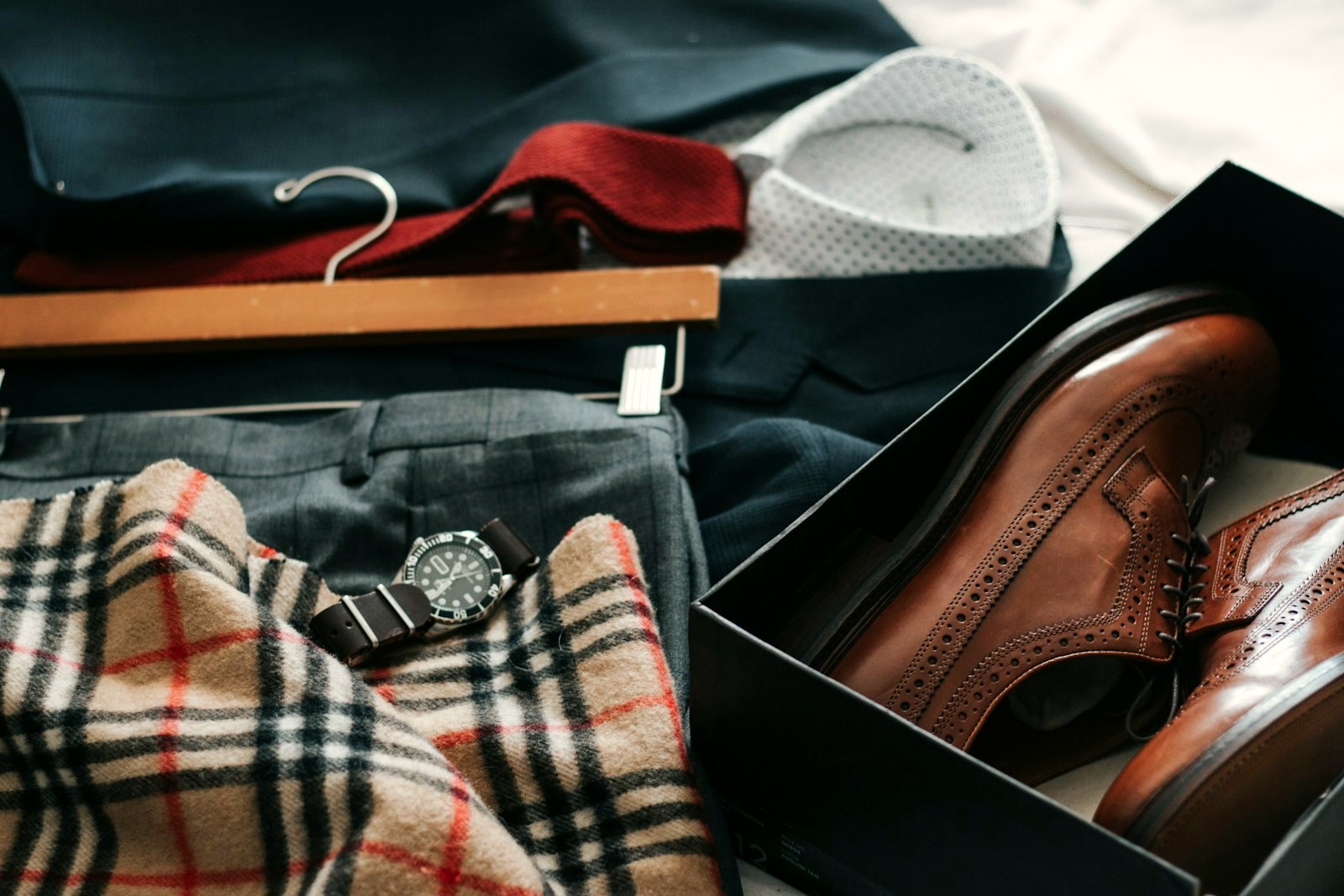
Spier & MacKay
US prices at last check: half-canvas suits from $328 at the maker's store; the Oxford $55 to $70, as printed in our Oxford ranking.
Keeps its standing 76 and its rows, the specification rival of this series' suit cluster pages: the anchor's rail with the paperwork printed, at prices that need no event.
The answer at the head of the rail, and the measure of everything below it. Spier & MacKay sells the anchor's exact want, slim office suiting and the separates under it, and publishes what the anchor does not: compositions on the product pages, cloth credited to named mills, a canvas standard stated where a buyer can grade it before paying. Its value row of 13 against the anchor's 5 is this ladder in one comparison: half-canvas suits from $328 at a price printed once, against a fused suit pant whose $128 list exists to be reduced twice. Fabric 22, construction 15, fit 17, value 13, longevity 9: 76, standing as the specification rival of the suit cluster pages in this series.
Buy the half-canvas suit here if the office wardrobe is the brief and it can wait for a delivery. It is the anchor's promise kept by a house that publishes its workings.
J.Crew
US list price at last check: the Secret Wash shirt about $90 at the maker's store, before the promotions that run most weeks.
Keeps its standing 73 and its rows, the anchor of its own page in this series: the washed shirt done properly, priced by promotion like the anchor and documented unlike it.
The mall answer one register up, and the anchor's oldest argument. J.Crew took the same first-office-wardrobe want and answered it with paperwork: the Secret Wash shirt with its wash named, cloth stories on the product pages, a suiting rail with its construction stated. Its value row of 12 against the anchor's 5 is not a claim that J.Crew prices plainly; it promotes most weeks, and this series has never pretended otherwise. The difference is what the promotion discounts: a garment carrying a record, against a garment carrying a percentage. Fabric 21, construction 15, fit 17, value 12, longevity 8: 73, standing as the anchor of its own page in this series.
Buy the Secret Wash shirt and the Ludlow suiting here, in the promotion, for the anchor's wardrobe with the record attached.

Banana Republic
US prices at last check: the Lived-In Chino lists at $100 and sold at $60 in the fall Friends and Family event; the Vitale Barberis Canonico wool suit separates list at $680 and sold at $408 in the same event.
Keeps its standing 69 and its rows, the anchor of its own page in this series, the page that set the anchor's score: the office rail tailored, its suiting cloth credited to a named Italian mill.
The comparison this ladder was born from: it was on this house's page that the anchor's number was set, as its skip, and the twenty-four points between them are the distance between two versions of the same machine. Banana Republic runs a promotional calendar too, list prices its own Friends and Family events halve, which is why its value row is 10 and not the 12 above it. What stands at the end of its machine is a Canonico wool suit and Italian-milled cotton; what stands at the end of the anchor's is a suit pant that is 41 percent polyester. Same theatre, different cloth budget. Fabric 20, construction 13, fit 17, value 10, longevity 9: 69, standing as the anchor of its own page in this series.
Buy the Canonico suiting here, in the event, when the anchor's rail is the want and the cloth has to survive the week. It is the machine with something underneath it.
Hockerty
US prices at last check: custom suits from under $300 at the maker's storefront, business suits offered at $349 on the maker's US pages, the named-mill lines at the ladder's top, £599 to £605 on the maker's UK storefront at this check.
Keeps its audited 56 and its rows, set on its own page in this series: the volume configurator whose audit found its mills named at the top of its ladder, and a fit guarantee published behind the clothes.
The configured answer, and the card where this ladder's afterlife argument turns. Hockerty's audit, on its own page, moved it from the derived 55 to 56 on one finding: the derivation's unnamed-mills charge retired at the top of its ladder, where the maker's own category page now merchandises Cerruti 1881, Loro Piana and Vitale Barberis Canonico in pure wool. Below the top, the record is the volume configurator's: a hundred and fifty-plus fabrics with compositions printed and samples sold, self-measurement behind guides and an algorithm, and, the row that matters against the anchor, a published fit guarantee, a claim inside thirty days of delivery, alterations covered or a remake where the garment cannot be altered. Fabric 15, construction 10, fit 12, value 12, longevity 7: 56, audited on its own page in this series.
Buy the business suit here at $349 if your measurements are known and the calendar allows the wait. Eleven points above the anchor is what a guarantee and a named mill are worth.
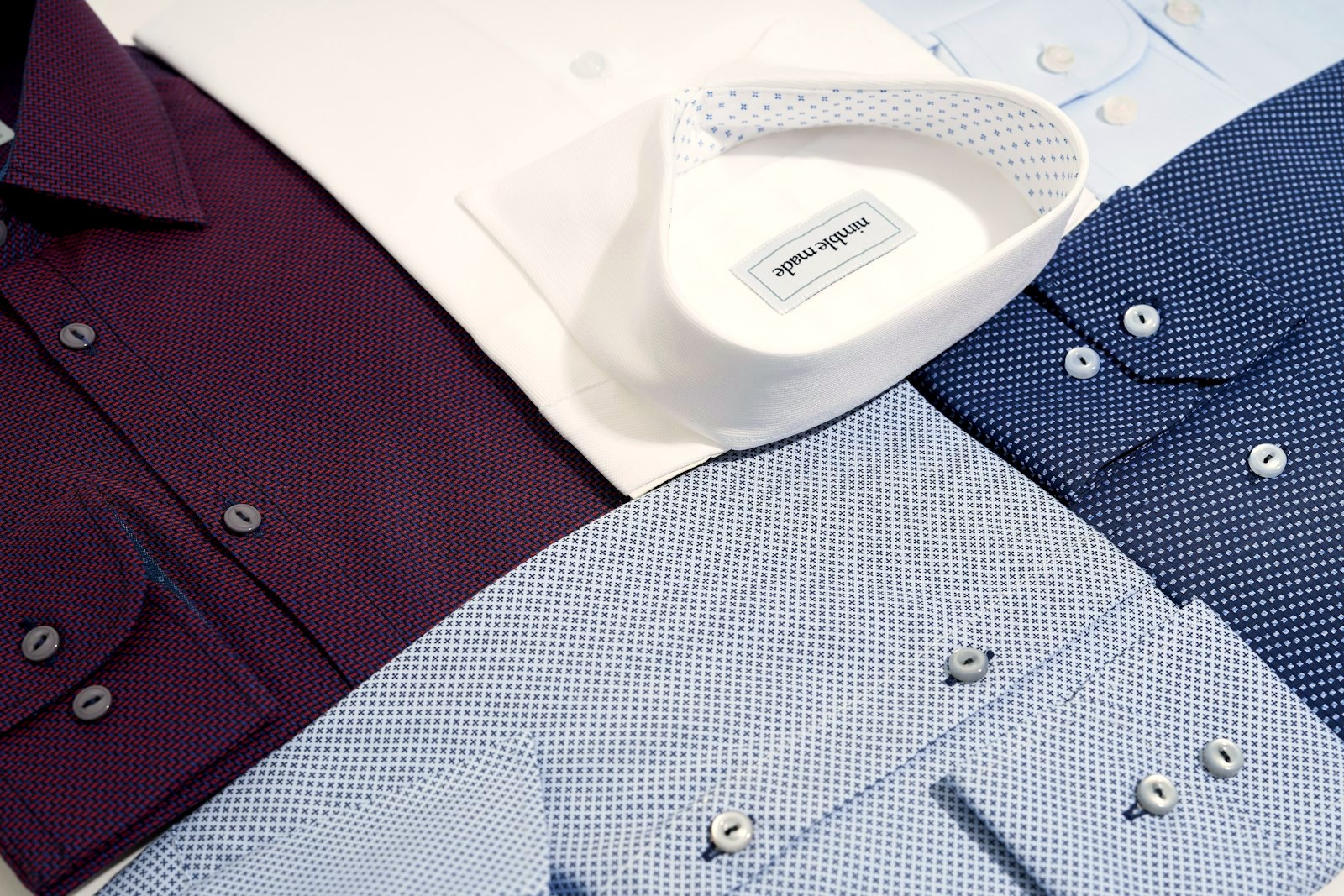
Indochino
US prices at last check: suits from $499 at the entry tier, $799 captured mid-ladder and $999 at the tier the maker labels Luxury, before the promo codes the maker's pages run most weeks.
Keeps its audited 49 and its rows, confirmed on its own page in this series: the showroom configurator, four points above the anchor on the strength of a garment cut to one body.
The other configurator, seated one rung above the anchor and audited to a standstill on its own page, every row confirmed at 49. The four points between it and the anchor are the price of a garment cut to one body in a showroom, against one pulled from a rail: the fit row of 10 records how much of that promise the measurement theatre keeps, and the value row of 7 records the promo codes its pages run most weeks, the anchor's own pricing habit in a configurator's dress. What it publishes that the anchor does not is a cloth ladder with its tiers labelled and priced, entry to the tier it calls Luxury at $999. Fabric 15, construction 10, fit 10, value 7, longevity 7: 49, audited on its own page in this series.
Buy the entry suit here if a showroom fitting is the want and the code is live. It is the anchor's rail with your name in the waistband, and the same caution about the printed price.
Zara
US price at last check: about $50. This card ships without a buy link, and the honesty section prints why.
Keeps its standing 48 and its rows, the anchor of its own page in this series, and holds the skip's seat: the office as resemblance, the effect named in place of the cloth.
The skip, seated above the anchor on score and sentenced anyway, with the seating printed in the bookkeeping above so no reader mistakes it for an error. The charge is the one its own page set: where a garment's cloth belongs, its descriptions print an effect, the vintage effect, the washed effect, a resemblance named in place of a specification, on the office rail as on every other. Against the anchor the charge reads differently, not softer: the anchor at least sells suiting, a named-fit library and a flagship garment whose composition, however poor, was printed to be read. The skip sells the outline of the office, a blazer's silhouette at about $50, with the cloth unnamed. Its fit row of 15 ties the anchor's honestly, a wide welcome in every high street, and its value row of 9 beats the anchor's, because its printed prices sit closer to its selling prices; what it sells at them is the look of the rail without the rail. Fabric 13, construction 8, fit 15, value 9, longevity 3: 48, standing as the anchor of its own page in this series. Buy the specification rival at the head of this page, or the anchor below in its stack, and get a garment whose cloth somebody was willing to name.
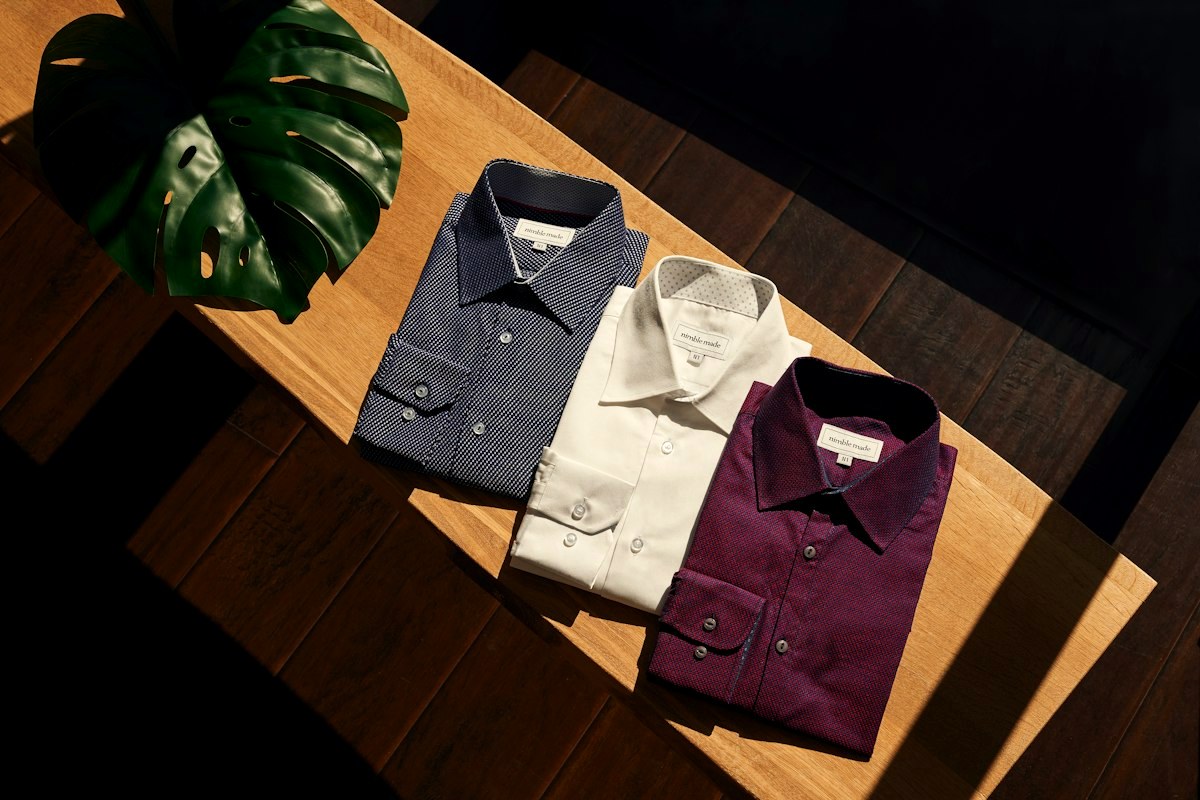
Express
US prices as read on the maker's own product page when the score was set: the Modern Tech Suit Pant lists at $128 and was marked to $96, after two stacked promotions.
Audited at 45 on this page, every row held from the score set on the Banana Republic page: the stack still prices it, the window still ends it, and the landlords now own it.
The house first, stated plainly, because the audit grades a name mid-rescue and both halves are the record. Express Inc. filed for Chapter 11 in April 2024 and closed some 95 of its stores and all 12 of its UpWest stores; in June 2024 a court approved the sale of most of its assets, reported at about $174 million, to Phoenix Retail, a joint venture of the brand firm WHP Global with Simon Property Group, Brookfield Properties and Centennial Real Estate, three of the mall landlords whose corridors the stores stand in. More than 450 stores and nearly 7,000 jobs were kept. Bonobos, bought by Express and WHP together from Walmart in 2023, came through the same sale and now sits beside Express under Phoenix's operation, its brand equity with WHP: a sister, no longer a subsidiary. The clothes are graded here on their published record, and that record is the one the scoring page read, standing entire under the new owners: a flagship suit pant in a cloth that is two fifths polyester at a wool garment's list; a front door that leads with a limited-time event priced by price point, with a cardholder stack behind it; a fit library of named cuts that remains the house's one honest asset; and a 30-day window behind all of it, with no repair programme, no guarantee term and no resale programme in the record. Fabric 12, construction 9, fit 15, value 5, longevity 4: 45, set on the Banana Republic page and audited here.
What would move the number is printed in the audit above: a flagship cloth with the polyester minority it deserves, one printed price allowed to stand for a season, and a commitment behind the suit longer than its returns window. Until then, if you buy this house, buy it the way its own pricing tells you to, at the bottom of the stack, never at the ticket, and buy the named fit you already know, because the library is the part of the record that was ever true.
The pattern under the ranking
The office rail runs on two fictions, and this ladder sorts itself by which fiction a house tells and what stands behind it. The first fiction is the price: the anchor tells it in its purest stacked form, a list maintained for a reduction and an insider discount behind the reduction, an event on the front door and a cardholder percentage behind the event; its sibling upstairs tells it at a higher register; the showroom configurator tells it in promo codes; and the houses that sit at the ladder's head are the ones whose printed price can be read once, the specification rival's $328 and the direct rival's documented list. The second fiction is the cloth's presentation: named mills and printed compositions at the head, labelled tiers in the middle, a blend described by its marketing name at the anchor, and an effect named in place of cloth at the skip. The audit's addition to the pattern is that neither fiction was disturbed by the largest event in the anchor's corporate life. A bankruptcy, a sale to its own landlords and two years of new ownership changed who owns the name, and the published record underneath the name, the cloth, the stack and the window, stands exactly where the scoring page found it. Ownership, it turns out, is not a row on this page, and a rescue is not a reform.
What would move the numbers is printed so the makers can act on it. For the anchor: print a flagship cloth whose wool is the majority its price claims, let one price stand unstacked for a season, and put a commitment behind the suit longer than 30 days, and the audit that follows this one moves rows instead of holding them. For the configurators: publish the entry cloth's composition at the size the luxury tier gets. For the sibling: the same list as the anchor's, one register up. For the skip, the list is the shortest in this series: print a composition where the effect now stands. Until then, the first office wardrobe is sold best by the house that specifies it, and the mall original stands last on its own page at an audited 45, with the widest named welcome at its end of the rail and the thinnest paperwork on it.
The ranking at a glance
| Brand | Score | The piece to buy | Price |
|---|---|---|---|
| Spier & MacKay | 76 | The Half-Canvas Suit | From $328 |
| J.Crew | 73 | The Secret Wash Shirt | About $90 list |
| Banana Republic | 69 | The Canonico Wool Suit Separates | $680 list, $408 in the event |
| Hockerty | 56 | The Business Suit | $349 |
| Indochino | 49 | The Entry Suit, with the code | From $499 |
| Zara | 48 | None | About $50 not spent |
| Express | 45 | The Modern Tech Suit Pant, at the bottom of the stack | $128 list, $96 as marked down |
The verdict: the anchor holds, last on its own page
Express keeps its number and improves its status: 45, set on our Banana Republic page and audited on this one, every row verified against the maker's current published record and every row held. The audit is not a whitewash and prints its findings at full size: the promotional stack still leads the maker's front door, priced by price point with a cardholder layer behind it; the flagship's cloth record stands unrebutted, two fifths polyester at a wool garment's list; the afterlife is a 30-day window with no repair programme or guarantee behind it; and the company itself passed through Chapter 11 into the hands of a venture owned in part by its own landlords, an event the longevity row had already priced. Zara remains this page's named loser, for the record its own page set: the effect named in place of the cloth, on the rail where even the anchor prints a composition. Every house above the anchor publishes more for the money or stands behind it longer, and the floor of the honest office rail is the specification rival's printed $328. Buy the first office wardrobe from a house that specifies it, and if you buy the anchor, buy it at the bottom of its own stack, in the fit whose name you already know.
Which one to buy
For the specified suit: Spier & MacKay, 76. The half-canvas suit from $328, compositions and mills printed.
For the mall wardrobe with paperwork: J.Crew, 73. The Secret Wash shirt and the Ludlow rail, in the promotion.
For the machine with cloth under it: Banana Republic, 69. The Canonico suiting, in the event.
For the configured suit with a guarantee: Hockerty, 56. The business suit at $349, alterations or a remake behind it.
For the showroom fitting: Indochino, 49. The entry suit, with the code live.
For the known fit, today, in a store: Express, 45. The Modern Tech Suit Pant at the bottom of the stack, never at the ticket.
To skip: Zara, 48. The outline of the office, sold under an effect.
Questions, answered
What brand is most like Express?
On the published record, Spier & MacKay at 76: the same office rail of slim suiting, dress pants and shirting, with the paperwork the anchor omits, compositions and mill names printed on the product pages and half-canvas suits from $328 at the maker’s store. For the mall version of the same want, J.Crew at 73 and Banana Republic at 69, the anchor’s own sister rail, both graded on their own pages of this series. For the configured version, Hockerty at 56, audited on its own page. Express itself, audited at 45 on this page, remains the answer only where the want is the exact one it built: a named fit, in a store, today, at whatever the stack makes it.
Did Express’s audit change its score?
No row moved, and the page prints the audit entire so the holding is a finding, not a default. Express’s 45 was set on our Banana Republic page, rows fabric 12, construction 9, fit 15, value 5, longevity 4, from the maker’s own product page: a Modern Tech Suit Pant at a $128 list reaching $96 only after two stacked promotions, in a cloth of 55 percent wool and 41 percent polyester. The audit re-read what the maker publishes now and found the system standing: the homepage still leads with a limited-time event priced by price point with a further cardholder stack on top, the afterlife is still a returns window with no repair programme or guarantee behind it, and the company that filed for Chapter 11 in April 2024 now belongs to the landlord-led venture that bought it out of the filing. One limit is printed rather than hidden: the maker’s product pages answer automated reads with an access wall at this check, the wall this series records at J.Crew, so the flagship’s cloth and list price stand as read on its scoring page, and nothing published since rebuts either figure. The total holds at 45, now audited.
Is Express always on sale?
On the evidence of the maker’s own store at this check, yes, and the sale is stacked. The homepage leads with a limited-time Fall Fashion Event priced by price point, fall steals at $25 and up, Portofino shirts at $39 and up, jackets and coats at $69 and up, with free shipping at $75 and an extra 20 percent off for holders of the house credit card printed on the same front door. The garment its score was costed on reached its selling price the same way: the Modern Tech Suit Pant listed at $128 and was marked to $96 on its own product page only after a 25 percent reduction and a further insider discount on top. The value row of 5 prices exactly that architecture: a list price maintained for the reductions that follow it, so no printed price on the rail can be read once and believed.
Who owns Express now, and what happened to Bonobos?
Express Inc. filed for Chapter 11 in April 2024, closed some 95 Express stores and all 12 of its UpWest stores, and in June 2024 a court approved the sale of most of its assets, reported at about $174 million, to Phoenix Retail, a joint venture of the brand firm WHP Global with three of its own mall landlords, Simon Property Group, Brookfield Properties and Centennial Real Estate. More than 450 stores and nearly 7,000 jobs were kept. Bonobos, which Express and WHP Global had bought together from Walmart in 2023, came through the same sale: Phoenix now operates United States direct-to-consumer commerce for both brands, so Bonobos sits beside Express under the same operator, its brand equity with WHP, rather than inside an Express company. The house a reader shopped in 2019 no longer exists as a company; the name, the stores and the fit library are what the landlords bought.
What is Express’s returns policy, and does it repair or guarantee its clothes?
The published window is 30 days from delivery on United States online orders, with 60 days at the Factory Outlet, returns free in store and a $6.99 deduction when the maker’s prepaid mail label is used, a receipt or order confirmation required. Behind the window there is nothing: no repair programme, no guarantee term and no resale programme stands anywhere in the maker’s published record, which is what the longevity row of 4 records, a row set after the bankruptcy filing and confirmed by everything the audit found after it. The configurators above the anchor on this page publish more: a fit guarantee with alterations or a remake behind it. The anchor publishes a window, and the window is the whole commitment.
The honesty section
Six scores on this page already stand in this series, and each card names its home: Spier & MacKay set at 76 as the specification rival of the suit cluster pages; J.Crew at 73 as the anchor of its own page; Banana Republic at 69 as the anchor of its own; Hockerty at 56, audited on its own page from the 55 derived on the Indochino page; Indochino at 49, audited and confirmed on its own page; and Zara at 48 as the anchor of its own page, seated here as the skip with its seating explained in the bookkeeping above. The anchor's 45 was set new on our Banana Republic page, from the maker's own product page, fabric 12, construction 9, fit 15, value 5, longevity 4, and reproduced in prose on the Gap page. This page audited the anchor against the maker's current published record and holds every row: the promotional architecture verified first-hand on the maker's homepage at this check, a limited-time event led by price points with a cardholder stack printed on the same front door; the corporate record completed, the Chapter 11 filing of April 2024, the store closures and the June 2024 court-approved sale to Phoenix Retail, the WHP Global venture with Simon Property Group, Brookfield Properties and Centennial Real Estate, resting on the trade record of the deal and the parties' own published statements; the Bonobos position read from the same record, a sister brand under Phoenix's operation rather than a part of an Express company; and the afterlife standing at a 30-day window with no repair programme, guarantee term or resale programme behind it, on the maker's published returns terms. The total holds at 45, and the two pages that carry the anchor, the Banana Republic page where its score was set and the Gap page which rests it in prose, are owed the status word only, set to audited, at the next pass, with this page as the ruling's home; the number and rows do not change anywhere. The audit's one limit is printed rather than smoothed over: the maker's product pages answer automated reads at this check with the access wall this series records at J.Crew, so the flagship garment's cloth and list price stand as read on its scoring page, no re-read is claimed, and the audit verified instead that nothing in the maker's public record since rebuts either figure. Corporate facts are printed as context and priced only where the published record prices them, in the longevity row the filing already set.
Buy links follow the deep-link rule: each card keeps the door its scoring page established, and every door on this page was checked at this check, the Spier & MacKay and Indochino product and category doors returning live, the Hockerty door returning live at the maker's homepage, the door its own audit page established, the Banana Republic door standing at the maker's homepage as its own page established it, that homepage answering automated checks at this check with the same access wall as the product pages below, two homepage doors on this page, inherited from those pages' records and logged here rather than introduced, the J.Crew door standing behind the maker's known bot wall as its own page records, and the anchor's door standing at the maker's Modern Tech Suit Pant product page, the door its scoring page established, behind the same wall at this check and printed as such in the audit; the anchor is graded here, not sentenced, so it links. The skip ships without a buy link, as on the Gap and lululemon pages: the desk does not link what it sentences. Photographs come from the bank credited in CREDITS.md; the bank holds no photograph of an Express garment, and the cards run on the bank's folded-garment, rail and street frames rather than on borrowed product photography. The anchor's card frame is the one the Banana Republic page gave it, folded dress shirts in a flat lay, captioned as exactly that; no frame on this page is captioned as a garment it does not show. Prices and programmes were checked in October 2026 against the makers' own published pages and current retail listings, following the method on our methodology page.