
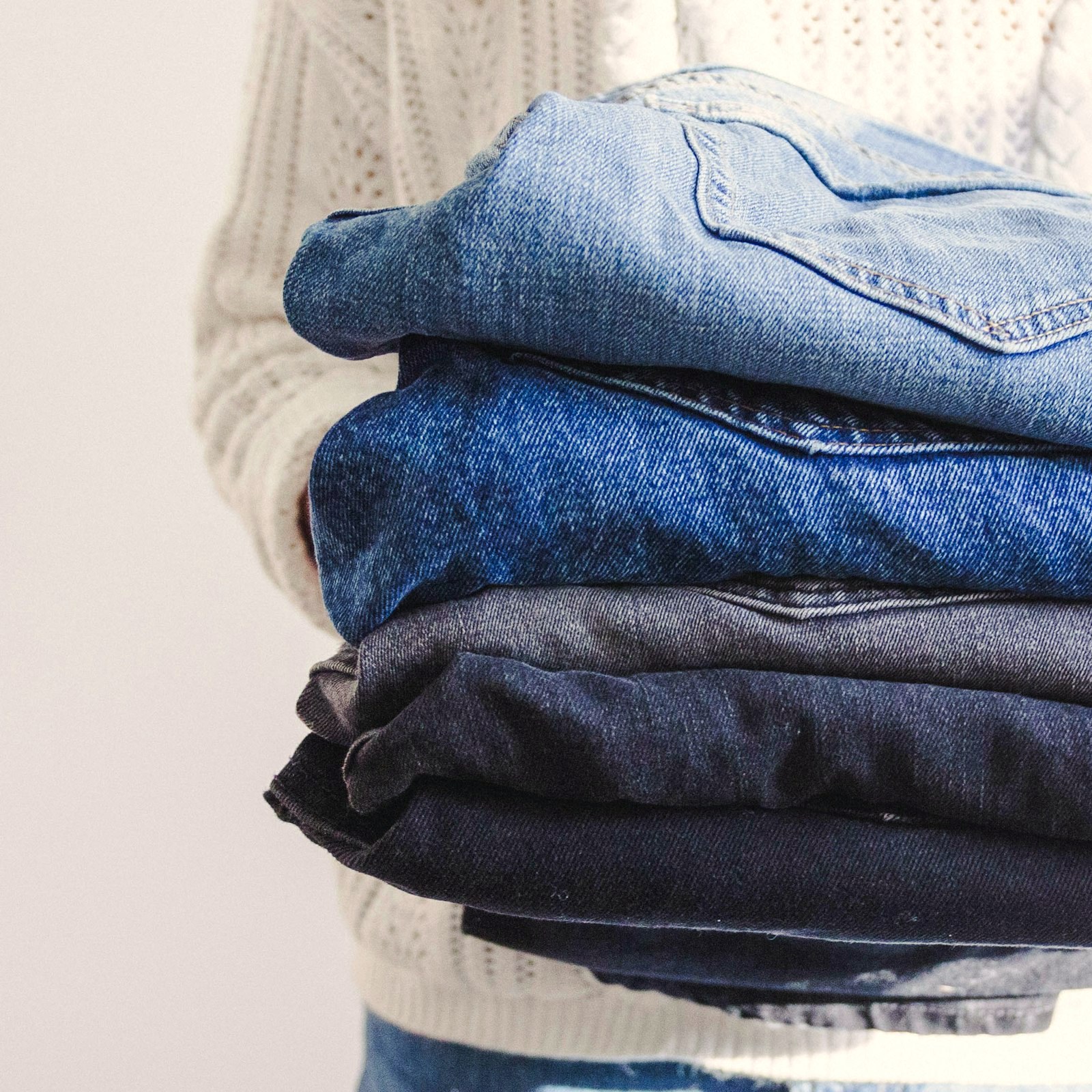
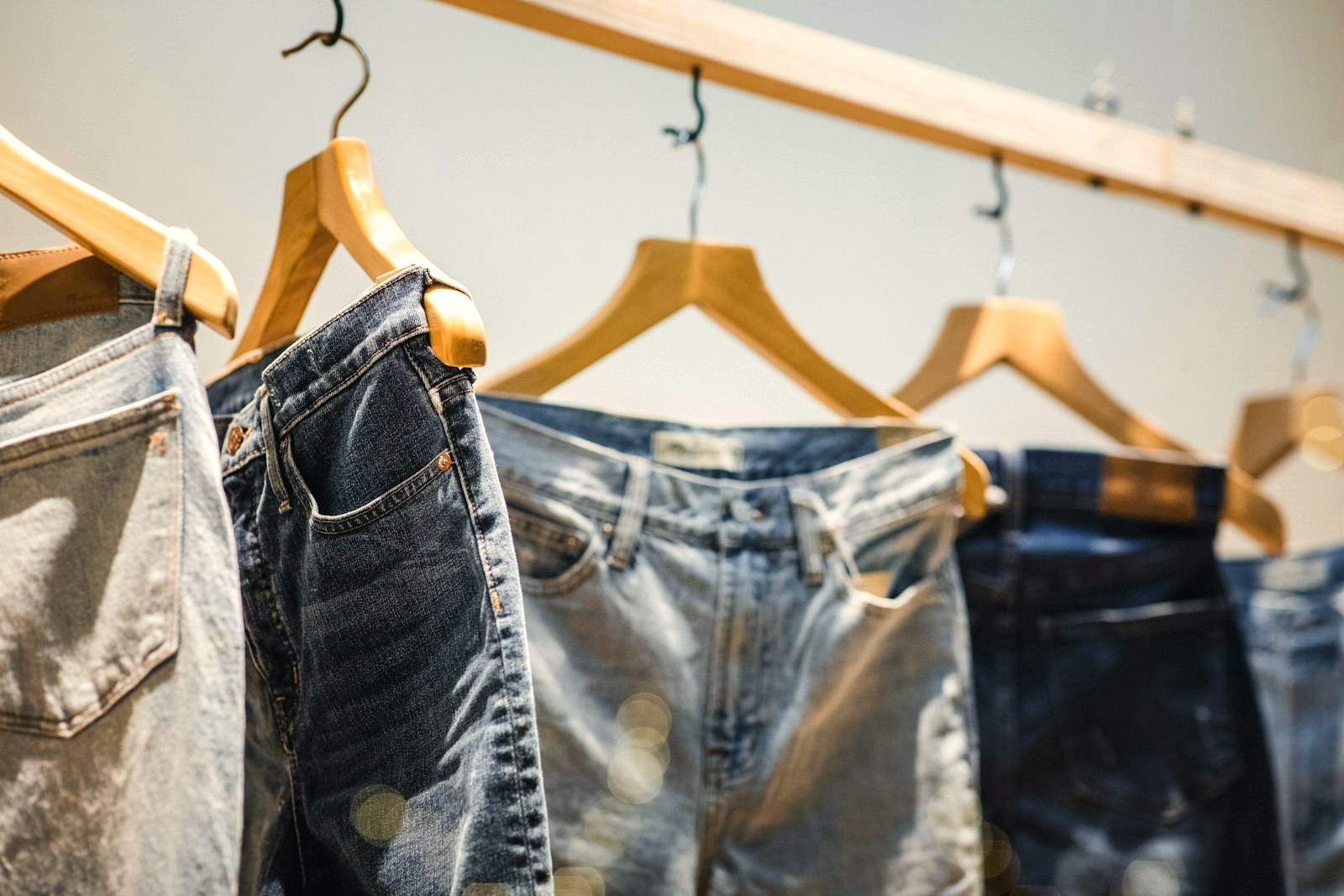
The anchor's register, folded: denim, the garment the house was founded on and the one its audit found improved. Our bank holds no photograph of a Gap garment and no mall interior, so no frame on this page is captioned as one.
The short answer: Gap stood at 57, derived in the open on our Taylor Stitch page from the maker's own published record, fabric 17, construction 11, fit 16, value 7, longevity 6, and reproduced exactly on our Alex Mill page. This page audits the anchor against the maker's current published record, read live on its own store, and holds every row: the denim flagship now prints its weight, and the audit credits it, and the knit line still sells a feeling under a fibre's name, the price is still a promotion, and the afterlife is still a 30-day window. The total is 57, audited. Above the anchor, the rail stands as the neighbouring pages set it: Uniqlo at 84, J.Crew at 73, Banana Republic at 69, Everlane at 67 and Quince at 59, with Zara at 48 as the skip.
What people actually want from Gap
The want under this search is the American uniform without a decision in it: the jean, the khaki, the Oxford, the crew sweater, in every size, in a store or on a phone, today, at a price that feels like a win before the garment is even tried. Gap invented that want's mall edition in San Francisco in 1969 and stocked it in washed neutrals for two generations; the five-pocket jean and the pocket tee are its native garments, and the fit library, waists to 42 and lengths to 34 on the flagship, tall fits beside regular, is the widest welcome in American retail. Around the clothes sits a revival with real names on it, a chief executive from the toy aisle's best turnaround story and a couture designer overseeing all four of the group's brands, and a company receiving design awards again. This page exists because the anchor's number was set on another house's brief, as a skip, derived from the maker's record at speed. The audit owed the number a reading on its own terms: the revival has had two years and a famous designer; what does the maker publish now, about the cloth, the price and the garment's life after the till?
The answer is a house whose best garment got more honest and whose system did not. The flagship denim publishes a weight and a composition, which the derivation's evidence did not. The knit line, the price architecture and the afterlife stand exactly where the derivation found them.
How the scores work
Same ruler as every page in this series, published on our methodology page: fabric and specification record out of 30, construction 20, fit and size range 20, value 15, longevity and repair 15. One score on this page is audited, the anchor's, and it holds; every other number already stands in this series, and each card names its home.
The standing record, in full. The Taylor Stitch page derived the anchor's rows in the open from the maker's own published record: fabric 17, construction 11, fit 16, value 7, longevity 6, summing to 57, on three counts: a flannel whose product page printed a price with 40 percent off at checkout beside it and a fabric record one line long; a bestselling knit line named CashSoft, for cashmere, over a cotton blend its own description calls cashmere soft; and colourways of that sweater chained from $89.95 to $35. The Alex Mill page reproduced all five rows exactly, as its skip. This page audits the anchor against the maker's current published record, verifies each row, and becomes the score's family home. No row moves, and the pages that carry the anchor keep their numbers entire; only the status word changes, derived to audited, at the next pass, with this page as the ruling's home.
Fabric, 17, stands, verified live, with the improvement printed. The audit read the flagship first, and the flagship has genuinely improved on the derivation's evidence. The men's '90s Loose Jeans, the garment this row is costed on below, print a full record on the maker's own product page: 13 oz (369 g) rigid denim with 100 percent regenerative cotton, no stretch, a button fly on the dark wash, the water-saving programme stated beside it. A cloth weight and a graded composition, printed where a buyer can read them before paying: that is the publishing habit this row pays for, and on the denim rail the anchor now practises it. The row is a range row, however, and the rest of the range stands as derived. The CashSoft crew sweater's page, read at this check, still leads with our bestselling fabric that feels cashmere soft, over a description line that reads, in full, supersoft cotton-blend pullover sweater: a bestselling line still named for a fibre the garment does not contain, its record still a feeling. And nothing the audit found rebuts the shirting record the derivation charged, a fabric line one sentence long with no weight, no mill and no construction term. One garment's improved page does not lift a range whose knit flagship still sells softness as a specification. The 17 stands.
Construction, 11, stands, verified live. Nothing in the maker's published record since the derivation changes the making grade in either direction: honest mall-scale construction, five-pocket styling, a fly, a waistband, and no construction vocabulary beyond it on the flagship's page, no stitch, no hardware metal, no origin line a buyer can grade. The revival's design credits, and they are real, are printed in the house prose below and not in this row: an audit does not move a construction grade on a red carpet, in either direction. The 11 stands.
Fit, 16, stands, verified live. The welcome the row was set on is intact and remains the anchor's honest strength: on the flagship jean, waists 28W through 42W across lengths 28L through 34L, in Regular and Tall fits; on the knit line, sizes running XS to XXXL. It is the widest library on this page beside Uniqlo's, stocked in stores where the fit can be tested before money moves, and it is the reason the anchor's total is a mid-market number rather than a fashion-rail one. The 16 stands.
Value, 7, stands, verified live at first hand. The derivation charged a printed price that is not the price, and the audit found the architecture standing entire on the maker's own store today. The homepage leads with 50 percent off. The flagship jean prints $79.95 struck through to $55.00, with 30 percent off: limited time printed beside the price on the product page itself; a second wash of the same jean prints $47.00 at 40 percent off; other washes print $62.00 at 30 percent off, three selling prices for one garment on one day, none of them the list. The CashSoft crew stands chained from $69.95 to $34.00, marked 50 percent off: price as marked. Trade reporting this autumn described a less-discounting playbook at the group; the audit grades the store, not the reporting, and the store at this check prices by promotion from its front door to its flagship. The row was never a claim that the clothes are dear at the till; the till price is often fair. It prices a list price nobody is asked to pay, which makes every garment's printed value a negotiation the buyer did not agree to. The 7 stands.
Longevity, 6, stands, verified live. The afterlife record is the derivation's, unchanged. The returns window is 30 days, from delivery for online purchases and from purchase in store, free in store; by mail, free for Encore members, with a $6 fee for non-members on the group's published policy pages, and longer windows only inside the paid member tiers, and then partly in merchandise credit. Behind the window there is no repair programme, no guarantee term and no resale programme anywhere in the maker's published record. The contrast the row prices is printed on the flagship's own page: a rigid 13 ounce denim that gets better with every wear, in the maker's words, sold by a house whose published commitment to the garment ends on day 30. Cloth built for years, backed for a month. Fabric 17, construction 11, fit 16, value 7, longevity 6: 57, derived on the Taylor Stitch page, audited and held here.
The bookkeeping, printed: Uniqlo's 84, J.Crew's 73, Banana Republic's 69, Everlane's 67, Quince's 59 and Zara's 48 are standing scores from their pages in this series, reproduced with their rows; nothing here re-derives them. The ladder is seated entire within the mid-market rail, in score order, and two houses are rested in prose deliberately. Asket, at 92, is the ceiling this series prints at the head of the Uniqlo, J.Crew, Banana Republic, Everlane and Quince pages; it is cited here rather than re-seated, because this page seats the houses a Gap shopper actually cross-shops at mall and high-street prices, and the Swedish answer to the uniform is a different search. Express, at 45 with rows 12/9/15/5/4, stands below the skip and is rested on rail logic: its costing garment on the Banana Republic page, where its score was set, is a suit pant, the office-formal rail, and the seventh seat here goes to the fashion rail's own anchor, the house this search cross-shops first; its number is printed, not hidden. One more house belongs in prose. H&M sells the same uniform at prices under every card on this page, and this series derives its brand score from its ranked garments on its own page rather than borrowing one; nothing here restates or re-derives that number, and no H&M garment is scored on this page.
The disclosure ledger
What each house publishes, in its own words where words exist. The audit reads this table before it reads any marketing.
| House | The fabric record, as published | The afterlife, as published |
|---|---|---|
| Uniqlo | Compositions and cloth weights printed on the product pages as a house habit, across the whole basics range | A standard returns window; no repair or resale programme published; the honesty is in the specification and the held price |
| J.Crew | Named washes and cloth stories on the product pages, the Secret Wash record among them; priced by promotion most weeks, documented all the same | Returns only; no repair or resale programme published |
| Banana Republic | Cloth named at a level above the anchor's, suiting cloth credited to a named Italian mill on its own page's record | Returns only, under the same group policy as the anchor; no repair programme published |
| Everlane | Fewer garments, each with its materials and margin story printed beside it | Returns only; no repair or resale programme published |
| Quince | Real fibres named on the product pages, with a struck-through traditional-retail figure doing the arguing beside every price | Returns only; no repair or resale programme published |
| Gap | Two records in one range: the flagship denim printing a weight and a full composition, and a bestselling knit line named for a fibre it does not contain over a one-feeling description | A 30-day window, free in store, mail returns free for members and $6 for non-members; no repair programme, no guarantee term, no resale programme |
| Zara | The effect named in place of the cloth: the vintage effect, the washed effect, one phrase where a composition belongs | Returns only; no repair or resale programme published |
Seven brands like Gap, ranked
Uniqlo
US prices at last check: the U crew-neck tee $15 to $30.
Keeps its standing 84 and its rows, the anchor of its own page in this series: the same uniform the anchor sells, with the paperwork printed and the price held.
The want answered with the receipts attached. Uniqlo sells this page's exact uniform, the tee, the Oxford, the chino, the five-pocket jean, and its product pages do the thing the anchor's mostly do not: compositions and cloth weights printed as a house habit, so the buyer grades the garment before paying rather than after. Its value row of 15 is the page's lesson in what the anchor's 7 is not: one price, held, with no promotion printed beside it pretending to be a favour. The fit welcome of 19 is the anchor's 16 answered and beaten, a library as wide and a size chart that reads like an engineering document. What it does not have is the mall: no fitting room on every corridor, no tall fit beside every regular. Fabric 22, construction 16, fit 19, value 15, longevity 12: 84, standing as the anchor of its own page in this series.
Buy the U crew and the denim here first if the uniform is the brief and you can order a size with confidence. It is the anchor's promise kept by a house that publishes its workings.
J.Crew
US list price at last check: the Secret Wash shirt about $90 at the maker's store, before the promotions that run most weeks.
Keeps its standing 73 and its rows, the anchor of its own page in this series: the washed shirt done properly, priced by promotion like the anchor and documented unlike it.
The house the whole mid-market graduated from, and the anchor's oldest argument. J.Crew took the same uniform up a register a generation ago: the Secret Wash shirt, the broken-in chino, cloth stories and named washes on the product pages where the anchor prints a feeling. Its value row of 12 against the anchor's 7 is the fine print of this ladder: J.Crew also prices by promotion, most weeks, and this series has never pretended otherwise; the difference is that the garment underneath the promotion carries a record, a wash with a name and a cloth with a story, so the discounted price discounts something specified. Fabric 21, construction 15, fit 17, value 12, longevity 8: 73, standing as the anchor of its own page in this series.
Buy the Secret Wash shirt here, in its promotion, for the uniform with the paperwork the anchor omits. The school still teaches the subject the anchor copies.

Banana Republic
US prices at last check: the Lived-In Chino lists at $100 and sold at $60 in the fall Friends and Family event; the Vitale Barberis Canonico wool suit separates list at $680 and sold at $408 in the same event.
Keeps its standing 69 and its rows, the anchor of its own page in this series: the anchor's own sibling, the same uniform tailored, one company up the corridor.
The comparison the group itself invites: the anchor's own sibling, under the same chief executive, the same creative director and the same returns policy, selling the same uniform one register up. The chino is Lived-In and lists at $100; the suiting cloth is credited to a named Italian mill, which is a fabric record the anchor's range reaches only on its denim rail. What the sibling shares with the anchor is the price architecture, list prices its own Friends and Family events halve, which is why its value row is 10 and not the 12 above it: the tailoring is real and the ticket is still an opening bid. Fabric 20, construction 13, fit 17, value 10, longevity 9: 69, standing as the anchor of its own page in this series.
Buy the Lived-In Chino here, in the event, when the uniform needs to enter a meeting. It is the anchor's cloth sense with the seams finished, at the family discount.
Everlane
US prices checked on its scoring page: the Cashmere Crew $148 list, $118 at that check's selling price; cotton crews $38.
Keeps its standing 67 and its rows, the anchor of its own page in this series: fewer garments, cleaner paperwork, and the margin printed beside the price.
The answer built against the anchor's habits, one by one. Where the anchor's range is a mall's worth of garments, Everlane's is a rail; where the anchor's price is a promotion, Everlane prints a list price with the margin story beside it; where the anchor's bestselling knit is named for an absent fibre, Everlane's cashmere crew is cashmere, at $148 list. Its deductions stand from its scoring page: a fit library of 14 that cannot match the anchor's welcome, and a range too narrow to dress a wardrobe entire. Fabric 20, construction 13, fit 14, value 11, longevity 9: 67, standing as the anchor of its own page in this series.
Buy the Cashmere Crew and the cotton crews here if the brief is a short list of honest garments. It is the anchor's uniform with the theatre removed.
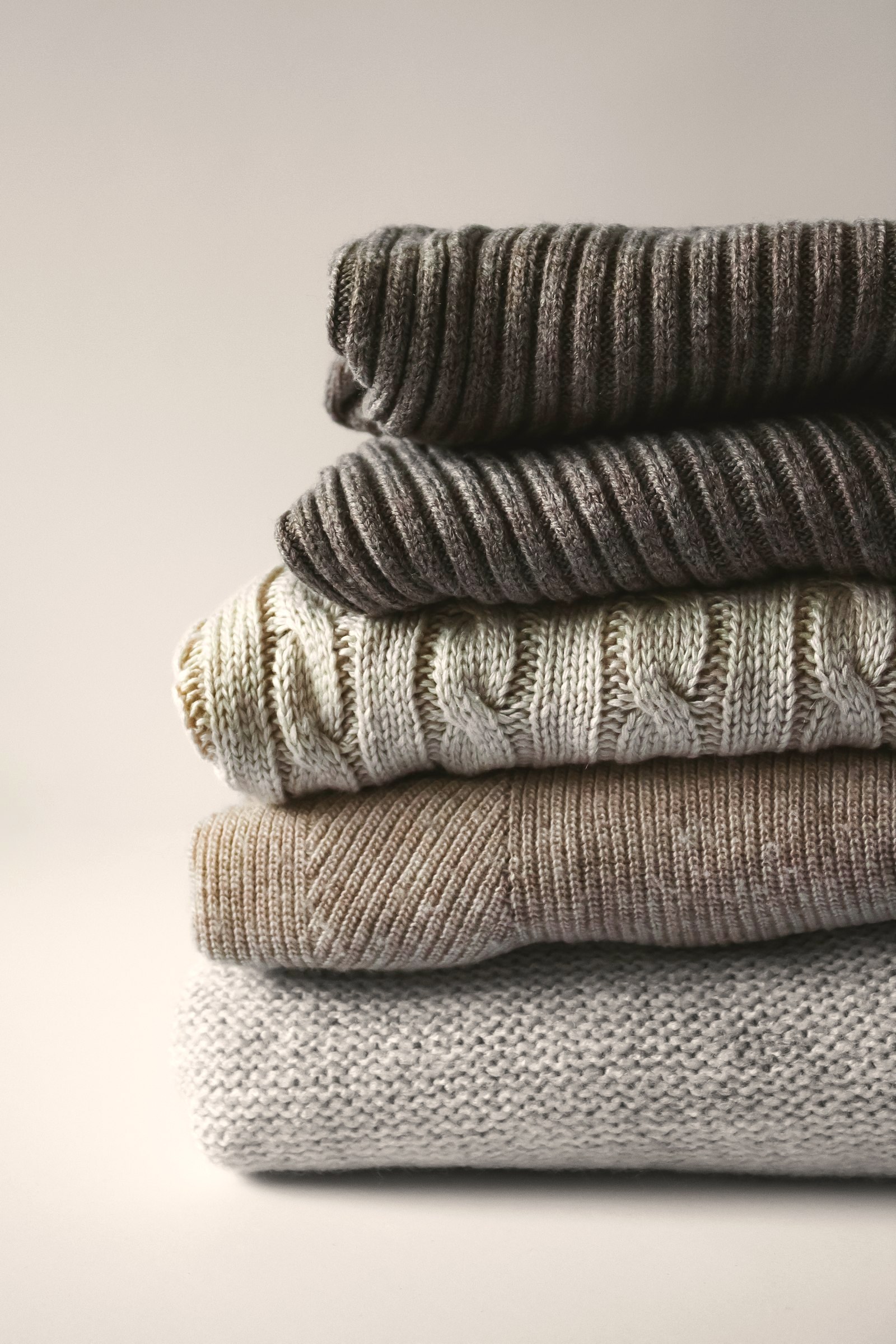
Quince
US prices checked on its scoring page: the Mongolian Cashmere Crew $59.90, beside a struck traditional-retail figure; the Australian Merino Half Zip $92.
Keeps its standing 59 and its rows, the anchor of its own page in this series: real fibres at anchor-beating prices, argued by a struck-through figure.
The closest seat to the anchor, and the two points between them are this page in miniature. Quince sells the uniform's premium fibres, Mongolian cashmere at $59.90, at prices the anchor's promotions only reach on their best day, and it reaches them every day, which earns the value row of 12 the anchor's architecture cannot. What it cannot do is be tried on, returned to a corridor, or fitted across a library: fit 11, a size run on a website, against the anchor's 16 in every mall in America. And its argument is made by a struck-through traditional-retail figure printed beside every price, a comparison nobody audits, which is the anchor's promotion wearing a direct-to-consumer suit. Fabric 18, construction 11, fit 11, value 12, longevity 7: 59, standing as the anchor of its own page in this series.
Buy the cashmere crew here if your size is a known quantity. Two points above the anchor is what a real fibre at a real price is worth without a store to stand in.
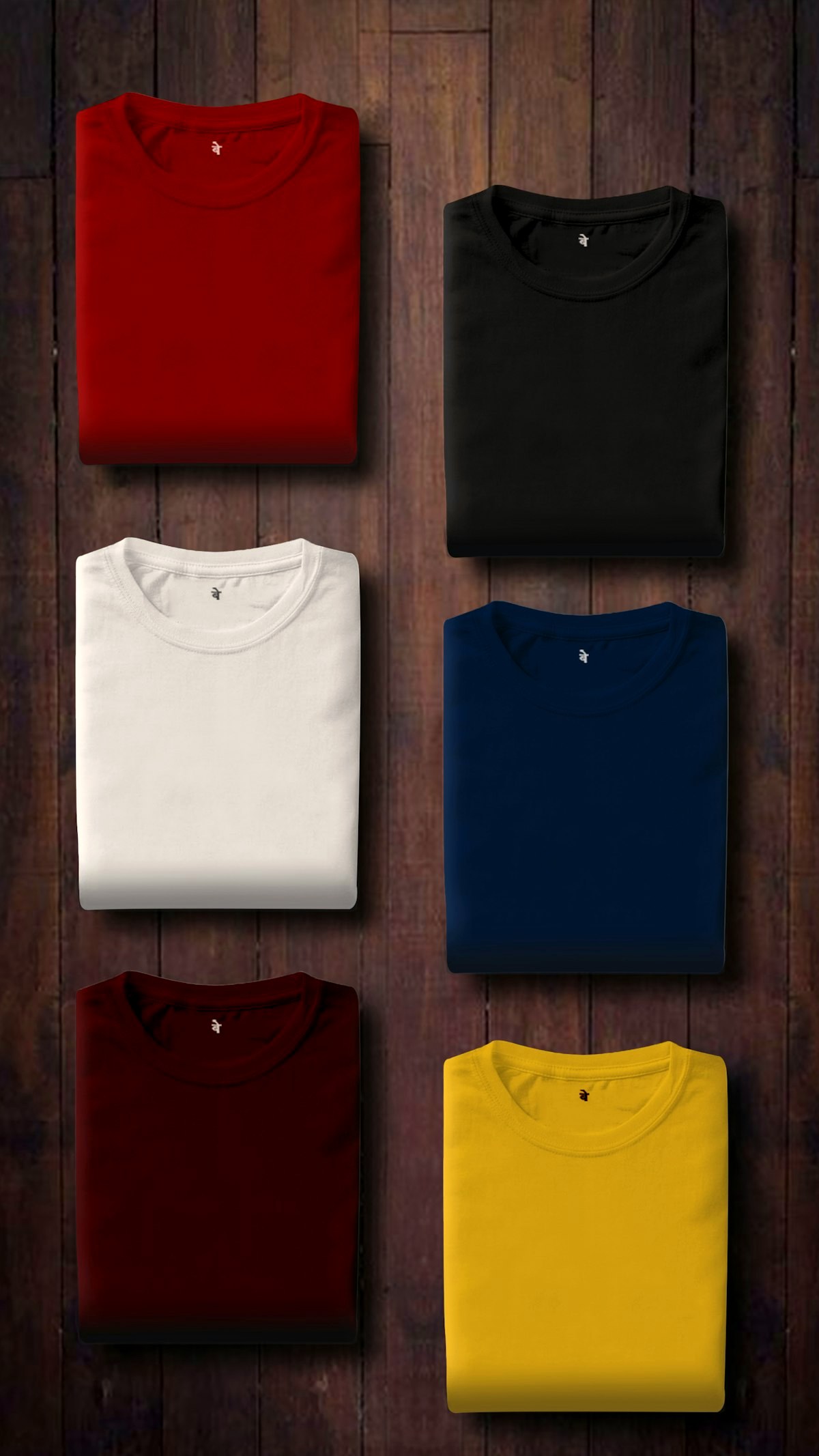
Gap
US prices read live on the maker's store at this check: the '90s Loose Jeans $79.95 list, $55.00 with 30 percent off, limited time, printed beside the price; the CashSoft Crew Sweater $69.95 list, $34.00 as marked.
Audited at 57 on this page, every row held from the open derivation on the Taylor Stitch page: the flagship denim improved its record, and the system around it did not.
The house first, stated plainly, because the audit grades an American institution mid-revival and both halves are the record. The group holds four brands, this one, Old Navy, Banana Republic, seated third on this page, and Athleta, under a chief executive hired for a turnaround and a creative director, Zac Posen, appointed on February 5, 2024, the first designer to oversee all four brands, whose GapStudio tier has put the house back on red carpets and award lists. The clothes are graded here on their published record, and that record is two records. On the denim rail it has genuinely improved: the '90s Loose Jeans, waists 28 to 42, lengths 28 to 34, print 13 oz (369 g) rigid denim with 100 percent regenerative cotton on their own product page, the publishing habit this series pays for, on the garment the house was founded on. Around it, the system the derivation sentenced stands entire: a bestselling knit named CashSoft for a fibre it does not contain, its page still selling a fabric that feels cashmere soft over a cotton blend; a price architecture in which the flagship prints three selling prices in a day and the list is a fiction maintained for the strikethrough; and an afterlife of 30 days behind cloth the maker itself describes as getting better with every wear. Fabric 17, construction 11, fit 16, value 7, longevity 6: 57, derived in the open on the Taylor Stitch page and audited here.
What would move the number is printed in the audit above: extend the denim page's honesty to the shirting and knit rails, retire the fibre name or put the fibre in the garment, and let one printed price stand for a season. Until then, buy the '90s Loose Jeans here, in the promotion, as the derivation advised: it is the best garment on the anchor's rail, now with its weight printed, from the house that invented the uniform's mall edition and still fits more bodies than any card on this page.
Zara
US price at last check: about $50. This card ships without a buy link, and the honesty section prints why.
Keeps its standing 48 and its rows, the anchor of its own page in this series, and keeps the skip's seat it held on the Pendleton and Woolrich pages: the uniform as resemblance, the effect named in place of the cloth.
The skip, restated from the pages that set and seated it, because a reader cross-shopping the anchor will meet this name and its number should be waiting. The charge is one count, read off the maker's own store: where a garment's cloth belongs, its descriptions print an effect, the vintage effect, the washed effect, a resemblance named in place of a specification, on workwear and classic rails alike. Against the anchor that charge now reads sharper, not softer: the anchor's flagship has started printing a weight and a composition, the first step on the road this series grades, and the skip has not taken it. Its fit row of 15 is honestly credited, a wide welcome in every high street, and its value row of 9 beats the anchor's, because its printed prices are closer to its selling prices; what it sells at those prices is the uniform's outline, at a quality of record the anchor's worst page matches and its best now beats. Fabric 13, construction 8, fit 15, value 9, longevity 3: 48, standing as the anchor of its own page in this series. Buy the anchor's jean above it, in its promotion, and get the uniform with a weight printed on it, or buy the winner and get it with the paperwork entire.
The pattern under the ranking
The mid-market runs on two fictions, and this ladder sorts itself by which fiction a house tells and what stands behind it. The first fiction is the price: the anchor tells it purest, a list maintained for the strikethrough, three selling prices for one jean in one day; its sibling tells it at a higher register, list prices halved by its own events; the direct-price house tells it in mirror image, a struck-through traditional figure nobody audits. The houses that do not tell it, the winner with its held price and the transparency answer with its printed margin, sit at the ladder's head for reasons that start there. The second fiction is the cloth's name: a bestselling knit named for an absent fibre at the anchor, named washes and cloth stories at the school, an effect named in place of cloth at the skip. The audit's addition to the pattern is that the anchor has begun, on one rail, to stop telling the second fiction: a weight and a composition on the flagship denim is the first honest page in the anchor's range that this series has graded, and it is printed here at the same size as the conviction it did not overturn. A range is graded on its whole record. The whole record is a house whose best garment improved and whose system, the named feeling, the promoted price, the 30-day afterlife, did not.
What would move the numbers is printed so the makers can act on it. For the anchor: print the denim page's record, weight and composition, on the shirting and knit rails; put cashmere in the CashSoft or retire the name; hold one price for a season and let the value row re-cost it; and give the flagship's cloth a commitment longer than its returns window, and the audit that follows this one moves rows instead of holding them. For the sibling: the same list, one register up. For the direct-price house: publish the comparison figure's source or drop it. For the skip, the list is the shortest in this series: print a composition where the effect now stands. Until then, the uniform is sold best by the house that documents it, and the mall original stands sixth on its own page at an audited 57, with the widest welcome on the page and the thinnest paperwork above the skip.
The ranking at a glance
| Brand | Score | The piece to buy | Price |
|---|---|---|---|
| Uniqlo | 84 | The U Crew-Neck Tee | $15 to $30 |
| J.Crew | 73 | The Secret Wash Shirt | About $90 list |
| Banana Republic | 69 | The Lived-In Chino | $100 list |
| Everlane | 67 | The Cashmere Crew | $148 list |
| Quince | 59 | The Mongolian Cashmere Crew | $59.90 |
| Gap | 57 | The '90s Loose Jeans, in the promotion | $79.95 list, $55 at this check |
| Zara | 48 | None | About $50 not spent |
The verdict: the anchor holds, and the skip stands
Gap keeps its number and improves its status: 57, derived in the open on our Taylor Stitch page and audited on this one, every row verified against the maker's current published record and every row held. The audit is not a whitewash and prints its finding for the maker at full size: the flagship denim now publishes a cloth weight and a full composition, the record this series asks of every house, and it is the only page in the anchor's range that does. Around it the convicted system stands, a bestselling knit named for a fibre it does not contain, a list price maintained for its strikethrough, and a 30-day window behind cloth sold as getting better with every wear. Zara remains this page's named loser, for the record its own page set: the effect named in place of the cloth, on the very week the anchor's flagship started printing the cloth. Every house above the anchor publishes more for the money or charges it more honestly, and the floor of the honest mid-market is the winner's held price at $15. Buy the uniform from a house that documents it, and if you buy the anchor, buy its best garment the way its own pricing tells you to: in the promotion, never at the ticket.
Which one to buy
For the documented uniform: Uniqlo, 84. The U crew and the denim, compositions printed, one price held.
For the washed shirt: J.Crew, 73. The Secret Wash, in its promotion, with the cloth story printed.
For the uniform tailored: Banana Republic, 69. The Lived-In Chino, in the event.
For the short honest list: Everlane, 67. The Cashmere Crew, with the margin beside the price.
For the fibre at the price: Quince, 59. The Mongolian Cashmere Crew at $59.90, if your size is known.
For the mall itself, and the jean: Gap, 57. The '90s Loose Jeans, in the promotion, the best garment on its rail with its weight now printed.
To skip: Zara, 48. The outline of the uniform, sold under an effect.
Questions, answered
What brand is most like Gap?
Uniqlo, at 84, the anchor of its own page in this series: the same uniform of tees, Oxfords, chinos and denim, with the paperwork the anchor omits, compositions and cloth weights printed on the product pages and one price held without a promotion beside it. For the uniform tailored, J.Crew at 73 and the anchor’s own sibling Banana Republic at 69, both graded on their own pages of this series. For the uniform at a direct price, Quince at 59. Gap itself, audited at 57 on this page, remains the answer to the exact want only where the want is the mall itself: every fit in every size, today, at whatever the promotion makes it.
Did Gap’s audit change its score?
No row moved, and the page prints the audit entire so the holding is a finding, not a default. Gap’s 57 was derived in the open on our Taylor Stitch page, rows fabric 17, construction 11, fit 16, value 7, longevity 6, from the maker’s own published record. The audit re-read that record live and found it standing: the knit line still sells a bestselling fabric that feels cashmere soft over a cotton blend, the price is still a promotion wearing a list price, and there is still no repair programme or guarantee term behind the clothes. One finding ran in the maker’s favour and is printed at the same size: the flagship ’90s Loose Jeans now publish a cloth weight, 13 ounces, and a full composition, 100 percent regenerative cotton, a better record than the one-line fabric line the derivation charged on the shirting rail. A range is graded on its whole record, and the whole record holds the number where the derivation put it: 57, now audited.
Is Gap always on sale?
On the evidence of the maker’s own store at this check, yes. The homepage leads with 50 percent off. The flagship ’90s Loose Jeans print 79.95 dollars struck through to 55 dollars, with 30 percent off, limited time, printed beside the price on the product page; a second wash of the same jean prints 47 dollars at 40 percent off; the bestselling CashSoft crew sweater stands chained from 69.95 dollars to 34 dollars, marked 50 percent off, price as marked. Trade reporting this autumn described a company trying to discount less, and the audit grades the store rather than the reporting: at the moment of this check the printed price on gap.com is an opening figure, and the value row of 7 prices exactly that. The standing advice from the page that derived the score holds: if you buy this house, buy it the way its own pricing tells you to, never at the printed ticket.
What is Gap’s returns policy, and does it repair or guarantee its clothes?
The returns window is 30 days, from delivery for online purchases and from purchase in store, free in store; returns by mail are free for Encore members and carry a 6 dollar fee for non-members on the group’s published policy pages, with longer windows for the paid member tiers. Behind the window there is nothing: no repair programme, no guarantee term and no resale programme stands anywhere in the maker’s published record, which is what the longevity row of 6 records. The contrast on this page is not with a covenant house, there is none on it; it is with the anchor’s own flagship, a rigid 13 ounce denim built to break in over years, sold by a house whose published commitment to it ends on day 30.
Who runs Gap now, and who designs it?
Gap Inc. of San Francisco, founded in 1969, holds four brands: Gap, Old Navy, the group’s largest by revenue, Banana Republic, which stands third on this page at 69, and Athleta. Richard Dickson is president and chief executive. Zac Posen has been executive vice president and creative director of Gap Inc. and chief creative officer of Old Navy since February 5, 2024, the first designer to oversee design across all four brands, and his GapStudio tier is the revival’s prestige line, its AW26 collection current at this check. The CFDA records Gap Inc. as the recipient of its Amazon Fashion Innovation Award, accepted by Dickson and Posen. None of that is garment evidence and no row on this page prices it; it is printed because a reader asking after this house in 2026 is asking about a revival in progress, and the audit grades the clothes with the revival stated rather than hidden: the design story has genuinely changed, and the published record underneath it, which is what this series grades, has so far changed on one product page.
The honesty section
Six scores on this page already stand in this series, and each card names its home: Uniqlo set at 84 as the anchor of its own page; J.Crew at 73 as the anchor of its own; Banana Republic at 69 as the anchor of its own; Everlane at 67 as the anchor of its own; Quince at 59 as the anchor of its own; and Zara at 48 as the anchor of its own page, seated as this series' skip on the Pendleton and Woolrich pages. The anchor's 57 was derived in the open on our Taylor Stitch page, from the maker's own published record, fabric 17, construction 11, fit 16, value 7, longevity 6, and reproduced with its rows on the Alex Mill page, where the house sat as the skip. This page audited the anchor against the maker's current published record, read live on gap.com at this check, and holds every row: the flagship denim's improved record, a 13 ounce weight and a full composition printed on the '90s Loose Jeans product page, credited in the fabric audit at the same size as the counts that stood, the CashSoft line's name and description standing as derived, the promotional architecture verified from the maker's homepage lead of 50 percent off through three selling prices for one jean on one day, and the afterlife standing at a 30-day window with no repair programme, guarantee term or resale programme behind it. The total holds at 57, and the two pages that card the anchor, the Taylor Stitch and Alex Mill pages, are owed the status word only, derived to audited, at the next pass, with this page as the ruling's home; the Flint and Tinder, Duluth Trading and Lands' End pages cite the anchor in prose at 57, which stands and needs no edit. The audit's sourcing is printed rather than smoothed over: the flagship's record, the knit line's record and the homepage's promotion were read on the maker's own store at this check; the returns terms rest on the group's published policy pages; the corporate record, the four brands, the chief executive and the creative director's appointment of February 5, 2024, rests on the company's own published statements and the CFDA's current news page, and is printed as context and priced nowhere. Asket was considered for the height seat and rested in prose, as the bookkeeping above prints: at 92 it heads the five neighbouring pages in this cluster, and this page seats the mall and high-street rail the search cross-shops. Express was considered for the seventh seat and rested in prose with its number printed, 45, because its costing garment belongs to the office-formal rail and the seat goes to the fashion rail's anchor. Prices and programmes were checked in October 2026 against the makers' own published pages and current retail listings, following the method on our methodology page.
Buy links follow the deep-link rule: each card keeps the door its scoring page established, and every door on this page was verified live at this check, the Uniqlo, Everlane and Quince product pages returning live, the Banana Republic door standing at the maker's homepage as its own page established it, the one homepage door on this page, inherited from that page's record and logged here rather than introduced, and the J.Crew door loading live and in stock behind the maker's known bot wall, which answers automated checks with a block. The anchor's door is new on this page and is printed as such: the maker's '90s Loose Jeans product page, read entire at this check; its cards on the Taylor Stitch and Alex Mill pages shipped without a buy link because the house sat as those pages' skip, and the desk does not link what it sentences, and the anchor is not sentenced here. The skip ships without a buy link for the same reason. Photographs come from the bank credited in CREDITS.md; the bank holds no photograph of a Gap garment and no mall interior, and the cards run on the bank's folded-garment, rail and street frames rather than on borrowed product photography. The anchor's card frame is the one the Alex Mill page gave it, folded t-shirts in several colours on wood, captioned as exactly that; no frame on this page is captioned as a garment it does not show.